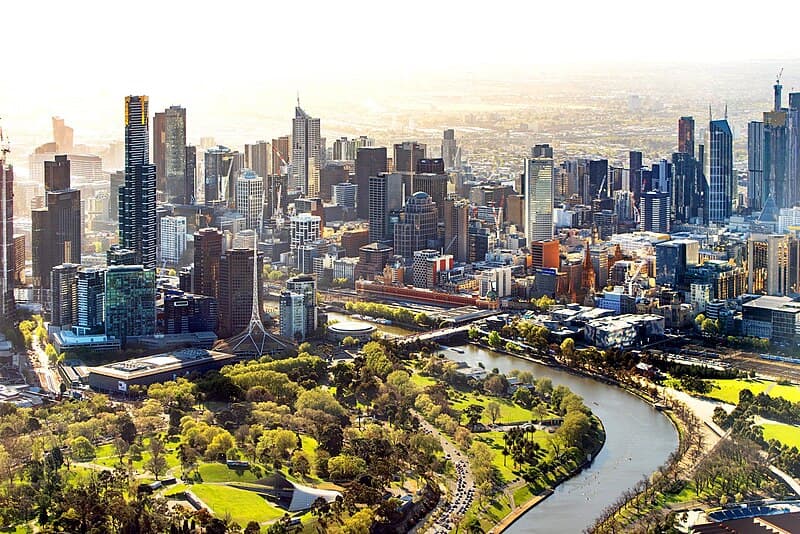
Hotels in Melbourne

Coffee-soaked laneways, trams, and four seasons in a day

Melbourne

LanguageEnglish
CurrencyAUD
TimezoneGMT+11
Temperature12-30 °C
Dial Code+61
Population26.4M
Area7,692,024 km²
SocketsType I
Tap waterDrinkable

Discover Melbourne

Melbourne is Australia's cultural capital and regularly ranks among the world's most liveable cities. Unlike Sydney, it has no iconic opera house or famous harbour — its charm hides in narrow laneways, where the best coffee in the southern hemisphere is brewed beside graffiti-covered walls, in rooftop bars, and in small restaurants. The city grew rich on the gold rush of the 1850s, leaving behind Victorian buildings, arcades, and the UNESCO-listed Royal Exhibition Building. Melburnians are sport-obsessed: the MCG stadium hosts cricket and Australian rules football for a hundred thousand spectators, the Australian Open tennis takes place here in January, and the Melbourne Cup horse race in November shuts down the whole state for a public holiday. The tram network is the largest in the world, and rides are free within the centre. The weather is famously changeable — locals say you can experience four seasons in one day. One to two hours from the city begins the Great Ocean Road, with the Twelve Apostles cliffs, the vineyards of the Yarra Valley, and an island where penguins return from the sea every evening.

What to see

The places worth your time in Melbourne, and what to expect at each

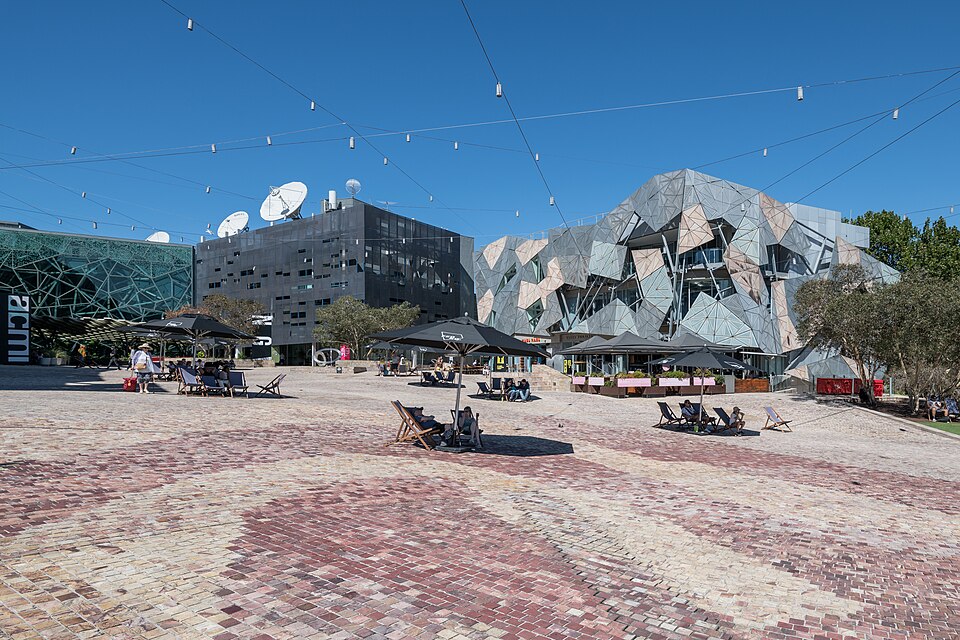
Federation Square

Federation Square

CBD

A square of deconstructivist buildings clad in triangular panels, facing Flinders Street station with its famous row of clocks above the entrance. A cultural hub housing the ACMI moving-image museum and the Australian wing of the National Gallery.

Tip: The ACMI museum of film, TV, and video games is free and worthwhile for adults too. Melburnians traditionally meet 'under the clocks' at Flinders Street station. The visitor centre sits right on the square.

Admission:
free
Time needed:
1 h
Hosier Lane and the laneways

Hosier Lane and the laneways

CBD

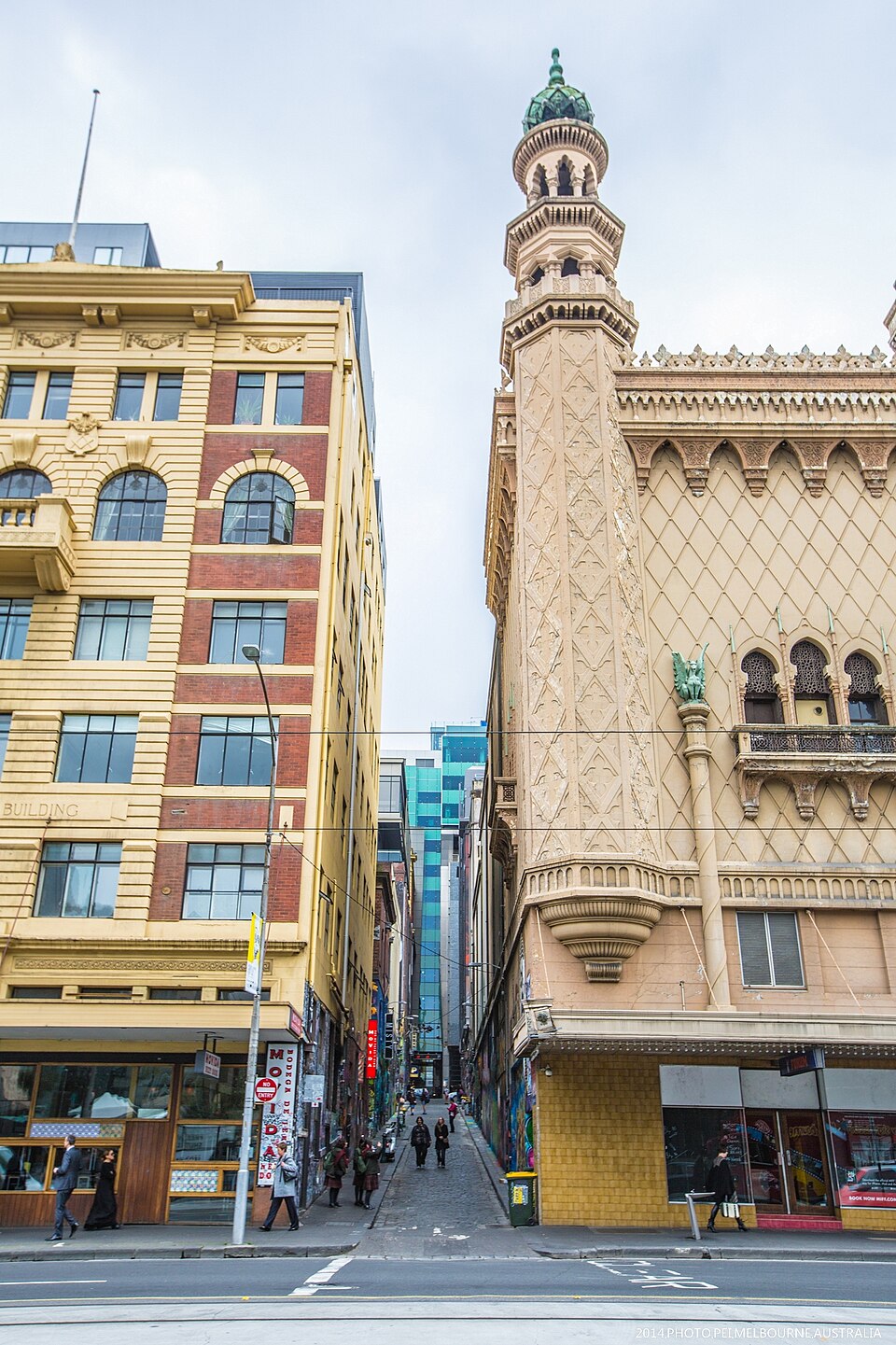
Narrow lanes in the centre where walls are covered floor to roof with graffiti and street art that changes weekly. The surrounding lanes, Degraves Street and Centre Place, are lined with cafés with tables set out on the pavement.

Tip: Hosier Lane is the most photographed but also the busiest — AC/DC Lane and Duckboard Place have similarly good art without the crowds. The best coffee is on Degraves Street and in Block Arcade. Free guided laneway tours leave from the square daily.

Admission:
free
Time needed:
1.5-2 h
Queen Victoria Market

Queen Victoria Market

CBD

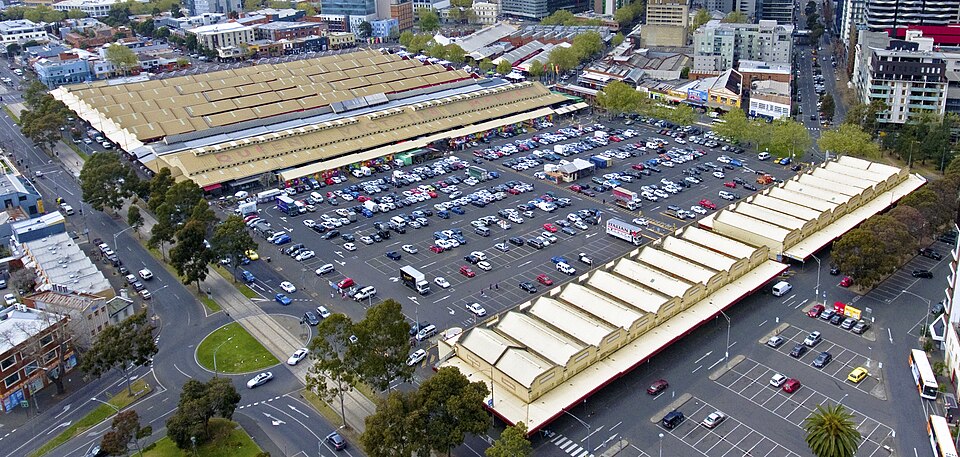
The largest open-air market in the southern hemisphere, with over six hundred stalls in halls dating from 1878: fruit, meat, fish, delicatessen goods, clothing, and souvenirs. A summer Wednesday night market serves food from around the world.

Tip: The market is closed Mondays and Wednesdays. Saturday morning is best, when locals do their shopping. Hot doughnuts from the American Doughnut Kitchen van have been sold since the 1950s, and there's always a queue. At 2pm, traders discount fruit and vegetables.

Admission:
free
Time needed:
1.5 h
Royal Botanic Gardens

Royal Botanic Gardens

South Yarra

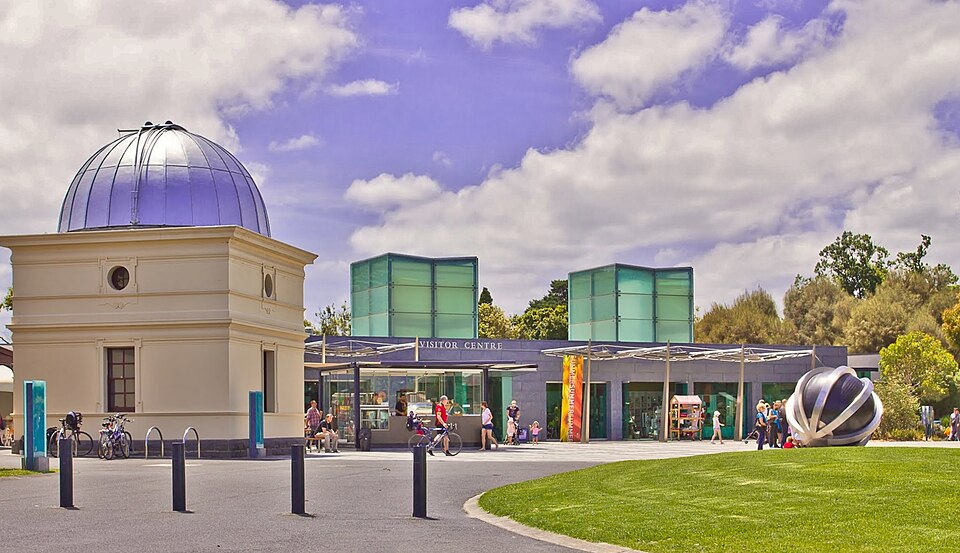
Gardens dating from 1846 on the banks of the Yarra River, spanning forty hectares of lawns, lakes, and over eight thousand plant species. A viewpoint overlooks the city skyscrapers, and black swans glide across the lake.

Tip: Entry is free. The Shrine of Remembrance war memorial stands at the southern edge and pairs well with a visit. In summer, outdoor films screen in the gardens at night. Children enjoy the Ian Potter Children's Garden with its water play area.

Admission:
free
Time needed:
2 h
National Gallery of Victoria

National Gallery of Victoria

Southbank

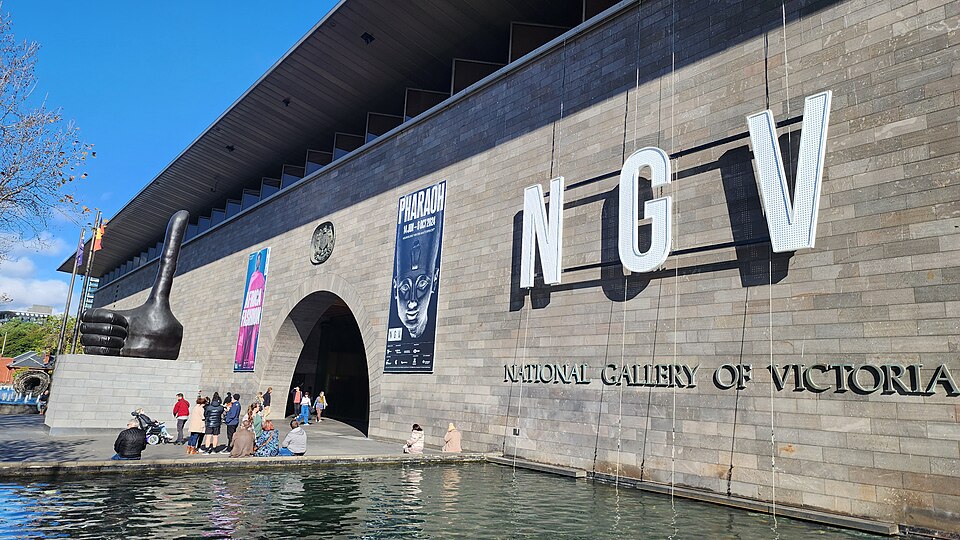
Australia's oldest and most visited gallery, holding European masters, Asian art, and the stained-glass ceiling of the Great Hall, under which visitors lie flat on the floor to admire it. The water wall at the entrance is an icon in itself.

Tip: The permanent collection is free. Lie down on the carpet in the Great Hall and look up at Leonard French's stained-glass ceiling — everyone does it. Australian art is housed in the second building on Federation Square. Special exhibitions sell out.

Admission:
free
Time needed:
2-3 h
Melbourne Cricket Ground

Melbourne Cricket Ground

East Melbourne

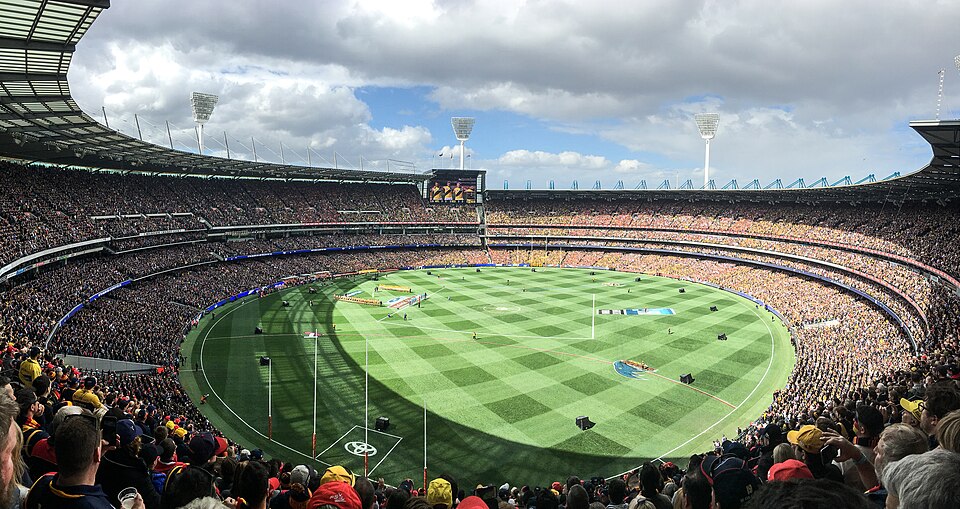
A stadium for one hundred thousand spectators, dating from 1853, where the first cricket Test match was played and the 1956 Olympics were held. It hosts Australian football and cricket, and houses the national sports museum.

Tip: The stadium tour takes you into the changing rooms and onto the pitch, and doesn't run on match days. An AFL Australian football match, played March to September, is a great experience even without knowing the rules — tickets are cheap. It's a fifteen-minute walk from the centre through the park.

Admission:
admission charge
Time needed:
1.5 h
State Library Victoria

State Library Victoria

CBD

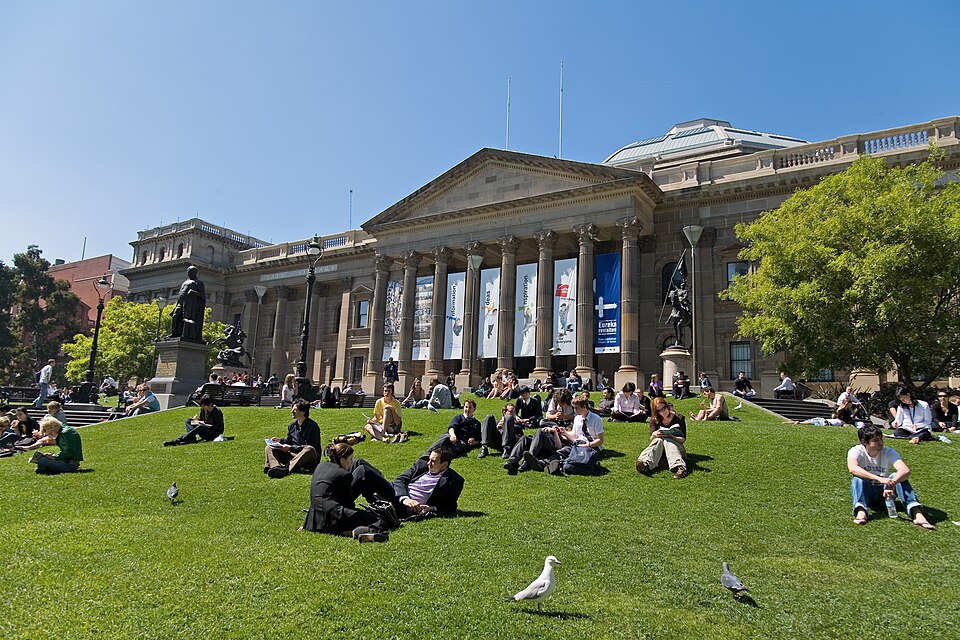
A state library dating from 1856, its domed La Trobe Reading Room letting visitors read beneath a ceiling seventeen metres high. Exhibitions cover Victoria's history, including the armour of the outlaw Ned Kelly.

Tip: Entry is free, and anyone can sit and work in the reading room. The best view of the dome is from the sixth-floor gallery. Ned Kelly's armour is the most famous exhibit.

Admission:
free
Time needed:
1 h
Royal Exhibition Building

Royal Exhibition Building

Carlton

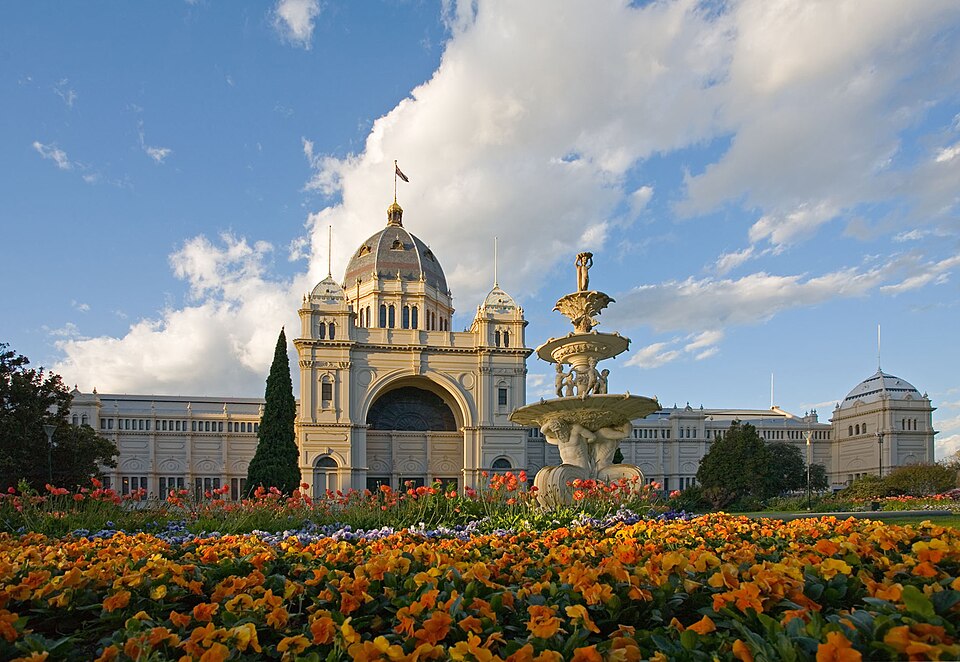
An exhibition palace from 1880, built for a world's fair, where the first Australian parliament sat. One of the few surviving world's fair buildings, and the first in Australia to be UNESCO-listed.

Tip: You can only go inside on a tour run from the Melbourne Museum next door, usually once a day. The surrounding Carlton Gardens are free and pleasant for a stroll. The Melbourne Museum has an exhibition on Indigenous Australians.

Admission:
tour admission charge
Time needed:
1 h
Shrine of Remembrance

Shrine of Remembrance

Southbank

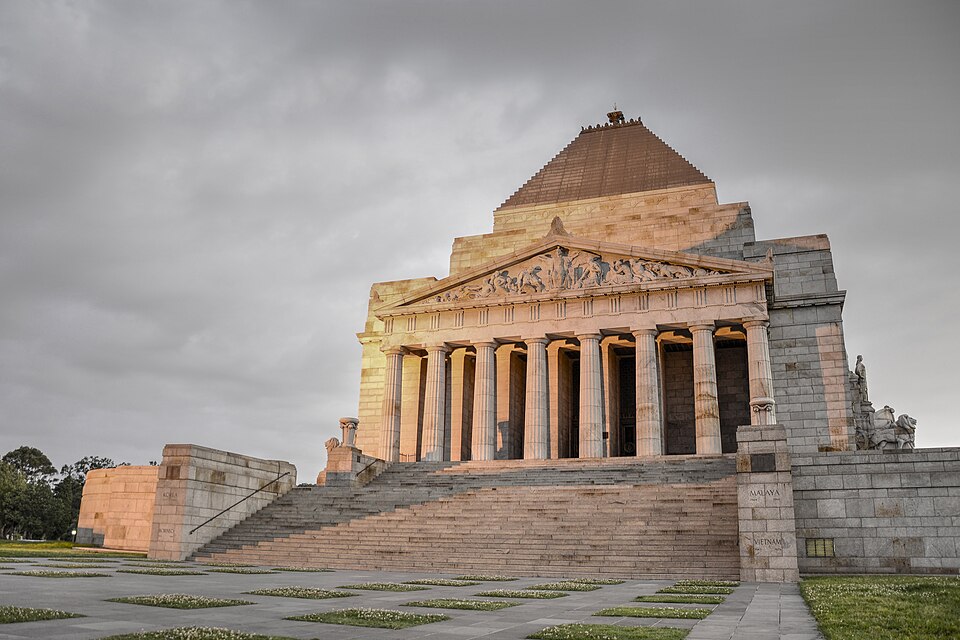
A war memorial from 1934 shaped like a Greek temple, dedicated to Australians who died in war. At 11am on November 11th, a shaft of sunlight through a roof opening falls precisely on the word 'Love' on the memorial stone.

Tip: Entry is free, and the upper balcony offers one of the best views over the city. A beam of light is simulated every half hour using artificial light. On Anzac Day, April 25th, a dawn ceremony is held here.

Admission:
free
Time needed:
1 h

Photos: Federation Square — DXR (CC BY-SA 4.0) · Hosier Lane and the laneways — WANG.PC (CC BY 2.0) · Queen Victoria Market — Bob T (CC BY-SA 4.0) · Royal Botanic Gardens — Johntorcasio (CC BY-SA 4.0) · National Gallery of Victoria — Shkuru Afshar (CC BY-SA 4.0) · Melbourne Cricket Ground — Flickerd (CC BY-SA 4.0) · State Library Victoria — Diliff (CC BY 2.5) · Royal Exhibition Building — Photograph taken by Diliff and straightened by Ian Fieggen (CC BY 2.5) · Shrine of Remembrance — Jorge Láscar from Australia (CC BY 2.0)

Where to stay

Areas and districts, matched to the kind of trip you are taking

CBD

Best for: first-time visitors

The centre, with laneways, cafés, shops, and free trams. Hotels here sit close to everything, and the area is lively in the evening.

Fitzroy and Collingwood

Best for: an alternative scene and bars

Bohemian districts north of the centre, with vintage shops, bars, street art, and restaurants along Brunswick and Smith Streets.

St Kilda

Best for: the beach

A beachside district with a promenade, an amusement park, and a pier, under which a colony of little penguins lives, emerging at dusk. Plenty of hostels and bars.

South Yarra and Prahran

Best for: shopping and food

An elegant district with shopping on Chapel Street and the Prahran Market. Close to the botanic gardens. Tram routes 6 and 78 run here from the centre.

Getting around

From the airport

Tullamarine Airport lies twenty-three kilometres north of the centre. From Prague, flights connect through Dubai, Doha, Abu Dhabi, Singapore, or Hong Kong, with a total journey of twenty-two to twenty-five hours. The SkyBus runs to Southern Cross station in the centre. An electronic eVisitor visa is required before departure. The smaller Avalon Airport handles low-cost flights.

Melbourne Tullamarine (MEL) · 23 km

  • SkyBus to Southern Cross· 30 min· 23 AUD
  • Taxi to the centre· 25-40 min· 65 AUD
  • Uber· 25-40 min· 50 AUD

Around town

Melbourne has the largest tram network in the world, and rides are free within the CBD's Free Tram Zone. Outside that zone, pay with a myki card, which must be bought and topped up, or with a contactless card, which is gradually being rolled out. Trains run out to the suburbs. A car is only useful for day trips.

TramsFree within the CBD's Free Tram Zone. The heritage City Circle tram loops around the centre. · free in the centre
Trams and trains outside the centrePay with a myki card; the daily fare cap is low. · 5.50 AUD
Metro trainsTo the suburbs and beaches. · 5.50 AUD
Uber / taxiFor evenings and airport trips. · 20 AUD within the centre
Rental carFor the Great Ocean Road and the vineyards. Driving is on the left. · 60 AUD/day

Useful apps: PTV, myki, Uber, Google Maps

When to go

March to May and September to November are best, with temperatures around 20°C. Summer, December to February, is warm, though occasional heatwaves push past 40°C before temperatures drop by twenty degrees within hours. Winter, June to August, is cold and grey, around 13°C. The Australian Open is played in January, Formula 1 in March, and the Melbourne Cup in November.

Best time

March to May and September to November

What to avoid

June to August, for the cold and grey skies

MonthJanFebMarAprMayJunJulAugSepOctNovDec
Day26°26°24°20°17°14°14°15°17°20°22°24°
Night14°15°13°11°9°7°6°7°8°9°11°13°
Rainy days879111314151615131110

Food & drink

Melbourne is Australia's food capital, and coffee culture here is close to religion. Thanks to Greek, Italian, Vietnamese, and Chinese immigration, the food scene spans the globe: Lygon Street is Italian, Victoria Street Vietnamese, and Melbourne has one of the largest Greek populations of any city outside Thessaloniki and Athens. Breakfast and brunch are an art form here. Prices run high.

What to try

Flat white

Espresso with silky microfoamed milk, an Australian invention and the backbone of local café culture. Coffee here is exceptionally good even in small towns, and chains have little foothold.

Smashed avo

Mashed avocado on toasted sourdough with feta and a poached egg. The symbol of Melbourne brunch, costing around twenty dollars.

Souvlaki

Grilled meat in pita bread with tzatziki, found at Greek places on Lonsdale Street. The best late-night food after the bars.

Meat pie

A small pie filled with stewed beef in thick gravy, the national fast food. Bought at a bakery or petrol station and eaten straight from the hand with tomato sauce.

Dim sum

Found in Chinatown on Little Bourke Street, Australia's oldest Chinatown.

Pho

Vietnamese noodle soup on Victoria Street in Richmond, around fifteen dollars.

Lamington

A cube of sponge cake coated in chocolate and coconut, a traditional Australian teatime treat. Every café does it differently, and the best are homemade at country bakeries.

Yarra Valley wine

Pinot noir and chardonnay from vineyards an hour from the city, served by the glass at bars from twelve dollars.

What it costs

Flat white

5-6 AUD

Brunch

20-30 AUD

Dinner at a restaurant

50-90 AUD per person

Beer at a bar

10-14 AUD

Tram in the centre

free

Day ticket outside the centre

11 AUD

Great Ocean Road trip

from 130 AUD

Night at a 3-star hotel in the centre

180-300 AUD

Indicative prices that change over time — treat them as a guide, not a price list.

Practical information

SocketsIAustralian, angled pins
Voltage230V / 50Hz
Tap waterTap water is drinkable — Tap water is safe to drink across Australia and ranks among the best quality in the world; buying bottled is money wasted. Public spaces, beaches, and national parks have drinking-water fountains where you can refill a bottle for free. The only exception is remote farms and campsites, where water comes from a rainwater tank and is marked non-potable.
TippingTipping isn't customary in Australia, since the legal minimum wage is high and service is included in the price. At restaurants, rounding up is only for genuine satisfaction, and around 10 percent is typical at upscale places. At cafés, bars, and in taxis, no one expects anything. Watch for a weekend and public holiday surcharge, usually 10-15 percent, always noted on the menu.
Driving on theleft
SafetyAustralian cities are safe, and walking around at night is generally fine — reasonable caution is only needed in nightlife districts late on Friday and Saturday nights. The real risks are natural: the UV index tops ten in summer, when you can burn in fifteen minutes even under cloud, and rip currents at ocean beaches — swim only between the red-and-yellow flags, where lifeguards patrol. Don't lean over cliff edges on coastal trails. There's no reciprocal healthcare agreement between the Czech Republic and Australia, and treatment is very expensive, so insurance is essential. The emergency number is 000.
Opening hoursCity shops are open from nine to five or six, until nine on Thursdays, and ten to four on Sundays. Coles and Woolworths supermarkets run until ten at night. Cafés open at seven and close by mid-afternoon around three — Australians eat breakfast out, but an afternoon coffee outing isn't really a thing. Restaurants serve dinner from six until nine or ten. Restaurants add a surcharge of ten to fifteen percent on weekends and public holidays.
Customs & etiquetteAustralians are informal and quick to use first names — addressing a doctor or official by their given name is completely normal. Queues are respected strictly, and jumping one is among the few things that draws a public reaction. At a bar, you order and pay at the counter straight away, not at the end of the night. Smoking is banned on most public beaches and all restaurant terraces. At the entrance to national parks and at events, you'll hear a Welcome to Country acknowledging Indigenous custodianship — listen quietly. Melburnians love arguing with Sydney over which city is better — stay neutral.
A few local wordsHello — G'dayThank you — Thanks / TaHow much is this? — How much is it?The bill, please — Can I get the bill, please?Cheers — Cheers

How to plan your days

1 day

A day in Melbourne

  1. 1Morning coffee on Degraves Street.
  2. 2The laneways of Hosier Lane and the arcades.
  3. 3Queen Victoria Market and lunch.
  4. 4Afternoon at the NGV and Federation Square.
  5. 5Evening rooftop bar and dinner in Chinatown.

2 days

Two days in Melbourne

  1. 1Day one as in the one-day plan.
  2. 2Day two morning at the Botanic Gardens and the Shrine of Remembrance.
  3. 3Afternoon at the State Library and Carlton Gardens.
  4. 4Tram to St Kilda for the beach.
  5. 5Penguins under the pier at dusk.

3 days

Three days in Melbourne

  1. 1Two days as in the plan above.
  2. 2Day three, a full-day trip along the Great Ocean Road.
  3. 3The Twelve Apostles at sunset.
  4. 4Return late in the evening.
  5. 5Or instead, Phillip Island and the Penguin Parade.

Day trips

Great Ocean Road

230 km · 3.5 h by car to the Twelve Apostles

A coastal road along cliffs with the limestone stacks of the Twelve Apostles, the surf beach at Bells Beach, and rainforest. Two days suits the full route better; a one-day bus tour takes twelve hours.

Phillip Island

140 km · 2 h by car

An island where hundreds of little penguins come ashore from the sea every evening at dusk, waddling across the beach to their burrows. The Penguin Parade is watched from grandstands, and photography isn't allowed.

Yarra Valley

60 km · 1 h by car

A wine region with more than eighty wineries, cheesemakers, and restaurants. Hot air balloons drift over the vineyards at dawn. Tastings cost ten to twenty dollars.

Frequently asked questions

How many days are enough for Melbourne?+

Three days: two for the city, one for the Great Ocean Road or the penguins. With more time, renting a car for the whole coast pays off.

Melbourne or Sydney?+

Sydney has the harbour, the opera house, and the beaches; Melbourne has cafés, laneways, sport, and better food. It's an hour's flight between them.

How do I get from the airport into the centre?+

By SkyBus to Southern Cross station in thirty minutes, running around the clock. Buy tickets online or at a machine.

Where should I stay in Melbourne?+

In the CBD for the free trams and closeness to everything, in St Kilda for the beach, in Fitzroy for the bars.

Is Melbourne expensive?+

Yes, one of the most expensive cities in the world. You can save on free trams, free museums, and a market lunch.

Do I need a visa for Australia?+

Yes, an electronic eVisitor visa, free for EU citizens and processed online. Approval usually arrives by email within a few days.

Is Melbourne safe?+

Yes, very. Caution is only really needed late at night on weekends in nightlife districts. Don't leave things visible in a parked car.

When is the Australian Open?+

The second half of January. Hotels get pricier and tickets to the main courts sell out.

Arrival Card

Fill in the required arrival card before your trip to avoid delays at immigration.

Complete Arrival Card

Visa Requirements

Check the latest visa requirements for entering this country. Some nationalities may need to apply for a visa or e-visa before travel.

Check visa requirements

Language

English

Currency

AUD

Timezone

GMT+11

Dial Code

+61

Population

26.4M

Area

7,692,024 km²

Voltage

230V / 50Hz

Driving Side

Left

Top Hotels in Melbourne

Live prices from 500+ properties

Loading hotels...

Planning a trip to Melbourne?

Compare hundreds of hotels, find the best price, and book with free cancellation on TravelManiac.