A baroque city between two hills that lives on music
Salzburg
LanguageEnglish
CurrencyEUR
TimezoneGMT+1
Temperature0-26 °C
Dial Code+43
Population9.1M
Area83,879 km²
SocketsType C / Type F
Tap waterDrinkable
Discover Salzburg
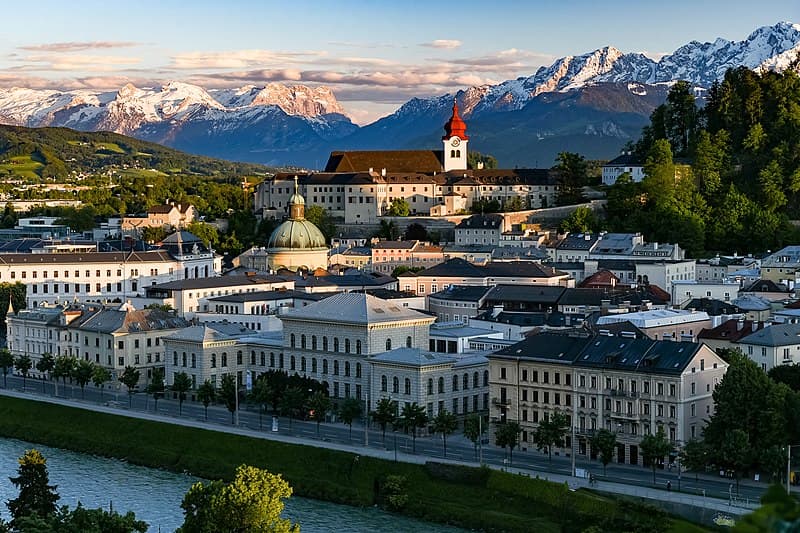
Salzburg sits on the Salzach river between two rocky hills, the Mönchsberg and the Kapuzinerberg, and its old town is entirely UNESCO-listed. For a thousand years it was ruled by prince-archbishops who used the proceeds from nearby salt mines to build one of the most complete baroque cityscapes north of the Alps — a cathedral, a residence, squares with fountains, and above it all the Hohensalzburg Fortress, one of the largest surviving medieval fortresses in Europe. In 1756, Wolfgang Amadeus Mozart was born here on Getreidegasse, and although he left at twenty-five and never returned, Salzburg still lives off him: concerts happen every evening, and from late July to the end of August the Salzburg Festival, the world's largest classical music and opera festival, takes over the city. The other side of Salzburg's fame is The Sound of Music, filmed in the surrounding area and still drawing busloads of American visitors. The old town is small and can be seen in two days; the rest of your time belongs to the mountains and lakes of the Salzkammergut, which begin just twenty kilometres from the main square.
What to see
The places worth your time in Salzburg, and what to expect at each
Hohensalzburg Fortress
Festung Hohensalzburg
Mönchsberg
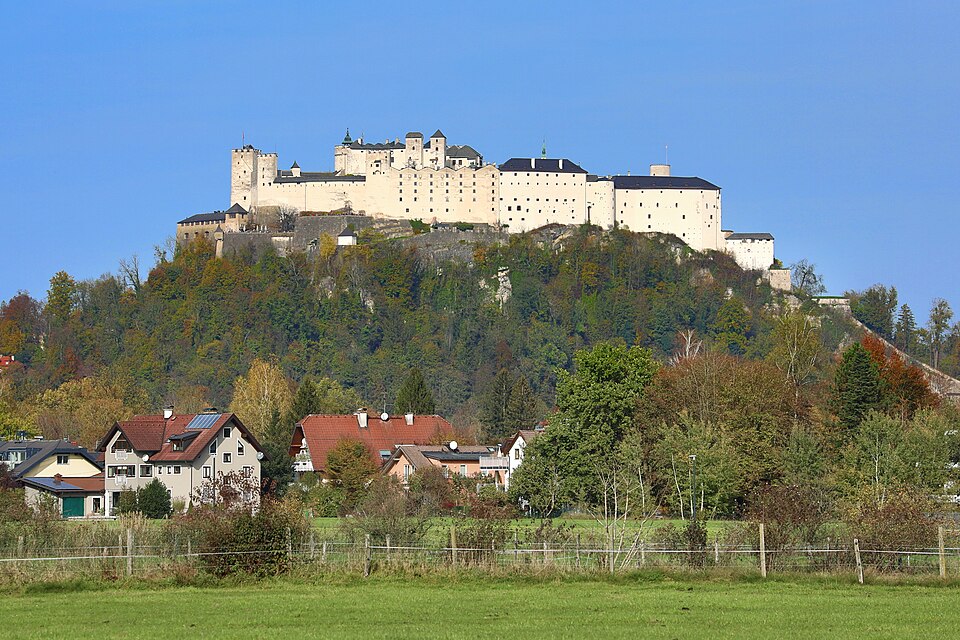
A fortress on the Mönchsberg above the old town, founded in 1077 and largely completed in its current form around 1500. Inside are the prince's chambers with the Golden Hall and gilded columns, the fortress museum, a puppet museum, and viewing terraces looking over the entire city and the border mountain Untersberg.
Tip: The FestungsBahn funicular from Festungsgasse takes a minute; on foot it's a twenty-minute climb, and walking up saves a few euros on the ticket — admission is paid at the top either way. After 4pm the fortress is often half-empty. In the evening, dinner concerts are held in the Golden Hall, with admission that includes the funicular.
Admission:
from 13 € without the funicular, 18 € with it
Time needed:
2 h
Salzburg Cathedral
Salzburger Dom
Altstadt
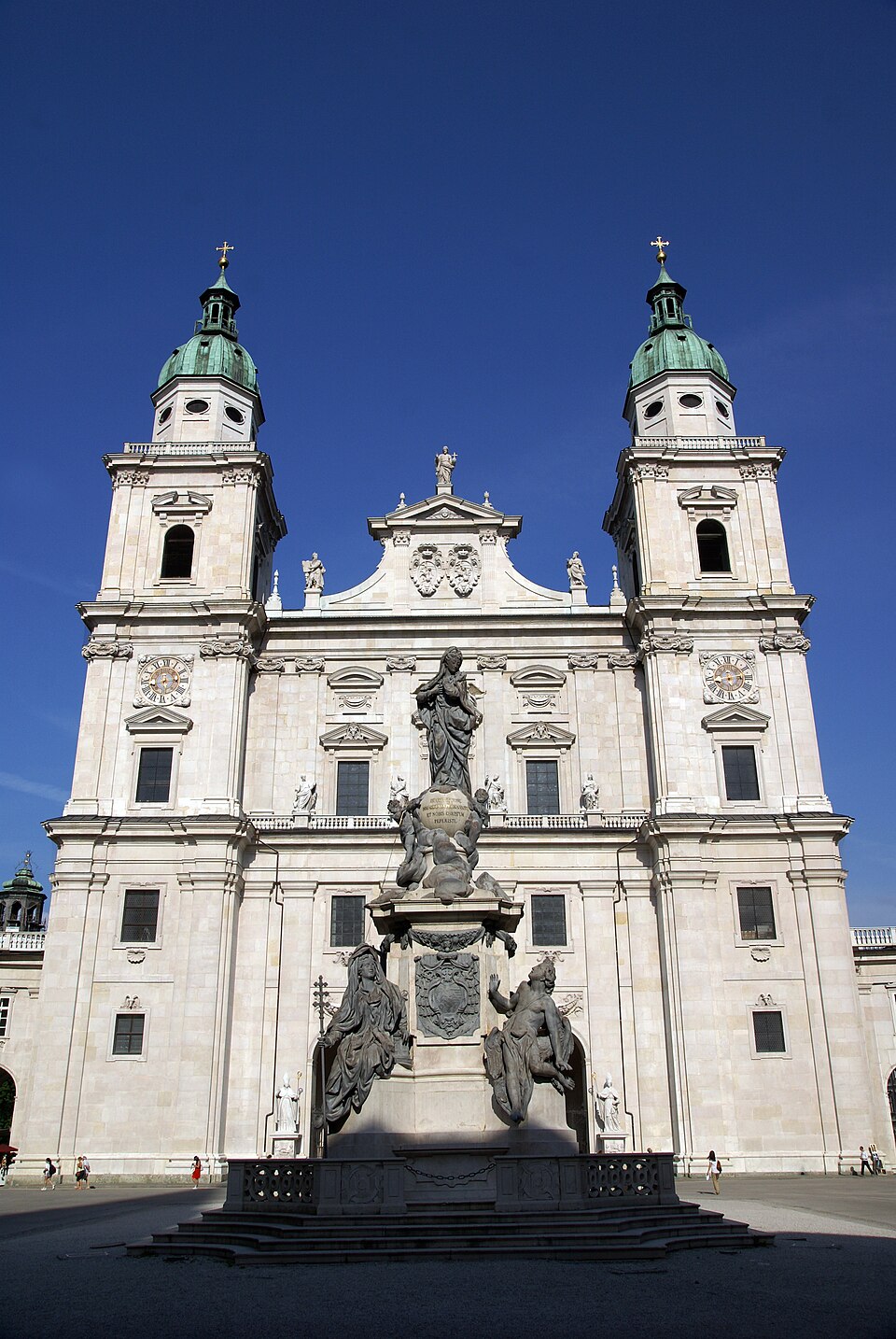
An early-baroque cathedral from 1628 with twin towers and a facade of marble from the Untersberg. Mozart was baptised here and himself played the organ as court organist. Beneath the cathedral lie the excavated remains of a Romanesque predecessor, and the side wings house the Dommuseum with its cathedral treasury.
Tip: For the midday organ concert on summer weekdays, arrive a quarter hour early. Entry to the cathedral itself is by voluntary donation, but the DomQuartier — with its museum and the passage from the residence through a gallery over the arch — is a separate paid ticket and gives the best view down onto Domplatz.
Admission:
cathedral by donation, DomQuartier 15 €
Time needed:
45 min
Getreidegasse and Mozart's Birthplace
Mozarts Geburtshaus
Altstadt
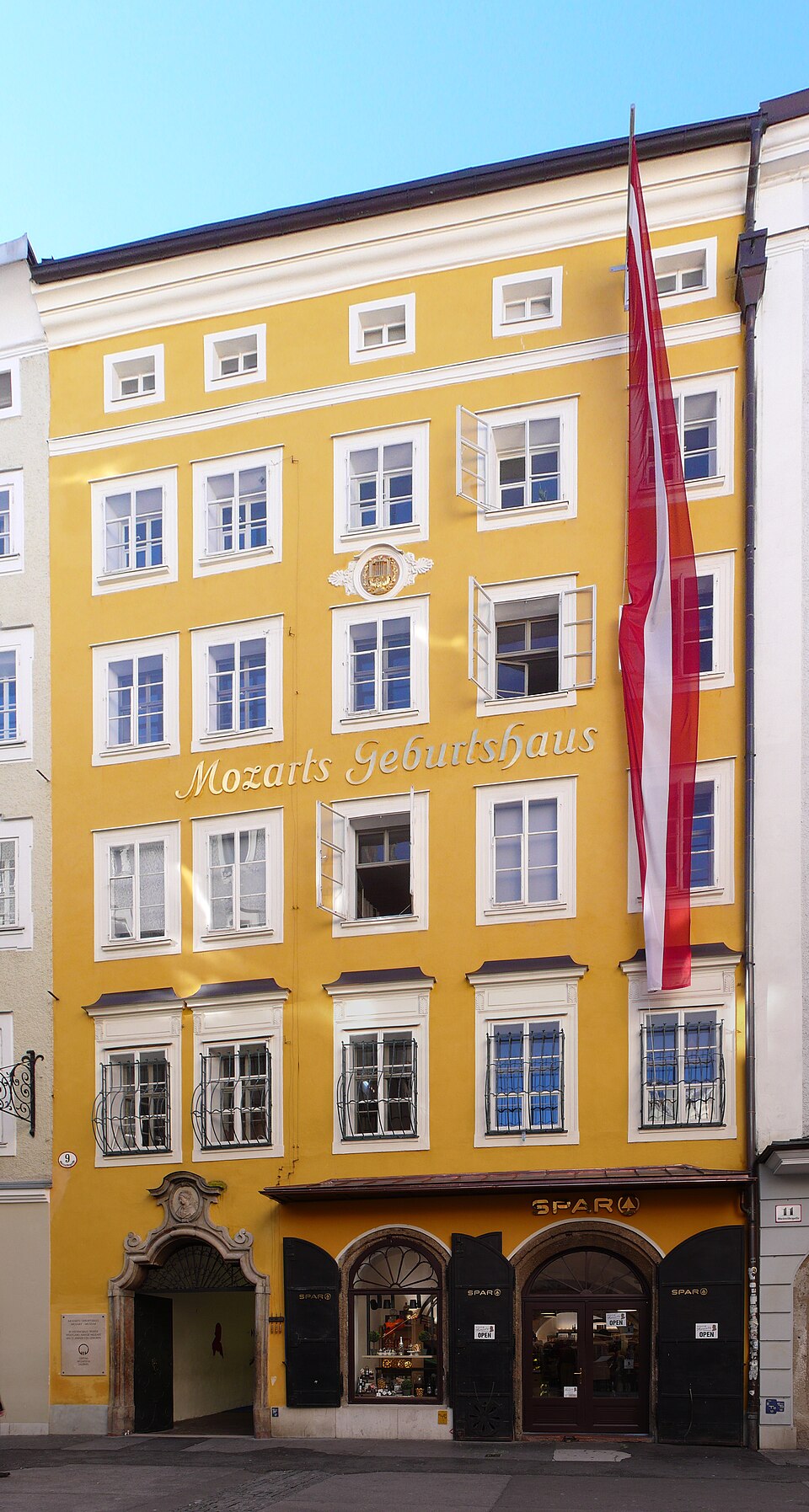
A narrow shopping street lined with ornate wrought-iron signs, which even McDonald's and banks must display under old-town regulations. At number 9 stands the yellow house where Mozart was born and where his family lived until he was seventeen; on the third floor are his childhood violin and clavichord.
Tip: Getreidegasse is jammed between 10am and 6pm, so walk it before 8am or in the evening. A combined ticket for the birthplace and Mozart's residence across the river saves three euros; the residence is more spacious and has a better audio guide. The passageways from Getreidegasse into Universitätsplatz lead through courtyards most tourists walk straight past.
Admission:
15 €, combined with the residence 21 €
Time needed:
1 h
Mirabell Palace and Gardens
Schloss Mirabell
Neustadt
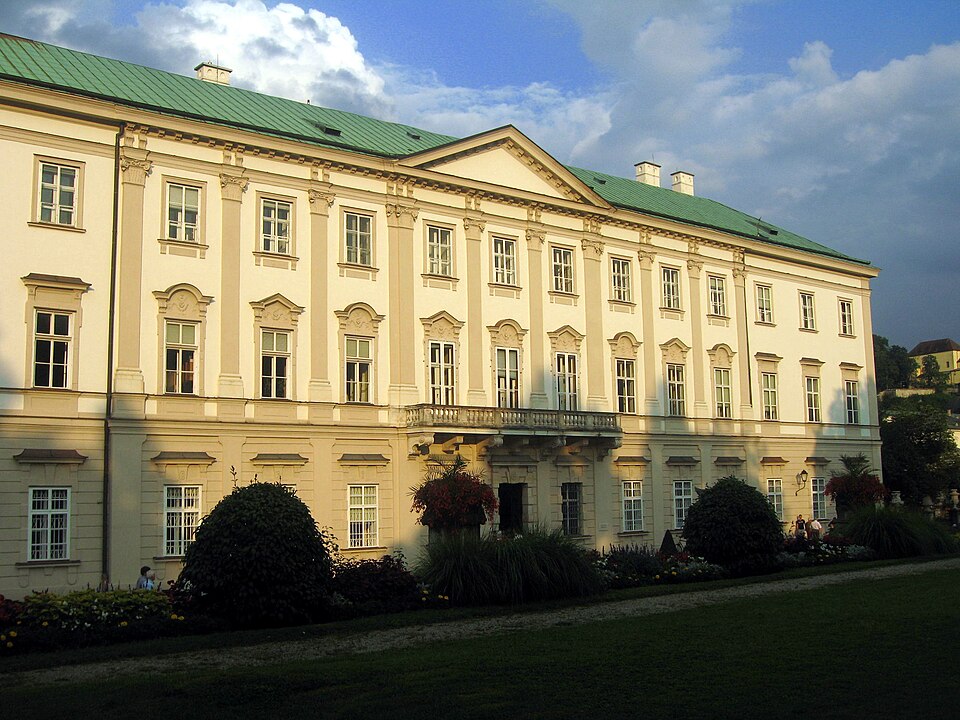
A palace built in 1606 by Archbishop Wolf Dietrich for his companion Salome Alt and their fifteen children. The baroque gardens, with geometric flowerbeds, a dwarf garden full of statues, and a view over the fountain toward the fortress, are among the most photographed spots in Austria. Inside is the Marble Hall, where the young Mozart once performed.
Tip: The gardens are free and open from 6am, when you can photograph the view of the fortress without crowds. The Marble Hall is only open on weekdays, and weekends often see weddings there — the best way in is via a Schlosskonzerte chamber concert, seated just metres from the musicians.
Admission:
gardens free
Time needed:
45 min
Hellbrunn Palace and its water games
Wasserspiele Hellbrunn
Morzg
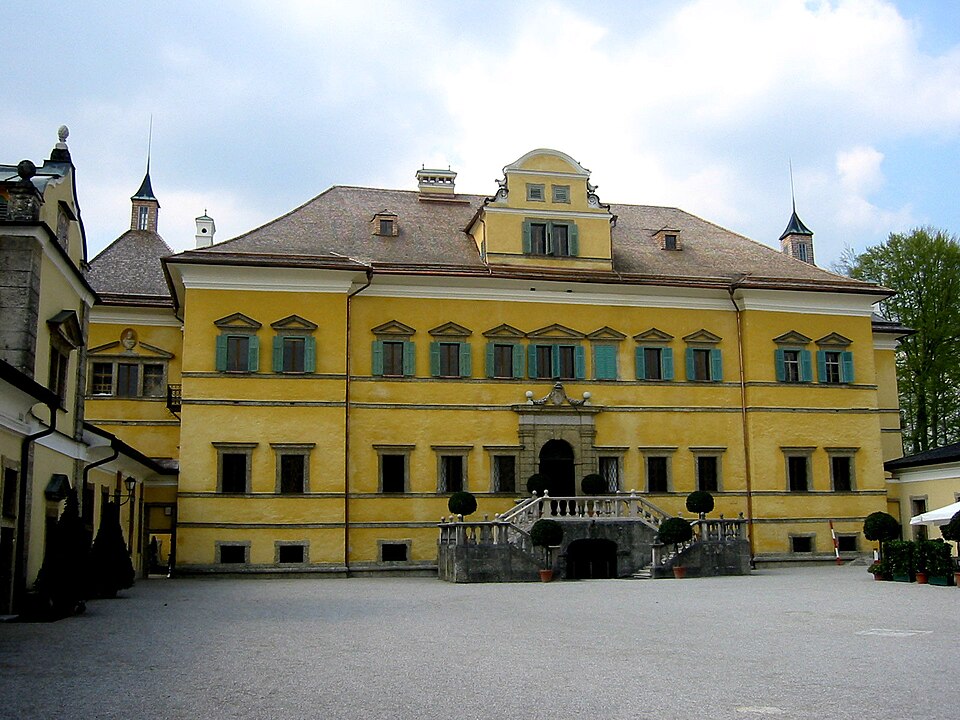
A summer palace built in 1615 by Archbishop Markus Sittikus, five kilometres south of the centre. It's famous for its water games: hidden jets in the gardens, a grotto with mechanical figures, and a stone table where the archbishop would drench guests who weren't allowed to stand up before he did. The park also holds the gazebo from The Sound of Music.
Tip: On the water-games tour, anyone standing at the front gets soaked — keep your phone in your pocket and let the kids take the front row. By bike, it's a twenty-minute ride along the Hellbrunner Allee embankment; bus 25 stops at the gate. The park is free and open even in winter, but the water games only run from April to October.
Admission:
15.50 €
Time needed:
1–2 h
Mönchsberg and the Museum of Modern Art
Museum der Moderne
Mönchsberg
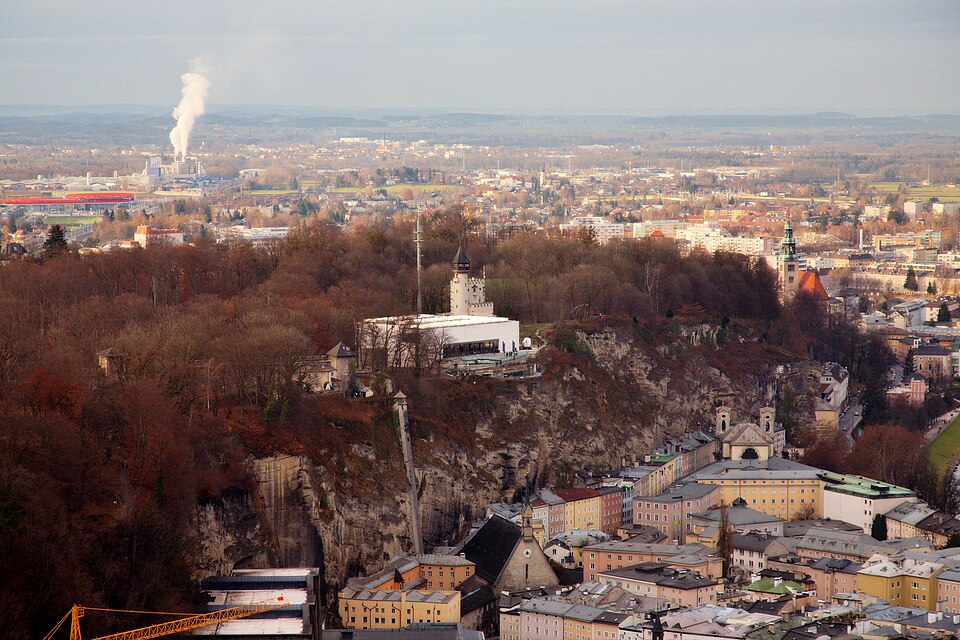
A forested rocky ridge above the old town, reached by a lift carved into the rock from Gstättengasse. At the top stands the Museum of Modern Art with a café terrace offering the best view over the rooftops, cathedral and fortress. A forest path with viewpoints follows the ridge all the way to the fortress.
Tip: The lift costs a few euros, but you can also climb the steps by the Toscaninihof in about ten minutes. The best plan is to ride up, walk the ridge for an hour through forest and old walls to the fortress, then descend to Nonnberg — you'll see the city from every angle and skip the funicular fee.
Admission:
lift 4.40 € return, museum 10 €
Time needed:
2 h
St. Peter's Abbey and cemetery
Stift St. Peter
Altstadt
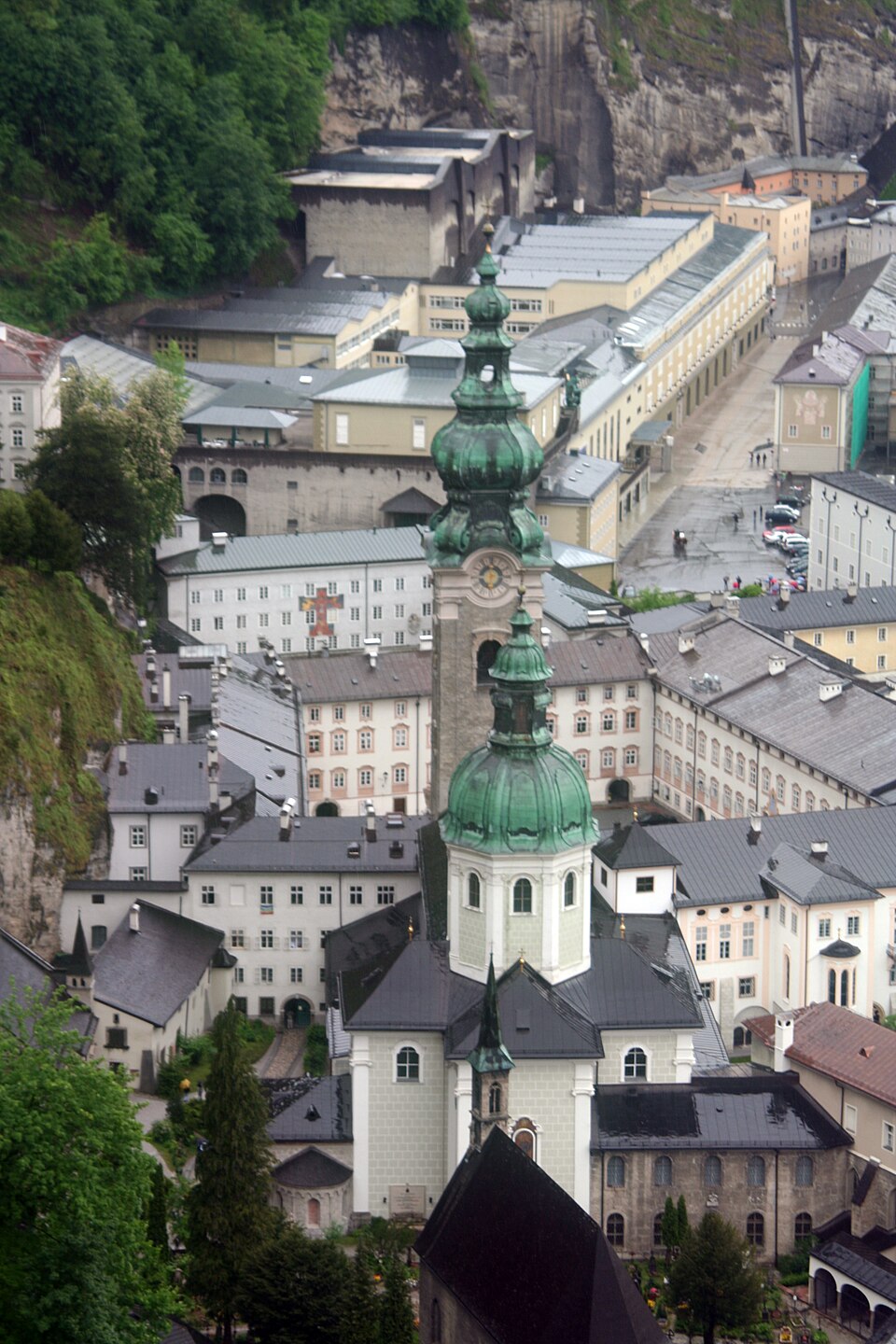
A Benedictine monastery founded in 696, the oldest still-functioning monastery in the German-speaking world. The cemetery, built against the rock face, has ornate iron grave crosses, arcaded tombs, and catacombs cut into the cliff with small chapels. The St. Peter Stiftskeller restaurant traces its history back to a mention from the year 803.
Tip: The cemetery is free and quietest in the morning; the catacombs cost a few euros and are reached via steep stairs. The Stiftskeller restaurant offers a touristy Mozart dinner with concert, but an ordinary lunch in the courtyard is half the price. The monastery bakery next to the cemetery bakes bread in a wood oven, closed on Wednesdays.
Admission:
cemetery free, catacombs 2 €
Time needed:
45 min
Kapuzinerberg
Right bank
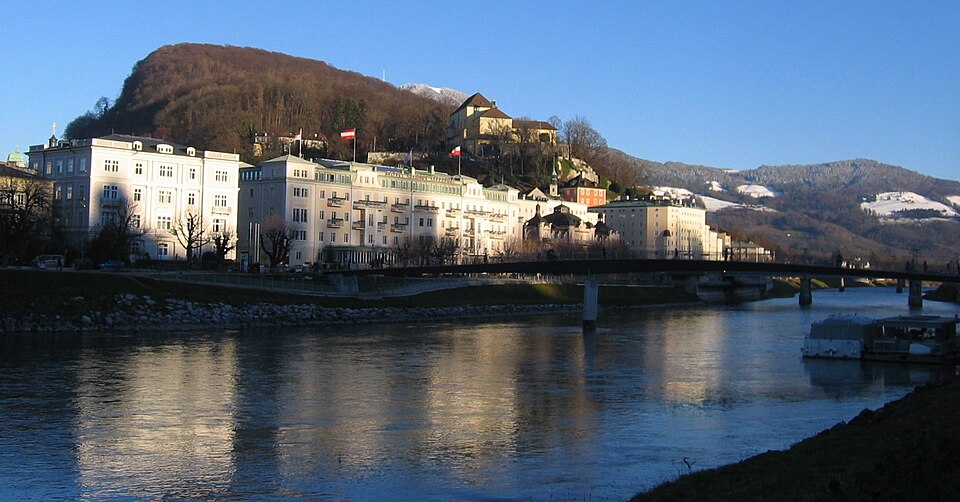
A forested hill on the river's right bank, the counterpart to the Mönchsberg, reached by steps from Linzergasse past a Stations of the Cross. At the top stands a Capuchin monastery and the Hettwer Bastei viewpoint, whose view of the cathedral and fortress photographs better than the view from the fortress itself, since the fortress is actually in the frame.
Tip: Bring water — there are over two hundred steps and nothing sold at the top. The light is best in the afternoon, when the sun hits the old town's facades. The entrance to the stairs is an unassuming gate between houses at Linzergasse 14; wild chamois graze along the ridge and aren't afraid of people.
Admission:
free
Time needed:
1–2 h
Untersberg
Grödig
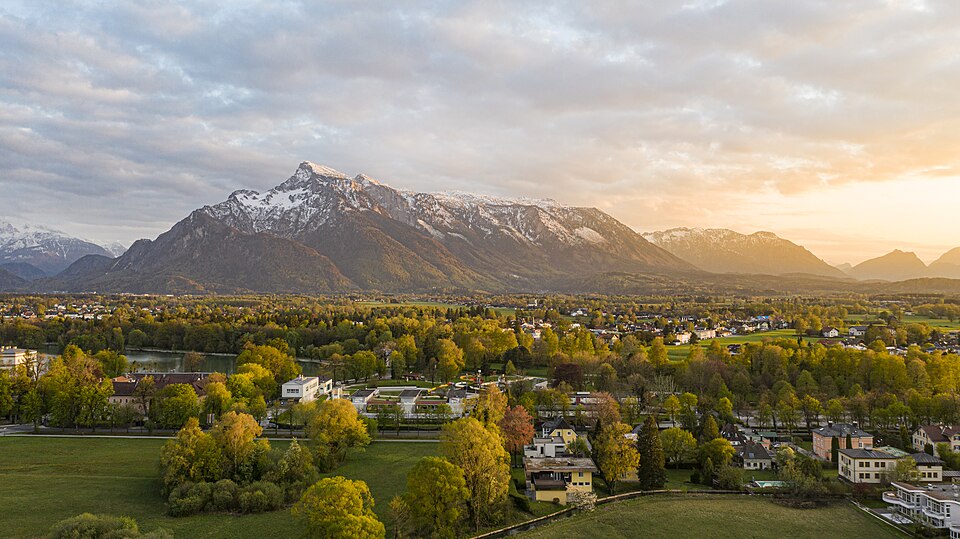
A massif on the Bavarian border fifteen kilometres south of town, reached by cable car from Sankt Leonhard up to 1,853 metres. At the top is a karst plateau with sinkholes, a summit cross, and views over Salzburg, the Chiemsee and the Berchtesgaden Alps.
Tip: Bus 25 runs from the centre to the lower cable-car station in half an hour, so a car isn't necessary. The cable car runs every thirty minutes and closes for maintenance for a month, usually in November or April. At the top, even in sunshine, it's about twelve degrees cooler than below, and the paths are rocky — sneakers aren't ideal.
Areas and districts, matched to the kind of trip you are taking
Altstadt
Best for: a first visit, sightseeing
The left bank between the Mönchsberg and the river, with the cathedral, Getreidegasse and the main squares. Hotels are small, set in historic buildings, and expensive, but everything is a few steps away. In the evening, once shops close, it's quiet, since almost no one actually lives here.
Neustadt and Linzergasse
Best for: convenient transport, mid-range budgets
The right bank around Mirabell Palace and Linzergasse, with mid-range hotels, cafés and Mozart's Residence. Five minutes over the bridge to the Altstadt, ten to the station — the most practical base for a weekend.
Mülln and Nonntal
Best for: quiet, beer, local life
Older districts on the edge of the old town. Mülln has the monastery brewery Augustiner Bräu with its huge beer garden under chestnut trees; Nonntal, below the fortress, is a quiet residential quarter with Nonnberg Abbey. Both are ten minutes on foot from the cathedral.
Around the station and Lehen
Best for: the lowest prices
Modern districts behind the main station, with chain hotels and hostels a third cheaper than downtown. Not pretty, but day trips to the Salzkammergut leave from the station, and the centre is twenty minutes on foot or by bus.
From Prague it's four hundred kilometres to Salzburg by car, about four and a half hours via České Budějovice and Linz, or via Strakonice and Passau; an Austrian motorway vignette is required. By train it's around six hours via Linz with one change, and direct Flixbus coaches also run. Salzburg Airport W. A. Mozart lies four kilometres from the centre, but there's no direct flight from Prague, and connecting via Vienna doesn't make sense. For international flights, Munich is a sensible alternative, with a train connection of under two hours.
Salzburg W. A. Mozart Airport (SZG) · 4 km
Trolleybus 2 or 10· 20 min· 2.60 €
Taxi· 15 min· 20 €
Munich (MUC) · 165 km
S-Bahn and train via Munich Hbf· 2 h 30 min· 30 €
Flixbus· 2 h 15 min· 15 €
Shared transfer· 2 h· 60 €
Linz (LNZ) · 130 km
Train· 1 h 30 min· 20 €
Rental car· 1 h 30 min
Around town
The old town is walkable, and a car makes no sense there — the centre is largely a pedestrian zone, and parking in the Mönchsberg garages runs around thirty euros a day. Trolleybuses cover the city, one of the largest trolleybus networks in Europe. The Salzburg Card covers all city transport, the fortress funicular, the Mönchsberg lift, the Untersberg cable car, a boat trip on the Salzach, and admission to nearly every sight — it pays off here more than in most cities, since most attractions charge admission. Postbus coaches to the Salzkammergut depart from the station.
Trolleybuses and busesTwelve trolleybus lines, running every five to ten minutes in the centre. Tickets from a machine are cheaper than from the driver. · 2.60 €, day pass 5 €
Salzburg CardCovers transport, the fortress with funicular, Hellbrunn, the Mozart houses, the Untersberg and a river boat trip. Pays off from three visits a day. · 33 € for 24 h, off-season
BicycleSalzburg is Austria's most bike-friendly city, with paths along the Salzach running to Hellbrunn and Hallein. Rentals near the Makartsteg and by the station. · 18 € / day
Postbus to the SalzkammergutLine 150 to St. Gilgen, St. Wolfgang and Bad Ischl runs hourly from the station and from Mirabellplatz. · from 6 €
Boat on the SalzachA scenic cruise from the Makartsteg to Hellbrunn and back, ending with the captain making the boat 'dance' a waltz on the waves. · 19 €
Salzburg is a year-round city, but each season has its own price tag. The Salzburg Festival, from late July to the end of August, doubles hotel prices, and tickets for the main performances go on sale in January. Advent, with markets on Domplatz and Residenzplatz, is the second peak — on December weekends the old town gets packed. The best value falls in May, June and September. The city has a reputation for rain thanks to a fine, persistent drizzle locals call Schnürlregen, and summer actually sees more rainy days than winter, so an umbrella always belongs in your bag.
Best time
May, June and September; Advent for the Christmas markets
What to avoid
the festival weeks in August unless you're there for the music, and damp, grey November
Month
Jan
Feb
Mar
Apr
May
Jun
Jul
Aug
Sep
Oct
Nov
Dec
Day
3°
5°
10°
15°
20°
23°
25°
24°
20°
15°
8°
4°
Night
-4°
-3°
1°
4°
9°
12°
14°
14°
10°
6°
1°
-2°
Rainy days
11
10
12
13
15
17
17
15
12
10
11
12
Food & drink
Salzburg eats Austrian with a Bavarian accent, since the border lies just past the city limits: schnitzels and Tafelspitz, but also beer from monastery breweries and roasted sausages. The best value and atmosphere are found at beer halls like Augustiner Bräu in Mülln, where beer is poured into stoneware mugs and food is bought at stalls inside or brought from outside. Universitätsplatz hosts the Grünmarkt market every morning except Sunday, and the Balkan Grill sausage stand in the passage off Getreidegasse has had a queue since 1950. Tourist restaurants on Getreidegasse serve average food at high prices.
What to try
Salzburger Nockerl
A sweet soufflé of egg whites shaped into three snowy peaks representing the Mönchsberg, Kapuzinerberg and Gaisberg hills. Baked to order in twenty minutes and meant for two — order it solo and you won't finish it.
Wiener Schnitzel
Veal pounded thin, breaded and fried in clarified butter so the crumb puffs away from the meat. The pork version must be labelled 'Schnitzel vom Schwein' and costs a third less; served with vinegar-based potato salad, never mayonnaise.
Tafelspitz
Boiled beef tip served in its own broth with grated horseradish, apple-horseradish and a creamy chive sauce. The broth is eaten first as a soup, only then the meat — that's part of the ritual, not an extra tip.
Mozartkugel
A marzipan-and-nougat praline coated in chocolate. The original, handmade since 1890, is sold only by the Fürst confectionery in silver foil; supermarkets stock mass-produced versions in red-and-gold wrapping, cheaper but different.
Kaiserschmarrn
Shredded pancake with raisins, dusted with powdered sugar and served with plum compote. A proper meal, not a dessert — the portion is usually for two, and mountain huts serve it as a main course.
Bosna
A Salzburg street-food invention from 1949: a grilled sausage in a bun with onion, mustard and curry powder. The original is at the Balkan Grill stand in the passage off Getreidegasse; the queue is long but moves fast.
Stiegl and Augustiner
Stiegl is Austria's largest privately owned brewery, based in Salzburg, with its own Stiegl-Brauwelt museum. Augustiner Bräu has been brewed by monks in Mülln since 1621 and served from wooden casks — you fetch your own mug and rinse it yourself at the fountain.
Wiener Melange
Espresso with hot milk and milk foam, Vienna's answer to cappuccino, always served with a glass of water on the tray. Order just 'einen Kaffee' at a classic café and you'll be asked which kind — there are more than ten on the menu.
What it costs
Melange at Café Tomaselli
5.50 €
Lunch at a pub
16–24 €
Dinner at a restaurant in the Altstadt
35–60 € per person
Litre of beer at Augustiner Bräu
9 €
Fortress with funicular
18 €
Salzburg Card, 24 hours
33–40 €
Mozart concert at Mirabell
from 40 €
Night in a 3-star hotel for two
130–220 €, up to 350 € in August
Indicative prices that change over time — treat them as a guide, not a price list.
Practical information
SocketsCEuroplug, two round pinsFSchuko
Voltage230V / 50Hz
Tap waterTap water is drinkable — Austria's tap water comes from mountain springs and flows by gravity without chemical treatment — it's some of the best tap water in Europe, and buying bottled is pointless. In restaurants, though, a glass of tap water is usually charged around a euro, since staff serve it as a drink; a glass alongside your coffee, on the other hand, comes free automatically. Public fountains marked 'Trinkwasser' are found around the city.
TippingTipping is customary and expected in Austria: five to ten percent, rounded up for coffee. It's not left on the table, though — you state the total including the tip when paying ('twenty-two, please') and the server hands back the change. You pay at the table, not at a till, and everyone usually pays for themselves; the server will ask 'zusammen oder getrennt?' (together or separate). At hotels, leave a euro or two per night for housekeeping and a euro per bag for porters.
Driving on theright
SafetySalzburg is a safe city and you can walk almost anywhere at night. Pickpockets work mainly on Getreidegasse, at the Advent markets and on crowded trolleybuses heading to the old town. Watch out for scooters and bikes: the paths along the Salzach move fast and pedestrians who wander onto them are in the way. Swimming in the river is out — the current is strong and the water cold even in August. Street sellers hawking tickets to 'Mozart concerts' often push touristy performances at full price; buy directly from the organiser instead. The emergency number is 112.
Opening hoursOpening hours in Austria are tightly regulated: shops are typically open from around 9am to 7pm, and until 6pm on Saturdays; on Sundays almost everything is closed except restaurants, museums, and shops at train stations and the airport. Arriving on a Sunday, you'll only be able to shop at the main station. Most museums close on Mondays, though the major Vienna galleries don't. Cafés open around 8am and close between 8pm and midnight; a classic Viennese-style café never rushes you out, and you can nurse one coffee for hours.
Customs & etiquetteTitles are taken seriously in Austria, and being addressed as 'Herr Doktor' is no joke. Greet with 'Grüß Gott' when entering a shop or a train compartment, and say 'Wiederschauen' when leaving. In a café you wait to be seated by staff and order through them; bringing your own food or joining a stranger's table isn't done. Punctuality is assumed — arriving ten minutes late for a reservation can mean losing your table. Shorts aren't worn into churches or the opera. Waste sorting is strict, with colour-coded bins.
A few local wordsHello — Grüß GottThank you — Danke schönPlease — BitteThe bill, please — Zahlen, bitteCheers — Prost
How to plan your days
1 day
Salzburg in a day
1Morning in the Mirabell Gardens for a crowd-free view of the fortress.
2Cross the Makartsteg bridge to Getreidegasse and Mozart's birthplace.
3The cathedral, Residenzplatz and St. Peter's cemetery.
4Afternoon funicular up to Hohensalzburg Fortress.
5Evening beer and sausage at Augustiner Bräu in Mülln.
2 days
A weekend with music
1Day one as above.
2Morning of day two: Hellbrunn Palace and its water games, cycling along the river.
3Afternoon lift up to the Mönchsberg and along the ridge to Nonnberg.
4Evening chamber concert in Mirabell's Marble Hall or at the fortress.
3 days
Three days including the Salzkammergut
1First two days as above.
2Day three: Postbus to St. Gilgen, then boat across Lake Wolfgang to St. Wolfgang.
3Alternatively, train and bus to Hallstatt and the salt mine.
4Evening back in Salzburg, sunset from the Kapuzinerberg.
Day trips
Hallstatt
75 km · 2 h by train or bus
A village on the shore of Lake Hallstatt, beneath a mountain where salt has been mined for seven thousand years. A cable car climbs to the salt mine with its inter-level slides and the Skywalk viewpoint. Hallstatt is swamped with tour buses in summer, so arrive before 9am or stay past 5pm once the groups have left.
Berchtesgaden and the Eagle's Nest
30 km · 45 min by bus 840
A Bavarian town just across the border, with Lake Königssee, crossed by silent electric boats to St. Bartholomä church. Above the town stands the Kehlsteinhaus, a 1938 mountain lodge reached by a special bus and a lift carved into the rock. The Eagle's Nest is only open from May to October, and tickets are best bought in the morning.
Hallein salt mine
20 km · 30 min by train and bus
The Salzwelten mine on the Dürrnberg above Hallein, explored via wooden slides between levels and a raft ride across an underground salt lake. The tour crosses the border into Bavaria underground. It's the best day trip from Salzburg for children, and ideal on a rainy day.
Frequently asked questions
How many days are enough for Salzburg?+
The old town, the fortress and Mirabell can be covered in a day, with Hellbrunn and the Mönchsberg in two. Anyone wanting to visit Hallstatt or Berchtesgaden needs three nights.
Is the Salzburg Card worth it?+
Yes, more so than in most cities. The fortress with its funicular, Mozart's birthplace and Hellbrunn alone add up to over forty-five euros; a 24-hour card costs thirty-three to forty euros depending on season and includes transport too.
How do I get tickets to the Salzburg Festival?+
Tickets go on sale on the festival's website from January, and the main operas sell out within weeks. Concerts at the Mozarteum and rehearsals are cheaper; in August, recordings of past performances are screened free on a giant screen on Kapitelplatz.
Where can I eat cheaply in Salzburg?+
At the Augustiner Bräu beer hall, where food is bought from stalls, at the Grünmarkt market on Universitätsplatz, and at the Bosna sausage stand. A set lunch menu at pubs outside the Altstadt costs twelve to fifteen euros.
Where was The Sound of Music filmed?+
The Mirabell Gardens with the Do-Re-Mi steps, the pavilion at Hellbrunn Palace, Nonnberg Abbey, the lake by Leopoldskron Palace, and the church in Mondsee. Organised bus tours take four hours, but you can walk all the in-town locations yourself for a fraction of the price.
How do I get to Hallstatt?+
By train via Attnang-Puchheim, or by bus 150 to Bad Ischl and then by train — both routes take about two hours. The train ends on the far side of the lake, and a boat, timed to meet every arrival, ferries you across to the village.
Is Salzburg good for families with children?+
Yes: the water games at Hellbrunn, the Hallein salt mine with its slides, the puppet museum in the fortress, and the Hellbrunn zoo set beneath the cliff. The old town is a pedestrian zone with cobbled streets, so large-wheeled strollers work better than small ones.
What is Schnürlregen?+
A fine, persistent drizzle that blows in from the northwest and stalls against the Alps right above Salzburg. The city gets around a hundred and thirty rainy days a year, more in summer than in winter, with June and July the worst.
Visa Requirements
Check the latest visa requirements for entering this country. Some nationalities may need to apply for a visa or e-visa before travel.