Hotels in Machu Picchu

An Inca city on a ridge above the Urubamba canyon, reached by train through the jungle

Machu Picchu

IdiomaEnglish
MonedaPEN
Huso horarioGMT-5
Temperatura15-28 °C
Prefijo+51
Población34M
Área1,285,216 km²
EnchufesTipo A / Tipo B / Tipo C
Agua del grifoNo potable

Descubra Machu Picchu

Machu Picchu is an Inca royal estate built around 1450 under Emperor Pachacuti, set on a narrow ridge between two mountains, six hundred metres above the Urubamba River. Inhabited for less than a century, it was never found by the Spanish and so survived intact — introduced to the wider world by American explorer Hiram Bingham in 1911. The mortarless stone walls are cut so precisely that a knife blade can't slide between the blocks, and the terraces still hold the slope against landslides today. A visit is now tightly organised: tickets are sold for a specific hour and one of three circuits, daily numbers are capped, and in high season they sell out weeks in advance. Machu Picchu has no road from Cusco — you take a train from Ollantaytambo to the town of Aguas Calientes below the mountain, then a bus up the switchbacks, or you can walk the four-day Inca Trail. It's best to spend a night in Aguas Calientes so you can be at the gate for the first bus.

What to see

The places worth your time in Machu Picchu, and what to expect at each

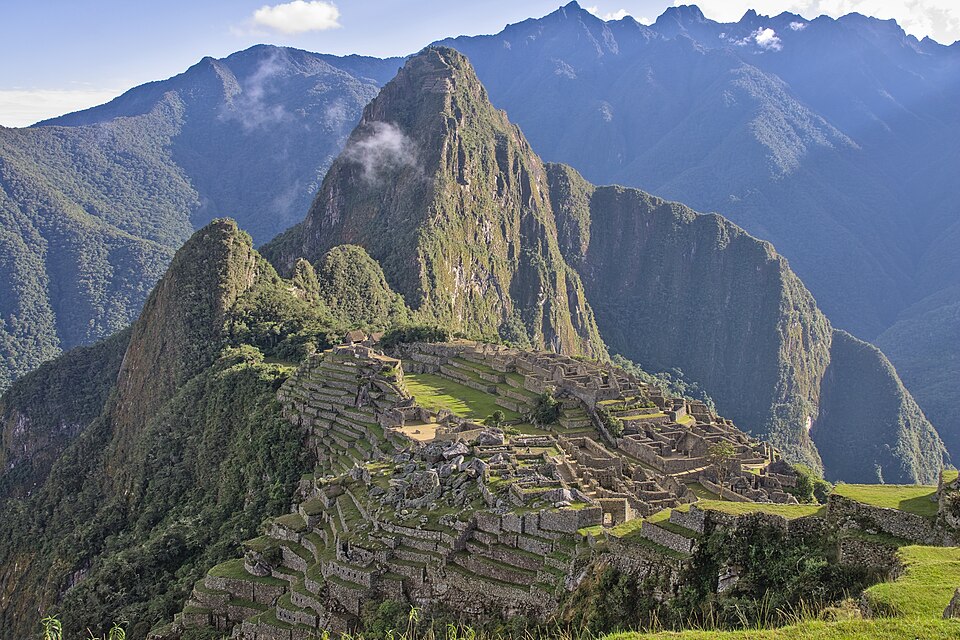
Machu Picchu citadel and the Guardhouse

Machu Picchu citadel and the Guardhouse

Upper terraces

The iconic view you know from photographs: terraces, temples, dwellings and a plaza on a ridge, with the sharp peak of Huayna Picchu behind. The best spot is by the thatched-roof Guardhouse on the upper terraces, reached via Circuits 1 and 2. From there, a marked one-way path descends into the city.

Tip: Buy Circuit 2, the only one that includes both the upper viewpoint and the temples below — Circuit 1 is only the viewpoint, Circuit 3 only the lower section. Buy June-to-August tickets on the official website two to three months ahead. The morning mist usually lifts between eight and nine — don't rush your photo.

Admission:
from PEN 152
Time needed:
2–3 h
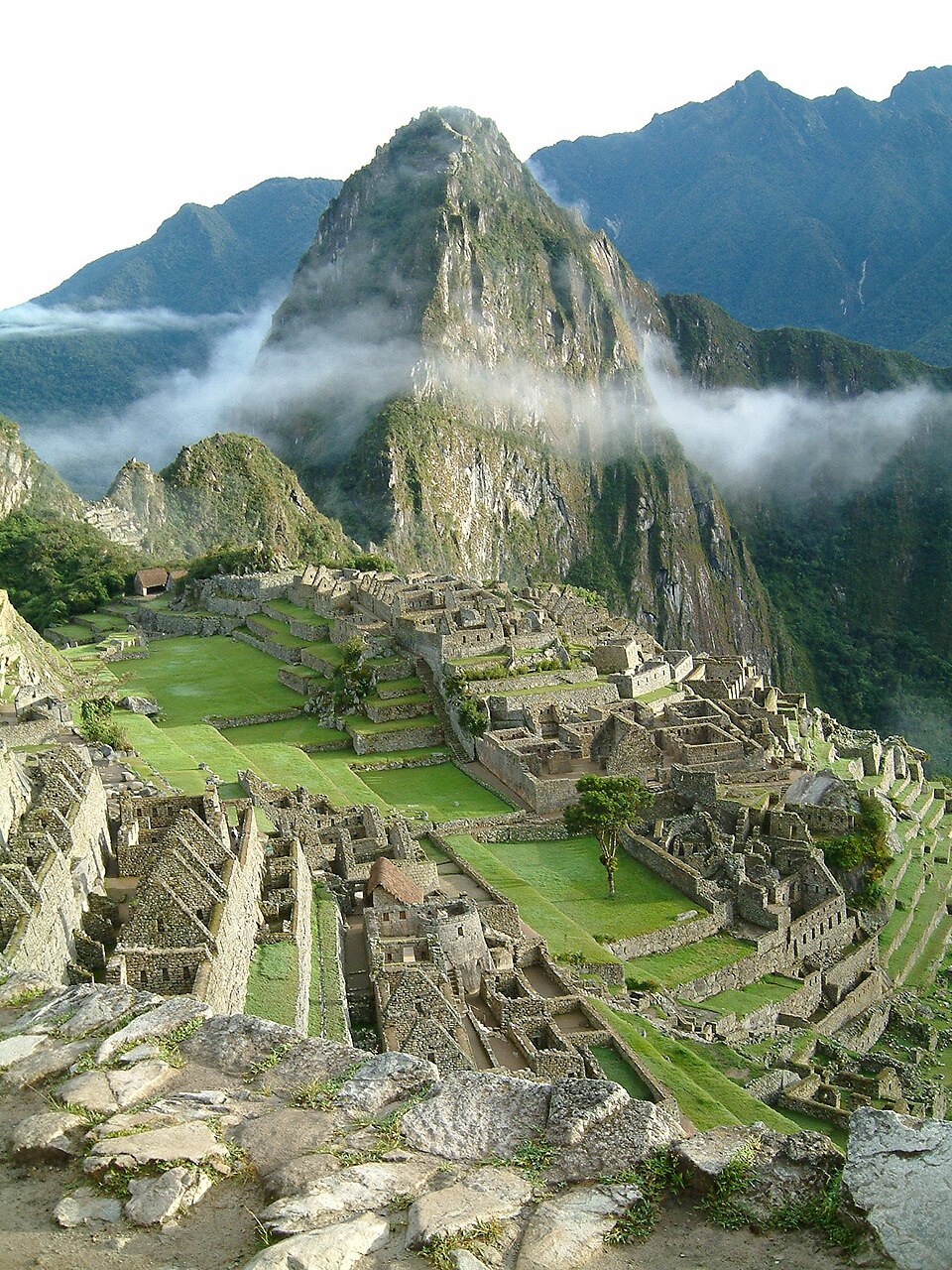
Huayna Picchu

Huayna Picchu

North of the citadel

A steep mountain above the citadel, with the ruins of temples and terraces at its 2,720-metre summit. The trail follows Inca steps, in places cut into the rock and secured with rope, and near the top you squeeze through a narrow cave. From the summit, the view looks straight down onto all of Machu Picchu and the river's bends.

Tip: Only a few hundred people are admitted daily, across two or three time slots, and tickets sell out first — buy them together with citadel entry. The climb takes an hour; the descent is harder because of the steep steps. Anyone prone to vertigo should choose Montaña instead. The trail gets slippery in rain and closes.

Admission:
around PEN 200 including citadel
Time needed:
2–3 h
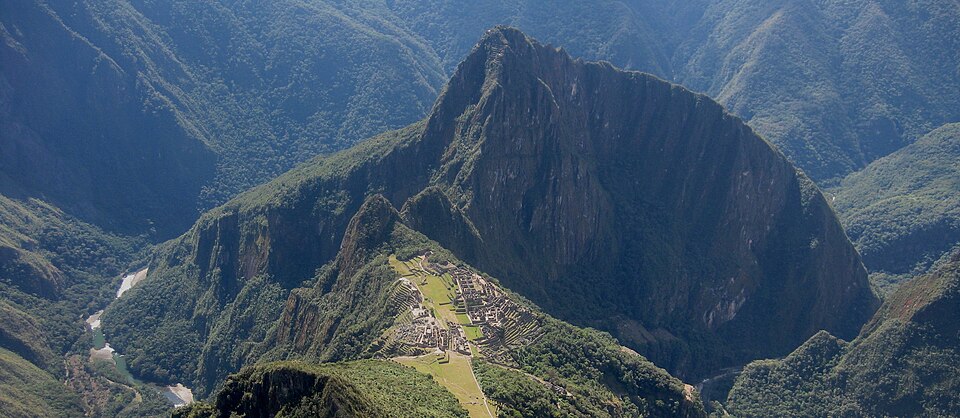
Machu Picchu Mountain (Montaña)

Machu Picchu Mountain (Montaña)

South of the citadel

The higher of the two mountains, at 3,061 metres, on the opposite side of the citadel. The trail climbs six hundred metres of stone steps, wider and less exposed than Huayna Picchu's, with a summit view over the whole valley and down onto Huayna Picchu itself. Far fewer visitors come this way.

Tip: Allow an hour and a half up and an hour down, through cloud forest with orchids. Tickets can often still be found a week ahead when Huayna Picchu is sold out. Bring water — there's nothing along the way or at the top, and toilets exist only at the main site entrance.

Admission:
around PEN 200 including citadel
Time needed:
3–4 h
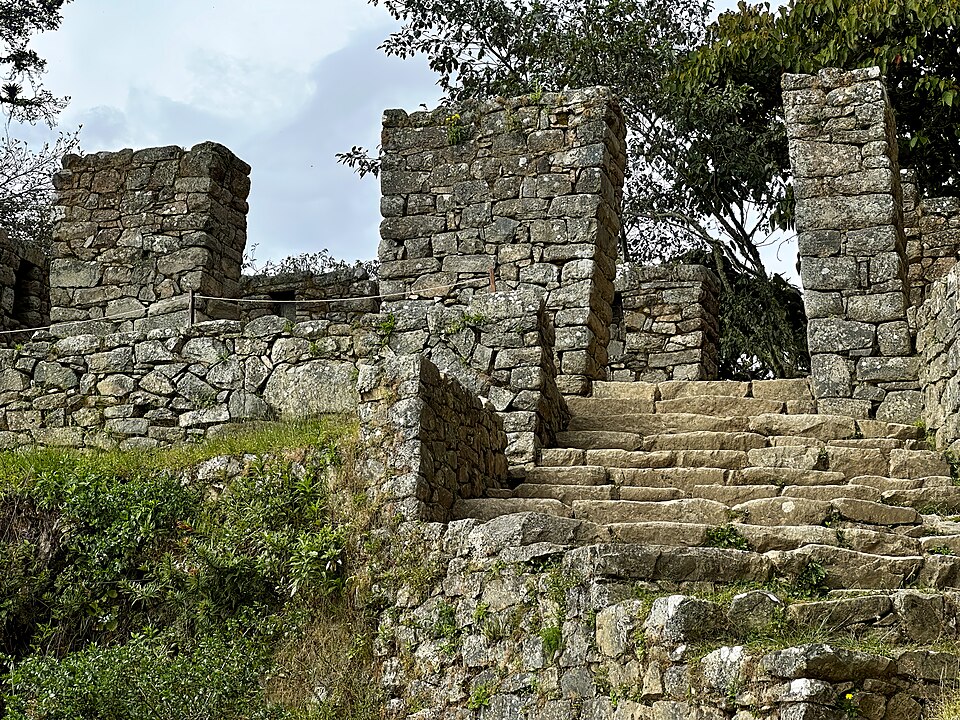
Sun Gate (Inti Punku)

Sun Gate (Inti Punku)

Southeast of the citadel

A stone gateway in the saddle above the citadel, where the Inca Trail arrives at Machu Picchu. It offers the first distant view of the whole city, and at the solstice the first ray of sunlight passes through it. A two-kilometre uphill stone path connects it to the citadel.

Tip: The trail to the gate is part of Circuit 1 and takes an hour uphill; a good option for anyone who couldn't get Huayna Picchu or Montaña tickets. Four-day Inca Trail hikers arrive here at dawn, and for them it's the trip's climax. Along the way sits the small Intipata site, with terraces and a valley view.

Admission:
included with Circuit 1
Time needed:
2 h
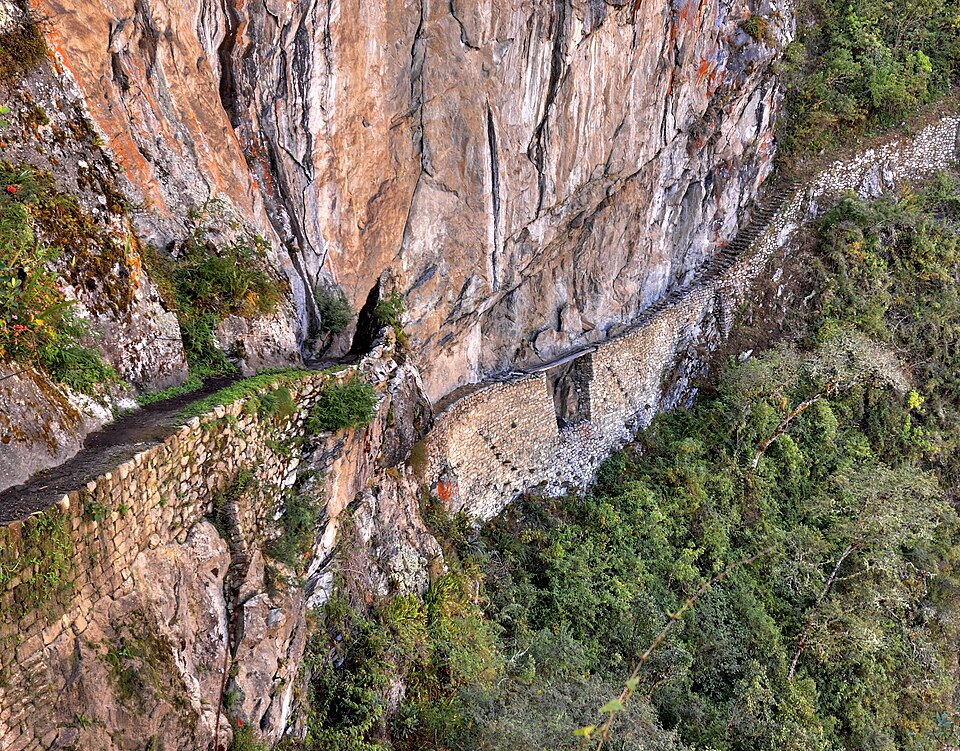
Inca Bridge

Inca Bridge

Western slope

A defensive bridge on the mountain's western face: a stone path along a sheer rock wall, interrupted by a six-metre gap once spanned by two removable logs — remove them and the site became unassailable. The path runs half an hour along the slope, six hundred metres above the valley floor.

Tip: This is the shortest and easiest of the side trails, good for families and anyone without a special mountain ticket. The bridge itself is off-limits — you can only view it from an overlook above. The trail branches off near the Guardhouse; ask at the entrance whether your circuit includes this detour.

Admission:
included with Circuit 1
Time needed:
1 h
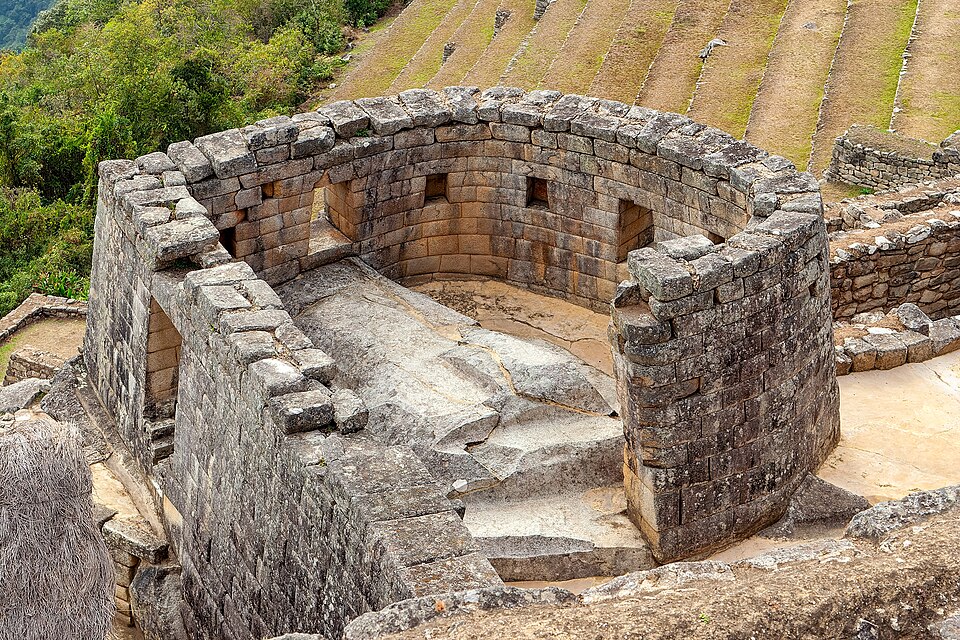
Temple of the Sun

Temple of the Sun

Royal quarter

A curved tower built from Machu Picchu's most precisely worked stone, set atop natural bedrock. Its windows are aligned so that at the June solstice a ray of light falls exactly on a carved stone at its centre. Beneath the temple lies the Royal Tomb cave, with niches cut into the rock.

Tip: Entry inside isn't allowed — you view it from the path above, and the best angle is from the upper part of Circuit 2. Note the difference between the temple's smooth blocks and the rough stones of ordinary houses: the precision of the walls signals how important the building was.

Admission:
included with Circuits 2 and 3
Time needed:
15 min
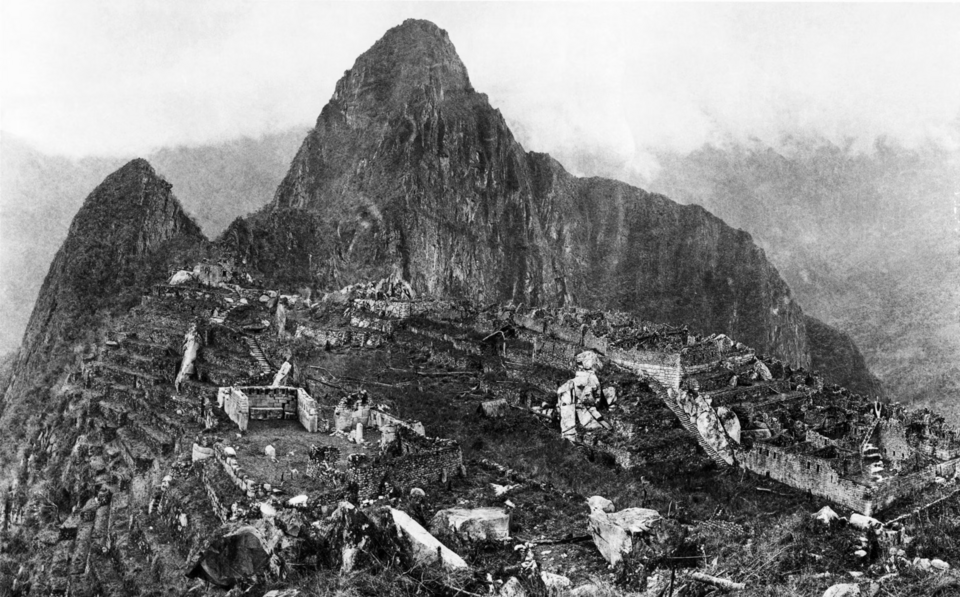
Intihuatana

Intihuatana

Sacred quarter

A carved stone block at the highest point of the city's sacred sector, its corners aligned to the cardinal directions. The Incas likely used it as a sundial and agricultural calendar; its name means 'the place where the sun is tied'. Nearby stand the Main Temple and the Temple of the Three Windows.

Tip: The stone is fenced off and touching it is banned — a crane damaged it in 2000 while filming a beer commercial. The time slot on your ticket determines whether it's accessible for your circuit; Circuit 2 usually includes it. From the Temple of the Three Windows there's a good view of Huayna Picchu.

Admission:
included with Circuit 2
Time needed:
20 min
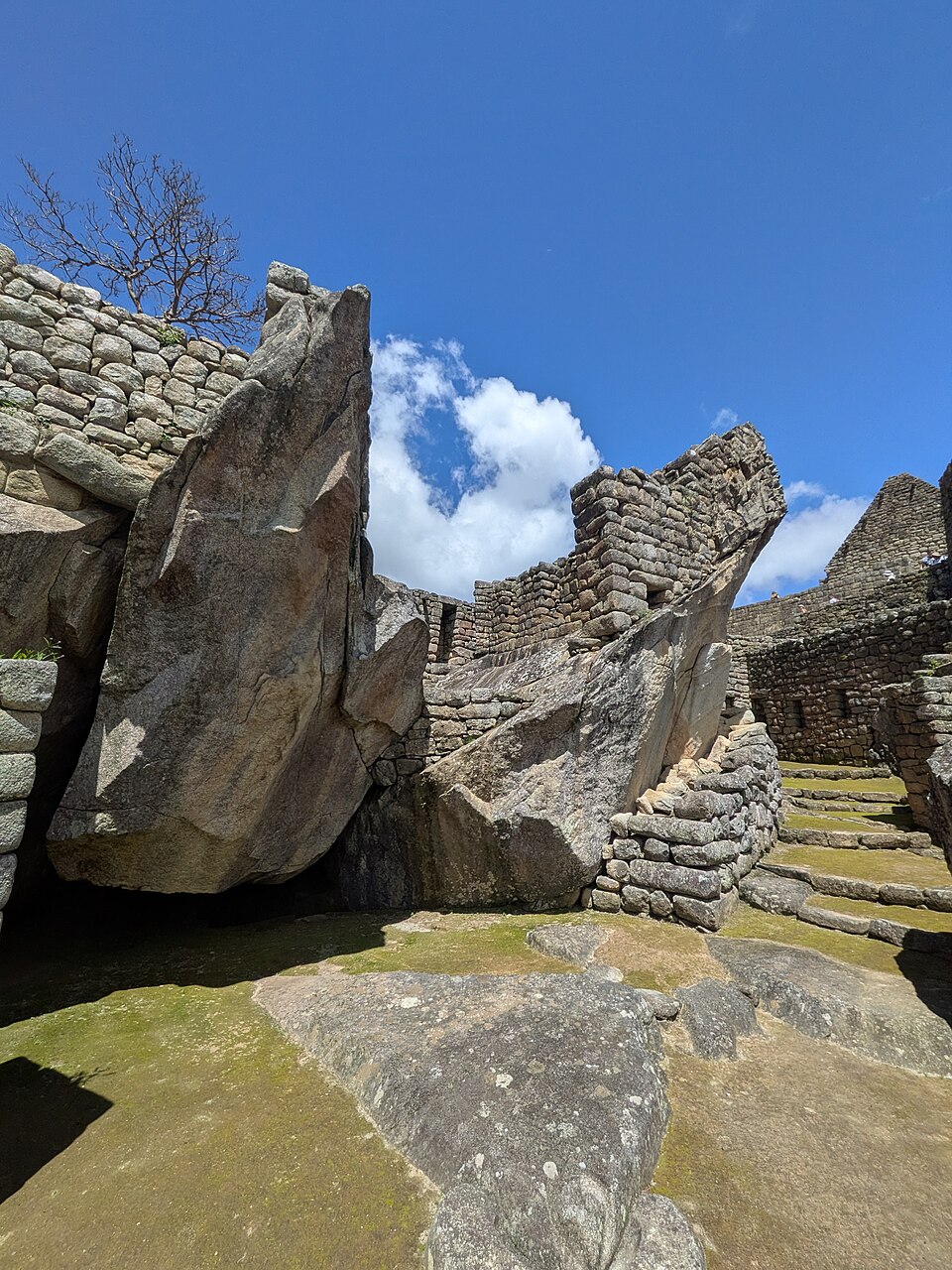
Temple of the Condor

Temple of the Condor

Lower city

A natural rock formation carved into the shape of a condor with outstretched wings, with a stone head and beak set into the ground beneath it. Below the rock are caves and niched chambers that may have served as a prison or a site of sacrifice. The condor was, for the Incas, a messenger between the world of the living and the gods.

Tip: It's one of the last stops on the route before the exit, so visitors often pass it tired and in a hurry — slow down here. Workshops and work terraces with stone tools sit nearby. The temple is included on Circuits 2 and 3.

Admission:
included with Circuits 2 and 3
Time needed:
15 min
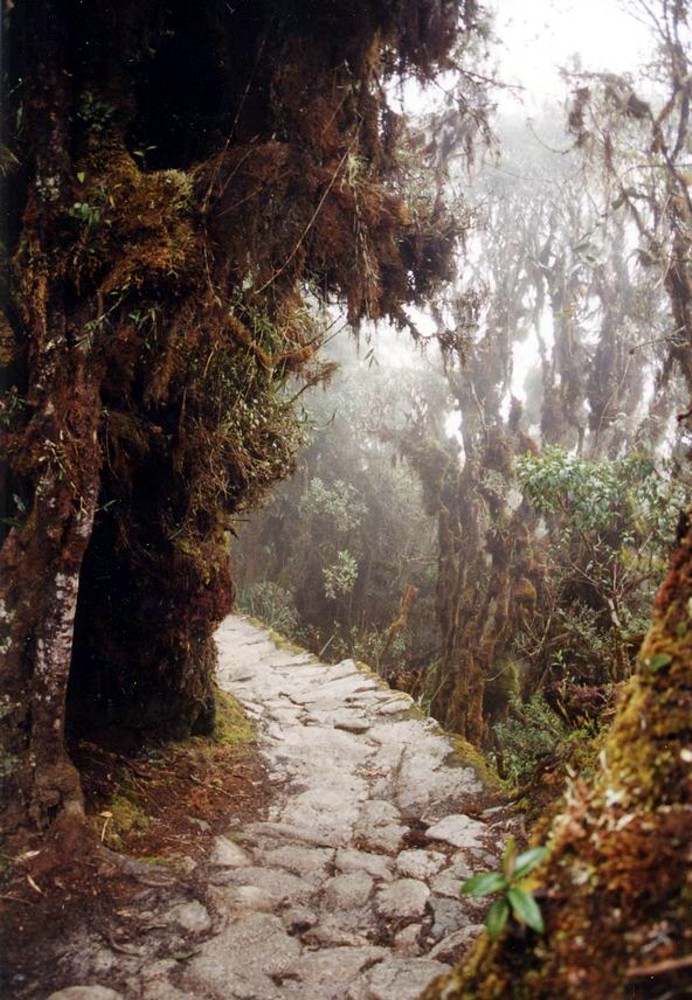
Inca Trail

Inca Trail

From the Sacred Valley

South America's most famous trek: forty-three kilometres over four days along the original Inca route, crossing mountain passes over 4,200 metres, past the ruins of Runkurakay, Sayacmarca and Wiñay Wayna. It ends at dawn at the Sun Gate, looking down on Machu Picchu. Only permitted with a licensed agency.

Tip: Permits are capped at five hundred people a day, including porters, and May-to-September dates sell out six months ahead; the trail is closed in February. Anyone without a permit can do the one-day Short Inca Trail from kilometre 104 via Wiñay Wayna, twelve kilometres, or the five-day Salkantay trek, which needs no permit.

Admission:
$600–800 with an agency
Time needed:
4 days

Photos: Machu Picchu citadel and the Guardhouse — Draceane (CC BY-SA 4.0) · Huayna Picchu — Allard Schmidt (The Netherlands) (Public domain) · Machu Picchu Mountain (Montaña) — EnriqueGuia (CC BY-SA 4.0) · Sun Gate (Inti Punku) — Steve FUNG (CC BY-SA 4.0) · Inca Bridge — Martin St-Amant (S23678) (CC BY-SA 3.0) · Temple of the Sun — Hans Brian Brandsberg Berg (CC BY 2.0) · Intihuatana — Hiram Bingham III (Public domain) · Temple of the Condor — Gedankenstuecke (CC BY-SA 4.0) · Inca Trail — Wikimedia Commons (Public domain)

Where to stay

Areas and districts, matched to the kind of trip you are taking

Aguas Calientes (Machupicchu Pueblo)

Best for: the night before your visit

The town below the mountain, squeezed between the railway and the river, full of hotels, restaurants and massage parlours. It's touristy and overpriced, but staying here means catching the first bus up at half past five. In the evening, people head to the hot springs above town.

Ollantaytambo

Best for: acclimatising, catching the train

An Inca town in the Sacred Valley at 2,800 metres, with a hillside fortress and an original Inca street grid still inhabited today. Most trains to Machu Picchu depart from here. An ideal spot for your first night after arrival, thanks to the lower altitude.

Sacred Valley (Urubamba)

Best for: peace and quiet, luxury, families

The river valley between Pisac and Ollantaytambo, with hotels set in gardens, farms and restaurants. It sits six hundred metres lower than Cusco, so sleep comes easier here. It's half an hour to the Ollantaytambo train.

Cusco

Best for: history, a multi-day stay

The former Inca capital, at 3,400 metres, with colonial churches built on Inca foundations, the San Pedro market and the region's best restaurants. Trains depart from Cusco's Poroy station, with the journey to Machu Picchu taking over three hours.

Getting around

From the airport

Flights from Prague to Lima connect through one stop, usually Madrid or Amsterdam, and take seventeen to twenty hours. From Lima to Cusco (CUZ) is an hour and a quarter's flight. From Cusco, Machu Picchu is reached by train: either an hour-and-a-half drive to Ollantaytambo followed by an hour-and-three-quarters train ride, or a direct three-and-a-half-hour train from Poroy station just outside Cusco. Trains are run by PeruRail and Inca Rail, in classes ranging from the glass-roofed tourist carriage to the luxury Hiram Bingham. The cheapest route is a minibus from Cusco to Hydroelectrica (six hours), followed by an eleven-kilometre walk along the tracks to Aguas Calientes. Consettur buses run up the mountain from Aguas Calientes every few minutes.

Cusco Alejandro Velasco Astete (CUZ) · 110 km

  • Taxi to Ollantaytambo + train· 3 h 30 min· $90
  • Train from Cusco (Poroy)· 3 h 30 min· $80
  • Minibus to Hydroelectrica + walk along the tracks· 8–9 h· $30

Around town

Eight kilometres of switchbacks connect Aguas Calientes to Machu Picchu, served only by Consettur buses, taking half an hour. Tickets are bought at the office by the bridge or online, and are checked against your passport. The queue for the first buses at half past five starts forming before five. On foot, a steep shortcut climbs from the Puente Ruinas bridge, an hour and a half uphill. Aguas Calientes itself is small and entirely walkable in ten minutes. In the Sacred Valley, taxis and colectivos connect the towns.

Consettur busFrom Aguas Calientes to the gate, every few minutes from half past five. · $24 one way
On foot up the stepsFrom the Puente Ruinas bridge, 1 h 30 min uphill, free.
PeruRail / Inca Rail trainFrom Ollantaytambo or Cusco, booking required. · $70 one way
Colectivo in the Sacred ValleyShared minibuses between Cusco, Urubamba and Ollantaytambo. · PEN 10

Useful apps: Uber, Cabify, InDrive, Google Maps, Rappi

When to go

The dry season, May to September, is best: clear skies, cloud-free views and mud-free trails, but also the most crowds and sold-out tickets and trains. June to August is peak season, coinciding with Peruvian holidays and the Inti Raymi festival in Cusco on 24 June. April and October are a good compromise, with fewer crowds and only occasional rain. The rainy season, November to March, brings daily afternoon showers and cloud cover, but green hillsides and fewer tourists. The Inca Trail is closed in February, and landslides occasionally disrupt the railway. Morning mist settles in the valley year-round and typically lifts around nine.

Best time

May–September, plus April and October

What to avoid

January–February

MonthJanFebMarAprMayJunJulAugSepOctNovDec
Day21°21°21°22°22°22°22°23°23°23°23°22°
Night11°11°11°10°8°6°6°7°9°10°11°11°
Rainy days2221201474459131519

Food & drink

Aguas Calientes eats mostly touristy and pricey — restaurants along the tracks serve wood-oven pizza, Peruvian classics and pisco sour happy hours. Cheaper is the market by the station with a set lunch menú for fifteen to twenty soles. At Machu Picchu itself, only the Sanctuary Lodge hotel by the entrance has a restaurant, an expensive buffet — eating inside the site itself is not allowed. Better food is found in Cusco and the Sacred Valley, cooked with Andean ingredients — hundreds of potato varieties, quinoa, corn and trout. The Andean specialty is roasted guinea pig, cuy.

What to try

Cuy

Roasted or fried guinea pig, an Andean festive dish served whole, head included. Tastes like dark chicken meat with crispy skin; best in Cusco and the Sacred Valley.

Urubamba trout

Trucha from mountain rivers and lakes, fried or grilled with potato and rice. The most common and cheapest main course in Aguas Calientes.

Alpaca

Lean meat similar to beef, served as a steak with an Andean-herb sauce or with quinoa. Less fatty than beef, and a staple of tourist-oriented restaurants in Cusco.

Quinoa soup

A hearty soup with quinoa, potato and vegetables, eaten daily by Andean families. Warming, and good fuel before a hike.

Lomo saltado

Strips of beef quickly stir-fried in a wok with soy sauce, onion and tomato, served with both fries and rice on the same plate. A showcase of Peru's Chinese-Peruvian chifa cuisine, as native to Peru as its indigenous fare.

Ceviche

Raw white fish marinated for a few minutes in lime juice with onion and ají limo chili, served with sweet potato and toasted corn. The leftover marinade, called leche de tigre, is drunk from a glass as a hangover cure. Eaten at lunch, never in the evening.

Pisco sour

Grape brandy pisco shaken with lime, sugar and egg white, topped with a drop of bitters. The national cocktail, whose origin Peru and Chile both claim. Stronger than it tastes — two is plenty.

Coca tea

Mate de coca, a brew of coca leaves that helps with altitude sickness, offered free at every hotel. Don't take the leaves home — they're illegal in Europe.

What it costs

Citadel entry ticket (Circuit 2)

from PEN 152

Ticket with Huayna Picchu or Montaña

around PEN 200

Bus up and down

$24 each way

Train from Ollantaytambo, one way

$70–150

Set lunch menú at the Aguas Calientes market

PEN 15–25

Dinner at a restaurant in Aguas Calientes

PEN 60–120

Hot springs in Aguas Calientes

PEN 20

Night in a 3-star hotel, double room, Aguas Calientes

$100–200

Indicative prices that change over time — treat them as a guide, not a price list.

Practical information

SocketsAtwo flat pins (US/JP)Btwo flat pins plus ground (US)CEuroplug, two round pins
Voltage220V / 60Hz
Tap waterDo not drink tap water — Don't drink tap water anywhere in Peru, even in Lima, where it's formally treated — the pipes are old and it upsets a visitor's stomach. Bottled water costs around two soles per litre and a half at a supermarket; a large jug for the room works out cheapest. Ice at better restaurants is made from filtered water; skip it at street stalls. Raw vegetables and ceviche at an established restaurant are fine; market fruit should be peeled or rinsed with bottled water.
TippingAt better restaurants, leave ten percent unless 'servicio' is already on the bill; at simple eateries with a set lunch menú, nothing is expected, or just round up. Tour guides get ten to twenty soles per person per day, baggage porters two to three soles. Taxi fares are agreed beforehand and no tip is expected. Cash in soles comes from BCP and Interbank ATMs inside branches or shopping centres; hotels and agencies accept dollars, but markets take only soles.
Driving on theright
SafetyMachu Picchu and Aguas Calientes are safe, and crime is barely a concern here. The real risks are different. Altitude: the citadel sits at 2,430 metres, lower than Cusco, but anyone flying in directly from the lowlands often gets a headache and shortness of breath on their first day in Cusco — that's why it's best to go first to the lower Sacred Valley. During the rainy season, December to March, landslides hit the railway and roads and trains get cancelled; the Inca Trail is closed in February. Huayna Picchu and Montaña have steep steps without railings above sheer drops — avoid them in the rain. Mosquitoes and sandflies are present on the surrounding trails, so repellent is essential.
Opening hoursThe citadel is open from six in the morning to half past five in the afternoon, and entry is only within the time window printed on your ticket; you can't stay inside longer than your circuit allows, usually three to four hours. The first buses from Aguas Calientes leave at half past five, and the queue for them starts forming before five. Restaurants in Aguas Calientes stay open until ten at night, shops and the market until eight.
Customs & etiquettePeruvians are polite and somewhat formal: a 'buenos días' greeting on entering a shop, and being addressed as 'señor' or 'señora', are expected. Women greet each other with a single cheek kiss. Punctuality is loose — arriving fifteen minutes late to a meeting is normal. Mild haggling is fine at markets, not in shops with price tags. Photographing people in traditional dress without asking is rude, and they often expect a sol for a photo. Pride in Peruvian cuisine runs deep, and asking whether ceviche is Peruvian or Chilean is not a question to raise here.
A few local wordsGood morning / good afternoon — Buenos días / Buenas tardesThank you — GraciasHow much does it cost? — ¿Cuánto cuesta?The bill, please — La cuenta, por favorNo chili, please — Sin ají, por favorDo you speak English? — ¿Habla inglés?

How to plan your days

1 day

Machu Picchu in one day from Cusco

  1. 1Early-morning train from Ollantaytambo or Cusco.
  2. 2Bus up and entry on Circuit 2 within your midday time slot.
  3. 3Upper viewpoint by the Guardhouse and a tour of the temples.
  4. 4Late lunch in Aguas Calientes.
  5. 5Afternoon train back to Ollantaytambo and Cusco.

2 days

Machu Picchu over two days

  1. 1Day 1: train from Ollantaytambo, afternoon at the Manuel Chávez Ballón museum and the Mandor garden.
  2. 2Evening at the hot springs, overnight in Aguas Calientes.
  3. 3Day 2: first bus at half past five, Circuit 2 in the morning mist.
  4. 4Climb Huayna Picchu or Montaña, depending on your ticket.
  5. 5Afternoon train back to the Sacred Valley.

3 days

Sacred Valley and Machu Picchu in three days

  1. 1Day 1: fly into Cusco and transfer to the Sacred Valley, market in Pisac.
  2. 2Day 2: Moray, the Maras salt terraces, Ollantaytambo fortress and an evening train.
  3. 3Day 3: morning at Machu Picchu with Montaña or the Sun Gate.
  4. 4Late lunch in Aguas Calientes.
  5. 5Train back and overnight in Cusco.

Day trips

Ollantaytambo

45 km · 1 h 45 min by train

The last Inca town on the line before Machu Picchu, still inhabited within its original Inca street grid, with running water channels. Fortress terraces rise on the hillside above the town, where the Incas defeated the Spanish in 1537, and at the top stands an unfinished Sun Temple built from six giant pink blocks. Visit the fortress in the morning before the buses arrive from Cusco.

Moray and the Maras salt terraces

75 km · 2 h 30 min by car

Moray is a set of concentric circular terraces sunk into the ground like an amphitheatre, apparently used by the Incas as an agricultural laboratory — the temperature difference between the top and bottom rings can reach fifteen degrees. A few kilometres away, over three thousand salt pools cling to a hillside at Maras, where salt has been harvested by evaporating a saline spring since Inca times. Both combine into a half-day trip from the Sacred Valley.

Cusco

80 km · 3 h 30 min by train

The former capital of the Inca empire, where the Spanish built a cathedral and churches directly on Inca foundations. See the twelve-angled stone wall on Hatunrumiyoc street, the Qorikancha temple, once covered in gold, the San Pedro market, and the Sacsayhuamán fortress above town with its giant blocks. The city sits at 3,400 metres, so don't push yourself on your first day.

Frequently asked questions

How do I buy tickets for Machu Picchu?+

On the official website of Peru's Ministry of Culture, or through a licensed agency. You choose a date, a circuit (1, 2 or 3, and their variants) and an entry time window. For June to August, buy two to three months ahead, and earlier still for Huayna Picchu. Tickets are name-specific and checked against your passport at the gate.

Which circuit should I choose?+

For a first visit, Circuit 2, which covers the upper terraces with the classic view as well as the temples down below. Circuit 1 is only the upper viewpoint plus the Sun Gate or Inca Bridge; Circuit 3 is only the lower section, without the classic view. Huayna Picchu and Montaña are sold as add-ons bundled with a specific circuit.

Is one day enough for Machu Picchu?+

For the citadel itself, yes, but a day trip from Cusco and back is fourteen hours of travel. It's better to spend the night in Aguas Calientes and go up on the first bus in the morning, when there are fewer people and mist still hangs over the valley. Three days including the Sacred Valley is ideal.

Do I have to hike the Inca Trail?+

No, most visitors go by train. The Inca Trail is a four-day trek for fit hikers, requiring a permit that sells out six months ahead and only through agencies. Without a permit, alternatives are the five-day Salkantay trek, the one-day Short Inca Trail, or walking the tracks from Hydroelectrica.

Will I get altitude sickness?+

Rarely at Machu Picchu itself, at 2,430 metres, but most people feel it on their first day in Cusco, at 3,400 metres. That's why it's recommended to spend the first night in the lower Sacred Valley and save Cusco for the end of the trip. Coca tea, plenty of water, no alcohol the first evening and a slow pace all help.

Can I bring food and a backpack into Machu Picchu?+

A backpack up to twenty litres, yes; large bags must be left at a storage counter by the entrance. Eating inside is not allowed, and drones, trekking poles with metal tips and speakers are banned. There are no toilets inside, only at the gate. Plastic water bottles are sometimes turned away — bring a refillable one.

When are the fewest crowds at Machu Picchu?+

In the six o'clock morning time slot, late afternoon, and in April, October and November. The busiest window is between ten and two, when the trains from Cusco arrive. During the rainy season there are fewer people, but clouds often block the view.

Is the luxury train worth it?+

The standard Expedition or Voyager train, with its glass-domed roof, is entirely adequate — it takes the same time and has the same views. Vistadome adds slightly bigger windows and snacks; the Hiram Bingham costs over five hundred dollars one way and comes with a full dining experience. The best scenery is on the right side of the train heading toward Machu Picchu.

Requisitos de visa

Verifique los requisitos de visa actuales para ingresar a este país.

Verificar requisitos de visa

Números de emergencia

Idioma

Spanish

Moneda

PEN

Huso horario

GMT-5

Prefijo

+51

Población

34M

Área

1,285,216 km²

Voltaje

220V / 60Hz

Lado de conducción

Derecha

Mejores hoteles en Machu Picchu

Precios en vivo de 500+ propiedades

Cargando hoteles...

More destinations in Peru

Planea un viaje a Machu Picchu?

Compare cientos de hoteles, encuentre el mejor precio y reserve con cancelación gratuita.