Hotels in Prague

Gothic architecture, Baroque splendour and beer, all in one city

Prague

IdiomaEnglish
MonedaCZK
Huso horarioGMT+1
Temperatura0-25 °C
Prefijo+420
Población10.8M
Área78,867 km²
EnchufesTipo C / Tipo E
Agua del grifoPotable

Descubra Prague

Prague is one of Europe's best-preserved historic centres — the Second World War largely passed it by, so its Gothic, Renaissance and Baroque layers stand side by side just as they were built. The main axis from the Powder Tower through Old Town Square and across Charles Bridge to Hradčany can be walked in two hours, but it is also the most crowded route in the city. The real Prague begins one street over: in Karlín, Vinohrady or Holešovice, where the cafés and pubs cater to locals and prices are a third lower. The city is compact, public transport is among the best in Europe, and there are no great distances to cover. Plan on three days for a first visit, four with a trip out of town.

What to see

The places worth your time in Prague, and what to expect at each

Prague Castle

Prague Castle

Hradčany

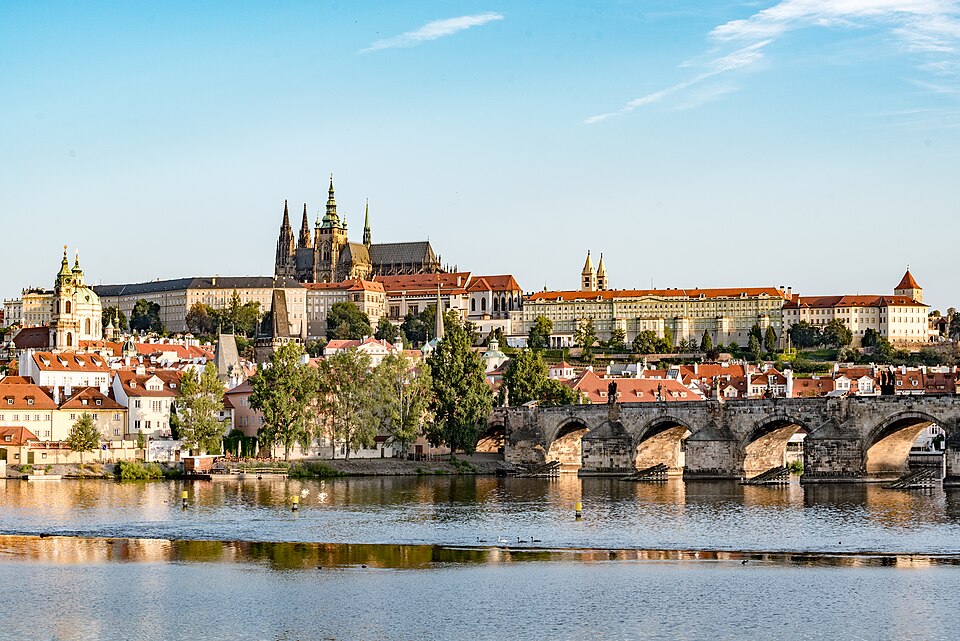
The largest continuous castle complex in the world has been the seat of Czech rulers, and today the president, since the ninth century. Inside stands St Vitus Cathedral with a stained-glass window by Alfons Mucha, the Romanesque Basilica of St George, and Golden Lane with its tiny houses built into the fortifications.

Tip: Walking through the courtyards is free; you only pay to enter the buildings. Arrive before nine, ahead of the first coach groups.

Admission:
circuit from CZK 250, courtyards free
Time needed:
3 h
St Vitus Cathedral

St Vitus Cathedral

Prague Castle

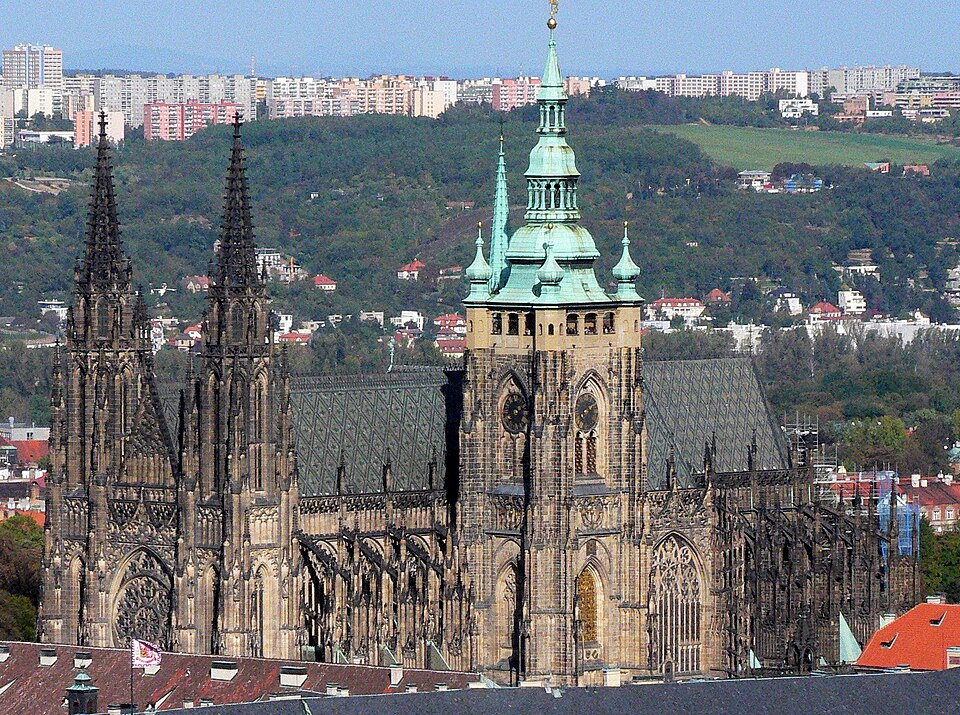
This Gothic cathedral took almost six hundred years to build and wasn't completed until 1929. Inside is the Chapel of St Wenceslas with semi-precious stones set into the walls, the crown jewels kept behind seven locks, and Mucha's Art Nouveau window in the north nave.

Tip: A ticket for the castle circuit is needed to reach the rear part of the cathedral; the front section can be viewed for free, though with a crowd.

Admission:
included in the castle circuit ticket
Time needed:
45 min
Charles Bridge

Charles Bridge

Old Town / Malá Strana

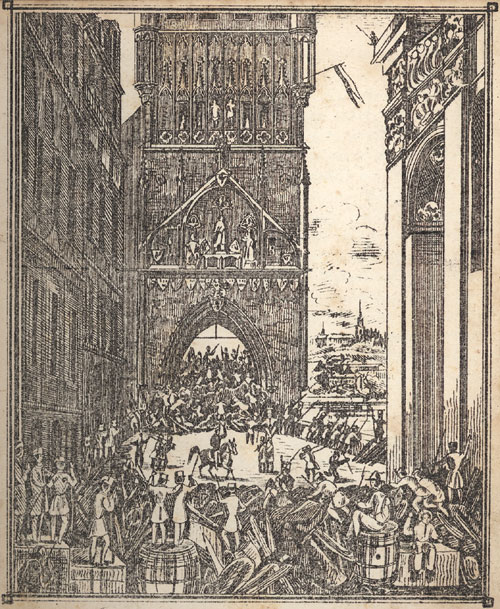
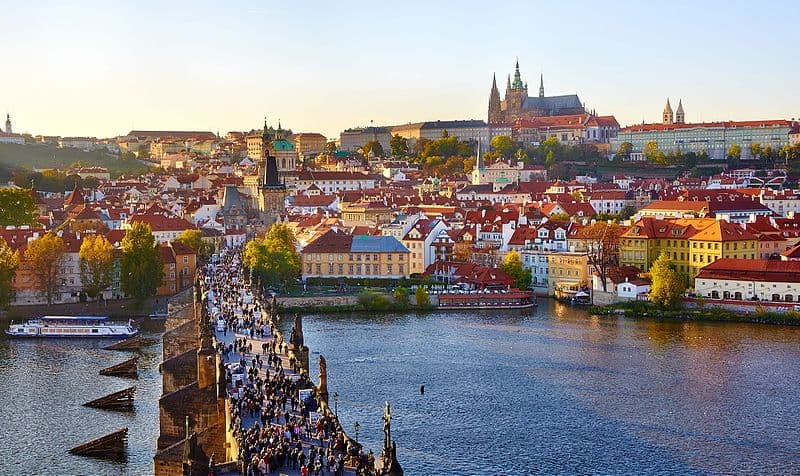
This stone bridge from 1357 links the Old Town with Malá Strana and is lined with thirty Baroque statues. The originals are kept in the Lapidarium; the copies on the bridge stand in their place. It's the busiest spot in Prague by day, but at dawn you can have the bridge almost to yourself.

Tip: Climb the Old Town Bridge Tower — from the gallery you get the best view of both the bridge and Hradčany at once.

Admission:
bridge free, tower from CZK 190
Time needed:
30–45 min
Old Town Square and Astronomical Clock

Old Town Square and Astronomical Clock

Old Town

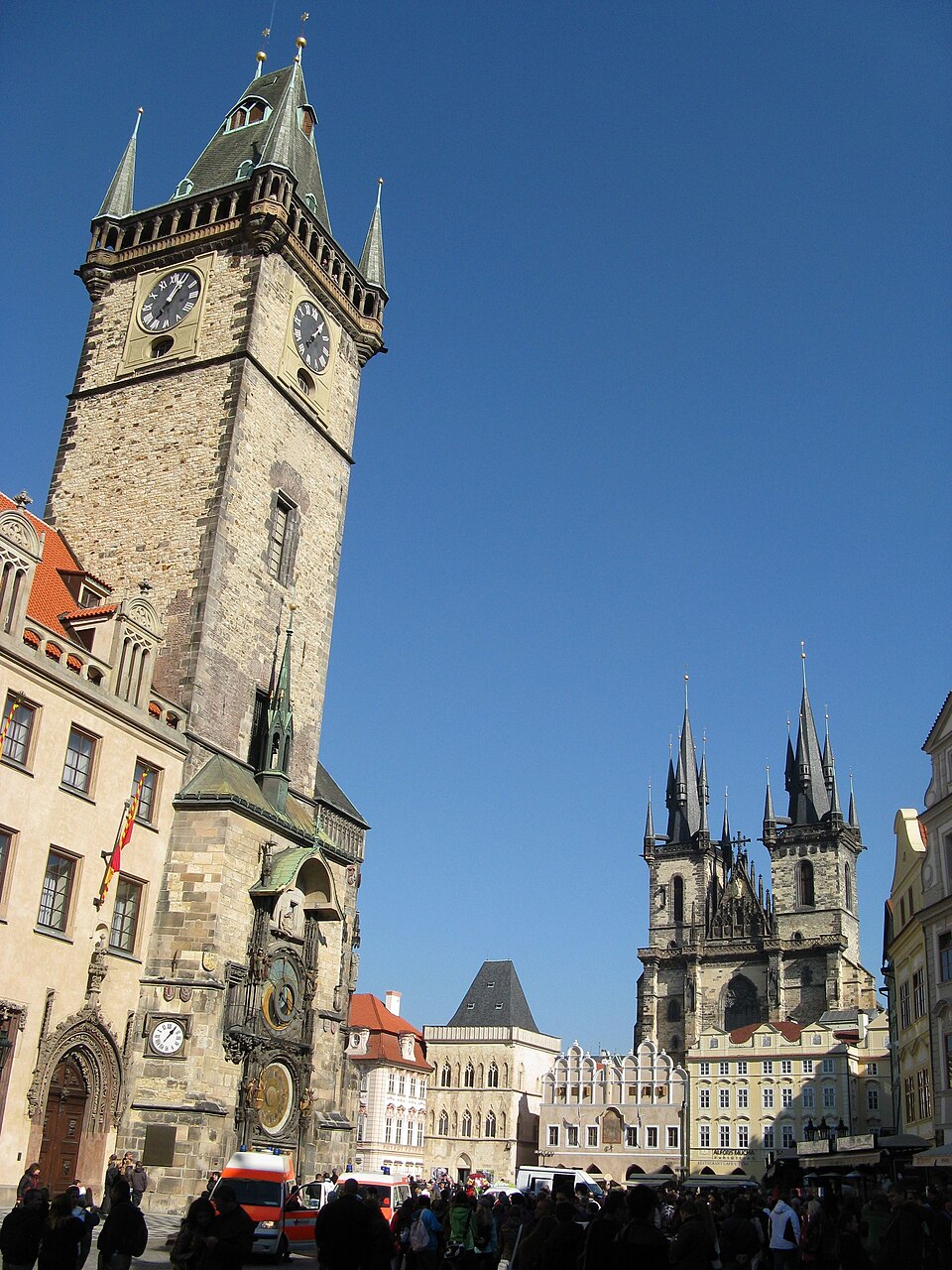
A square ringed by houses spanning Gothic to Art Nouveau, with the Jan Hus memorial at its centre. The Old Town Hall carries the Astronomical Clock from 1410, the oldest still-working astronomical clock in the world; the apostles appear in its windows on the hour.

Tip: The parade of the apostles itself lasts under a minute and can be a letdown — the lift up the town hall tower for a view over the square from above is far more rewarding.

Admission:
square free, tower from CZK 300
Time needed:
1 h
Jewish Quarter of Josefov

Jewish Quarter of Josefov

Josefov

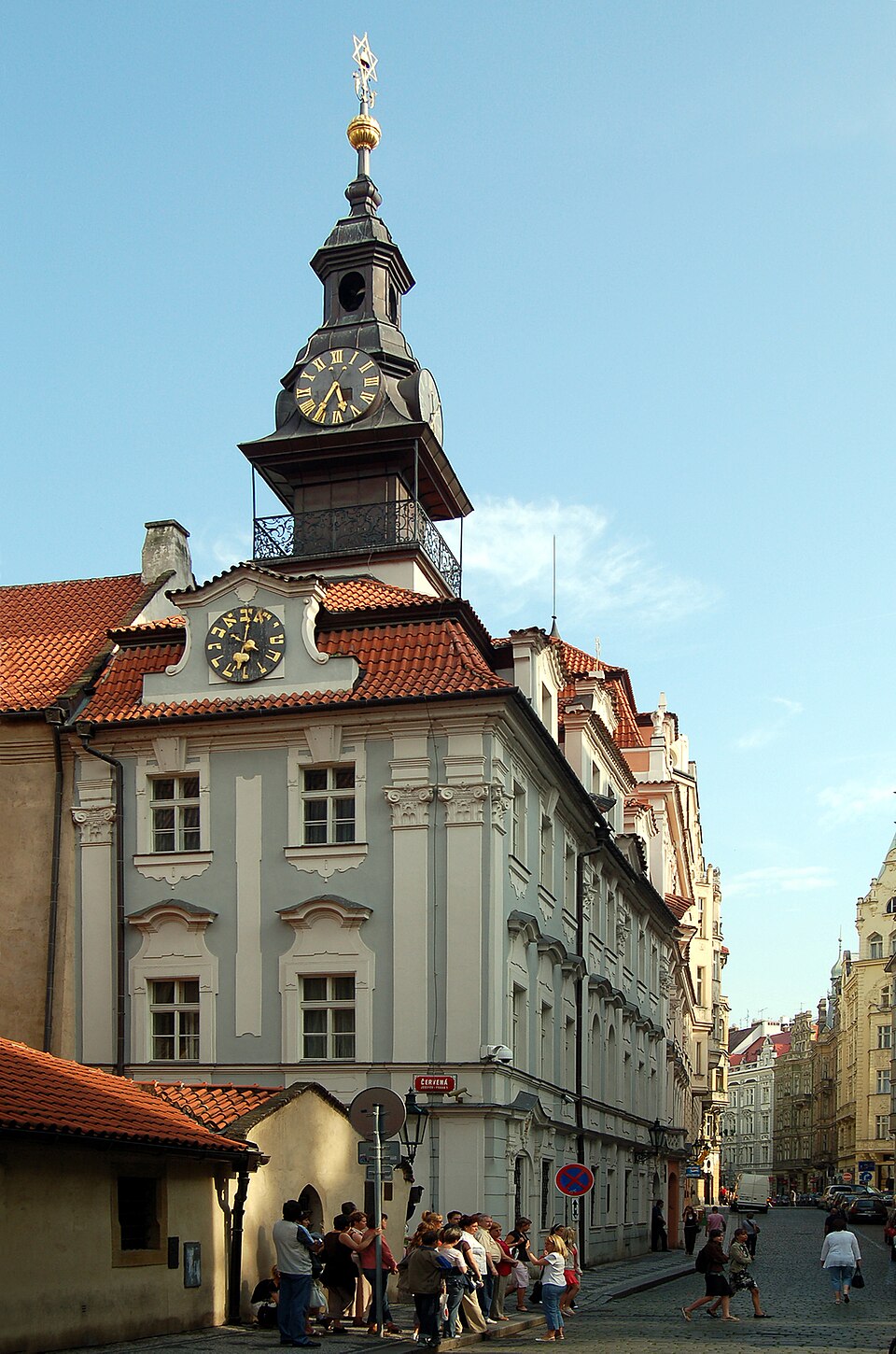
Six monuments of the former ghetto, including the Old Jewish Cemetery with twelve thousand gravestones stacked in twelve layers, and the Spanish Synagogue with its Moorish decoration. The Pinkas Synagogue has the names of eighty thousand Holocaust victims inscribed on its walls.

Tip: A single combined ticket covers all the sites and is valid for ten days, so you don't need to fit everything into one day.

Admission:
circuit from CZK 500
Time needed:
2–3 h
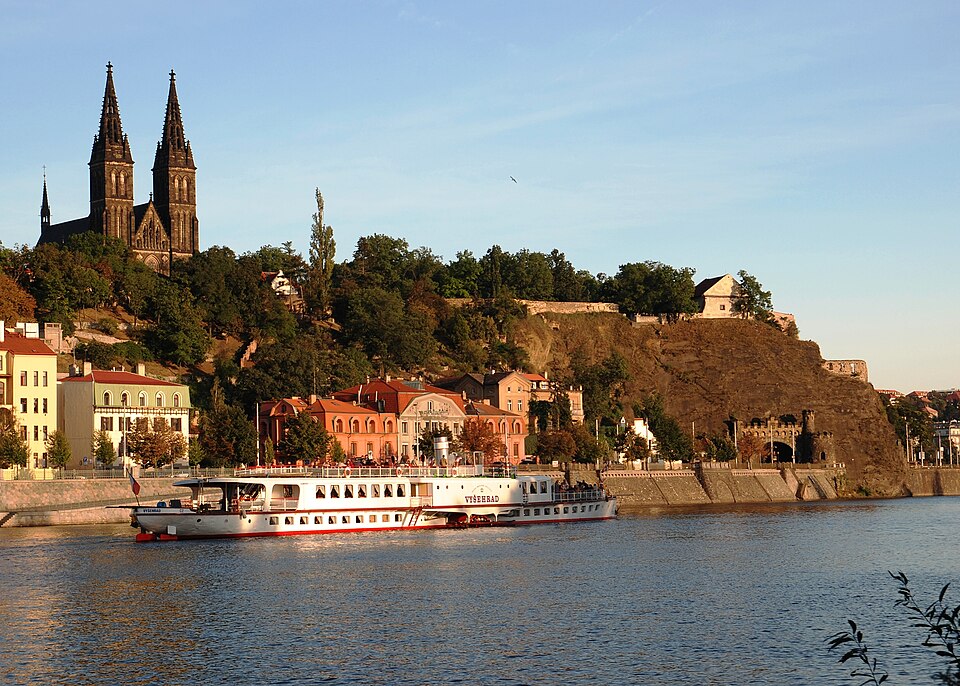
Vyšehrad

Vyšehrad

Vyšehrad

A fortress above the Vltava with the Basilica of St Peter and St Paul and the Slavín cemetery, the resting place of Dvořák, Smetana, Čapek and Mucha. Unlike Hradčany, tour groups rarely make it here, and the ramparts offer the loveliest view of the river.

Tip: The grounds are open to the public around the clock and free to enter — an ideal spot for an early-evening walk to watch the sun set over the Vltava.

Admission:
grounds free, casemates from CZK 90
Time needed:
1.5–2 h
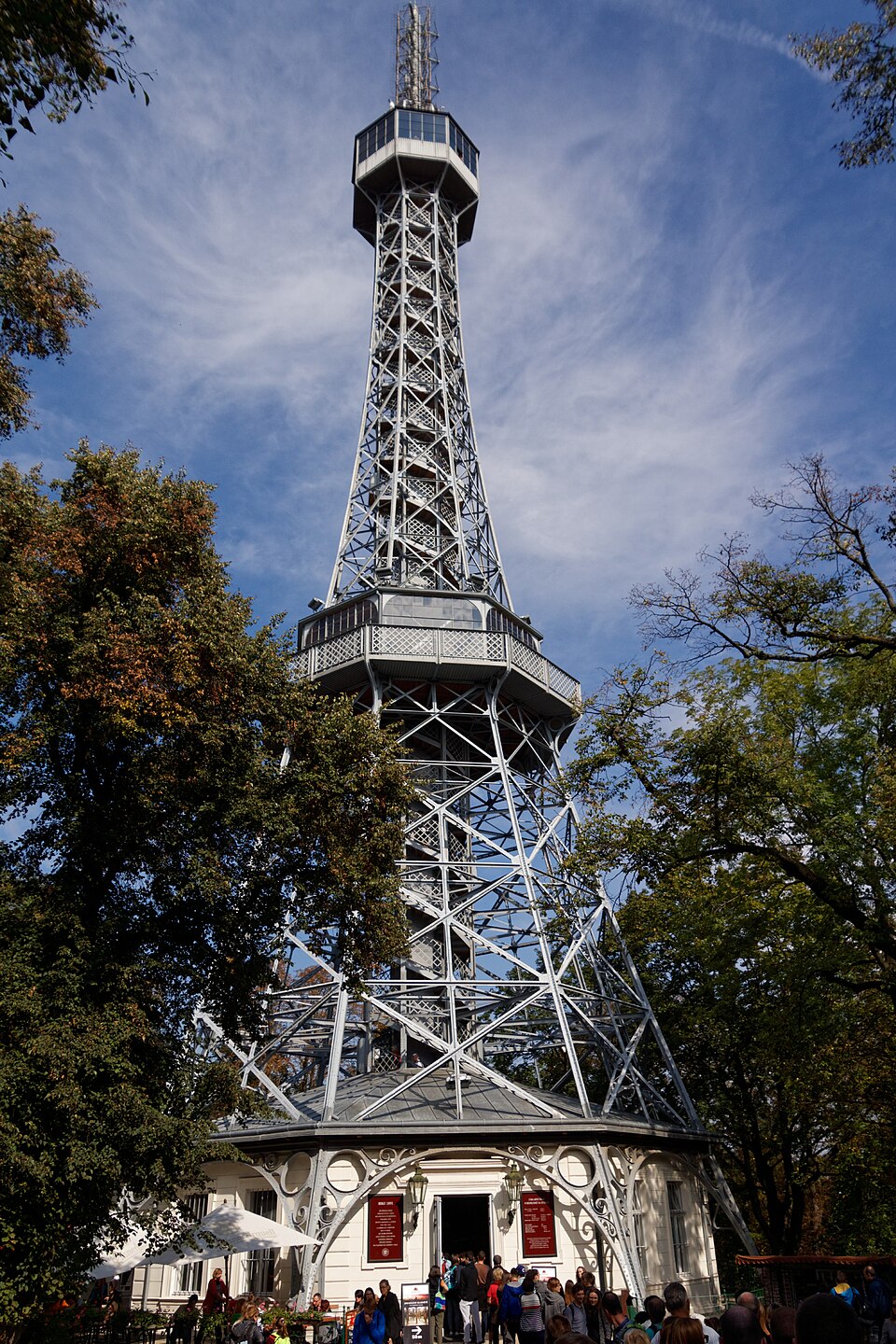
Petřín Hill and lookout tower

Petřín Hill and lookout tower

Malá Strana

A wooded hill above Malá Strana with a lookout tower from 1891, a scaled-down cousin of the Eiffel Tower. From the gallery, 299 metres above sea level, you can see all the way to the Giant Mountains on a clear day. A funicular runs up on an ordinary public transport ticket.

Tip: The lookout tower has 299 steps as well as a lift. Head back into town on foot through the orchards and Strahov Monastery — it's a prettier route than the funicular.

Admission:
tower from CZK 220, funicular on a standard transport ticket
Time needed:
2 h
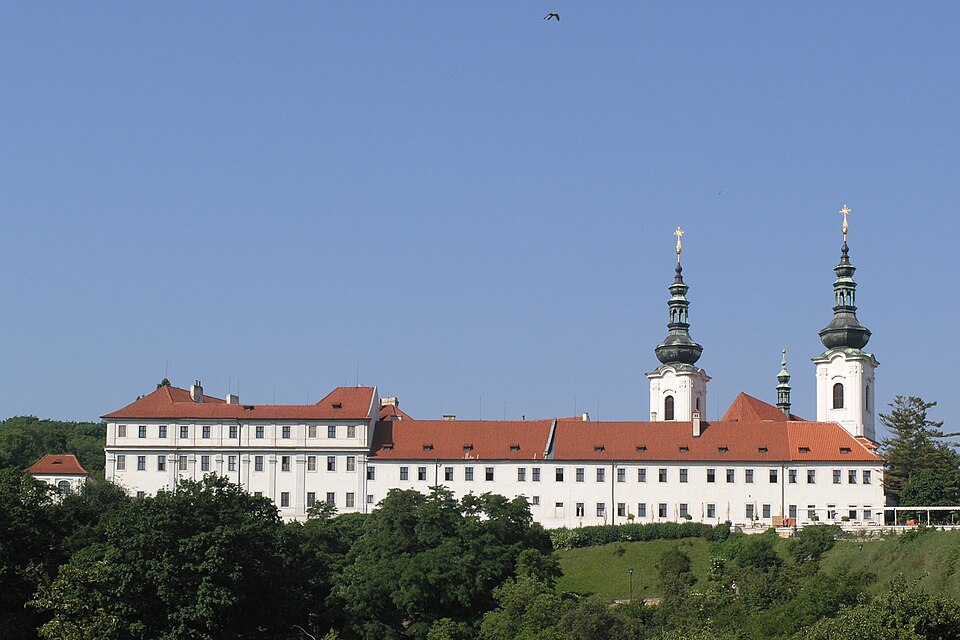
Strahov Monastery and Library

Strahov Monastery and Library

Strahov

A Premonstratensian monastery founded in 1143, home to the Baroque Theological and Philosophical Halls, among the most photographed libraries in the world. You can't enter the halls themselves, only view them from the doorway, but it's still worth the stop on the way from Petřín.

Tip: The monastery brewery serves its own beer, and the terrace offers a view over the whole city without the Hradčany crowds.

Admission:
from CZK 180
Time needed:
1 h
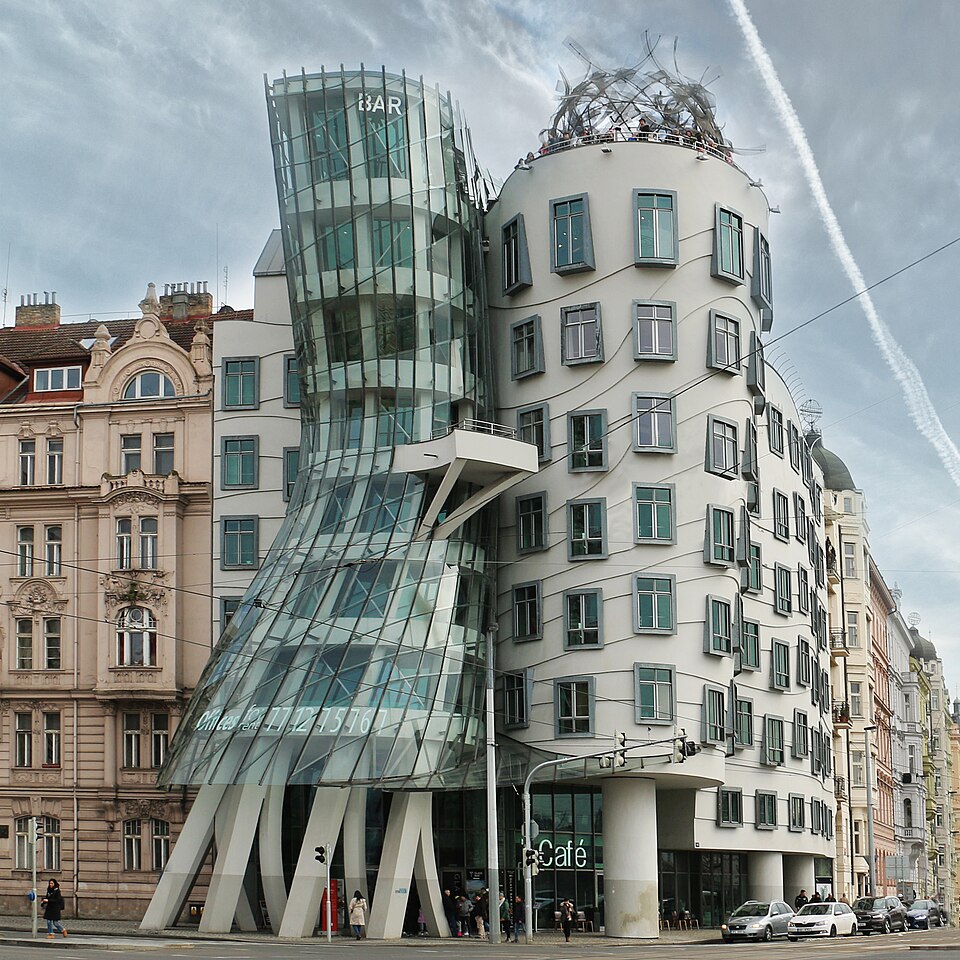
Dancing House

Dancing House

New Town

A deconstructivist building by Frank Gehry and Vlado Milunić from 1996, standing on the embankment among historic houses and still dividing opinion among Praguers. The top floor has a restaurant and a viewing terrace open even without dining there.

Tip: The best view of the building isn't up close but from the opposite bank near Jirásek Bridge.

Admission:
terrace from CZK 200
Time needed:
30 min

Photos: Prague Castle — Tilman2007 (CC BY-SA 4.0) · St Vitus Cathedral — MathKnight and Zachi Evenor (CC BY 2.5) · Charles Bridge — Wikimedia Commons (Public domain) · Old Town Square and Astronomical Clock — Yair Haklai (CC BY-SA 3.0) · Jewish Quarter of Josefov — Martin Pauer (Power) (CC BY-SA 2.5) · Vyšehrad — Stanislav Jelen (CC BY-SA 3.0) · Petřín Hill and lookout tower — Ivan Korostelev (CC BY-SA 4.0) · Strahov Monastery and Library — Matěj Baťha (CC BY-SA 2.0) · Dancing House — Danny Alexander Lettkemann, Architekt (CC BY-SA 4.0)

Where to stay

Areas and districts, matched to the kind of trip you are taking

Staré Město (Old Town)

Best for: a first visit and sights on your doorstep

The best location if you only have two or three days in Prague and don't want to deal with transport. In exchange you pay the highest prices and put up with evening noise from bars, especially around Dlouhá and Týnská streets. Choose a hotel set back in a courtyard rather than facing the street.

Malá Strana

Best for: a quieter centre and atmosphere

This Baroque quarter below the Castle is just as well located as the Old Town, but noticeably calmer and prettier. The downsides are the hilly terrain and the fact that almost nothing happens after nine in the evening. Ideal for couples and older visitors.

Vinohrady

Best for: value for money and longer stays

A turn-of-the-century apartment-block district with the best choice of cafés and restaurants in Prague, ten minutes from the centre by metro. Accommodation prices here are about a third lower than in the Old Town, and you walk among locals rather than tour groups.

Karlín and Holešovice

Best for: modern Prague and a lower budget

Former industrial districts transformed over the last decade: cafés in old halls, the DOX gallery, food markets and plenty of new hotels. It's a few minutes to the centre by metro, and for the same money you get a noticeably better room than in the historic core.

Getting around

From the airport

Prague has a single international airport, Václav Havel Airport, about 17 km west of the centre. There's no train to the airport; connections run by city bus and the Airport Express bus. The cheapest option is bus 119 to the Nádraží Veleslavín terminus of metro line A, then the metro into the centre on a single ticket. Book an airport taxi through an app or at the official taxi stand, and avoid drivers who approach you offering rides inside the terminal.

Václav Havel Airport Prague (PRG) · 17 km

  • Bus 119 + metro A· 35 min· CZK 40
  • Airport Express to the main railway station· 40 min· CZK 100
  • Bus 100 + metro B· 35 min· CZK 40
  • Taxi or Bolt/Uber· 30 min· CZK 450

Around town

Prague's public transport is among the best in Europe, and a single ticket covers the metro, trams and buses, including transfers. The historic centre is best explored on foot, while the metro's three lines are the fastest way to cover longer distances. Trams are slower but more scenic — line 22 passes the National Theatre and Malá Strana Square on its way up to Prague Castle, effectively replacing a sightseeing loop. Buy tickets from a machine, the PID Lítačka app, or by contactless card directly on board.

Metro A, B, CThree lines, running every 2–4 minutes at peak times, service until midnight. · CZK 40 / 90 minutes
TramsA dense network including night lines. Line 22 is the most scenic route through the city. · CZK 40
24-hour ticketUnlimited rides; worthwhile from your fourth journey of the day. · CZK 120
Bolt and UberCheaper and more predictable than hailing a taxi on the street, both operate widely in Prague. · CZK 120 for a short ride

Useful apps: PID Lítačka, Bolt, Uber, IDOS

When to go

May, June and September are the most pleasant months: warm, with long days and beer gardens in full swing. July and August are the busiest, and the centre gets hot with heat radiating off the paving stones. December, with its Christmas markets, is magical, but hotels are at their most expensive of the year. November and February are the cheapest, though expect grey weather and darkness by four in the afternoon.

Best time

May, June and September

What to avoid

November and February, for the grey weather and short days

MonthJanFebMarAprMayJunJulAugSepOctNovDec
Day2°4°9°15°20°23°25°25°20°14°7°3°
Night-3°-2°1°4°9°12°14°14°10°6°2°-1°
Rainy days9888101111108799

Food & drink

Czech cuisine is hearty and built around meat, sauces and dumplings — the main meal of the day is lunch, not dinner. In a pub you pay at the end, and it's normal to share a table with strangers when the place is full. Beer is poured as a matter of course with meals, and in a decent establishment a half-litre costs less than a soft drink. You can spot the tourist traps in the centre by an eight-language menu and a trdelník display in the window; incidentally, that's not a traditional Czech pastry but a recent import.

What to try

Svíčková na smetaně

Beef in a creamy sauce with cranberries and bread dumplings, the archetypal Sunday lunch.

Roast pork with dumplings and cabbage

Roasted pork with cabbage and dumplings, a classic of every pub.

Goulash

Beef goulash with onion and dumplings, served in pubs even with a glass of beer as a standard lunch.

Chlebíčky

Open-faced canapés with potato salad and ham, sold in delicatessens for a few koruna each.

Fried cheese

A slice of Edam breaded and deep-fried, served with tartare sauce and chips, a cult cheap meal among students.

Beer

The pale twelve-degree lager is the standard; a good pub pours it both with a thick head and with a thin one, on request.

What it costs

Coffee in a café

CZK 60–90

Lunch in a pub

CZK 180–250

Half-litre of beer in a pub

CZK 50–70

Half-litre of beer on Old Town Square

CZK 100–140

90-minute public transport ticket

CZK 40

Taxi, 5 km

CZK 200–250

Night in a 3-star hotel

CZK 2,000–2,800

Night in a 4-star hotel

CZK 3,000–4,500

Indicative prices that change over time — treat them as a guide, not a price list.

Practical information

SocketsCEuroplug, two round pinsEFrench, with earth pin
Voltage230V / 50Hz
Tap waterTap water is drinkable — Tap water is safe to drink throughout Prague and its quality is high. There's no need to buy bottled water.
TippingIn restaurants the bill is rounded up or around ten percent is added. Tips are given when paying, not left on the table — just state the total amount including the tip to the server.
Driving on theright
SafetyPrague is a safe city. The main risks are pickpockets on tram 22 and in the metro, exchange offices with unfavourable rates, and taxi drivers touting for business near tourist sites. Change money at a bank or withdraw it from an ATM, never at booths advertising zero commission.
Opening hoursShops are typically open 9am–7pm, shopping centres until 9pm. Restaurants take last orders around 10pm, and pubs close between 11pm and midnight. Museums are usually closed on Mondays.
Customs & etiquetteIn a pub, people greet each other on arriving and leaving. Everyone at the table clinks glasses together and keeps eye contact during the toast. On public transport, give up your seat for older passengers, and validate your ticket as soon as you board.

How to plan your days

1 day

Prague in one day

  1. 1Morning at Prague Castle and St Vitus Cathedral, before the tour groups arrive.
  2. 2Walk down Nerudova Street to Malá Strana Square and across Charles Bridge.
  3. 3Lunch in the Old Town away from the main drag, then Old Town Square and the Astronomical Clock.
  4. 4Early evening at Wenceslas Square, and dinner in a pub in the New Town.

2 days

Two days including the Jewish Quarter

  1. 1Day one as in the single-day plan.
  2. 2Day two morning: a walk through the Jewish Quarter of Josefov.
  3. 3Lunch in Vinohrady or Karlín, afternoon at Vyšehrad.
  4. 4Early evening at Letná with views of the bridges, and dinner in Holešovice.

3 days

Three days including a day trip

  1. 1The first two days as above.
  2. 2Day three: train to Kutná Hora for the ossuary and the Cathedral of St Barbara.
  3. 3Return in the afternoon, then take the funicular up Petřín Hill in the early evening for the lookout tower.
  4. 4Evening beer at Strahov Monastery or a brewery in Vinohrady.

Day trips

Kutná Hora

70 km · 1 h by train

A medieval silver-mining town on the UNESCO list, with the Gothic Cathedral of St Barbara and the famous Sedlec Ossuary, decorated with the bones of forty thousand people. Both can be seen in half a day.

Karlštejn

30 km · 40 min by train

A Gothic castle built by Charles IV to house the crown jewels. It's a half-hour uphill walk from the station. Tours including the Chapel of the Holy Cross must be booked ahead and often sell out.

Terezín

60 km · 1 h by bus

A fortress town the Nazis turned into a ghetto and transit camp. The Small Fortress and the Ghetto Museum make for a demanding but exceptionally powerful visit. Allow a full day.

Frequently asked questions

How many days are enough for Prague?+

Two days comfortably cover the main sights, three give you a relaxed pace and let you add Vyšehrad and Josefov. A fourth day is perfect for a trip to Kutná Hora or Karlštejn, both under an hour away by train.

Can I pay in euros in Prague?+

The official currency is the Czech koruna. Some businesses in the centre accept euros, but at a very unfavourable rate. It's better to pay by card, which is accepted almost everywhere, or withdraw koruna from a bank ATM.

Where can I exchange money at a good rate?+

At a bank or a reputable exchange office away from the main tourist route. Avoid the booths near Charles Bridge and Wenceslas Square that advertise zero commission but offer a rate up to a fifth worse. The simplest option is to withdraw cash from an ATM.

How do I get from the airport to the centre?+

The cheapest option is bus 119 to the Nádraží Veleslavín metro station, then metro line A into the centre — about 35 minutes total on a single ticket costing CZK 40. The Airport Express bus straight to the main railway station is more comfortable and costs CZK 100.

Is Prague's public transport reliable?+

Yes, it's among the best in Europe. The metro runs every two to four minutes at peak times, and night trams replace the metro at night with a thirty-minute interval. A single ticket covers all modes of transport, including transfers.

How much does a beer cost in Prague?+

In an ordinary pub away from the centre, expect to pay fifty to seventy koruna for half a litre. Right on Old Town Square or by Charles Bridge, the same beer can cost one hundred to one hundred and forty koruna, so it's worth walking two streets further.

Is trdelník a traditional Czech pastry?+

No. It only became widespread in Prague after 2000 and has nothing to do with Czech cuisine, despite being sold as a local speciality. If you want something genuinely Czech, try open sandwiches, koláče or a větrník pastry from a bakery.

When is the best time to visit?+

May, June and September offer warm weather, long days and open beer gardens without the summer crowds. December is beautiful thanks to the Christmas markets, but hotels are at their most expensive of the year and it's cold. November and February are the cheapest months.

Requisitos de visa

Verifique los requisitos de visa actuales para ingresar a este país.

Verificar requisitos de visa

Números de emergencia

Idioma

Czech

Moneda

CZK

Huso horario

GMT+1

Prefijo

+420

Población

10.8M

Área

78,867 km²

Voltaje

230V / 50Hz

Lado de conducción

Derecha

Mejores hoteles en Prague

Precios en vivo de 500+ propiedades

Cargando hoteles...

Planea un viaje a Prague?

Compare cientos de hoteles, encuentre el mejor precio y reserve con cancelación gratuita.