Hotels in Great Barrier Reef

2,000 kilometres of coral, turtles and fish along the Queensland coast

Great Barrier Reef

LangueEnglish
DeviseAUD
FuseauGMT+10
Température12-30 °C
Indicatif+61
Population26.4M
Superficie7,692,024 km²
PrisesType I
Eau du robinetPotable

Découvrez Great Barrier Reef

The Great Barrier Reef is the largest structure ever built by living organisms on Earth: over 2,500 individual reefs and 900 islands stretching 2,300 kilometres along the Queensland coast, an area larger than Italy. It's home to around 1,500 fish species, six of the world's seven marine turtle species, dugongs, sharks and over 400 species of coral. The reef lies 15 to 150 kilometres offshore and is visited by boat — from Cairns and Port Douglas in the north, from Airlie Beach in the Whitsundays, and from Lady Elliot and Heron Island in the south. The most common option is a full-day catamaran trip to the outer reef with a pontoon, snorkelling and introductory diving for beginners. Since 2016, the reef has been hit by several waves of mass coral bleaching caused by warming seas, and some areas are damaged; others, especially at the outer edge, remain vividly colourful. So it matters where you go and with whom. It's best combined with the Daintree Rainforest, the oldest in the world, which reaches all the way to the sea in northern Queensland.

What to see

The places worth your time in Great Barrier Reef, and what to expect at each

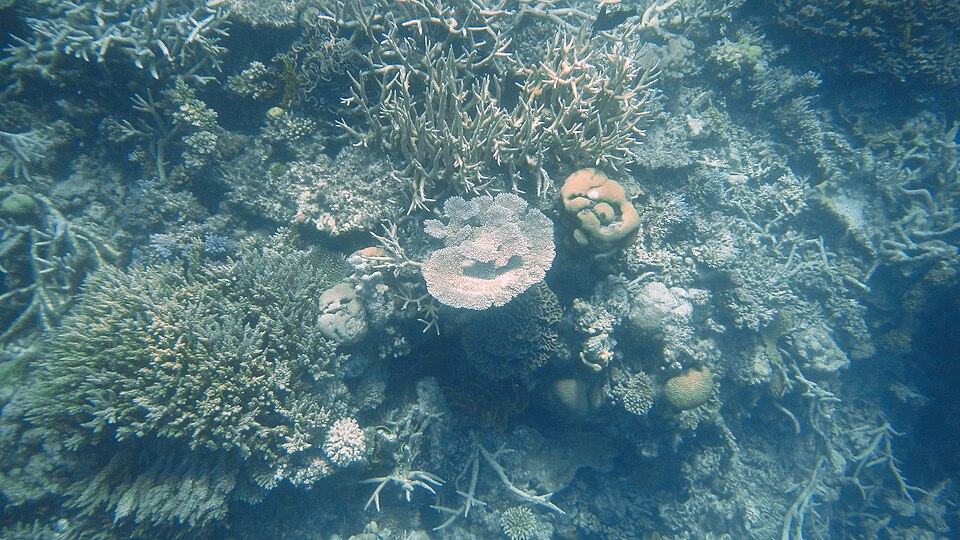
Outer reef from Port Douglas: Agincourt

Outer reef from Port Douglas: Agincourt

Port Douglas

A chain of ribbon reefs right at the edge of the continental shelf, where the water is clearest and the coral most colourful. Catamarans from Port Douglas take an hour and a half to reach a pontoon with an underwater observatory, where you can snorkel and dive. Giant clams, turtles and shoals of colourful fish live here.

Tip: The outer reefs are in better condition than those close to shore — it's worth paying extra for a trip that goes there rather than to reefs near the islands. Smaller boats carrying 20–60 people stop at 2 or 3 sites without a pontoon, but with no crowds. The sea is calmest early in the morning.

Admission:
A$250–350
Time needed:
full day
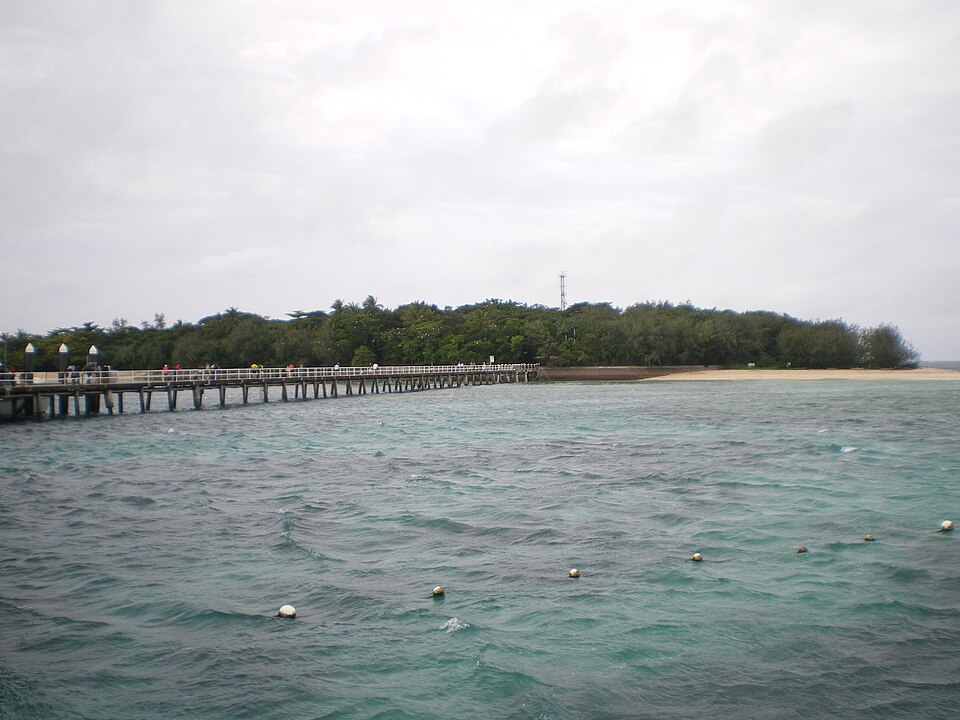
Green Island

Green Island

Cairns

A coral island covered in rainforest, 45 minutes by boat from Cairns. You can snorkel right around the island from the beach, and there are turtles and glass-bottom boats. Walk the whole island in half an hour on a forest trail, and the pier has an underwater observatory.

Tip: Green Island is the best choice for families with children and non-swimmers, since you snorkel from the beach in the shallows. Coral here is weaker than on the outer reef, though. Take the first boat at 8am, before the midday crowds arrive. The island is small and gets packed by noon.

Admission:
A$100–130 boat
Time needed:
half day to full day
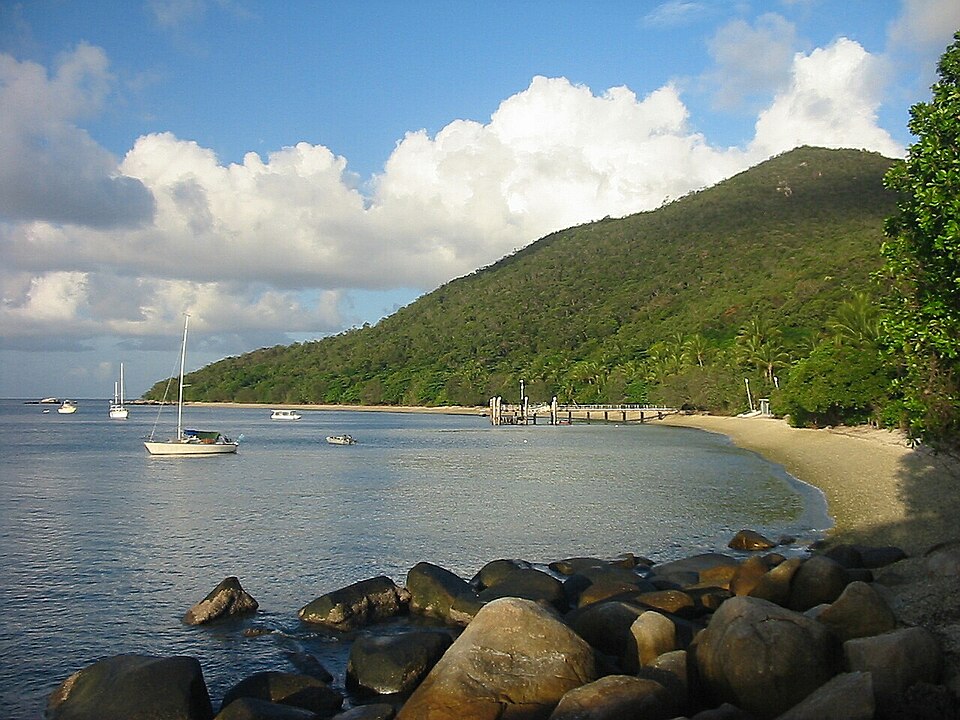
Fitzroy Island

Fitzroy Island

Cairns

A mountainous, forested island with a network of trails and the white coral sands of Nudey Beach, 45 minutes by boat from Cairns. The island has a turtle rehabilitation centre where sick and injured sea turtles are treated, which can be visited with a guide.

Tip: A 1.5-hour forest trail leads to a lighthouse viewpoint with the best view of the islands and reef. Snorkel at Nudey Beach and Welcome Bay, with coral close to shore. The island has a resort, so you can stay overnight — in the evening the island is quiet and empty. Visits to the turtle rehabilitation centre run at set times.

Admission:
A$90–110 boat
Time needed:
full day
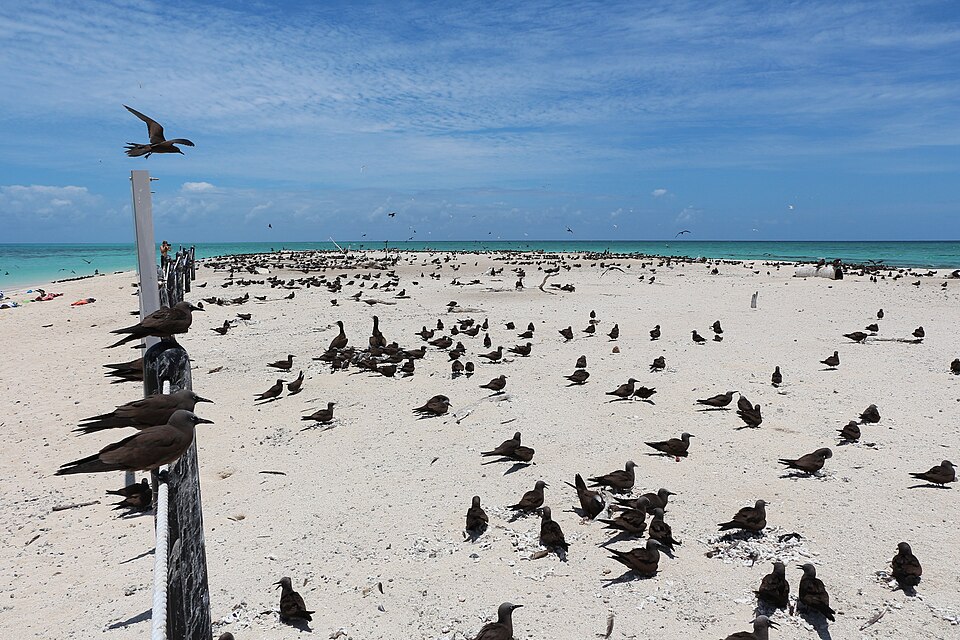
Michaelmas Cay

Michaelmas Cay

Cairns

A treeless sand islet in the middle of the reef where tens of thousands of seabirds nest, mainly terns and noddies. The island is protected, and only a small stretch of beach is accessible; snorkelling happens around the edges among giant clams and turtles. Sailing boats from Cairns come here.

Tip: The Ocean Spirit and Seastar sailing catamarans take longer to get here but carry fewer people and serve lunch on board. Birds nest mainly from September to April and are noisy, but don't touch them and stick to the marked beach area. Combining it with Hastings Reef works well for beginners and experienced snorkellers alike.

Admission:
A$200–240
Time needed:
full day
Low Isles

Low Isles

Port Douglas

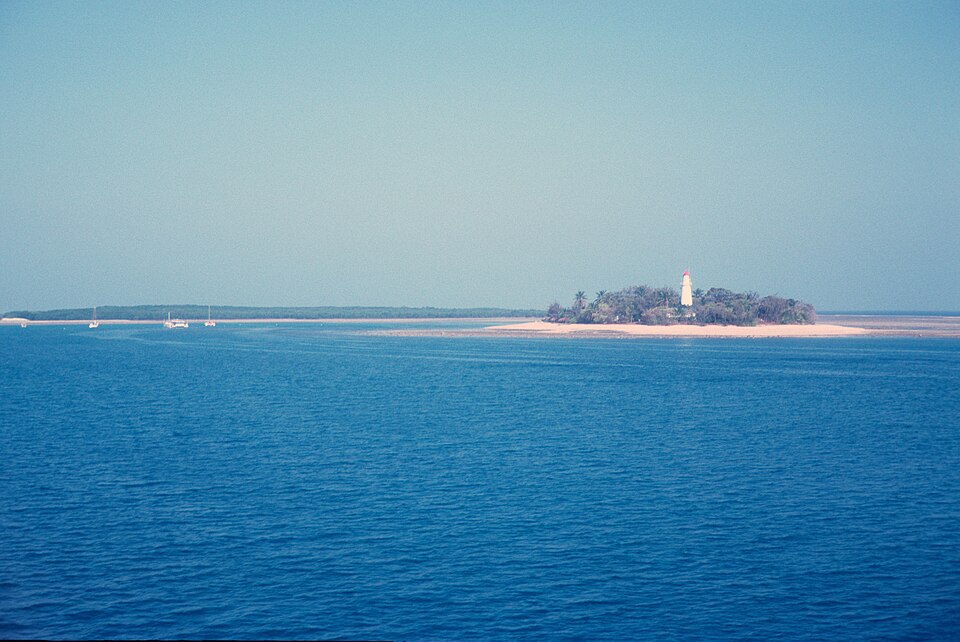
2 small islands an hour's sail from Port Douglas: a coral cay with a historic lighthouse and a mangrove island. Snorkel from the beach over shallow coral with turtles that live here year-round. The islet has a research station where scientists have worked since 1928.

Tip: Low Isles is the calmest snorkelling spot around Port Douglas and ideal for children and nervous swimmers. The Sailaway sailing boat carries smaller groups, and a half-day trip is enough. Turtles are most often seen on the western side of the island, in the seagrass.

Admission:
A$150–200
Time needed:
half day
SS Yongala wreck

SS Yongala wreck

Townsville

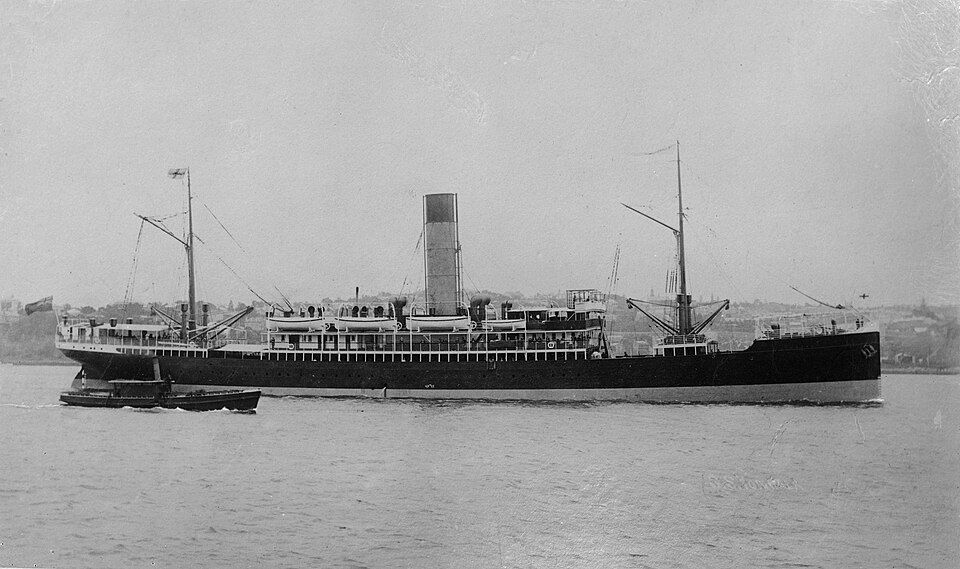
A steamship sunk by a cyclone in 1911 with all 122 people aboard, and today one of the best dives in the world. The wreck lies at 30 metres, is 100 metres long and covered in coral, surrounded by giant groupers, rays, sea snakes, turtles and bull sharks.

Tip: Diving here is for advanced divers with an Advanced Open Water certification, since currents are strong and visibility varies. The wreck lies off Townsville, and the shortest route is by boat from Alva Beach near Ayr, taking half an hour. Entry into the wreck is prohibited, as it's a war grave. Snorkellers won't see much.

Admission:
A$300–400 with 2 dives
Time needed:
full day
Heart Reef

Heart Reef

The Whitsundays

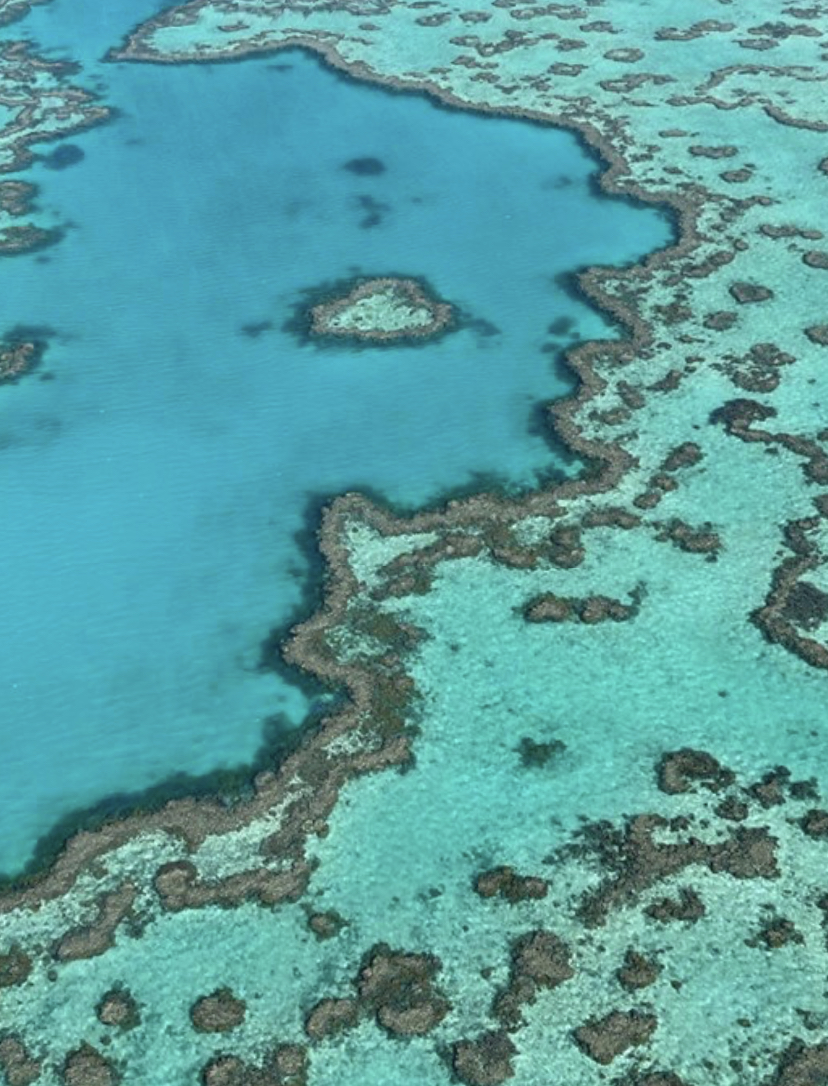
A heart-shaped reef in the Whitsundays, 17 metres across, formed entirely by natural coral. It's the most photographed spot on the reef, but can only be seen from the air — swimming and snorkelling here are prohibited. Flights leave from Airlie Beach or Hamilton Island by seaplane or helicopter.

Tip: A scenic flight at $400–600 is only worth it in good weather, when the water is clearest; morning light is best. Combined flights add a landing on Whitehaven Beach or snorkelling at a pontoon on Hardy Reef. There are no flights from Cairns.

Admission:
A$400–600 scenic flight
Time needed:
1–3 h
Lady Elliot Island

Lady Elliot Island

Southern reef

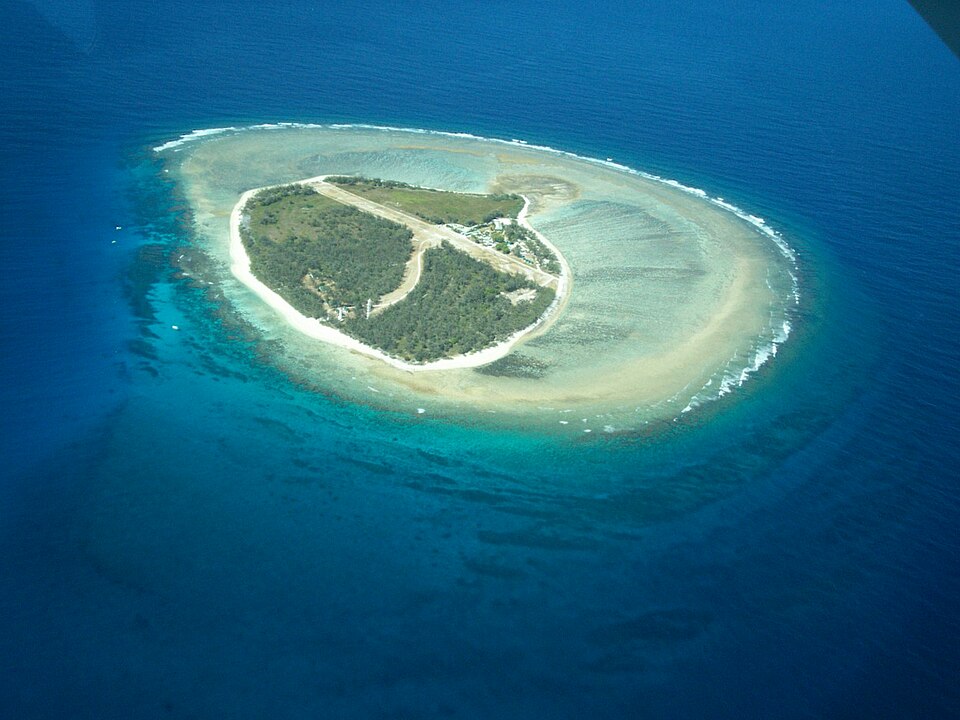
The southernmost coral island of the reef, reached by small plane from Bundaberg or Hervey Bay. Snorkel straight from the beach over coral, with turtles and, year-round, manta rays — the island is their home. Guest numbers are limited to a single eco-resort.

Tip: Manta rays are here year-round, most often from May to August. A day trip by plane with lunch and snorkelling costs around $600, but staying overnight is best. The lagoon on the south side has the safest snorkelling; the west side has strong currents at low tide.

Admission:
around A$600 day trip
Time needed:
full day
Heron Island

Heron Island

Southern reef

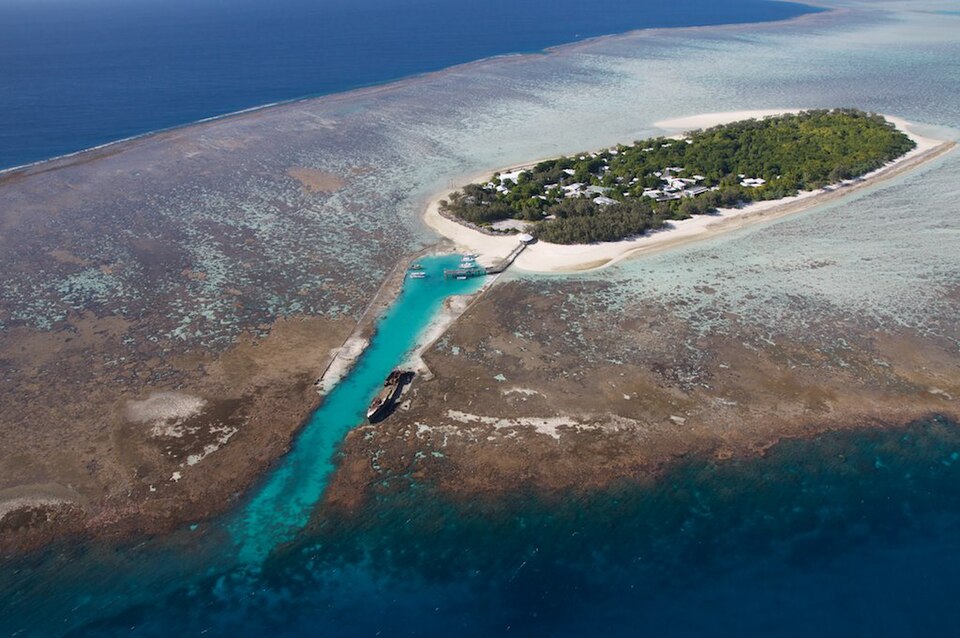
A coral island in the southern reef, right on the reef's edge, where you can snorkel and dive straight from the beach. From November to March, loggerhead and green turtles come ashore at night to lay eggs, and hatchlings emerge from January to April. The island has a university research station.

Tip: Reaching Heron Island means a 2-hour boat from Gladstone, and accommodation is resort-only, with no day visits — plan a stay of at least 2 nights. Guided night-time turtle watching is free and one of the reef's most memorable experiences. At low tide, you can walk on the reef in shoes.

Admission:
resort from A$400/night
Time needed:
2–3 days

Photos: Outer reef from Port Douglas: Agincourt — Robert Linsdell from St. Andrews, Canada (CC BY 2.0) · Green Island — Roadrunnerz45 (CC BY-SA 3.0) · Fitzroy Island — user riftreef, [1] (CC BY 2.5) · Michaelmas Cay — Bernard Gagnon (CC BY-SA 4.0) · Low Isles — Iraphne R. Childs (CC BY 4.0) · SS Yongala wreck — Allan C. Green (Public domain) · Heart Reef — Alphasauce (CC BY-SA 4.0) · Lady Elliot Island — LordDimwit at English Wikipedia (Public domain) · Heron Island — Ciambue (CC BY 2.0)

Where to stay

Areas and districts, matched to the kind of trip you are taking

Cairns

Best for: first-time visits, trips

The capital of northern Queensland, with the airport, the harbour from which dozens of boats depart for the reef each morning, and a waterfront esplanade with a free outdoor swimming lagoon. There's no beach here, just a muddy shoreline. The widest choice of accommodation and restaurants at every price point.

Palm Cove and the northern beaches

Best for: couples, relaxation

Quiet beach villages 20 to 30 minutes north of Cairns, with palm trees, resorts and restaurants along the promenade. Reef boats pick up guests right here. Ideal for those who want to stay by the beach and take reef trips from there.

Port Douglas

Best for: luxury, the outer reef, Daintree

A polished town an hour north of Cairns with the long Four Mile Beach, resorts and restaurants. Boats from here sail to the most colourful outer reefs at Agincourt and to Low Isles. Closest to the Daintree Rainforest.

Airlie Beach and the Whitsundays

Best for: sailing, islands

A harbour town 600 kilometres south of Cairns, the gateway to the Whitsundays archipelago, with beaches, scenic flights over Heart Reef and multi-day sailing trips. A destination in its own right, reached by air or by road.

Getting around

From the airport

Flying to Cairns from Europe usually means 2 stopovers, often via Dubai, Doha or Singapore and then Sydney or Brisbane; the journey takes 25 to 30 hours. Qantas, Jetstar and Singapore Airlines run direct flights from Asia to Cairns via Singapore. Travellers to Australia need the eVisitor electronic visa, which is free and arranged online. Cairns Airport is 7 kilometres from the city centre. From Sydney, it's a 3-hour flight to Cairns; from Brisbane, 2.25 hours. For the southern reef, fly to Bundaberg, Gladstone or Hervey Bay, and for the Whitsundays, to Hamilton Island or Proserpine.

Cairns (CNS) · 7 km

  • Taxi to the centre· 15 min· A$30
  • Shuttle to the centre· 20 min· A$20
  • Shuttle to Port Douglas· 1 h 15 min· A$50

Around town

The reef is reached exclusively by boat, and trips are booked through agencies or directly online, with hotel pick-up in Cairns, Palm Cove and Port Douglas usually included. Around Cairns, you get about on foot and by Sunbus buses. For trips to Daintree, Kuranda and the Atherton Tablelands, a rental car is best — driving is on the left and the roads are excellent, apart from an unsealed stretch beyond the Daintree River. Kuranda is reached by the historic railway and the Skyrail cable car over the rainforest.

Day boat trip to the reefFrom Cairns or Port Douglas, with lunch and snorkelling gear included. · A$200
Rental carFor Daintree, Kuranda and the Atherton Tablelands; driving is on the left. · A$60/day
Sunbus busAround Cairns and to the northern beaches. · A$2.40
Cairns–Port Douglas shuttleRegular service with hotel pick-up. · A$45

Useful apps: Uber, Google Maps, Willy Weather, Fuel Map Australia

When to go

The best time is June to October: the dry season, with temperatures around 27 degrees, calm seas, the best underwater visibility, and no jellyfish. From November to May, there's a risk of venomous Irukandji and box jellyfish in the water, so snorkellers wear full-body lycra suits provided by the boats. From December to March is the wet season, with humid heat, heavy downpours and cyclones that occasionally cancel trips; the water is also warmest then, and turtles hatch on the southern reef. Water temperature stays above 22 degrees year-round. Crowds peak during Australian school holidays in July and at Christmas.

Best time

June–October

What to avoid

January–March (cyclones, rain)

MonthJanFebMarAprMayJunJulAugSepOctNovDec
Day31°31°30°29°27°25°24°25°27°29°30°31°
Night24°24°23°21°18°15°14°15°17°20°22°23°
Rainy days14151410754334711
Sea29°29°29°28°26°24°23°23°24°25°27°28°

Food & drink

Tropical North Queensland's cuisine reflects its setting: fish and seafood from the reef — barramundi, coral trout, mangrove mud crabs and prawns — plus tropical fruit from local plantations, including mango, papaya, rambutan and lychee. Cairns and Port Douglas have waterfront restaurants, fish stalls and a night market. Australian classics like burgers, fish and chips and meat pies are everywhere, alongside local beer and wine from the southern states. Reef trips typically include a buffet lunch. Restaurants are pricey, but you can eat cheaply from Coles and Woolworths supermarkets or at free public barbecues in the parks.

What to try

Barramundi

An Australian sea bass with firm white flesh, grilled as a fillet and served with lemon. The most common fish on Queensland menus and a reliable choice even in an ordinary pub.

Australian prawns

Large prawns from Moreton Bay or Queensland, sold cooked and chilled by the kilogram at fishmongers. Bought for a picnic on the beach rather than ordered in a restaurant.

Mud crab

A large mangrove crab, cooked and served with chilli or garlic. Priced by weight and the most expensive item on the menu, but fresh and worth it in Queensland.

Fish and chips

Battered fish with chips, bought at the harbour across the street and eaten from the paper on the pier. Ask for tartare sauce on the side, and watch out for the seagulls — they're bold.

Meat pie

A small pie filled with stewed beef in thick gravy, the national fast food. Bought at a bakery or petrol station and eaten with tomato sauce, straight from the hand.

Tropical fruit

Mango, papaya, rambutan, dragon fruit and mangosteen grow on plantations around Cairns and Mossman. Farmers sell them at markets and roadside stalls for a fraction of shop prices, best in season from November to February.

Lamington

A cube of sponge cake coated in chocolate and coconut, a traditional Australian treat with coffee. Every café's version differs, and the best are often homemade in country bakeries.

Flat white

Espresso with silky steamed milk, an Australian invention and the backbone of the local café culture. Coffee here is exceptionally good even in small towns, and chains are rarely used.

What it costs

Full-day trip to the outer reef

A$250–350

Boat to Green Island

A$100–130

Introductory dive for beginners

A$80–120 extra

Reef protection levy

around A$10/day

Fish and chips

A$18–25

Dinner at a restaurant in Port Douglas

A$50–80

Beer at a bar

A$10–14

Night at a 3-star hotel, for 2

A$170–280

Indicative prices that change over time — treat them as a guide, not a price list.

Practical information

SocketsIAustralian, angled pins
Voltage230V / 50Hz
Tap waterTap water is drinkable — Tap water is safe to drink across Australia and ranks among the best in the world in quality; buying bottled water is a waste of money. Public areas, beaches and national parks have drinking-water fountains where you can refill a bottle for free. The only exceptions are remote farms and campsites, where water comes from rainwater tanks and is marked non-potable.
TippingTipping isn't customary in Australia, because the legal minimum wage is high and service is included in the price. In restaurants, rounding up is only for genuine satisfaction, and around 10% is typical at nicer places. At cafés, bars and in taxis, no one expects anything. Watch out for weekend and public holiday surcharges, usually 10–15%, which are always listed on the menu.
Driving on theleft
SafetyThe real risks at the Great Barrier Reef aren't sharks, but sun and jellyfish. A UV index above 10 means sunburn within 15 minutes, so a T-shirt in the water and a hat even on cloudy days are standard here. From November to May, deadly Irukandji and box jellyfish are present in coastal waters — trips issue neoprene suits as standard, and swimming should be confined to netted areas. Never step on coral on the reef; it's sharp and wounds heal poorly in the tropics. Healthcare is excellent but expensive, and there's no reciprocal healthcare agreement with Australia, so travel insurance is essential.
Opening hoursShops are usually open from 9am to 5pm, until 9pm on Thursdays, and for shorter hours on Sundays. Coles and Woolworths supermarkets stay open until 10pm, including weekends. Restaurants serve dinner early, with kitchens often closing at 9pm. On public holidays and at Easter, almost everything closes except tourist-oriented businesses, which add a surcharge.
Customs & etiquetteAustralians are informal and quick to use first names — addressing a doctor or an official by their first name is normal. Queuing is strictly observed, and jumping the queue is one of the few things that provokes a public reaction. At a bar, you order and pay at the counter, not at the end of the night. Smoking is banned on most public beaches and all restaurant verandas. At the entrance to national parks and at events, you'll hear a Welcome to Country, which pays respect to Indigenous peoples; it's listened to in silence.
A few local wordsHello — G'dayThank you — Thanks / TaHow much does it cost? — How much is it?The bill, please — Can I get the bill, please?Cheers — Cheers

How to plan your days

1 day

The reef in 1 day

  1. 1Morning hotel pick-up in Cairns or Port Douglas.
  2. 21.5-hour sail out to the outer reef.
  3. 3Snorkelling or an introductory dive at the pontoon.
  4. 4Lunch on board and a second snorkelling spot in the afternoon.
  5. 5Evening dinner on the waterfront and the night market.

2 days

Cairns in 2 days

  1. 1Day 1: full-day trip to the outer reef.
  2. 2Evening swim at the Esplanade Lagoon and dinner in Cairns.
  3. 3Day 2: train to Kuranda, back down by the Skyrail cable car over the rainforest.
  4. 4Afternoon at the Kuranda markets and the butterfly sanctuary.
  5. 5Sunset at Palm Cove.

3 days

The reef and rainforest in 3 days

  1. 1Day 1: drive to Port Douglas, afternoon at Four Mile Beach.
  2. 2Day 2: trip to Agincourt on the outer reef.
  3. 3Day 3: Mossman Gorge, a boat trip on the Daintree River looking for crocodiles.
  4. 4Cross the river by ferry to Cape Tribulation.
  5. 5Return to Port Douglas in the evening.

Day trips

Daintree and Cape Tribulation

110 km · 2 h by car from Cairns

The Daintree Rainforest is over 130 million years old, the oldest in the world, and at Cape Tribulation it meets the reef on the beach. At Mossman Gorge you swim in rock pools with a Kuku Yalanji guide, boat trips on the Daintree River go looking for saltwater crocodiles, and cassowaries live in the forest. The river crossing is by ferry.

Kuranda

30 km · 2 h on the historic train

A mountain village in the rainforest above Cairns, reached by a historic railway from 1891 that crosses bridges and passes the Barron Falls. The return trip is by the Skyrail cable car, 8 kilometres above the forest canopy. Kuranda has craft markets, a butterfly and bird sanctuary and a koala zoo.

The Whitsundays

600 km · 1 h 15 min by plane

An archipelago of 74 islands with Whitehaven Beach's near-pure quartz sand, the Hill Inlet viewpoint and a heart-shaped reef. It's too far for a day trip; better to fly to Airlie Beach or Hamilton Island and stay 3 to 4 days, including a multi-day sailing trip.

Frequently asked questions

Is the reef still beautiful, or has it been bleached?+

Since 2016 the reef has been hit by several waves of coral bleaching, and some coastal sections are damaged. But large parts of the reef recover between bleaching events, and the outer reefs at the edge of the continental shelf remain vividly colourful. Quality varies by location, so choose trips to the outer reef and ask about current conditions directly on the boat.

Where's best to see the reef — Cairns, Port Douglas or the Whitsundays?+

From Port Douglas you're closest to the most colourful outer reefs around Agincourt. Cairns has the widest choice of boats and prices. The Whitsundays are more about islands and sailing, with the reef further away. In the south, Lady Elliot and Heron Island offer snorkelling straight from the beach, no boat required.

Can I dive without any experience?+

Yes, most trips offer an introductory dive for beginners with an instructor, down to 12 metres, no certification needed — just a short health questionnaire. It costs an extra $80–120 on top of the trip. For more, do an Open Water course in Cairns over 3 to 5 days.

How dangerous are the jellyfish?+

From November to May, box jellyfish and small Irukandji jellyfish live in the coastal waters, and their stings can be very serious. They're rarer out on the reef further from shore, but boats are required to provide full-body lycra suits during the season. On beaches, swimming during the season is confined to netted enclosures. Vinegar for first aid is always kept on board.

How many days do I need for the reef and Cairns?+

3–4 days is enough for 1 or 2 reef trips, Kuranda and Daintree. If you want to dive, add a multi-day liveaboard trip — 3 days and 2 nights on the outer reefs, with 5 to 10 dives a day.

Do I need a visa for Australia?+

Yes, the eVisitor electronic visa, which is free for EU citizens and is arranged online through the Australian immigration authority's website. It usually arrives within a few days. It's valid for a year, for repeat stays of up to 3 months.

Is sunscreen worth bringing?+

Yes, but only reef-safe sunscreen without oxybenzone and octinoxate, which damage coral. For snorkelling, a long-sleeved rash vest is better — it protects against sun and jellyfish alike. The UV index on the reef exceeds 12, and sunburnt backs after an hour of snorkelling are common.

Where can I see turtles?+

Most reliably at Low Isles, Green Island and Fitzroy Island, and while snorkelling on the outer reef, where they live year-round. At Heron and Lady Elliot Island, turtles come ashore from November to March to lay eggs, and hatchlings emerge from January to April.

Carte d'arrivée

Remplissez la carte d'arrivée requise avant votre voyage pour éviter les retards à l'immigration.

Remplir la carte d'arrivée

Conditions de visa

Vérifiez les conditions de visa actuelles pour entrer dans ce pays.

Vérifier les conditions de visa

Langue

English

Devise

AUD

Fuseau

GMT+10

Indicatif

+61

Population

26.4M

Superficie

7,692,024 km²

Tension

230V / 50Hz

Côté de conduite

Gauche

Meilleurs hôtels à Great Barrier Reef

Prix en direct de 500+ hébergements

Chargement des hôtels...

More destinations in Australia

Vous planifiez un voyage à Great Barrier Reef?

Comparez des centaines d'hôtels, trouvez le meilleur prix et réservez avec annulation gratuite.