Hotels in Lyon

France's gastronomic capital, Renaissance lanes and the secret traboule passages

Lyon

LangueEnglish
DeviseEUR
FuseauGMT+1
Température8-25 °C
Indicatif+33
Population68.2M
Superficie640,679 km²
PrisesType C / Type E
Eau du robinetPotable

Découvrez Lyon

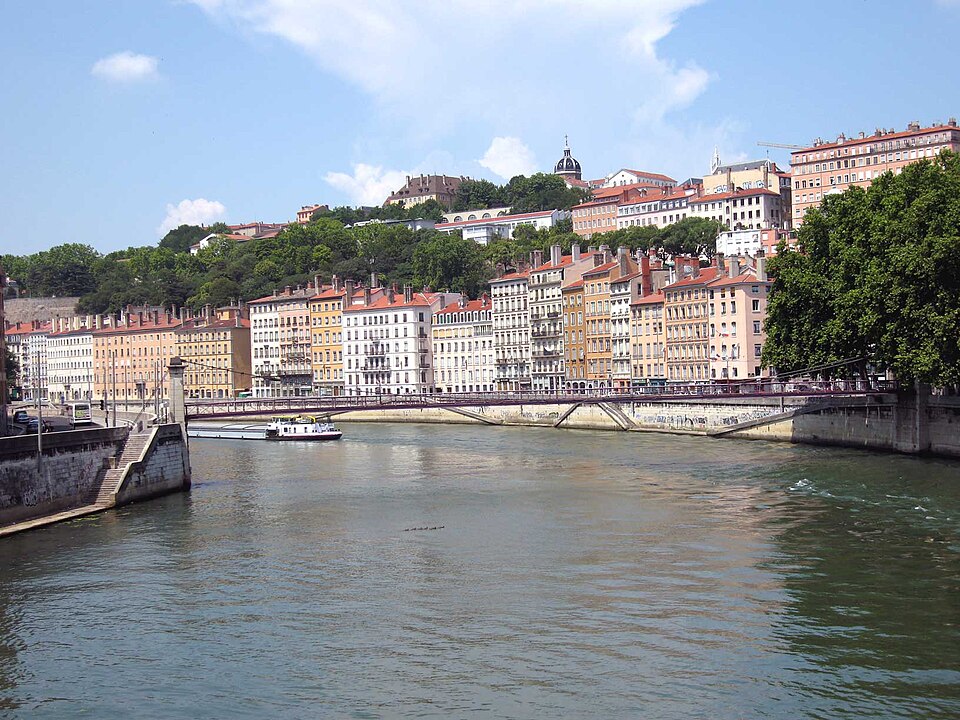
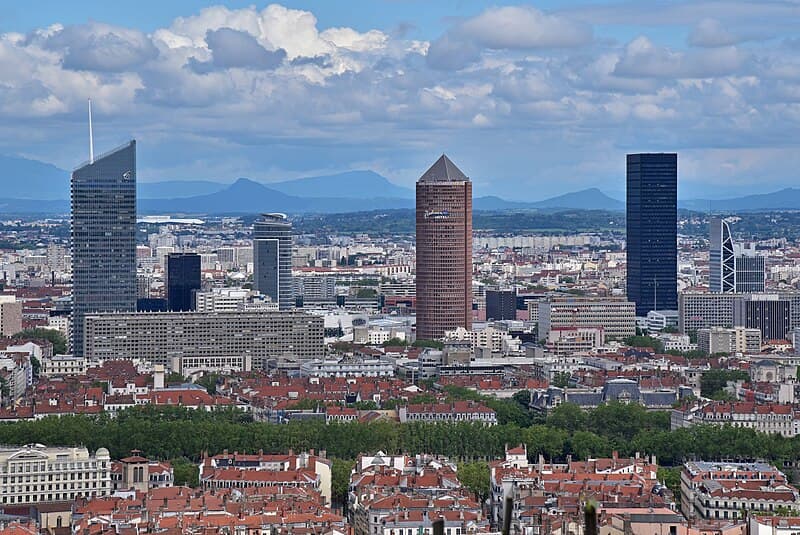
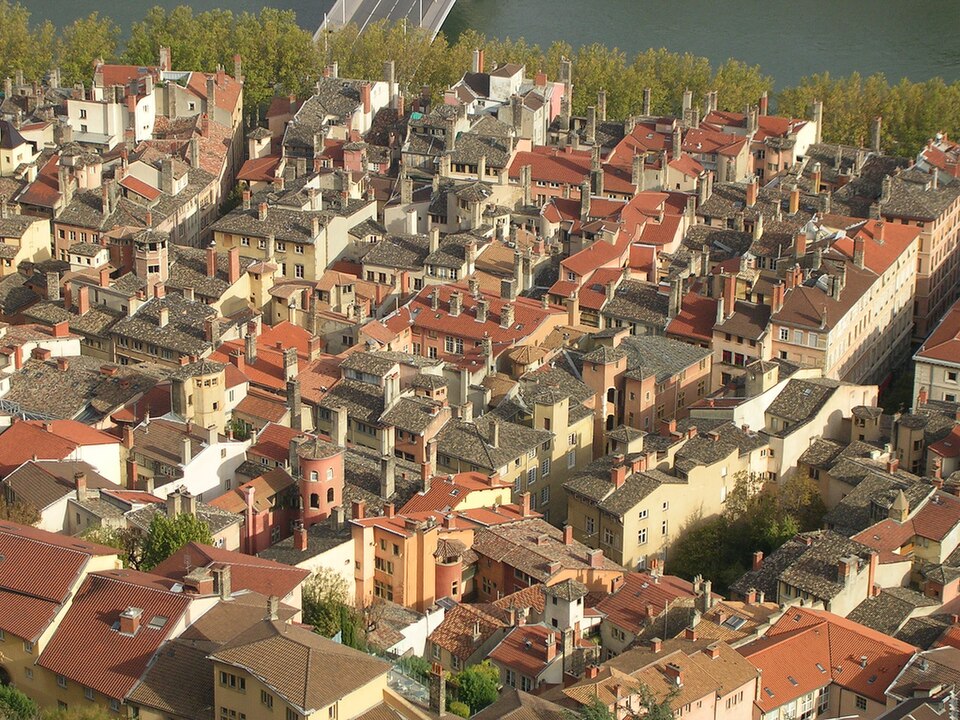
Lyon is France's third-largest city, at the confluence of the Rhône and the Saône, and many French consider it the country's gastronomic capital. The Romans founded it as Lugdunum, capital of Gaul — their two theatres still stand on the Fourvière hill, watched over by a white basilica above. Below the hill lies Vieux Lyon, one of Europe's largest Renaissance quarters, where wealthy Italian bankers and silk merchants built houses with towers and courtyards. Their buildings are linked by traboules, hundreds of hidden passageways between streets, once used by silk workers to carry fabric under cover and by resistance fighters to escape during the war. The historic centre is UNESCO-listed. On the Presqu'île peninsula between the two rivers lie elegant squares and shops; on the Croix-Rousse hill, a former working-class silk-weavers' district. But above all, people come here to eat: at bouchons, traditional taverns with checked tablecloths, at the celebrated Halles Paul Bocuse market, and at restaurants whose stars have carried the city's name around the world. Lyon is less touristy and cheaper than Paris, which is two hours away by high-speed train.

What to see

The places worth your time in Lyon, and what to expect at each

Vieux Lyon

Vieux Lyon

Vieux Lyon

A Renaissance quarter beneath the Fourvière hill, in three sections — Saint-Paul, Saint-Jean and Saint-Georges — with fifteenth- and sixteenth-century houses, spiral staircase towers, arcaded courtyards and Saint-Jean Cathedral with its astronomical clock. One of the largest collections of Renaissance architecture in Europe.

Tip: Rue Saint-Jean and Rue du Bœuf are the main streets, but the real charm is in peeking into the courtyards — many entrances stand open by day. The cathedral's astronomical clock chimes at noon, 2pm, 3pm and 4pm. Restaurants right on Rue Saint-Jean are tourist traps serving fake bouchons — look for the Les Bouchons Lyonnais label for the genuine article.

Admission:
free
Time needed:
2 h
Traboules

Traboules

Vieux Lyon and Croix-Rousse

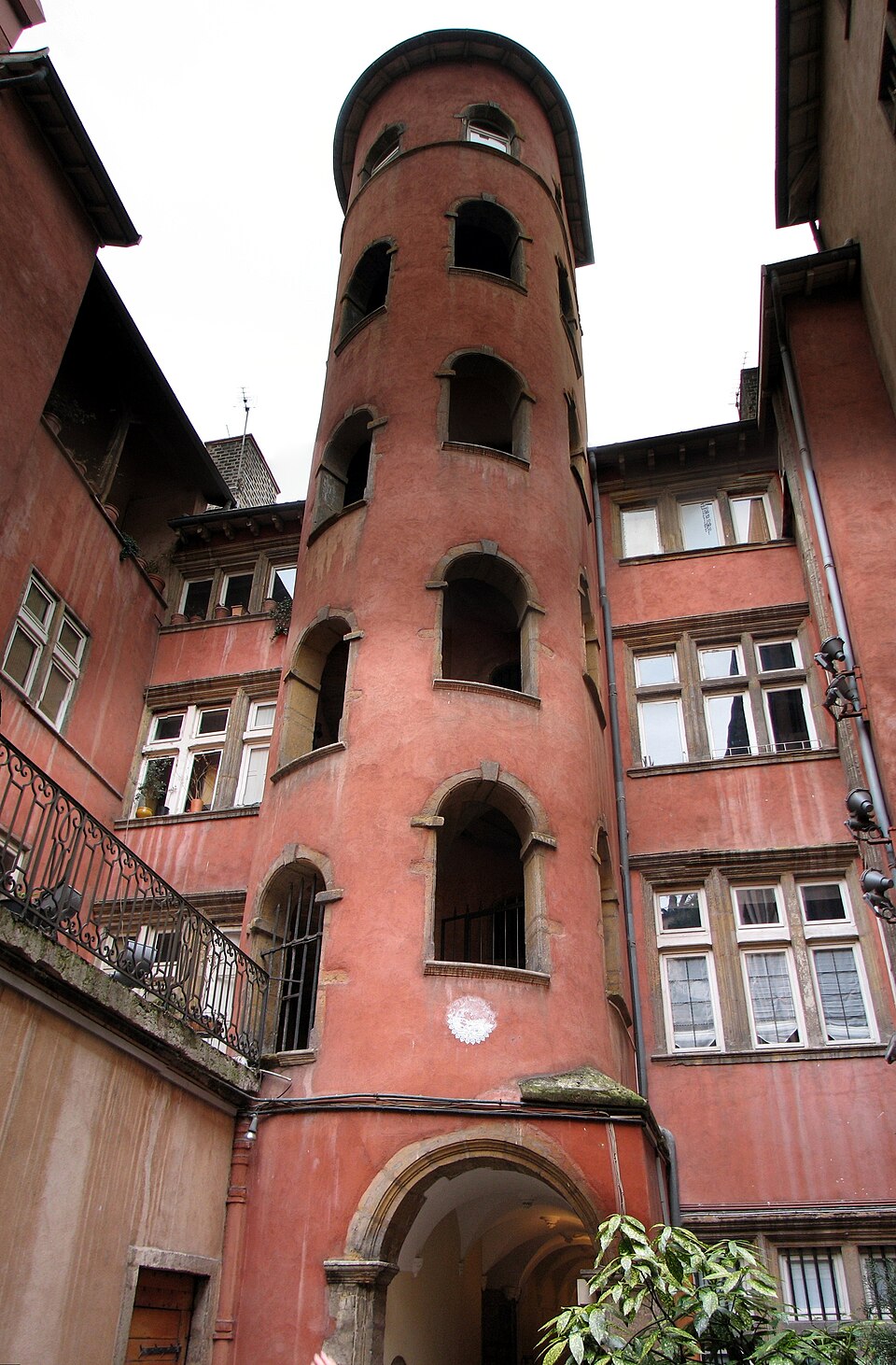
A network of around four hundred hidden passageways running through buildings, courtyards and staircases between parallel streets in Vieux Lyon and Croix-Rousse. About forty are open to the public. Silk workers once used them to carry fabric, and the resistance used them during the Second World War.

Tip: Entrances hide behind ordinary doors marked with a small bronze plaque bearing a lion. The longest traboule runs from 54 Rue Saint-Jean to 27 Rue du Bœuf; the most famous is the Cour des Voraces in Croix-Rousse, with its six-storey staircase. These are residential buildings — keep quiet and don't ring doorbells. The tourist office hands out a map of the traboules open to the public.

Admission:
free
Time needed:
1–2 h
Basilica of Notre-Dame de Fourvière

Basilica of Notre-Dame de Fourvière

Basilique Notre-Dame de Fourvière

Fourvière

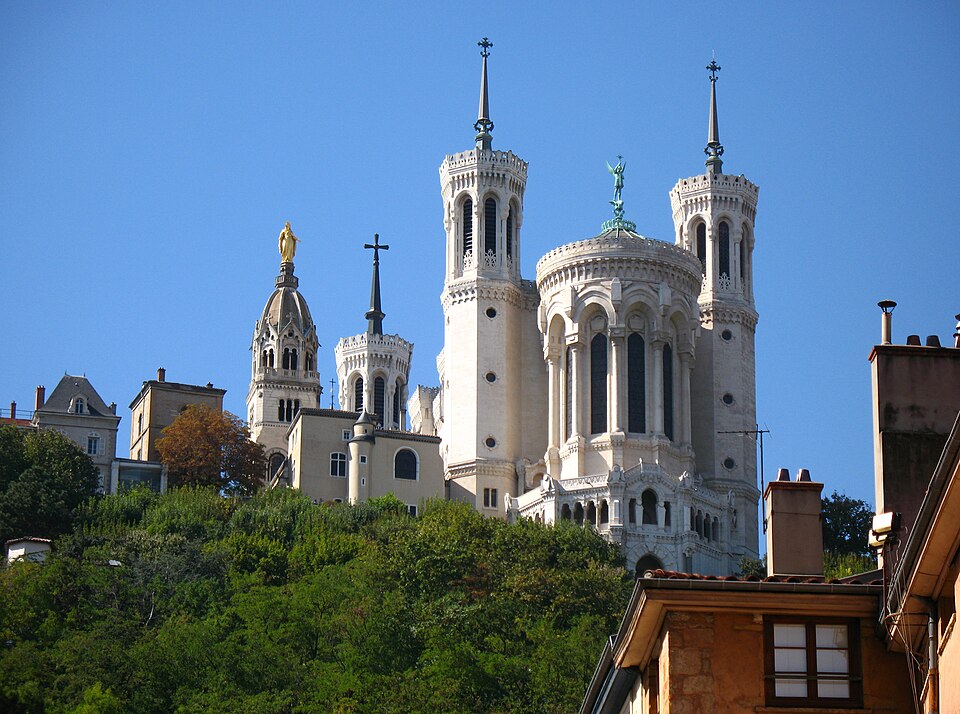
A white basilica built between 1872 and 1896 on the hill above Lyon, richly decorated inside with mosaics, gold and marble. The terrace beside it offers the best view over the whole city and its rivers, reaching all the way to Mont Blanc on a clear day.

Tip: Take the funicular up from Vieux Lyon and walk back down through the Rosaire gardens. The terrace viewpoint is free; climbing to the basilica's roof requires a guided tour. The Chapel of the Virgin next to the basilica is older. Every 8 December, the basilica and the whole city light up for the Festival of Lights.

Admission:
free
Time needed:
1 h
Ancient Theatre of Fourvière

Ancient Theatre of Fourvière

Théâtres romains de Fourvière

Fourvière

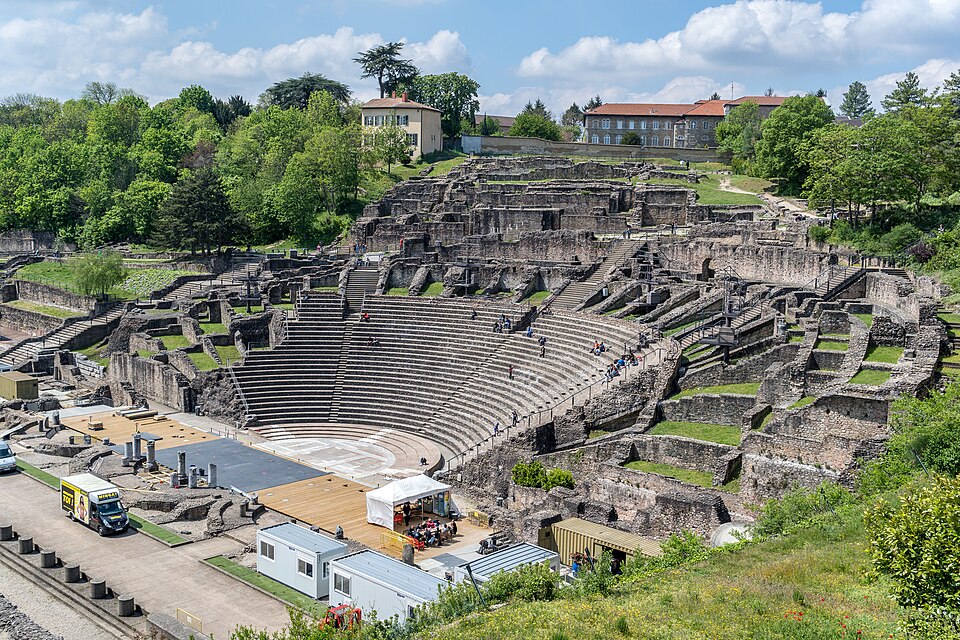
A large Roman theatre from 15 BC seating ten thousand spectators, and a smaller odeon on the Fourvière hillside, remnants of the capital of Roman Gaul. Beside them, a Gallo-Roman museum set into the slope holds its most prized exhibit: a bronze tablet inscribed with a speech by Emperor Claudius, born in Lyon.

Tip: The theatres are freely open, a two-kilometre walk from the basilica. In June and July, the Nuits de Fourvière festival hosts concerts and open-air theatre here, with tickets going on sale in winter. The museum is small and good, free on the first Thursday of the month.

Admission:
theatres free, museum around €5
Time needed:
1–1.5 h
Presqu'île and Place Bellecour

Presqu'île and Place Bellecour

Presqu'île et place Bellecour

Presqu'île

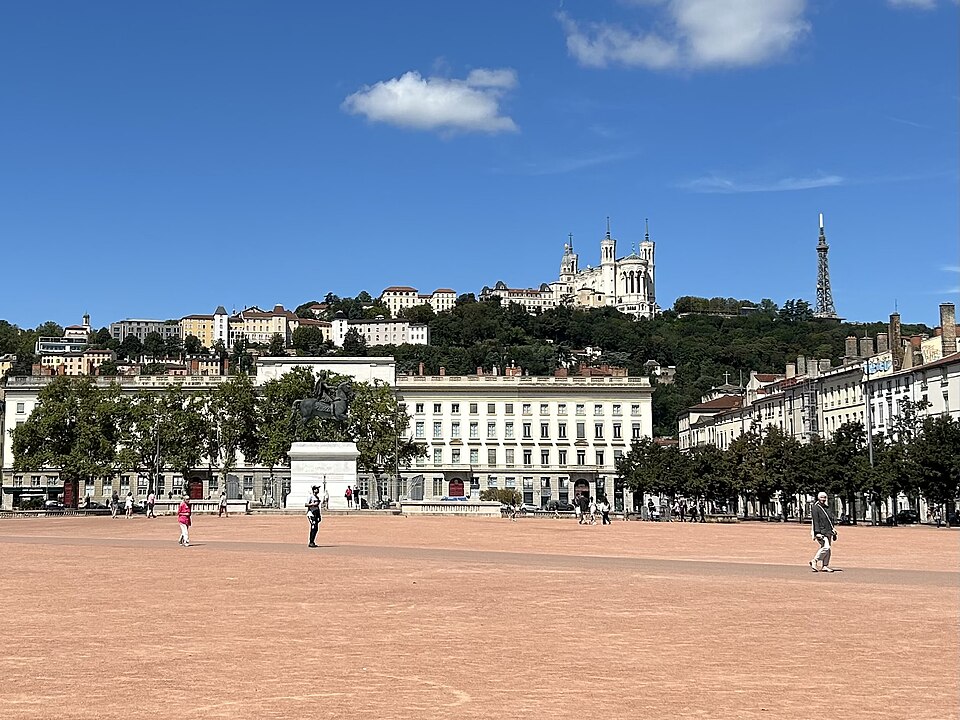
The peninsula between the Rhône and the Saône, home to the main squares and shopping streets. Place Bellecour is one of the largest squares in Europe, with an equestrian statue of Louis XIV; Place des Terreaux has the fountain by Bartholdi, sculptor of the Statue of Liberty, and the town hall.

Tip: Place des Terreaux has the Bartholdi fountain with its four horses, a design Bordeaux turned down, next to the Museum of Fine Arts. On Presqu'île, look for the murals — the Fresque des Lyonnais on Quai Saint-Vincent, depicting thirty famous Lyon residents, is the most celebrated. Rue Victor Hugo and Rue de la République are pedestrian zones.

Admission:
free
Time needed:
1.5–2 h
Croix-Rousse

Croix-Rousse

Croix-Rousse

A hill north of Presqu'île that, in the nineteenth century, was home to the silk-weaving canuts, who worked Jacquard looms in tall apartments with four-metre ceilings. The canuts' revolts of the 1830s were the first workers' uprising in Europe.

Tip: The Maison des Canuts demonstrates a working Jacquard loom and sells silk. The Cour des Voraces courtyard, with its giant outdoor staircase, is the most photogenic traboule. Up top there's a market on Boulevard de la Croix-Rousse every morning except Monday. The Mur des Canuts is the city's largest mural. The hill is steep — take metro line C to the top.

Admission:
free
Time needed:
2 h
Les Halles de Lyon Paul Bocuse

Les Halles de Lyon Paul Bocuse

Part-Dieu

A covered market named after Lyon's most famous chef, with around fifty stalls selling cheese, charcuterie, oysters, pastries and chocolate. Local chefs shop here, and on Sunday mornings people drink white wine with oysters.

Tip: Best on a Saturday or Sunday morning, sitting at the bar counters over oysters and a glass of white. Mère Richard cheeses, Sibilia charcuterie and Giraudet quenelles are the classics. Closed Mondays. The market sits in the Part-Dieu district, five minutes from the station.

Admission:
free
Time needed:
1 h
Musée des Confluences

Musée des Confluences

Confluence

A museum of natural sciences and anthropology in a deconstructivist building of glass and steel at the tip of the peninsula, where the Rhône meets the Saône. The building resembles a cloud or a crystal, and the exhibits cover the origins of life, humanity and death.

Tip: The architecture is the main draw, but the exhibits are good for children too. The terrace looks out over the river confluence. The museum stands in the new Confluence district, redeveloped from an old port, with colourful buildings on the water. Take tram T1. Free on the first Thursday evening of the month.

Admission:
around €12
Time needed:
2 h
Parc de la Tête d'Or

Parc de la Tête d'Or

Brotteaux

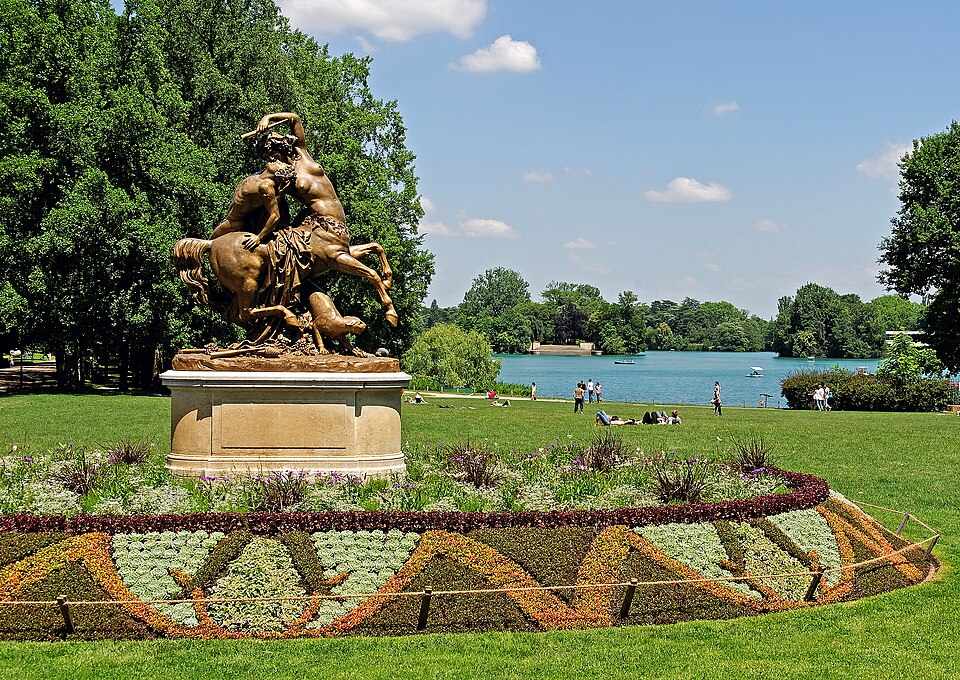
France's largest city park, with a lake, rowing boats, a botanical garden with large greenhouses, a rose garden with thousands of varieties, and a free zoo. Founded in 1857 along the Rhône.

Tip: The zoo and botanical garden are free. The large tropical greenhouse dates from 1880. The rose garden blooms in June. Rowing boats can be hired on the lake, and bikes near the entrance. The park is best for a Sunday afternoon picnic, the way locals do it.

Admission:
free
Time needed:
2 h

Photos: Vieux Lyon — Karldupart (CC BY-SA 3.0) · Traboules — Wikimedia Commons (CC BY-SA 3.0) · Basilica of Notre-Dame de Fourvière — Elwood j blues (CC BY-SA 3.0) · Ancient Theatre of Fourvière — Jean-Christophe BENOIST (CC BY 4.0) · Presqu'île and Place Bellecour — Corentin Eustacchi (CC BY-SA 4.0) · Croix-Rousse — Pline (CC BY-SA 3.0) · Les Halles de Lyon Paul Bocuse — Benoît Prieur (CC0) · Musée des Confluences — Vassil (CC0) · Parc de la Tête d'Or — Phinou (CC BY-SA 3.0)

Where to stay

Areas and districts, matched to the kind of trip you are taking

Vieux Lyon

Best for: atmosphere, history

Hotels in Renaissance buildings beneath Fourvière, with pedestrian lanes and restaurants. The most romantic area, but also the busiest with tourists. Metro line D and the funiculars are close by.

Presqu'île

Best for: central location, walkability

Hotels between Bellecour and Terreaux, walking distance to everything, with metro lines A and D. The most practical choice for a first visit, with shops and restaurants everywhere.

Croix-Rousse

Best for: local life, the market

A hilltop district with small hotels and apartments in former weavers' buildings, with a market and cafés. Quieter, with a village feel. Five minutes to the centre by metro.

Part-Dieu and Brotteaux

Best for: the station, business trips

Modern hotels near Part-Dieu station and the Paul Bocuse market, with the elegant Brotteaux district near the park. Convenient for trains. Ten minutes to the centre by metro.

Getting around

From the airport

Flights from Prague to Lyon connect through Paris, Frankfurt or Amsterdam, with a direct seasonal route depending on the time of year. France is in the Schengen area, so Czech citizens travel with an ID card. Saint-Exupéry Airport is twenty-five kilometres from the centre, linked by the Rhônexpress tram. The TGV high-speed train reaches Paris in two hours, Marseille in an hour and three quarters, and Geneva in under two hours.

Lyon Saint-Exupéry (LYS) · 25 km

  • Rhônexpress to Part-Dieu· 30 min· around €17
  • Taxi· 30–45 min· €60
  • Uber· 30–45 min· €45

Around town

Central Lyon is compact, and Vieux Lyon, Presqu'île and Croix-Rousse are all walkable. The metro has four lines, and TCL trams and buses cover the whole city; buy a ticket from a machine, the app, or by tapping a contactless card. Two funiculars run up to Fourvière from Vieux Lyon, included in the standard ticket. The Vélo'v bike-share scheme is cheap and the cycle paths are good. The Lyon City Card covers transport and museums.

Metro, tram, TCL busAn hour-long ticket, also valid on the funiculars. · €2.10
Day ticketUnlimited travel for 24 hours. · €6.50
Vélo'vBike share, daily registration. · €4
Fourvière funicularFrom Vieux Lyon, included in the standard ticket. · €2.10

Useful apps: Google Maps, TCL, Uber, Vélo'v, Citymapper

When to go

The best time is May to June and September to October, with temperatures of twenty to twenty-six degrees. Summer is hot, around thirty degrees in July and August, and some restaurants, including bouchons, close for the summer holiday in August. Winter is cold and foggy, around zero degrees. The Fête des Lumières around 8 December is the biggest event of the year — for four nights the whole city transforms with light installations and projections, and hotels sell out months ahead. June and July bring the Nuits de Fourvière festival.

Best time

May–June, September–October

What to avoid

August, for closed restaurants

MonthJanFebMarAprMayJunJulAugSepOctNovDec
Day7°9°14°17°21°26°29°28°23°18°11°7°
Night0°1°4°7°11°15°17°17°13°9°4°1°
Rainy days9889108677999

Food & drink

Lyon is France's gastronomic capital, and food is the reason many people come here. Two worlds sit side by side: bouchons, traditional taverns serving honest meat dishes, offal and Lyon wine in a stubby pot bottle, and Michelin-starred restaurants long dominated by Paul Bocuse. But Lyon also sits between the vineyards of Beaujolais and Côtes du Rhône, and lunch is accompanied by a glass of the local wine. A twenty-to-thirty-euro set lunch menu is the best way to try great food cheaply. Bakeries, chocolate shops and cheesemongers are excellent. Prices are lower than in Paris.

What to try

Lyon bouchon

A traditional Lyon tavern with checked tablecloths and a set menu for twenty-five to thirty-five euros: saucisson, salade lyonnaise with bacon and egg, quenelle, andouillette and cervelle de canut. Genuine bouchons carry the Les Bouchons Lyonnais label.

Quenelle de brochet

A light pike dumpling made from flour and eggs, baked in a crayfish Nantua sauce. Lyon's best-known dish, unassuming to look at and delicate in flavour.

Tarte aux pralines

A tart filled with crushed pink sugar-roasted almonds, vividly pink and very sweet. Sold by the slice at bakeries.

Coffee and a croissant

Breakfast in France is understated: an espresso and a croissant at the counter for three or four euros. Sit at a terrace table and you'll pay half again as much for the same coffee — menus are legally required to list both prices.

Saucisson brioché

Lyon sausage baked inside brioche, served warm in slices as a starter. Found in every bouchon and at the butcher's stall in the market.

Cervelle de canut

Literally 'weaver's brain' — but no brain involved: fresh cheese whipped with chives, shallot, garlic, vinegar and oil. Eaten with bread as a starter.

Beaujolais and Côtes du Rhône

Lyon sits between two wine regions, so everything is washed down with a light red Beaujolais or a full-bodied Côtes du Rhône. At a bouchon, order a 'pot', a stubby forty-six-centilitre bottle.

What it costs

Coffee at the bar

€1.50–2.50

Croissant

€1.20–1.80

Set lunch menu at a bouchon

€20–30

Dinner at a restaurant

€35–60

Pot of Beaujolais

€14–22

Public transport ticket

€2.10

Musée des Confluences

around €12

Night in a 3-star hotel, double room

€100–160

Indicative prices that change over time — treat them as a guide, not a price list.

Practical information

SocketsCEuroplug, two round pinsEFrench, with earth pin
Voltage230V / 50Hz
Tap waterTap water is drinkable — Tap water is safe everywhere in France, and you're entitled to it free in a restaurant — ask for 'une carafe d'eau' and they must bring it, even if you haven't ordered anything else. Ask simply for 'de l'eau' and you may be brought paid bottled water for four to six euros. A sign reading 'eau non potable' by a fountain means it's not drinkable.
TippingService is included in the price by law in France, and the bill will usually say 'service compris'. Tipping is therefore optional and small: leave loose change at a café, five percent at a restaurant for good service. Card terminals rarely offer a tip option, so it's left in cash on the table. In taxis, just round up.
Driving on theright
SafetyMajor French cities are safe for visitors; the main risk is pickpockets working in pairs on the metro, at stations and in crowds near landmarks. Don't leave your phone on a café table. Watch out for the petition-clipboard scam and the 'found ring' trick. The emergency number is 112, police 17.
Opening hoursShops are open roughly nine to seven, with smaller shops and bakeries closing for a midday break from half twelve to half three. Most shops are closed on Sundays except bakeries and tourist-centre exceptions. Restaurants serve lunch from twelve to two and dinner from seven to half ten; in between you'll only get coffee and a sandwich. Museums close on Mondays or Tuesdays.
Customs & etiquette'Bonjour' is said on entering any shop, bakery or doctor's office, and skipping it reads as rude — it matters more in France than the rest of the conversation that follows. Using 'tu' with a stranger isn't done. Courses are ordered one at a time, and the bill is never brought until you ask for it. Walking around town in swimwear isn't done, and on the Riviera it's fined by municipal ordinance. Bread is broken by hand and set directly on the tablecloth, not on the plate.
A few local wordsHello — BonjourThank you — MerciPlease — S'il vous plaîtThe bill, please — L'addition, s'il vous plaîtCheers — SantéGoodbye — Au revoir

How to plan your days

1 day

Lyon in one day

  1. 1Morning in Vieux Lyon and the traboules.
  2. 2Funicular up to Fourvière and the Roman theatres.
  3. 3Lunch at a bouchon.
  4. 4Afternoon on Presqu'île, Place Bellecour and Terreaux.
  5. 5Evening walk along the Saône.

2 days

Two days in Lyon

  1. 1Day 1: Vieux Lyon, the traboules, Fourvière.
  2. 2Day 1 evening: a bouchon.
  3. 3Day 2: Croix-Rousse with its market and the Cour des Voraces.
  4. 4Day 2 afternoon: Halles Paul Bocuse and Parc de la Tête d'Or.

3 days

Three days with Beaujolais

  1. 1Day 1: Vieux Lyon and Fourvière.
  2. 2Day 2: Croix-Rousse, Presqu'île, Musée des Confluences.
  3. 3Day 3: Beaujolais vineyards with a tasting.
  4. 4Day 3 evening: Halles Paul Bocuse or a starred restaurant.

Day trips

Pérouges

35 km · 40 min by car

A fortified medieval hilltop town with cobbled lanes, stone houses and a square with a liberty tree planted in 1792. Historical films have been shot here. Try the galette de Pérouges, a thin tart of butter and sugar. Two hours is enough to see it.

Beaujolais

50 km · 1 h by car

A wine region north of Lyon with villages of golden 'pierres dorées' stone, rolling vineyards and cellars offering tastings. Ten crus including Morgon, Fleurie and Moulin-à-Vent. Beaujolais Nouveau is celebrated on the third Thursday of November.

Annecy

140 km · 1 h 45 min by car

An Alpine town on a lake with the cleanest water in Europe, canals, flowers and the old Palais de l'Isle prison on an island. In summer people swim in the lake and cycle around it. The train takes over two hours; driving is faster.

Frequently asked questions

How many days are enough for Lyon?+

Two days for Vieux Lyon, Fourvière, Presqu'île and Croix-Rousse. A third day for Beaujolais or Pérouges. Lyon combines well with Paris, Provence or the Alps, with high-speed trains running in every direction.

What is a bouchon?+

A traditional Lyon eatery with checked tablecloths, tightly packed tables and hearty meat dishes — charcuterie, offal, quenelles. Genuine bouchons carry the 'Les Bouchons Lyonnais' label. A set lunch menu costs twenty to thirty euros. Many bouchons close on weekends.

How do I find the traboules?+

Look for small bronze plaques with a lion by doorways in Vieux Lyon and Croix-Rousse. Entrances stand open during the day — just push the door. The tourist office on Place Bellecour hands out a map of the traboules open to the public.

When is the Festival of Lights?+

Around 8 December, over four nights. The whole city lights up with installations and building-facade projections, and residents set candles in their windows. Two million visitors come, and hotels sell out months in advance.

Is Lyon expensive?+

Cheaper than Paris. A set lunch menu costs twenty to thirty euros, coffee at the bar two euros, and hotels are affordable. Starred restaurants are expensive, but their lunch menus often cost a fraction of the evening price.

How do I get from the airport into the centre?+

The Rhônexpress tram takes thirty minutes to Part-Dieu station, with a ticket around seventeen euros. A taxi costs around sixty euros. The airport is twenty-five kilometres from the centre.

How do I get from Lyon to Paris?+

The TGV high-speed train from Part-Dieu or Perrache station takes two hours, running every hour. Ouigo trains are cheaper. Book tickets in advance on SNCF Connect.

Is Lyon safe?+

Yes. Watch for pickpockets on the metro, at Part-Dieu station and in crowds on Presqu'île. The centre is safe in the evening. During the Festival of Lights, crowds are enormous and pickpockets are active.

Conditions de visa

Vérifiez les conditions de visa actuelles pour entrer dans ce pays.

Vérifier les conditions de visa

Numéros d'urgence

Langue

French

Devise

EUR

Fuseau

GMT+1

Indicatif

+33

Population

68.2M

Superficie

640,679 km²

Tension

230V / 50Hz

Côté de conduite

Droite

Meilleurs hôtels à Lyon

Prix en direct de 500+ hébergements

Chargement des hôtels...

Vous planifiez un voyage à Lyon?

Comparez des centaines d'hôtels, trouvez le meilleur prix et réservez avec annulation gratuite.