A medieval town beneath the world's most famous downhill run
Kitzbühel
SpracheGerman
WährungEUR
ZeitzoneEurope/Vienna
Temperatur0-26 °C
Vorwahl+43
Bevölkerung9.1M
Fläche83,879 km²
SteckdosenTyp C / Typ F
LeitungswasserTrinkbar
Entdecken Sie Kitzbühel
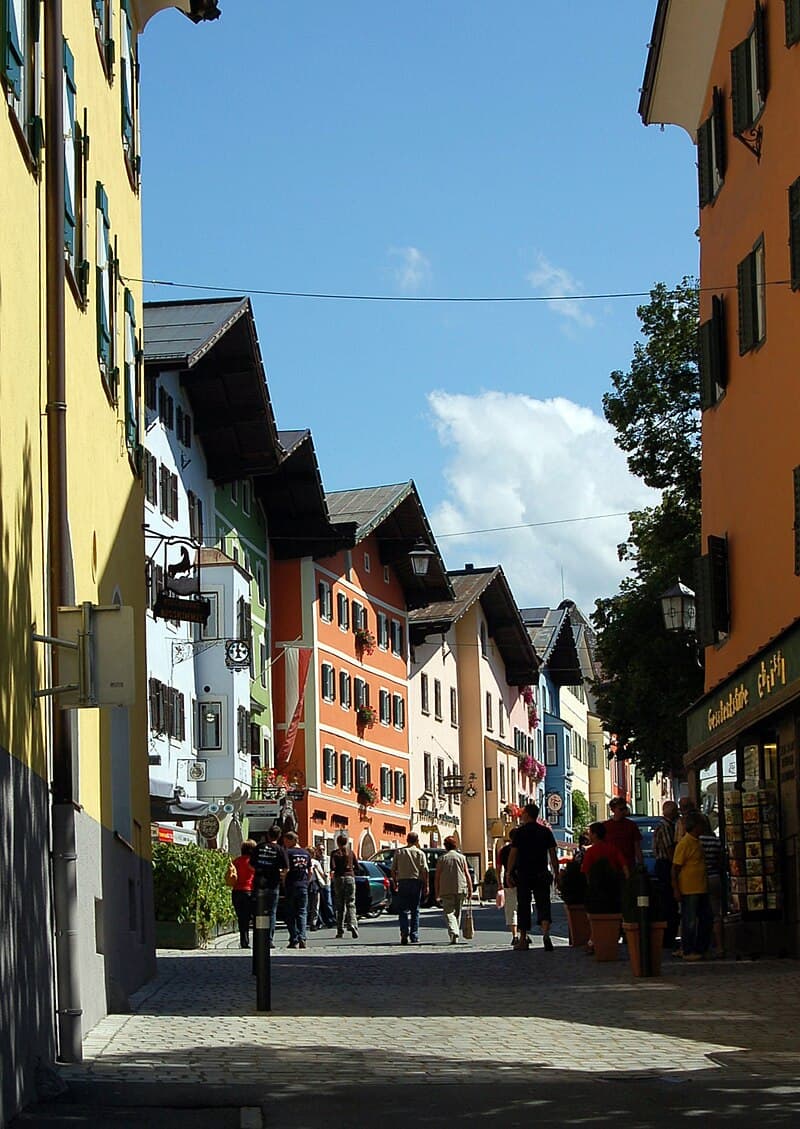
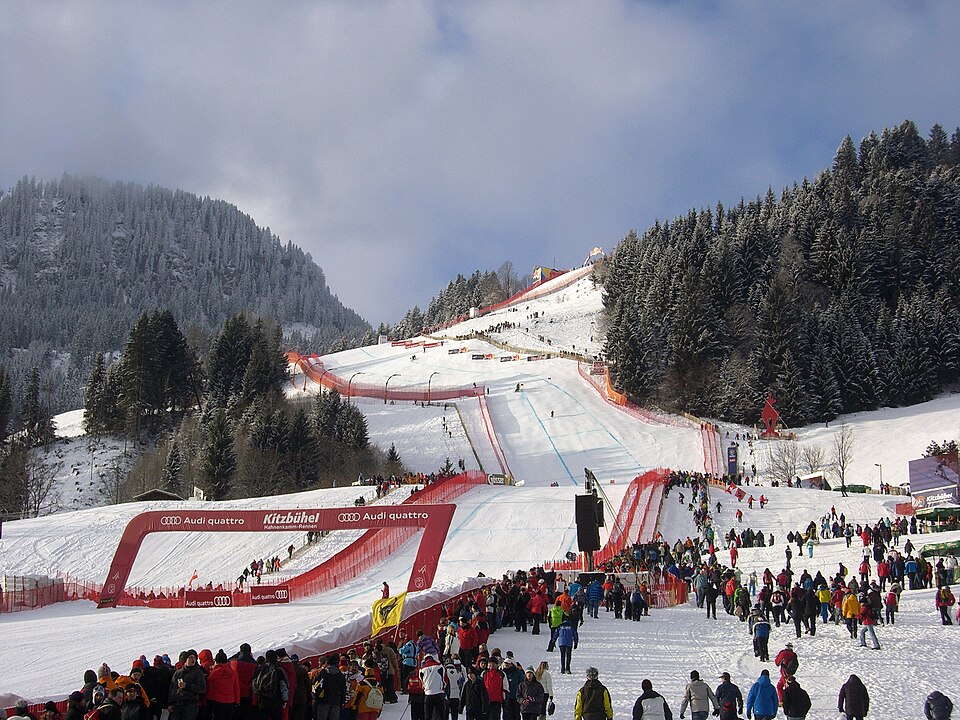
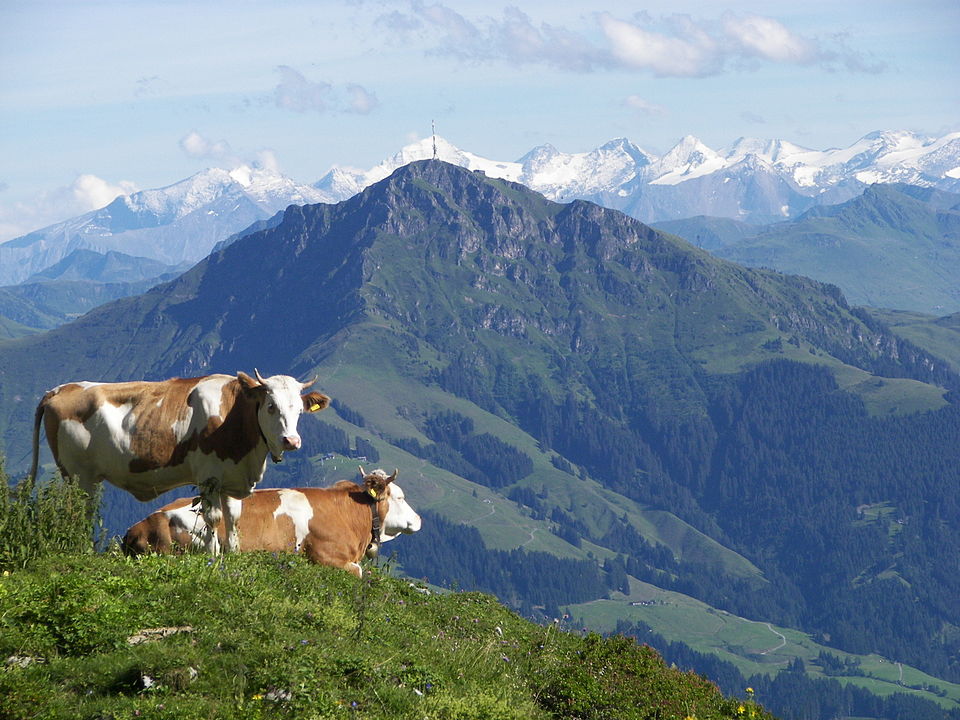
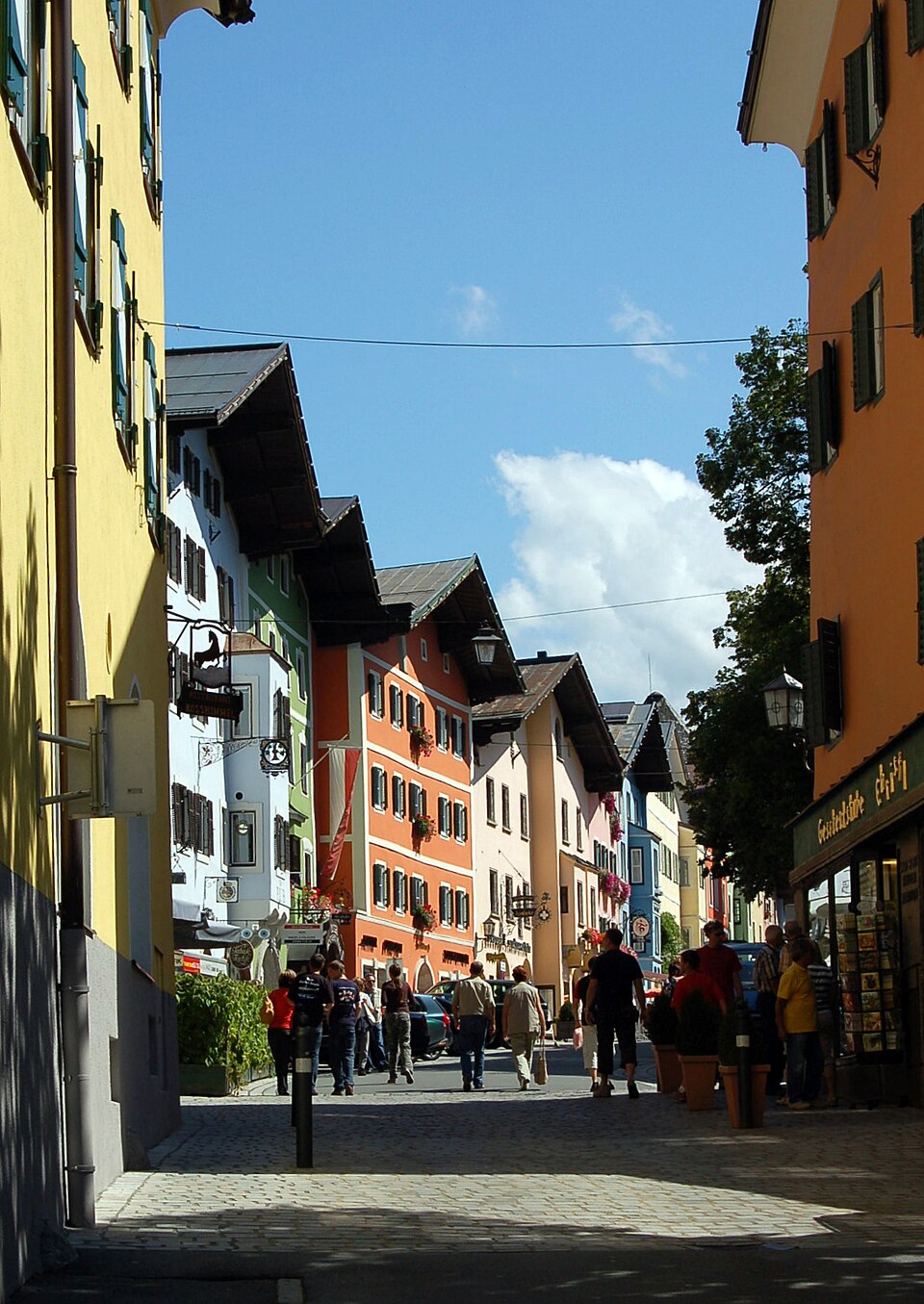
Kitzbühel is a town of 9,000 people, a medieval centre of pastel houses with gabled roofs, surrounded by one of Austria's largest ski areas with 233 km of runs. Unlike resorts built purely for skiers, this is a real town with 700 years of history: it grew rich on silver and copper mining, and skiing began here in 1893, when local resident Franz Reisch ordered the first pair of skis from Norway. It's world-famous for the Hahnenkamm, where every January the World Cup downhill is raced on the Streif, the most feared course on the circuit — on the Mausefalle section the gradient reaches 85%, and racers hit speeds of over 140 km/h. Kitzbühel has a reputation as an expensive, upmarket place, but skiing itself costs the same as at other major Austrian resorts, and because the resort sits at low altitude, snow is less reliable than higher up in the Alps. In summer, the town becomes a base for hiking, mountain biking and golf, with swimming in the moor lake Schwarzsee.
What to see
The places worth your time in Kitzbühel, and what to expect at each
Hahnenkamm
above the town
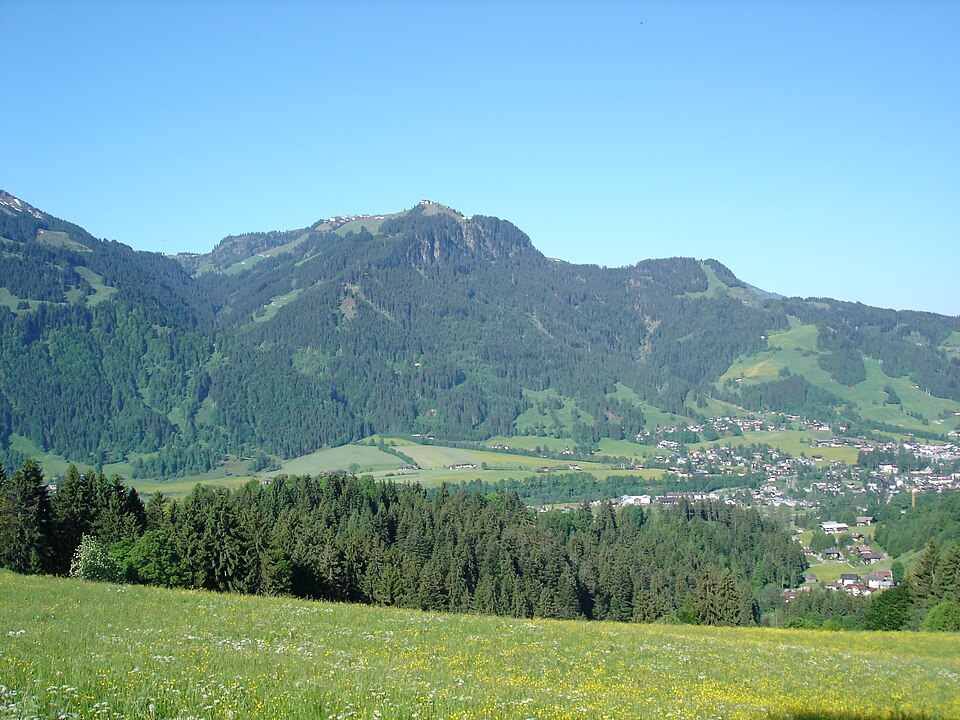
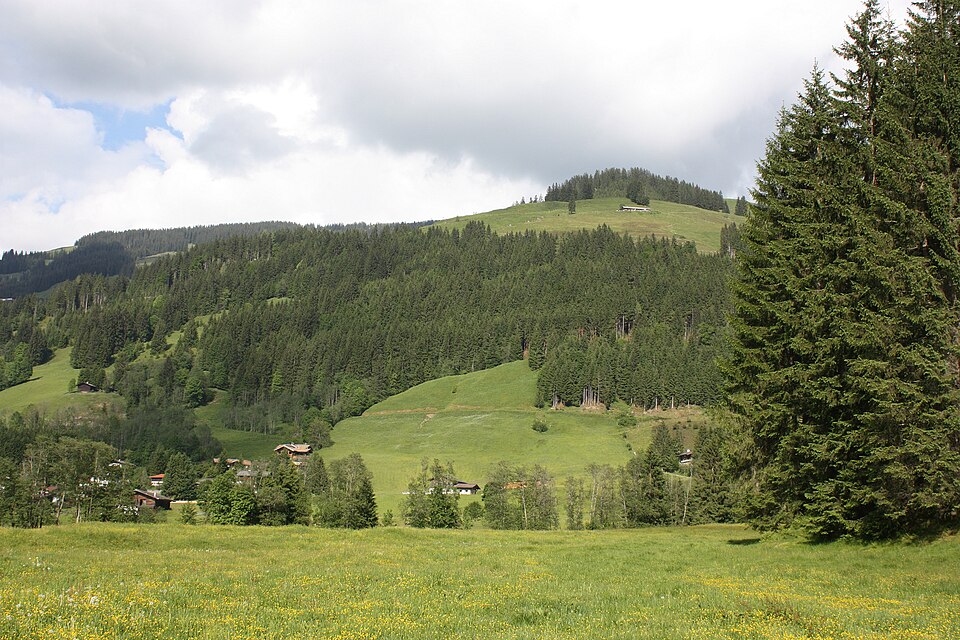
The main ski mountain above the town, reached by the Hahnenkammbahn gondola straight from the centre up to 1,665 m. At the top is the Hahnenkamm race museum, a restaurant and the start of the Streif run. From there, runs continue towards Pengelstein, Kirchberg and Jochberg.
Tip: On Saturday and Sunday mornings the queue for the Hahnenkammbahn stretches out onto the street — at that time, start instead from Kirchberg via the Fleckalmbahn or from Klosterwald, reaching the Hahnenkamm by run in 10 minutes. In summer, the Hahnenkamm is a starting point for mountain hikes, and the ticket down is cheaper than the ticket up.
Admission:
day ski pass from €79
Time needed:
full day
Streif
Hahnenkamm
A 3,312 m World Cup downhill course with 860 m of vertical drop. Sections like the Mausefalle, where racers fly 80 m through the air off the start, or the Steilhang, are legends of downhill skiing. Outside race week, the course is open to the public as a black run.
Tip: The recreational version of the Streif skips the steepest section, the Mausefalle, via a bypass, but the Steilhang remains, and on hard morning snow it's a challenge even for good skiers. Ski it after 11am, once the snow softens. Some 100,000 people come for the Hahnenkammrennen race in January; accommodation is booked a year ahead.
Admission:
included with ski pass
Time needed:
10–15 min run
Kitzbüheler Horn
east of town
The town's second mountain, on the opposite side of the valley, facing southeast and so getting more sun. At the summit, 2,000 m up, stand a transmitter tower, a chapel and an alpine botanical garden with 400 species of mountain flowers. On a clear day you can see the Grossglockner and the Wilder Kaiser from here.
Tip: The Horn is more family-friendly and quieter than the Hahnenkamm, with the best blue runs for beginners above Trattalm. In summer you can drive up on a toll road, which once a year hosts a cycling race up the Horn — for cyclists, one of the steepest climbs in Austria. The botanical garden is in bloom in July.
Admission:
summer cable car from €30 return
Time needed:
half a day
3S Cable Car
3S-Bahn
Pengelstein – Wurzhöhe
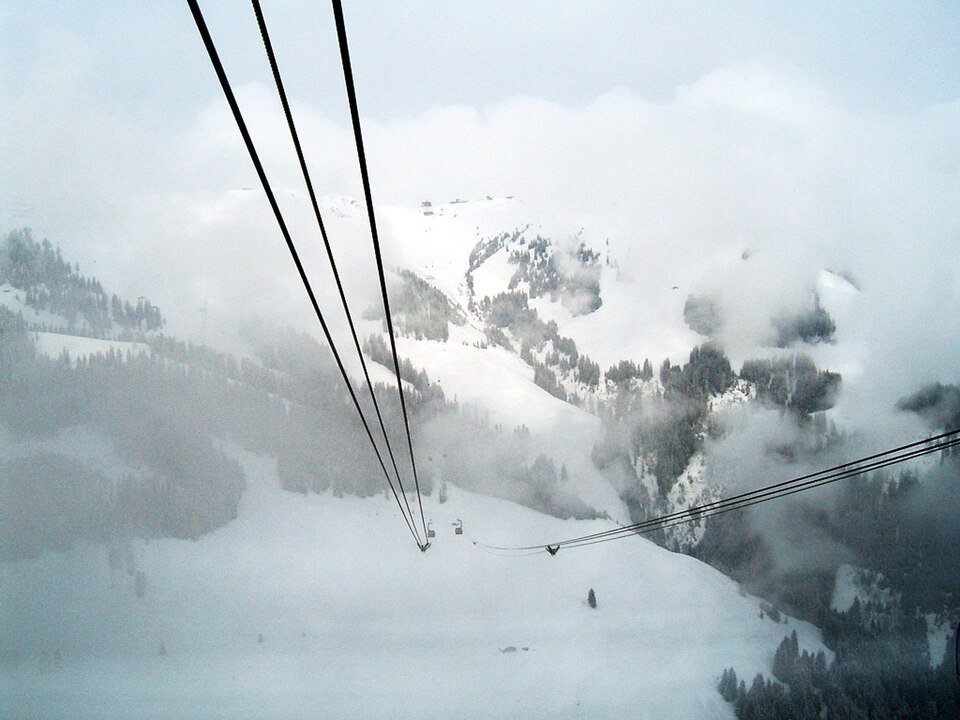
A tricable gondola between Pengelstein and Wurzhöhe, spanning the Saukasergraben valley 400 m above the ground over a length of almost 4 km. Some of the 30-person cabins have a glass floor. It links the two halves of the ski area.
Tip: Wait for the next cabin with the glass floor — it's marked and runs first or second in the sequence during the season. In summer, the cable car is open to walkers and links hikes between the Hahnenkamm and the Resterhöhe — buy a one-way ticket and walk back down to Jochberg.
Admission:
included with ski pass
Time needed:
10 min ride
Old Town
Vorderstadt a Hinterstadt
centre
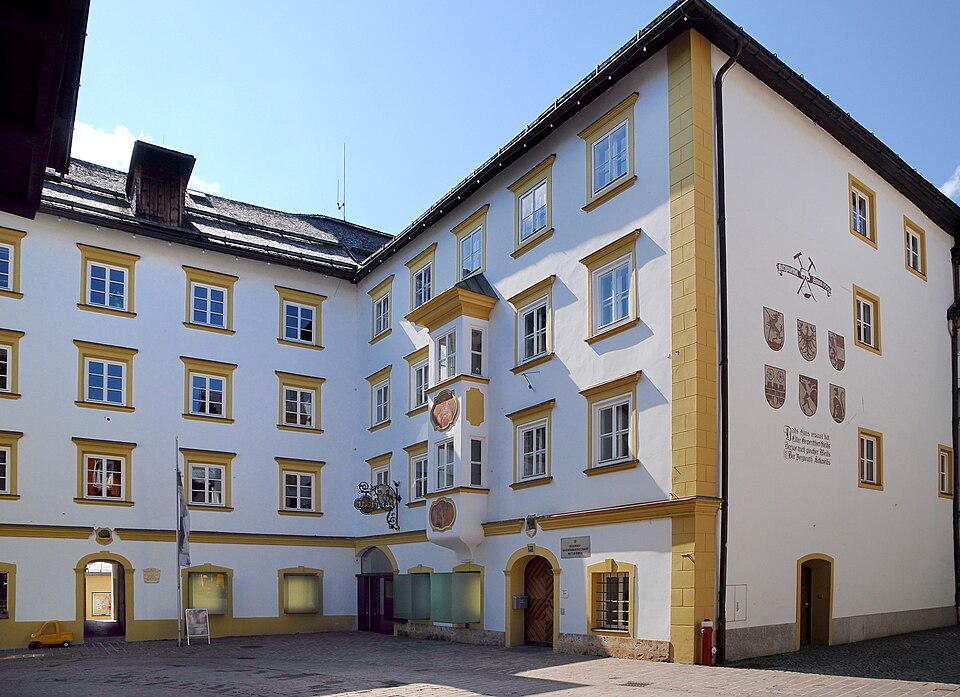
Two parallel streets forming the town's medieval core, with Gothic and Baroque houses in pastel colours, wrought-iron shop signs, boutiques and cafés. At the end stands the parish church of St Andrew, with the Liebfrauenkirche and its tower above, and a path leading round to the cemetery with a view of the Hahnenkamm.
Tip: Parking right in the centre is banned; the nearest garage is by the Hahnenkammbahn, a five-minute walk if you're heading there for a stroll. On Saturday mornings there's a market with farmhouse cheese and speck on Pfarrau. Café Praxmair on Vorderstadt is known for its Florentiner wafers, baked there since 1917.
Admission:
free
Time needed:
1–2 h
Lake Schwarzsee
Schwarzsee
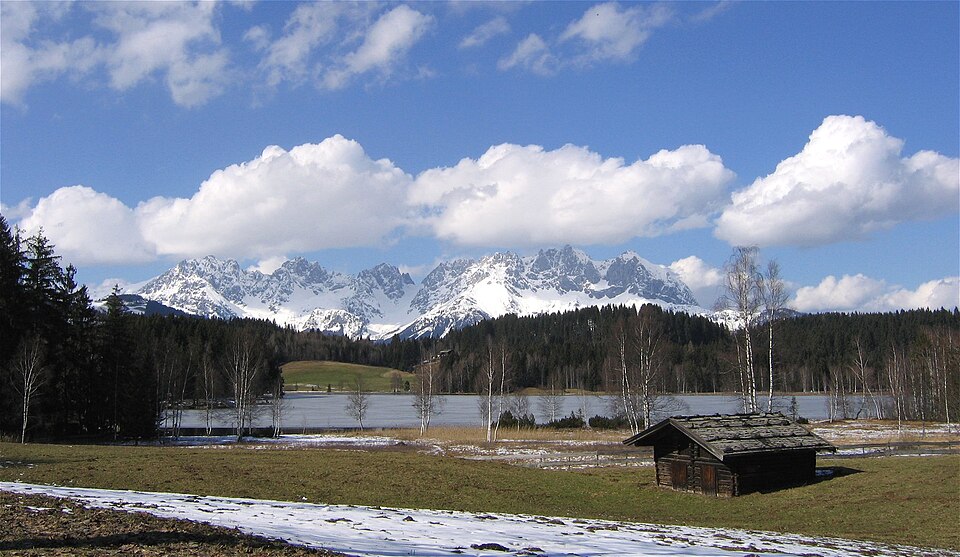
A moor lake 3 km northwest of the centre that warms up to 25°C in summer, making it one of Tyrol's warmest lakes. The water is dark from the peat, hence the name. On the shore there's a lido with a jetty, boat hire and a restaurant with views of the Wilder Kaiser.
Tip: Entry to the main lido is ticketed, but on the far side of the lake there's a public meadow with free access. It's a flat 40-minute walk from the centre, or take the train to the Schwarzsee stop. In winter, when the ice is thick enough, people skate and curl on the frozen lake — the town announces it on its website.
Admission:
lido €6
Time needed:
half a day
Kitzbühel Museum
centre
The town museum, housed in an old granary by the town tower, with exhibits on silver and copper mining, the history of skiing and Kitzbühel's famous skiers, including Toni Sailer, who won all three Alpine skiing events at the 1956 Olympics. It also houses a gallery of painter Alfons Walde, who painted snowy mountains and designed the first ski posters.
Tip: It's the best use of an hour in town in bad weather, and entry is discounted with the guest card. From the upper floor you can see over Vorderstadt to the Hahnenkamm. Take a close look at Walde's paintings — many posters around town are copies of his work.
Admission:
€10
Time needed:
1 h
Aschau and Spertental
Kirchberg
A side valley south of Kirchberg, with the village of Aschau at its end. It's a queue-free way into skiing in winter and offers quiet hiking in summer, with family farms and huts making their own cheese. Runs from Pengelstein reach here via a long blue run all the way to the Aschau cable car.
Tip: In winter a run with almost 1,000 m of vertical drop leads here into Aschau, where parking is free and there's no queue for the cable car — ski buses run here from Kitzbühel. At the end of the valley is the Oberlandhütte, with evening sledging under lights.
Admission:
free
Time needed:
half a day
Wilder Kaiser
Ellmau, Going
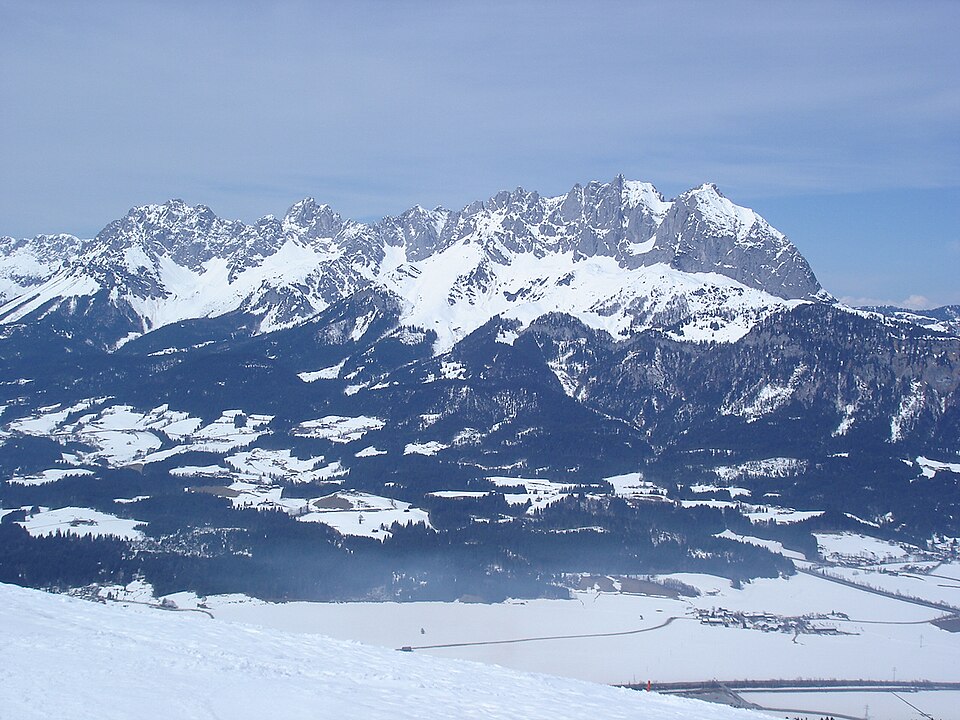
A limestone range north of Kitzbühel, whose jagged peaks are visible from every slope in the area. Beneath the walls lie the Gruttenhütte and Gaudeamushütte huts, with routes suitable even for less experienced walkers. On the southern side is the SkiWelt ski area, the largest linked ski area in Austria.
Tip: The shortest approach to the mountains is from Ellmau or Going, 15 km from Kitzbühel. The hike to Gruttenhütte takes 2 hours along a forest track, with views over the whole valley to Kitzbühel from the top. The Kaiser mountains are great for via ferratas, but experience is essential.
Areas and districts, matched to the kind of trip you are taking
Centre and Vorderstadt
Best for: atmosphere and shopping
The medieval core, five minutes from the Hahnenkamm cable car, with hotels in historic houses, restaurants and après-ski bars. It's the most expensive and, in season, the liveliest address, but you can walk to the slopes and won't need a car or taxi in the evening.
Hahnenkamm and Ehrenbachhöhe
Best for: ski-in ski-out
Hotels and apartments on the slopes above town, right by the runs or the upper cable car station. Skiing is ski-in ski-out, but getting into the centre means a taxi, since it's steep on foot and the cable car, the only way back in the evening, closes in the afternoon.
Kirchberg
Best for: younger visitors, après-ski, lower prices
A village 6 km west, on the other side of the Hahnenkamm, with the same ski area and pass but accommodation around a quarter cheaper. Nightlife is livelier than in Kitzbühel, and both train and ski bus run every 20 minutes.
Jochberg and Aurach
Best for: families, peace and quiet
Villages south of town towards the Pass Thurn, with access to the Wagstätt and Panoramabahn cable cars. Family-run guesthouses, quiet evenings and runs with smaller queues. It's 10 minutes to Kitzbühel by ski bus.
By car, Kitzbühel is reached via Munich and Kufstein, or via Passau and Salzburg; both routes require an Austrian motorway vignette, and winter tyres are necessary in the cold months. By train, the journey runs via Munich and Wörgl, or via Salzburg, taking 7-8 hours from major hubs; Kitzbühel Hahnenkamm station is a 5-minute walk from the cable car. The nearest airports are Innsbruck and Salzburg, while Munich offers the widest choice of flights from across Europe.
Salzburg (SZG) · 80 km
Train via Zell am See· 2 h 15 min· €25
Shared transfer· 1 h 15 min· €50
Innsbruck (INN) · 95 km
Train via Wörgl· 1 h 20 min· €20
Rental car· 1 h 15 min
Munich (MUC) · 150 km
Train via Wörgl· 2 h 40 min· €35
Shared transfer· 2 h· €65
Rental car· 1 h 50 min
Around town
The town centre can be walked in half an hour. Kitzbühel has a dense network of ski buses in winter, free with a ski pass, running to Kirchberg, Jochberg, Aurach and the cable cars up the Horn. Between Kitzbühel, Kirchberg and St. Johann, a regional train runs every hour. A car is worth it for excursions, but parking in the centre is expensive and limited, and hotels charge extra for garage parking. In summer, buses are free with the guest card, and cable cars are discounted.
Ski busIn winter, 7 lines between Kirchberg, Kitzbühel, Jochberg and the cable cars, every 15-30 minutes. Free with a ski pass. · free with ski pass
Regional trainHourly towards Wörgl and Innsbruck, and towards Zell am See and Salzburg. Stops at Kitzbühel Hahnenkamm, Kitzbühel and Schwarzsee. · from €2.50
TaxiTaxi ranks are by the Hahnenkammbahn and on Bichlstraße. Book ahead in the evening during high season, otherwise expect to wait. · €12 within town
Mountain bike and e-bikeOver 200 km of marked trails in summer, with rental at the cable car stations. Bikes can be taken on the cable cars. · €45 a day
CarUseful for trips to the Krimml Waterfalls or Salzburg. Park in the garage by the Hahnenkammbahn in the centre. · garage €25 a day
The ski season runs from late October, when the run at Resterhöhe opens, to mid-April. Kitzbühel sits at just 760 m and snow conditions down in the valley are unreliable, so the resort relies on snowmaking, and the most dependable snow is in January and February. The most expensive periods are Christmas, New Year, the week of the Hahnenkammrennen in January, and the February school holidays. In summer, from June to September, people hike, cycle and play golf on 4 courses. The shoulder seasons in November and May are quiet, but the cable cars are closed.
Best time
January and February for skiing, June to September for hiking
What to avoid
the week of the Hahnenkammrennen, unless you're going for the race, and May, when most cable cars are closed
Month
Jan
Feb
Mar
Apr
May
Jun
Jul
Aug
Sep
Oct
Nov
Dec
Day
1°
3°
8°
12°
17°
20°
23°
22°
18°
14°
7°
2°
Night
-8°
-7°
-3°
1°
6°
9°
11°
11°
7°
3°
-2°
-6°
Rainy days
10
9
11
13
15
16
16
15
11
9
10
10
Food & drink
Kitzbühel has 2 culinary scenes: up on the mountains, dozens of huts serving Tyrolean cuisine, and down in town, restaurants with Michelin stars and dinners costing €100 a head. The mountain huts on the Hahnenkamm are good quality and not markedly more expensive than elsewhere in Tyrol; one local quirk is that almost every hut has its own recipe for Kaiserschmarrn. In town, cheap eats can be found at bakeries and butchers selling ready meals to take away, and at evening pizzerias. Kitzbühel is also a golf and wine town, and its wine shops carry a wide range of Austrian varieties.
What to try
Kaspressknödel
Flat dumplings made from white bread, eggs and pungent mountain cheese, pan-fried and served either in beef broth or with cabbage salad. It's the cheapest hot dish on any hut menu, usually under €12.
Tiroler Gröstl
Fried potatoes with onion and diced boiled beef or pork, topped with a fried egg and served with caraway cabbage salad. Originally a way to use up Sunday lunch leftovers, now a fixture on every mountain menu.
Kasspatzln
Tyrolean egg noodles baked with pungent cheese and topped with fried onions, often served straight from the pan they were cooked in. Portions are generous and heavy on cheese — order a green salad on the side, not a starch.
Kaiserschmarrn
Shredded pancake with raisins, dusted with icing sugar and served with plum compote. It's a full meal, not a dessert — portions are usually meant for 2, and mountain huts serve it as a main course.
Tiroler Speck
Smoked pork leg air-dried in the mountain climate, sliced thin. The protected g.g.A. designation guarantees Tyrolean origin; huts serve it as a Brettljause on a wooden board with cheese, horseradish and dark bread.
Florentiner
Wafers of almonds and candied fruit coated in chocolate on the underside, baked at Café Praxmair since 1917 to a recipe that's never been revealed. Sold by the piece or in gift boxes, and the best souvenir from Kitzbühel.
Germknödel
A yeast dumpling filled with plum jam, drizzled with melted butter and dusted with poppy seeds and sugar. On the huts it's eaten as lunch, not dessert, and it fuels a whole afternoon of skiing.
Obstler and Zirbenschnaps
Obstler is a fruit brandy made from apples and pears; Zirbenschnaps is infused with Swiss pine cones and has a resinous, slightly spiced flavour. Huts pour it after meals, often on the house as a thank-you.
What it costs
Espresso in town
€3.80
Lunch at a mountain hut
€18–28
Dinner at a restaurant in the centre
€45–90 per person
Day ski pass
€79–85
Ski rental for a day
€40–60
Return cable car to the Horn in summer
€30
Beer at après-ski
€6
Night in a 3-star hotel for 2
€180–350, up to €500 in January
Indicative prices that change over time — treat them as a guide, not a price list.
Practical information
SocketsCEuroplug, two round pinsFSchuko
Voltage230V / 50Hz
Tap waterTap water is drinkable — Vienna and most of Austria drink water from mountain springs that flows straight into the tap by gravity with no chemical treatment — it's some of the best tap water in Europe, and buying bottled makes no sense. In restaurants, though, a glass of tap water is usually charged at around €1, since staff serve it as a drink; a glass to go with coffee, on the other hand, comes free automatically. Towns have public fountains marked "Trinkwasser".
TippingTipping is customary and expected in Austria: 5-10%, rounded up for coffee. It isn't left on the table, though — you tell the server the total including the tip when you pay ("22, please") and they hand back the change. You pay at the table, not at a till, and everyone usually pays for themselves; the server will ask "zusammen oder getrennt?" ("together or separate?"). At hotels, housekeeping gets €1-2 a night, porters €1 per bag.
Driving on theright
SafetyCrime in the Tyrolean and Salzburg mountains is negligible; a lost wallet is usually handed in to the local council office. The real risks are the mountains themselves: avalanche conditions change day to day in winter and are published every morning at lawis.at — nobody heads off-piste without an avalanche transceiver. Piste rules follow FIS regulations, and after a collision the police are called just as for a road accident. In summer, storms typically roll in after 2pm, so hikes should start early in the morning. Mountain rescue by helicopter is not free — without insurance covering mountain rescue, a callout can run to thousands of euros. The emergency number is 112, mountain rescue is 140.
Opening hoursOpening hours are more relaxed at mountain resorts than in cities: in ski season, supermarkets and sports shops are open even on Sundays, usually from 8am to 7pm. Cable cars run roughly from 8:30am to 4:30pm, and mountain huts close with the last run. Restaurants serve lunch from 11:30am to 2pm and dinner from 6pm to 9pm; in between they offer only soup and Kaiserschmarrn. The shoulder season, from mid-April to the end of May and in November, means most hotels and cable cars are closed.
Customs & etiquetteKitzbühel follows Tyrolean customs: say "Grüß Gott" on entering a shop or a hut, and greet anyone you meet in the mountains. Ski boots aren't worn around town — shops don't like it, and the pavements are slippery. At huts, don't take tables reserved with jackets and helmets if you're eating elsewhere. Après-ski is loud, but the centre quietens down noticeably after 6pm. In town hotels it's customary to change for dinner; mountain wear is only welcome up on the slopes.
A few local wordsHello — Grüß Gott / ServusThank you — DankeOne day ski pass, please — Einen Tagesskipass, bitteThe bill, please — Zahlen, bitteCheers — ProstWhere's the cable car? — Wo ist die Bergbahn?
How to plan your days
1 day
A day skiing
1In the morning, take the Fleckalmbahn from Kirchberg to avoid the queue.
2Mid-morning runs around Pengelstein and the 3S cable car across the valley.
3Lunch at a hut on Wurzhöhe or Ehrenbachhöhe.
4Afternoon on the Streif once the snow has softened after 11am.
5Evening stroll along Vorderstadt and après-ski by the Hahnenkammbahn.
2 days
A summer weekend
1Day 1: cable car to the Hahnenkamm, a ridge hike, then descend into town.
2Afternoon swim at Lake Schwarzsee.
3Day 2 at the Kitzbüheler Horn and the botanical garden.
4Lunch at the Alpenhaus or Trattalm.
5Afternoon at the museum and Café Praxmair.
3 days
3 days with a day trip
1The first 2 days as above.
2Day 3 by car or train to the Krimml Waterfalls.
3Or alternatively, the Wilder Kaiser from Ellmau and a hike to Gruttenhütte.
4Back in Kitzbühel in the evening for dinner in Hinterstadt.
Day trips
Krimml Waterfalls
55 km · 1 h by car via Pass Thurn
Austria's highest waterfalls, where water drops a total of 380 m over 3 tiers. The path alongside the falls climbs for 1.5 hours through forest with ever-changing views, and at several viewpoints the spray is strong enough to soak you. Flow is heaviest in June and July, after the snowmelt.
A fortress above the Inn river on the border with Bavaria, home to the world's largest outdoor organ — the Heldenorgel plays every day at noon and can be heard across the whole town. The fortress has a museum, and the ramparts offer views of the Wilder Kaiser. The town below has the charming Römerhofgasse lane, lined with wine bars.
Frequently asked questions
Is Kitzbühel good for beginners?+
Yes, Kitzbüheler Horn and the Gaisberg area in Kirchberg have wide blue runs and ski schools with children's parks. The Hahnenkamm and the Streif, by contrast, are for advanced skiers — beginners shouldn't start on that mountain.
Is snow reliable in Kitzbühel?+
Skiing is at low altitude, around 800 m at the base, so snow can be artificial only at the start and end of the season. The resort snowmakes almost all its runs, though, and the highest area, Resterhöhe at 2,000 m, has snow from November.
When is the Hahnenkammrennen race?+
Every year in the second half of January, with the downhill run on the Saturday. Up to 100,000 spectators attend, accommodation is booked out a year ahead, and prices double. Entry to the finish area is ticketed.
How do I get to Kitzbühel without a car?+
By train via Munich and Wörgl, or via Salzburg, taking 7-8 hours. Trains and shared transfers run from Munich, Salzburg and Innsbruck airports. Within the resort, ski buses are enough, and they're free with a ski pass.
How much does a ski pass cost?+
A day pass for KitzSki costs around €80 in high season, a 6-day pass around €400. The area is also linked to the Superskipass, valid in other resorts across Tyrol and Salzburg.
What is there to do in Kitzbühel in summer?+
Hiking on the Hahnenkamm and the Horn, swimming in Lake Schwarzsee, mountain biking and golf on 4 courses. The guest card gives discounts on cable cars and free transport around the region.
Is Kitzbühel expensive?+
Accommodation and restaurants in town are, yes, especially in January. But ski passes and lunch at mountain huts are on a par with other major Austrian resorts. Cheaper accommodation can be found in Kirchberg or Jochberg, on the same ski pass.
Where's the best place to stay in Kitzbühel?+
For skiing without a car, stay in the centre near the Hahnenkammbahn; with children, Jochberg or Aurach; for après-ski and lower prices, Kirchberg. Hotels on the slopes are ski-in ski-out, but a taxi is needed to get into town in the evening.
Visabestimmungen
Prüfen Sie die aktuellen Visabestimmungen für die Einreise in dieses Land.