Hotels in Seattle

Coffee, ferries and a volcano above the skyline

Seattle

SpracheEnglish
WährungUSD
ZeitzoneGMT-8
Temperatur5-30 °C
Vorwahl+1
Bevölkerung335M
Fläche9,833,520 km²
SteckdosenTyp A / Typ B
LeitungswasserTrinkbar

Entdecken Sie Seattle

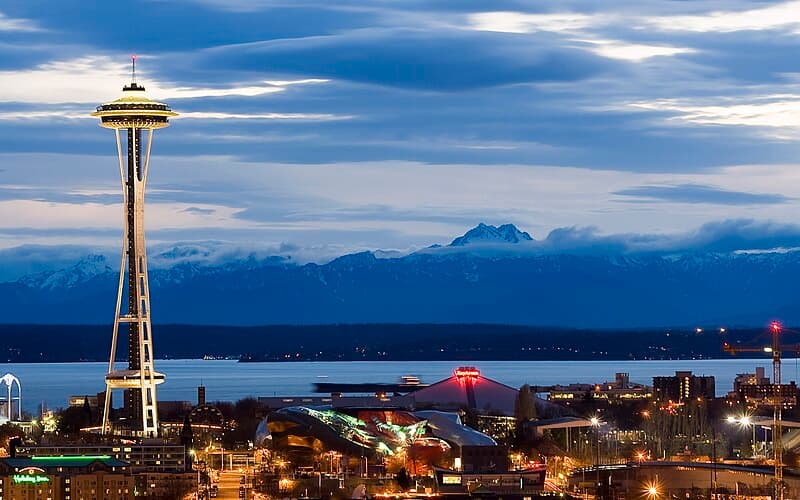
Seattle sits on a narrow isthmus between the saltwater Puget Sound and Lake Washington, ringed by mountains on three sides. On a clear day, the glacier-capped Mount Rainier volcano, over four thousand metres tall, hovers above the skyline, and viewpoints reveal the snow-covered Olympic Mountains too. The city is home to Boeing, Microsoft and Amazon, making it wealthy, young and expensive, and it's also the birthplace of the café culture Starbucks exported worldwide, as well as the grunge sound of Nirvana and Pearl Jam. Its rainy reputation is overstated: Seattle gets fewer millimetres of rain than New York, just often and lightly, while summer is dry and sunny. A visit revolves around Pike Place Market above the harbour, the Space Needle, and hillside neighbourhoods linked by ferries and steep streets. Seattle makes a good first stop on a Pacific Northwest trip — Vancouver is three hours away, Mount Rainier two.

What to see

The places worth your time in Seattle, and what to expect at each

Pike Place Market

Pike Place Market

Downtown

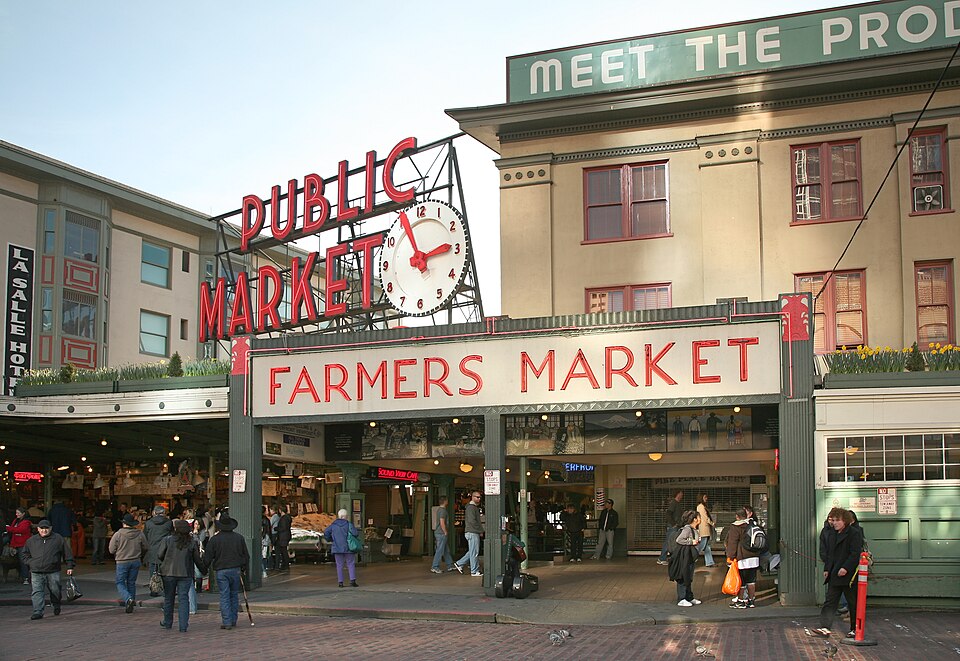
A market above the harbour open since 1907, the oldest continuously operating farmers market in America. Across a maze of nine levels are fishmongers who toss salmon over the counter, flower stalls, bakeries, a bookshop of vintage comics, and the original 1971 Starbucks.

Tip: Go before 9am, before the cruise ship crowds arrive — by noon the main arcade is nearly impassable. Skip the queue at the original Starbucks; there's no seating and the coffee is the same as anywhere else. The gum wall is in Post Alley beneath the market.

Admission:
free
Time needed:
2 h
Space Needle

Space Needle

Seattle Center

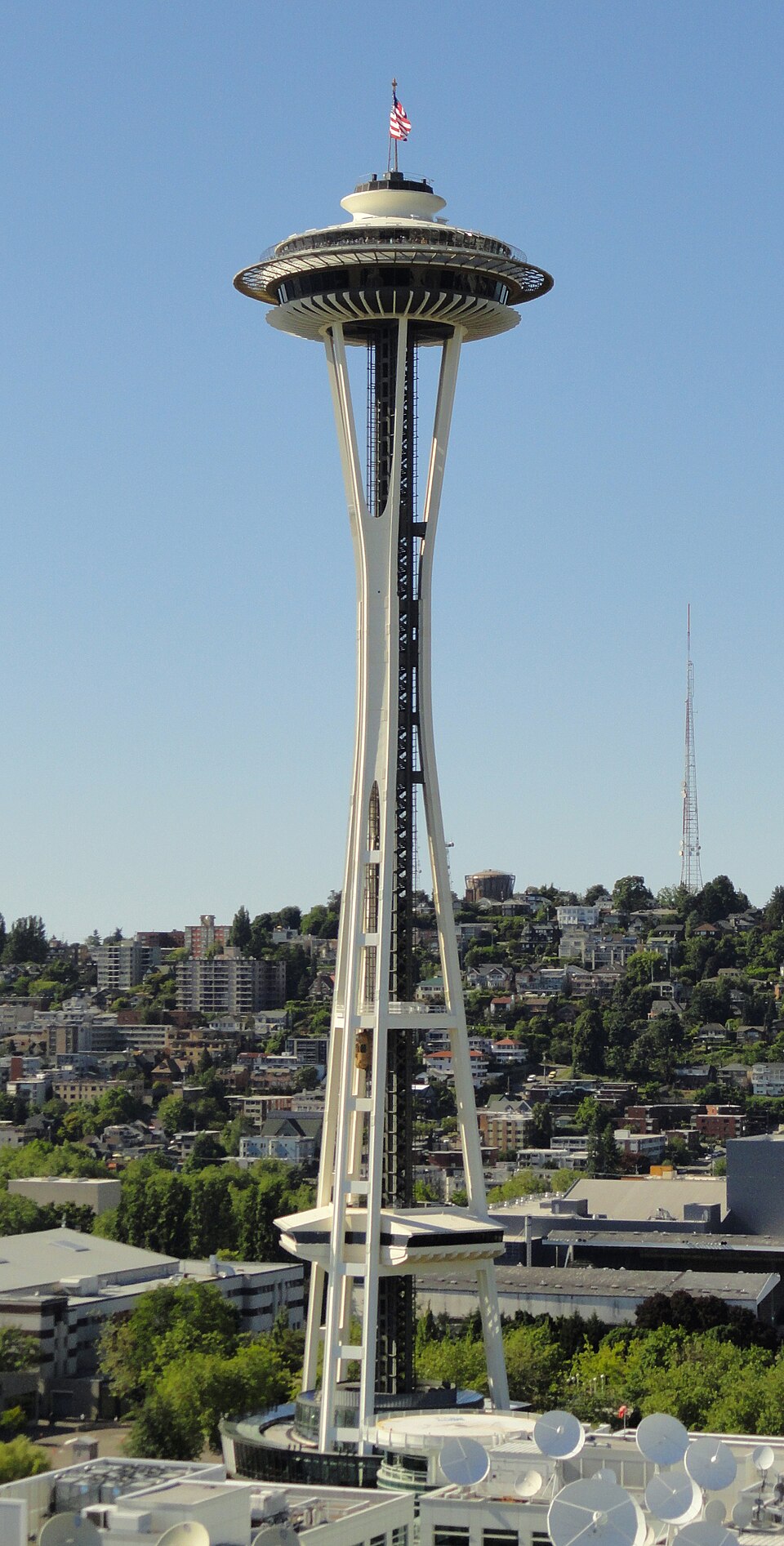
A 184-metre observation tower built for the 1962 World's Fair, the symbol of the city. The upper deck has a rotating glass floor and glass walls, with Mount Rainier and the Olympic Mountains visible on a clear day.

Tip: Buy a timed-entry ticket for a clear day, an hour before sunset — in fog it's forty dollars wasted. A combo ticket with the Chihuly glass museum next door works out cheaper. Skip paying entirely for a similar view, free, from Kerry Park.

Admission:
admission fee
Time needed:
1 h
Chihuly Garden and Glass

Chihuly Garden and Glass

Seattle Center

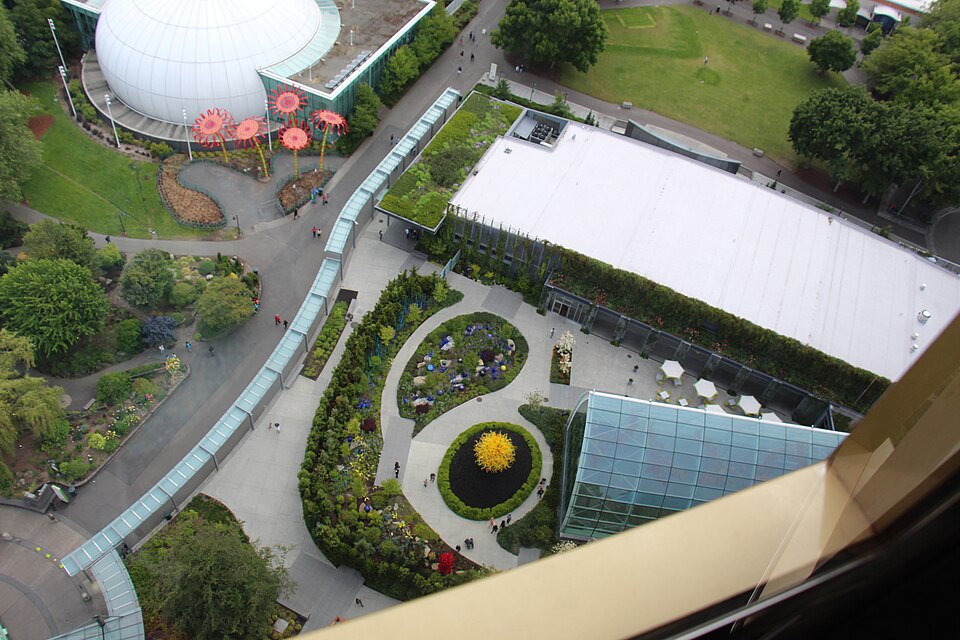
A museum of glass artworks by local artist Dale Chihuly at the base of the Space Needle. Giant coloured chandeliers, a glass boat filled with orbs, a garden where glass flowers grow among real plants, and a greenhouse with a twelve-metre glass garland.

Tip: The garden looks best at dusk, when the glass lights up, and the evening queue is shorter. Tickets after 5pm are usually cheaper. The greenhouse gets hot on a sunny afternoon, while fog outside makes for the best photos.

Admission:
admission fee
Time needed:
1–1.5 h
Museum of Pop Culture

Museum of Pop Culture

Seattle Center

A museum of popular culture in a Frank Gehry building meant to evoke a smashed electric guitar. Permanent exhibits on Nirvana and Jimi Hendrix, both Seattle natives, plus sci-fi and horror, and a room where you can play instruments and record a song.

Tip: The Sound Lab music room upstairs is the most fun part and most people rush past it. The Monorail from downtown runs right underneath the building, so it's easy to combine the ride with your visit. Online tickets are cheaper than at the door.

Admission:
admission fee
Time needed:
2 h
Pioneer Square Underground

Pioneer Square Underground

Pioneer Square

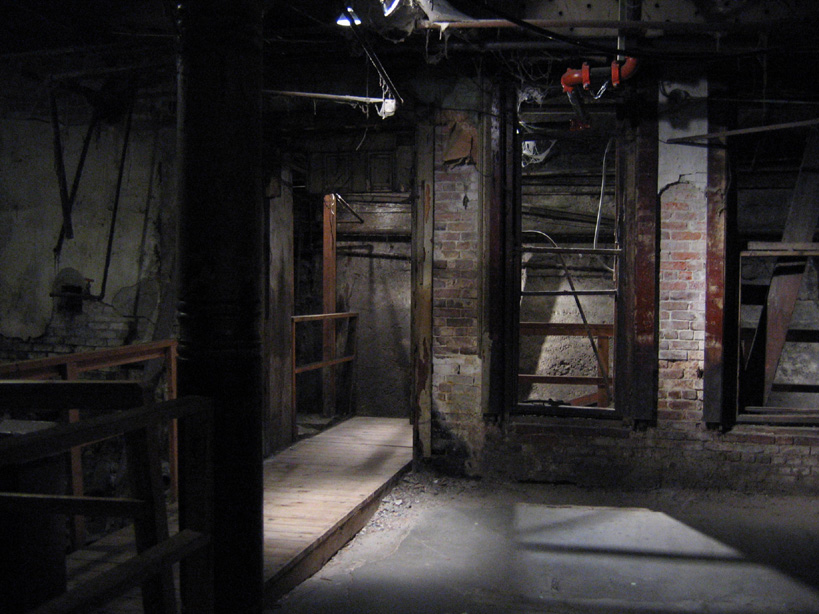
After a fire in 1889, the city raised its streets by one to two storeys, leaving the original shopfronts buried beneath the new sidewalks. The tour winds through passages beneath today's Pioneer Square, telling the city's bizarre history from loggers to brothels.

Tip: The Bill Speidel's Underground Tour guides bring sharp humour and speak fast English — those who don't follow well will miss half the jokes. While walking the sidewalks above, look for the purple glass blocks that light the underground below.

Admission:
admission fee
Time needed:
75 min
Ballard Locks

Ballard Locks

Ballard

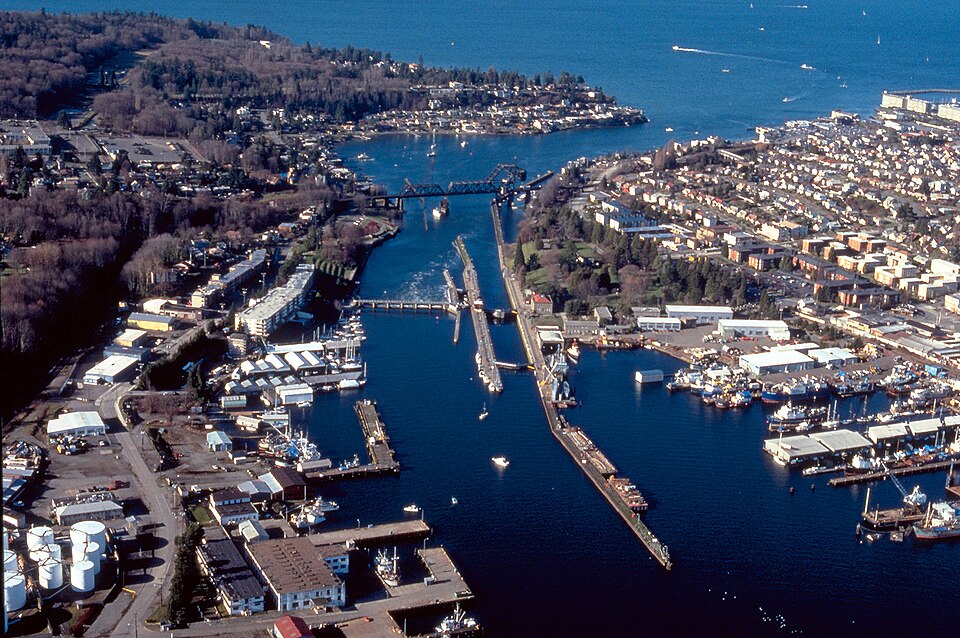
Locks connecting freshwater lakes to the saltwater Puget Sound, with boats rising and falling up to seven metres. Alongside runs a fish ladder with an underwater viewing window where, from July to September, salmon can be seen leaping upstream.

Tip: Best visited in August, when the most salmon are running. The locks can also be reached by a sightseeing boat from the harbour, which passes through the canal by the houseboats from Sleepless in Seattle. The botanical garden next door is free.

Admission:
free
Time needed:
1 h
Kerry Park

Kerry Park

Queen Anne

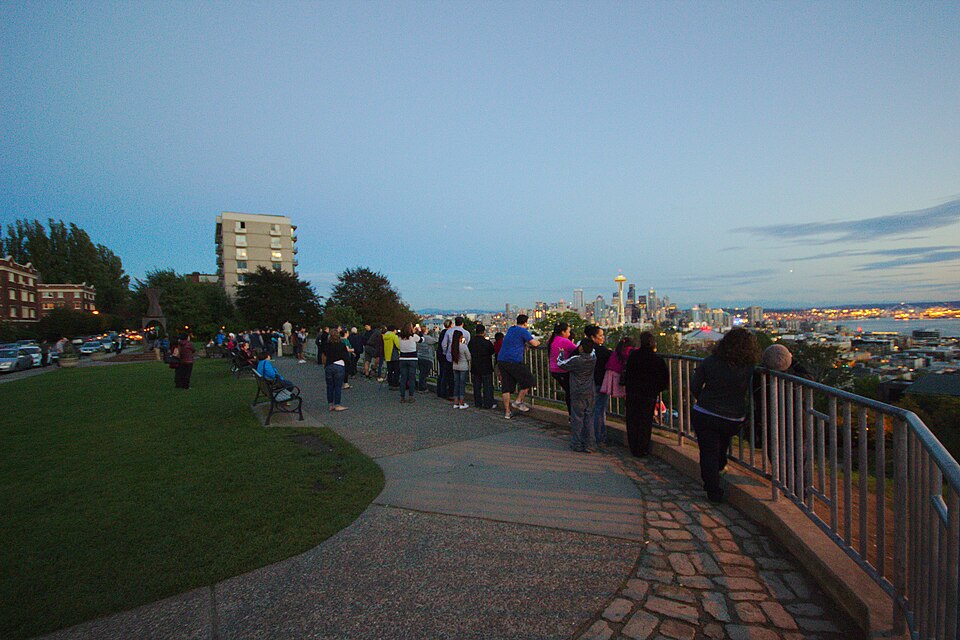
A small viewing terrace on the slope of Queen Anne Hill, offering the most iconic view of Seattle: the Space Needle in the foreground, skyscrapers behind it, and Mount Rainier looming above. The same shot appears on postcards and TV shows alike.

Tip: Arrive an hour before sunset and stay until dusk, when the city lights up. Parking nearby is difficult; bus route 2 or 13 is a better bet. Rainier is only visible on a fully clear day, roughly one day in three during summer.

Admission:
free
Time needed:
30 min
Olympic Sculpture Park

Olympic Sculpture Park

Belltown

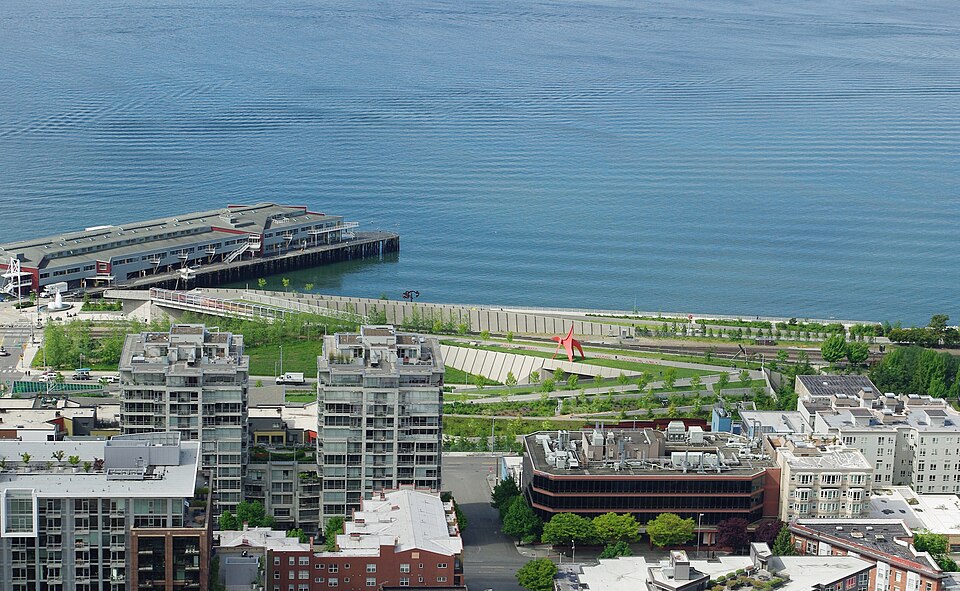
An outdoor sculpture park built on a former oil storage site above the bay, with works by Alexander Calder, Richard Serra and Louise Bourgeois. A zigzagging path leads down from the city to the beach and on to the waterfront promenade.

Tip: The park is free from sunrise to sunset. Combine it with a walk along the waterfront north to Myrtle Edwards Park, which is quieter and has ferry views. There's a small pebble beach by the water for families with kids.

Admission:
free
Time needed:
1 h
Discovery Park

Discovery Park

Magnolia

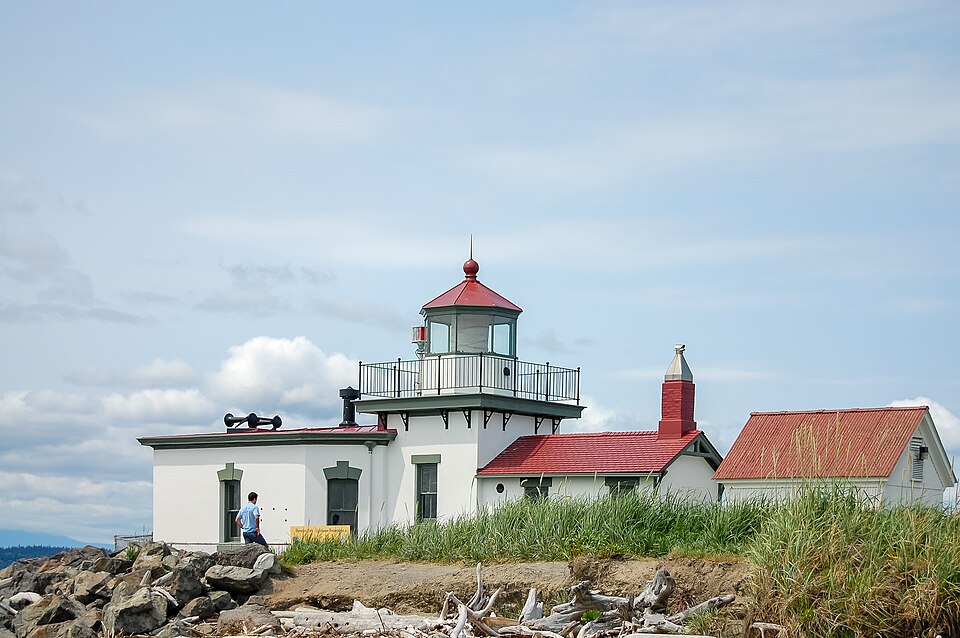
Seattle's largest park, on a former military base: two hundred hectares of forest, meadow and bluffs above Puget Sound. A trail leads to the beach and the white West Point Lighthouse, with views of the Olympic Mountains.

Tip: The Loop Trail runs four and a half kilometres, with a spur down to the lighthouse beach. The visitor centre car park fills by mid-morning on weekends; bus 33 from downtown reaches the park. At low tide, the beach reveals tide pools with tiny crabs and starfish.

Admission:
free
Time needed:
2–3 h

Photos: Pike Place Market — Daniel Schwen (CC BY-SA 4.0) · Space Needle — Jordon Kalilich (Public domain) · Chihuly Garden and Glass — Jllm06 (CC BY-SA 4.0) · Museum of Pop Culture — Museum of Pop Culture (Public domain) · Pioneer Square Underground — Wikimedia Commons (CC BY-SA 3.0) · Ballard Locks — Unknown Photographer / US Army Corps of Engineers (Public domain) · Kerry Park — Sage Ross (CC BY-SA 2.0) · Olympic Sculpture Park — M.O. Stevens (CC BY-SA 3.0) · Discovery Park — Cody Logan (CC BY-SA 4.0)

Where to stay

Areas and districts, matched to the kind of trip you are taking

Downtown and Belltown

Best for: a first visit

The centre, with Pike Place Market, the waterfront and shops. Belltown, north of the market, has bars, restaurants and hotels closer to Seattle Center. Lively in the evening, though some streets in the core of downtown see homeless encampments.

Capitol Hill

Best for: nightlife and cafés

A hill east of downtown with clubs, bars, bookshops and cafés, and the centre of the local LGBT community. The Starbucks Reserve Roastery is on Pike Street. Volunteer Park, with its conservatory and views, sits at the neighbourhood's north end.

Fremont and Ballard

Best for: local atmosphere

Former working-class and fishing suburbs to the north. Fremont has a troll statue under a bridge, a Sunday market and a statue of Lenin. Ballard has Scandinavian roots, breweries, oyster bars and the locks. Housing here is cheaper and quieter.

Pioneer Square

Best for: history and sports

The oldest neighbourhood, with brick buildings from after the great fire, galleries and the entrance to the Underground tour. Right next door are the football and baseball stadiums. After dark, though, the district empties out and doesn't feel entirely comfortable.

Getting around

From the airport

Seattle-Tacoma Airport, known as Sea-Tac, lies twenty kilometres south of downtown. From Prague, flights connect via London, Amsterdam, Frankfurt, Reykjavik or Dublin, with total travel time of twelve to fifteen hours. The Link 1 Line light rail runs from the airport into downtown in forty minutes. An ESTA authorisation is required before departure. Amtrak Cascades trains and buses run the coast from Vancouver in four hours, and from Portland by train in three and a half. Seattle is also a departure port for Alaska cruises.

Seattle-Tacoma International (SEA) · 20 km

  • Link 1 Line light rail to downtown· 40 min· 3 USD
  • Taxi to downtown· 25–45 min· 55 USD
  • Uber / Lyft· 25–45 min· 40 USD

Around town

Downtown is hilly but compact, and it's walkable from Pike Place to Pioneer Square and Seattle Center. For longer distances, there's the Link light rail, buses and the short Monorail. Pay with an ORCA card or the Transit GO app. Ferries across Puget Sound double as public transit and the cheapest scenic cruise in town. A car is needed for mountain day trips, not for the city — downtown parking runs thirty to fifty dollars a day.

Link light railFrom the airport through downtown to Capitol Hill and the university. Runs every eight to ten minutes. · 3 USD
MonorailA two-minute ride from Westlake Center to Seattle Center, built for the 1962 World's Fair. · 4 USD
King County Metro busesA dense network to every neighbourhood, paid with an ORCA card or contactless. · 3 USD
Washington State FerriesFrom Pier 52 to Bainbridge Island and Bremerton. Only the outbound leg from Seattle is charged; the return is free. · 10 USD
Uber / LyftGood for evenings and neighbourhoods off the transit lines; prices rise in the rain. · 15 USD around downtown

Useful apps: Uber, Lyft, Transit GO, OneBusAway, Google Maps

When to go

Best from July to September: a dry, sunny, warm summer around 25°C, when Mount Rainier is visible most often and mountain trails wind through wildflower meadows. It's also peak season, with the highest hotel prices and Alaska cruise ships unloading thousands of people downtown every Saturday. From October to April it's grey with near-daily drizzle, though freezing is rare, and prices are low. May and June are transitional: green, mild days alternate with drizzle locals call 'June gloom'. In August, wildfire smoke from inland can sometimes blanket the city.

Best time

July to September

What to avoid

November to January, for rain and short days

MonthJanFebMarAprMayJunJulAugSepOctNovDec
Day8°10°12°15°19°22°26°26°22°16°11°8°
Night2°2°4°6°9°12°14°14°11°8°4°2°
Rainy days18151614108447131818

Food & drink

Seattle runs on seafood from the cold waters of the North Pacific: wild salmon, Dungeness crab, oysters from bay farms, and clams. Thanks to a large Asian community, the city has excellent Japanese, Vietnamese and Chinese restaurants, plus dim sum in the International District. Coffee is a religion — beyond the original Starbucks, dozens of independent roasters operate here. Food is expensive, since wages are high too; the cheapest options are Pike Place Market and the International District. Restaurant bills add a sales tax of over ten percent, plus a tip.

What to try

Wild salmon

Chinook, sockeye or coho grilled on a cedar plank, which gives it a smoky flavour. Fresh only in season, May to September; otherwise it's frozen.

Dungeness crab

A sweet, meaty crab from cold waters, served whole boiled with butter or in crab cakes. Price follows the catch, and a whole crab costs forty to sixty dollars.

Oysters

Farmed in Puget Sound's bays; the small Kumamoto and Olympia varieties are the most delicate. Oyster bars in Ballard run afternoon happy hours for a few dollars each.

Pike Place clam chowder

Sold at the market in a cup or a bread bowl, with a queue often forming at the Pike Place Chowder stall. The local version is thick and creamy.

Teriyaki

Seattle's version of grilled chicken in Japanese sauce with rice and salad is a cheap lunch, and there are well over a hundred teriyaki joints in town.

Dim sum

Served in the International District from morning into the afternoon, with weekend queues. Dumplings are ordered from carts or a menu.

Coffee

Seattle is the birthplace of café culture; beyond the Starbucks Reserve Roastery, try local roasters Victrola, Espresso Vivace or Elm. Lattes are drunk all day long.

What it costs

Latte

5–7 USD

Chowder at the market

9–15 USD

Seafood dinner

50–90 USD per person

Beer at a brewery

8–10 USD

Space Needle admission

from 35 USD

Ferry to Bainbridge and back

10 USD

Light rail from the airport

3 USD

Night in a 3-star hotel downtown

200–350 USD + tax

Indicative prices that change over time — treat them as a guide, not a price list.

Practical information

SocketsAtwo flat pins (US/JP)Btwo flat pins plus ground (US)
Voltage120V / 60Hz
Tap waterTap water is drinkable — Tap water in the United States is safe to drink, and restaurants serve it free with ice — just ask for 'tap water'. Buying bottled is unnecessary and expensive — a bottle costs two to three dollars in a shop, five near an attraction. A refillable bottle is worth carrying, with filling stations at airports and in parks. Ice is everywhere, and drinks are served noticeably colder than is typical in Europe.
TippingTipping isn't optional here — it's part of staff wages. At a table-service restaurant, tip eighteen to twenty percent of the pre-tax total; at a bar, a dollar per drink; taxi and rideshare drivers get fifteen percent; housekeeping gets three to five dollars a night; porters two dollars per bag. Payment terminals usually offer percentage buttons — watch out, since these sometimes calculate off the tax-included total. Seattle adds a sales tax over ten percent to prices, and hotel tax over fifteen percent, so the final bill is always higher than the sticker price.
Driving on theright
SafetyTourist areas are safe by day, but Seattle has a large homeless population, and around 3rd Avenue and Pine Street downtown you'll encounter people visibly under the influence of drugs. It isn't a direct danger, but avoid that stretch at night and take Uber instead. Break-ins to parked cars are common — leave nothing visible on the seats. Hospital treatment costs thousands of dollars, so insurance is essential. The emergency number is 911.
Opening hoursShops are open from ten to nine including Sundays, and supermarkets and pharmacies like CVS or Walgreens are often 24 hours. Restaurants serve breakfast from six, lunch from eleven, and dinner early — by 9pm many kitchens are already closing. Bars check ID for anyone who looks under forty, and won't serve without a passport; a copy isn't accepted. Drinking alcohol in public, on the beach or in a car is illegal.
Customs & etiquetteFriendly small talk from service staff is a professional norm, not an invitation to friendship. Queuing is respected, and personal space is larger than in Europe. Haggling only happens over cars and at flea markets, never elsewhere. Smoking is banned in practically all indoor spaces and on many beaches. Questions about salary and politics aren't opened with strangers. Seattle's polite reserve is known as the 'Seattle Freeze' — people are friendly but slow to open up. Locals don't carry umbrellas; they wear a waterproof jacket with a hood instead.
A few local wordsHello — Hi / Good morningThank you — Thank youThe bill, please — Check, pleaseJust browsing — Just looking, thanksHow much does it cost including tax? — How much is it with tax?Tap water, please — Tap water, please

How to plan your days

1 day

One day in Seattle

  1. 1Morning at Pike Place Market and coffee in Post Alley.
  2. 2A waterfront walk to the Olympic Sculpture Park.
  3. 3Monorail to Seattle Center, Chihuly Garden and the Museum of Pop Culture.
  4. 4Space Needle before sunset.
  5. 5Evening seafood on Capitol Hill.

2 days

Two days in Seattle

  1. 1Day one as above.
  2. 2Morning two, the Pioneer Square Underground.
  3. 3Ferry to Bainbridge Island and lunch at the harbour.
  4. 4Afternoon at the Ballard Locks watching salmon.
  5. 5Evening at Ballard breweries and sunset at Kerry Park.

3 days

Three days in Seattle

  1. 1Two days as above.
  2. 2Day three, a full-day drive to Mount Rainier's Paradise area.
  3. 3A short hike along the Skyline Trail.
  4. 4On the way back, a stop at Snoqualmie Falls.
  5. 5Evening dim sum in the International District.

Day trips

Mount Rainier

140 km · 2–2.5 h by car

A national park surrounding a glacier-capped volcano 4,392 metres high. The Paradise area on the south slope has meadows full of wildflowers in July and August, with trails overlooking the glaciers. The road to Sunrise is only open in summer. Park entry is charged per car, and a timed-entry reservation is required in summer.

Bainbridge Island

15 km · 35 min by ferry

A ferry from Pier 52 crosses the bay with views of the Seattle skyline and the Olympic Mountains. On the island is the small town of Winslow, with wineries, bakeries and an art museum, plus the Bloedel Reserve garden. Foot passengers pay only for the outbound trip.

Snoqualmie Falls

45 km · 40 min by car

An eighty-two-metre waterfall, familiar from Twin Peaks, as is the Salish Lodge hotel above it. The viewpoint is by the car park, and a trail down to the base of the falls runs a kilometre and a half. Water flow peaks in spring during snowmelt.

Frequently asked questions

Does it really rain all the time in Seattle?+

From October to April it drizzles often, but Seattle actually gets less annual rainfall than New York or Miami. Summer, by contrast, is dry and sunny — in July it rains on average just four days.

How many days are enough for Seattle?+

Two days cover downtown, the market, the Space Needle and a ferry ride. A third day suits a trip to Mount Rainier or the Olympic Peninsula. Seattle also connects well with Vancouver.

Is the Seattle CityPASS worth it?+

It pays off if you want the Space Needle, the aquarium, the Museum of Pop Culture and a scenic cruise. The market, parks and the locks are free anyway.

When can you see Mount Rainier?+

Only on a clear day, most often from July to September. Locals say 'the mountain is out' when it's visible. The best views are from Kerry Park and the Space Needle.

How do I get from the airport to downtown?+

By the Link 1 Line light rail for three dollars, taking forty minutes, running from 5am to 1am. Taxi and Uber cost forty to sixty dollars.

Where should I stay in Seattle?+

Downtown or Belltown for a first visit, Capitol Hill for nightlife, Queen Anne for a quieter stay near Seattle Center. Airport-area hotels are cheaper, with light rail into downtown in forty minutes.

Can I take a trip to Canada from here?+

Yes, Vancouver is two hundred and thirty kilometres north — four hours by Amtrak Cascades train, three by car plus border wait. You'll need a Canadian eTA.

Is Seattle safe?+

The tourist districts, yes. Downtown has a visible homelessness and public drug use problem, which can feel unsettling, but tourists usually aren't targeted. Avoid the area around 3rd Avenue at night.

Visabestimmungen

Prüfen Sie die aktuellen Visabestimmungen für die Einreise in dieses Land.

Visabestimmungen prüfen

Sprache

English

Währung

USD

Zeitzone

GMT-8

Vorwahl

+1

Bevölkerung

335M

Fläche

9,833,520 km²

Spannung

120V / 60Hz

Fahrseite

Rechts

Top Hotels in Seattle

Live-Preise von 500+ Unterkünften

Hotels werden geladen...

Planen Sie eine Reise nach Seattle?

Vergleichen Sie Hunderte von Hotels, finden Sie den besten Preis und buchen Sie mit kostenloser Stornierung.