Hotels in Cannes

Sandy beaches and the red carpet

Cannes

LanguageEnglish
CurrencyEUR
TimezoneGMT+1
Temperature8-25 °C
Dial Code+33
Population68.2M
Area640,679 km²
SocketsType C / Type E
Tap waterDrinkable

Discover Cannes

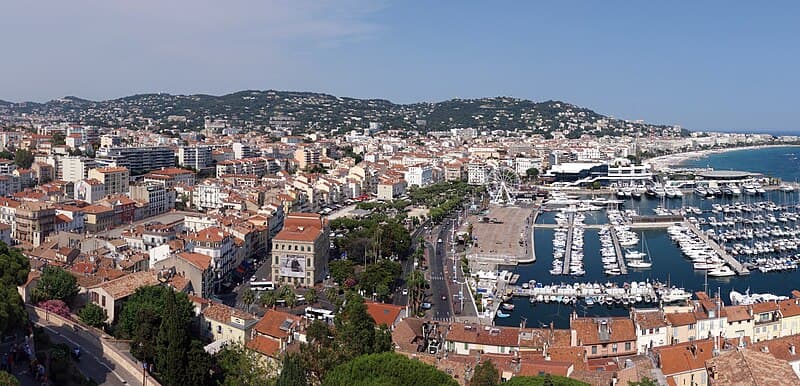
Cannes lives off 1 week a year. The film festival in the second half of May takes over the whole town, triples hotel prices, and turns the steps of the Palais des Festivals into the most photographed staircase in Europe — for the rest of the year, it's a quiet seaside town of 70,000 people with 1 key advantage over the rest of the Riviera: the beaches here are sandy, not pebbled. They line the three-kilometre Croisette promenade, lined with palm trees and 1920s hotels. Above the harbour stands the old quarter of Le Suquet, with cobbled lanes and a bell tower overlooking the whole bay, and an hour's drive from the coast begins the hinterland, with Grasse, the perfume capital of the world. Two Lérins islands lie just offshore: one holds the fortress where the Man in the Iron Mask was imprisoned, the other a monastery where monks still make wine today. Nice is half an hour away by train.

What to see

The places worth your time in Cannes, and what to expect at each

La Croisette

La Croisette

seafront

A three-kilometre promenade along the bay, lined with a double row of palm trees, the 1920s Carlton, Majestic and Martinez hotels, and sandy beaches the whole way. The pavement is set with the handprints of film stars, known as the Allée des Étoiles, starting at the Palais des Festivals.

Tip: Most beaches along the Croisette belong to hotels, with a sunlounger costing from €30. The public Plage du Midi begins west beyond the harbour and is just as sandy and free. Benches shaded by palm trees line the whole promenade — the best spot for a snack from the Forville market.

Admission:
free
Time needed:
2 h
Palais des Festivals and the Steps

Palais des Festivals and the Steps

by the old harbour

The 1982 convention centre where the film festival is held, fronted by 24 steps covered in a red carpet each May. Nearby is the Allée des Étoiles with the handprints of 300 filmmakers and actors, and a replica Palme d'Or stands on the terrace.

Tip: For the rest of the year the red carpet is gone and the steps are freely accessible — anyone can pose for a photo, with no one watching. Behind-the-scenes tours of the festival auditorium can be booked at the tourist information office inside the building, and only run on certain days.

Admission:
outside free, tour from €8
Time needed:
1 h
Le Suquet

Le Suquet

Le Suquet

The oldest quarter, on a hill above the harbour, site of the original fishing village: steep cobbled lanes, a 22-metre square tower from the 12th century and the church of Notre-Dame d'Espérance. From the terrace below the tower you can see the whole bay, the harbour and the Lérins Islands.

Tip: Rue Saint-Antoine, the street you descend on, is full of restaurants with menus posted in four languages and is the most expensive place to eat in Cannes. Climb up for the view, then head down to eat near the Forville market. The climb up takes 10 minutes on steep steps.

Admission:
free
Time needed:
2 h
Musée de la Castre

Musée de la Castre

Le Suquet

A collection in a former castle at the top of Le Suquet, made up of ethnographic objects from Oceania, Asia and the Americas, plus one of Europe's finest musical instrument collections. Admission includes the climb up the medieval tower's 109 steps.

Tip: The collection itself is interesting, but the main reason to visit is the tower — the highest accessible point in Cannes, with views stretching across the whole bay to the Estérel massif. The museum is open until 7pm in summer, and an hour before closing it's quiet with the best light.

Admission:
from €6.50
Time needed:
1.5 h
Île Sainte-Marguerite

Île Sainte-Marguerite

Lérins Islands

The larger of the two Lérins Islands, 15 minutes by boat from the harbour, covered in eucalyptus and pine forest with paths around its edge. Fort Royal holds the cell where the Man in the Iron Mask was imprisoned for 11 years, along with a museum of finds from Roman shipwrecks off the seabed nearby.

Tip: There's no shop on the island and almost nowhere to eat besides one restaurant near the pier — bring food and water. The best swimming is in the coves on the north side, a 20-minute walk from the pier, where the water is cleaner than anywhere along the coast. The last boat back leaves around 6pm.

Admission:
boat from €16 return
Time needed:
full day
Île Saint-Honorat

Île Saint-Honorat

Lérins Islands

The smaller of the two islands, belonging to a Cistercian monastery since the 5th century — monks still live here today, tending 8 hectares of vineyards to make wine and liqueur. A path circles the island past a fortified 11th-century monastery, built as a refuge during Saracen raids.

Tip: A different boat, from a different pier, serves Saint-Honorat than Sainte-Marguerite, run by the monastery — the only way to combine the islands is to return to Cannes in between. It's peaceful here, since camping and swimming outside designated spots are banned. Wine is sold only at the monastery shop.

Admission:
boat from €18 return
Time needed:
half a day
Forville Market

Forville Market

Marché Forville

below Le Suquet

A covered market below Le Suquet, open Tuesday to Sunday, selling vegetables from inland, cheeses, olives and fish caught in the bay that same day. On Mondays, food gives way to an antiques and flea market that fills the whole hall.

Tip: Several stalls around the market let you eat right there — a sharp contrast to Croisette prices. The market winds down around 1:30pm, and fishmongers sell off the last stock cheaper from around noon. It's the cheapest place in Cannes to buy lunch.

Admission:
free
Time needed:
1 h
Old Harbour and Rue d'Antibes

Old Harbour and Rue d'Antibes

town centre

The Vieux Port, with fishing boats moored beside 50-metre yachts, is the sharpest snapshot of what Cannes is. Two blocks up and running parallel to the Croisette is Rue d'Antibes, the main shopping street, with shops a notch more accessible than the boutiques on the promenade.

Tip: Boats to both Lérins Islands and sightseeing cruises to the Estérel leave from the harbour. Restaurants along Quai Saint-Pierre are expensive, but places in the side streets behind Rue d'Antibes serve a set lunch menu for €18, frequented by people who actually work here.

Admission:
free
Time needed:
2 h
Villa Domergue and Gardens

Villa Domergue and Gardens

Croix des Gardes

An Art Deco villa built in 1936 by painter Jean-Gabriel Domergue, now owned by the city and used as the jury's residence during the festival. Terraced gardens with cypress trees, water cascades and sculptures descend the hillside in complete quiet above the town.

Tip: It's open only in summer and only a few days a week, so check the hours in advance at the tourist office — it's the most common wasted trip in Cannes. It's a 20-minute uphill walk from the centre, or take bus route 9. Garden entry is usually free.

Admission:
gardens usually free
Time needed:
1.5 h

Photos: La Croisette — No machine-readable author provided. Nikita~commonswiki assumed (based on copyright claims). (CC BY-SA 2.5) · Palais des Festivals and the Steps — Timantha102938 (Public domain) · Le Suquet — Alistair Cunningham (CC BY 3.0) · Musée de la Castre — Jorge Láscar from Australia (CC BY 2.0) · Île Sainte-Marguerite — Guilhem06 18:52, 10 May 2007 (UTC) (CC BY 2.5) · Île Saint-Honorat — Olivier Cleynen (CC BY 4.0) · Forville Market — Iswoar (CC BY-SA 4.0) · Old Harbour and Rue d'Antibes — Jean-Pierre Bazard Jpbazard (CC BY-SA 3.0) · Villa Domergue and Gardens — Jean-Auguste-Dominique Ingres (Public domain)

Where to stay

Areas and districts, matched to the kind of trip you are taking

La Croisette and the centre

Best for: a first stay and a beach outside your window

The strip between the promenade and Rue d'Antibes, with hotels ranging from the most luxurious to standard 3-star. The sandy beach is a minute's walk away, the station five minutes. Prices are the highest in Cannes, tripling during the festival. In return, you barely need to use any transport in Cannes at all.

Le Suquet

Best for: atmosphere and views

The old quarter on the hill, with cobbled lanes and bay views. Accommodation is in small guesthouses and apartments, cheaper than the Croisette, but you'll be hauling luggage uphill on steps, and at night there's noise from the restaurants on Rue Saint-Antoine. The Forville market is down at the foot of the hill.

La Bocca and the west

Best for: lower prices and public beaches

The western part of town beyond the harbour, with the long public Plage du Midi beach, where sunloungers are free. Accommodation is about a third cheaper than in the centre, and both bus and train, with its own stop, run to Cannes. But nightlife is lacking, and it's 3km to the Palais des Festivals.

Palm Beach and the eastern tip

Best for: peace and a longer stay with a car

A peninsula at the eastern end of the Croisette with hotels, a casino and smaller beaches that stay quieter even in August. It's a 2km walk along the promenade to the centre, pleasant enough, though less so with shopping bags. The best part of Cannes for a returning visitor who doesn't need everything under their window.

Getting around

From the airport

Cannes has no airport of its own; flights arrive into Nice, 33km to the east. From the airport, direct bus route 210 runs to the Cannes bus station in 50 minutes, or you can take the tram and then the train with one change in Nice. Cannes train station sits right in the centre, a three-minute walk from the Croisette, served by regional trains along the whole Riviera as well as TGV high-speed trains from Paris. By car, expect a long drive from most of northern Europe on France's tolled motorways. In Cannes itself, a car is mostly about parking and finding a spot.

Nice Côte d'Azur (NCE) · 33 km

  • Route 210 bus direct to Cannes· 50 min· €22
  • Tram 2 and train with a change in Nice· 1 h· €14
  • Taxi· 35 min· €90

Marseille Provence (MRS) · 175 km

  • TER train via Marseille· 2 h 45 min· €35
  • Rental car via the A8 motorway· 2 h

Around town

Cannes is entirely walkable: 3 minutes from the station to the Croisette, 10 minutes to the Forville market, 20 minutes up to Le Suquet. City buses run by Palm Bus have a flat fare of around €1.50 and serve La Bocca and up to Croix des Gardes. Along the coast, the train is the best option — half an hour to Nice, 15 minutes to Antibes, an hour to Monaco, running several times an hour. Boats to the Lérins Islands leave from the old harbour, with each island served by a different pier and operator. A car is a burden in the centre: parking costs over €20 a day, and during the festival, finding a spot in Cannes is practically impossible.

Palm Bus busesThe city network covering Cannes, La Bocca and surrounding towns, with a flat fare and transfers included. · €1.50 a ride
Coastal trainThe regional TER stops at Antibes, Juan-les-Pins, Nice and Monaco. The station is in central Cannes. · €3–10
Boats to the Lérins IslandsDepart from the old harbour, with a different operator and pier for each island. Hourly in season, last boat back around 6pm. · €16–18 return
BicycleA continuous flat cycle path runs along the Croisette and further west. Rental shops are found by the station and the harbour. · €15 a day
Taxi and rideshare appsTaxis are expensive in Cannes; Uber and Bolt operate and are cheaper. Book airport transfers in advance. · €15 for a ride in the centre

Useful apps: Google Maps, Palm Bus, SNCF Connect, Riviera Lines

When to go

The season runs from May to October, the sea is swimmable from June to October, and August reaches 25°C. The period most people should avoid is the second half of May — the film festival triples hotel prices, takes over the whole town, and makes the Croisette impassable. June and September offer the best combination of warmth, warm sea and manageable prices. July and August are busy and pricey, but the sandy beaches are long enough that you can still find a spot away from the Croisette. Winter is mild, around 13°C, but some beach clubs and hotels close.

Best time

June and September

What to avoid

the second half of May, because of the film festival

MonthJanFebMarAprMayJunJulAugSepOctNovDec
Day13°14°16°18°22°26°29°29°26°22°17°14°
Night4°4°6°9°12°16°19°19°16°13°8°5°
Rainy days655753125776
Sea14°13°14°15°18°21°24°25°23°21°18°15°

Food & drink

Cannes is part of Provence and cooks accordingly: olive oil, garlic, herbs, fish and vegetables. The gap between expensive and reasonably priced food here is stark, and can be mapped geographically — restaurants on the Croisette and on Rue Saint-Antoine in Le Suquet charge festival prices year-round, while places behind Rue d'Antibes and stalls at the Forville market cook just as well for a third of the price. A set lunch menu at €18–22 is standard and the best value in town. Provençal rosé served in a carafe is the drink to have with it.

What to try

Bouillabaisse

A fish soup made from several types of rockfish, served in 2 courses — first the broth with garlic-mayonnaise rouille, then the fish. A proper one is ordered a day ahead and costs over €40; a cheap €15 version is just fish soup, not bouillabaisse.

Socca and pissaladière

A chickpea-flour flatbread and a tart with caramelised onion and anchovies, both sold from bakeries and market stalls. The cheapest lunch in Cannes, at a few euros, and it tastes fine cold too.

Ratatouille

Stewed aubergine, courgette, pepper and tomato with herbs. In a good version, each vegetable is sautéed separately before being combined — you can tell by the fact that the pieces hold their shape.

Grilled loup de mer (sea bass)

Whole sea bass grilled with fennel, billed by weight. Always ask to see the fish and get the price per kilogram confirmed first; wild costs roughly double farmed.

Tapenade and anchoïade

A black-olive paste with capers and anchovies, and a second one made just from anchovies and garlic, both spread on toasted bread as an aperitif snack. Sold in jars at the Forville market, and the best souvenir from Cannes.

Fougasse

A Provençal bread shaped like an ear of wheat, slashed and filled with olives, cheese or bacon. Around €3 at bakeries, and a good snack to take on the boat to the Lérins Islands.

Lérins wine and liqueur

Wine from 8 hectares of vineyards on Île Saint-Honorat, tended by Cistercian monks, plus a herbal liqueur called Lérina. Sold only at the monastery's own shop on the island, nowhere else in France.

Provence rosé

A pale, dry pink wine, the standard summer drink across the Riviera. Ordered by the quarter- or half-litre carafe for a fraction of a bottle's price; a decent bottle costs around €8 in a shop.

What it costs

Espresso at the counter

€1.50–2.50

Fougasse or socca

€3–5

Set lunch menu at a bistro

€18–24

Dinner at a harbourside restaurant

€45–70 per person

Sunlounger on a hotel beach

€30–60

Boat to Île Sainte-Marguerite

from €16 return

Musée de la Castre with tower

€6.50

Night in a 3-star hotel

€130–230 for a double

Indicative prices that change over time — treat them as a guide, not a price list.

Practical information

SocketsCEuroplug, two round pinsEFrench, with earth pin
Voltage230V / 50Hz
Tap waterTap water is drinkable — Tap water is safe to drink everywhere in France, and you're entitled to it free at restaurants — ask for "une carafe d'eau" and they must bring it, even if you haven't ordered anything else. Anyone who just says "de l'eau" will be brought paid bottled water for €4–6. A sign reading "eau non potable" by a fountain means it's not drinkable.
TippingService is included in the price by law in France, noted on the bill as "service compris". Tipping is therefore optional and modest: loose change at a café, around 5% at a restaurant for good service. Card terminals rarely offer a tipping option, so it's usually left in cash on the table. In a taxi, just round up.
Driving on theright
SafetyThe French Riviera is safe, but has a high rate of pickpocketing — in crowds along the promenade, at markets and on suburban trains. The most common crime in the region, though, is break-ins to parked cars: windows get smashed over a backpack left on a seat, especially at beach and viewpoint car parks. Leave your car empty and carry your documents with you. The emergency number is 112, sea rescue is 196.
Opening hoursShops are generally open from around 9am to 7pm, with smaller shops and bakeries taking a midday break from 12:30pm to 3:30pm. Most shops are closed on Sundays, apart from bakeries and tourist-centre exceptions. Restaurants serve lunch from noon to 2pm and dinner from 7pm to 10:30pm; between those times you'll only get coffee and a sandwich. Museums close on Mondays or Tuesdays.
Customs & etiquette"Bonjour" is said on entering a shop, a bakery or a doctor's office, and skipping it reads as rude — it matters more in France than the rest of the conversation combined. Strangers aren't addressed informally. Food is ordered course by course, and the bill isn't brought until you ask for it. Walking around town in swimwear isn't done, and on the Riviera it's fined by municipal bylaw. Bread is torn by hand and placed directly on the tablecloth, not on a plate.
A few local wordsHello — BonjourThank you — MerciPlease — S'il vous plaîtThe bill, please — L'addition, s'il vous plaîtCheers — SantéGoodbye — Au revoir

How to plan your days

1 day

1 day in Cannes

  1. 1Morning at the Forville market, picking up a beach snack.
  2. 2Palais des Festivals, the steps and the handprints on the Allée des Étoiles.
  3. 3Lunch in a side street behind Rue d'Antibes, not on the promenade.
  4. 4Afternoon swim on the sand at Plage du Midi.
  5. 5Climb up to Le Suquet for sunset, then dinner down by the harbour.

2 days

2 days with the island

  1. 1Day 1 as in the plan above.
  2. 2Morning boat to Île Sainte-Marguerite, food and water in hand.
  3. 3Fort Royal, the cell of the Man in the Iron Mask, and the shipwreck museum.
  4. 4Swim in the coves on the island's north side, where the water is cleanest.
  5. 5Last boat back and an evening stroll along the Croisette.

3 days

3 days with the hinterland

  1. 1The first 2 days as in the plan above.
  2. 2Morning bus to Grasse for a perfumery tour and blending your own scent.
  3. 3Lunch in Grasse's old town.
  4. 4Afternoon train to Antibes, the Picasso Museum in the château and the seafront ramparts.
  5. 5Back to Cannes for dinner; both trips can be done without a car.

Day trips

Grasse

18 km · 45 min by bus

The world capital of perfumery, where scents have been distilled since the 16th century, and home to Fragonard, Molinard and Galimard. Their factories offer free tours and workshops where, in two hours, you can blend your own perfume, with the recipe kept on file by the company. The town also has a perfume museum and an old quarter above the valley.

Antibes and Juan-les-Pins

11 km · 15 min by train

Antibes has the best-preserved old town on the Riviera, walled and set right above the sea, Europe's largest yacht harbour, and the Picasso Museum in the Château Grimaldi, where the painter worked in 1946 and left behind everything he made there. Neighbouring Juan-les-Pins has sandy beaches and a jazz festival.

Saint-Tropez

75 km · 2 h by car or 2 h 30 min by boat

A fishing village turned fashionable destination thanks to film and Brigitte Bardot. A yacht harbour, a citadel above the town, and the famous Pampelonne beaches 5km outside, lined with beach clubs. In summer, driving means sitting in a queue on the single access road — a seasonal boat from Cannes is more comfortable, if slower.

Frequently asked questions

Are the beaches in Cannes sandy?+

Yes, and that's the main difference from Nice, which has pebbles. The sand runs the length of the Croisette and further west. Most beaches along the Croisette belong to hotels, and a sunlounger costs from €30; the public Plage du Midi beyond the harbour is just as sandy and free.

When is the Cannes Film Festival, and should I avoid it?+

The second half of May, 12 days. Hotel prices triple, the town is packed, and you can barely move along the Croisette. Regular visitors can't get into film screenings anyway, since those are for accredited guests only. Unless you're after the atmosphere, avoid this period.

How do I get from Nice airport to Cannes?+

By direct bus route 210 from both terminals to the Cannes bus station, taking 50 minutes and costing €22. Cheaper is the tram to Nice followed by the train along the coast, which takes about an hour and costs around €14. A taxi costs around €90.

Which of the Lérins Islands should I choose?+

Sainte-Marguerite if you want swimming, forest and the fortress holding the cell of the Man in the Iron Mask. Saint-Honorat if you want quiet, a monastery and wine made by monks. Different boats leave from different piers for each island, and there's no link between them — you can only manage 1 per day.

Do I need a car in Cannes?+

No. The town itself is walkable, the train along the coast runs to Antibes, Nice and Monaco, and a bus goes to Grasse. Parking in the centre costs over €20 a day, and during the festival there's simply nowhere to park. A car is only useful for Saint-Tropez and the inland villages.

Where can I eat reasonably in Cannes?+

Near the Forville market and in the side streets behind Rue d'Antibes, where a set lunch menu runs €18–24. Avoid restaurants on the Croisette and on Rue Saint-Antoine in Le Suquet, which post menus in 4 languages and charge festival prices year-round.

How many days are enough for Cannes?+

The town itself takes 1 day to see, or 2 with the Lérins Islands. For a week-long stay, Cannes makes a good base: Antibes is 15 minutes by train, Nice 30 minutes, Monaco an hour, Grasse 45 minutes by bus. All of these work as day trips without changing hotels.

When is the sea warm enough in Cannes?+

From June, when the sea reaches 21°C, through to October. It's warmest in August at around 25°C, and September stays around 23°C. In May the sea is at 18°C, too cold for a long swim, even though the air is already pleasant.

Visa Requirements

Check the latest visa requirements for entering this country. Some nationalities may need to apply for a visa or e-visa before travel.

Check visa requirements

Emergency Numbers

Language

French

Currency

EUR

Timezone

GMT+1

Dial Code

+33

Population

68.2M

Area

640,679 km²

Voltage

230V / 50Hz

Driving Side

Right

Top Hotels in Cannes

Live prices from 500+ properties

Loading hotels...

Planning a trip to Cannes?

Compare hundreds of hotels, find the best price, and book with free cancellation on TravelManiac.