Hotels in Marseille

France's oldest city, the white cliffs of the Calanques, and fish soup by the Old Port

Marseille

LanguageEnglish
CurrencyEUR
TimezoneGMT+1
Temperature8-25 °C
Dial Code+33
Population68.2M
Area640,679 km²
SocketsType C / Type E
Tap waterDrinkable

Discover Marseille

Marseille is France's oldest city, founded by Greek colonists from Phocaea around 600 BC as Massalia, and the country's second largest. It's a port that has always looked more to the sea than to Paris — loud, multicultural, rough-edged, and unpretentious, with communities from North Africa, Armenia, Italy, and the Comoros. Its heart is the Old Port, crowded with boats, above which the Notre-Dame de la Garde basilica stands on a limestone hill, topped with a gilded statue of the Virgin Mary, protector of sailors. The oldest district, Le Panier, with its climbing lanes and laundry strung between windows, feels like a slice of Naples. Since 2013, when Marseille was European Capital of Culture, the waterfront has been transformed by the MuCEM museum. Just outside the city begins Calanques National Park — white limestone cliffs dropping into turquoise coves, reached on foot or by boat. Marseille has more sunny days than any other major French city, and the sea right in town.

What to see

The places worth your time in Marseille, and what to expect at each

The Old Port

The Old Port

Vieux-Port

Vieux-Port

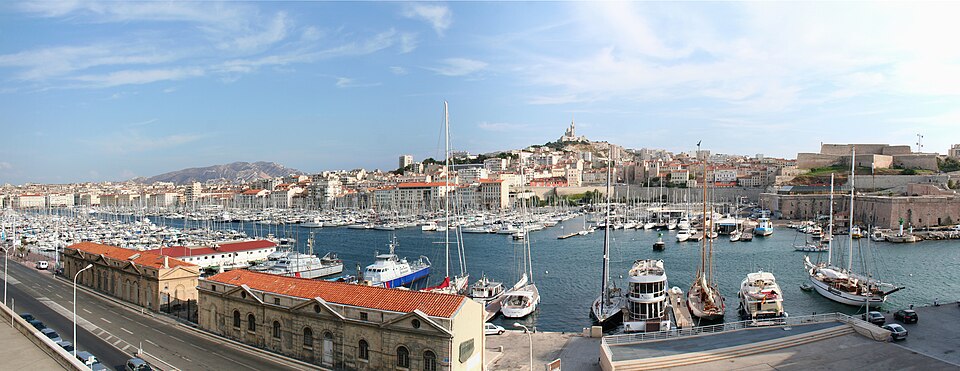
A natural harbour where the Greeks landed two and a half thousand years ago, still packed with a thousand boats and a fish market every morning on the quay. Cafés and restaurants line the waterfront, and on the Ombrière side stands Norman Foster's mirrored canopy, reflecting the whole square.

Tip: The fish market on Quai des Belges runs every morning until noon, with fishermen selling straight from their boats — arrive before nine. Under the mirrored canopy, people photograph their own reflection overhead. A short ferry, the Ferry Boat, crosses the harbour for a couple of euros, one of the shortest ferry crossings in the world. Boats to Château d'If and the Calanques leave from Quai de la Fraternité.

Admission:
free
Time needed:
1-2 h
Notre-Dame de la Garde

Notre-Dame de la Garde

Notre-Dame du Mont

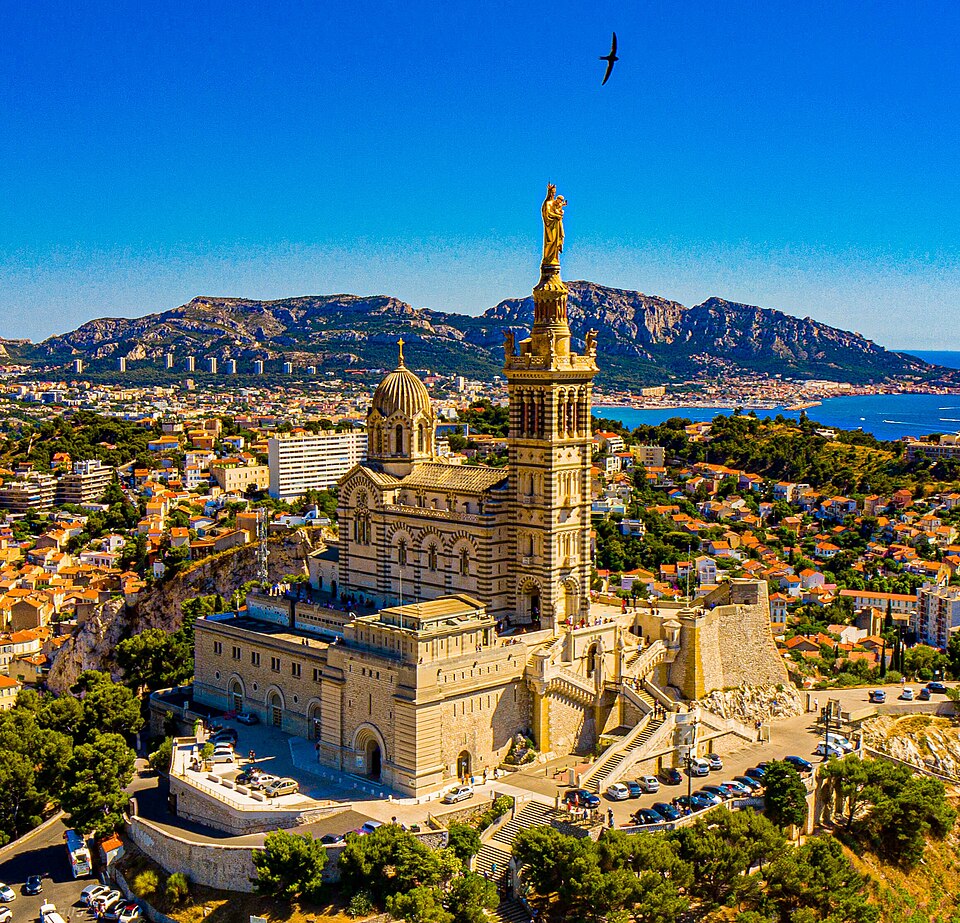
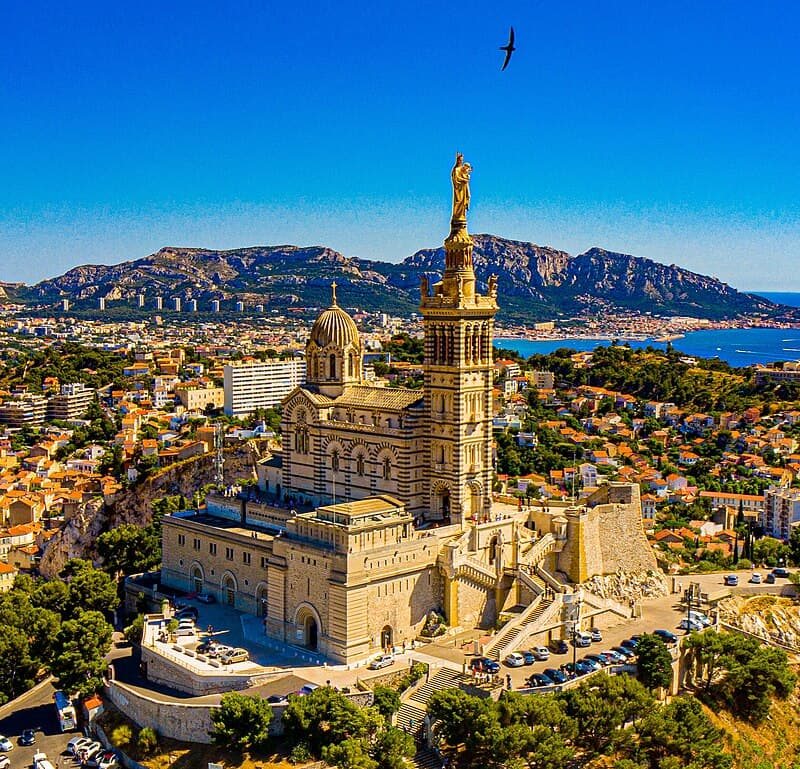
A neo-Byzantine basilica from 1864 at the city's highest point, topped with a gilded statue of the Virgin and Child on its bell tower. Inside are mosaics and hundreds of ex-votos — model ships, paintings, and thank-you plaques from sailors who survived storms at sea. Locals call her Bonne Mère, the Good Mother.

Tip: The terrace looks out over the whole city, the harbour, the Frioul Islands, Château d'If, and the surrounding hills. On foot it's a steep thirty-minute climb from the Old Port; bus 60 runs all the way up from the harbour. Best at sunset. The stones around the basilica still bear bullet marks from the August 1944 liberation.

Admission:
free
Time needed:
1 h
MuCEM

MuCEM

J4

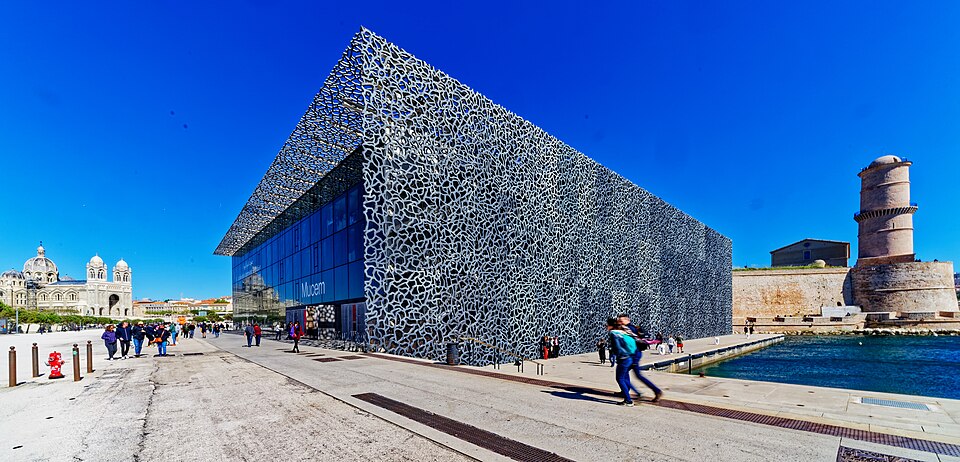
The Museum of European and Mediterranean Civilisations, opened in 2013 in a cube wrapped in concrete lattice designed by Rudy Ricciotti, linked by a footbridge to the seventeenth-century Fort Saint-Jean at the harbour entrance. Exhibitions cover Mediterranean history and cultures.

Tip: The walkways, rooftop terrace, and Fort Saint-Jean are all free to enter and are the best part — views over the harbour and the sea. Two hours is enough for the exhibitions, and the temporary ones tend to outshine the permanent collection. The rooftop restaurant and café have good views. The lace-like façade looks best in the late afternoon light.

Admission:
free, exhibitions around 11 €
Time needed:
2 h
Le Panier

Le Panier

Le Panier

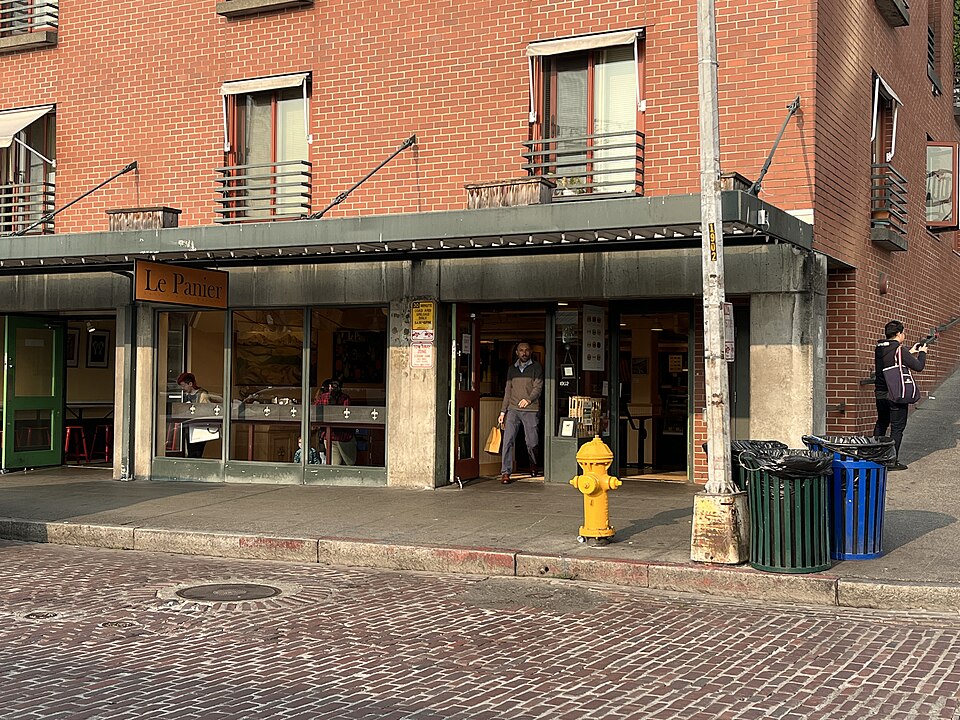
Marseille's oldest district, on the site of Greek Massalia, on a hill above the harbour. Narrow climbing lanes, staircases, small squares, colourful houses, street art, and craft workshops selling soap and ceramics. Its heart is La Vieille Charité, a former poorhouse with a seventeenth-century chapel.

Tip: Get lost without a map between Place de Lenche and Vieille Charité. Workshops sell genuine Marseille soap, stamped cubes made from olive oil. La Vieille Charité houses an archaeology museum and a courtyard that's free to enter. Mornings are quiet, afternoons bring the tourists.

Admission:
free
Time needed:
1.5 h
Calanques National Park

Calanques National Park

Parc national des Calanques

South

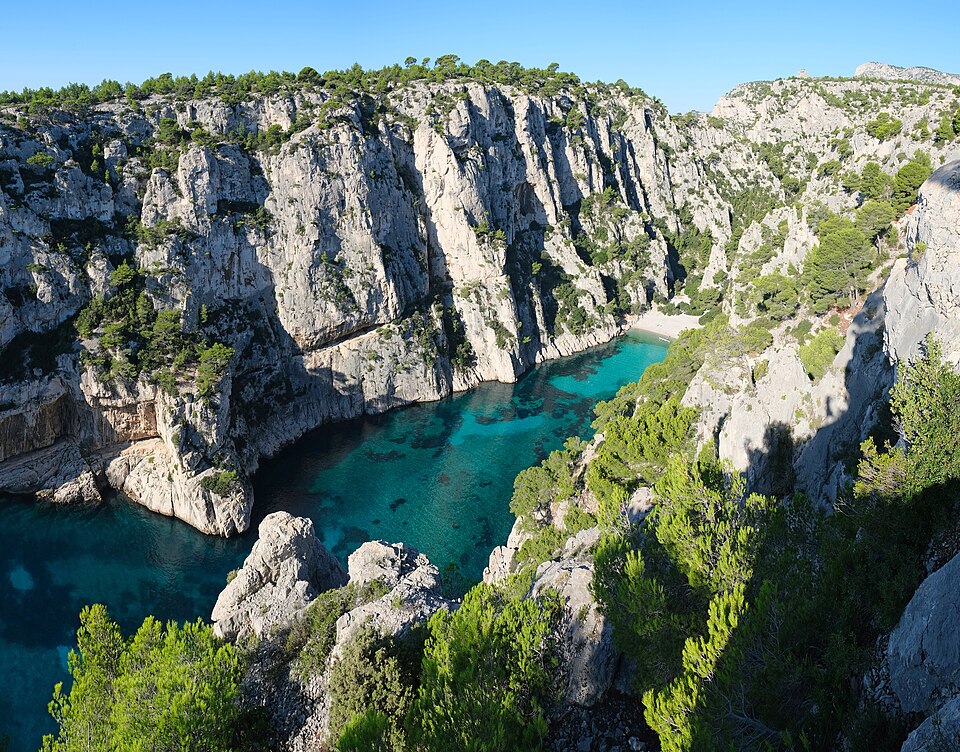
Twenty kilometres of limestone coastline between Marseille and Cassis, with white cliffs, turquoise coves, pine trees, and birdlife. The best-known coves are Sormiou, Morgiou, Sugiton, and En-Vau. The park was established in 2012.

Tip: Sugiton is an hour's walk from Luminy university, or take bus 21 from the centre. In summer, access to Sugiton requires a free online booking for protection reasons, and the park closes entirely during high fire-risk periods — check conditions the day before. Bring plenty of water and sturdy shoes, as the paths are rocky. A boat from the Old Port lets you see the coves from the sea without walking.

Admission:
free, boat from 30 €
Time needed:
half a day
Château d'If

Château d'If

Île d'If

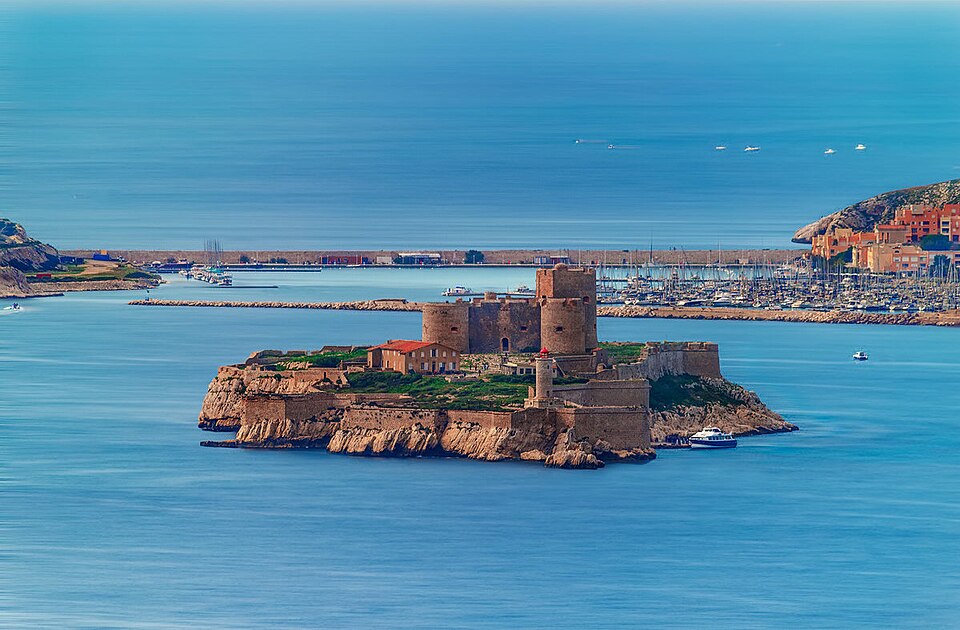
A fortress from 1529 on a small island off Marseille, later used as a prison and made famous by Alexandre Dumas's novel The Count of Monte Cristo. The prisoners' cells are open to visitors, and the ramparts offer a view over the city.

Tip: The boat leaves from the Old Port and takes twenty minutes. A combined ticket also covers the Frioul Islands, which have small beaches for swimming. Boats don't run when the mistral is blowing. The 'Count of Monte Cristo' cell is fictional, but they show it anyway. An hour is enough for a visit.

Admission:
around 7 € plus the boat
Time needed:
2-3 h
Vallon des Auffes

Vallon des Auffes

Corniche

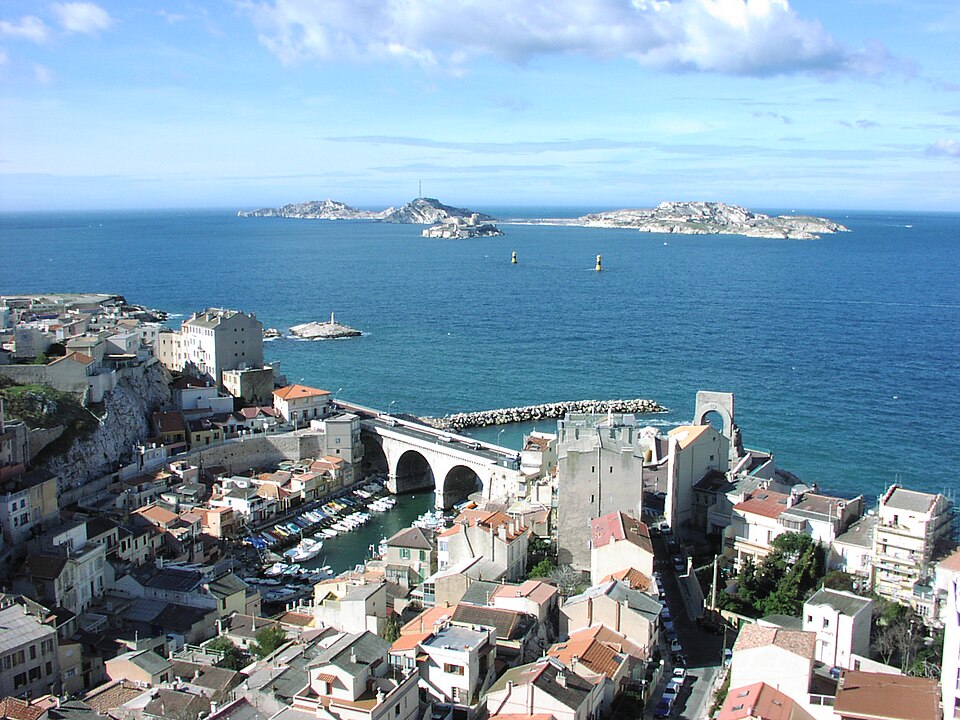
A small fishing harbour tucked beneath a bridge on the Corniche coastal road, with colourful boats and fishermen's cabanons. It feels like a village hidden inside the city, and holds one of Marseille's most celebrated bouillabaisse restaurants.

Tip: Best at sunset with a pastis on a terrace. Chez Fonfon has served bouillabaisse here since 1952, and booking is essential. From Vallon des Auffes, continue along the Corniche to Catalans beach or south to Malmousque, where locals swim off the rocks. Bus 83 runs along the Corniche.

Admission:
free
Time needed:
1 h
Marseille Cathedral (La Major)

Marseille Cathedral (La Major)

Cathédrale de la Major

Joliette

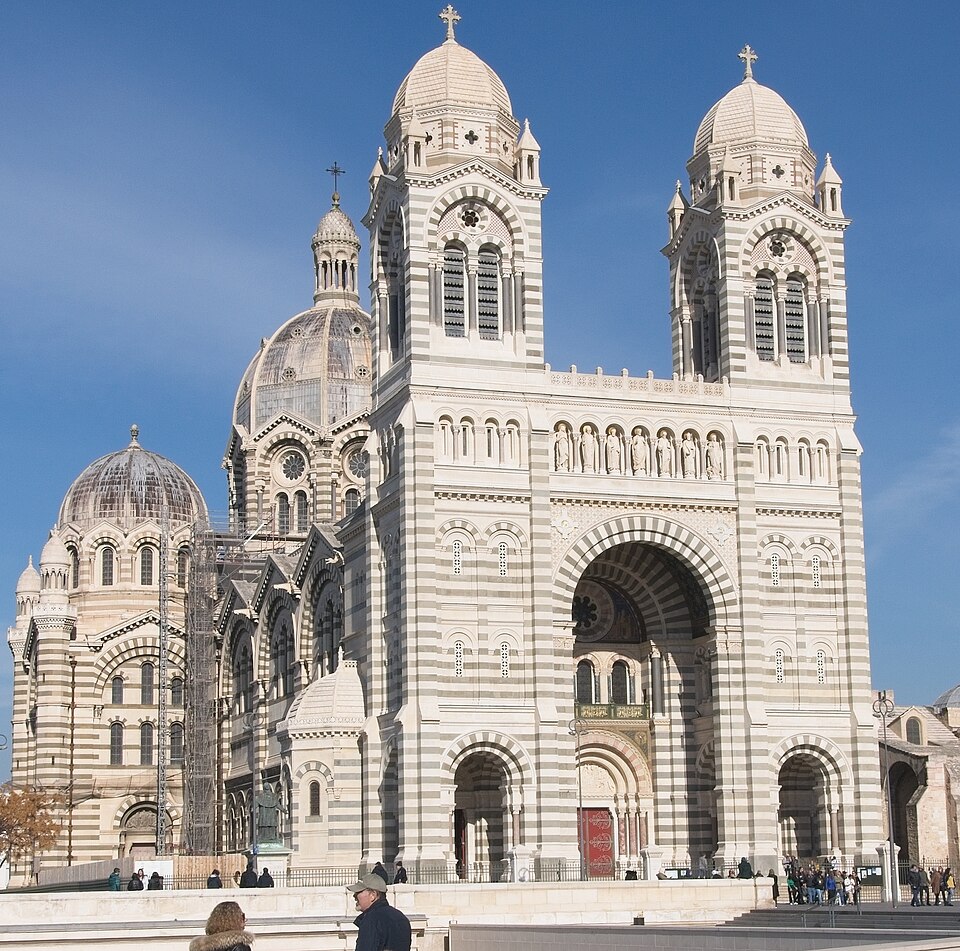
A giant neo-Byzantine cathedral in banded stone from the late nineteenth century by the Joliette harbour, one of the largest in France. Beside it stands the small old cathedral, dating from the twelfth century.

Tip: Inside are mosaics and marble in alternating colours. The cathedral is a ten-minute walk from MuCEM and Le Panier. On the waterfront below is Les Voûtes shopping arcade, set into former vaulted cellars. The best photo is from the MuCEM footbridge.

Admission:
free
Time needed:
30 min
Palais Longchamp

Palais Longchamp

Longchamp

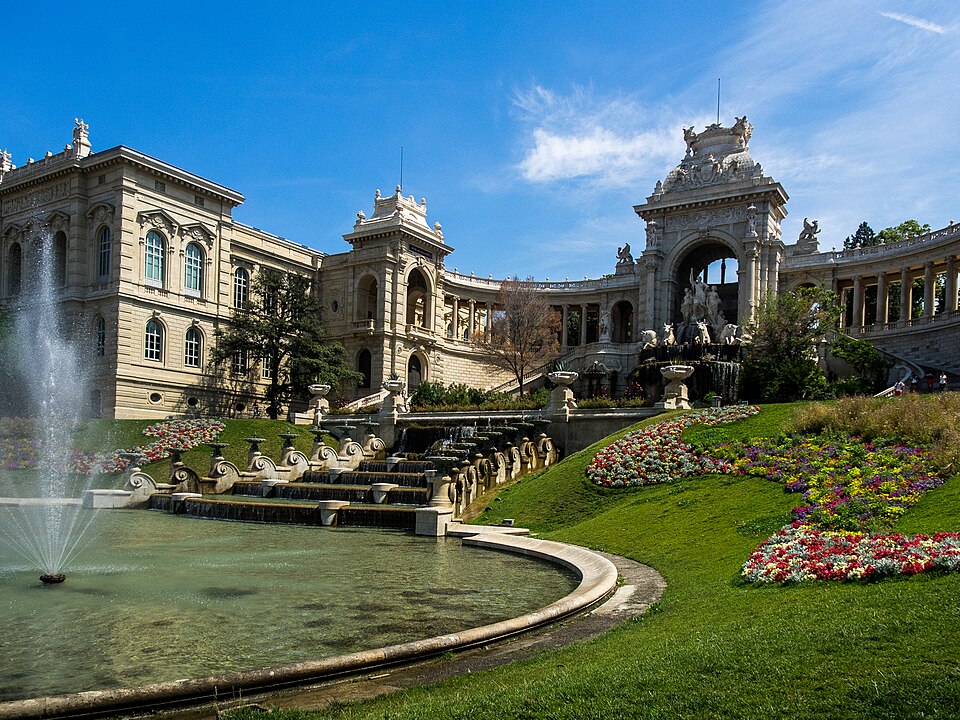
A monumental palace from 1869, built to celebrate the arrival of water from the Durance river in Marseille via canal. A cascading fountain with statues and colonnaded wings conceals the fine arts museum and the natural history museum. A park lies behind the palace.

Tip: The fountain and park are free and prettiest in the morning. The fine arts museum holds a good collection of Provençal painters. The palace sits at the end of Boulevard Longchamp — take tram T2. Locals come here to picnic. Less touristy than the harbour.

Admission:
park free, museum around 6 €
Time needed:
1 h

Photos: The Old Port — Ingo Mehling (CC BY-SA 3.0) · Notre-Dame de la Garde — Earth777 (CC BY-SA 4.0) · MuCEM — Holger Uwe Schmitt (CC BY-SA 4.0) · Le Panier — Another Believer (CC BY-SA 4.0) · Calanques National Park — kallerna (CC BY-SA 4.0) · Château d'If — Marian78ro (CC BY-SA 4.0) · Vallon des Auffes — Florent Chabaud (CC BY-SA 3.0) · Marseille Cathedral (La Major) — Bertrand SOUBEYRAND (CC BY-SA 4.0) · Palais Longchamp — Ajay Suresh from New York, NY, USA (CC BY 2.0)

Where to stay

Areas and districts, matched to the kind of trip you are taking

Vieux-Port

Best for: first-time visitors, walkable location

Hotels around the Old Port with views of the boats and Notre-Dame, within walking distance of Le Panier, MuCEM, and the waterfront. The best base for a short stay. Lively in the evening but safe.

Le Panier and Joliette

Best for: atmosphere, modern comfort

Small hotels and apartments in the oldest district, and modern hotels in the redeveloped Joliette district near MuCEM. Close to the harbour, with tram access. Joliette is quiet and tidy.

Corniche and Endoume

Best for: sea views, calm

Hotels and villas along the coastal road, with sea and island views, close to Vallon des Auffes and the rocky swimming spots. Fifteen minutes to the harbour by bus. Best for summer.

Cours Julien

Best for: nightlife, budget

An alternative hilltop district with bars, street art, music venues, and cheaper hotels. Ten minutes' walk to the harbour. Lively in the evening, with a young crowd.

Getting around

From the airport

From Prague, direct low-cost flights to Marseille run seasonally, taking about two hours; otherwise it's a connection through Paris or Frankfurt. France is in the Schengen area, so EU citizens can travel on an ID card. Marseille Provence Airport lies twenty-seven kilometres from the centre. The high-speed TGV reaches Paris in three and a quarter hours, Lyon in one hour forty-five, and Nice in two and a half hours.

Marseille Provence (MRS) · 27 km

  • Shuttle bus to Saint-Charles station· 25 min· around 10 €
  • Taxi· 30 min· 60 €
  • Train from Vitrolles to Saint-Charles· 35 min· around 6 €

Around town

Central Marseille around the Old Port is walkable, but the city is large and hilly. Two metro lines and three RTM tram lines cover the centre, and buses run along the Corniche, to the Calanques, and up to Notre-Dame. Buy tickets from a machine or the app. Ferries from the Old Port run to L'Estaque and to Pointe Rouge in summer, at the same fare as public transport. Le Vélo shared bikes are cheap but the hills are tough going. Trains and buses run out to Cassis for day trips.

Metro, tram, RTM busSingle ticket valid for an hour. · 2 €
Day passUnlimited travel for 24 hours. · 5.20 €
Ferry to L'EstaqueFrom the Old Port, in summer. · 2 €
Boat to the CalanquesFrom the Old Port. · from 30 €

Useful apps: Google Maps, RTM, Uber, Bolt, Mes Calanques

When to go

Marseille enjoys almost three hundred sunny days a year. The best time is May to June and September to October, with temperatures around 25°C and a warm sea. Summer runs hot, around 30°C, beaches get crowded, and fire risk in the Calanques can lead to closures during high-alert periods. The mistral, a cold northwesterly wind, blows for several days at a stretch, mostly in winter and spring, clearing the sky but halting boats. Winter is mild, around 12°C, and sunny.

Best time

May-June, September-October

What to avoid

August, for the heat and Calanques closures

MonthJanFebMarAprMayJunJulAugSepOctNovDec
Day12°13°16°19°23°28°31°30°26°21°15°12°
Night3°4°6°9°13°17°19°19°16°12°7°4°
Rainy days544653124665
Sea13°13°13°15°17°21°23°23°21°19°16°14°

Food & drink

Marseille's cooking is Provençal and Mediterranean — fish, olive oil, garlic, tomatoes, herbs, and saffron — with North African, Armenian, and Italian influences from waves of immigration. Bouillabaisse is famous but costly; everyday eating means wood-fired pizza, panisse, couscous in the Noailles district, and grilled fish. The Noailles market along Rue Longue des Capucins smells of spices like a souk. Pastis is drunk around four in the afternoon with water and ice. Local rosé from Cassis and Bandol is served chilled. Prices run lower than on the Riviera.

What to try

Bouillabaisse

A fishermen's soup, now an expensive celebratory dish at 60-100 euros: a saffron broth with croutons and rouille sauce comes first, followed by the whole fish. Only a handful of restaurants that follow the official charter serve the real version.

Panisse

Fried chickpea-flour chips, a Marseille street classic. Best bought in a paper cone in L'Estaque.

Navettes

Hard, boat-shaped biscuits flavoured with orange blossom, baked since 1781 at a bakery by the Saint-Victor abbey. Good with tea or as a souvenir in your suitcase.

Pastis

An anise aperitif diluted with water at a ratio of one to five, turning cloudy white. Drunk before lunch with two ice cubes, and the cheapest item on the menu at every village café.

Provençal rosé

Pale dry wine from the Côtes de Provence, the standard summer drink on the Riviera. Ordered by the carafe, a quarter or half litre, and much cheaper than by the bottle.

Aïoli

Provence's Friday dish: boiled cod, potatoes, carrots, green beans, and eggs with a thick garlic mayonnaise. Traditionally served on Fridays at bistros.

Pieds paquets

Parcels of lamb tripe filled with bacon and garlic, braised in tomato sauce with lamb trotters. A Marseille speciality for the adventurous.

Noailles couscous

North African restaurants in the Noailles district serve couscous with lamb, chicken, or merguez for ten to fifteen euros. The best value for money in Marseille.

What it costs

Coffee at the bar

1.50-2.50 €

Panisse in a paper cone

3-5 €

Wood-fired pizza

10-15 €

Set lunch menu

18-25 €

Bouillabaisse

60-100 €

Pastis

3-5 €

Boat to the Calanques

from 30 €

Night at a 3-star hotel for two

90-150 €

Indicative prices that change over time — treat them as a guide, not a price list.

Practical information

SocketsCEuroplug, two round pinsEFrench, with earth pin
Voltage230V / 50Hz
Tap waterTap water is drinkable — Tap water is safe to drink everywhere in France, and you're entitled to it free at a restaurant — ask for 'une carafe d'eau', and it must be brought even if you haven't ordered anything else. Ask only for 'de l'eau' and you may get charged bottled water at four to six euros. A sign reading 'eau non potable' by a fountain means it's not drinkable.
TippingIn France, service is included in the price by law, and the bill usually notes 'service compris'. Tipping is therefore optional and modest: small change at a café, around 5 percent at a restaurant for good service. Card terminals rarely offer a tip option, so it's usually left in cash on the table. In a taxi, just round up.
Driving on theright
SafetyMarseille has a worse reputation than the centre tourists actually visit deserves — the Old Port, Le Panier, Notre-Dame de la Garde, and the beaches are all safe. Drug-related crime is concentrated in the northern housing estates, which visitors have no reason to go near. Real risks are pickpockets on the metro, around Saint-Charles station, and at the Noailles market, plus car break-ins, so leave nothing visible in a parked car. Avoid the station area and Rue Belsunce at night. The emergency number is 112, police 17.
Opening hoursShops are typically open from about nine to seven, with smaller shops and bakeries taking a midday break from half past twelve to half past three. Most shops close on Sundays except bakeries and the tourist centre, where exceptions apply. Restaurants serve lunch from noon to two and dinner from seven to half past ten; in between, expect only coffee and a sandwich. Museums close on Monday or Tuesday.
Customs & etiquette'Bonjour' is said on entering a shop, a bakery, or a doctor's office, and skipping it reads as rude — it matters more in France than the rest of the exchange. Strangers aren't addressed with the informal 'tu'. Food is ordered course by course, and the bill isn't brought until you ask for it. Walking around town in swimwear isn't done, and on the Riviera it's fined by municipal bylaw. Bread is broken by hand and placed directly on the tablecloth, not on the plate.
A few local wordsHello — BonjourThank you — MerciPlease — S'il vous plaîtThe bill, please — L'addition, s'il vous plaîtCheers — SantéGoodbye — Au revoir

How to plan your days

1 day

Marseille in one day

  1. 1Morning at the fish market at the Old Port.
  2. 2Le Panier and La Vieille Charité.
  3. 3Lunch, then MuCEM and Fort Saint-Jean.
  4. 4Afternoon bus up to Notre-Dame de la Garde.
  5. 5Evening at Vallon des Auffes with a pastis.

2 days

Two days in Marseille

  1. 1Day 1: the Old Port, Le Panier, MuCEM, La Major cathedral.
  2. 2Day 1 evening: Notre-Dame de la Garde at sunset.
  3. 3Day 2: hike into the Calanques from Sugiton.
  4. 4Day 2 evening: bouillabaisse on the Corniche.

3 days

Three days including Cassis

  1. 1Day 1: the Old Port, Le Panier, MuCEM.
  2. 2Day 2: the Calanques on foot or by boat.
  3. 3Day 3: Cassis, its harbour, and wine.
  4. 4Day 3 evening: Notre-Dame de la Garde.

Day trips

Cassis

30 km · 40 min by bus

A fishing port with colourful houses, terraced vineyards, and Cap Canaille, France's highest sea cliff. Boats leave the harbour for the calanques of Port-Miou, Port-Pin, and En-Vau. White wine from Cassis pairs well with fish. A bus from Marseille takes forty minutes; the train station sits far from the centre.

Aix-en-Provence

30 km · 40 min by bus

An elegant Provençal town with the Cours Mirabeau boulevard, fountains, markets, and Paul Cézanne's studio. Mont Sainte-Victoire, which he painted repeatedly, rises nearby. The market on Place Richelme runs every morning. Buses leave from Saint-Charles station every ten minutes.

Frioul Islands

4 km · 30 min by boat

A cluster of bare limestone islands offshore from Marseille, with small swimming coves and the former quarantine hospital, Caroline. Boats run from the Old Port several times a day and are often combined with Château d'If. There's no shade, so bring water and a hat.

Frequently asked questions

Is Marseille safe?+

The centre, where tourists go, is safe. Drug-related crime is concentrated in the northern housing estates, well off the tourist trail. Watch for pickpockets on the metro and around Saint-Charles station, and for car break-ins. Avoid the area around the station in the evening.

How do you get to the Calanques?+

On foot from Sugiton, an hour from Luminy university, bus 21 from the centre; to Sormiou and Morgiou by bus then on foot; or by boat from the Old Port or from Cassis. In summer access may be restricted for fire risk or require a free booking — check ahead.

How many days for Marseille?+

Two to three days for the port, Le Panier, Notre-Dame, and the Calanques. A fourth day for Cassis or Aix-en-Provence. Marseille also makes a good base for Provence — Avignon and Arles are both reachable by train.

Where can you try real bouillabaisse?+

At restaurants that follow the official bouillabaisse charter, such as Chez Fonfon in Vallon des Auffes or Le Miramar at the Old Port. A proper one costs 60-100 euros and sometimes needs booking a day ahead. Cheap 20-euro versions aren't the real thing.

Can you swim in the sea in Marseille?+

Yes — the Prado and Pointe Rouge beaches lie south of the city, Catalans is close to the centre, and locals swim off the rocks at Malmousque and Vallon des Auffes. The nicest swimming is in the Calanques and around the Frioul Islands. The sea is warm from June to September.

Is Marseille expensive?+

Cheaper than Nice and the Riviera. A set lunch menu costs twenty euros, pizza ten to fifteen, couscous in Noailles is cheap. Bouillabaisse and summer hotels are the expensive items. Transport is inexpensive.

How do you get from the airport to the centre?+

By shuttle bus to Saint-Charles station in twenty-five minutes, running every fifteen minutes. A taxi costs around sixty euros. The airport is twenty-seven kilometres from the centre.

What is the mistral?+

A strong, cold northwesterly wind that blows down the Rhône valley toward the sea, most often in winter and spring, for several days at a stretch. It clears the sky but is unpleasant and halts boats to the islands and the Calanques.

Visa Requirements

Check the latest visa requirements for entering this country. Some nationalities may need to apply for a visa or e-visa before travel.

Check visa requirements

Emergency Numbers

Language

French

Currency

EUR

Timezone

GMT+1

Dial Code

+33

Population

68.2M

Area

640,679 km²

Voltage

230V / 50Hz

Driving Side

Right

Top Hotels in Marseille

Live prices from 500+ properties

Loading hotels...

Planning a trip to Marseille?

Compare hundreds of hotels, find the best price, and book with free cancellation on TravelManiac.