Hotels in Chamonix

The mountaineering capital beneath the highest peak in the Alps

Chamonix

LanguageEnglish
CurrencyEUR
TimezoneGMT+1
Temperature8-25 °C
Dial Code+33
Population68.2M
Area640,679 km²
SocketsType C / Type E
Tap waterDrinkable

Discover Chamonix

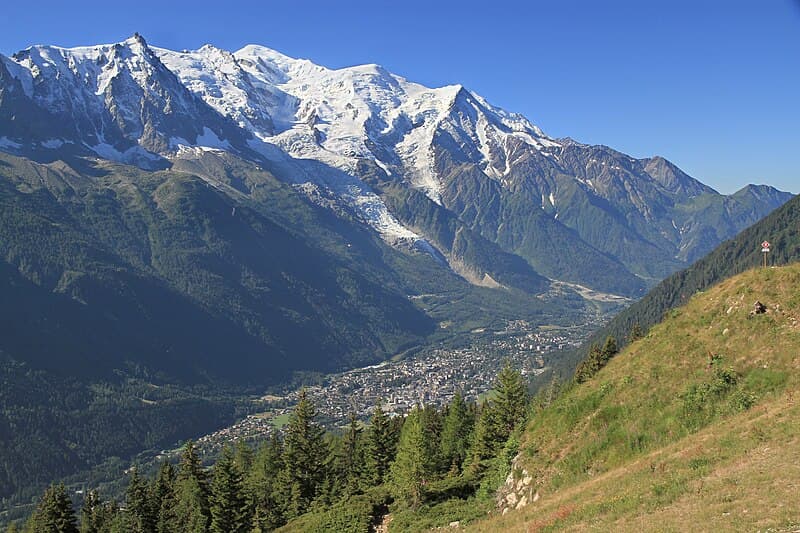
Chamonix sits in a narrow valley 17km long, above which Mont Blanc, the highest peak in the Alps and in Western Europe, rises 4,000m higher still. From the square in the centre you can see the Bossons Glacier, which flows almost down into the valley, and the granite spires of the Aiguilles, climbed since the 18th century. Modern mountaineering was born here in 1786, when local crystal hunter Jacques Balmat and doctor Michel Paccard first reached the summit of Mont Blanc, and in 1924 the town hosted the first Winter Olympic Games. Chamonix isn't a resort built for skiers but a town of 9,000 people, where mountain guides, climbers and tourists from around the world meet in its cafés. The ski areas are spread across the valley and aren't linked to each other, but they offer the most challenging terrain in the Alps, including the 20km glacier run of the Vallée Blanche. The Aiguille du Midi cable car takes anyone up to 3,842m in 20 minutes, no experience required.

What to see

The places worth your time in Chamonix, and what to expect at each

Aiguille du Midi

Aiguille du Midi

Centre – Aiguille du Midi

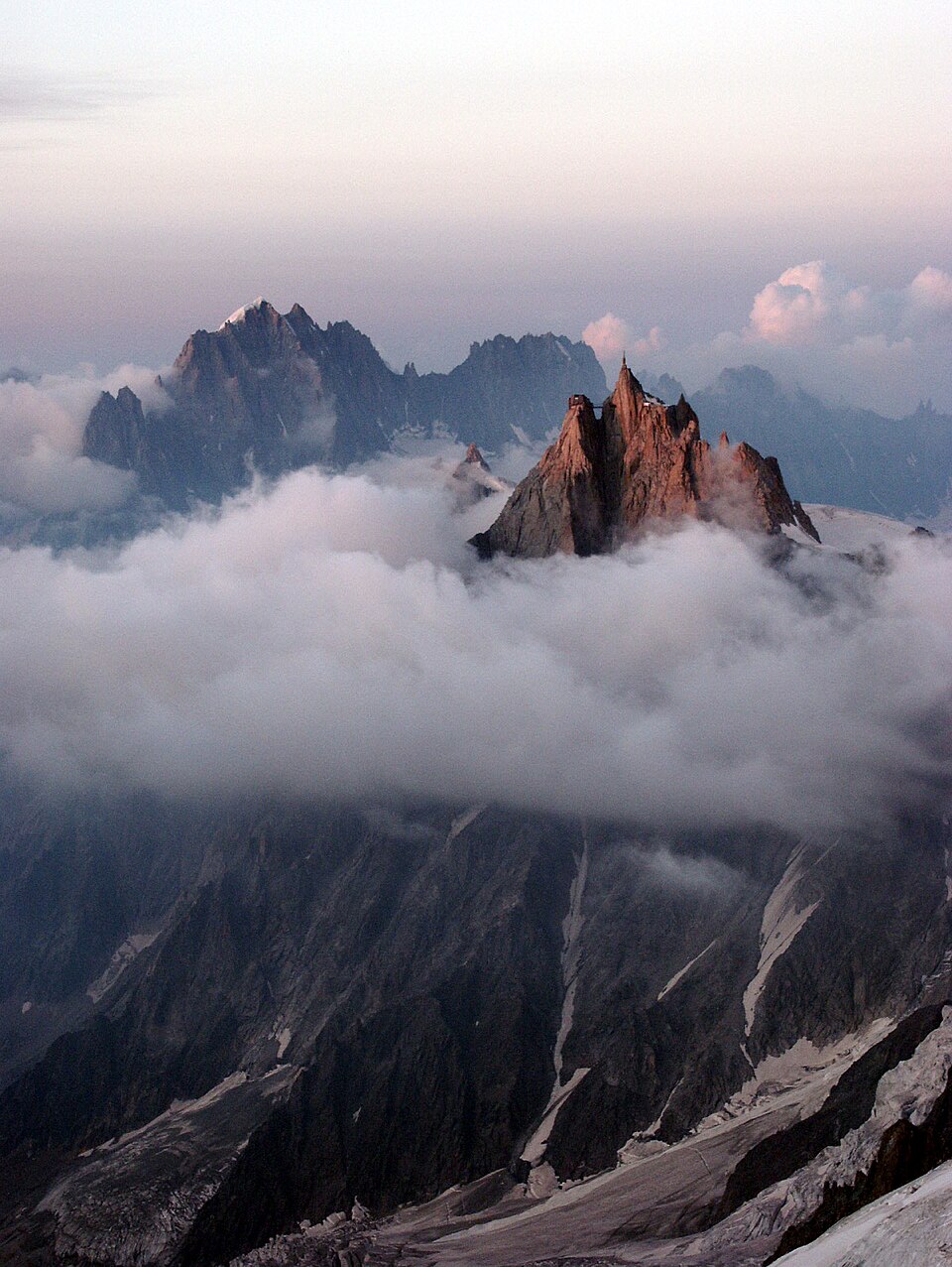
A rock spire at 3,842m, reached from the centre by a cable car built in 1955 with a change at Plan de l'Aiguille. At the top are terraces looking out to Mont Blanc, a lift to the highest viewpoint, and the glass Pas dans le Vide box, where you stand over a 1,000m drop. In summer, gondolas run from here across the glacier into Italy.

Tip: Buy your ticket online with a set departure time; in summer the ticket office queue can be a 2-hour wait. The first cable car at 7:30am is best — the views are clear and there are 10 people in the queue for Pas dans le Vide instead of 100. It's below freezing at the top even in August, so bring a jacket and hat, and skip the trip on your first day up because of the altitude.

Admission:
return from €79
Time needed:
half a day
Mer de Glace and the Montenvers Railway

Mer de Glace and the Montenvers Railway

Mer de Glace

Montenvers

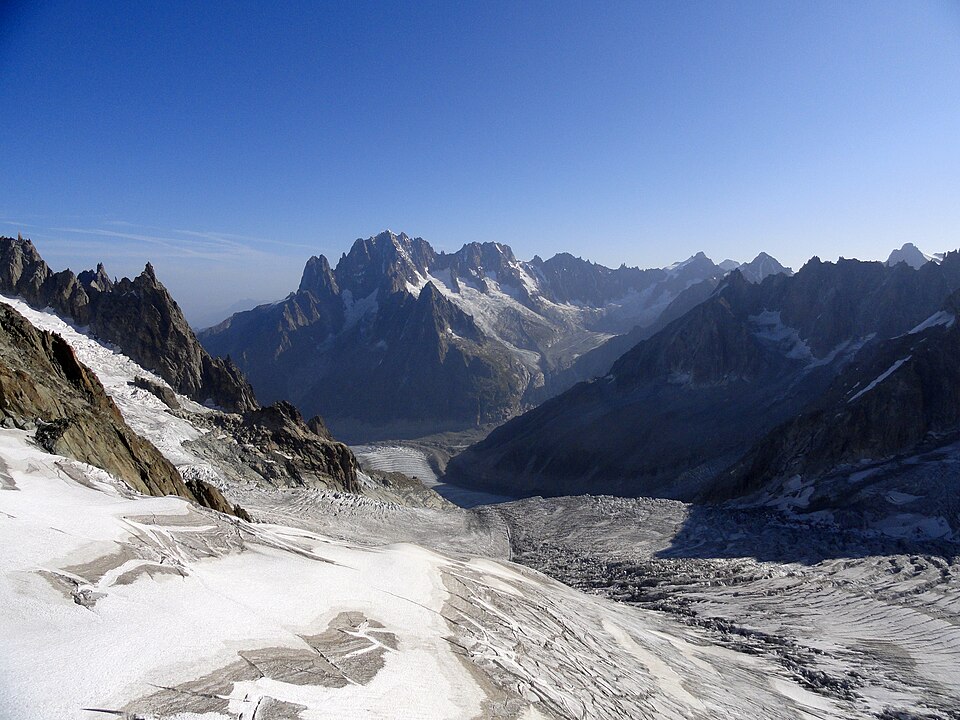
France's largest glacier, 7km long, reached since 1908 by a red rack railway from Chamonix station to Montenvers station at 1,913m. From there, paths lead down to the glacier and an ice cave, carved afresh every year. The Glaciorium museum explains how the glacier is shrinking.

Tip: The glacier has dropped 120m over the past 30 years, and reaching the cave today means over 500 steps — signs along the way mark where the ice used to be, and it's the most striking part of the trip. Allow an extra hour for the descent and climb back up. It's also possible to walk up from Chamonix through the forest in 2.5 hours and take the train back down.

Admission:
return €40 including the ice cave
Time needed:
3 h
Le Brévent

Le Brévent

Brévent

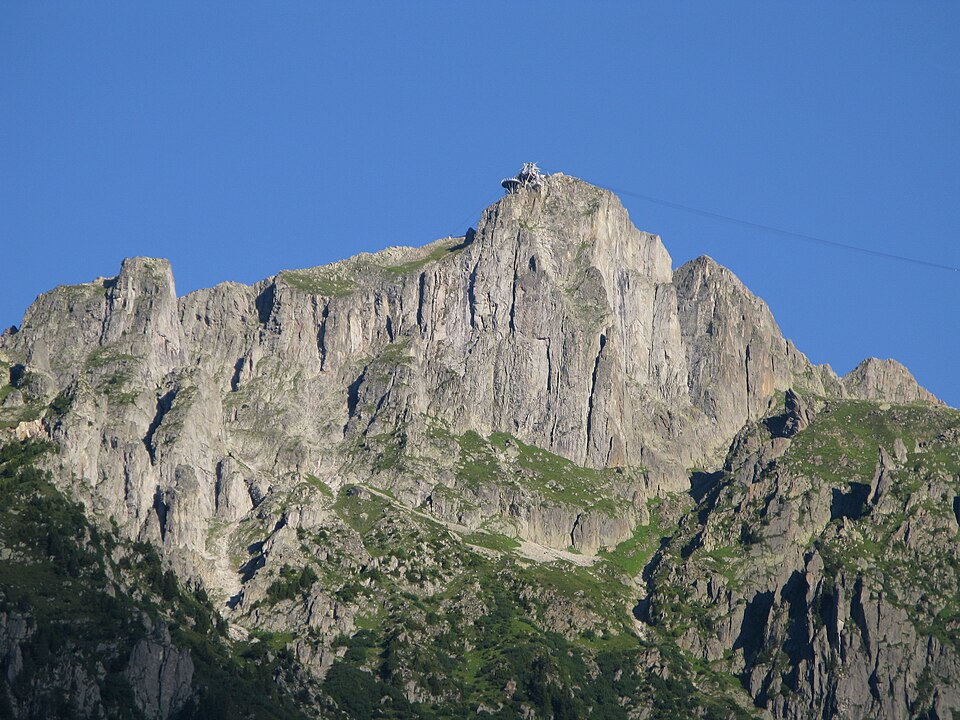
A summit at 2,525m on the opposite side of the valley from Mont Blanc, reached by gondola and cable car directly from the town centre. It offers the best frontal view of the entire Mont Blanc massif with its glaciers and spires. In winter, Le Brévent is linked to the Flégère area and has runs for all levels.

Tip: The view of Mont Blanc is better from Le Brévent in the afternoon, when the sun lights up the massif, while the Aiguille du Midi is better in the morning — combine the two accordingly. The terrace at Le Panoramic restaurant makes for lunch with a view, and in summer this is a launch spot for paragliding. Walking down via Planpraz takes 2.5 hours.

Admission:
return €38
Time needed:
half a day
Lac Blanc

Lac Blanc

Aiguilles Rouges

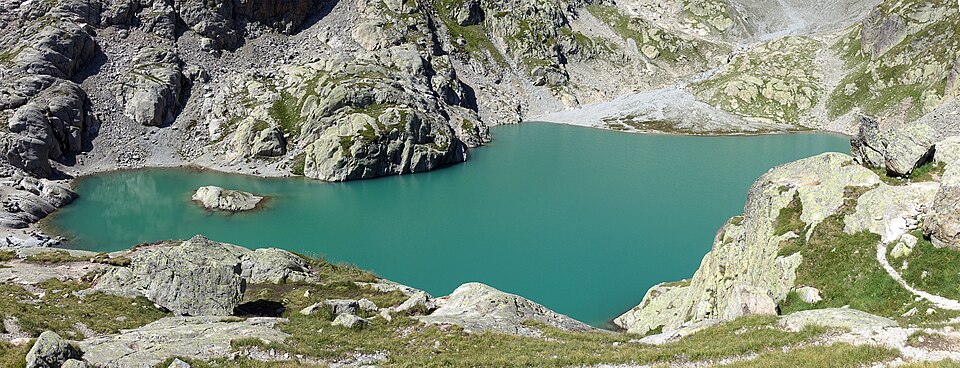
A mountain lake at 2,352m in the Aiguilles Rouges, which on a calm day reflects the whole Mont Blanc massif. It's the valley's most popular hike: from the top station of the Index or Flégère cable car, the trail takes 1.5–2 hours. A hut with overnight beds stands by the lake.

Tip: For the hike, take the first cable car and walk from Flégère via the Lacs des Chéserys — the route is 15 minutes longer but quieter, with better views. The final stretch has ladders across rocks; for small children or dogs the direct route from Index is easier. The lake doesn't thaw until late June.

Admission:
Flégère cable car return €30
Time needed:
5 h
Vallée Blanche

Vallée Blanche

Aiguille du Midi – Chamonix

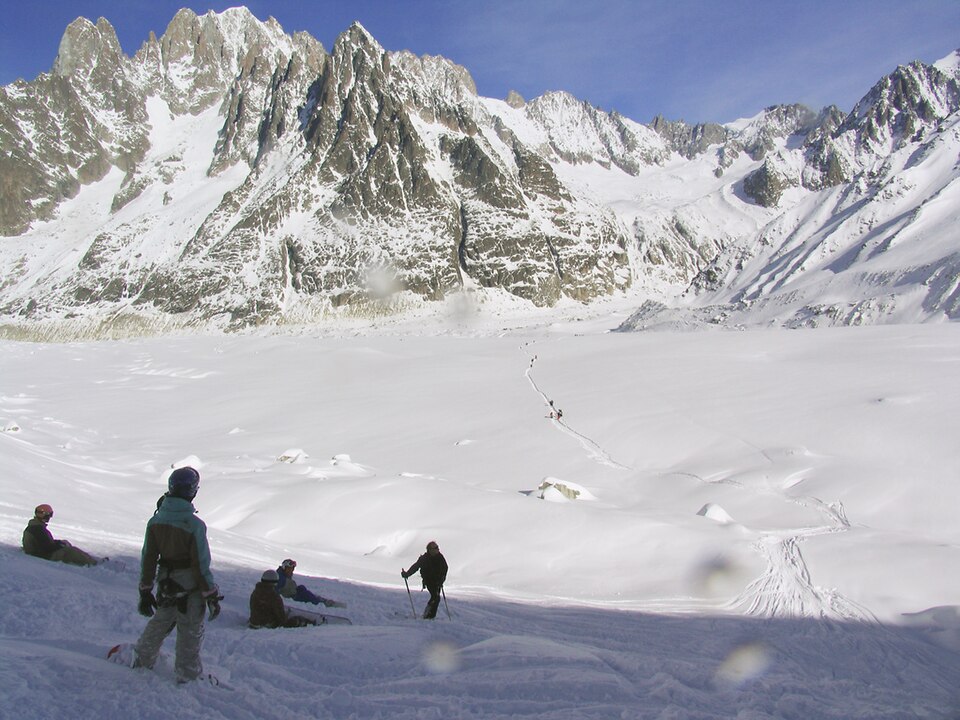
A 20km off-piste run from the Aiguille du Midi down the Géant and Mer de Glace glaciers to Chamonix, with a 2,700m descent. It isn't groomed but crosses a crevassed glacier, and the hardest part is the narrow ridge below the cable car station. For experienced skiers, it's one of the most famous runs in the world.

Tip: Only done with a mountain guide; the cost for a group of 4 is around €150 per person plus the cable car. The season runs from late January to April, depending on snow. The hardest part isn't the descent but the ridge from the cable car, walked with skis on your back and secured by rope — anyone prone to vertigo should think twice.

Admission:
guide from €150 per person
Time needed:
full day
Tramway du Mont-Blanc

Tramway du Mont-Blanc

Saint-Gervais

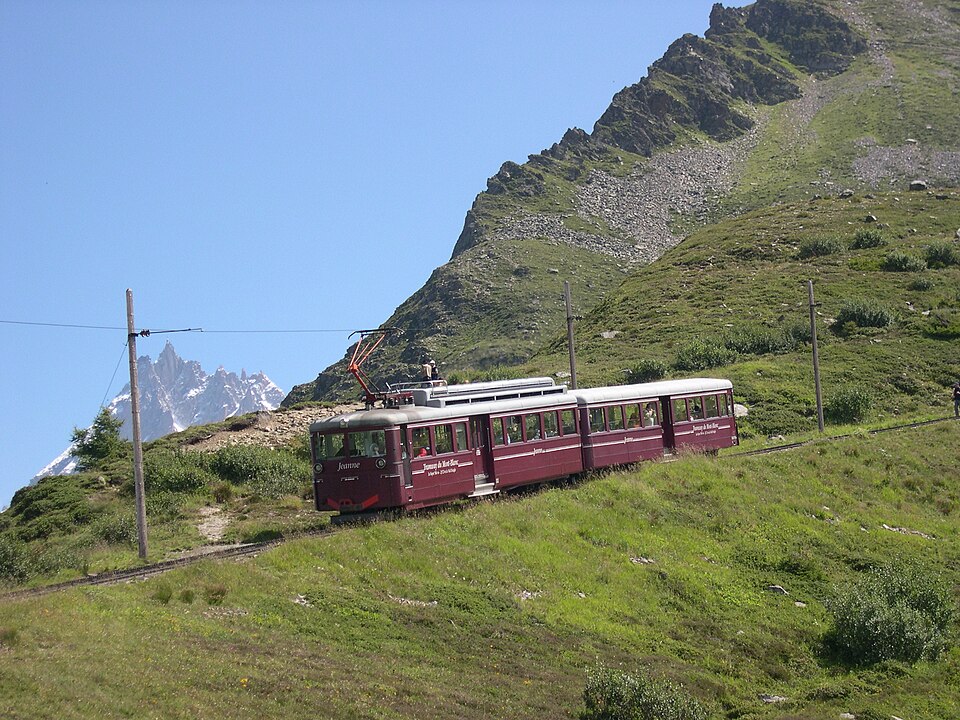
France's highest rack railway, running since 1909 from Saint-Gervais-le-Fayet up to Nid d'Aigle at 2,372m. From here begins the classic route to the summit of Mont Blanc, though most passengers ride up for the view of the Bionnassay Glacier and a walk across the mountain meadows.

Tip: The Mont-Blanc Express train runs from Chamonix to Saint-Gervais in 30 minutes, which can be combined into a full-day trip. From Nid d'Aigle, an hour's walk leads to the Bionnassay Glacier and is noticeably quieter than hikes around Chamonix. In winter the tram only runs to Bellevue and serves skiers.

Admission:
return €42
Time needed:
half a day
Grands Montets and Argentière

Grands Montets and Argentière

Argentière

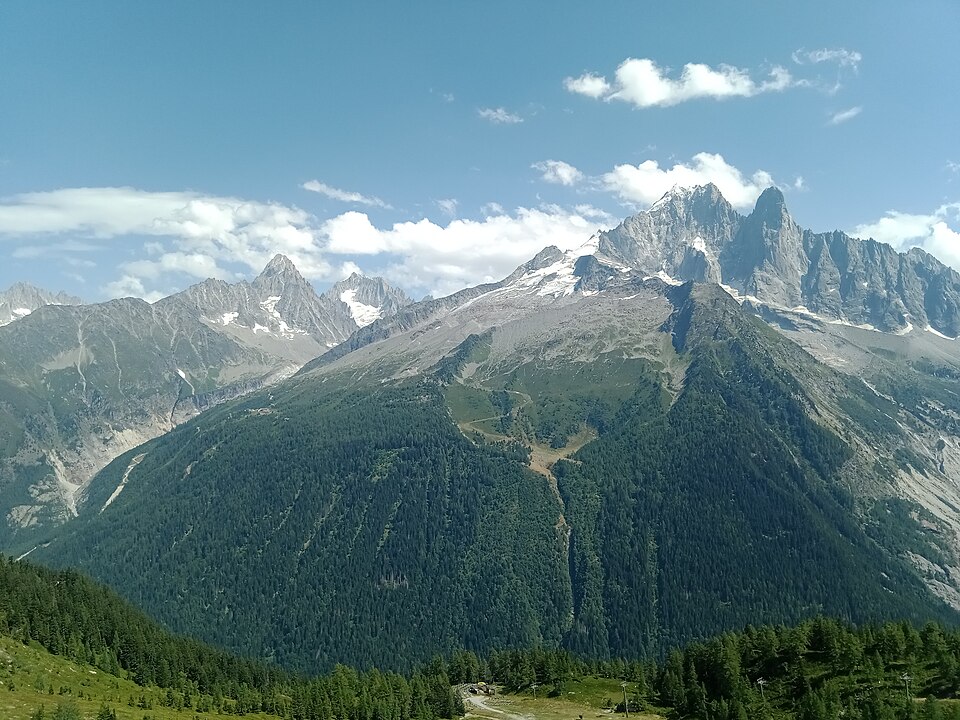
A ski area above the village of Argentière at the upper end of the valley, known for steep slopes and freeriding up to 3,200m. The north-facing side gets more snow and it lasts longer. Argentière itself is a quiet village with a mountaineering tradition and a glacier visible from the square.

Tip: Grands Montets is for advanced skiers; beginners head to Le Tour or Les Houches. A morning bus runs to Argentière, and the car park by the cable car fills up by 9am.

Admission:
day ski pass from €65
Time needed:
full day
Alpine Museum

Alpine Museum

Musée Alpin

Centre

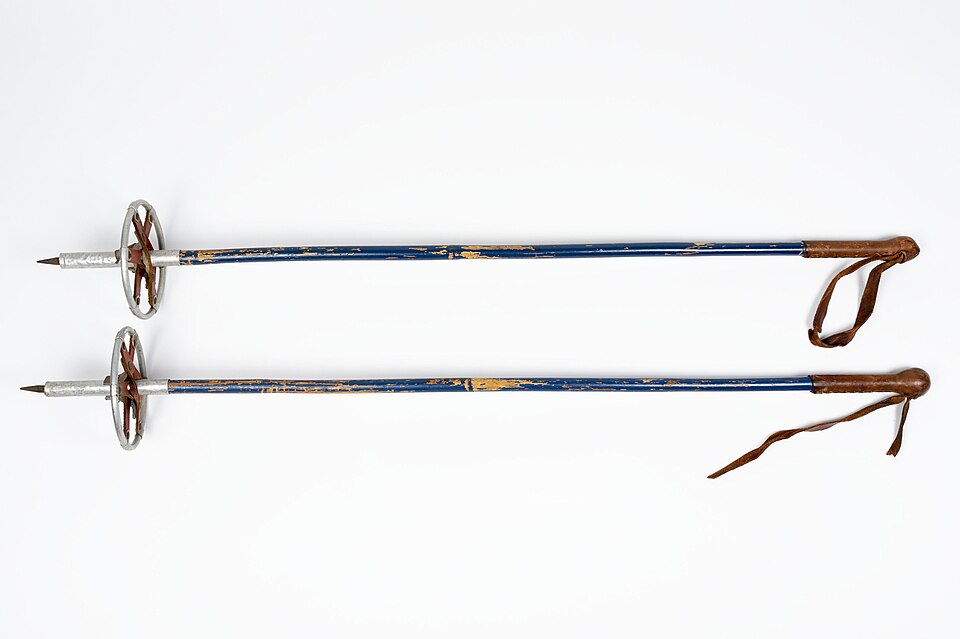
A museum in the former Chamonix Palace Hotel telling the story of how a mountain village became the mecca of mountaineering: early ascents, climbing gear from wooden ice axes to nylon ropes, the history of tourism, and the 1924 Winter Olympics. It holds original documents and paintings.

Tip: Admission is included in the Pass Musées, which also covers the Maison de la Mémoire and the Espace Tairraz crystal museum in Montenvers. On a rainy day, along with the cinema, it's about the only indoor thing to see in the valley. Open in the afternoons, closed Tuesdays.

Admission:
€6
Time needed:
1 h
Town Centre and Place Balmat

Town Centre and Place Balmat

Centre

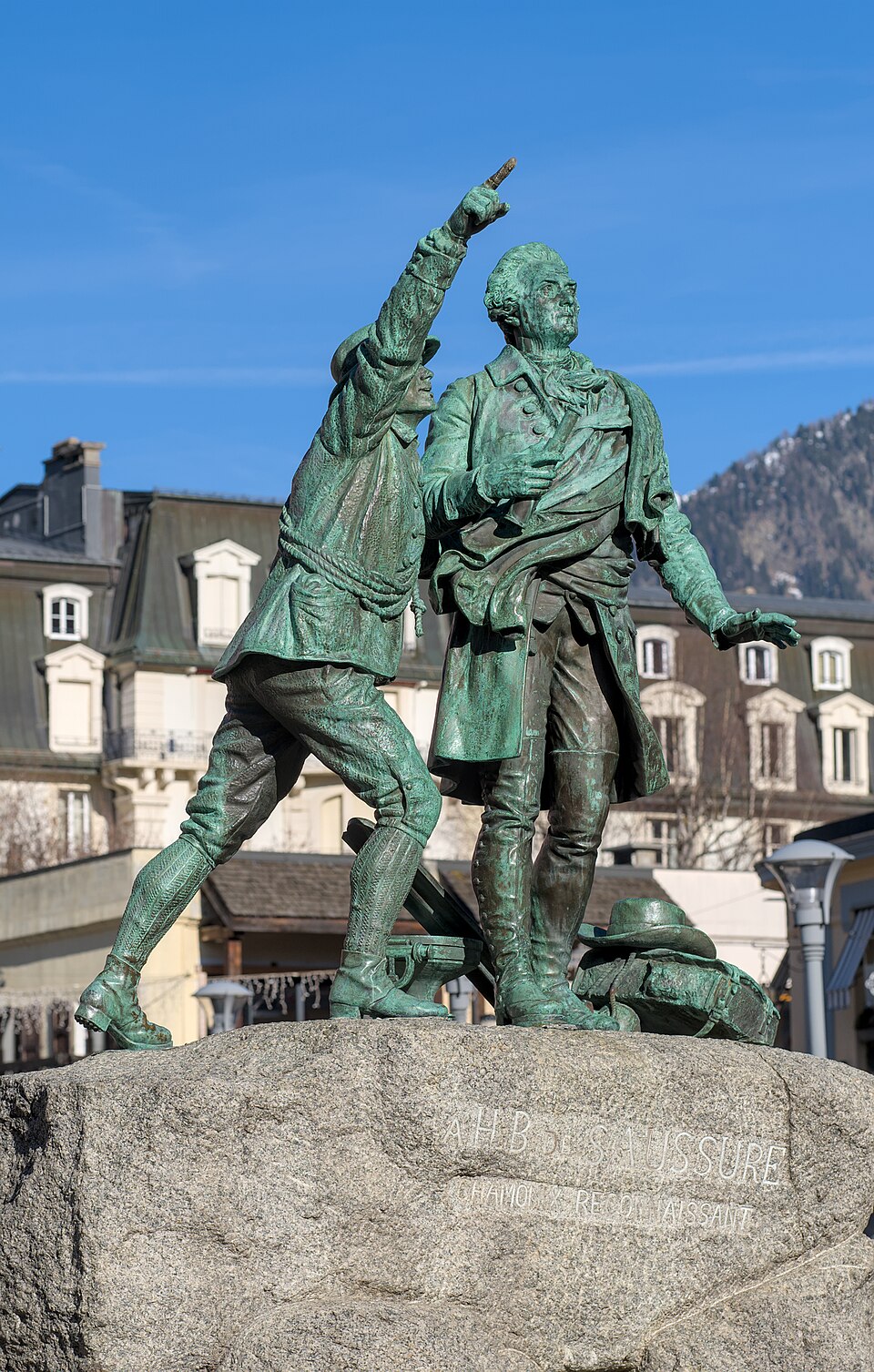
Chamonix's pedestrianised centre along the Arve river, with outdoor-brand shops, bakeries and cafés. On Place Balmat stands a bronze statue of Jacques Balmat pointing out Mont Blanc to Professor Saussure, who had offered a reward for the first ascent. The Church of St Michael and the 1821 Compagnie des Guides office stand on the square.

Tip: The Compagnie des Guides office posts the weather and avalanche forecast on a board every summer afternoon — it's the best source of information in the valley, and it's free. Every Saturday morning there's a market on Place du Mont-Blanc selling cheese, cured meats and bread from local producers.

Admission:
free
Time needed:
1–2 h

Photos: Aiguille du Midi — Garrondo (CC BY-SA 3.0) · Mer de Glace and the Montenvers Railway — Kristoferb (CC BY-SA 3.0) · Le Brévent — Franck Langlois (CC BY-SA 3.0) · Lac Blanc — Tiia Monto (CC BY-SA 3.0) · Vallée Blanche — Lite (CC BY-SA 3.0) · Tramway du Mont-Blanc — Wikimedia Commons (CC BY-SA 3.0) · Grands Montets and Argentière — Rémih (CC BY-SA 4.0) · Alpine Museum — Wikimedia Commons (Public domain) · Town Centre and Place Balmat — Romainbehar (CC0)

Where to stay

Areas and districts, matched to the kind of trip you are taking

Chamonix Centre

Best for: first visit, nightlife

The pedestrianised zone by the Arve river, from where paths lead to the Aiguille du Midi and Le Brévent cable cars. Hotels, apartments, dozens of restaurants and bars, lively in both summer and winter. The most practical address for those without a car.

Les Praz and Les Bois

Best for: quiet, families

A village 2km above the town, near the Flégère cable car and a golf course. Chalets and smaller hotels, quiet evenings and a view of the Aiguille du Dru. It's a 20-minute walk into the centre, or take the bus.

Argentière

Best for: freeriding, climbers

The upper end of the valley, 10km from the centre, by the Grands Montets cable car. A mountaineering and skiing village with its own character, cheaper apartments and access to the valley's most demanding terrain.

Les Houches

Best for: budget, beginners

The lower end of the valley, 8km from Chamonix, with its own ski area in the forest, sheltered in bad weather. Accommodation here is the cheapest, and both train and bus run to Chamonix.

Getting around

From the airport

Chamonix is closest to Geneva, whose airport is 88km away, with buses and shared transfers taking 1 h 15 min. Geneva has direct flights from many European cities, making it the fastest option overall, followed by the transfer. By road, the drive from many parts of Central Europe runs via Munich, Zurich and Geneva; a Swiss motorway vignette is required, and tolls apply in France. By train, services run to Saint-Gervais, where you change onto the Mont-Blanc Express, or via Martigny from Switzerland.

Geneva (GVA) · 88 km

  • Bus· 1 h 30 min· €20
  • Shared transfer· 1 h 15 min· €35
  • Rental car via the French side· 1 h 15 min

Lyon (LYS) · 220 km

  • Bus· 3 h 30 min· €40
  • Rental car· 2 h 30 min

Turin (TRN) · 170 km

  • Rental car via the Mont Blanc Tunnel· 2 h 15 min
  • Shared transfer· 2 h 30 min· €60

Around town

The valley has the Mont-Blanc Express train, running from Saint-Gervais through Chamonix and Argentière to Vallorcine and Martigny, plus a dense bus network. With a guest card, given to every registered guest, the train between Servoz and Vallorcine and the buses in the valley are free. A car is only useful for trips to Annecy or Italy; parking in the centre is expensive and full in winter. The Mont Blanc Multipass covers almost all cable cars and rack railways in summer and pays off from your second ride.

Mont-Blanc ExpressA train running along the valley every hour, from Saint-Gervais to Martigny. Free within the valley with a guest card. · free with guest card
Chamonix BusBuses between Les Houches, the centre, Argentière and Le Tour. Ski buses to the cable cars in winter. · free with guest card
Mont Blanc MultipassCovers the Aiguille du Midi, Montenvers, Le Brévent, Flégère and other cable cars for 1 or several days. · €80 per day
Bus to CourmayeurSeveral services a day through the Mont Blanc Tunnel, taking 45 minutes. · €15
Bike and e-bikeA flat path along the Arve in the valley, mountain bike trails higher up. Rental shops in the centre. · €35 per day

Useful apps: Chamonix Mont-Blanc, Montenvers-Mont-Blanc, Météo-France, SNCF Connect

When to go

Chamonix has 2 main seasons. Winter, from mid-December to the end of April, is for skiing and freeriding, with the Vallée Blanche skiable from late January. Summer, from late June to mid-September, is mainly for hiking, mountaineering and the cable cars, with the valley crowded in July and August. Early September is loveliest, when the huts are still open and the views are clear. The shoulder seasons in May and November mean closed cable cars and some hotels shut. The last week of August brings the UTMB, an ultramarathon around Mont Blanc, when accommodation sells out.

Best time

late June to mid-September for hiking, February and March for skiing

What to avoid

May and November, when the cable cars are closed, and UTMB race week

MonthJanFebMarAprMayJunJulAugSepOctNovDec
Day3°5°9°13°17°21°24°23°19°14°8°3°
Night-8°-7°-4°0°4°7°9°9°6°2°-3°-7°
Rainy days111011121413111110101112

Food & drink

Chamonix eats Savoyard: tartiflette, fondue, raclette and sausages, made with local beaufort or reblochon cheese. The town also has plenty of international food, thanks to its large British, Scandinavian and American crowd, and bars sell craft beer from local breweries. The best value is the midday "menu du jour" at around €20, plus bakeries selling baguettes for hikes. Up in the mountains, refuges — mountain huts — serve omelettes, soups and cakes at reasonable prices. The Saturday market on Place du Mont-Blanc is the best place to buy cheese to take home.

What to try

Tartiflette

Potatoes baked with bacon, onion and a whole wheel of reblochon cheese, melted on top. The recipe was invented in the 1980s by the reblochon producers' association to boost sales — today it's a symbol of the Savoy mountains.

Fondue savoyarde

The Savoy take on fondue, made from 3 cheeses — beaufort, comté and emmental — melted in white wine from Apremont. Ordered for a minimum of 2 people, priced per person, typically €25–30.

Crozets and diots

Crozets are small square buckwheat pasta pieces baked with beaufort cheese, while diots are Savoyard sausages stewed in white wine with onion. Both are a cheaper alternative to fondue, cooked mainly in family-run places outside the centre.

Beaufort and reblochon

Beaufort is a hard cheese made from the milk of cows grazed on high pastures; the "d'été" or "chalet d'alpage" version is made in summer directly at the mountain farm and costs the most. Reblochon is a soft cheese with an orange rind; at a valley cheesemaker's it costs a third less than in resort shops.

Croûte au fromage

A slice of bread soaked in white wine, topped with ham and cheese and baked until golden, often with an egg on top. It's the fastest hot meal at a mountain hut and costs around €15.

Farçon

A potato cake with raisins, prunes and bacon, baked for hours in the oven. A traditional Sunday dish from the valley, now only served at a handful of traditional restaurants, so it's worth asking about.

Génépi

A herbal liqueur made from mountain wormwood that grows above 2,000m. Drunk after a meal as a digestif, it's pale green or yellow depending on whether it's coloured, and a bottle from a village shop makes the best souvenir from the mountains.

Café and croissant

Breakfast in France is kept simple: an espresso and a croissant at the counter for €3–4. Sit down on a terrace and you'll pay half as much again for the same coffee — the menu is required by law to show both prices.

What it costs

Espresso

€2.50–3

Midday menu du jour

€18–25

Restaurant dinner

€35–60 per person

Fondue for 2

€50–60

Aiguille du Midi return

€79

Chamonix Le Pass day ski pass

from €65

Mountain guide for the Vallée Blanche

from €150 per person

Night in a 3-star hotel for 2

€150–280

Indicative prices that change over time — treat them as a guide, not a price list.

Practical information

SocketsCEuroplug, two round pinsEFrench, with earth pin
Voltage230V / 50Hz
Tap waterTap water is drinkable — Tap water is drinkable everywhere in France, and you're entitled to it free at restaurants — ask for "une carafe d'eau" and it must be brought, even if you haven't ordered anything else. Ask just for "de l'eau" and you'll be given paid bottled water for €4–6. A sign reading "eau non potable" at a fountain means it isn't drinkable.
TippingService is included in the price by law in France, and bills often carry the note "service compris". Tipping is therefore optional and modest: leave small change at a café, and around 5% at a restaurant for good service. Card terminals rarely offer a tip option, so it's left in cash on the table. In taxis, just round up.
Driving on theright
SafetyCrime is low in the French Alps; theft mainly involves skis left unlocked outside restaurants and gear in unlocked cars at cable car car parks. The main risk is the terrain: the Météo-France avalanche bulletin is issued daily in the afternoon, and level 3 out of 5 already counts as significant danger. Off-piste, don't go without a transceiver, probe and shovel, and never onto a glacier without a mountain guide. Rescue is free in France, but helicopter transport on the slopes isn't — you can add Carré Neige rescue insurance to your ski pass for a few euros a day. The emergency number is 112.
Opening hoursIn French mountain resorts, opening hours follow the season rather than the calendar. In winter, shops and rental outlets are open from 8am to 7pm including Sundays, Saturday is changeover day for apartments and the streets are busy all day. Mountain restaurants only serve lunch, roughly from noon to 2:30pm, with dinner from 7pm. Outside the season — mid-April to the end of June and September to November — most hotels, shops and cable cars are closed, and you can't even buy bread in the resort.
Customs & etiquette"Bonjour" is said when entering a shop, a bakery or a doctor's office, and skipping it reads as rude — it matters more in France than the rest of the conversation. Strangers aren't addressed informally. Food is ordered course by course, and the bill isn't brought until you ask for it. Walking around town in swimwear isn't done, and on the Riviera it's finable by local ordinance. Bread is broken by hand and placed directly on the tablecloth, not on a plate.
A few local wordsHello — BonjourThank you — MerciPlease — S'il vous plaîtThe bill, please — L'addition, s'il vous plaîtCheers — SantéGoodbye — Au revoir

How to plan your days

1 day

A Day Beneath Mont Blanc

  1. 1First cable car at 7:30am up to the Aiguille du Midi.
  2. 2Pas dans le Vide and the terraces overlooking Mont Blanc.
  3. 3Lunch in the centre — menu du jour.
  4. 4Afternoon gondola up Le Brévent for a view of the massif.
  5. 5Evening stroll around the centre and Place Balmat.

2 days

A Weekend with the Glacier

  1. 1First day as in the one-day itinerary.
  2. 2Second day, morning rack railway to Montenvers and down to Mer de Glace.
  3. 3Afternoon at the Alpine Museum and a café.
  4. 4Evening tartiflette at a traditional restaurant.

3 days

3 Days with a Hike

  1. 1First 2 days as above.
  2. 2Third day, cable car to Flégère and a hike to Lac Blanc.
  3. 3Lunch at the hut by the lake.
  4. 4Return via Index and evening in Argentière.

Day trips

Courmayeur

20 km · 45 min by bus through the tunnel

An Italian village on the other side of Mont Blanc, reached through an 11.5km tunnel under the mountain. The Skyway Monte Bianco cable car runs from Courmayeur up to Punta Helbronner at 3,466m, with rotating cabins. Italian food and €1 espressos make a good contrast to Chamonix.

Annecy

95 km · 1 h 15 min by car

A town on the shore of Lake Annecy, with canals, flower-covered bridges and the medieval Palais de l'Isle prison in the middle of the river. The lake is among the cleanest in Europe and swimmable in summer. The Tuesday, Friday and Sunday market in the old town is one of the best in Savoy.

Geneva

88 km · 1 h 15 min by bus

A city on Lake Geneva with the Jet d'Eau fountain, an old town with a cathedral, and the UN headquarters. It makes a good rainy-day trip, or a stop on the way to the airport. Prices are Swiss-level, so shopping and eating work out cheaper back in France.

Frequently asked questions

Do I need mountaineering experience for the Aiguille du Midi?+

No, the cable car takes anyone up, and the terraces at the top are fenced. However, the altitude of 3,800m can cause headaches and nausea, so it's better to go up on your second day and move slowly once there.

Can you climb Mont Blanc?+

Yes, but only with mountaineering experience, acclimatisation and ideally a guide. The climb takes 2 days with a night at the Goûter hut, which needs to be booked months in advance. Dozens of people die here every year.

When is the best time to visit?+

For hiking, early September, when the huts are still open and the valley is quieter. For skiing, February and March, and late February to April for the Vallée Blanche.

Is the Mont Blanc Multipass worth it?+

Yes, if you're planning at least 2 rides a day, such as the Aiguille du Midi and Le Brévent. The Aiguille du Midi alone costs €79, and the day Multipass around €80.

How do I get from Geneva to Chamonix?+

By bus or shared transfer in 1 h 15 min, with many departures a day. By car, it's via the A40 motorway; winter tyres or chains are required in winter.

Is Chamonix suitable for beginner skiers?+

Partly. The ski areas are spread out and much of the terrain is challenging, but Les Houches, Le Tour and Planpraz on Le Brévent have wide blue runs. Beginners with children are better off in Les Houches.

What can you do in Chamonix when it rains?+

The Alpine Museum, the Maison de la Mémoire, the ice cave near Mer de Glace, the Richard Bozon pool and climbing wall. Or a day trip to Annecy, which tends to have better weather.

Can you take a cable car from Chamonix to Italy?+

Yes, in summer the Panoramic Mont-Blanc gondolas run from the Aiguille du Midi across the glacier to Punta Helbronner, and from there the Skyway continues down to Courmayeur. The return trip is by bus through the tunnel.

Visa Requirements

Check the latest visa requirements for entering this country. Some nationalities may need to apply for a visa or e-visa before travel.

Check visa requirements

Emergency Numbers

Language

French

Currency

EUR

Timezone

GMT+1

Dial Code

+33

Population

68.2M

Area

640,679 km²

Voltage

230V / 50Hz

Driving Side

Right

Top Hotels in Chamonix

Live prices from 500+ properties

Loading hotels...

Planning a trip to Chamonix?

Compare hundreds of hotels, find the best price, and book with free cancellation on TravelManiac.