Hotels in Kefalonia

The largest Ionian island, with a lake hidden underground

Kefalonia

LanguageGreek
CurrencyEUR
TimezoneEurope/Athens
Temperature12-33 °C
Dial Code+30
Population10.4M
Area131,957 km²
SocketsType C / Type F
Tap waterBottled advised

Discover Kefalonia

Kefalonia is the largest of the Ionian Islands and also the most mountainous — a ridge runs the length of the island, capped by Mount Ainos at 1,628 m, home to an endemic fir found nowhere else. It's this rugged terrain that makes Kefalonia an island of long drives: getting from one end to the other takes 1.5 hours of switchbacks. The reward is scenery you won't find elsewhere in Greece: Myrtos beach hemmed in by white cliffs, the underground lake at Melissani with a roof collapsed open to blue water, and the fishing villages of Assos and Fiskardo, the only places to survive the 1953 earthquake intact. The island is greener and less crowded than neighbouring Zakynthos. The season runs from June to September.

What to see

The places worth your time in Kefalonia, and what to expect at each

Myrtos Beach

Myrtos Beach

Μύρτος

northwest

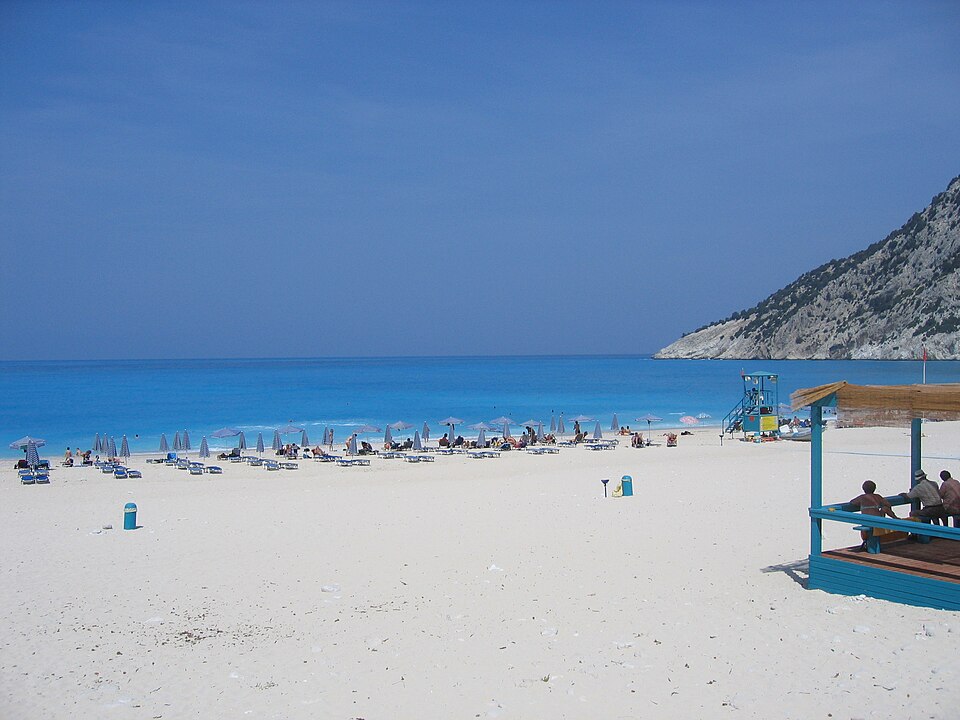
A half-kilometre arc of white pebbles hemmed in by 2 headlands with cliffs, which give the water a deep turquoise colour. It's one of the most photographed beaches in Greece, and the whole sweep is visible from the switchback road above.

Tip: The entry into the water is steep and the white pebbles underwater are slippery — a demanding beach for weaker swimmers and young children.

Admission:
free, sunbed from 12 €
Time needed:
half day
Melissani Underground Lake

Melissani Underground Lake

Sami, east

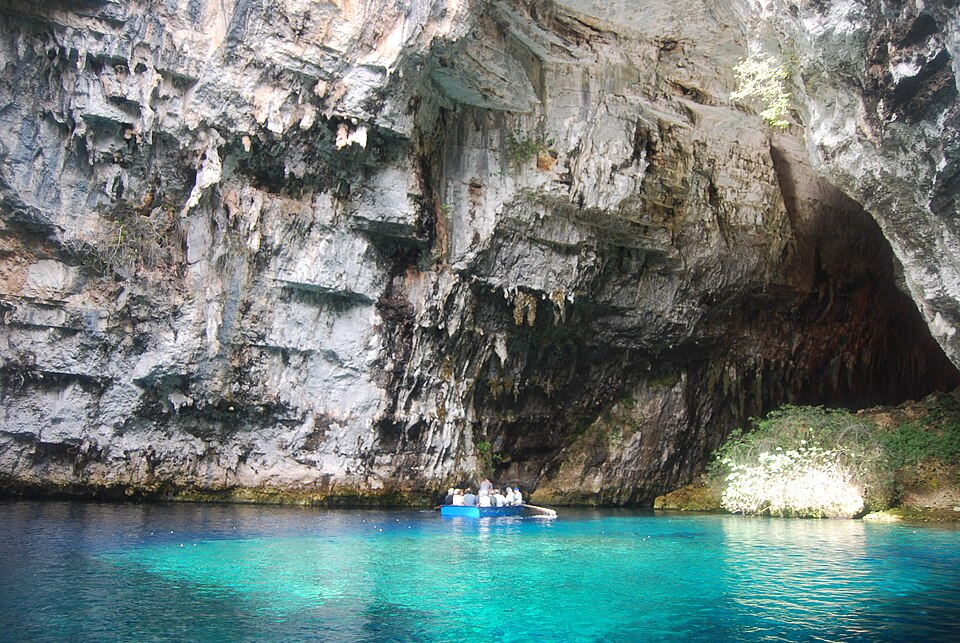
A cave with a lake whose roof collapsed 2,000 years ago, letting direct sunlight pour in. Around midday the water glows neon blue, and a rowing boat with a boatman takes you through the whole chamber.

Tip: Go between 11am and 1pm, when the sun shines straight down through the opening — outside that window the lake is dark and the effect disappears.

Admission:
from 10 €
Time needed:
1 h
Drogarati Cave

Drogarati Cave

Sami, east

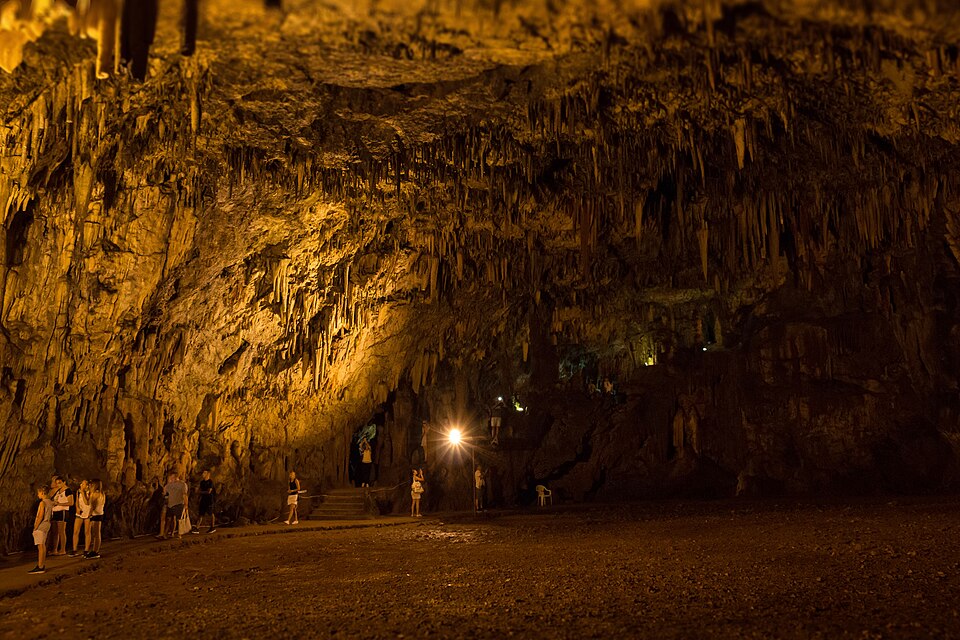
A stalactite cave roughly 150,000 years old with a huge chamber whose acoustics are so good that concerts are held there — Maria Callas once sang in it. Steps lead down to a depth of 60 m.

Tip: It's 18°C inside with high humidity, and the steps are slippery — bring a light jacket and shoes with grip.

Admission:
from 6 €
Time needed:
45 min
Assos

Assos

northwest

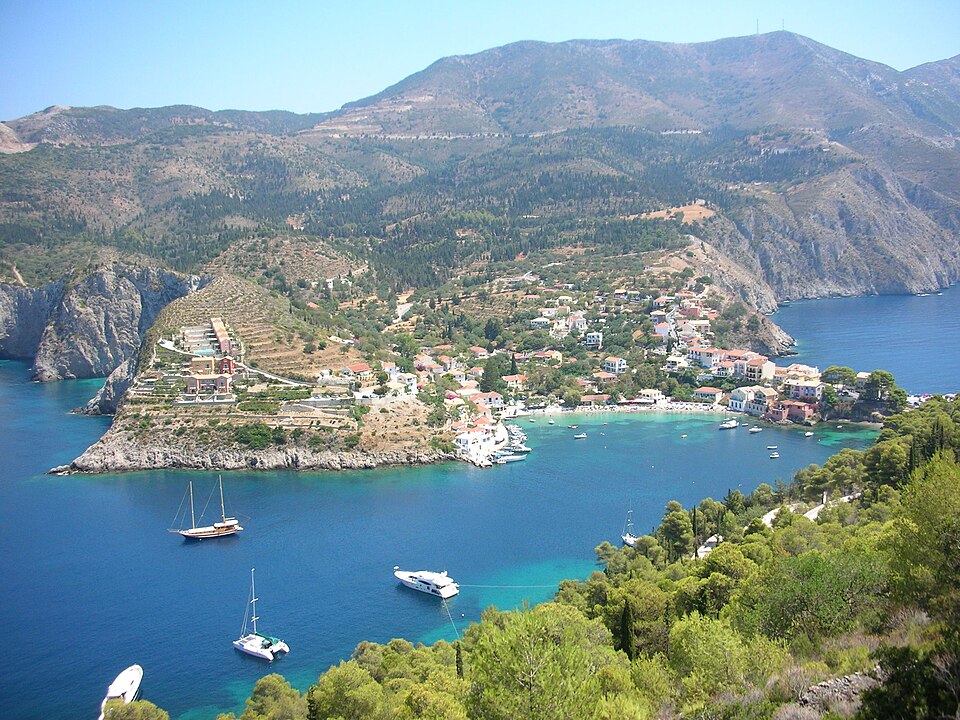
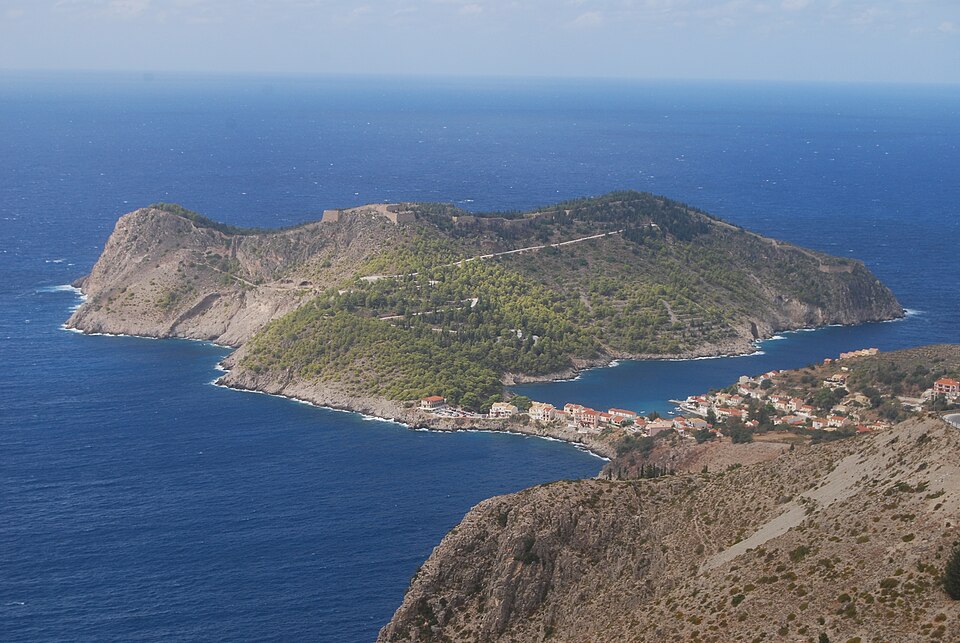
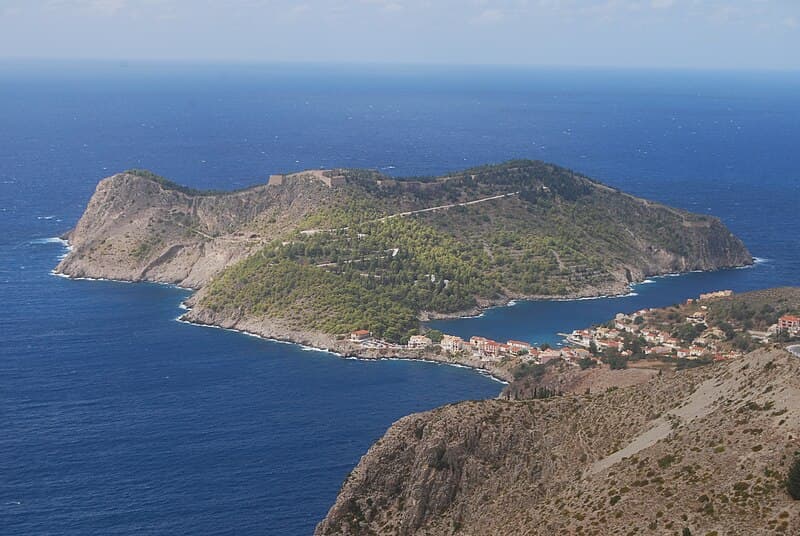
A fishing village on a narrow isthmus below a 16th-century Venetian fortress, with pastel houses around a small harbour. It's one of the few parts of the island the 1953 earthquake left untouched.

Tip: A half-hour switchback path leads up from the village to the fortress — there are no facilities at the top, but the view across both sides of the isthmus is worth it.

Admission:
free
Time needed:
half day
Fiskardo

Fiskardo

north

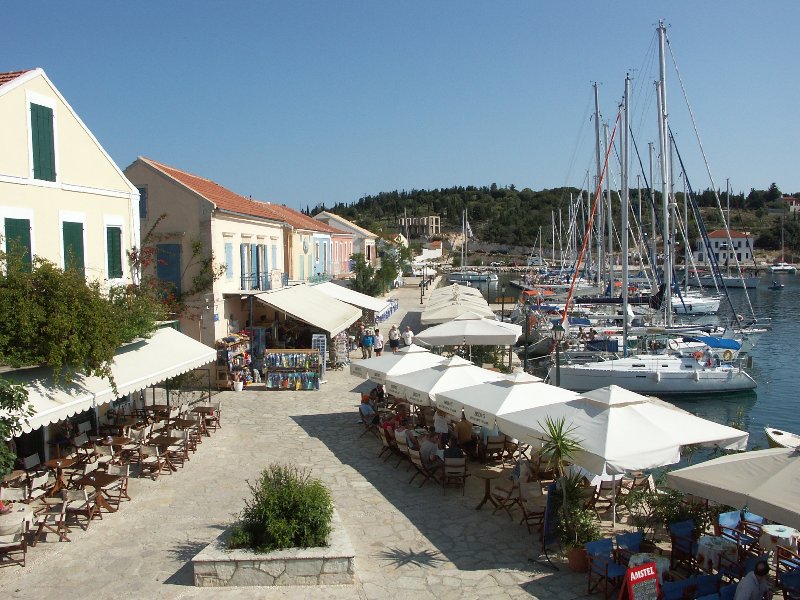
The island's northernmost village and the only one to survive the earthquake entirely intact. The Venetian houses around the harbour date from the 18th century, yachts moor here, and it's both the most expensive and the prettiest spot on Kefalonia.

Tip: Restaurants right on the quay charge noticeably more — a street back you'll pay a third less for the same meal.

Admission:
free
Time needed:
half day
Argostoli and Katavothres

Argostoli and Katavothres

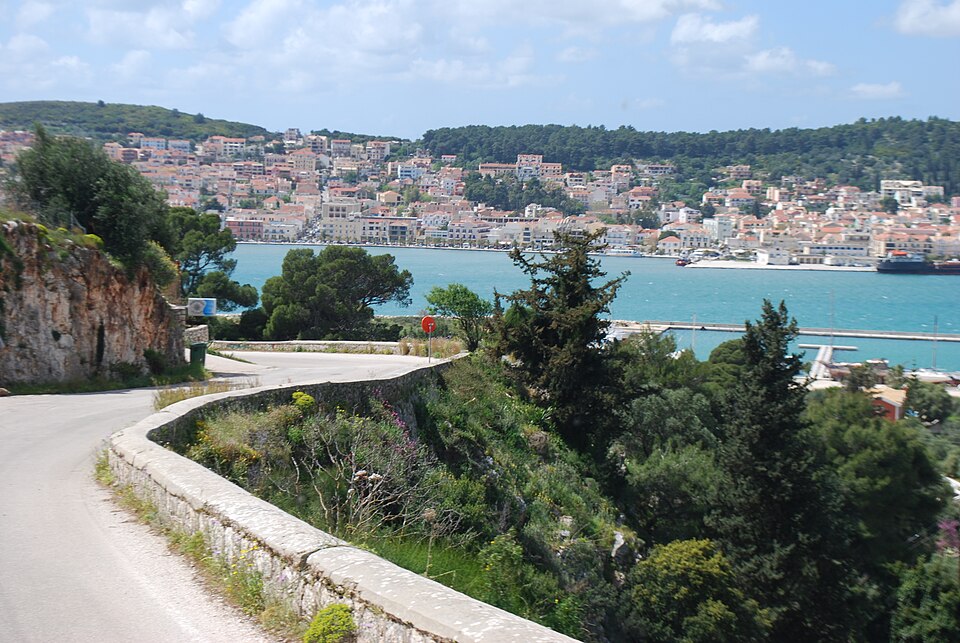
Argostoli

The island's capital, with a promenade, the De Bosset Bridge across the lagoon, and the Katavothres phenomenon, where seawater vanishes into cracks in the rock and flows underground across the whole island to Melissani Lake. Loggerhead turtles live in the lagoon.

Tip: By the fish market on the promenade, turtles linger for scraps from the catch — you can spot them from the shore most days, for free.

Admission:
free
Time needed:
3 h
Mount Ainos

Mount Ainos

Αίνος

centre of the island

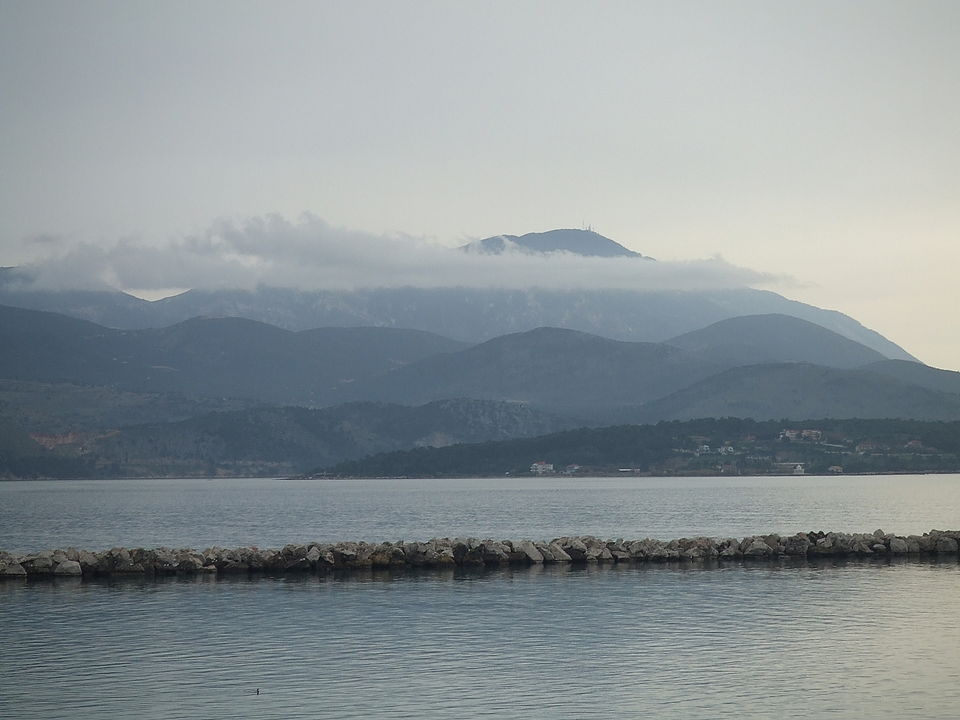
A national park around the highest mountain in the Ionian Islands, home to the endemic Kefalonian fir, found nowhere else on Earth. Semi-wild horses graze the slopes, and on a clear day the summit gives views of both Zakynthos and the mainland.

Tip: The road to the summit is only partly surfaced and offers no bearings at all in fog — drive it in clear weather and in the morning.

Admission:
free
Time needed:
half day
Antisamos Beach

Antisamos Beach

east, near Sami

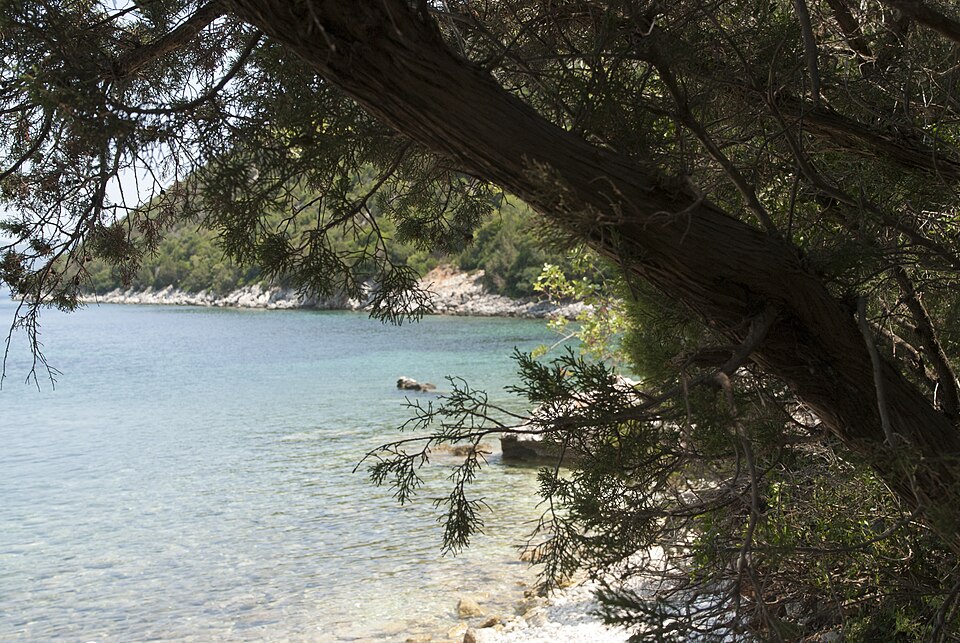
A pebble beach in a bay near Sami, ringed by wooded hills, where the film Captain Corelli's Mandolin was shot. The water is deep and clear, and unlike Myrtos there are bars and sunbeds here.

Tip: The pebbles are large and get very hot — without water shoes and a mat it's uncomfortable, and a towel alone won't cut it on the stones.

Admission:
free, sunbed from 12 €
Time needed:
half day
Kefalonia's Robola Vineyards

Kefalonia's Robola Vineyards

Omalos valley

The island has its own white grape, Robola, grown on limestone slopes up to 800 m. The cooperative winery near Agios Gerasimos Monastery offers tastings and is open daily without booking.

Tip: The neighbouring Agios Gerasimos Monastery is the island's pilgrimage site and worth a stop even for non-believers — it has a huge plane tree and the saint's underground cell.

Admission:
tasting from 5 €
Time needed:
2 h

Photos: Myrtos Beach — Splendid entry (CC BY 3.0) · Melissani Underground Lake — Matt Sims (CC BY 2.0) · Drogarati Cave — Lubomir Mihalik (CC BY 3.0) · Assos — Ulrike Wegner (CC BY-SA 3.0) · Fiskardo — Paul Brink at Dutch Wikipedia (CC BY-SA 3.0) · Argostoli and Katavothres — Jean Housen (CC BY-SA 3.0) · Mount Ainos — No machine-readable author provided. Christos Vittoratos assumed (based on copyright claims). (CC BY-SA 2.5) · Antisamos Beach — Piet Horden (CC BY-SA 3.0) · Kefalonia's Robola Vineyards — Matt Sims (CC BY 2.0)

Where to stay

Areas and districts, matched to the kind of trip you are taking

Argostoli

Best for: first visit and accessibility

The capital, with a promenade, shops and the best bus connections. The best base if you won't have a car for the whole stay. The beaches here are weaker than in the north, though, and the town was rebuilt after the earthquake, so don't expect much history.

Lassi and Svoronata

Best for: families and easy beaches

The southwestern coast just outside Argostoli and near the airport, with the sandy beaches of Makris and Platys Gialos and the densest choice of hotels. The most practical choice for a holiday with children, and the shortest transfer on the island.

Sami and the east

Best for: caves and boat trips

A small harbour town in the east, where ferries leave for Ithaca, and a base for both caves and Antisamos beach. Quieter than the southwest, with smaller hotels. It's half an hour over the mountains to Argostoli.

Fiskardo and the north

Best for: atmosphere and calm

The prettiest and most expensive part of the island, with original Venetian buildings. Accommodation here leans towards apartments and small guesthouses rather than hotels. It's 1.5 hours of switchbacks from the airport, so without a car you're practically stuck.

Getting around

From the airport

Kefalonia has its own international airport roughly 9 km south of Argostoli, served by charter flights in season. The transfer to southwestern resorts takes 10–20 minutes, but 1.5 hours over the mountains to reach Fiskardo in the north. The island can also be reached by ferry from mainland Kyllini to Poros, or from Patras. Ferries also run to neighbouring Ithaca, Lefkada and Zakynthos.

Kefalonia Anna Pollatou (EFL) · 9 km

  • Taxi to Argostoli· 15 min· 20 €
  • Taxi to Lassi· 10 min· 15 €
  • Taxi to Fiskardo· 1 h 30 min· 110 €
  • Hotel transfer· 15–90 min depending on resort· included in package

Around town

KTEL buses run from Argostoli to the main resorts, but infrequently and almost not at all at weekends. Kefalonia is mountainous and drives take a long time — Argostoli to Fiskardo is 1.5 hours of switchbacks, even though it's just 40 km as the crow flies. Without a car you can only reach a handful of places. The roads are narrow and winding, in places without barriers, but well surfaced. A scooter isn't suited to the long mountain routes.

KTEL busFrom Argostoli to the resorts, rarely at weekends. · 2–6 €
Rental carPractically essential. The island is large and mountainous, and public transport covers only a fraction of it. · 35 € / day
Ferry to IthacaFrom Sami to Pisaetos several times a day, a 30-minute crossing. · 5 €
TaxiExpensive for long trips — Fiskardo costs over €100 one way. · 4 € flag fall

Useful apps: Moovit, Google Maps

When to go

The swimming season runs from June to September, with the sea warmest in August at 26°C. June and September are the best months: warm without being scorching, and the island isn't crowded. Kefalonia is one of the rainier Greek islands — heavy rain falls from November to March, which keeps it green but also closes most resorts. Spring is beautiful for hiking on Mount Ainos, though the sea is still too cold for swimming.

Best time

June and September

What to avoid

November to April, when it rains and resorts close

MonthJanFebMarAprMayJunJulAugSepOctNovDec
Day14°14°16°19°23°28°30°30°27°23°19°16°
Night8°8°9°11°14°18°21°21°18°15°12°10°
Rainy days131110853114101415
Sea16°15°15°17°20°23°25°26°25°22°20°18°

Food & drink

Kefalonian cooking is Ionian with Venetian influences: meat stewed in sauces, olive oil and herbs. The island speciality is kreatopita, a meat pie, and Robola, a white wine from high-altitude vineyards. A small black raisin is also grown here and exported worldwide. In harbour villages, fish is chosen from the display case and charged by weight — always check the price per kilo first, as it can run double in Fiskardo compared with Sami.

What to try

Kreatopita

A meat pie of lamb and pork with rice and herbs in a crisp pastry. The island's most typical dish.

Robola

A white wine from limestone slopes, dry and mineral. The cooperative in the Omalos valley holds tastings daily.

Aliada

A thick paste of garlic, potato and olive oil, served with fried fish and with beetroot.

Riganada

Toasted bread with tomatoes, oregano, olive oil and feta — the simplest Ionian starter.

Mandolato

White nougat with almonds and honey, a traditional Ionian sweet and the most popular souvenir.

Fresh fish

In Sami and Agia Efimia, fish is charged by weight and comes cheaper than in Fiskardo for the same quality.

What it costs

Greek coffee or frappé

3–4 €

Gyros in pitta

4–5 €

Dinner at a taverna

20–30 € per person

Beer, 0.5 l

4–5 €

Sunbed and umbrella

12–18 € for 2 sunbeds

Entry to Melissani

10 €

Rental car per day

from 35 €

Night at a 4-star hotel

100–170 €

Indicative prices that change over time — treat them as a guide, not a price list.

Practical information

SocketsCEuroplug, two round pinsFSchuko
Voltage230V / 50Hz
Tap waterTap water is treated, bottled is common — Tap water is drinkable on Kefalonia, which has its own underground sources. In some resorts it has a higher mineral content and a stronger taste, so bottled water is commonly drunk instead.
TippingNot compulsory. At tavernas, it's common to round up or leave 5–10% if a service charge hasn't already been added.
Driving on theright
SafetyKefalonia is very safe. The main risks are on the road: mountain switchbacks without barriers, especially the route to Myrtos and Mount Ainos. At Myrtos the entry into the water is steep with slippery pebbles, and at Antisamos the stones get very hot underfoot.
Opening hoursShops in the resorts stay open late into the evening, 7 days a week. The caves are open roughly from 9am to 7pm, with shorter hours out of season. From November to April most places outside Argostoli close.
Customs & etiquetteCover shoulders and knees when visiting monasteries; at Agios Gerasimos, scarves are lent out at the entrance. Toilet paper goes in the bin, not the toilet. Topless sunbathing is common on the beaches.
A few local wordsHello — KaliméraThank you — EfcharistóPlease — ParakalóCheers — JamasThe bill, please — To logariasmó, parakaló

How to plan your days

1 day

A day in the north

  1. 1Morning: drive the switchbacks above Myrtos beach for the viewpoint.
  2. 2Swim at Myrtos before it fills up.
  3. 3Lunch in Assos below the Venetian fortress.
  4. 4Afternoon in Fiskardo with a walk round the harbour, back in the early evening.

2 days

2 days with the caves

  1. 1Day 1 as above.
  2. 2Day 2 at midday: the underground lake at Melissani, when the sun shines through the opening.
  3. 3Straight after: Drogarati Cave nearby.
  4. 4Afternoon at Antisamos beach and dinner in Sami.

3 days

3 days including the mountains

  1. 1The first 2 days as above.
  2. 2Day 3 morning: Argostoli, the De Bosset Bridge and the turtles by the fish market.
  3. 3Lunch in town, afternoon in the Omalos valley for a Robola tasting.
  4. 4Agios Gerasimos Monastery and a drive up Mount Ainos in clear weather.
  5. 5Return to your resort in the early evening.

Frequently asked questions

Do I need a car on Kefalonia?+

Pretty much, yes. It's the largest of the Ionian islands and very mountainous; buses run only from Argostoli to the main resorts, and almost not at all at weekends. Without a car you can't reach Myrtos, Assos or the caves.

When should you visit Melissani Cave?+

Between 11am and 1pm, when the sun shines straight down through the collapsed roof and the water glows neon blue. Outside that window the lake is dark and the effect people come for doesn't happen.

Is Myrtos Beach suitable for children?+

Not really. The entry into the water is steep, it gets deep right at the shore, and the white pebbles underwater are slippery. For families with young children, the sandy beaches of Makris and Platys Gialos near Lassi are better.

How far is it from the airport to Fiskardo?+

About 50 km, but the mountain switchbacks make it a 1.5-hour drive. A taxi costs over €100 one way. If you plan to stay in the north, factor that into your transfer planning.

When is the sea warmest?+

The sea is 26°C in August and 25°C in September. Comfortable swimming runs from June to early October. In May the sea is 20°C, which most people find on the cool side.

What is Katavothres?+

A phenomenon at Argostoli where seawater disappears into cracks in the coastal rock. Dye tests have shown it flows underground right across the island and resurfaces 2 weeks later in Melissani Lake on the opposite side.

Did anything survive the 1953 earthquake?+

Only the north of the island. Fiskardo came through almost untouched and Assos partly so, which is why original Venetian houses still stand there. Argostoli and the rest of the island were levelled and rebuilt, so you won't find historic buildings there.

How many days are enough for Kefalonia?+

4 days with a car if you want to see Myrtos, the north, the caves and Mount Ainos. The island is large and drives are long, so fewer days don't get you far. For a week's holiday, there's time left over for a trip to Ithaca too.

Visa Requirements

Check the latest visa requirements for entering this country. Some nationalities may need to apply for a visa or e-visa before travel.

Check visa requirements

Language

Greek

Currency

EUR

Timezone

Europe/Athens

Dial Code

+30

Population

10.4M

Area

131,957 km²

Voltage

230V / 50Hz

Driving Side

Right

Top Hotels in Kefalonia

Live prices from 500+ properties

Loading hotels...

Planning a trip to Kefalonia?

Compare hundreds of hotels, find the best price, and book with free cancellation on TravelManiac.