Hotels in Paralia Katerini

Sandy beaches below Greece's highest mountain

Paralia Katerini

LanguageGreek
CurrencyEUR
TimezoneEurope/Athens
Temperature12-33 °C
Dial Code+30
Population10.4M
Area131,957 km²
SocketsType C / Type F
Tap waterBottled advised

Discover Paralia Katerini

Paralia Katerini is a beach resort on the coast of Pieria in northern Greece, six kilometres from the market town of Katerini, and one of the best-known seaside destinations for travellers from Central Europe. Its success comes down to distance: from Prague it is around 1,500 kilometres by motorway through Hungary, Serbia and North Macedonia, so for decades coach holidays and families in their own cars have headed here. The beach is long and sandy and the water near the shore is shallow, which children especially appreciate. Beyond it stretches the Olympic Riviera — a chain of smaller resorts such as Olympiaki Akti, Leptokarya and Platamonas lying right below the Olympus massif. Greece's highest mountain rises less than thirty kilometres from the sea, and on a clear morning you can see snow on the peaks from the beach. That makes it easy to combine swimming with a trip into the mountains, to ancient Dion or to the Crusader castle above Platamonas. Paralia itself is noisy, cheap and geared to fun; if you want peace, stay a few kilometres further south.

What to see

The places worth your time in Paralia Katerini, and what to expect at each

Paralia beach and promenade

Paralia beach and promenade

centre of the resort

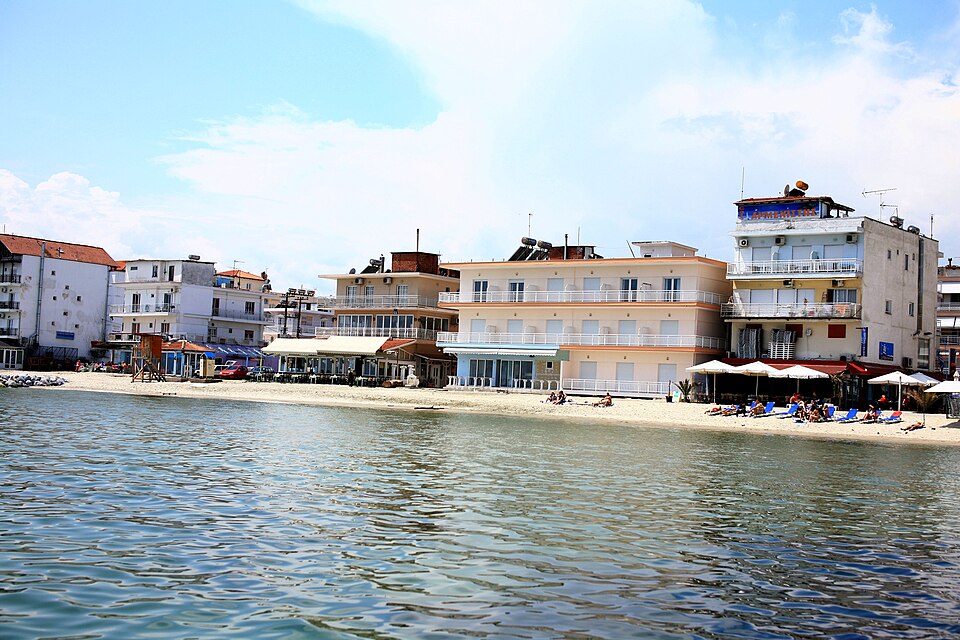
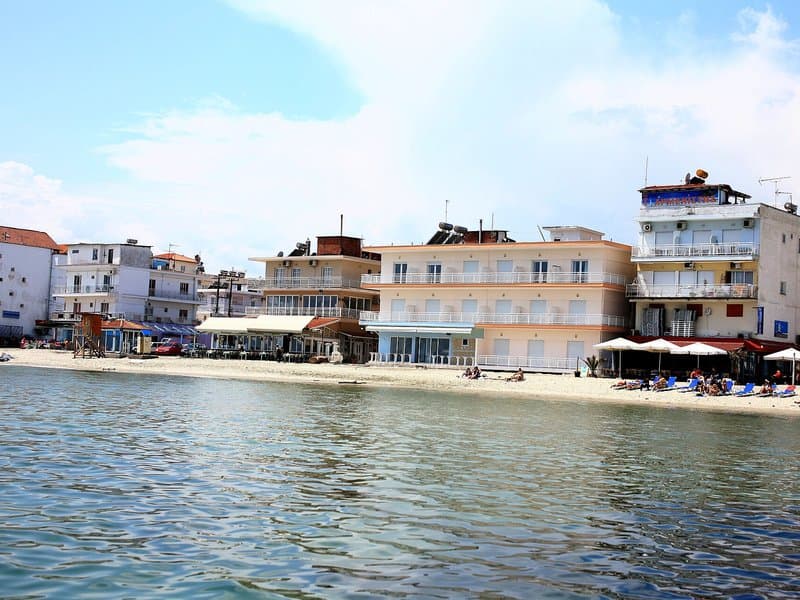
A sandy beach several kilometres long with a Blue Flag, where the sea is still shallow tens of metres from the shore. A pedestrian promenade runs alongside with cafés, beach bars and souvenir shops, and a block back is the main street with tavernas, gyros joints and signs in Czech, Slovak and Polish.

Tip: Sunbeds at the bars are often free if you order a drink or a coffee — ask first, otherwise a pair costs around €8. The quietest stretch is the northern end of the beach towards Korinos, where the bars stop.

Admission:
free
Time needed:
full day
Dion Archaeological Park

Dion Archaeological Park

17 km south-west of Paralia

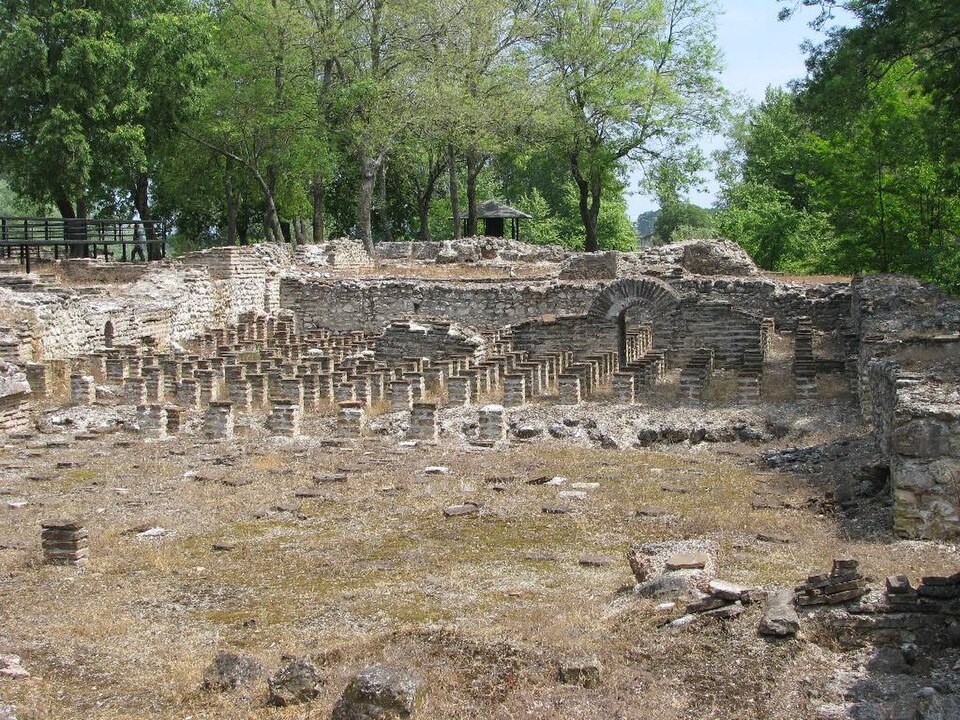
The sacred city of the ancient Macedonians at the foot of Olympus, where Philip II and Alexander the Great sacrificed to Zeus before their campaigns. The sprawling site holds remains of walls, baths, houses with mosaics, a Roman theatre and the sanctuary of the Egyptian goddess Isis, still flooded by spring water today.

Tip: Come at eight when it opens — there is hardly any shade and the plain below the mountains gets muggy during the day; bring insect repellent, as the marshy ground around the Isis sanctuary has mosquitoes. Parking at the entrance is free.

Admission:
about €8 (site and museum)
Time needed:
2 h
Archaeological Museum of Dion

Archaeological Museum of Dion

Dion village

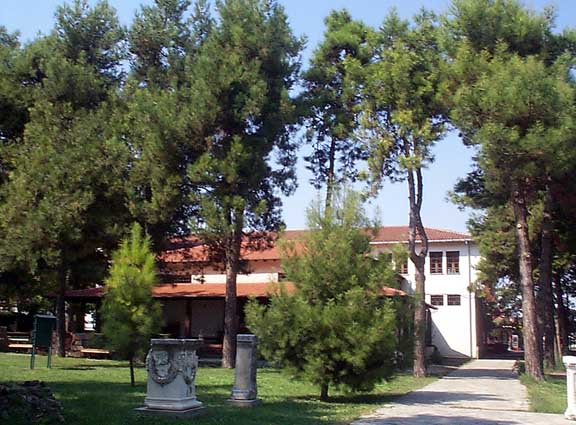
The museum in Dion village, a kilometre from the site, displays finds from the excavations: statues of gods and emperors, votive reliefs and, in a separate building, a large Dionysus mosaic and the remains of an ancient water organ, the hydraulis, the oldest find of its kind.

Tip: The ticket covers both the museum and the site, so keep it; save the museum for midday, when it is hottest outside — it is air-conditioned, and on Monday mornings and out of season it may keep shorter hours.

Admission:
included in the Dion ticket
Time needed:
1 h
Litochoro

Litochoro

25 km south of Paralia

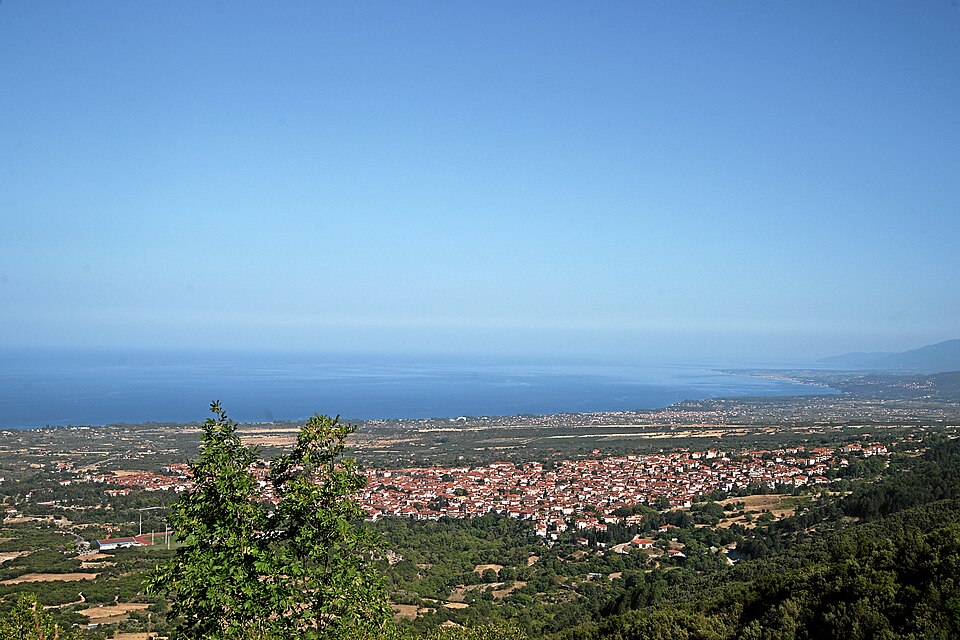
A mountain town at the foot of Olympus, about three hundred metres up, and the main base for climbs. The centre has a square with a plane tree and a church, outdoor gear shops, the national park information centre and tavernas overlooking the Enipeas gorge.

Tip: Come up from the coast for dinner: it is five degrees cooler and the tavernas are cheaper than in Paralia. Litochoro railway station is down by the sea, five kilometres by taxi from the town.

Admission:
free
Time needed:
half a day
Enipeas gorge

Enipeas gorge

starts in Litochoro

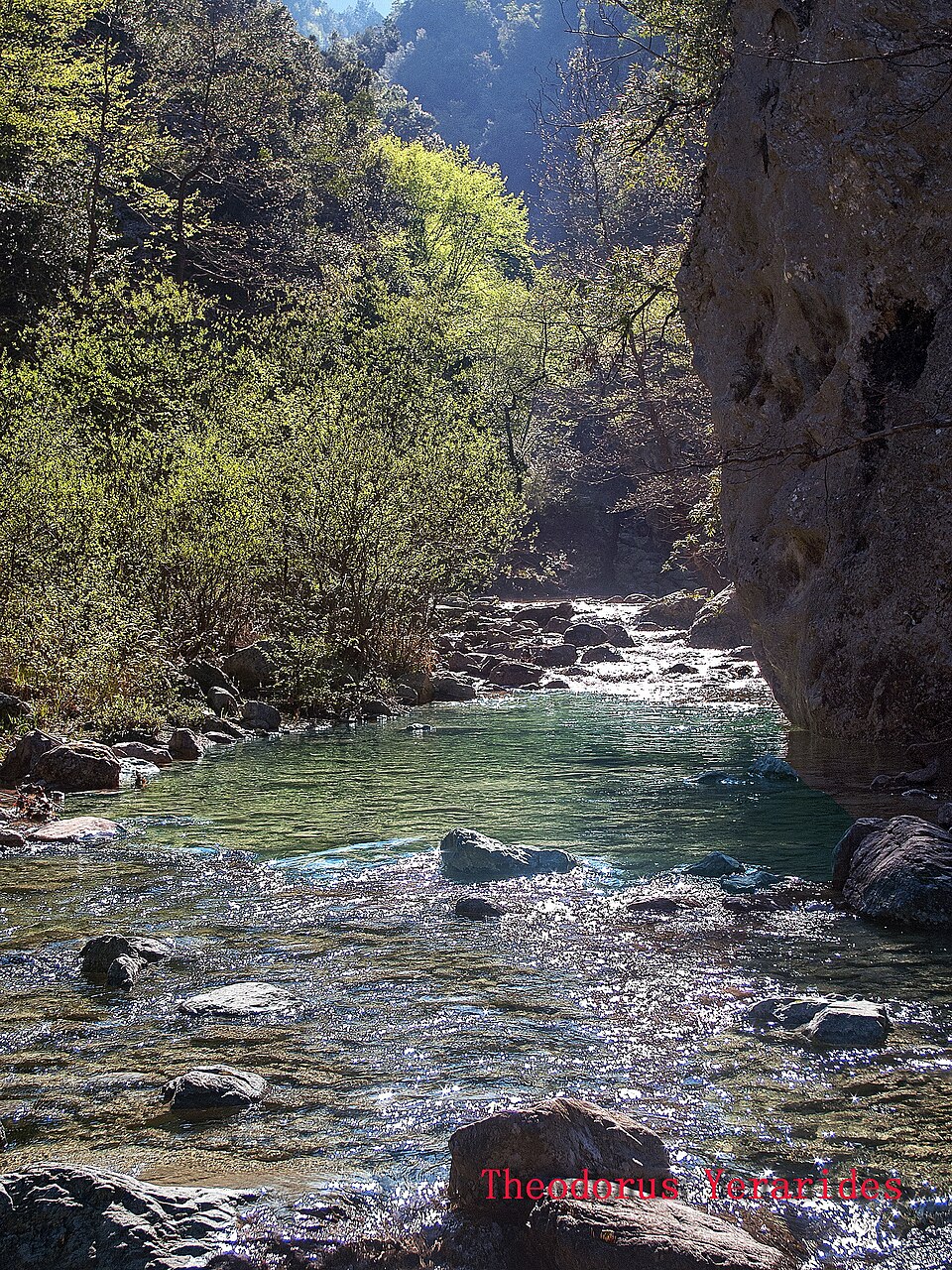
A trail along the Enipeas river, which runs down from Olympus, leads from Litochoro through forest, over footbridges and past rock pools all the way to Prionia. It is part of the E4 European long-distance path and one of the finest hiking stretches in Greece, with no need to climb the mountain itself.

Tip: The full route to Prionia is about twelve kilometres and takes five to six hours; for a half-day outing, walk an hour and a half from Litochoro to the first pools and turn back. Sturdy shoes are essential, as the path crosses rocks and has chain-assisted sections.

Admission:
free
Time needed:
3–6 h
Mount Olympus: Prionia to Spilios Agapitos refuge

Mount Olympus: Prionia to Spilios Agapitos refuge

Prionia, 18 km from Litochoro

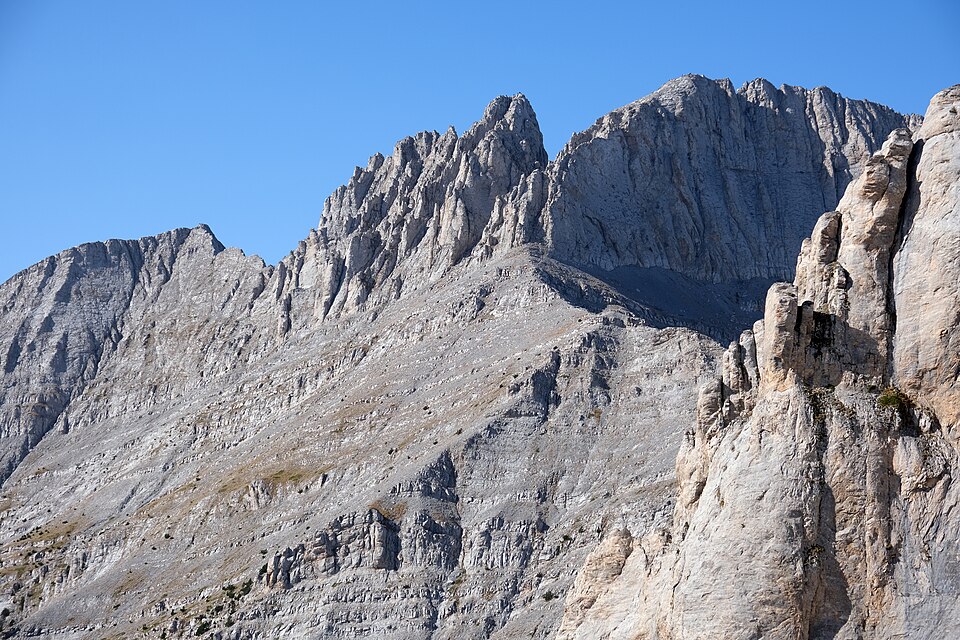
Greece's highest mountain, with its Mytikas summit at 2,918 metres, and the country's oldest national park. The road from Litochoro ends after eighteen kilometres at Prionia, 1,100 metres up by the waterfalls, where a waymarked path climbs through forest to the Spilios Agapitos mountain refuge at about 2,100 metres.

Tip: The hike to the refuge takes three hours and is manageable for any fit walker without experience; for the summit itself you need to sleep at the refuge and set out at dawn the next day, as the final section is a scramble. Book the refuge weeks ahead — in July and August it is full.

Admission:
free, refuge bed about €20
Time needed:
full day
Old Monastery of St Dionysios

Old Monastery of St Dionysios

15 km above Litochoro

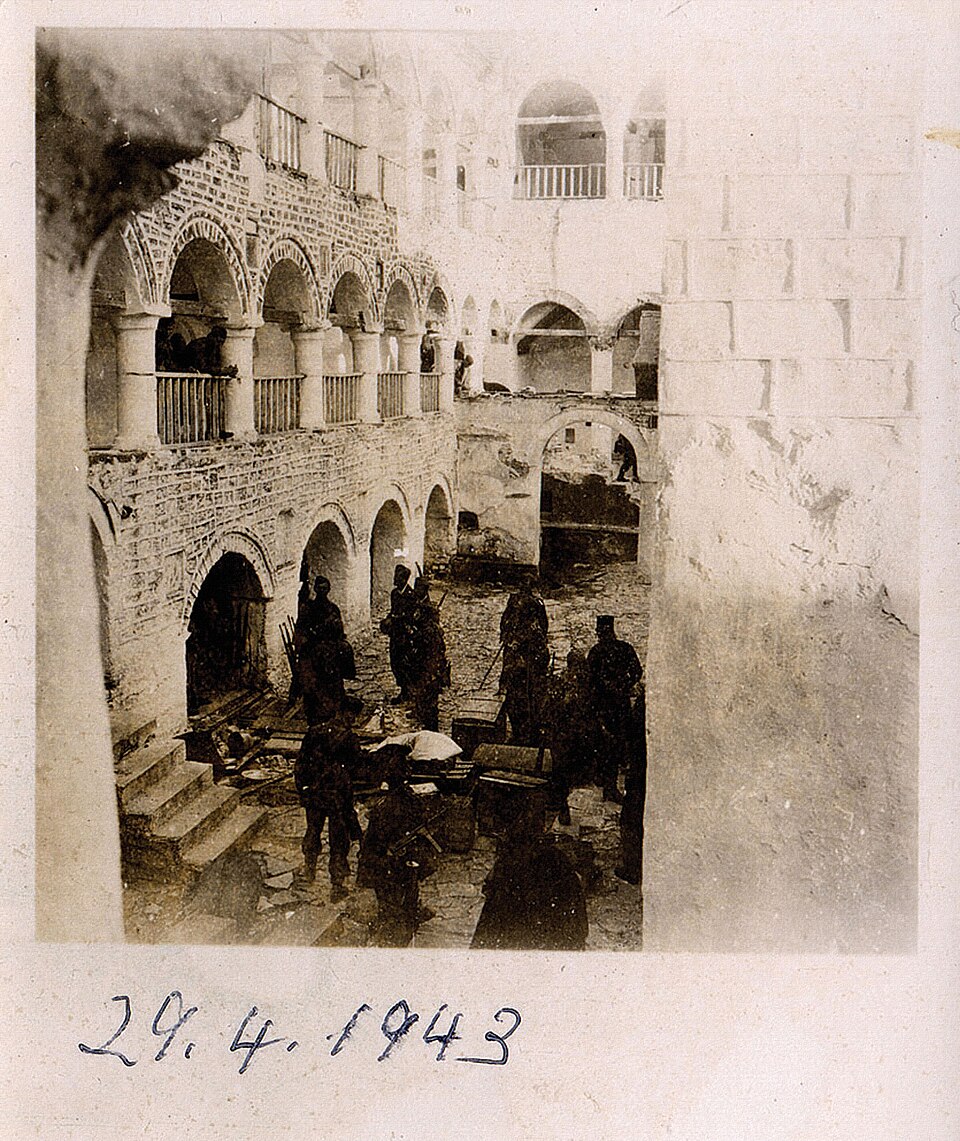
A monastery in the forest above the Enipeas gorge, founded in the 16th century by the monk Dionysios. During the Second World War the German army burned it down while searching for partisans, and it is now gradually being rebuilt. The church and some buildings have been restored; the rest remains a ruin.

Tip: It lies three kilometres before Prionia by the road, so it combines easily with a trip to Olympus or the waterfalls; women should bring a skirt that covers the knees, as none are lent here.

Admission:
free
Time needed:
45 min
Platamon Castle

Platamon Castle

40 km south of Paralia

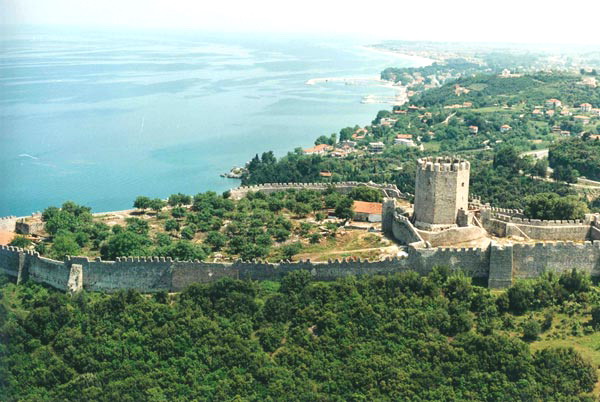
A Crusader castle from the early 13th century on a hill above the sea, guarding the entrance to the Vale of Tempe between Olympus and Ossa. Its massive walls and octagonal keep survive, and inside is a courtyard where concerts and theatre are staged in summer as part of the Olympus Festival.

Tip: The best photo of the castle with the sea is from the beach below it at Nei Pori; drive right up to the entrance gate, as walking up from the village is a steep climb with no shade. It is often closed on Mondays and on afternoons out of season.

Admission:
about €6
Time needed:
1 h
Palaios Panteleimonas

Palaios Panteleimonas

above Platamonas, 45 km from Paralia

A mountain village seven hundred metres up on the slopes of Olympus, abandoned in the 1960s and later fully restored to its original look, with stone houses, cobbled lanes and a square under plane trees. From the edge of the village the view sweeps over the coast to Platamon Castle and the whole riviera.

Tip: Come in the early evening, when the tavernas on the square open and the coast below is still hot; a narrow switchback road leads up — park in the car park below the village, as cars are not allowed in the lanes.

Admission:
free
Time needed:
2 h

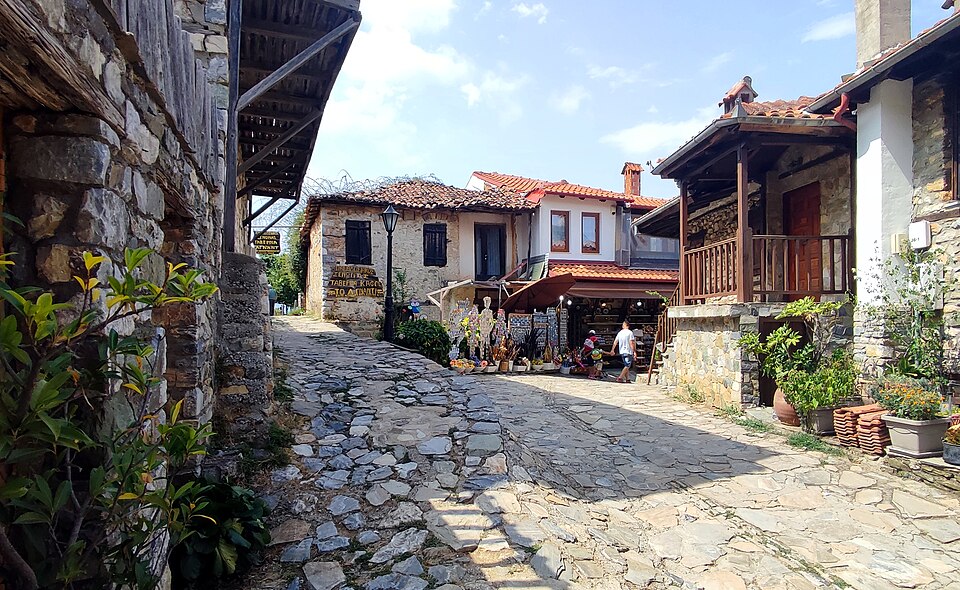
Photos: Paralia beach and promenade — Elena Chochkova (CC BY-SA 3.0) · Dion Archaeological Park — stg_gr1 (CC BY 2.0) · Archaeological Museum of Dion — Prof. Vlasis Vlasidis (CC BY-SA 3.0) · Litochoro — Mboesch (CC BY-SA 4.0) · Enipeas gorge — Teogera (CC BY-SA 4.0) · Mount Olympus: Prionia to Spilios Agapitos refuge — kallerna (CC BY-SA 4.0) · Old Monastery of St Dionysios — Karl Faber (CC0) · Platamon Castle — JFKennedy at English Wikipedia (Public domain) · Palaios Panteleimonas — DocWoKav (CC BY-SA 4.0)

Where to stay

Areas and districts, matched to the kind of trip you are taking

Central Paralia

Best for: nightlife and staying without a car

The main street with bars, shops and tavernas, and the beach within reach. The most accommodation, and where tour operators send most coach holidays. In summer it is noisy until dawn, so for a good night's sleep pick a room on the streets further from the sea or off the main strip.

Olympiaki Akti

Best for: families with children

A smaller resort eight kilometres south of Paralia, with a long sandy beach, shallow water and a quieter promenade. Apartments with kitchenettes, supermarkets and playgrounds. A local bus runs to Paralia and Katerini.

Leptokarya and Plaka Litochorou

Best for: combining the beach with trips up Olympus

Coastal villages right below Olympus with both pebble and sandy beaches and a railway station. The shortest route to Litochoro and the national park, with fewer bars and more local tavernas. Plaka is the quieter of the two.

Platamonas and Nei Pori

Best for: couples and a quieter holiday

The southern end of the riviera below the Crusader castle, with a fishing harbour in Platamonas and a long beach in Nei Pori. Green slopes run right down to the sea, and Palaios Panteleimonas is a quarter of an hour away by car.

Getting around

From the airport

The nearest airport is Thessaloniki Makedonia, about eighty kilometres north, with charter flights in season and direct scheduled services from many European cities. From the airport it is an hour to Paralia by car, or two to three hours by bus via Thessaloniki and Katerini. Many visitors, though, come by coach or in their own car: from Prague it is about 1,500 kilometres via Budapest, Belgrade and Skopje, roughly sixteen hours of driving, crossing into Greece at Evzoni. Trains also run from Thessaloniki to Katerini.

Thessaloniki Makedonia (SKG) · 80 km

  • Hotel transfer· 1 h 15 min· included in your package
  • Taxi to Paralia· 1 h· €90
  • Bus X1 to Thessaloniki KTEL station, then KTEL to Katerini· 2 h 30 min· €12
  • Hire car· 1 h· €35 / day

Around town

Paralia is small and the centre is walkable. In summer, local buses run from Paralia to Katerini and Olympiaki Akti roughly every twenty minutes. KTEL Pierias intercity buses link Katerini with Litochoro, Leptokarya and Thessaloniki. The Thessaloniki – Athens railway runs along the coast with stops at Katerini, Litochoro and Leptokarya. For trips into the mountains, to Dion and the castle, a car is best; the coastal motorway is tolled but fast.

Local bus Katerini – ParaliaRuns through the day and into the evening; buy tickets at a kiosk or from the driver. · €1.50
KTEL Pierias busFrom Katerini bus station to Litochoro, Leptokarya, Dion and Thessaloniki. · €2
Hellenic TrainKaterini – Thessaloniki in under an hour, also stopping at Litochoro and Leptokarya. · €5
Hire carBest for Olympus, Dion and Platamonas; the motorway toll to Litochoro is about €2. · €35 / day

Useful apps: Hellenic Train, Google Maps, Uber (taxi)

When to go

The swimming season runs from June to mid-September, with the sea at around twenty-five degrees in August. July and August are the busiest, when coaches arrive from Czechia, Slovakia, Poland and Serbia and the beach gets crowded. June and September are best, pleasantly warm and about a third cheaper. Being so close to Olympus, afternoon thunderstorms are more frequent than in southern Greece, though they are usually short. The best time to climb the mountain is from mid-June to the end of September, once the snow has gone.

Best time

June and the first half of September

What to avoid

October to May, when the resort is closed

MonthJanFebMarAprMayJunJulAugSepOctNovDec
Day11°12°15°19°24°29°31°31°27°21°16°12°
Night2°3°5°9°14°18°21°20°17°12°8°4°
Rainy days878775334689
Sea14°13°14°16°19°23°25°26°24°21°18°15°

Food & drink

Food on the Olympic Riviera is northern Greek and, above all, cheap. Pieria lies on the Thermaic Gulf, where most of Greece's mussels are farmed, so they are fresh here and cost a fraction of what they do elsewhere. Breakfast is bougatsa, as in Thessaloniki; tavernas serve grilled meat and fish, and the mountain villages below Olympus offer lamb and cheeses. On Paralia's main street many places have menus in Czech and other languages, while the same food costs a fifth less in Katerini or Litochoro.

What to try

Thermaic Gulf mussels

Mydia saganaki with tomatoes and feta, steamed in wine or as a pilaf with rice. They are farmed a few kilometres from the beach near Makrygialos and are best from June to September.

Bougatsa

Filo pastry filled with vanilla custard and dusted with sugar and cinnamon, or a savoury version with cheese or minced meat. The northern Greek breakfast, from €3 in bakeries.

Gavros tiganitos

Fried anchovies dusted in flour, eaten whole, bones and all, with lemon. A cheap dish with beer or tsipouro, usually under €10 on the menu.

Souvlaki and gyros pita

Grilled meat from a skewer or a spit in pitta with tomato, onion, tzatziki and chips inside. The cheapest full meal in the country; 'kalamaki' is a skewer without the pitta.

Horiatiki (Greek salad)

Tomatoes, cucumber, onion, peppers, olives and a slab of feta with oregano and olive oil, with no lettuce. It is served as a shared starter, and mopping up the leftover oil with bread is part of the ritual.

Loukoumades

Fried balls of yeast dough drenched in honey and sprinkled with cinnamon and nuts, served hot. An ancient dessert still made the same way; it comes with cold water, not coffee.

Frappé and freddo espresso

Frappé is whipped instant coffee over ice; freddo espresso is the younger and better version made with real espresso. Order it sketos without sugar, metrios medium-sweet or glykos sweet.

Ouzo and tsipouro

An anise spirit that turns milky white when water is added. It is sipped slowly with meze, never downed in one and never on an empty stomach. Tsipouro is a grape spirit, in the north often made without anise.

What it costs

Frappé or freddo espresso

€2.50–3.50

Gyros pita

€3–4

Bougatsa from a bakery

€3–4

Taverna dinner

€15–20 per person

Portion of mussels saganaki

€8–12

0.5 l beer in a bar

€3–4.50

Dion admission

about €8

Night in a studio or apartment

€35–70

Indicative prices that change over time — treat them as a guide, not a price list.

Practical information

SocketsCEuroplug, two round pinsFSchuko
Voltage230V / 50Hz
Tap waterTap water is treated, bottled is common — Tap water in Paralia and along the riviera is technically drinkable, but in summer heavy demand gives it a taste of chlorine and locals do not drink it. Bottled water costs about half a euro for a litre and a half in the supermarket. In the mountain villages below Olympus, such as Litochoro, cold spring water runs from the fountains and you can fill your bottle there.
TippingTipping in Greece means rounding up or leaving five to ten per cent, in cash on the table — card terminals usually have no tip option. The bill often arrives on a small plate with a few pieces of fruit or a free glass of spirit; that is hospitality, not an item to pay for. In tavernas you often pay at the till. A cover charge (bread) may only be added if it is listed on the menu.
Driving on theright
SafetyParalia is a safe resort; the main issue is the noise and nightlife in the centre. Keep an eye on your things when you go into the sea, and in the evening on the main street don't keep your phone in a back pocket. Every year hikers are injured on Olympus after setting off in trainers or in the afternoon — mountain weather changes quickly, and above two thousand metres it can drop below ten degrees even in summer. The emergency number is 112, which also reaches mountain rescue.
Opening hoursIn season, shops, bars and tavernas in Paralia open daily from morning until late at night, and supermarkets from about eight to ten in the evening. Katerini keeps normal Greek hours with a midday break and closes on Sundays. Dion Archaeological Park and Platamon Castle open from eight in summer; the castle closes on Mondays. From October most hotels and bars in the resort shut.
Customs & etiquetteIn Greece, tilting the head up with a click of the tongue means 'no', not agreement. An open palm pushed towards someone (the mountza) is an insult, so wave with your fingers together. In a taverna, dishes are ordered for the middle of the table and shared; people don't order individual plates. Churches and monasteries are not entered in shorts or with bare shoulders; shawls are often lent at the entrance. Stiletto heels are banned at historic sites to protect the marble. In older buildings toilet paper must not be flushed, as the plumbing cannot cope with it.
A few local wordsGood morning / hello — KaliméraThank you — EfcharistóPlease / you're welcome — ParakalóThe bill, please — To logariasmó, parakalóCheers — Jamas

How to plan your days

1 day

One day below Olympus

  1. 1Morning: Dion Archaeological Park at eight, then the museum in the village.
  2. 2Drive to Litochoro for coffee on the square and lunch at a taverna above the gorge.
  3. 3Afternoon: drive up to the waterfalls at Prionia, stopping at the Monastery of St Dionysios on the way.
  4. 4Evening swim and dinner back on the beach in Paralia.

2 days

Two days: mountain and castle

  1. 1Day one as above.
  2. 2Day two: morning swim at Nei Pori beach below the castle.
  3. 3Afternoon at Platamon Castle.
  4. 4Sunset and dinner in Palaios Panteleimonas.

3 days

Three days including the Enipeas gorge

  1. 1The first two days as above.
  2. 2Day three: morning walk up the Enipeas gorge from Litochoro to the first pools and back.
  3. 3Mussels for lunch in Leptokarya or Olympiaki Akti.
  4. 4Afternoon on the beach, evening on the promenade in central Paralia.

Day trips

Thessaloniki

70 km · 1 h by car or by train from Katerini

Greece's second city, with the White Tower on the waterfront, Byzantine churches on the UNESCO list and the old upper town of Ano Poli. From Paralia it makes a full-day trip for shopping and food, most easily by train from Katerini, which arrives close to the centre.

Vergina (Aigai)

60 km · 1 h by car

The first capital of the Macedonian kingdom, with royal tombs under an artificial mound, among them that of Philip II, father of Alexander the Great. The underground museum displays the gold casket that held his remains and the tomb decorations; the site is a UNESCO World Heritage Site.

Meteora

190 km · 2 h 30 min by car

Monasteries built on the tops of sandstone pillars above the town of Kalambaka, a UNESCO World Heritage Site. From the riviera it is a full-day trip through the Vale of Tempe, and tour operators run it by coach; you can fit in two or three monasteries and the viewpoints above them.

Frequently asked questions

How do I get to Paralia Katerini?+

By coach, by car or by flying to Thessaloniki. By car it is about 1,500 kilometres from Prague via Hungary, Serbia and North Macedonia, around sixteen hours of driving. From Thessaloniki airport the transfer takes about an hour.

Is Paralia good for families with children?+

Yes, the beach is sandy and the water shallow. Central Paralia is noisy in the evening, though, so families with small children tend to stay in Olympiaki Akti, Leptokarya or quieter streets away from the main strip.

Where is the best beach nearby?+

The longest and most comfortable beaches are in Paralia itself and in Olympiaki Akti. The most scenic are Nei Pori and the beach below Platamon Castle, where the green slopes of Olympus rise above the sea. Beaches south of Leptokarya are pebbly in places.

Can I climb Mount Olympus from Paralia?+

You can reach the Spilios Agapitos refuge at about 2,100 metres in a day from Prionia. For the Mytikas summit you need to sleep at the refuge and set out at dawn; the final section is a scramble that requires experience. Plan the climb between late June and September.

Do I need a car in Paralia?+

Not for the beach — you can walk around the resort and a bus runs to Katerini. For trips to Dion, Litochoro, Prionia and Platamon Castle a car is worth it, as public transport there is sparse and does not reach Prionia at all. If you arrive in your own car, so much the better.

What is the sea like in Paralia?+

Warm and shallow, around twenty-five degrees in August. The Thermaic Gulf is enclosed, though, so after storms or on still days the water is less clear than on the islands or in Halkidiki. It is clearest in the morning and further south towards Platamonas.

Is Paralia cheap?+

It is one of the cheapest resorts in Greece. A gyros costs three to four euros, a taverna dinner fifteen to twenty euros per person and a studio around thirty-five to seventy euros a night. June and September are cheaper.

Do people speak Czech in Paralia?+

Often, at least the basics. Paralia has been popular with Czech and Slovak holidaymakers for decades, many restaurants have Czech menus and shop staff understand Czech or Slovak. English is widely spoken too; in the mountain villages it is mostly Greek only.
Visa Requirements

Check the latest visa requirements for entering this country. Some nationalities may need to apply for a visa or e-visa before travel.

Check visa requirements

Language

Greek

Currency

EUR

Timezone

Europe/Athens

Dial Code

+30

Population

10.4M

Area

131,957 km²

Voltage

230V / 50Hz

Driving Side

Right

Top Hotels in Paralia Katerini

Live prices from 500+ properties

Loading hotels...

Planning a trip to Paralia Katerini?

Compare hundreds of hotels, find the best price, and book with free cancellation on TravelManiac.