Hotels in Mexico City

Aztec temples beneath the cathedral, the best tacos in the world, and pyramids an hour away

Mexico City

LanguageEnglish
CurrencyMXN
TimezoneGMT-6
Temperature18-32 °C
Dial Code+52
Population129M
Area1,964,375 km²
SocketsType A / Type B
Tap waterNot drinkable

Discover Mexico City

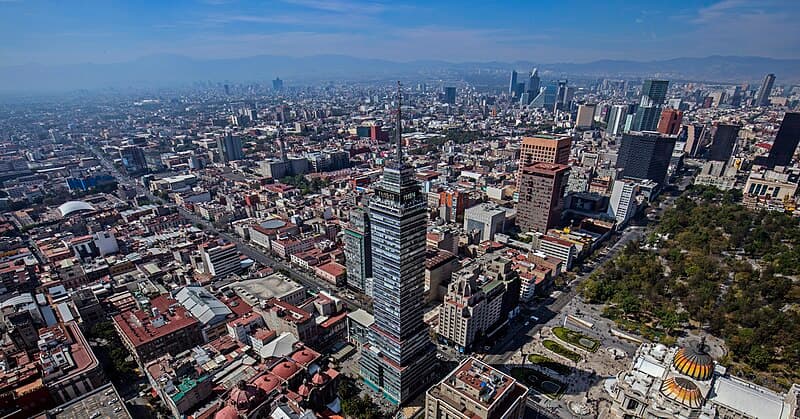
Mexico City, Ciudad de México in Spanish or CDMX for short, is one of the largest cities in the world — its metropolitan area holds more than twenty million people — sitting in a mountain valley at two thousand two hundred forty meters, ringed by volcanoes. This is where the Aztec city of Tenochtitlan once stood, an island city on a lake with pyramid temples, which Hernán Cortés conquered and demolished in 1521, using its stones to build the cathedral and palaces of the colonial capital. Both layers are still visible side by side today: the ruins of the Templo Mayor sit just steps from the cathedral, which is slowly sinking into the mud of the drained lake. Mexico City tends to surprise visitors. Instead of a chaotic, dangerous megacity, they find the leafy neighborhoods of Roma and Condesa with tree-lined avenues and art deco houses, one of the finest museums in the world, more than one hundred fifty museums in total, Frida Kahlo's house, and a food scene that draws chefs from around the globe — from street taquerías to restaurants ranked among the world's best. An hour outside the city stand the pyramids of Teotihuacán. This is a city for a week, not a weekend.

What to see

The places worth your time in Mexico City, and what to expect at each

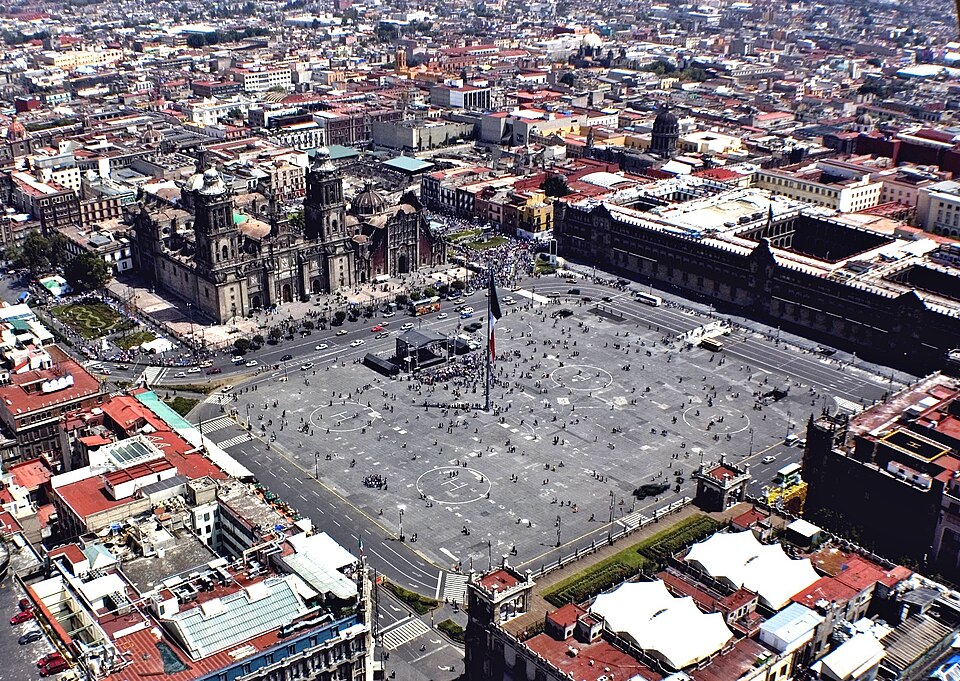
Zócalo and the Cathedral

Zócalo and the Cathedral

Plaza de la Constitución

Centro Histórico

One of the largest public squares in the world, built on the site of the Aztec sacred precinct, with a giant flag at its center and the Metropolitan Cathedral, the largest in the Americas, on its north side. The cathedral took two hundred fifty years to build, so it blends Renaissance, baroque and neoclassical styles. Because of the soft ground beneath it, it sinks unevenly, visible inside from the plumb line hanging near the altar.

Tip: You can climb the cathedral's bell tower with a guide for a few pesos — the view over the square and the palace beats any rooftop bar. The best view of the whole Zócalo is from the terrace restaurants of the hotels on the square's west side, such as the Gran Hotel Ciudad de México with its Tiffany stained-glass ceiling — anyone can drop in for a coffee.

Admission:
free
Time needed:
1–1.5 h
Templo Mayor

Templo Mayor

Centro Histórico

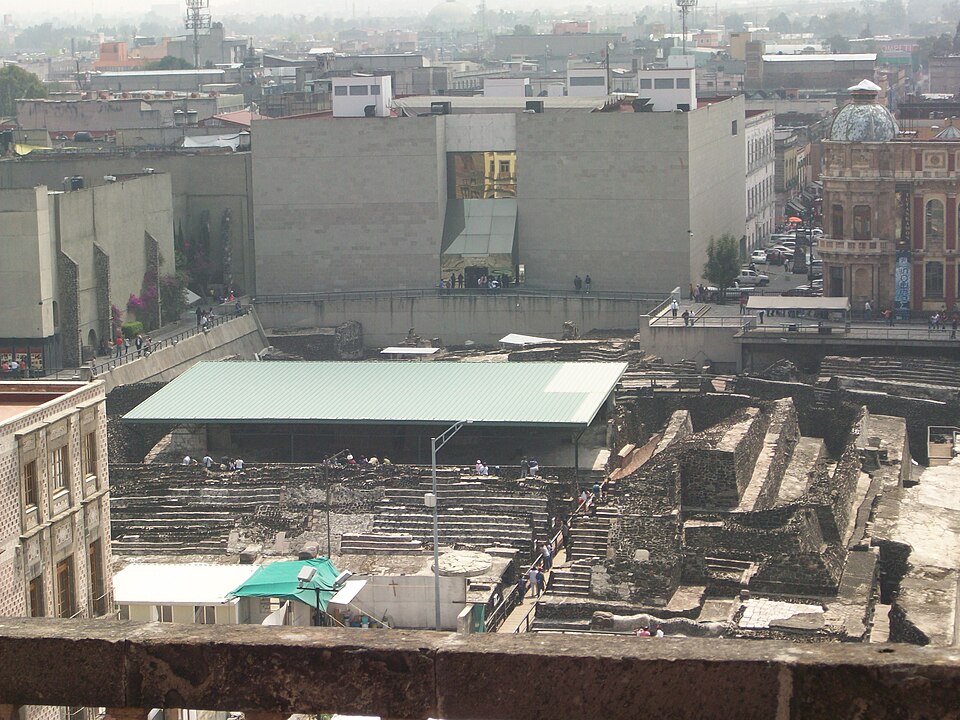
The ruins of Tenochtitlan's main temple, a double pyramid dedicated to the war god Huitzilopochtli and the rain god Tlaloc, which the Spanish tore down and built over. Electricians rediscovered it in 1978 when they struck the giant stone disk of the goddess Coyolxauhqui. Next to the ruins is a museum holding thousands of finds, including the largest known Aztec monolith.

Tip: The museum is closed on Mondays. Walk the outdoor walkways over the ruins first to understand how the temples were built in seven layers on top of each other, then visit the museum. Tickets are payable only by card or online — bring your passport. Excavation is ongoing, and you can see archaeologists at work from Guatemala Street.

Admission:
around 100 MXN
Time needed:
2 h
National Palace

National Palace

Palacio Nacional

Centro Histórico

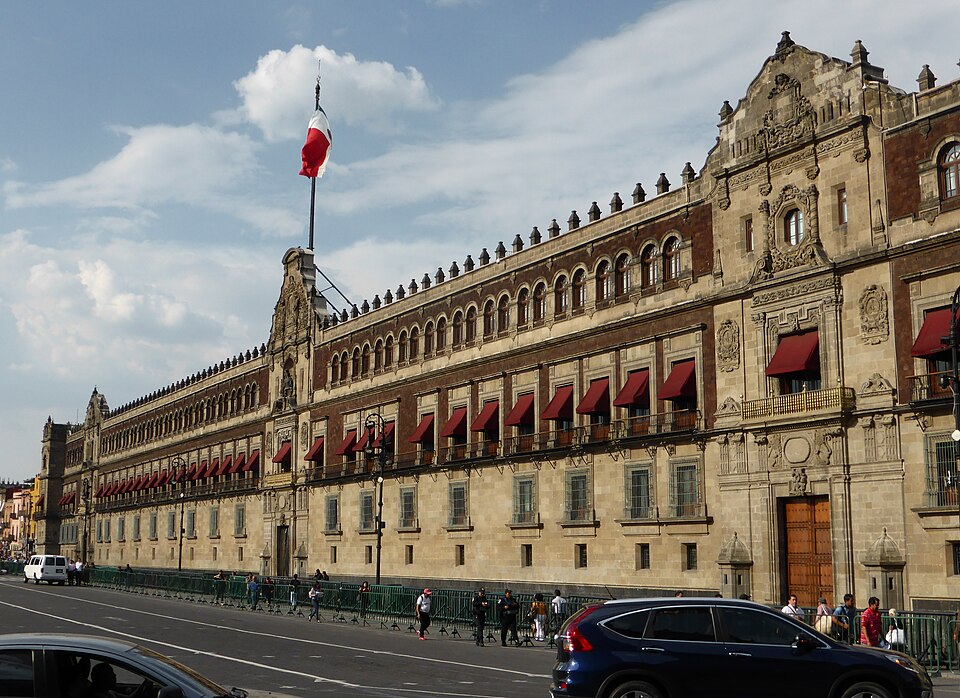
The seat of Mexico's president on the east side of the Zócalo, built on the site of Montezuma's palace. On the staircase and courtyard galleries hang Diego Rivera's most famous murals, an epic history of Mexico from the Aztec empire to the revolution. Rivera worked on them, on and off, for twenty-two years.

Tip: Admission is free but requires a passport or ID, and the palace's opening hours vary with the president's schedule — check in the morning whether it's open. Give the murals at least an hour; look for Frida Kahlo and Rivera himself among the figures. Backpacks must be checked at the cloakroom.

Admission:
free, with passport
Time needed:
1–1.5 h
National Museum of Anthropology

National Museum of Anthropology

Museo Nacional de Antropología

Chapultepec / Polanco

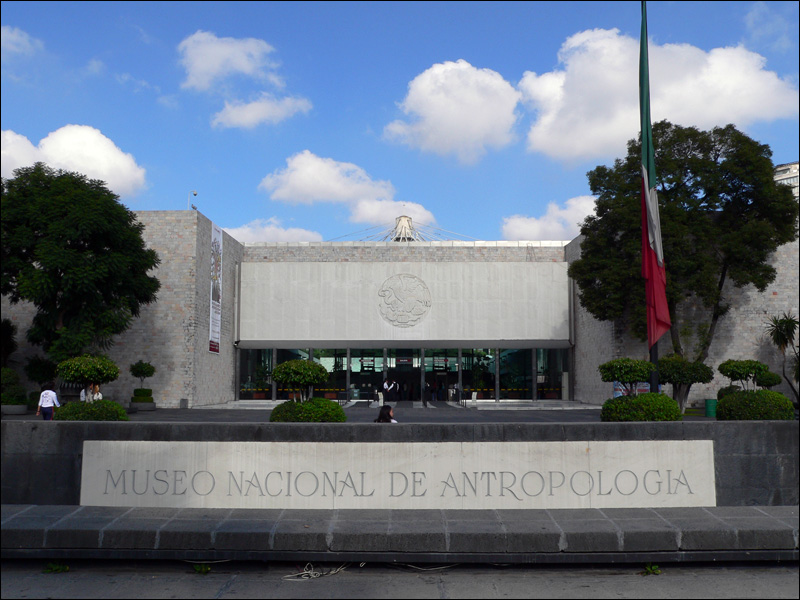
One of the finest museums in the world, holding the largest collection of pre-Columbian art, in a 1964 building with a courtyard beneath a concrete umbrella balanced on a single column, over which a waterfall cascades. The Aztec hall holds the Sun Stone, a twenty-four-ton calendar disk; the Maya hall has a replica of King Pakal's tomb from Palenque.

Tip: A full day isn't enough for the whole museum; focus on the Mexica (Aztec) hall, the Maya hall and Teotihuacán, and just walk through the rest. Closed on Mondays, and crowded on Sundays since admission is free for Mexicans. Arrive at opening at nine. Most visitors skip the upper floor on the ethnography of present-day Indigenous peoples, though it's excellent.

Admission:
around 100 MXN
Time needed:
3–4 h
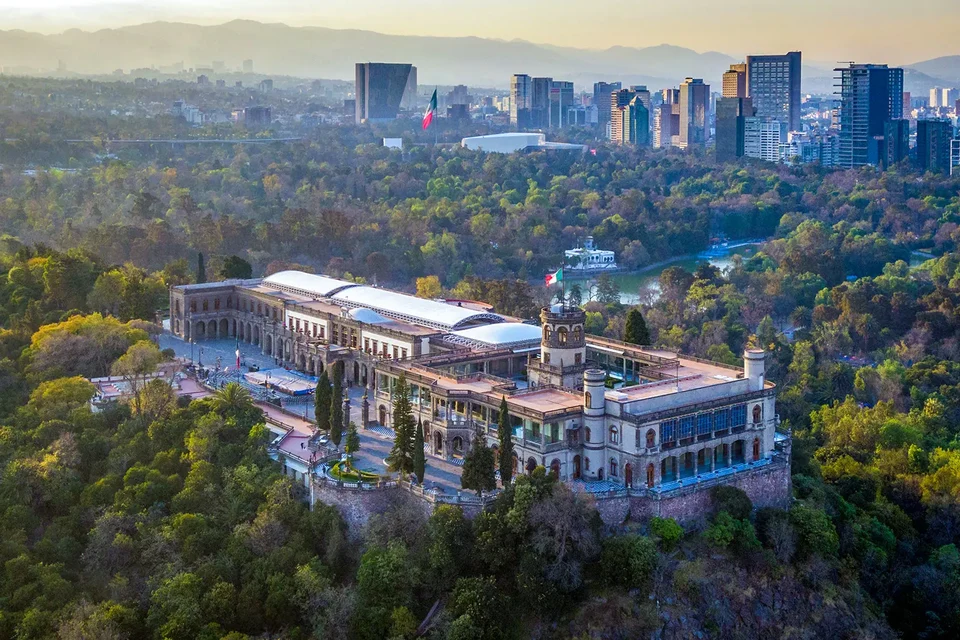
Chapultepec Castle

Chapultepec Castle

Castillo de Chapultepec

Chapultepec

The only castle in the Americas that has housed reigning monarchs — the Austrian Archduke Maximilian, brother of Emperor Franz Joseph, and his wife Carlota lived here during the brief Mexican empire of the 1860s. Today it houses the National History Museum, furnished chambers, and gardens with a view over the entire city along Paseo de la Reforma.

Tip: The castle sits on a hill in the middle of Chapultepec Park, twice the size of Central Park; it's a ten-minute walk uphill or a ride on the tourist trolley. Closed on Mondays. Combine it with the Museum of Anthropology, a twenty-minute walk away in the park. On Sundays the park fills with families and vendors.

Admission:
around 100 MXN
Time needed:
2 h
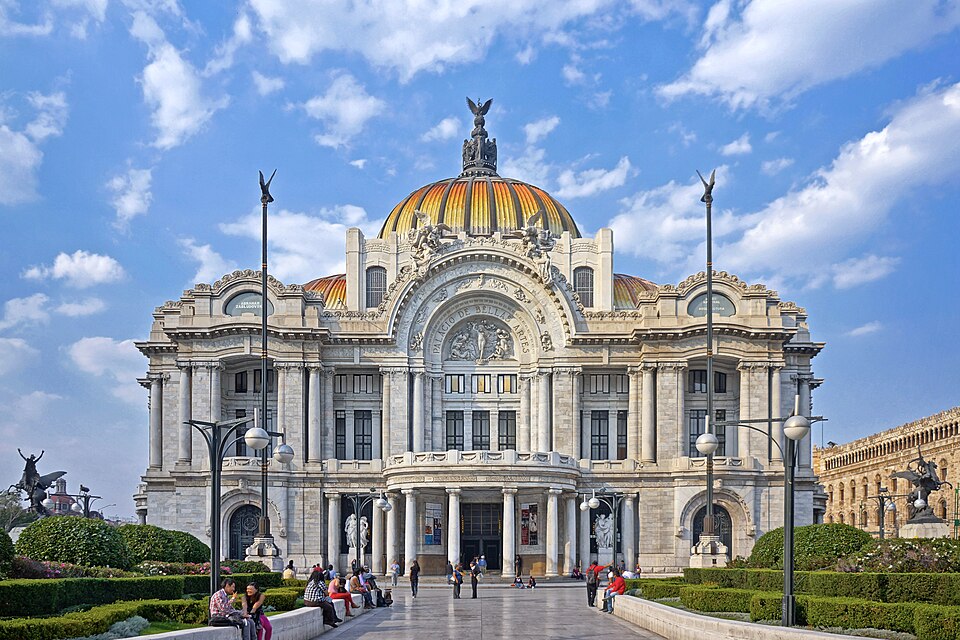
Palacio de Bellas Artes

Palacio de Bellas Artes

Centro Histórico / Alameda

A palace of the arts in white Carrara marble, begun in Art Nouveau style in 1904 and completed in Art Deco style in 1934, topped with a gold and orange dome. Inside are murals by Rivera, Siqueiros and Orozco, and a theater with a stage curtain made of a million pieces of Tiffany glass. The building has sunk four meters over the past century.

Tip: The best view of the palace is from the eighth-floor café of the department store across the street on Avenida Juárez — coffee is cheap and the terrace is famous, with a line forming toward evening. On Wednesdays and Sundays, the Ballet Folklórico de México performs folk dances from every region of the country; buy tickets ahead of time.

Admission:
museum around 90 MXN
Time needed:
1 h
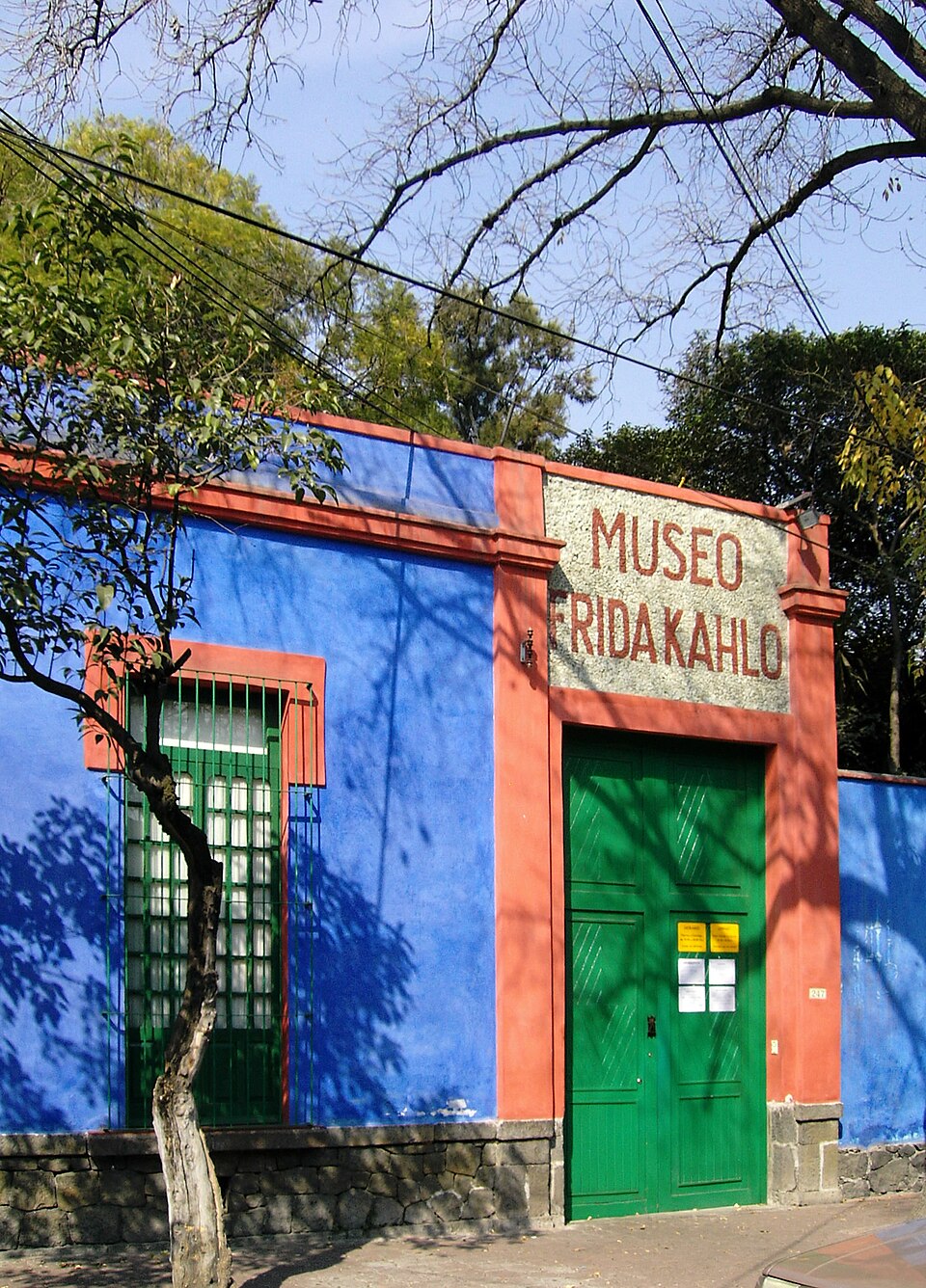
Frida Kahlo's Blue House

Frida Kahlo's Blue House

Museo Frida Kahlo – La Casa Azul

Coyoacán

A cobalt-blue house in Coyoacán where Frida Kahlo was born, lived with Diego Rivera, and died. Inside is her studio with brushes and wheelchair, the bedroom with a mirror over the bed where she painted while lying down, the kitchen, and a collection of her dresses and corsets. The garden, with its pyramid and cacti, is an experience in itself.

Tip: Tickets are sold only online for a specific time slot and sell out days in advance, especially on weekends — buy them as soon as you know your date. Photography inside is allowed only for an extra fee. The ticket also includes Anahuacalli, Diego Rivera's pyramid-shaped museum, which is visited separately. Afterward, eat at the Mercado de Coyoacán, two blocks away.

Admission:
around 320 MXN for foreign visitors
Time needed:
1.5 h
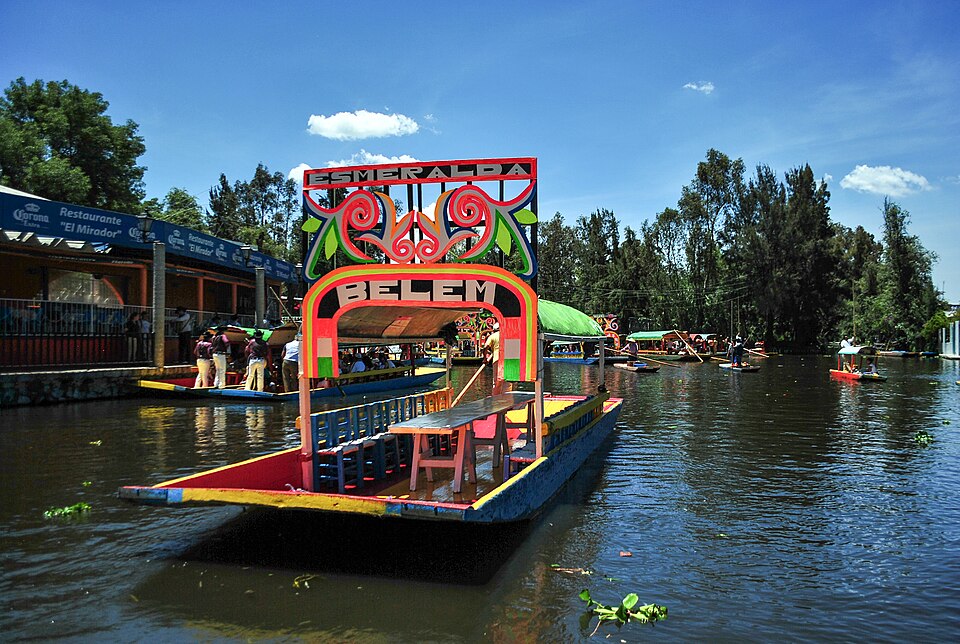
Xochimilco

Xochimilco

Xochimilco

A network of canals in the south of the city, the last remnant of the lakes and floating chinampa gardens on which the Aztecs grew vegetables. Colorful boats called trajineras, each named on an arch at the bow, glide along the canals, passing boats selling mariachi music, food, beer and flowers. On Saturdays and Sundays it turns into a big local party.

Tip: Boats are priced per hour and per boat, not per person, and the official rate is posted at the dock — don't be talked into paying more. Go as a group and split the cost. Mariachi bands are paid per song. For a quieter, more natural setting, try the Cuemanco dock, where you can reach the floating gardens and the eerie Island of the Dolls.

Admission:
boat around 600 MXN per hour
Time needed:
half a day
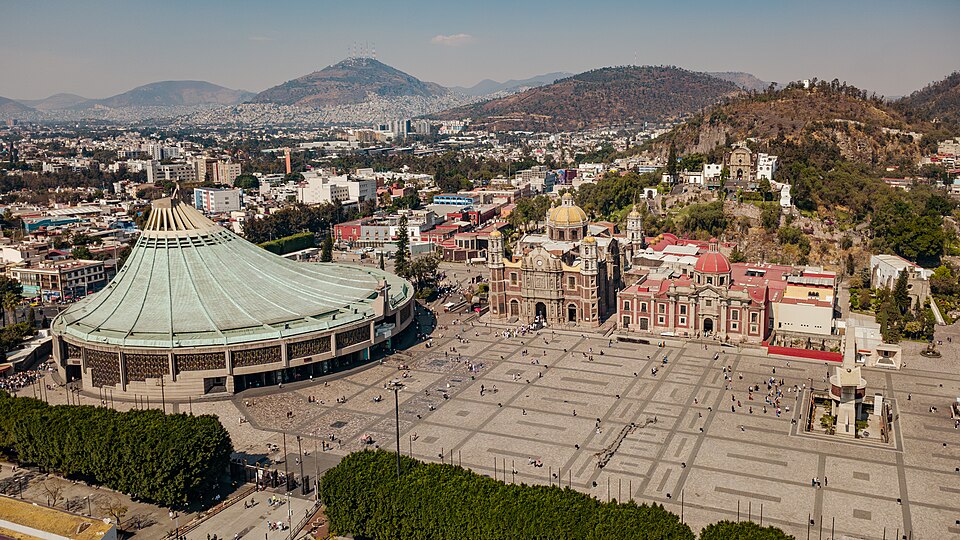
Basilica of Our Lady of Guadalupe

Basilica of Our Lady of Guadalupe

Basílica de Santa María de Guadalupe

Gustavo A. Madero

The most-visited Catholic pilgrimage site in the world, drawing twenty million pilgrims a year, on Tepeyac Hill, where the Virgin Mary is said to have appeared to the Indigenous man Juan Diego in 1531. In the modern circular basilica, built in 1976, a cloak bearing the image of the Virgin hangs above the altar — a national symbol for Mexicans.

Tip: Moving walkways run beneath the image so pilgrims don't linger — ride them there and back. Next door stands the old baroque basilica, tilted from ground subsidence. On December twelfth, the feast of the Virgin, more than five million people arrive and the surrounding area becomes impassable. Metro station La Villa-Basílica.

Admission:
free
Time needed:
1.5 h

Photos: Zócalo and the Cathedral — Comisión Mexicana de Filmaciones from México D. F., México (CC BY-SA 2.0) · Templo Mayor — GAED (CC BY-SA 3.0) · National Palace — Dirk Ingo Franke (CC BY-SA 4.0) · National Museum of Anthropology — kornemuz (CC BY-SA 3.0) · Chapultepec Castle — Sisgeo (CC BY-SA 4.0) · Palacio de Bellas Artes — Xavier Quetzalcoatl Contreras Castillo (CC BY-SA 3.0) · Frida Kahlo's Blue House — No machine-readable author provided. Nachtwächter assumed (based on copyright claims). (CC BY-SA 3.0) · Xochimilco — ProtoplasmaKid (CC BY-SA 4.0) · Basilica of Our Lady of Guadalupe — Arne Müseler (CC BY-SA 3.0 de)

Where to stay

Areas and districts, matched to the kind of trip you are taking

Centro Histórico

Best for: sightseeing and a first visit

The colonial core around the Zócalo, with the cathedral, palaces, Bellas Artes and museums. Busy and lively by day, with the pedestrian streets Madero and Regina. Hotels in historic mansions have real character; downtown empties out at night, and it's best to walk carefully, especially on side streets. The metro has a dense network of stations here.

Roma and Condesa

Best for: food, bars and strolling

Two adjacent early-twentieth-century neighborhoods with art deco houses, tree-lined avenues, the parks Parque México and España, and the city's best restaurants, cafés and bars. This is where most expats and middle-class Mexicans live. The most pleasant place to stay, and safe at night too.

Polanco

Best for: luxury and business trips

The wealthiest neighborhood, with luxury hotels, boutiques along Masaryk Street — named after Tomáš Garrigue Masaryk — and restaurants ranked among the world's best. It borders Chapultepec Park and the Museum of Anthropology. Clean and quiet, but less distinctly Mexican than the rest of the city.

Coyoacán

Best for: quiet and village atmosphere

Once a separate colonial village to the south, now part of the city, with cobblestone streets, a square with a coyote fountain, a church, a market and Frida Kahlo's house. Full of families and street performers on weekends. It's forty minutes from downtown by metro, so most people visit rather than stay here.

Getting around

From the airport

From Europe, direct flights to Mexico City run from Madrid, Barcelona, Paris, Amsterdam, Frankfurt, Munich, London and Rome; the flight takes eleven and a half to thirteen hours, and from Prague you'll connect through one stop. Most European travelers do not need a visa, and a tourist stay of up to one hundred eighty days is recorded on arrival. The main airport, Benito Juárez, sits within the city just eight kilometers from the Zócalo, but the taxi ride can take thirty minutes to an hour due to traffic. From the arrivals hall, official taxis are paid in advance at a counter based on zone, and Uber picks up from a designated area. The Metrobus line 4 runs cheaply into downtown from both terminals; you'll need a rechargeable card from a vending machine. Some domestic and low-cost flights use the newer AIFA airport, forty-five kilometers north of the city, from which the transfer takes considerably longer.

Benito Juárez (MEX) · 8 km

  • Authorized taxi, prepaid· 30–60 min· around 300 MXN
  • Uber or DiDi· 30–60 min· around 200 MXN
  • Metrobus line 4 to downtown· 45–60 min· around 30 MXN

Felipe Ángeles (AIFA) (NLU) · 45 km

  • Taxi or Uber· 60–90 min· around 600 MXN
  • Bus to downtown· 1.5–2 h· around 100 MXN

Around town

Mexico City has twelve metro lines, one of the cheapest in the world — a ride costs five pesos regardless of distance — plus a network of fast Metrobus lines on dedicated lanes. Both are faster than a car, but during rush hours, seven to ten and six to eight in the evening, they get packed — don't bring a backpack and suitcase onto the metro then. The front cars are reserved for women and children. Uber and DiDi are cheap and the best option for getting around at night; don't hail taxis on the street. Roma, Condesa and Polanco are walkable, and shared Ecobici bikes are available around the city. On Sunday mornings, Paseo de la Reforma closes to cars and belongs to cyclists. Watch out for the altitude: on your first day you'll move more slowly and get out of breath faster.

MetroTwelve lines, flat fare regardless of trip length. Pay with a rechargeable card or a single-use ticket from the booth. Every station has a pictogram so even people who can't read can navigate by them. · 5 MXN
MetrobusFast articulated buses on dedicated lanes; line 1 along Insurgentes is the most useful for Roma and Condesa, and line 4 runs to the airport. Payable only with a rechargeable card. · 6 MXN
Uber and DiDiThe safest and most convenient way to get around at night and for longer trips. A ride from Roma to downtown costs around eighty to one hundred twenty pesos, more during rush hour and rain. · from 60 MXN
Ecobici bikesShared bikes in downtown, Roma, Condesa and Polanco, with day or week passes for tourists. The city is flat, though traffic is heavy; Sunday mornings on Reforma are best. · around 120 MXN / day
ADO long-distance busesComfortable buses to Puebla, Taxco and Teotihuacán depart from the Norte, Sur and TAPO terminals. Tickets can be bought online or at the terminal. · from 60 MXN

Useful apps: Uber, DiDi, Google Maps, Ecobici, Moovit

When to go

Thanks to its altitude, Mexico City enjoys spring-like weather year-round: twenty to twenty-seven degrees by day, cool at night. The best months are October through April, when it's dry and sunny. From November to February nights turn cold, around five degrees, and hotels and homes have no heating — bring a sweater. March through May are the warmest and driest months, but also the months with the worst smog, when the city imposes driving restrictions. From June to September it rains almost every afternoon, with heavy storms lasting about an hour before clearing up again; mornings are fine for walking around. In late October and early November, Día de Muertos is celebrated with a parade, altars and marigold decorations — the most colorful time of year, but also the busiest.

Best time

October to April, plus Día de Muertos in late October/early November

What to avoid

April and May, if you're sensitive to smog

MonthJanFebMarAprMayJunJulAugSepOctNovDec
Day22°24°26°27°27°25°24°24°23°23°22°21°
Night6°7°9°11°12°13°12°12°12°10°8°6°
Rainy days22361117212017932

Food & drink

Mexican cuisine is inscribed on UNESCO's Intangible Cultural Heritage list, and Mexico City is its capital. The best food often costs no more than a few dozen pesos: stalls selling tacos al pastor, quesadillas and tlayudas on every corner, market food counters, and cheap three-course set lunches called comida corrida. At the other end of the scale are restaurants like Pujol or Quintonil, which draw food tourists from around the world. In cantinas, food comes free with your drink. Besides tequila and mezcal, people here drink pulque, a fermented agave juice the Aztecs already drank, served in pulquerías. Chili is everywhere, but usually served on the side in sauces — ask what's spicy.

What to try

Tacos al pastor

Pork marinated in chili and annatto, roasted on a vertical spit in the Lebanese tradition and sliced onto a small corn tortilla with pineapple, onion and cilantro. Eaten standing at an evening stall, with three pieces making one portion.

Mole

A thick sauce made from dozens of ingredients — dried chilies, spices, nuts, seeds and sometimes chocolate — served with chicken or turkey. Mole poblano from Puebla is dark and sweet-spicy; in Mexico City it's cooked in traditional restaurants and at markets.

Chilaquiles

Fried tortilla pieces simmered in red or green salsa, topped with cream, cheese, onion and egg or chicken. The quintessential Mexican breakfast and a cure for a night out with mezcal.

Tamales and atole

Corn dough with a filling, wrapped in a corn husk and steamed, sold in the morning from carts marked tamales oaxaqueños. They're washed down with atole, a hot, thick corn drink; a tamal in a bun is called a guajolota.

Pozole

A hearty soup of large corn kernels with pork or chicken, in red, green or white versions. Each bowl comes with radishes, cabbage, oregano, chili and lime on the side, and everyone seasons their own.

Chiles en nogada

Poblano pepper stuffed with ground meat and fruit, topped with a walnut sauce and sprinkled with pomegranate seeds. A seasonal dish served from August to September, and rarely done properly outside that window.

Elote

Boiled corn on the cob coated in mayonnaise, sprinkled with cotija cheese and chili, and finished with a squeeze of lime. Sold from carts along promenades for around twenty-five pesos.

Mezcal and pulque

Mezcal is a smoky spirit distilled from roasted agave, sipped slowly with a slice of orange and chili salt. Pulque is older, fermented and milky white, made from agave — cheap, popular, and flavored with fruit at pulquerías.

What it costs

Tacos al pastor from a stall

20–30 MXN each

Coffee at a café in Roma

50–75 MXN

Beer at a bar

50–90 MXN

Comida corrida set lunch

120–200 MXN

Dinner at a restaurant

400–800 MXN per person

Metro ride

5 MXN

Museum of Anthropology

around 100 MXN

Night in a 3-star hotel for two

1,500–2,800 MXN

Indicative prices that change over time — treat them as a guide, not a price list.

Practical information

SocketsAtwo flat pins (US/JP)Btwo flat pins plus ground (US)
Voltage127V / 60Hz
Tap waterDo not drink tap water — Don't drink Mexico City's tap water, and don't even brush your teeth with tap water at cheaper hotels — the pipes are old and treatment is uneven. Bottled water and large garrafón jugs are sold everywhere and cheap. Ice at restaurants and cafés is made from purified water and is safe, as are juices at better establishments. For street food, the rule of thumb is that a good stall has a line of locals and cooks the food in front of you on a hot griddle.
TippingAt restaurants, tip ten to fifteen percent, ideally in cash, since the card terminal often can't add a tip — the server will ask '¿con propina?' and enter the amount manually. No tip is expected at street stalls or taquerías; leave small change only at a table with table service. Uber drivers get nothing or a small tip in the app, museum and pyramid guides fifty to one hundred pesos per person. Mariachi bands in Xochimilco and at Plaza Garibaldi are paid per song, with the price agreed in advance. Cash is useful everywhere outside restaurants and shops.
Driving on theright
SafetyMexico City has a worse reputation than its tourist neighborhoods deserve: Centro, Roma, Condesa, Polanco and Coyoacán are safe and busy by day, and people walk to bars in Roma and Condesa at night. The real risks are pickpockets on the metro and in downtown crowds, street-hailed taxis — historically linked to ATM-robbery kidnappings, so use Uber or DiDi instead — and neighborhoods like Tepito right next to downtown, which tourists have no reason to visit. Use ATMs inside banks and shopping centers. Two specific risks worth knowing: the altitude of two thousand two hundred forty meters, which tires you out faster on day one and makes alcohol hit harder, and earthquakes — if the seismic alarm sirens sound, leave the building or move away from windows. The emergency number is 911.
Opening hoursShops are open from ten to eight, and malls until ten, including Sundays. Lunch, comida, is the main meal of the day, eaten between two and five in the afternoon; dinner is lighter, and restaurants in Roma and Condesa fill up around nine. Most museums are closed on Mondays and open at nine or ten. Taquerías serving tacos al pastor don't open until evening and run until two in the morning. During Día de Muertos, Easter and Christmas the city is packed while some offices are closed.
Customs & etiquetteMexicans are more polite and formal than you might expect: a greeting comes before every question, addressing people as señor and señora isn't overly formal, and direct criticism is phrased indirectly. Haggling belongs at markets and with street vendors, not in shops and restaurants. Cover up when visiting churches and archaeological sites, and climbing the pyramids is no longer allowed at most sites. Jokes about drug cartels and illegal migration don't land well, and Mexicans dislike them.
A few local wordsGood morning / hello — Buenos díasThank you — GraciasHow much does it cost? — ¿Cuánto cuesta?The check, please — La cuenta, por favorIt's not spicy, right? — ¿No pica?

How to plan your days

1 day

A day in Mexico City

  1. 1Morning at the Zócalo, the cathedral and Templo Mayor.
  2. 2National Palace with Diego Rivera's murals.
  3. 3Lunch on Madero Street, with a view of Bellas Artes from the café terrace across the road.
  4. 4Afternoon taxi to Roma and Condesa, a walk through Parque México.
  5. 5Evening tacos al pastor and mezcal in Roma.

2 days

Two days in Mexico City

  1. 1First day as above.
  2. 2Second day, morning at the Museum of Anthropology at opening time.
  3. 3Lunch in Polanco.
  4. 4Afternoon at Chapultepec Castle and sunset over Reforma.
  5. 5Evening Ballet Folklórico at Bellas Artes or a lucha libre match at Arena México.

3 days

Three days with Frida and Xochimilco

  1. 1First two days as above.
  2. 2Third day, morning at Frida Kahlo's Blue House with tickets bought in advance.
  3. 3Lunch at the Coyoacán market and a walk around the square.
  4. 4Afternoon trajinera boat ride in Xochimilco.
  5. 5On a fourth day, a trip to the pyramids of Teotihuacán.

Day trips

Teotihuacán

50 km · 1 h by bus

An ancient city that was, in the first millennium, one of the largest in the world, already found abandoned by the Aztecs, who named it the Place Where the Gods Were Born. Its main street, the two-kilometer-long Avenue of the Dead, runs from the Pyramid of the Moon past the Pyramid of the Sun — the third-largest pyramid in the world — to the Temple of the Feathered Serpent. Climbing the pyramids is no longer allowed. Arrive at opening at nine, since by noon the heat is unbearable and there is no shade. Buses leave from the Terminal Norte every twenty minutes, and hot air balloons drift over the pyramids at dawn.

Puebla and Cholula

130 km · 2 h by bus

Puebla is a colonial city with a cathedral, baroque churches faced with painted talavera tiles, and a culinary tradition that produced both mole poblano and chiles en nogada. The Rosary Chapel in the Church of Santo Domingo is covered in gold from floor to ceiling. Fifteen minutes away lies Cholula, home to the largest pyramid in the world by volume, so overgrown it looks like a hill with a church on top, behind which the Popocatépetl volcano is visible on a clear day.

Taxco

170 km · 2.5–3 h by bus

A silver-mining town on a steep mountainside with white houses, red roofs, and the baroque Church of Santa Prisca, whose pink facade was built by a mining magnate with silver profits. The streets are so narrow and steep that only small white Volkswagen Beetle taxis can navigate them. Silver jewelry is cheaper here than almost anywhere else, but check the quality by looking for the 925 stamp. It's a long trip for a single day — better to stay overnight.

Frequently asked questions

Is Mexico City safe?+

The tourist districts of Centro, Roma, Condesa, Polanco and Coyoacán are safe by day, and Roma and Condesa are fine at night too. The real risks are pickpockets on the metro and in crowds, hailing taxis on the street, and a handful of neighborhoods such as Tepito. Use Uber or DiDi, withdraw cash only at ATMs inside banks, and don't wear expensive jewelry on the street. Most visitors leave feeling the city is safer than they expected.

How do I handle the altitude?+

The city sits at two thousand two hundred forty meters, which you'll notice most on your first day — you'll get out of breath faster, may get a mild headache, and may sleep worse. Drink plenty of water, take it easy on day one, and go lighter on alcohol, which hits harder at altitude. Serious altitude sickness is rare at this elevation.

Do I need a visa for Mexico?+

Most nationalities, including EU citizens, do not need a visa for a tourist stay. The immigration officer at the airport records the permitted length of stay, usually up to one hundred eighty days, and may ask about a return ticket and accommodation. Your passport must remain valid for the whole stay.

How many days do I need in Mexico City?+

At least four days: two for downtown, the museum and Chapultepec, one for Coyoacán and Xochimilco, one for Teotihuacán. A week lets you add Puebla, Taxco and more eating. Mexico City is often combined with a trip to the Yucatán and Cancún, a two-and-a-quarter-hour flight away.

Is street food safe to eat?+

At stalls with a line of locals and food cooked on a hot griddle right in front of you, yes — tacos al pastor, quesadillas and tamales are safe. Be more cautious with raw salads and salsa that's been sitting in the sun a long time. Eat lightly the first few days and carry activated charcoal and rehydration salts.

How do I get to the Teotihuacán pyramids?+

By bus from the Terminal Norte, the Teotihuacán line departs every twenty minutes and takes an hour; the return trip is the same. An organized tour with a guide costs more but often includes the Basilica of Guadalupe along the way. By car it's an hour on the toll highway. Arrive in the morning, since by noon it's scorching hot with no shade anywhere.

When is Día de Muertos celebrated?+

Day of the Dead is mainly celebrated on November first and second, but decorations with altars, marigolds and skeletons appear around the city from mid-October onward. The big parade along Reforma takes place the Saturday or Sunday before the holiday. The most intense atmosphere is at the cemeteries in Mixquic and in Coyoacán. Book hotels well in advance.

What is lucha libre and where do I see it?+

Mexican wrestling with masked fighters, acrobatic jumps and a loud crowd, staged like a theater of good versus evil. The best known venue is Arena México on Tuesdays, Fridays and Sundays; buy the best seats at the box office or online, and wrestler masks are sold outside the arena. The neighborhood around the arena is less safe at night, so take Uber there and back.

Visa Requirements

Check the latest visa requirements for entering this country. Some nationalities may need to apply for a visa or e-visa before travel.

Check visa requirements

Language

Spanish

Currency

MXN

Timezone

GMT-6

Dial Code

+52

Population

129M

Area

1,964,375 km²

Voltage

127V / 60Hz

Driving Side

Right

Top Hotels in Mexico City

Live prices from 500+ properties

Loading hotels...

More destinations in Mexico

Planning a trip to Mexico City?

Compare hundreds of hotels, find the best price, and book with free cancellation on TravelManiac.