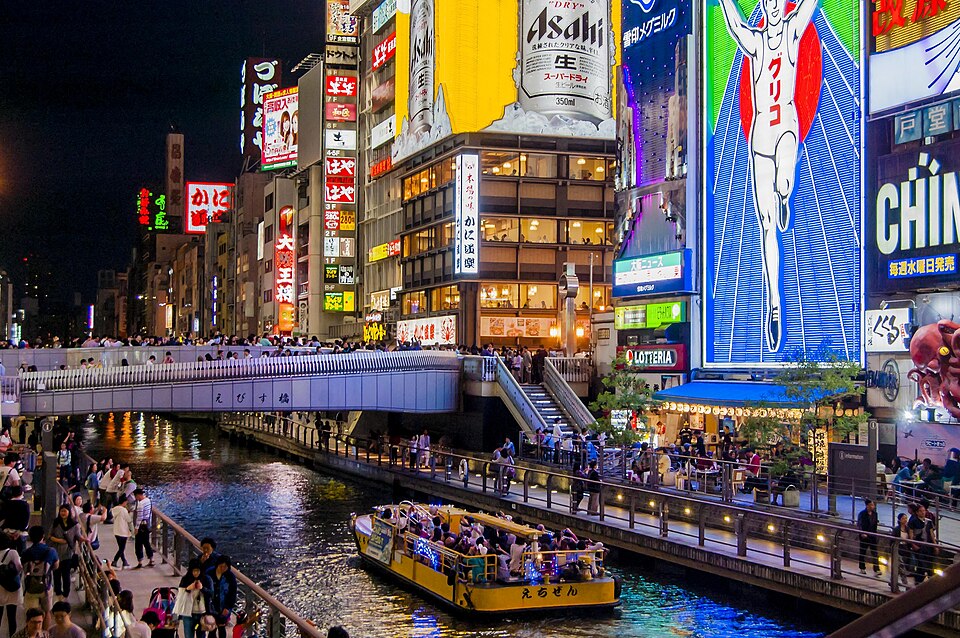
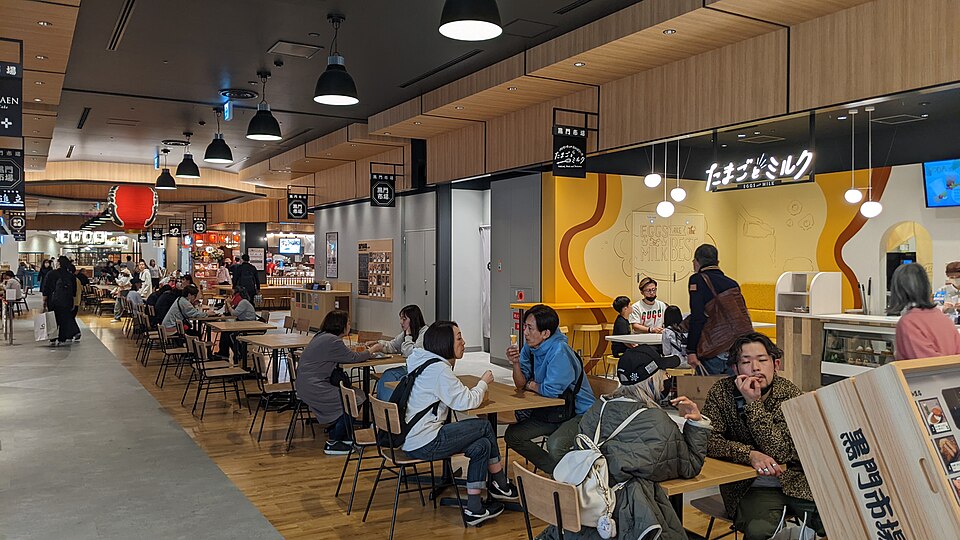
Osaka is Japan's food capital in the everyday sense: eating here isn't expensive, but it's plentiful, fast and done on the street. Local specialities are konamono, batter-based dishes — octopus balls takoyaki and savoury pancakes okonomiyaki — and deep-fried skewers kushikatsu in Shinsekai. Dotonbori and Namba have the highest density of restaurants in the country, and a queue on the street is the most reliable review there is. Osaka also has a celebrated tradition of kappo cooking, where the chef cooks right in front of you at the counter, and some of the best sushi and fish thanks to its coastal location. Everything runs a little cheaper than in Tokyo, and portions are more generous.
Takoyaki
Batter balls with a piece of octopus, cooked in a special mould and topped with sauce, mayonnaise and shavings of dried bonito that curl in the heat. They're scalding hot inside, so let them cool a moment. Eight pieces cost five hundred to eight hundred yen.
Okonomiyaki
A savoury pancake of cabbage, batter and pork, shrimp or octopus, cooked on a griddle right at the table. The name means "grilled as you like it". Osaka style mixes everything into the batter, unlike the layered Hiroshima style with noodles.
Kushikatsu
Skewers of meat, vegetables, cheese or shrimp, breaded and deep-fried, served with a shared dipping sauce. The no-double-dipping rule is taken seriously at every stall; anyone wanting more sauce scoops it up with a piece of cabbage instead.
Sushi
Away from tourist spots, it's eaten off a conveyor belt (kaiten) for one hundred to three hundred yen a plate, or at the counter of a small shop where the chef serves piece by piece. Nigiri is dipped fish-side down in soy sauce, not rice-side, and the wasabi is already tucked inside. The best value is a lunch set at places that charge tens of thousands of yen in the evening.
Ramen
Wheat noodles in broth — soy-based shoyu, salt-based shio, miso, or the thick pork tonkotsu. You order at a ticket machine by the entrance and hand the ticket to the cook; it's eaten fast and loud, and slurping is expected. A bowl runs eight hundred to fifteen hundred yen.
Kitsune udon
Thick wheat noodles in a delicate broth with a slice of sweet fried tofu, said in legend to be a fox's favourite. Invented in Osaka in the nineteenth century, it's a cheap, filling lunch.
Wagyu and yakiniku
Marbled beef is most often grilled at the table, thinly sliced, yakiniku-style. The priciest cuts aren't necessary — even a mid-grade A4 is a different world of flavour from beef back home, and a lunch set costs a fraction of the evening price.
Onigiri and convenience-store food
Triangles of rice with a filling wrapped in seaweed, egg sandwiches and fried karaage chicken from 24-hour stores are good and cheap — a breakfast for three hundred yen. Onigiri wrapping opens by pulling the tabs in order one, two, three, so the seaweed stays crisp.