Hotels in Rhodes

A medieval town and beaches on both sides of the island

Rhodes

LanguageGreek
CurrencyEUR
TimezoneEurope/Athens
Temperature12-33 °C
Dial Code+30
Population10.4M
Area131,957 km²
SocketsType C / Type F
Tap waterBottled advised

Discover Rhodes

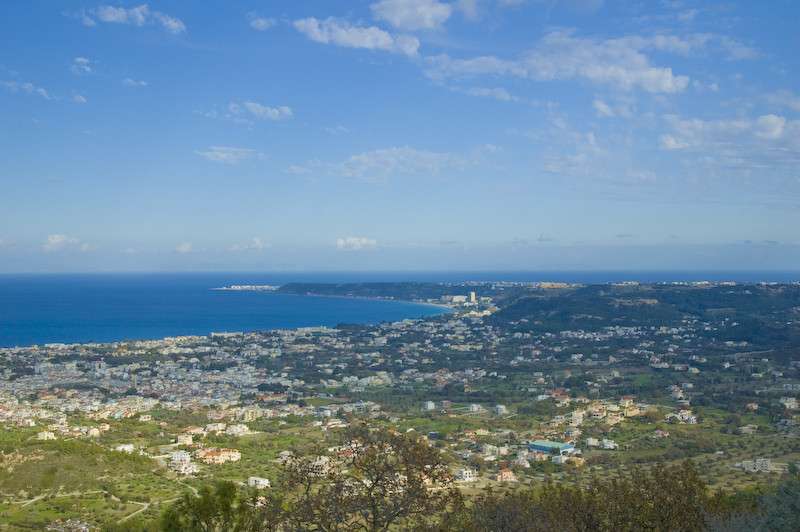
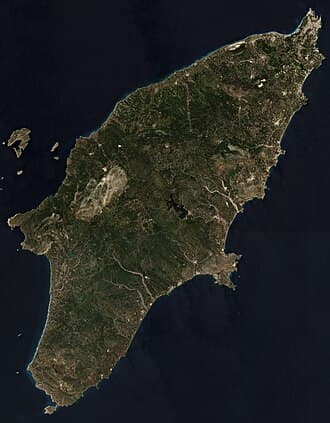
Rhodes is the fourth-largest Greek island and the only one where you can combine swimming with a walk through a completely preserved medieval town on the UNESCO World Heritage list. The island has two very different sides: the west is exposed to the wind, with cooler and wilder seas, while the east is sheltered and calm, home to all the main resorts and the best beaches. The north around Rhodes Town is the busiest area, while the south toward Prasonisi remains empty and wild. The season runs from May to October, one of the longest in Greece, since Rhodes gets more sunny days than any other Greek island. Seeing the whole island requires a car — public transport reaches the resorts, but not the mountain villages.

What to see

The places worth your time in Rhodes, and what to expect at each

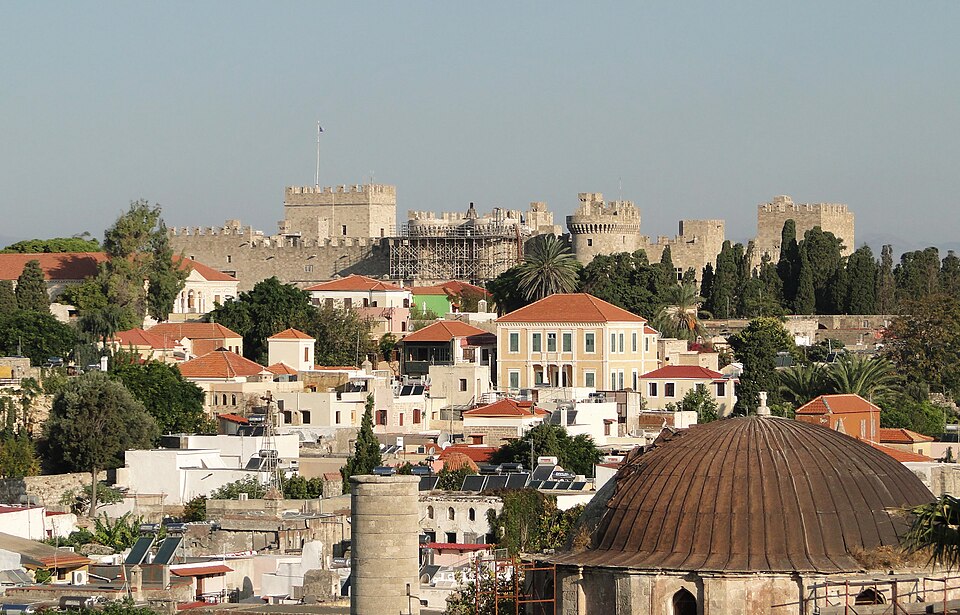
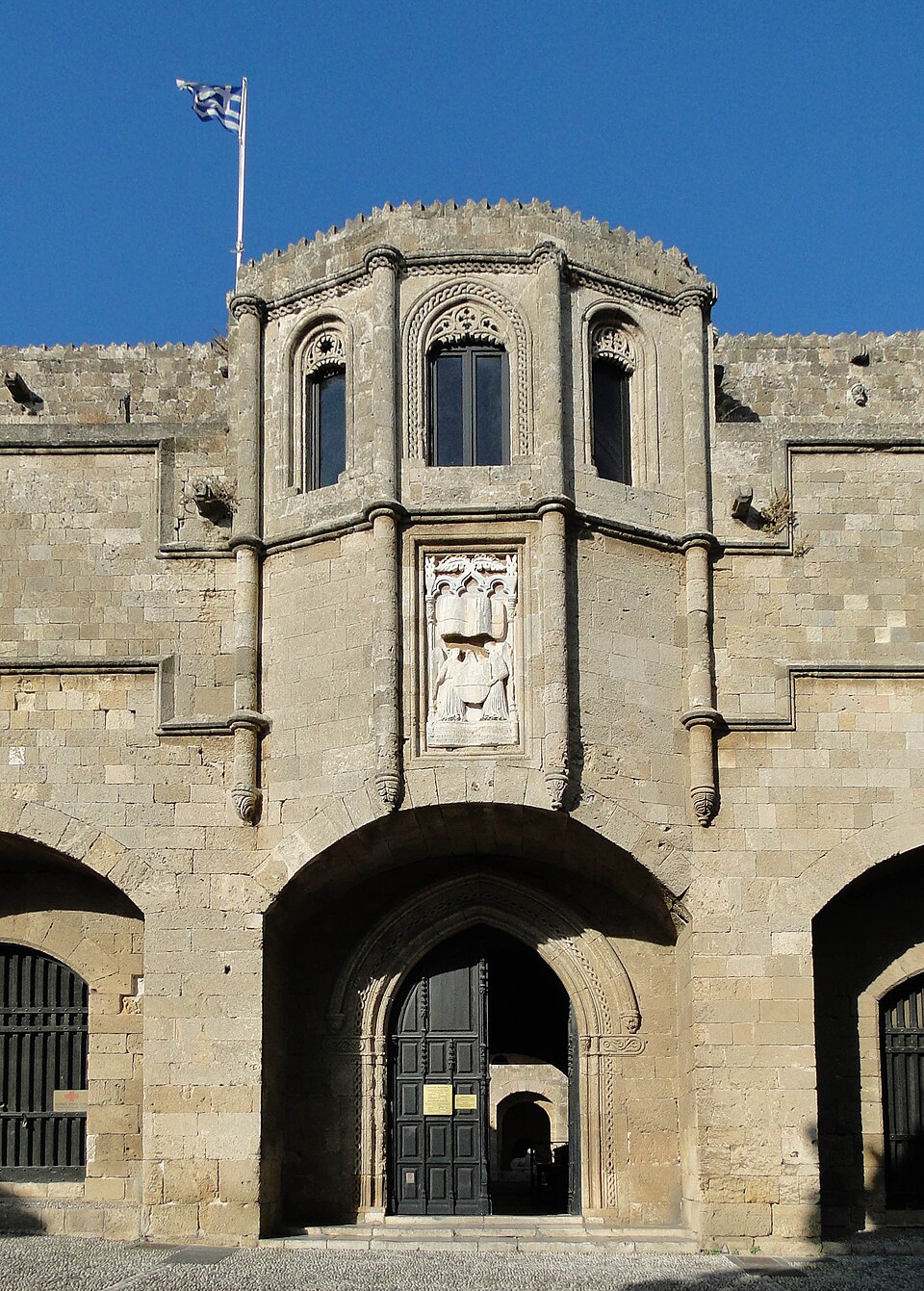
Medieval City of Rhodes

Medieval City of Rhodes

Μεσαιωνική Πόλη

Rhodes Town

The largest inhabited medieval town in Europe, ringed by four kilometers of walls built by the Knights of St. John in the 14th century. Inside is a maze of lanes, minarets left from the Ottoman period, and the Street of the Knights, lined with the lodgings of each language group of the order.

Tip: Visit the lanes after nine in the evening, once the tour boats have left — the town is lit up and empty, and feels completely different.

Admission:
free
Time needed:
3 h
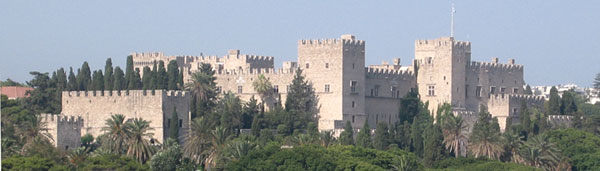
Palace of the Grand Master

Palace of the Grand Master

Παλάτι του Μεγάλου Μαγίστρου

Rhodes Town

A 14th-century Gothic fortress, seat of the Grand Master of the Knights of St. John. After a 19th-century explosion, Mussolini had it rebuilt as a summer residence for the Italian king, so today's interiors date from the 1930s, though they include ancient mosaics brought from Kos.

Tip: The palace ticket can be combined with the archaeological museum, which works out cheaper than two separate tickets.

Admission:
from 10 €
Time needed:
1.5 h
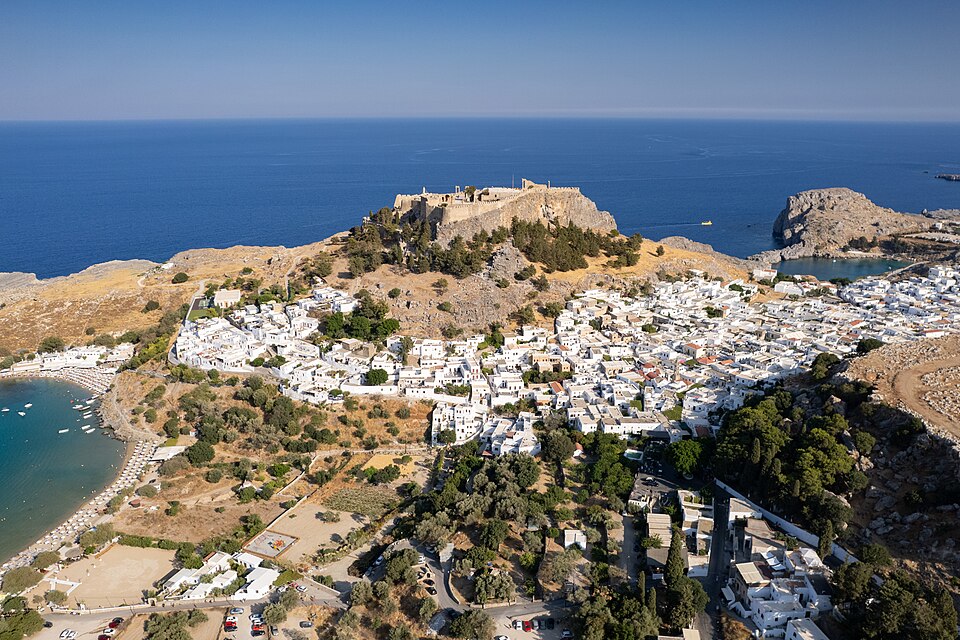
Lindos and the Acropolis

Lindos and the Acropolis

Λίνδος

50 km south

A whitewashed town beneath a cliff topped by an ancient acropolis, home to the 4th-century BC Temple of Athena Lindia and a Knights' fortress. From the summit you can see two bays at once, including St. Paul's Bay with its turquoise water.

Tip: A steep paved path with no shade leads up — go first thing in the morning, since the climb becomes unpleasant after ten in summer.

Admission:
acropolis from 12 €
Time needed:
half a day
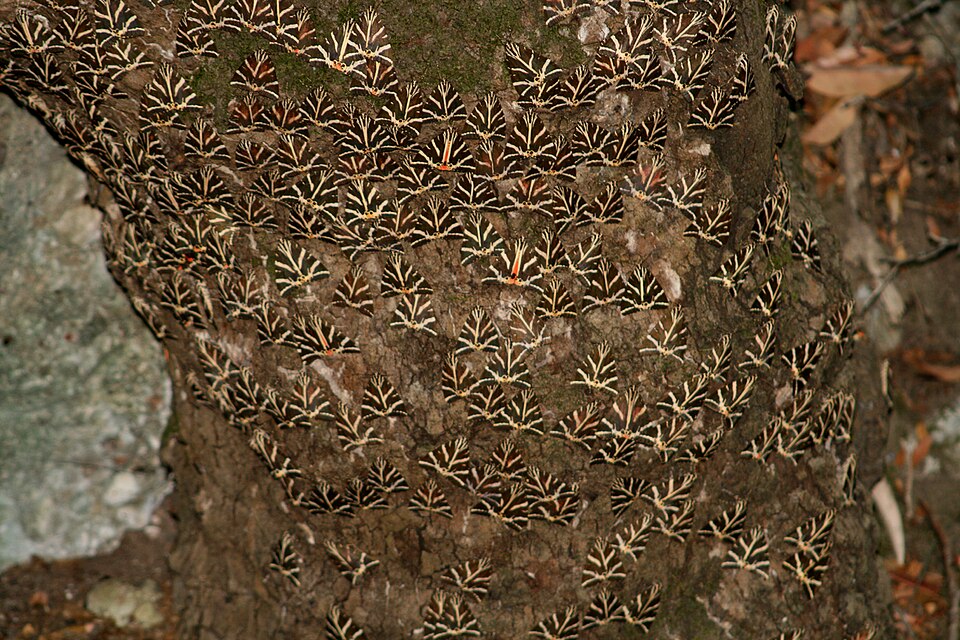
Butterfly Valley

Butterfly Valley

Πεταλούδες

25 km southwest

A wooded valley with a stream and waterfalls where, from June to September, hundreds of thousands of Jersey tiger moths gather. They sit motionless on the sweetgum trunks and rise in clouds when disturbed. Outside this season it's just a pretty but ordinary gorge.

Tip: Don't clap or try to startle them — every disturbance costs the moths energy, and it's actually banned, with fines enforced.

Admission:
from 5 € in season
Time needed:
2 h
Archaeological Museum of Rhodes

Archaeological Museum of Rhodes

Rhodes Town

Housed in the 15th-century Knights' Hospital, the building itself, with its vaulted halls and courtyard, is worth the visit. The collection includes the Aphrodite of Rhodes, Greek grave stelae, and finds from Kamiros and Ialysos.

Tip: The courtyard with its garden and pile of cannonballs is the most photogenic part of the whole museum, and it's easy to miss.

Admission:
from 8 €
Time needed:
1.5 h
Ialysos and Filerimos

Ialysos and Filerimos

Ιαλυσός

15 km southwest

One of the island's three ancient cities, set on Filerimos hill with a monastery, a Byzantine church and a Calvary path lined with Stations of the Cross reliefs. Semi-wild peacocks roam the grounds, and there's a view over the whole northern tip of the island.

Tip: The cross at the end of the Calvary path doubles as a viewpoint — you can climb up inside one of its arms via a staircase.

Admission:
from 6 €
Time needed:
2 h
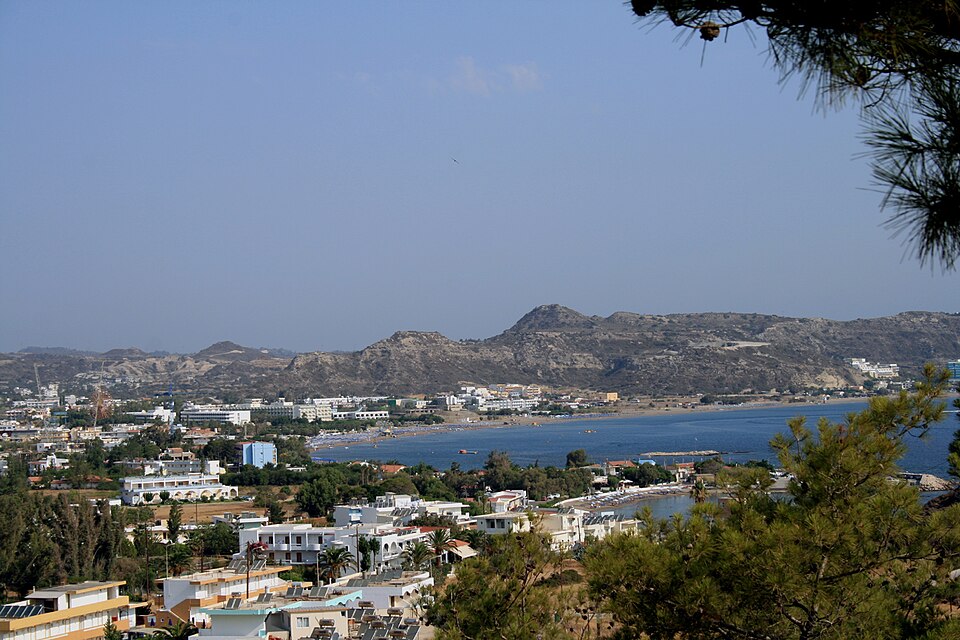
Faliraki

Faliraki

14 km south

The island's largest resort on the east coast, with a long sandy beach, a water park, and the liveliest nightlife on the island. The northern part of the beach is quieter and family-friendly, while the southern end near Ladiko is rocky with small coves.

Tip: Anthony Quinn Bay, a short way south, is the loveliest spot nearby — rocky, with clear water and no sand.

Admission:
beach free, sunbed from 10 €
Time needed:
half a day
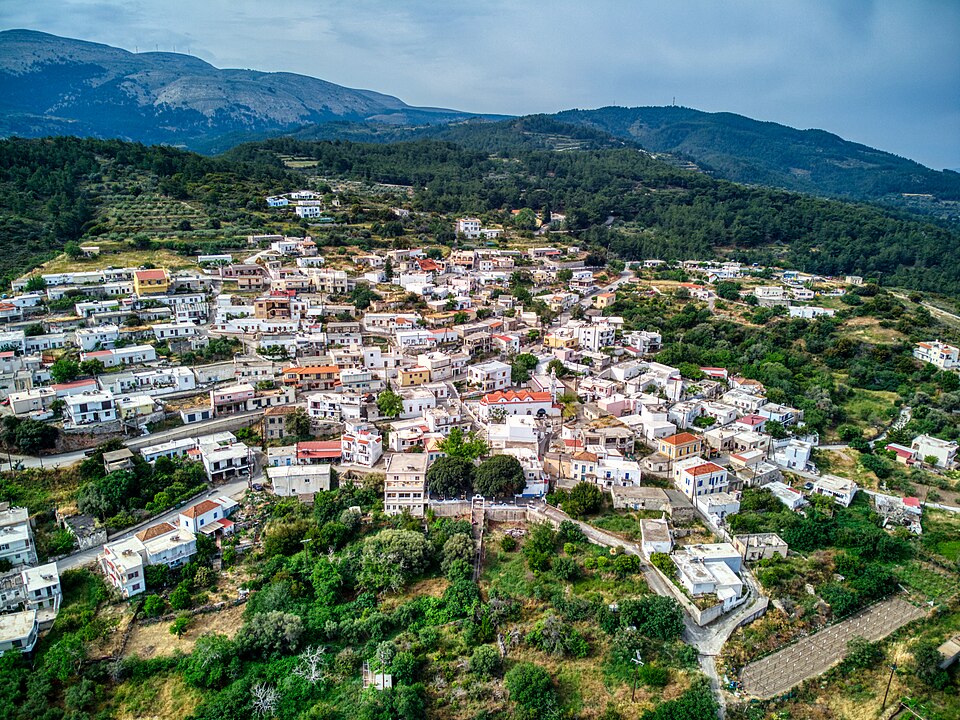
Kritinia Castle

Kritinia Castle

Κρητηνία

55 km southwest

The ruins of a Knights' castle perched on a cliff above the west coast, with views on a clear day as far as the islands of Chalki and Alimia. Freely accessible and almost visitor-free, unlike the sights on the east side.

Tip: A perfect stop on a west-coast loop, especially at sunset. Entry is free and unsupervised.

Admission:
free
Time needed:
1 h
Prasonisi

Prasonisi

90 km south

The southernmost tip of the island, where the Aegean and Mediterranean seas meet. The sandy spit between them is dry and walkable in summer, connecting to a rocky islet, but gets swallowed by the sea in spring. One of the best windsurfing and kitesurfing spots in Europe.

Tip: One side of the sandbar has waves and wind, the other calm water — pick your side depending on whether you want to surf or swim.

Admission:
free
Time needed:
half a day with travel

Photos: Medieval City of Rhodes — Bernard Gagnon (CC BY-SA 4.0) · Palace of the Grand Master — Picture taken by Polimerek (CC BY-SA 3.0) · Lindos and the Acropolis — Thomas Berwing (CC BY-SA 4.0) · Butterfly Valley — Karelj (CC BY-SA 3.0) · Archaeological Museum of Rhodes — Bernard Gagnon (CC BY-SA 4.0) · Ialysos and Filerimos — Mouras (CC BY 3.0) · Faliraki — Karelj (Public domain) · Kritinia Castle — Hagai Agmon-Snir حچاي اچمون-سنير חגי אגמון-שניר (CC BY-SA 4.0) · Prasonisi — Aldo Ardetti (CC BY-SA 3.0)

Where to stay

Areas and districts, matched to the kind of trip you are taking

Rhodes Town

Best for: first-time visitors and sightseeing

The only place on the island where history, restaurants and a beach are all within walking distance. Staying inside the Medieval City is atmospheric, but the hotels are small and pool-less. The newer Nea Agora area offers standard hotels closer to the beach.

Faliraki and Kallithea

Best for: families and a livelier holiday

The main resort strip on the east coast, a quarter-hour from town. Long sandy beaches, a water park, the most all-inclusive hotels, and the best bus connections. Also the noisiest part of the island, especially Faliraki in peak season.

Lindos and Pefkos

Best for: peace and atmosphere

The southern stretch of the east coast, with the prettiest villages and coves. Lindos is beautiful but packed with day-trippers in season; neighboring Pefkos is quieter and cheaper. It's an hour by bus to Rhodes Town, so plan on staying put.

Ixia and Ialysos

Best for: windsurfing and better value

The west coast right by the airport, where the wind blows steadily — great for surfers, less so for calm swimming. Beaches are pebbly and the sea choppier, but hotels here run about a third cheaper than equivalent standard properties in the east.

Getting around

From the airport

Rhodes has Diagoras International Airport about fourteen kilometers southwest of the main town, served in season by charter flights from Prague. A hotel transfer is usually included in package holidays. Traveling independently, a scheduled bus from the airport runs to Rhodes Town or the west-coast resorts; reaching Lindos requires a change in town. Car rental desks are located right in the terminal.

Rhodes Diagoras (RHO) · 14 km

  • Scheduled bus to town· 35 min· 3 €
  • Taxi to Rhodes Town· 20 min· 30 €
  • Taxi to Faliraki· 35 min· 45 €
  • Hotel transfer· 20–70 min depending on resort· included in package

Around town

Two bus operators serve the island: KTEL runs along the east coast to Lindos, and RODA covers the west side. Services to the resorts run frequently, but mountain villages get only one or two buses a day, so you can't plan a loop route around them. If you want to see more than your own beach, rent a car — the island stretches eighty kilometers end to end and the roads are good. A scooter only makes sense for short distances; it's risky on the main road.

KTEL busEast coast including Faliraki and Lindos, hourly in season. · 2.50 €
RODA busWest coast and city routes within Rhodes Town. · 1.50 €
Rental carThe only way to see the interior and the south of the island. Book ahead — cars sell out in August. · 35 € / day
TaxiFixed rates for main routes are posted at the taxi rank near the airport and the harbour. · 4 € flag fall

Useful apps: Moovit, Google Maps

When to go

The swimming season runs from May to October, with the sea warmest in August and September at 25–26°C. The best balance of weather and calm is June and September: warm but not scorching, and the sea already, or still, pleasant. July and August are the hottest and priciest months, and the meltemi wind can make things uncomfortable on the west coast. From November to March most resorts close, and only Rhodes Town stays open.

Best time

June and September

What to avoid

November to March, when the resorts close

MonthJanFebMarAprMayJunJulAugSepOctNovDec
Day15°15°17°20°24°28°30°31°28°24°20°17°
Night9°9°10°12°16°20°23°23°21°17°14°11°
Rainy days151185310026914
Sea17°16°16°18°20°23°25°26°25°23°21°19°

Food & drink

Rhodian cuisine is classic Greek, built around fish, olive oil and herbs, but with a few specialties of its own. At tavernas you order several dishes for the middle of the table, and bread and water are often charged separately as a 'couvert'. Lunch is eaten late and dinner after nine. In the touristy parts you'll get standard moussaka and gyros; for the real thing, head to the inland villages, where they cook whatever is in season.

What to try

Pitaroudia

Rhodian fried chickpea fritters with onion and mint, a local specialty you won't find elsewhere in Greece.

Souvlaki and gyros

Skewered or spit-roasted meat in pita with tzatziki and fries, the cheapest and fastest meal on the island.

Melekouni

A sesame and honey bar, traditionally served at weddings. The best souvenir to bring home from Rhodes.

Fresh fish

At seaside tavernas the fish is chosen and priced by weight; ask for the price per kilo up front.

Saganaki

Pan-fried sheep's cheese with a squeeze of lemon, a classic warm starter.

Ouzo

An anise spirit drunk with water and ice alongside mezes, never neat or on an empty stomach.

What it costs

Greek coffee or frappé

3–4 €

Gyros in pita

4–5 €

Dinner at a taverna

18–28 € per person

Beer, 0.5 l

4–5 €

Sunbed and umbrella

10–15 € for two sunbeds

Bus to Lindos

5.50 €

Rental car per day

from 35 €

Night in a 4-star hotel

90–150 €

Indicative prices that change over time — treat them as a guide, not a price list.

Practical information

SocketsCEuroplug, two round pinsFSchuko
Voltage230V / 50Hz
Tap waterTap water is treated, bottled is common — Tap water in Rhodes is treated and safe for washing and cooking, but because of the taste and higher mineral content, most people drink bottled water. It costs a few cents a liter at the supermarket.
TippingNot mandatory. At tavernas, people round up or leave five to ten percent if a service charge wasn't already added.
Driving on theright
SafetyRhodes is very safe. The main risks are natural rather than criminal: strong sun, sea urchins on rocky beaches, and the meltemi wind, which can whip up rough seas on the west coast. In Lindos, watch your footing on the pavement, which is worn smooth and slippery.
Opening hoursShops in the resorts stay open late into the evening, seven days a week. Museums close in the early afternoon and are often shut on Mondays. Outside the main season, opening hours shrink considerably.
Customs & etiquetteCover your shoulders and knees when visiting monasteries and churches. In Greece, toilet paper goes in the bin, not the toilet bowl — the plumbing isn't built for it. Topless sunbathing is common on beaches; full nudity is only for designated spots.
A few local wordsGood day — KaliméraThank you — EfcharistóPlease — ParakalóCheers — JamasThe bill, please — To logariasmó, parakaló

How to plan your days

1 day

A day in Rhodes Town

  1. 1Morning in the Medieval City and along the Street of the Knights.
  2. 2Palace of the Grand Master and the archaeological museum during the midday heat.
  3. 3Lunch in the back lanes away from the main drag, then a walk along the walls.
  4. 4Late afternoon at Elli beach below the town and dinner at Mandraki harbour.

2 days

Two days with Lindos

  1. 1Day one as above.
  2. 2Day two, head early by car or bus to Lindos.
  3. 3Climb to the acropolis before the heat builds, then swim in St. Paul's Bay.
  4. 4On the way back, stop at the Kallithea thermal springs and Anthony Quinn Bay.

3 days

Three days including a loop of the island

  1. 1First two days as above.
  2. 2Day three, drive the west coast: Ialysos and Filerimos.
  3. 3Butterfly Valley and ancient Kamiros.
  4. 4Kritinia Castle, then back through the inland mountain villages.
  5. 5If time allows, push all the way to Prasonisi at the southern tip.

Day trips

Symi Island

45 km · 1 h by fast boat

A small island with a harbour lined by pastel-colored neoclassical houses, one of the most photogenic spots in the Aegean. Boats leave in the morning from Mandraki harbour and return in the early evening.

Ancient Kamiros

35 km · 45 min by car

Ruins of one of the island's three ancient cities, set on a slope above the sea, with a preserved layout of streets, houses and a water reservoir. Often called the 'Pompeii of Greece', and noticeably quieter than Lindos.

Seven Springs

30 km · 40 min by car

A shaded valley with plane trees, a stream and peacocks, where you can walk through a 180-meter tunnel ankle-deep in water to reach a small pool. A refreshing escape from the heat, especially popular with families.

Frequently asked questions

When is the sea warmest around Rhodes?+

In August and September, when the sea reaches 25–26°C. Swimming is comfortable from June, when the sea is around 23°C, through the end of October. In May, at around 20°C, it still feels cold to most people.

Do I need a car in Rhodes?+

If you want to see more than your resort, yes. Buses run reliably along the coast to the resorts and to Lindos, but inland and southern routes run only once or twice a day. The island is eighty kilometers long and you can't get around it without a car.

What's the difference between the east and west coasts?+

The east side is sheltered, with sandy beaches, warmer, calmer water, and all the main resorts. The west side is exposed to the wind, with pebble beaches and choppier seas, which suits surfers. Hotels there tend to be cheaper.

Is a day trip to Lindos worth it?+

Yes, it's the prettiest spot on the island. Go early in the morning, though — tour buses and boats arrive around eleven and the narrow lanes get jammed. The climb to the acropolis is steep, shadeless and tough in summer, so don't leave it for midday.

When can you see the moths in Butterfly Valley?+

From June to September, when hundreds of thousands of Jersey tiger moths gather in the valley. Outside that window it's just a pretty wooded gorge without its main attraction, so a spring or autumn visit isn't really worth it.

Is Rhodes good for families with kids?+

Yes, especially the east coast around Faliraki and Kallithea, which has sandy beaches with a gentle entry, a water park, and plenty of all-inclusive hotels. On the rocky beaches in the west, watch out for sea urchins — water shoes are worth packing.

When do the resorts open and close?+

Most resort hotels operate from late April to late October. Outside that window, practically only Rhodes Town stays open year-round. In spring and autumn, check in advance whether your specific hotel is running.

How much does a day in Rhodes cost?+

You can get by modestly on thirty euros a day if you eat gyros and take the bus. A typical day with lunch at a taverna, a sunbed on the beach, and dinner by the sea comes to fifty to seventy euros per person, not counting accommodation.

Visa Requirements

Check the latest visa requirements for entering this country. Some nationalities may need to apply for a visa or e-visa before travel.

Check visa requirements

Language

Greek

Currency

EUR

Timezone

Europe/Athens

Dial Code

+30

Population

10.4M

Area

131,957 km²

Voltage

230V / 50Hz

Driving Side

Right

Top Hotels in Rhodes

Live prices from 500+ properties

Loading hotels...

Planning a trip to Rhodes?

Compare hundreds of hotels, find the best price, and book with free cancellation on TravelManiac.