Hotels in Thassos

A green island of pine and white marble

Thassos

LanguageGreek
CurrencyEUR
TimezoneEurope/Athens
Temperature12-33 °C
Dial Code+30
Population10.4M
Area131,957 km²
SocketsType C / Type F
Tap waterBottled advised

Discover Thassos

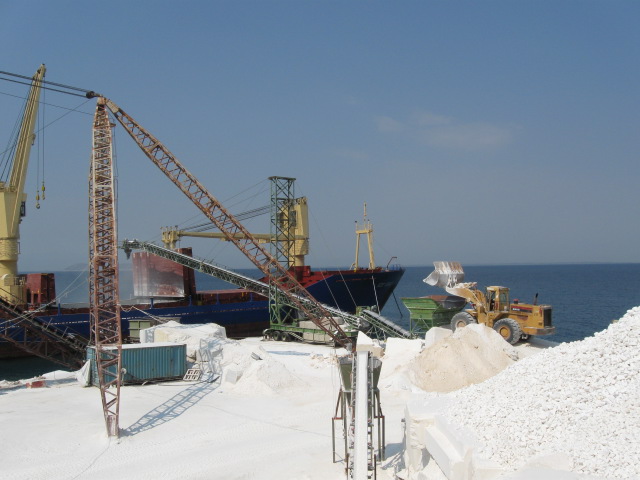
Thassos is the northernmost Greek island and also the greenest: pine forests run from the ridge of Mount Ypsario almost down to the beaches, which is rare in the Aegean. Only a narrow strait separates it from the mainland; the ferry from Keramoti takes forty minutes, with boats every half hour to an hour in season. That makes Thassos one of the few Greek islands you can realistically reach in your own car from Central Europe, and coach holidays run here too. The island is round, circled by a coastal road about a hundred kilometres long, so you can drive all the way around in a day. It is famous for its white marble, quarried here since antiquity — today it gives you a beach of dazzling white pebbles and whole quarries above Limenas. The sea is clean, but being so far north it is two or three degrees cooler than around Crete. Prices are among the lowest on any Greek island, and the main season runs from mid-June to mid-September.

What to see

The places worth your time in Thassos, and what to expect at each

Limenas and the ancient agora

Limenas and the ancient agora

north of the island

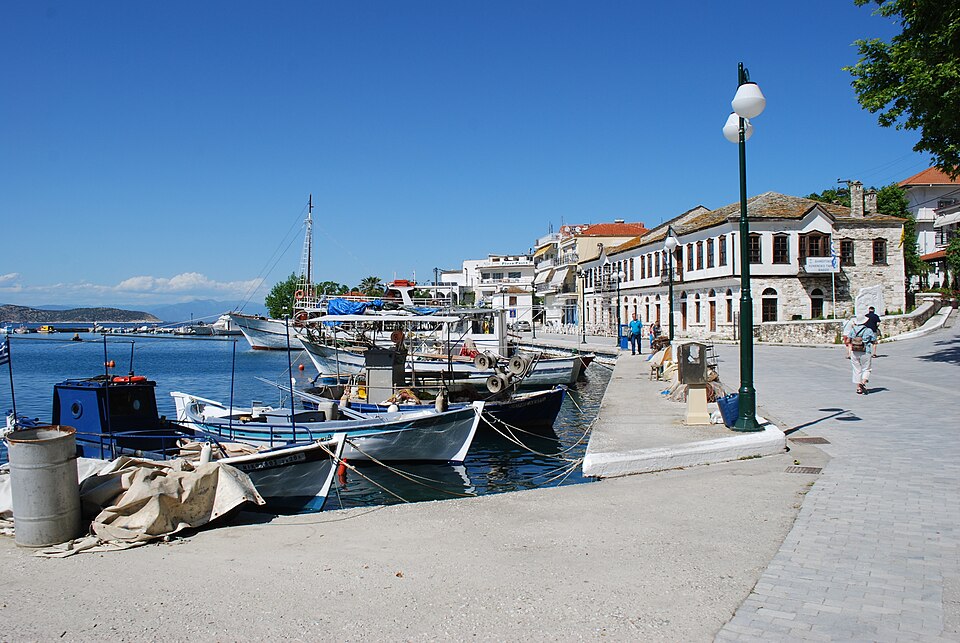
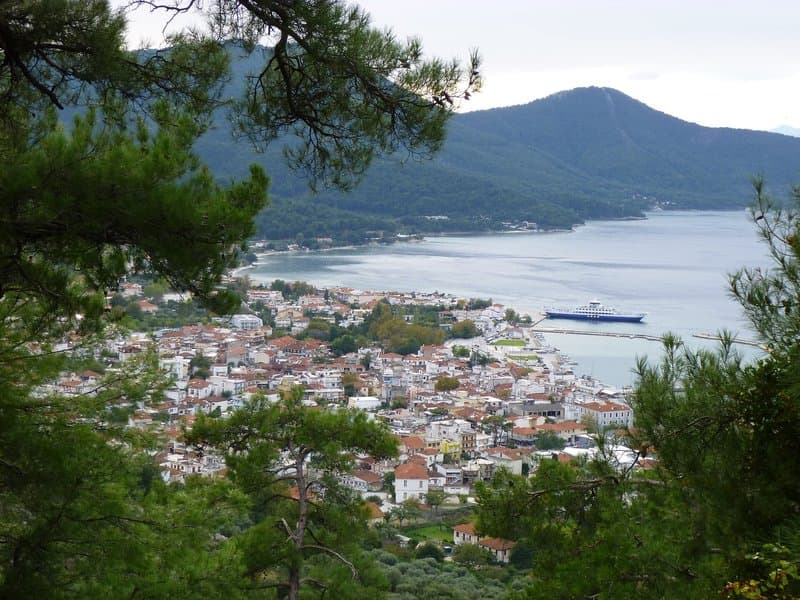
The island's capital and port, built directly over ancient Thasos, a colony of Paros founded in the 7th century BC. Among the houses and cafés lies the open agora with the foundations of colonnades and altars, and by the harbour the Archaeological Museum with a larger-than-life kouros.

Tip: The agora is best seen from the wall by the old harbour, where the tavernas light up in the evening — visit the museum in the morning, as in summer not all of it is air-conditioned and it gets stuffy in the afternoon.

Admission:
agora free, museum about €6
Time needed:
3 h
Acropolis and ancient theatre

Acropolis and ancient theatre

above Limenas

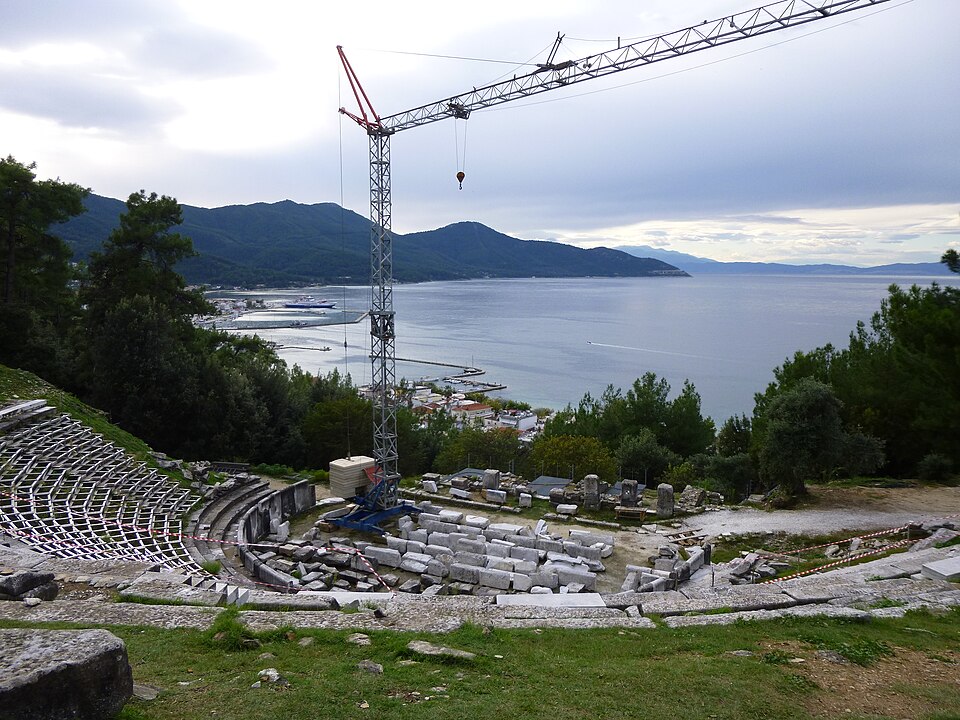
A footpath climbs from Limenas through the woods past the ancient theatre, restored and once again used for a summer festival, to the ridge with the ruins of a Genoese castle on the site of the Temple of Apollo. It continues to the Temple of Athena, a relief of the god Pan and the steep steps known as Parmenon's Gate.

Tip: The loop is three kilometres and best walked at the end of the day against the flow: up from the theatre, down through Parmenon's Gate and along the city walls straight into the centre for dinner.

Admission:
free
Time needed:
2 h
Giola lagoon

Giola lagoon

south of the island near the village of Astris

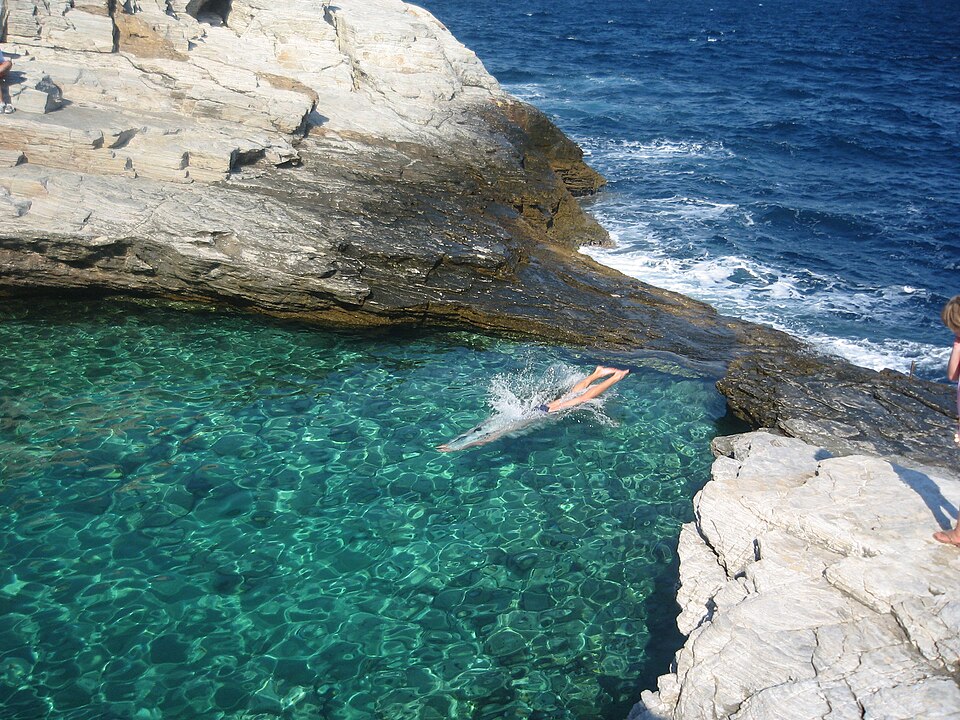
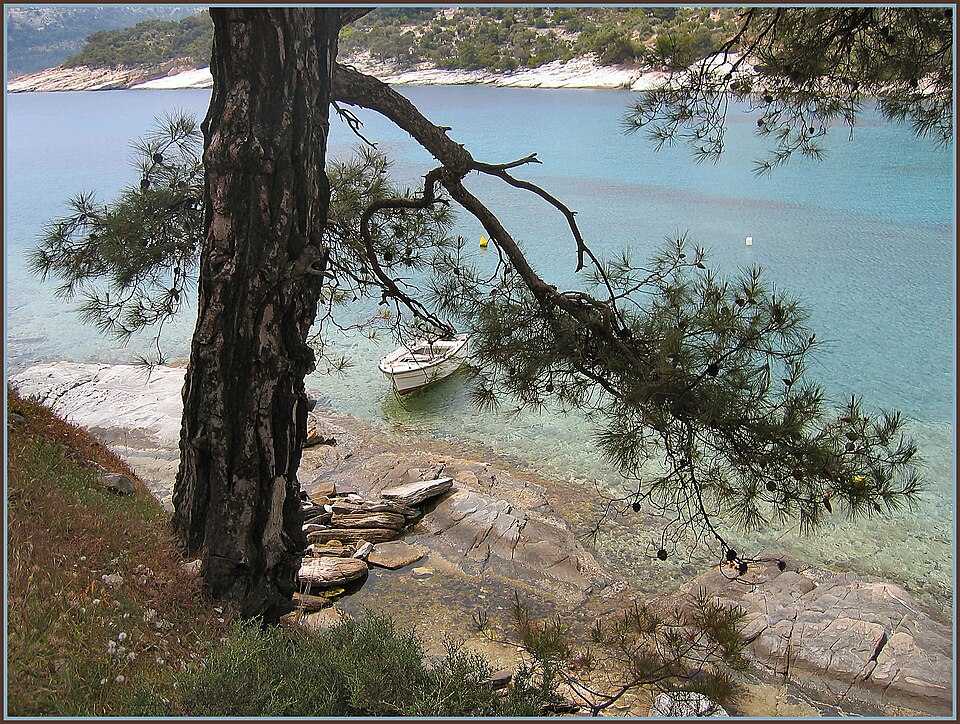
A natural pool carved into the rock on the south coast, separated from the sea only by a narrow rock barrier that waves wash over in rough weather. The water inside is calm, crystal clear and warmer than the sea. A rocky path leads down the slope from the roadside car park.

Tip: Arrive before ten, after that dozens of people crowd the edge; jumping from the higher rocks above the lagoon is dangerous — there have been several serious injuries, and the shallow bottom is invisible from above.

Admission:
free
Time needed:
2 h
Saliara marble beach

Saliara marble beach

12 km south-east of Limenas

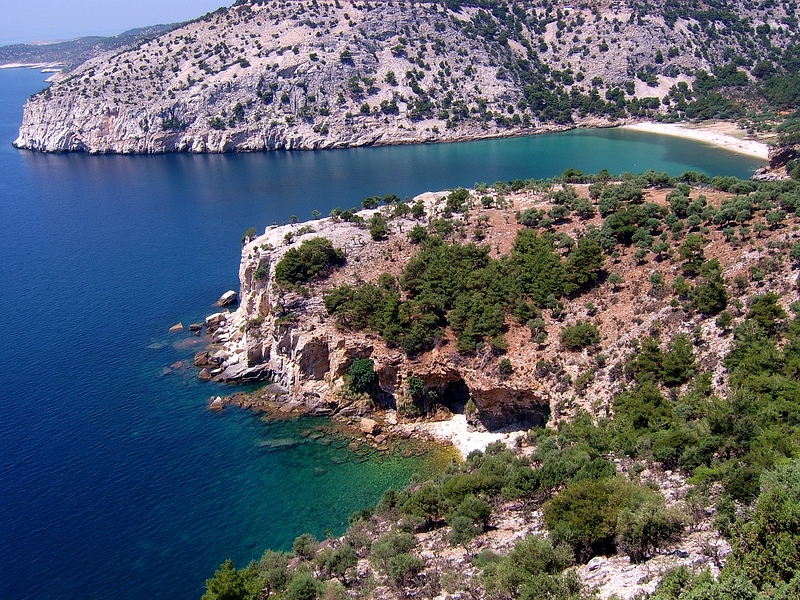
A small cove on the east coast where, instead of sand, the beach is made of fine chips of white marble from the quarry above. Over the white seabed the water is a Caribbean turquoise. There is a bar with sunbeds and nothing else.

Tip: The last five kilometres are a dirt track through a working marble quarry with lorries — drive slowly, as hire companies often exclude off-asphalt driving from the insurance; the alternative is a boat from Limenas.

Admission:
free, sunbeds from €10
Time needed:
half a day
Aliki

Aliki

south-east of the island

A small peninsula in the south-east with an ancient marble quarry, where the grooves left by cutting out blocks and unfinished columns are still visible in the rock. There are the foundations of two early Christian basilicas and a sanctuary of the Dioscuri. Small swimming coves lie on either side of the isthmus.

Tip: After looking round the quarry, swim at its lower end, where the carved marble ledges make natural jetties into deep water; bring water shoes for the sea urchins.

Admission:
free
Time needed:
2 h
Monastery of the Archangel Michael

Monastery of the Archangel Michael

south-east of the island

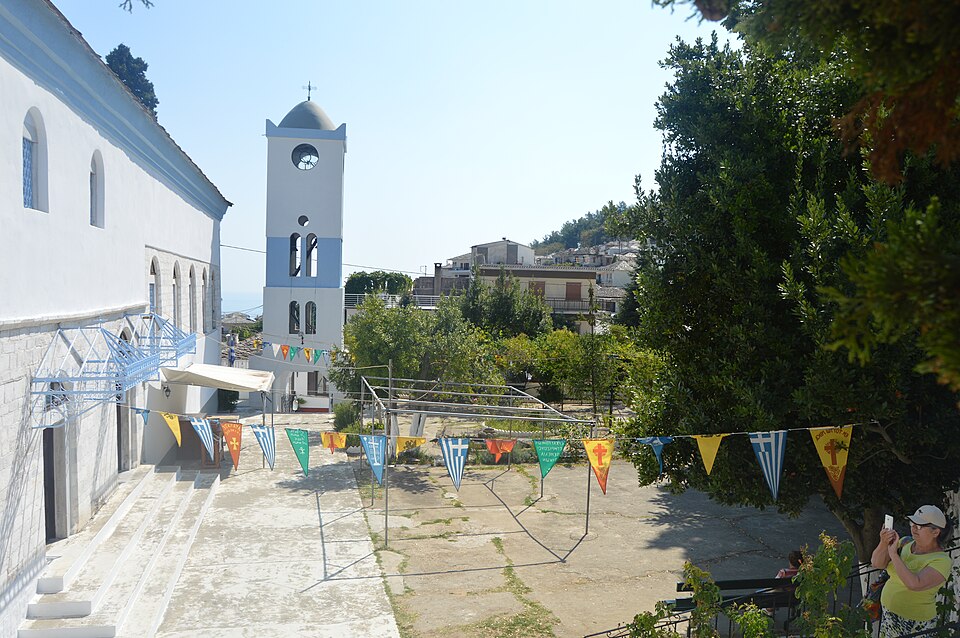
A convent on a rocky spur a hundred metres above the sea, a dependency of Philotheou Monastery on Mount Athos. The nuns keep a relic that tradition holds to be a nail from the Cross. The terrace in front of the church looks across the sea to Athos.

Tip: Skirts and scarves are lent at the entrance, but it is often closed at midday — plan a morning visit and combine it with Aliki, five minutes away by car.

Admission:
free
Time needed:
1 h
Panagia and Potamia

Panagia and Potamia

9 km south of Limenas

Two neighbouring mountain villages on the slopes above the east coast, with houses roofed in slate slabs and fountains running with cold spring water. Potamia has a museum of the sculptor Polygnotos Vagis, who was born in the village, and is the starting point for the climb up Ypsario.

Tip: Fill your bottle at the fountain by the church in Panagia — it is the best water on the island; for lunch, head to the tavernas under the plane trees, which are cheaper than on the coast.

Admission:
free
Time needed:
half a day
Theologos

Theologos

50 km from Limenas, south of the island

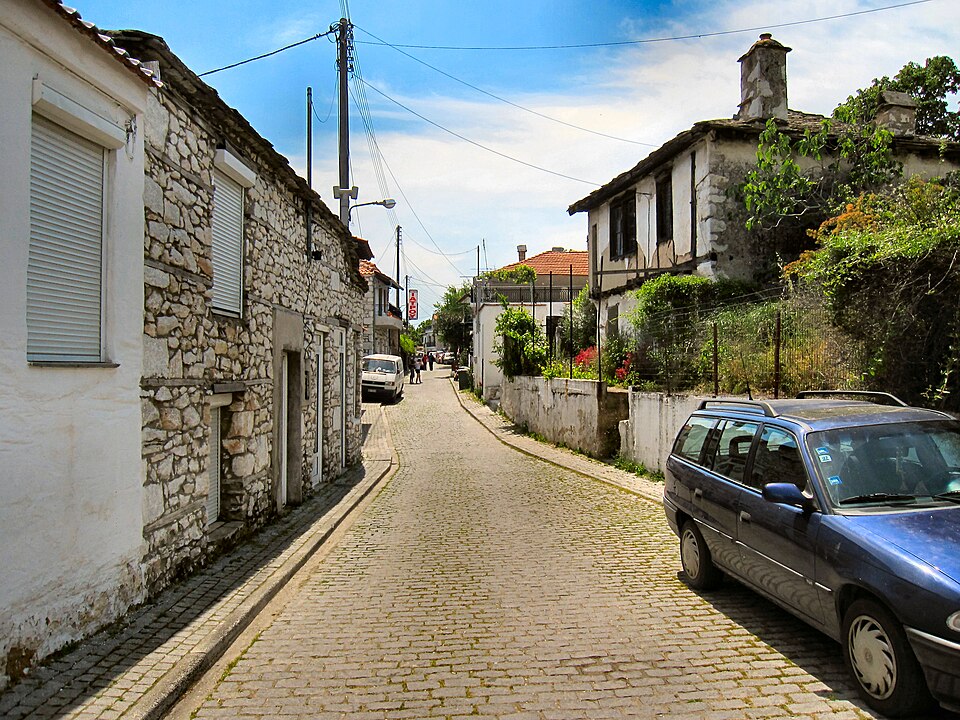
The island's former capital, inland, where people retreated from pirates. The village is a protected heritage site, with stone houses, slate roofs and wooden balconies. Its tavernas are renowned for lamb and kid roasted on the spit.

Tip: The tavernas have the spit-roast ready from midday and it is best eaten between one and two; arrive in the evening and you will get leftovers reheated from lunch.

Admission:
free
Time needed:
2 h
Golden Beach

Golden Beach

east coast, 12 km from Limenas

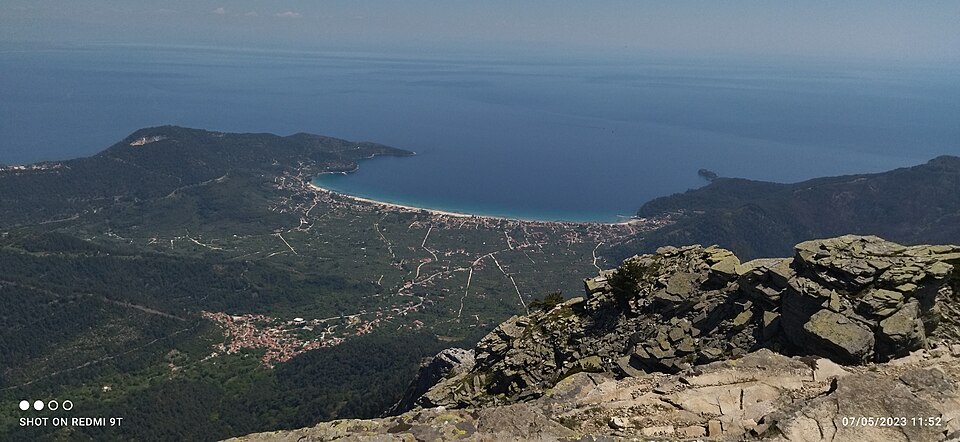
The island's longest beach, over two kilometres of fine golden sand in a bay below Mount Ypsario. The water is shallow and calm, and behind the beach are tavernas, hotels and water-sports rentals. At its northern end it merges into the fishing village of Skala Potamias.

Tip: The most space and least wind are at the southern end of the beach; at the northern end by Skala Potamias, sunbeds are often free if you order a drink.

Admission:
free
Time needed:
half a day

Photos: Limenas and the ancient agora — Jean Housen (CC BY-SA 4.0) · Acropolis and ancient theatre — Rosa-Maria Rinkl (CC BY-SA 4.0) · Giola lagoon — arjenD (CC BY-SA 3.0) · Saliara marble beach — Gerhard Haubold (CC BY-SA 3.0) · Aliki — Ronald Saunders from Warrington, UK (CC BY-SA 2.0) · Monastery of the Archangel Michael — Steliyan Kasabov / Стелиян Касабов (Public domain) · Panagia and Potamia — Oliwier Brzeziński (CC BY-SA 4.0) · Theologos — Ronald Saunders from Warrington, UK (CC BY-SA 2.0) · Golden Beach — Sli23121953 (CC BY-SA 4.0)

Where to stay

Areas and districts, matched to the kind of trip you are taking

Limenas

Best for: a first visit and staying without a car

The town with the ferries, the bus station, the museum and the most restaurants. It has small beaches of its own and boats run to the coves nearby. The most practical base for combining the beach with trips, but it stays lively until late at night.

Golden Beach and Skala Potamias

Best for: families with children

The longest sandy beach, with shallow water and a calm sea, twelve kilometres from Limenas. Plenty of apartments and small hotels with tavernas right by the water. Buses to Limenas run roughly every hour.

Potos and Limenaria

Best for: nightlife and sunsets

The south-west coast, with the island's liveliest resort, Potos, its bars and evening promenade. Limenaria next door is bigger and quieter, with a harbour and shops. This is the closest base for Theologos and Giola, and the sun sets over the sea.

Skala Prinou and Skala Rachoniou

Best for: drivers and lower prices

The north-west coast by the port of Prinos, where ferries leave for Kavala. The beaches are sandy with pines right down to the water, and accommodation is the cheapest on the island. Fewer tavernas and less nightlife, but plenty of peace.

Getting around

From the airport

The nearest airport is Kavala Alexander the Great near Chrysoupoli, served in season by charter flights from several European cities. From the airport it is fifteen minutes to the port of Keramoti and then a forty-minute ferry to Limenas. The second route runs from the port of Kavala to Prinos, a crossing of an hour and a quarter. Thessaloniki airport, two hours' drive from Keramoti, is the alternative. By car from Central Europe it is a long but popular drive — from Prague, for example, about 1,800 kilometres via Hungary, Serbia and North Macedonia, roughly eighteen hours — and coach holidays from the region run here too.

Kavala Alexander the Great (KVA) · 25 km

  • Taxi to Keramoti port· 15 min· €25
  • Ferry Keramoti – Limenas (foot passenger)· 40 min· €3
  • Ferry Keramoti – Limenas (car)· 40 min· €20
  • Hotel transfer· 1–2 h· included in your package

Thessaloniki Makedonia (SKG) · 190 km

  • KTEL bus to Kavala and ferry· 4 h· €20
  • Hire car to Keramoti· 2 h· €35 / day

Around town

The road around the island is about a hundred kilometres long and mostly follows the coast, with turn-offs to the mountain villages. KTEL buses run from Limenas in both directions around the island, in summer roughly hourly to Golden Beach and Potos, less often on the full loop. A car is the most comfortable option and parking on Thassos is easy; if you bring your own, so much the better. Scooters and quads are popular, but off the asphalt the tracks are dusty and steep.

KTEL busFrom the station in Limenas by the port; timetables are posted at stops and you pay on board. · €2
Hire carBest for circling the island and the villages; if you arrive by car from home, it goes over on the ferry. · €35 / day
ScooterFine for short hops along the coast; for Theologos and the mountains a car is better. · €20 / day
Round-the-island boat tripA full-day loop from Limenas with swimming stops in coves you cannot reach by land. · €30

Useful apps: Ferryhopper, Google Maps

When to go

The swimming season on Thassos is shorter than on the southern islands: the sea is above twenty degrees from mid-June to mid-September and warmest in August. July and August are the busiest, with lots of Greeks from the mainland and families from neighbouring countries. June and early September are best, warm and cheaper. After mid-September rain becomes more frequent, and from October most resorts close.

Best time

June and the first half of September

What to avoid

October to May, when most hotels are closed

MonthJanFebMarAprMayJunJulAugSepOctNovDec
Day11°12°15°19°24°28°31°31°27°21°16°12°
Night3°4°6°9°14°18°21°21°17°13°9°5°
Rainy days9887642236910
Sea14°13°13°15°19°23°25°25°23°20°17°15°

Food & drink

The food of Thassos rests on olives, honey and the spit. The island has over a million olive trees, and the local throumba variety ripens and wrinkles on the tree, so it can be eaten without curing. Honey from the pine forests is dark, less sweet, and sold in shops directly by the beekeepers. Inland villages roast lamb and kid, while the harbours serve sardines from nearby Kavala. Food prices are much lower than in the Cyclades.

What to try

Throumba olives

Wrinkled black olives that ripen on the tree and partly lose their bitterness on their own, so they only need salting. Buy them loose at the market in Limenas; they are cheaper and better than the packaged ones.

Pine honey

Dark honey that bees make from the honeydew left by insects on pine bark. It is less sweet and richer in minerals; beekeepers sell it by the roadside in jars from €8.

Glyko karydaki

A spoon sweet of green, unripe walnuts cooked whole in syrup, a Thassos speciality. It is served with Greek coffee as a small treat on the house.

Spit-roast kid and lamb

Meat roasted whole or in large pieces slowly over embers, the signature dish of the mountain villages. In Theologos it is ordered by the kilo.

Kavala sardines

Fresh grilled or marinated sardines from the nearby Gulf of Kavala, the cheapest fish on the menu. They are eaten whole with lemon and a pinch of salt.

Horiatiki (Greek salad)

Tomatoes, cucumber, onion, peppers, olives and a slab of feta with oregano and olive oil, with no lettuce. It is served as a shared starter, and mopping up the leftover oil with bread is part of the ritual.

Souvlaki and gyros pita

Grilled meat from a skewer or a spit in pitta with tomato, onion, tzatziki and chips inside. The cheapest full meal in the country; 'kalamaki' is a skewer without the pitta.

Ouzo and tsipouro

An anise spirit that turns milky white when water is added. It is sipped slowly with meze, never downed in one and never on an empty stomach. Tsipouro is a grape spirit, in the north often made without anise.

What it costs

Frappé or freddo espresso

€2.50–3.50

Gyros pita

€3.50–4

Taverna dinner

€15–22 per person

0.5 l beer in a taverna

€3.50–4.50

Two sunbeds and an umbrella

€8–12

Car ferry Keramoti – Limenas

about €20

Round-the-island boat trip

from €30

Night in a studio or apartment

€45–80

Indicative prices that change over time — treat them as a guide, not a price list.

Practical information

SocketsCEuroplug, two round pinsFSchuko
Voltage230V / 50Hz
Tap waterTap water is treated, bottled is common — Tap water on Thassos comes from mountain springs and boreholes and is drinkable in most villages, although in the beach resorts chlorine is sometimes added in August because of heavy demand. Locals fill up with drinking water at the fountains in the mountain villages, such as Panagia. Bottled water costs a few tens of cents a litre in the supermarket.
TippingTipping in Greece means rounding up or leaving five to ten per cent, in cash on the table — card terminals usually have no tip option. The bill often arrives on a small plate with a few pieces of fruit or a free glass of spirit; that is hospitality, not an item to pay for. In tavernas you often pay at the till. A cover charge (bread) may only be added if it is listed on the menu.
Driving on theright
SafetyThassos is safe and quiet. The biggest risk is forest fires — large areas of pine forest have burned repeatedly, most extensively in 2016 — and in summer lighting fires and barbecuing outside tavernas is banned. The mountain roads are narrow and you will meet goats on the hairpins. At Giola, beware of jumping from the high rocks. The emergency number is 112.
Opening hoursIn season, shops and tavernas in the resorts open every day until late, and supermarkets from eight to ten at night. The Archaeological Museum in Limenas closes one day a week, so check which day in advance. Monasteries close over midday. From late September opening hours shrink and ferries run less often.
Customs & etiquetteIn Greece, tilting the head up with a click of the tongue means 'no', not agreement. An open palm pushed towards someone (the mountza) is an insult, so wave with your fingers together. In a taverna, dishes are ordered for the middle of the table and shared; people don't order individual plates. Churches and monasteries are not entered in shorts or with bare shoulders; shawls are often lent at the entrance. Stiletto heels are banned at historic sites to protect the marble. In older buildings toilet paper must not be flushed, as the plumbing cannot cope with it.
A few local wordsGood morning / hello — KaliméraThank you — EfcharistóPlease / you're welcome — ParakalóThe bill, please — To logariasmó, parakalóCheers — Jamas

How to plan your days

1 day

One day in Limenas

  1. 1Morning: the Archaeological Museum and a walk through the ancient agora.
  2. 2A swim on the town beach or a boat to the nearest cove.
  3. 3Late afternoon: the acropolis loop past the theatre and through Parmenon's Gate.
  4. 4Dinner by the old harbour with fish or sardines.

2 days

Two days: mountains and white marble

  1. 1Day one as above.
  2. 2Day two: drive to Panagia and Potamia in the morning for spring water and coffee under a plane tree.
  3. 3Afternoon swim at Golden Beach.
  4. 4If you are up for it, drive on to Saliara marble beach in the early evening and back to Limenas.

3 days

Three days around the whole island

  1. 1The first two days as above.
  2. 2Day three: circle the island clockwise to Aliki and the Monastery of the Archangel Michael.
  3. 3Swim in Giola lagoon before noon.
  4. 4Lunch of spit-roast meat in Theologos.
  5. 5Sunset and dinner in Potos, returning along the west side of the island.

Day trips

Kavala

30 km · 1 h 15 min by ferry from Prinos

A port city below a Byzantine castle, with the Roman Kamares aqueduct striding across the centre and the old Panagia quarter on a rocky promontory. The ferry from Prinos is the best way to go; Kavala is explored on foot and you return on an evening boat.

Philippi

45 km · 1 h 45 min by ferry and car

An ancient city founded by Alexander the Great's father and a UNESCO World Heritage Site, with a theatre, forum and the remains of basilicas. According to the Acts of the Apostles, Paul preached here and founded the first Christian community in Europe. It lies fifteen kilometres beyond Kavala.

Nestos gorge and Xanthi

50 km · 1 h 15 min by ferry and car

On the border of Macedonia and Thrace the Nestos river cuts deep meanders, with a trail alongside and rafting and kayaking on the water. A little further on is Xanthi, with an old town of Ottoman-era houses and a Thursday market.

Frequently asked questions

How do I get to Thassos?+

From Kavala airport it is fifteen minutes to the port of Keramoti, then a forty-minute ferry to Limenas. In summer, boats run every half hour to an hour from six in the morning to ten at night. Tickets are bought at the port and no booking is needed.

Can I drive to Thassos?+

Yes. From Central Europe the usual route runs through Hungary, Serbia and North Macedonia — from Prague, for example, it is about 1,800 kilometres or eighteen hours at the wheel. The car crosses to the island on the ferry from Keramoti for about twenty euros. A car is useful on Thassos, and you can drive round the island in a day.

Is Thassos good for families with children?+

Yes. Golden Beach, Skala Prinou and Pefkari have sand and shallow water, the island is quiet and prices are lower than on most Greek islands. The sea is cooler in early June, though, at around twenty-two degrees.

What is the best beach on Thassos?+

The most photogenic is Saliara, the marble beach with white pebbles and turquoise water; the best for a full day with children is Golden Beach. Giola lagoon is more of an hour-long experience than a beach, and only a limited number of people fit around it.

When is the sea warmest on Thassos?+

In August, at around twenty-five degrees. From mid-June to mid-September swimming is comfortable. Thassos lies in the northern Aegean, so the water is two or three degrees cooler than around Crete or Rhodes.

Do I need a car on Thassos?+

We recommend one. KTEL buses run around the island, but less often away from the Limenas – Golden Beach – Potos route. The mountain villages, Aliki and Giola are easiest by car. You can hire one in Limenas or bring your own.

Is Thassos cheap?+

It is one of the cheapest Greek islands. A taverna dinner costs fifteen to twenty-two euros per person, two sunbeds eight to twelve euros and a studio by the beach from forty-five euros a night. The north-west coast around Prinos is the cheapest.

How many days do I need on Thassos?+

Three days to get to know the island: Limenas with the acropolis, the mountain villages and one day all the way round. For a beach holiday a week is ideal, leaving time for a trip to Kavala and Philippi on the mainland.

Visa Requirements

Check the latest visa requirements for entering this country. Some nationalities may need to apply for a visa or e-visa before travel.

Check visa requirements

Language

Greek

Currency

EUR

Timezone

Europe/Athens

Dial Code

+30

Population

10.4M

Area

131,957 km²

Voltage

230V / 50Hz

Driving Side

Right

Top Hotels in Thassos

Live prices from 500+ properties

Loading hotels...

Planning a trip to Thassos?

Compare hundreds of hotels, find the best price, and book with free cancellation on TravelManiac.