Hotels in Niagara Falls

Three waterfalls straddling the Canada–US border, where the spray rises higher than skyscrapers

Niagara Falls

IdiomaEnglish
MonedaCAD
Huso horarioGMT-5
Temperatura-10-25 °C
Prefijo+1
Población40M
Área9,984,670 km²
EnchufesTipo A / Tipo B
Agua del grifoPotable

Descubra Niagara Falls

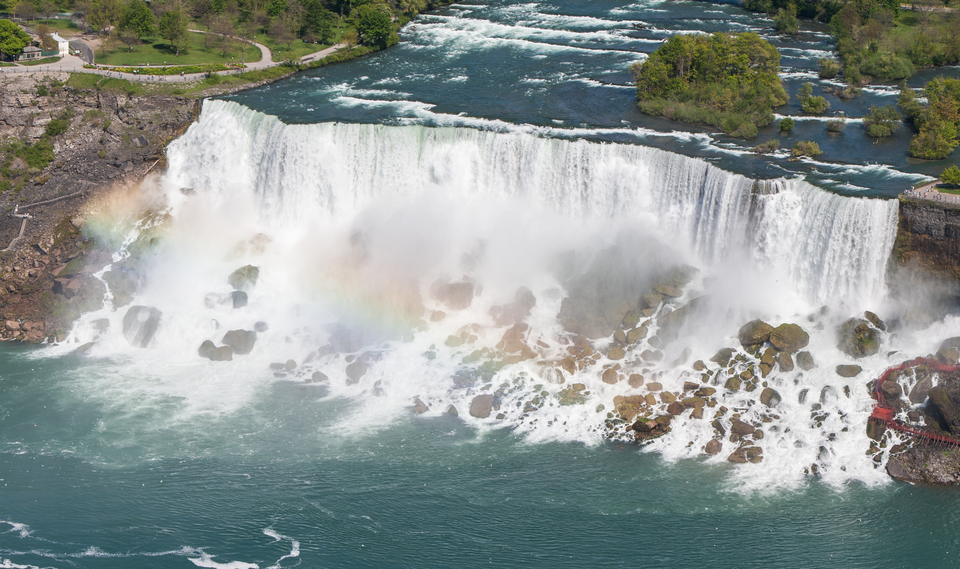
Niagara Falls sits on the Niagara River, which carries water from Lake Erie to Lake Ontario, right on the border between the Canadian province of Ontario and the American state of New York. It's made up of three falls: the largest, horseshoe-shaped Horseshoe Falls, 670 meters wide and 57 meters high, on the Canadian side, and the smaller American Falls and Bridal Veil Falls on the American side. In summer, around 2,400 cubic meters of water pour over the falls every second — at night and outside the season, up to three-quarters of the flow is diverted to hydroelectric plants. The falls aren't the tallest in the world, but they're the most powerful in North America, and accessible closely enough that the spray will soak you. The Canadian side has the better view of all three falls at once, hotels with windows facing the falls, and the tourist strip of Clifton Hill with its attractions. The American side is quieter, with a state park on islands right at the edge. Niagara is one hundred thirty kilometers from Toronto and can be visited in a single day, but the evening illumination of the falls is worth staying overnight for.

What to see

The places worth your time in Niagara Falls, and what to expect at each

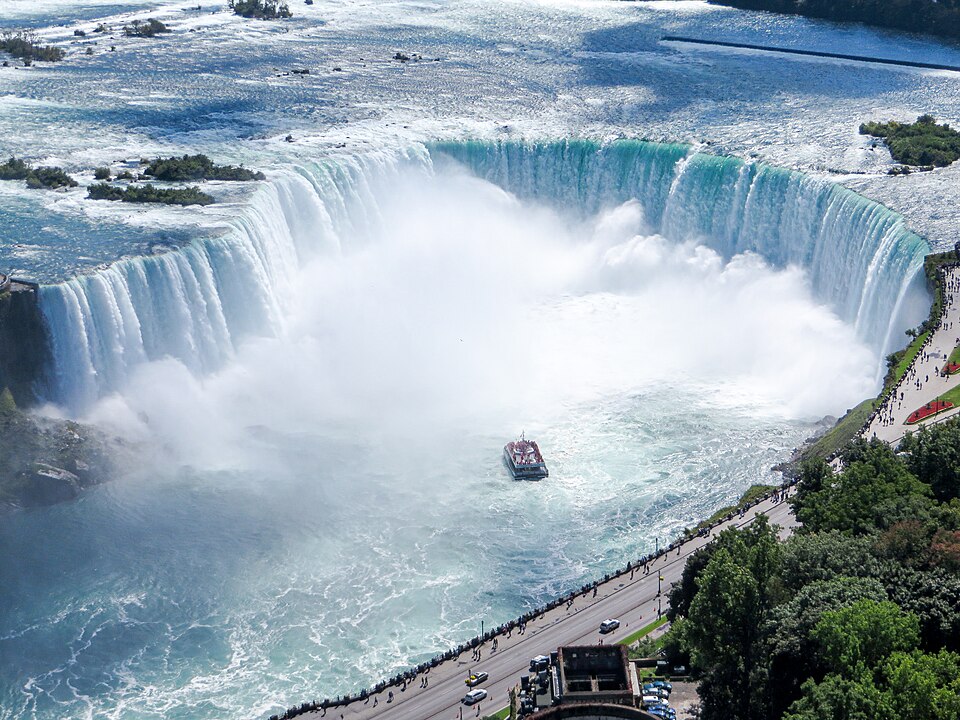
Horseshoe Falls and Table Rock

Horseshoe Falls and Table Rock

Fallsview

The largest of the Niagara falls, its edge forming a horseshoe 670 meters wide. The Table Rock viewpoint sits on the Canadian side right at the edge of the falls, where water breaks downward just meters from the railing and spray rises over a hundred meters high. It's the most powerful spot on the whole of Niagara.

Tip: Come early in the morning, when the railing area is empty and the sun lights the water from the east — in the afternoon it shines against you. The Niagara Parkway promenade runs on foot from the Rainbow Bridge past all three falls, about two kilometers. In summer the spray soaks you even from a hundred meters away, so a rain jacket helps.

Admission:
free
Time needed:
1 h
Boat beneath the falls

Boat beneath the falls

Clifton Hill

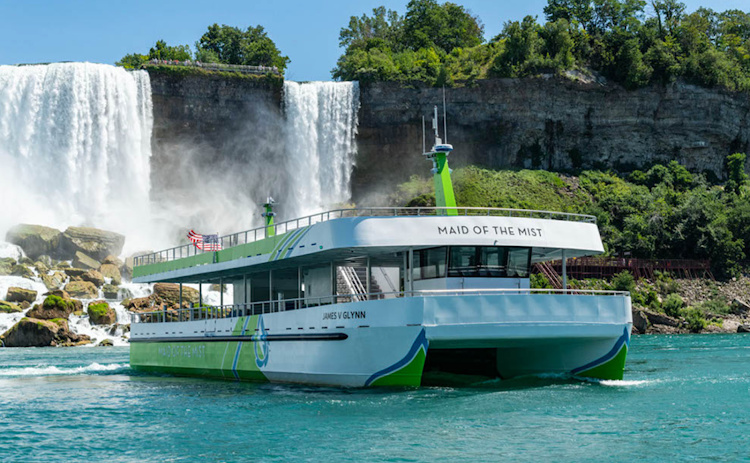
On the Canadian side, Niagara City Cruises boats in red ponchos carry passengers, and on the American side Maid of the Mist boats in blue, twenty minutes straight into the mist beneath Horseshoe Falls. The boat stops in the basin, where the roar of the water drowns out everything and the spray-driven wind soaks you to the skin. It's Niagara's most famous experience.

Tip: Both boats go to the same spot, so pick the one on the side you're staying on. The longest lines run between eleven and four; the first boat at nine is half-empty. The rain poncho is included, but your shoes will get wet anyway — sandals work best. Stand at the front of the upper deck, on the right.

Admission:
around 35 CAD
Time needed:
45 min
Journey Behind the Falls

Journey Behind the Falls

Table Rock

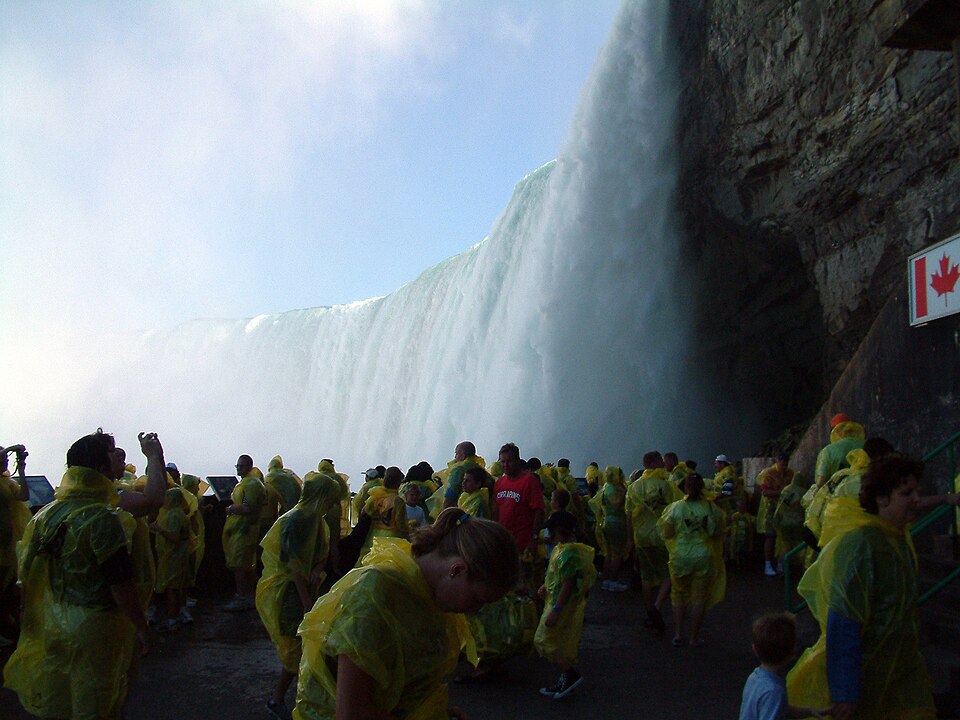
An elevator descends forty-five meters into the rock beneath Table Rock, and tunnels carved in 1889 lead to two portals right behind the falling water, plus an observation deck at the foot of Horseshoe Falls. Behind the water you see only a white wall, and you can feel the rock vibrating.

Tip: The portals behind the water are mostly about the noise and vibration, with limited views — the lower observation deck off to the side of the falls is the best part. In winter the deck is closed due to ice, but the tunnels stay open year-round and admission is cheaper. Book a timed entry online; in summer the wait runs an hour.

Admission:
around 25 CAD
Time needed:
45 min
Skylon Tower

Skylon Tower

Fallsview

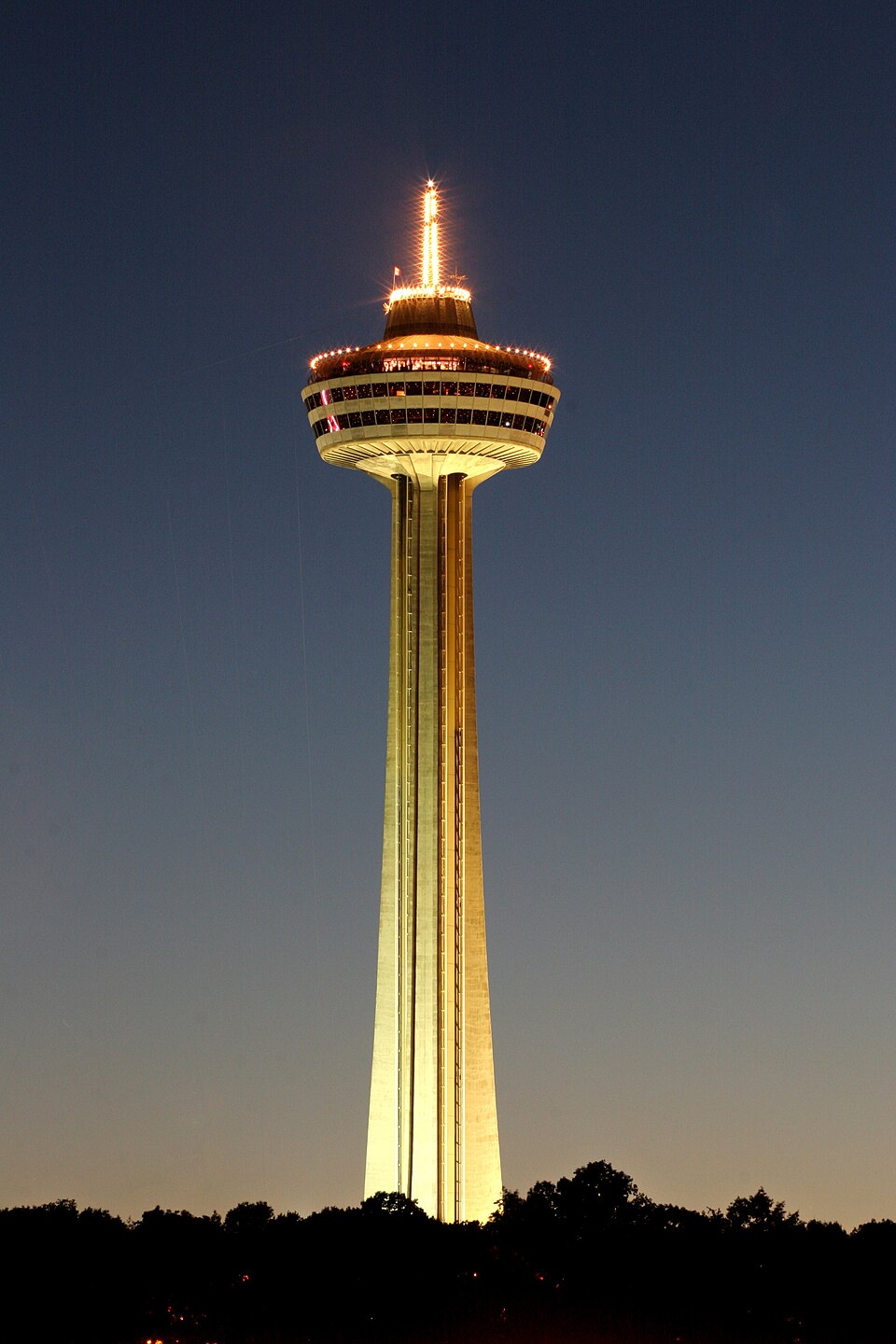
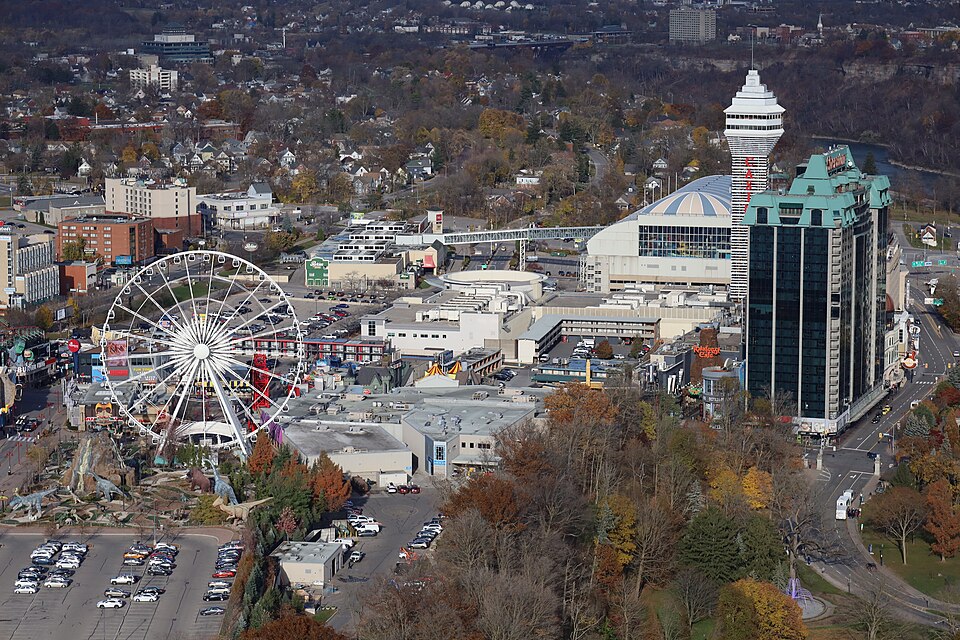
A 160-meter observation tower whose elevators run up the outside of the building in yellow glass pods. The observation deck offers the best view of all three falls at once, and on a clear day even as far as Toronto. A revolving restaurant sits at the top.

Tip: Observation deck admission is included if you book lunch or dinner at the revolving restaurant — the food is average, but it works out about the same as a ticket plus a meal elsewhere. Best at sunset, staying until dark when the colored illumination of the falls switches on.

Admission:
around 20 CAD
Time needed:
1 h
Clifton Hill

Clifton Hill

Clifton Hill

A street of attractions climbing from the river up to the Fallsview hotels: wax figures, haunted houses, mini golf, the giant SkyWheel and neon signage. It's the kitschy, loud and expensive side of Niagara, and kids love it. A casino sits at the top.

Tip: The SkyWheel is the one attraction here worth the money, since it offers a view of the falls. The street is liveliest in the evening, but the restaurants are chains and overpriced. Anyone without kids can walk it in half an hour and head to the falls promenade instead.

Admission:
attractions 10–30 CAD
Time needed:
1–3 h
Whirlpool Aero Car

Whirlpool Aero Car

Niagara Parkway, 4 km north

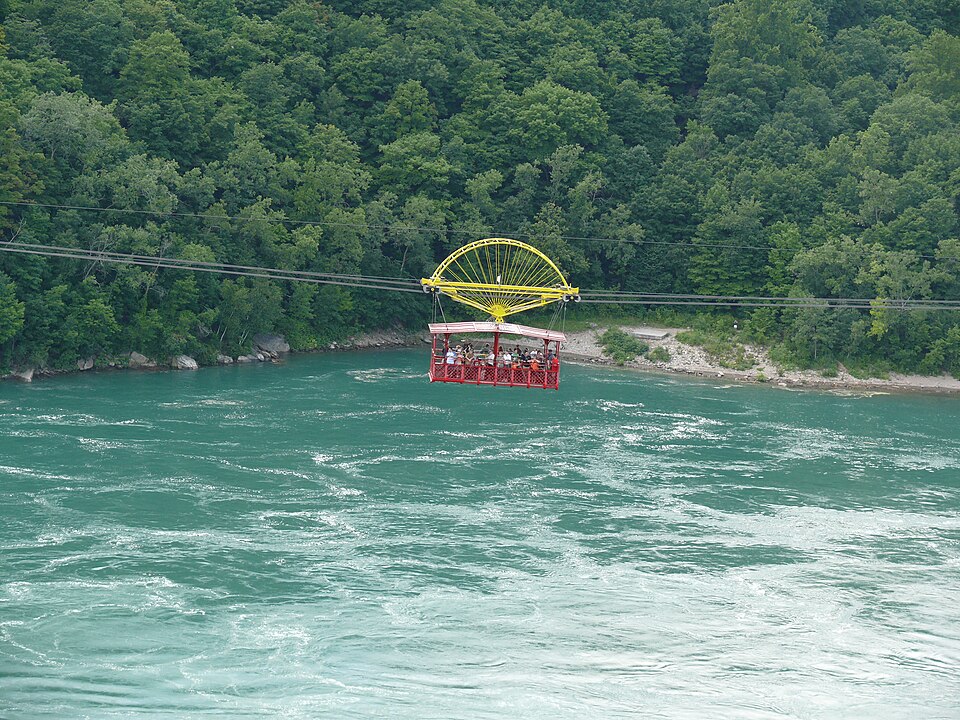
A historic 1916 cable car designed by Spanish engineer Leonardo Torres Quevedo, crossing above a giant whirlpool on the Niagara River in a canyon three kilometers below the falls. The river bends at a right angle here, and the water spins in an enormous vortex. The cabin passes over American territory, but no passport is needed.

Tip: The ride takes ten minutes round trip, and you stand in the cabin. More striking than the cable car itself is the view of the whirlpool from the shore, which is free. At the edge of the canyon near the cable car, the Niagara Glen trails descend to the river among boulders, a quiet spot and one of the oldest forests in Ontario.

Admission:
around 20 CAD
Time needed:
30 min
White Water Walk

White Water Walk

Niagara Parkway, 3 km north

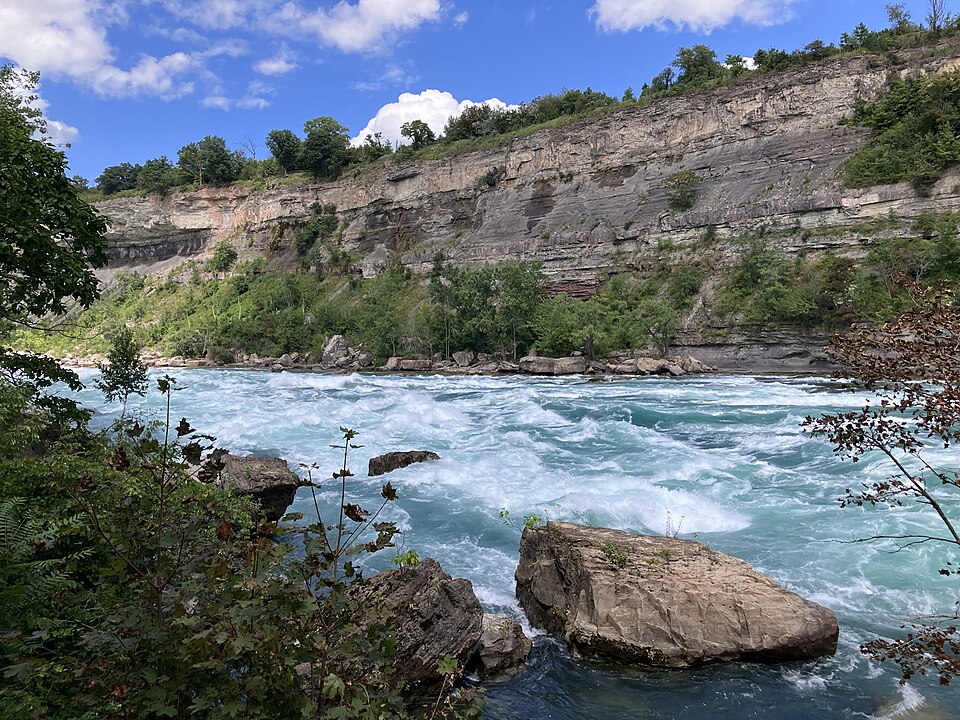
A wooden boardwalk at the bottom of the canyon runs alongside the highest-grade rapids, where the river below the falls flows at over thirty kilometers an hour and waves rise several meters high. An elevator descends seventy meters to reach it. It's the closest you can get to the wild Niagara River.

Tip: The boardwalk is three hundred meters long and the visit takes half an hour — worth it mainly for the power of the water up close. Information panels explain why no one has survived attempting to swim it. Combine it with the Aero Car under the Niagara Parks Adventure Pass.

Admission:
around 20 CAD
Time needed:
45 min
Niagara Parks Power Station

Niagara Parks Power Station

Fallsview

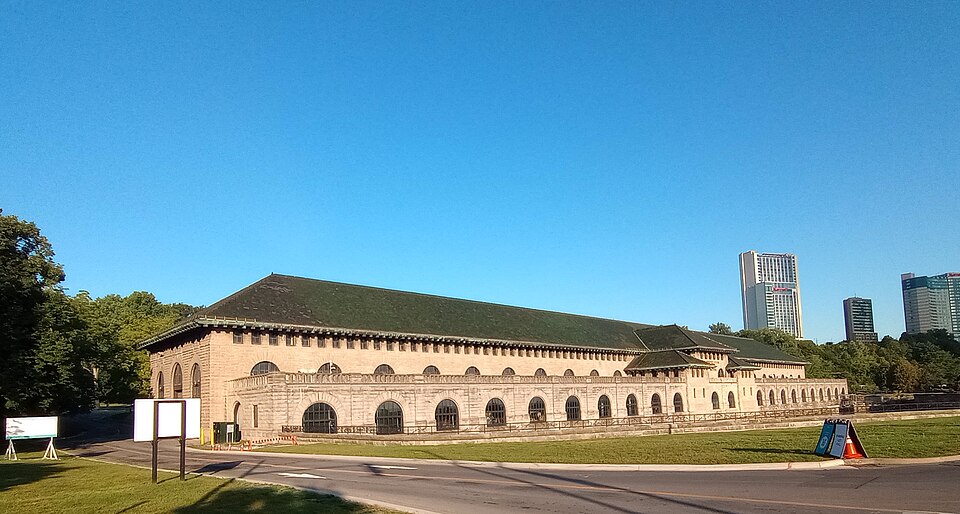
A historic 1905 hydroelectric power station right above Horseshoe Falls, with giant generators in a hall featuring a marble floor and an ornate ceiling. Below it runs a 670-meter tunnel that returns water to the river; an elevator descends into the tunnel, leading to a platform right at the river's edge below the falls.

Tip: The tunnel and the observation point at the end are newer and less well known, so there are no lines. In summer evenings, a light show about the power station's history runs in the hall. It's one of the few places at Niagara where you learn how the falls' water is put to use — and why less water flows at night.

Admission:
around 30 CAD with tunnel
Time needed:
1.5 h
The American side: Goat Island and Cave of the Winds

The American side: Goat Island and Cave of the Winds

Niagara Falls, NY

On the American side lies the oldest state park in the US, spread across islands among the falls. From Goat Island, paths lead to Terrapin Point at the edge of Horseshoe Falls and to Luna Island between American Falls and Bridal Veil Falls. Cave of the Winds is a set of wooden platforms right beneath Bridal Veil Falls, where the falling water hits you directly.

Tip: Walk to the American side across the Rainbow Bridge for a few dollars; you'll need a passport and ESTA. Cave of the Winds is the wettest experience at Niagara — a poncho and sandals are included, but bring a towel. The Canadian side has better views, the American side closer contact with the water.

Admission:
Cave of the Winds around 22 USD
Time needed:
2–3 h

Photos: Horseshoe Falls and Table Rock — Thomaswm (CC BY-SA 4.0) · Boat beneath the falls — Bona1858 (CC BY-SA 4.0) · Journey Behind the Falls — Vassgergely at English Wikipedia (CC BY-SA 3.0) · Skylon Tower — Ingelbert Lievaart II (CC BY-SA 3.0) · Clifton Hill — Antony-22 (CC BY-SA 4.0) · Whirlpool Aero Car — Ad Meskens (CC BY-SA 3.0) · White Water Walk — Gogerr (CC BY-SA 4.0) · Niagara Parks Power Station — Dpalma01 (CC BY-SA 4.0) · The American side: Goat Island and Cave of the Winds — Robert F. Tobler (CC BY-SA 4.0)

Where to stay

Areas and districts, matched to the kind of trip you are taking

Fallsview

Best for: the view, first-time visitors

Hotels with windows facing the falls, on the hill above the river, along with the casino and Skylon Tower. Rooms with a falls view cost twice as much as those without, but the experience is different — you can see the illumination and fireworks from bed at night. Five minutes to the promenade.

Clifton Hill and Lundy's Lane

Best for: families, budget travel

Hotels around the attractions strip, plus motels on Lundy's Lane further from the river, a third cheaper. Close to restaurants and kid-friendly attractions, noisy into the night. Ten to twenty minutes on foot to the falls, or take the WEGO bus.

Niagara-on-the-Lake

Best for: quiet, wine, couples

A historic nineteenth-century town twenty kilometers north, with guesthouses, wineries and the Shaw Festival theater. Quiet and elegant, with excellent restaurants. Reach the falls by car or bus.

Niagara Falls, NY

Best for: the American side

The town on the American side, with a casino and hotels near the state park. Quieter, but the town itself is run-down and empty in the evening. Convenient if you're continuing on through the US or flying from Buffalo.

Getting around

From the airport

Flights from Prague to Toronto (YYZ) run direct or with one connection, taking nine to twelve hours. From the airport it's a hundred twenty kilometers to Niagara, an hour and fifteen minutes by car off-peak, double that on Friday afternoons. The GO Transit train runs from Toronto's Union Station to Niagara Falls in two hours, daily in summer and on weekends otherwise; GO and FlixBus buses also run the route. On the American side, the nearest airport is Buffalo (BUF), forty kilometers away. Entering Canada requires an electronic eTA authorization, and the American side requires ESTA.

Toronto Pearson (YYZ) · 120 km

  • Rental car· 1 h 15 min· 60 CAD/day
  • Niagara Airbus shuttle· 1 h 30 min· 100 CAD
  • UP Express to Union, then GO train· 2 h 30 min· 30 CAD

Buffalo Niagara (USA) (BUF) · 40 km

  • Taxi via Rainbow Bridge· 45 min· 80 USD
  • Rental car· 40 min· 60 USD/day

Around town

Getting between the falls, Clifton Hill and Fallsview is done on foot along the promenade, and for longer distances the WEGO buses connect hotels, the falls and attractions along the Niagara Parkway all the way to Queenston Heights. The Falls Incline Railway carries passengers from Fallsview down to the falls for a few dollars. Parking near the falls is expensive, thirty to forty dollars a day. Reach Niagara-on-the-Lake by WEGO bus, by car, or by bike along the river path. Cross to the American side on foot across the Rainbow Bridge.

WEGO busRuns along the Niagara Parkway and to the hotels; 24- or 48-hour passes available. · 12 CAD
Falls Incline RailwayA funicular from Fallsview down to the falls. · 3 CAD
BicycleAlong the cycling path on the Niagara Parkway to Niagara-on-the-Lake. · 40 CAD/day
On foot across the Rainbow BridgeTo the American side, with a passport and ESTA. · 1 USD

Useful apps: Niagara Parks, Google Maps, ArriveCAN / CBP One (border)

When to go

The best time is May through October, when the boats beneath the falls run, all the attractions are open, and it's warm. The falls carry the most water during daytime in summer. July and August are the busiest months, with boat lines over an hour and the highest hotel prices. September and October see fewer people, and the wineries hold their harvest. Winter is cold, with snow and freezing temperatures; the boats don't run, but frozen spray coats the trees and railings in ice, creating striking scenery, and a light festival runs from November to January. The falls never fully freeze over.

Best time

May–June, September–October

What to avoid

July–August weekends

MonthJanFebMarAprMayJunJulAugSepOctNovDec
Day-1°0°5°12°19°24°27°26°22°15°8°2°
Night-8°-8°-4°2°8°14°17°16°12°6°1°-5°
Rainy days161313131211101011131415

Food & drink

Most dining at Niagara happens at chain restaurants on Clifton Hill and in the Fallsview hotels — the food is average and overpriced, but comes with a view of the falls. Better dining is found in Niagara-on-the-Lake and across the wine region, where wineries run their own restaurants using local ingredients. The Niagara Peninsula is Canada's most important wine region thanks to the mild climate between the lakes, growing riesling, chardonnay and pinot noir, and above all producing ice wine. In summer, roadside stands sell peaches, cherries and strawberries from local orchards.

What to try

Ice wine

A sweet wine made from grapes harvested frozen in January at minus eight degrees, when the berries hold only concentrated sugar. The Niagara Peninsula is the world's largest ice wine producer; a small bottle costs fifty to a hundred dollars.

Niagara wines

Riesling, chardonnay, cabernet franc and pinot noir from wineries in Niagara-on-the-Lake and on the slopes of the Niagara Escarpment. A five-wine tasting costs fifteen to twenty-five dollars.

Peninsula peaches and fruit

In July and August, roadside stands along the Niagara Parkway sell peaches, cherries and plums straight from local farms. Peach pie is the seasonal specialty.

Poutine

Fries smothered in brown gravy and topped with fresh cheese curds that squeak against your teeth. It originated in rural Quebec in the 1950s; good poutine has curds that only half-melt in the hot gravy. It's mostly eaten after midnight.

Butter tart

A small pastry filled with butter, sugar and eggs, runny in the center. Canadians argue over whether raisins or pecans belong in it. The best come from rural Ontario bakeries; café-chain versions tend to be oversweet.

Maple syrup

Canada produces three-quarters of the world's maple syrup, most of it in Quebec. Grades differ by color — light "golden" is delicate, dark "very dark" is bold and best for baking. Buy it in a can or jar from a farmer; the maple-leaf-shaped bottle at the airport costs three times as much.

Caesar

Canada's national cocktail: vodka, Clamato juice (tomato and clam), Worcestershire and Tabasco, with a celery-salt rim and a celery stalk garnish. Invented by a bartender in Calgary in 1969, and almost unknown outside Canada.

Buffalo wings

Spicy chicken wings in a butter-and-chili sauce, served with celery and blue cheese dip. Invented in Buffalo, thirty kilometers from the falls on the American side.

What it costs

Boat beneath the falls

around 35 CAD

Journey Behind the Falls

around 25 CAD

Niagara Parks Adventure Pass

around 90 CAD

Parking near the falls, per day

30–40 CAD

Burger and a beer on Clifton Hill

35–45 CAD

Wine tasting in Niagara-on-the-Lake

15–25 CAD

Night at a 3-star hotel for two, no view

150–250 CAD

Night at a hotel with a falls view

300–500 CAD

Indicative prices that change over time — treat them as a guide, not a price list.

Practical information

SocketsAtwo flat pins (US/JP)Btwo flat pins plus ground (US)
Voltage120V / 60Hz
Tap waterTap water is drinkable — Tap water is safe to drink throughout Canada, and restaurants serve it free with ice — just ask for tap water. Bottled water is an unnecessary expense — a bottle costs two to three dollars, five at the airport. Airports, parks and museums have refill stations, so it's worth carrying your own bottle. In national parks, stream water shouldn't be drunk without boiling because of giardia parasites, even when it looks crystal clear.
TippingTipping in Canada is mandatory, not a bonus: at a table-service restaurant it's fifteen to twenty percent, at a bar a dollar or two per drink, ten to fifteen percent for taxi and rideshare drivers, and three to five dollars per night for housekeeping. The card terminal will offer preset percentage buttons — some calculate them on the total including tax, so working it out yourself is often cheaper. Sales tax, ranging five to fifteen percent depending on the province, is added at the register on top of the listed price, so the final total is always higher than the price tag shows.
Driving on theright
SafetyNiagara Falls is a tourist town, and its tourist areas — Fallsview, Clifton Hill and the waterfront promenade — are safe even at night. Further from the tourist zone, in the old downtown on Queen Street and on the American side in Niagara Falls, NY, there are poorer neighborhoods where walking after dark isn't advisable. Railings line the edge of the falls, and climbing over them is dangerous — the current above the edge is stronger than it looks. The boats and the Journey Behind the Falls tunnels are wet and slippery. In winter, mist freezes on sidewalks and railings. Crossing to the American side via the Rainbow Bridge requires a passport and electronic ESTA authorization.
Opening hoursShops are generally open from around ten a.m. to nine p.m., shorter hours on Sundays; supermarkets are often open until eleven and Shoppers Drug Mart pharmacies around the clock. Restaurants serve dinner from five p.m., and kitchens in smaller towns close around ten. Alcohol is bought at government-run LCBO stores in Ontario and SAQ stores in Quebec, or at the supermarket; in Alberta it's sold at private liquor stores. Drinking in public is not allowed. Museums are usually closed on Mondays and often have one free or discounted evening a week. On public holidays — Canada Day on July 1, Thanksgiving in October — most shops close.
Customs & etiquetteCanadians are polite and say "sorry" even when you bump into them. Queuing is strictly observed, whether at a bus stop or in line for coffee. Confusing Canadians with Americans is the most common faux pas, and in Quebec every conversation should open with "bonjour" — switching to English afterward is fine, but starting in English without a greeting comes across as rude. Indigenous peoples are referred to as First Nations, Inuit and Métis, and the word "Indian" is not used. Smoking, including marijuana, is banned in restaurants, on terraces and near entrances.
A few local wordsHello — Hi / Good morningThank you — Thank youExcuse me — Sorry / Excuse meThe bill, please — Can I get the bill, please?How much is it including tax? — How much is it with tax?Tap water, please — Tap water, please

How to plan your days

1 day

Niagara in one day

  1. 1Morning at Table Rock and the Horseshoe Falls viewpoint.
  2. 2Boat beneath the falls on the first sailing.
  3. 3Journey Behind the Falls, then lunch with a view.
  4. 4Afternoon at White Water Walk and the Whirlpool Aero Car.
  5. 5Evening at Skylon Tower for the falls' illumination.

2 days

Niagara in two days

  1. 1Day 1: Table Rock, the boat, Journey Behind the Falls and the power station with its tunnel.
  2. 2Evening: the illuminated falls, and fireworks at 10 p.m. in summer.
  3. 3Day 2: walk to the American side across the Rainbow Bridge, Goat Island and Cave of the Winds.
  4. 4Afternoon: WEGO bus to Niagara-on-the-Lake.
  5. 5Wine tasting and dinner at a winery.

3 days

Niagara and its surroundings in three days

  1. 1Day 1: the falls from the Canadian side and the boat.
  2. 2Day 2: the American side, the Aero Car and the Niagara Glen trails.
  3. 3Day 3: cycle the Niagara Parkway to Niagara-on-the-Lake.
  4. 4Peninsula wineries with an ice wine tasting.
  5. 5Return to Toronto.

Day trips

Niagara-on-the-Lake

20 km · 25 min by car

A historic nineteenth-century town at the mouth of the Niagara River where it meets Lake Ontario, with Victorian houses, flowers and Fort George from the War of 1812. More than thirty wineries with tastings and restaurants surround it, and the Shaw Festival theater runs in summer. A cycling path along the river connects it to Niagara Falls.

Toronto

130 km · 1 h 30 min by car

Canada's largest city, with the CN Tower, St. Lawrence Market, the Kensington Market and Distillery District neighborhoods, and islands on the lake with skyline views. Most visitors to Niagara arrive through here, and if you have the time, it's worth two to three days.

Buffalo

35 km · 40 min by car

A city on the American side with unexpectedly good architecture — Frank Lloyd Wright houses, an Art Deco city hall, and waterfront grain silos converted into an entertainment district. Buffalo is the birthplace of chicken wings, still served today at the Anchor Bar, where they were invented. Crossing the border requires a passport and ESTA.

Frequently asked questions

Is the Canadian or American side better?+

The Canadian side has a better view of all three falls at once, hotels with a view, and more attractions. The American side is closer to the water and has Cave of the Winds and Goat Island, but the town itself is run-down. It's best to stay in Canada and walk over to the American side for half a day.

Do I need a passport and visas to cross between the two sides?+

Yes, the Rainbow Bridge crosses the border between Canada and the US. You need a passport, and for the US an electronic ESTA authorization arranged online beforehand. Returning to Canada by land only requires a passport — eTA is only required when arriving by plane. Expect a border line, up to an hour on summer weekends.

Is one day enough for Niagara?+

Yes, the main falls, the boat and Journey Behind the Falls can be done, even as a day trip from Toronto. But the evening illumination and fireworks, plus a quiet morning at Table Rock, are worth staying overnight for. Add the American side and Niagara-on-the-Lake and plan for two to three days.

When is the falls illumination and fireworks?+

The falls are lit with colored floodlights every evening year-round from dusk until two in the morning. Fireworks run every evening at ten in summer, and on weekends and holidays outside the season. The best view is from Queen Victoria Park or Skylon Tower.

Do the boats run in winter too?+

No, boats beneath the falls run roughly from April or May to November, depending on ice on the river. In winter the Journey Behind the Falls tunnels stay open (without the lower viewing deck), as does the power station. Winter Niagara, with its ice-coated trees and light festival, is beautiful, and hotels are cheaper.

Is the Niagara Parks Adventure Pass worth it?+

If you want the boat, Journey Behind the Falls, White Water Walk and the power station, yes — the pass saves around thirty percent and includes WEGO buses for two days. For just one or two attractions it isn't worth it.

Where's the best free view of the falls?+

From Table Rock and the whole promenade along the Niagara Parkway on the Canadian side, from Terrapin Point and Luna Island on the American side, and from the Rainbow Bridge. The promenade between the Rainbow Bridge and Table Rock is the best walk and it's free.

How do I get to Niagara from Toronto without a car?+

By GO Transit train from Union Station in two hours (daily in summer, weekends otherwise), by GO or FlixBus bus, or on an organized tour that includes the boat and Niagara-on-the-Lake. From the Niagara Falls train station, the WEGO bus runs to the falls.

Requisitos de visa

Verifique los requisitos de visa actuales para ingresar a este país.

Verificar requisitos de visa

Números de emergencia

Idioma

English / French

Moneda

CAD

Huso horario

GMT-5

Prefijo

+1

Población

40M

Área

9,984,670 km²

Voltaje

120V / 60Hz

Lado de conducción

Derecha

Mejores hoteles en Niagara Falls

Precios en vivo de 500+ propiedades

Cargando hoteles...

Planea un viaje a Niagara Falls?

Compare cientos de hoteles, encuentre el mejor precio y reserve con cancelación gratuita.