A tower over the lake, the market with Canada's best sandwich, and Niagara two hours away
Toronto
LanguageEnglish
CurrencyCAD
TimezoneGMT-5
Temperature-10-25 °C
Dial Code+1
Population40M
Area9,984,670 km²
SocketsType A / Type B
Tap waterDrinkable
Discover Toronto
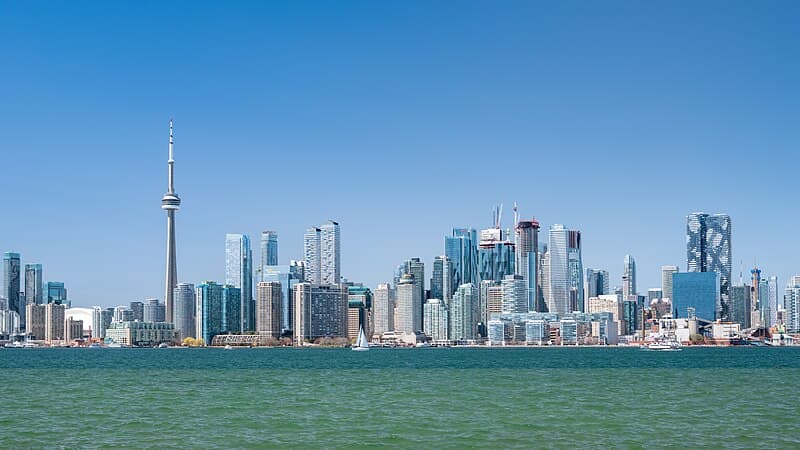
Toronto is Canada's largest city and, by share of foreign-born residents, the most diverse city in the world — half of its nearly three million people came from elsewhere, and more than a hundred sixty languages are spoken here. For a visitor, that mostly means food: a single street can hold a Portuguese bakery, an Ethiopian restaurant and a Korean barbecue joint. Downtown sits on the shore of Lake Ontario, which looks like the sea, overlooked by the CN Tower, a five hundred fifty-three-meter tower that was the world's tallest free-standing structure for more than thirty years. Toronto isn't a city of grand monuments like Paris or Rome; its strength lies in its neighborhoods — the Victorian breweries of the Distillery District, bohemian Kensington Market, Chinatown, Greektown and Little Italy — and the islands in the bay, which offer the best view of the skyline. Add to that a two-hour trip to Niagara Falls, the reason most Europeans come here in the first place. The city is clean, safe and well connected by subway and streetcars, but expensive: downtown accommodation ranks among the priciest in North America.
What to see
The places worth your time in Toronto, and what to expect at each
CN Tower
Entertainment District
A 553-meter broadcasting tower completed in 1976, still the defining feature of the skyline. An elevator ride of under a minute takes you to the LookOut observation deck at 346 meters, home to the famous glass floor. A hundred meters higher is the SkyPod, and for the daring, the EdgeWalk, a harnessed walk around the outer edge of the roof.
Tip: Booking dinner at the revolving 360 Restaurant includes the elevator ride up in the price — with admission around fifty dollars, a seventy-dollar dinner is only slightly more and gets you a window seat for two hours. Buy timed tickets online; ticket-counter lines in summer run over an hour. The best time is an hour before sunset.
Admission:
from 45 CAD
Time needed:
1.5–2 h
Toronto Islands
Toronto Bay
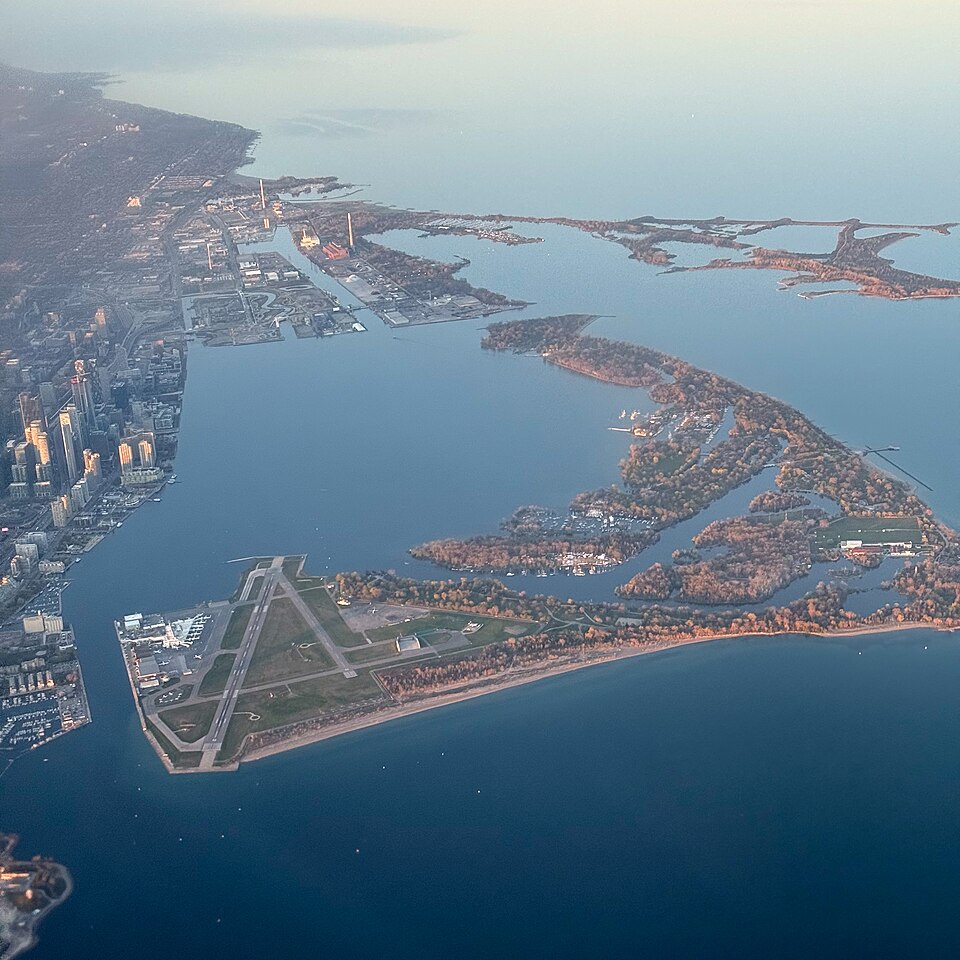
A chain of low-lying islands in the bay, ten minutes by ferry from downtown, car-free, with parks, beaches and a few hundred residents in wooden cottages. Centre Island has an amusement park for kids, Ward's Island has quiet lanes, and Hanlan's Point has the best beach. This is also the best vantage point for the city skyline with the CN Tower.
Tip: The ferry from Jack Layton Ferry Terminal costs around nine dollars round trip, and long lines form for Centre Island on weekends — boats to Ward's Island leave from the same terminal and tend to be half-empty. Bikes can be rented on the islands, and the whole loop takes about an hour. Hanlan's Point beach is partly clothing-optional.
Admission:
ferry around 9 CAD round trip
Time needed:
half day
St. Lawrence Market
Old Town
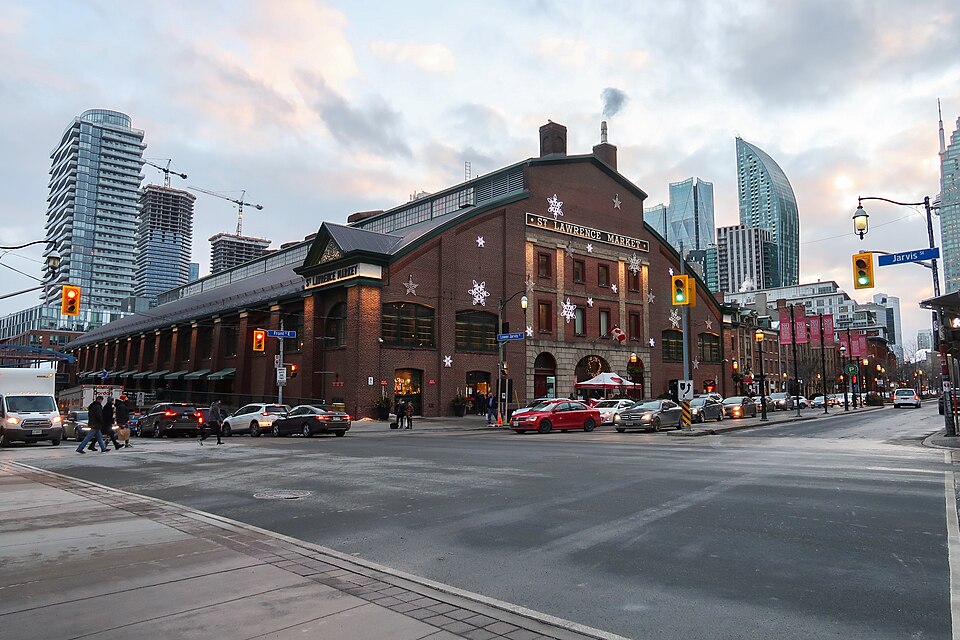
A covered market hall from 1845 built of brick, once home to the city hall. Downstairs are cheesemongers, fishmongers and butchers; upstairs, bakeries and food counters. It's the best place to try the Toronto peameal bacon sandwich — lean bacon rolled in cornmeal, tucked into a soft roll.
Tip: The peameal bacon sandwich at Carousel Bakery costs around twelve dollars and is the dish locals come here for; the line runs twenty minutes at lunchtime and none at nine in the morning. The market is closed Sundays and Mondays. On Saturdays from five in the morning, a farmers' market runs in the adjoining North Market.
Admission:
free
Time needed:
1–1.5 h
Distillery District
Old Town / Corktown
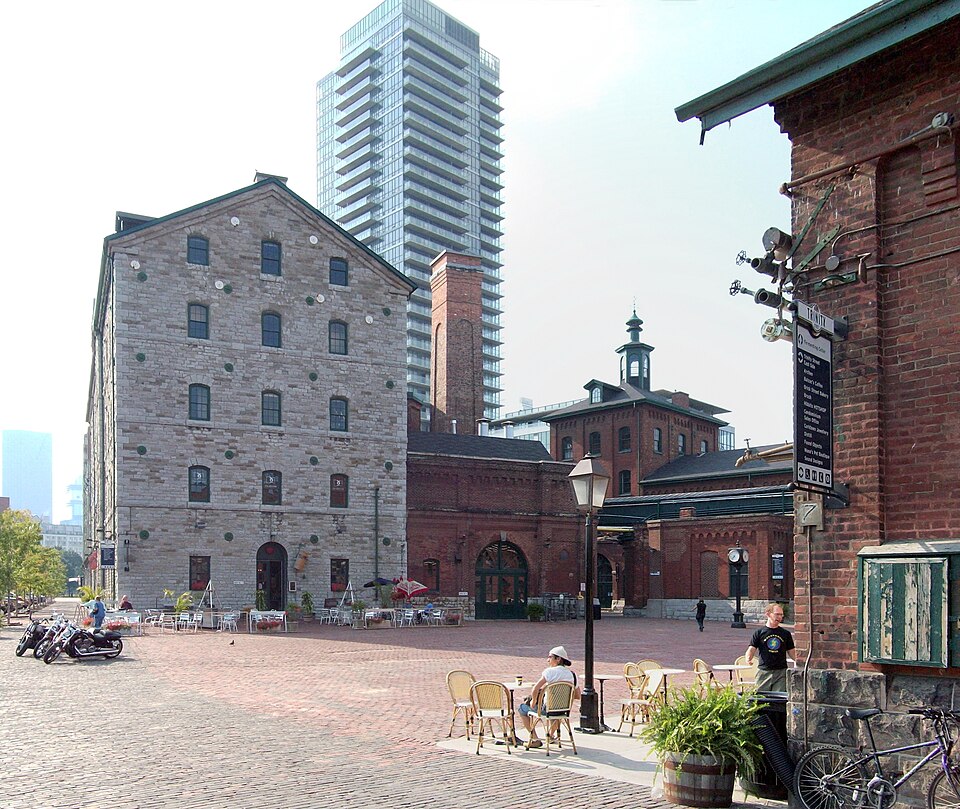
The grounds of the Victorian-era Gooderham & Worts distillery, once the largest in the world, with forty-seven brick buildings and cobblestone lanes closed to cars. Today it houses galleries, breweries, cafés and design shops. It's Toronto's most photogenic corner and hosts a Christmas market in winter.
Tip: It's quiet by day and fills with bar crowds in the evening. The Christmas market from mid-November charges admission on weekends, and tickets should be bought online in advance; weekdays are free. Streetcar 504 King runs here from downtown, but it's also a fifteen-minute walk from St. Lawrence Market.
Admission:
free
Time needed:
1–2 h
Royal Ontario Museum
Yorkville / Queen's Park
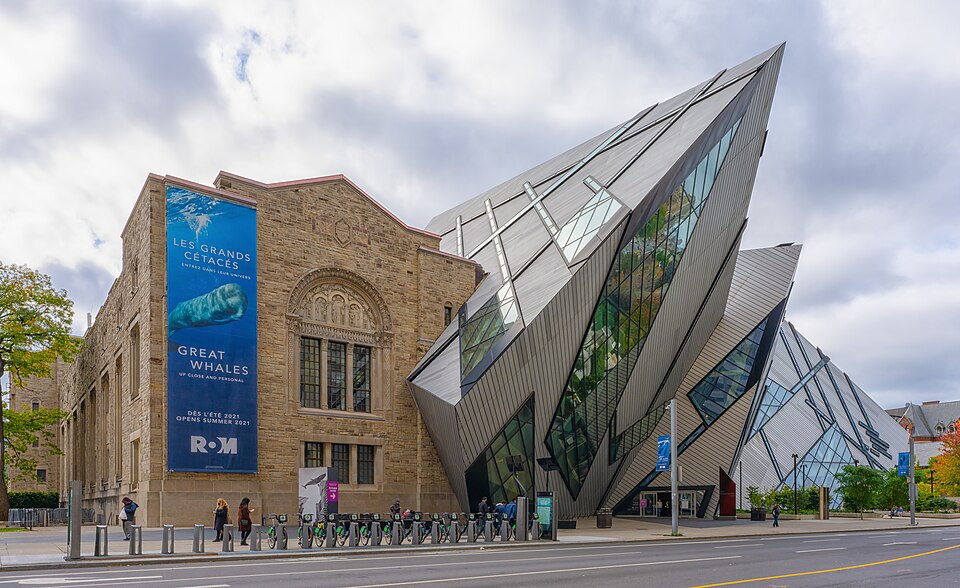
Canada's largest museum, holding six million objects from dinosaurs to Chinese temple paintings. In 2007, the 1914 original building was pierced by Daniel Libeskind's angular aluminum-and-glass crystal, which remains controversial to this day. The strongest sections are the dinosaur halls, the First Peoples gallery and the Chinese collection.
Tip: A full day isn't enough to see the whole museum; pick two or three collections and see the dinosaurs early, since school groups arrive in the afternoon. Across the street is the Bata Shoe Museum, founded by the wife of Tomáš Baťa's son — an interesting stop for a Czech visitor, with a collection of thirteen thousand shoes.
Admission:
around 26 CAD
Time needed:
3 h
Art Gallery of Ontario
Grange Park / Chinatown
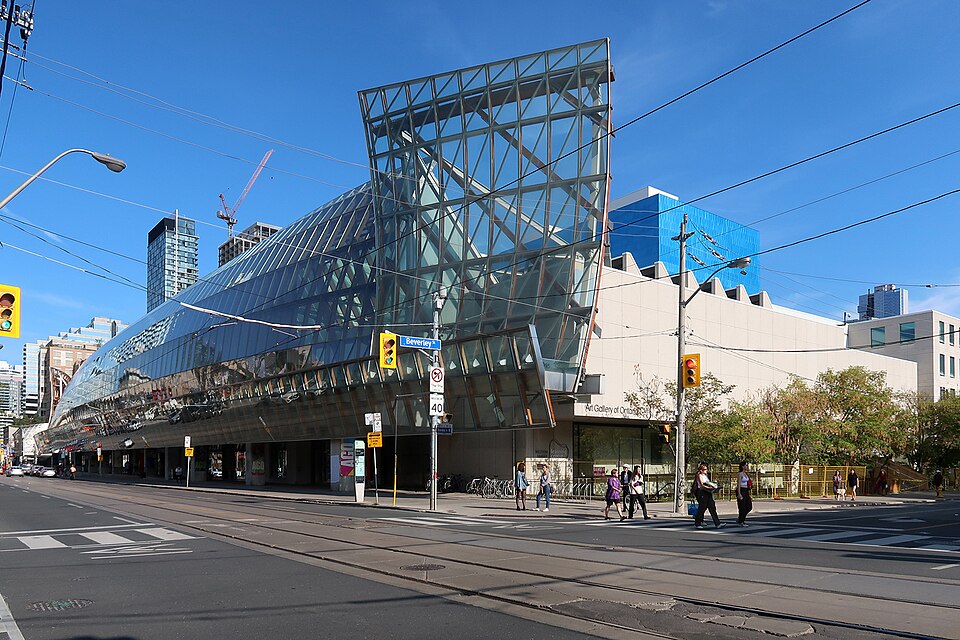
One of North America's largest galleries, renovated in 2008 by Toronto-born architect Frank Gehry — the glass-and-timber facade on Dundas Street and the spiral staircase jutting from the rear are his signature touches. Inside is the finest collection of Canadian Group of Seven paintings and a large Henry Moore collection.
Tip: On Wednesday evenings from six to nine, entry to the permanent collection is free — just reserve a time slot online. Visitors under twenty-five get a free annual membership. The spiral staircase up into the modern wing is a reason to visit on its own.
Admission:
around 30 CAD, free Wednesday evenings
Time needed:
2–3 h
Kensington Market
Kensington / Chinatown
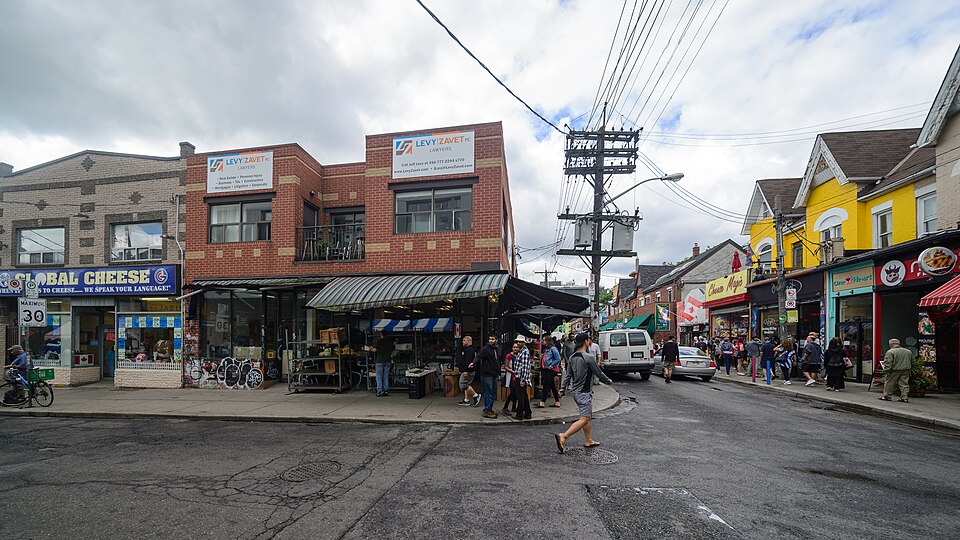
A bohemian neighborhood of narrow streets lined with old Victorian houses painted in bright colors, mixing thrift shops, cheesemongers, Latin American eateries and cafés. It began as a Jewish market and was gradually settled by Portuguese, Caribbean and Chinese communities. It's the least polished and liveliest part of downtown.
Tip: On the last Sunday of the month from May to October, Pedestrian Sundays close the street to cars and fill it with music and stalls. The best empanadas come from the Chilean eateries on Augusta Avenue. From Kensington, it's just one street over to Chinatown on Spadina for cheap dim sum.
Admission:
free
Time needed:
1.5–2 h
Casa Loma
The Annex / Midtown
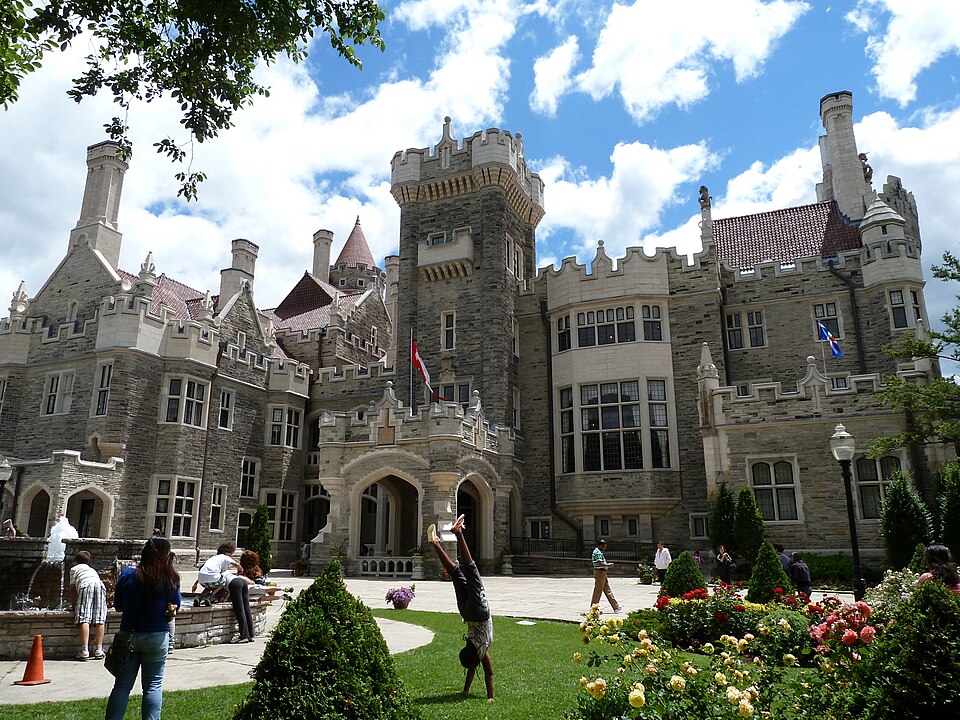
A Gothic Revival castle with ninety-eight rooms, towers and secret passages, built between 1911 and 1914 by financier Sir Henry Pellatt, who lost it to debt within a decade. Inside are period salons, a stable with mahogany stalls and an underground tunnel to it. The towers offer views over downtown.
Tip: From Dupont subway station, skip the road and climb the Baldwin Steps instead, a hundred ten steps with a view of the skyline. Reaching the towers requires narrow spiral stairs, which older visitors may find difficult. The gardens are only open from May to October.
Admission:
around 40 CAD
Time needed:
2 h
Hockey Hall of Fame
Financial District
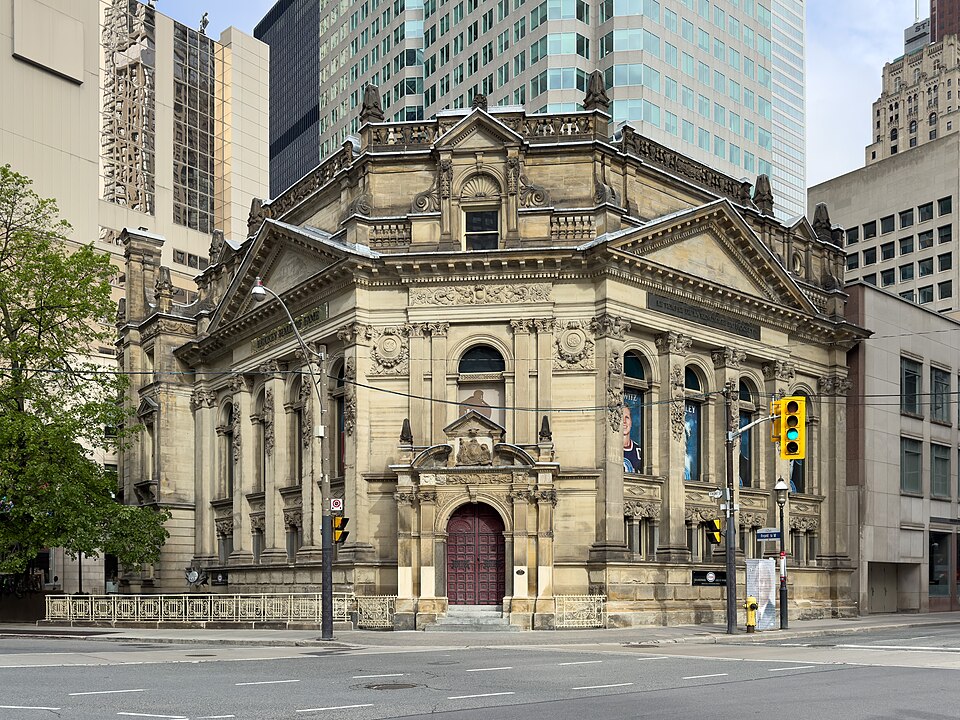
The hall of fame of ice hockey, housed in a former 1885 bank building on the corner of Yonge and Front Street. The prize exhibit is the Stanley Cup itself, displayed in the old bank vault, alongside jerseys, helmets and gear belonging to legends of the game. An interactive zone lets visitors take shots against a virtual goalie.
Tip: The cup on display is the genuine Stanley Cup — except on the days it travels with the winning team over summer, when a sign on the case explains its absence. To see hockey live, Maple Leafs tickets at Scotiabank Arena are expensive and sell out; games by the farm-team Marlies are cheaper.
Areas and districts, matched to the kind of trip you are taking
Downtown and the Entertainment District
Best for: first-time visitors and hotels
The financial district's skyscrapers, the CN Tower, the hockey arena, King Street's theaters and Union Station, where the airport train arrives. Most hotels are here, and everything is walkable; thirty kilometers of underground PATH tunnels lined with shops replace the street in winter. It's busy around King West in the evening, but otherwise the financial core empties out after six.
Old Town and St. Lawrence
Best for: food and a quieter stay
The oldest part of the city, with nineteenth-century brick buildings, St. Lawrence Market, St. James Cathedral and the Flatiron Building familiar from postcards. It's a short walk from here to the Distillery District and the island ferries. Hotels are smaller and somewhat cheaper than around the CN Tower.
Queen West, Kensington and Chinatown
Best for: bars, shopping and cheap eats
Queen Street West is the best shopping street for independent shops and galleries, giving way further west to the bars and clubs of West Queen West. To the north lie Kensington Market and the Chinatown along Spadina, with the cheapest food downtown. Streetcars 501 Queen and 510 Spadina run all night.
Yorkville
Best for: luxury and museums
Once a 1960s hippie neighborhood, now Toronto's most expensive address, with designer boutiques, galleries and luxury hotels. It sits right next to the Royal Ontario Museum and the university campus. During the TIFF film festival in September, celebrities fill the area and hotel prices spike.
There's no regular direct flight from Prague to Toronto. The fastest option is a connection in Frankfurt, Munich or Zurich with Air Canada or Lufthansa, or via Warsaw with LOT; the transatlantic leg alone takes eight and a half to nine hours, and the whole trip with a connection around fourteen. The main airport, Pearson, lies twenty-seven kilometers northwest of downtown, and the fastest way in is the UP Express train to Union Station in twenty-five minutes. Taxis and rideshares take forty minutes to an hour and a half depending on traffic — Highway 427 and the Gardiner Expressway are jammed at rush hour. Smaller Porter aircraft also fly into Billy Bishop Airport, on an island right in front of downtown and linked by a pedestrian tunnel; from there you can fly to Montreal, Ottawa or US cities. Before departure, you need an electronic eTA authorization.
Toronto Pearson (YYZ) · 27 km
UP Express train to Union Station· 25 min· 12.35 CAD
TTC bus 900 + subway line 2· 60–75 min· 3.30 CAD
Taxi or Uber· 35–90 min· 60 CAD
Billy Bishop Toronto City (YTZ) · 3 km
Pedestrian tunnel and shuttle bus to Union· 15 min· free
Taxi· 10 min· 15 CAD
Around town
Downtown Toronto is flat and laid out on a grid, so main sights are walkable, and in winter the underground PATH tunnels take over. For longer distances, the TTC network serves the city: two main subway lines shaped like a U and a cross, and, above all, streetcars running along Queen, King, Spadina and College, which are often more useful for visitors than the subway. A ticket costs 3.30 dollars and covers two hours with transfers in any direction; payment is by tapping a contactless card or phone on the reader, since paper tickets no longer exist. Don't bother with a car downtown — parking runs twenty-five to forty dollars a day and streets are congested. A car does come in handy, though, for the trip to Niagara.
TTC subway, streetcars and busesOne fare covers two hours with unlimited transfers. Pay with a contactless bank card or phone at the reader; the same card must be tapped at each transfer, or a new fare is charged. · 3.30 CAD
PRESTO day passUnlimited rides for the whole day; on weekends it covers two adults at once. Worth it from the fourth ride onward. Buy a PRESTO card at a subway station vending machine. · 13.50 CAD
Bike Share TorontoOver six hundred stations downtown, with a day pass covering unlimited thirty-minute rides. The Martin Goodman Trail runs continuously along the lake, the prettiest cycling route in the city. · 15 CAD / day
GO Transit commuter trainsGreen double-decker trains from Union Station to surrounding towns, and on summer weekends all the way to Niagara Falls. Buy a ticket through the app or by tapping a card. · from 5 CAD
Uber and taxiUber and Lyft are cheaper than taxis and available everywhere. Expect fifteen to twenty-five dollars for trips under ten kilometers downtown. · 15 CAD
Useful apps: TTC (Transit), Uber, PRESTO, Google Maps
When to go
The most pleasant months are late May, June, and September through mid-October: temperatures around twenty degrees, patios open, and the islands running full service. July and August are hot and humid, over thirty degrees with occasional thunderstorms, but the city comes alive with festivals and beaches. In early September, the TIFF film festival sends downtown hotel prices up by half. From mid-September to mid-October, the maples turn color and nature day trips are at their best. Winter runs from December to March, with temperatures dropping to minus ten and a biting wind off the lake; the city keeps running regardless, and the underground PATH network helps. Niagara is visited year-round; in winter, the falls are partly frozen.
Best time
June and September through mid-October
What to avoid
January and February for the cold, early September for TIFF price surges
Month
Jan
Feb
Mar
Apr
May
Jun
Jul
Aug
Sep
Oct
Nov
Dec
Day
-1°
0°
5°
12°
19°
24°
27°
26°
22°
14°
8°
2°
Night
-8°
-7°
-3°
3°
9°
14°
17°
17°
13°
6°
1°
-4°
Rainy days
15
12
12
12
12
11
10
10
10
11
12
14
Food & drink
Toronto cooks the most diverse food in Canada, and the best meals aren't found downtown among the skyscrapers but in the ethnic neighborhoods: dim sum on Spadina, Greek souvlaki on Danforth Avenue, Portuguese bakeries in Little Portugal, Caribbean roti in Little Jamaica, and Korean barbecue in Koreatown on Bloor Street. A local specialty is the peameal bacon sandwich from St. Lawrence Market. Food is expensive — dinner at a restaurant, with tip and thirteen percent tax, runs fifty to seventy dollars per person — and the best savings come from food courts under the PATH tunnels and eateries in Chinatown. Weekend brunch means lines and a reservation is a must. Alcohol is bought at LCBO shops and now increasingly at supermarkets, and beer from Toronto's craft breweries is excellent.
What to try
Peameal bacon sandwich
Lean pork loin cured in brine and rolled in cornmeal, fried and served on a soft roll with mustard. A Toronto invention from the late nineteenth century, when the bacon was rolled in ground yellow peas — hence 'peameal.'
Poutine
Fries smothered in brown gravy and topped with fresh cheese curds that squeak against your teeth. It originated in rural Quebec in the 1950s; good poutine uses curds that only half-melt in the hot gravy. Mostly eaten after midnight.
Butter tart
A small pastry shell filled with butter, sugar and eggs, gooey in the center. Canadians still argue over whether raisins or pecans belong in it. The best ones come from rural Ontario bakeries; the café-chain versions tend to be too sweet.
Jamaican patty and roti
The Caribbean community brought spicy beef patties and curry-goat-filled roti flatbread to Toronto. The best are found in Little Jamaica on Eglinton Avenue and in Parkdale; they cost a few dollars and can fill you up for half a day.
Dim sum
Cantonese dumplings and steamed buns ordered plate by plate with tea, typically on weekend mornings. Toronto's dim sum ranks among the best outside Asia, and a plate costs just a few dollars on Spadina or in Markham to the north.
Maple syrup
Canada produces three-quarters of the world's maple syrup, most of it in Quebec. Grades differ by color — light 'golden' is delicate, dark 'very dark' is bold and best for baking. Buy it in a can or jar from a farmer; the maple-leaf-shaped bottle at the airport costs three times as much.
Caesar
Canada's national cocktail: vodka, Clamato juice (tomato and clam), Worcestershire sauce and Tabasco, served with a celery-salt rim and a celery stalk. Invented by a bartender in Calgary in 1969, it's almost unknown outside Canada.
What it costs
Coffee at a café
4–6 CAD
Beer at a pub (pint)
9–12 CAD
Peameal bacon sandwich
11–13 CAD
Restaurant dinner
50–70 CAD per person
TTC ticket
3.30 CAD
CN Tower
from 45 CAD
Ferry to the islands
around 9 CAD
Night at a 3-star hotel for two
220–350 CAD
Indicative prices that change over time — treat them as a guide, not a price list.
Practical information
SocketsAtwo flat pins (US/JP)Btwo flat pins plus ground (US)
Voltage120V / 60Hz
Tap waterTap water is drinkable — Tap water is safe and good throughout Canada, and restaurants serve it free with ice — just ask for 'tap water.' Bottled water is an unnecessary expense: a bottle costs two to three dollars, five at the airport. Refill stations are found at airports, in parks and in museums, so it's worth carrying your own bottle. In national parks, stream water shouldn't be drunk without boiling, even if it looks crystal clear, because of the giardia parasite.
TippingIn Canada, tipping is an obligation, not a bonus: fifteen to twenty percent at a table-service restaurant, a dollar or two per drink at a bar, ten to fifteen percent for taxi and rideshare drivers, and three to five dollars per night for housekeeping. Payment terminals offer preset percentage buttons — some calculate them on the pre-tax amount, so doing the math yourself is sometimes cheaper. Tax is added at checkout on top of listed menu and store prices, five to fifteen percent depending on the province, so the final total is always higher than the price tag. Ontario's HST is thirteen percent.
Driving on theright
SafetyCanadian cities rank among the safest in the world, and walking around tourist neighborhoods at night is fine. The real risks are different: car and bike theft, pickpockets in crowds, and in some neighborhoods a visible homelessness and drug crisis, which is unpleasant but generally poses no threat to tourists. In winter, the biggest hazard is ice and frost — shoes with non-slip soles matter more than anything else. Healthcare is very expensive for foreigners, with a single night in hospital costing thousands of dollars, so travel insurance with a high coverage limit is essential. The emergency number is 911.
Opening hoursShops are open roughly from ten until nine in the evening, shorter hours on Sundays; supermarkets often stay open until eleven, and Shoppers Drug Mart pharmacies are sometimes open around the clock. Restaurants serve dinner from five, and kitchens in smaller towns close around ten. Alcohol is sold at government-run LCBO and SAQ shops in Ontario and Quebec, or at supermarkets, and at private liquor stores in Alberta; drinking in public is not allowed. Museums are typically closed on Mondays and often have one free or discounted evening a week. Most shops close on public holidays such as Canada Day (July 1) and Thanksgiving in October.
Customs & etiquetteCanadians are polite and say 'sorry' even when you bump into them. Queuing is followed strictly, whether at a bus stop or ordering coffee. Confusing Canadians with Americans is the most common faux pas, and in Quebec, every conversation should open with 'bonjour' — switching to English afterward is fine, but starting in English without a greeting comes across as rude. Indigenous peoples are referred to as First Nations, Inuit and Métis, and the word 'Indian' is avoided. Smoking, including marijuana, is banned in restaurants, on patios and near entrances.
A few local wordsHello — Hi / Good morningThank you — Thank youExcuse me — Sorry / Excuse meThe bill, please — Can I get the bill, please?How much does it cost with tax? — How much is it with tax?Tap water, please — Tap water, please
How to plan your days
1 day
A day in Toronto
1Morning at St. Lawrence Market for a peameal bacon sandwich.
2Walk to the Distillery District.
3Afternoon at the CN Tower and a stroll along Harbourfront.
4Ferry to Ward's Island for sunset views of the skyline.
5Dinner in Chinatown or on King West.
2 days
Two days in Toronto
1Day one as above: the market, Distillery District, CN Tower and islands.
2Day two morning: the Royal Ontario Museum and Yorkville.
3Lunch in Kensington Market.
4The Art Gallery of Ontario and a walk down Queen Street West.
5Evening hockey, basketball, or a bar on Ossington Avenue.
3 days
Three days with Niagara
1Two days in the city as above, adding Casa Loma.
2Day three, head to Niagara Falls early by car or bus.
3Take the Niagara City Cruises boat right up to the Horseshoe Falls.
4Afternoon at the wineries and the town of Niagara-on-the-Lake.
5Return to Toronto along the lakeshore in the evening.
Ontario's prettiest town, with Georgian houses, the Shaw Festival theater festival, and dozens of wineries nearby. The local specialty is icewine, made from grapes harvested frozen at minus eight degrees — a bottle costs fifty dollars and up, with tastings at wineries running five to fifteen. It's fifteen minutes from the falls, so both fit into one day; the wineries can also be reached by bike along a flat trail beside the Niagara River.
Algonquin Provincial Park
250 km · 3 h by car
Canada's oldest provincial park, with two and a half thousand lakes, forests and moose, most often spotted in May and June along Highway 60. In a single day, you can drive through the park, walk one of the short trails such as the Lookout Trail, and rent a canoe for an hour on Canoe Lake. Late September and early October bring the most color and the biggest crowds; without a car, the only option is an organized tour.
Frequently asked questions
How many days are enough for Toronto?+
Two days are enough for the city itself: St. Lawrence Market, the CN Tower, the islands, the ROM and the Kensington and Queen West neighborhoods. A third day is needed for Niagara Falls. Anyone adding Algonquin or Montreal should plan four to five days; Toronto is typically the first stop on a longer trip across Canada.
Do I need a visa for Canada?+
Travelers don't need a visa, but before departure they must have an electronic authorization called an eTA, costing seven Canadian dollars, processed online through the official Canadian government website and usually approved within minutes. Without it, the airline won't let you board. Avoid third-party websites that charge ten times as much for the same thing.
How do I get from Toronto to Niagara Falls?+
The most comfortable option is a rental car — the drive takes an hour and a half, and it pairs well with Niagara-on-the-Lake. Without a car, FlixBus and Megabus run from the bus terminal by Union Station in about two hours, and a direct GO train runs on summer weekends. A guided day tour costs a hundred to a hundred fifty dollars and includes a boat trip under the falls.
Is Toronto expensive?+
Yes, especially accommodation, which costs two hundred to three hundred fifty dollars a night for a three-star hotel downtown. A thirteen percent tax is added to listed prices, plus a fifteen to twenty percent tip at restaurants, so the final bill runs about a third higher than the menu price. You'll save by eating at Chinatown eateries and market food stalls.
Is Toronto safe?+
It's among the safest major cities in North America, and downtown is safe even at night. Around Dundas and Sherbourne, and on parts of Yonge Street, you'll see homeless people and people under the influence, which is unpleasant but generally doesn't threaten tourists. Ordinary caution is enough: don't leave anything in a parked car and keep an eye on your phone in crowds.
When's the best time to visit?+
June and September through mid-October — warm but not muggy, with colorful maples in autumn. Summer is hot and humid, winter freezing with a biting wind off the lake. Unless you're going specifically for the films, avoid the first two weeks of September, when TIFF fills every hotel.
Where's the best place to stay in Toronto?+
For a first visit, Downtown around King Street or Old Town near St. Lawrence Market, from where everything is within walking distance and the island ferries are just around the corner. Cheaper hotels are found near subway stations further from the lake, such as Midtown, fifteen minutes from downtown. Airport hotels only make sense for the night before a flight.
Can you pay by card in Toronto?+
Cards work almost everywhere, including streetcars and market stalls; cash is rarely needed. A contactless card or phone also works as a transit ticket. The Canadian dollar differs from the US dollar — American dollars are accepted in some places, but at an unfavorable rate.
Visa Requirements
Check the latest visa requirements for entering this country. Some nationalities may need to apply for a visa or e-visa before travel.