Turquoise lakes below glaciers, and a mountain town at the heart of Canada's oldest park
Banff
LanguageEnglish
CurrencyCAD
TimezoneGMT-7
Temperature-10-25 °C
Dial Code+1
Population40M
Area9,984,670 km²
SocketsType A / Type B
Tap waterDrinkable
Discover Banff
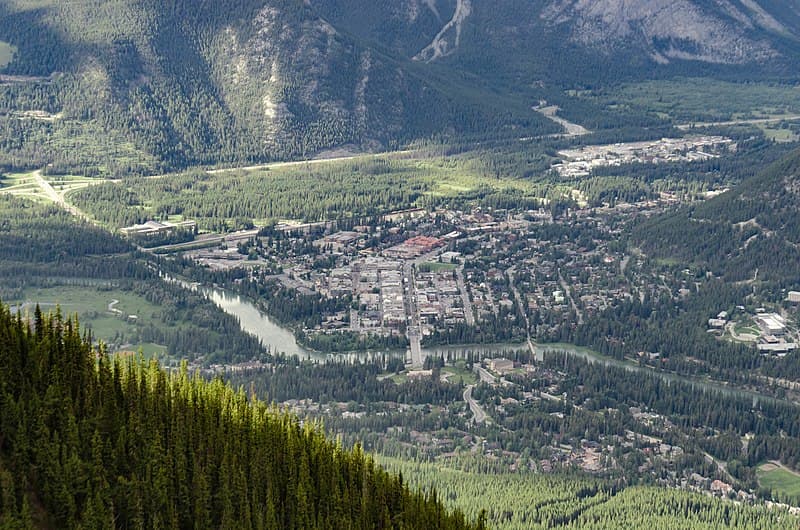
Banff is Canada's oldest national park, established in 1885 after workers building the transcontinental railway discovered hot springs at the foot of Sulphur Mountain. The park sits in the Rocky Mountains of Alberta, a 130 kilometres west of Calgary, and covers more than 6 a half 1,000 square kilometres. Its emblem is its intensely turquoise glacial lakes — Lake Louise, Moraine Lake and Peyto Lake — coloured by fine rock flour from the glaciers that suspends in the water and reflects light. At the heart of the park lies the town of Banff, with hotels, restaurants and shops, and the castle-like Banff Springs Hotel, serving as a base for hikes, the lakes, the gondola and the hot springs. The park is home to bears, elk, bighorn sheep and mountain goats, often seen right beside the road. In winter, Banff is one of Canada's best ski destinations, with 3 resorts. Because of limited parking capacity, a visit to the lakes now needs to be planned ahead.
What to see
The places worth your time in Banff, and what to expect at each
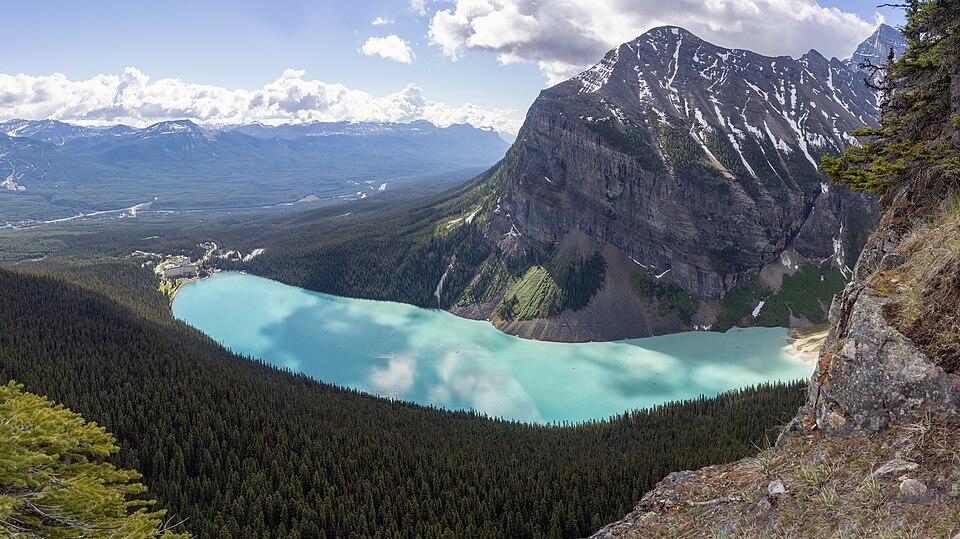
Lake Louise
Lake Louise
A turquoise lake beneath the Victoria Glacier, ringed by 3,000-metre peaks, with the Fairmont Château on its shore. It's the most iconic view in the Canadian Rockies. A flat trail follows the shore to the foot of the glacier, and canoes can be rented in summer.
Tip: The car park fills before 7 in the morning in summer and costs over 20 dollars a day — the Parks Canada or Roam shuttle, booked ahead, is far more convenient. The best hike is to the Lake Agnes Tea House, 3 a half kilometres 400 metres of climbing, for tea and cake above the lake. Canoe rental runs over a 100 dollars an hour.
Admission:
parking or shuttle fee
Time needed:
half a day
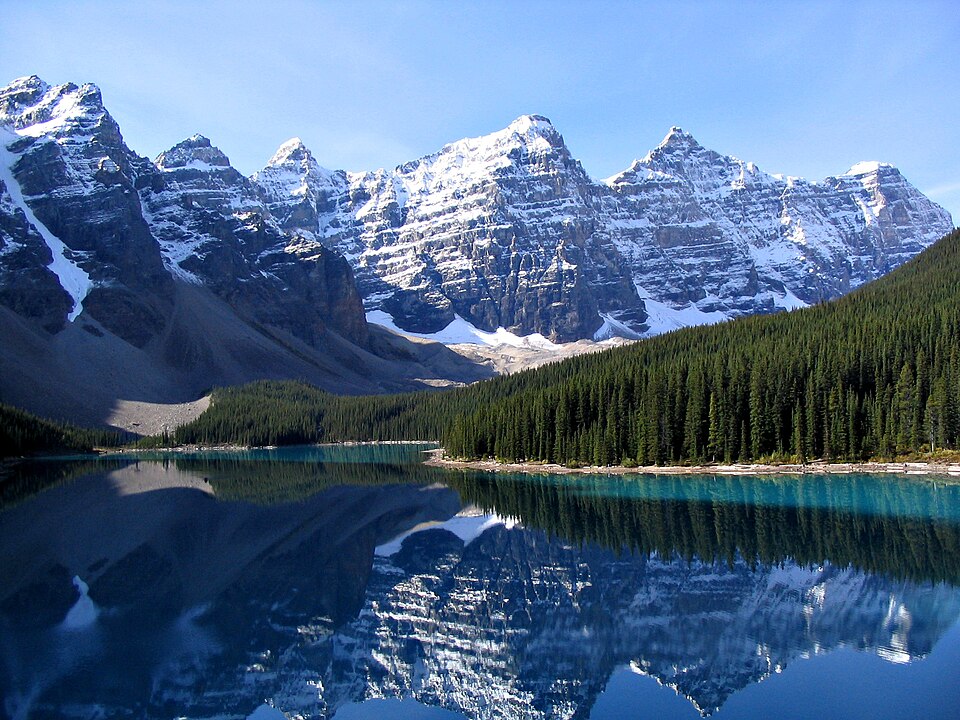
Moraine Lake
Lake Louise
A smaller lake in the Valley of the 10 Peaks, even more intensely turquoise than Lake Louise. Above the lake is the Rockpile, a short climb to the famous view once featured on the Canadian 20-dollar bill. The lake doesn't thaw until June.
Tip: Since 2023 the road to the lake has been closed to private cars; access is by Parks Canada shuttle, Roam bus, or private shuttle. The best option is the first sunrise departure, which sells out as soon as reservations open. In autumn, during the second half of September, the larches above the lake in Larch Valley turn gold.
Admission:
shuttle around CAD 8–10
Time needed:
half a day
Sulphur Mountain Gondola
Banff, 4 km from the centre
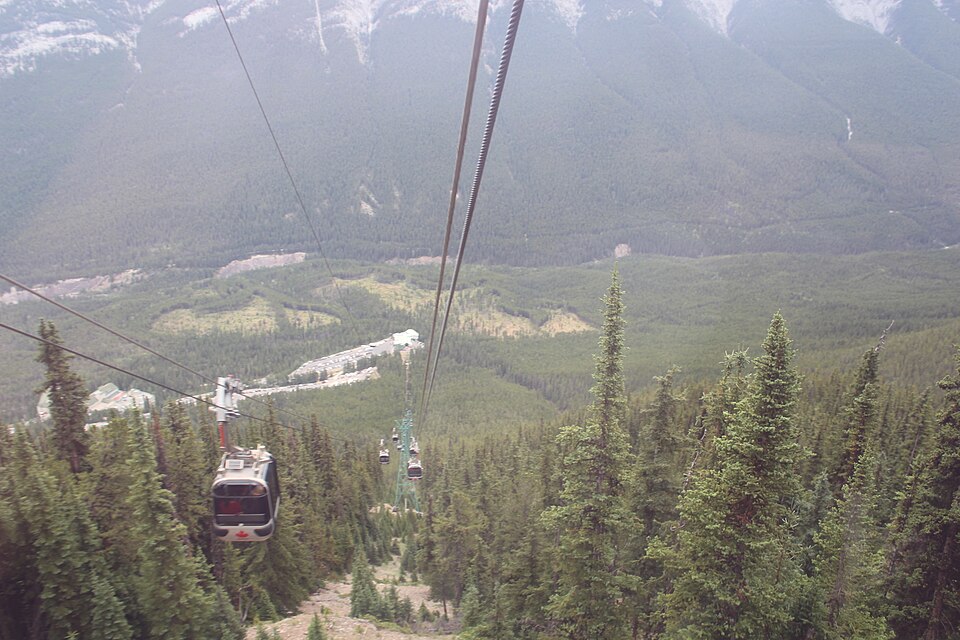
The Banff Gondola carries you to the summit of Sulphur Mountain, at 2,281 metres, in 8 minutes. At the top is an observation building with a restaurant and a boardwalk along the ridge to the old weather station on Sanson's Peak, with views over 6 mountain ranges and the town below.
Tip: The cheapest option is going up in the last hours of operation in the evening, when discounts and sunset often coincide. To save entirely, walk up the switchback trail in about 2 hours and ride down for free. It's about 10 degrees cooler at the top than in town, so bring a jacket.
Admission:
CAD 70–90
Time needed:
2 h
Johnston Canyon
Bow Valley Parkway, 25 km from Banff
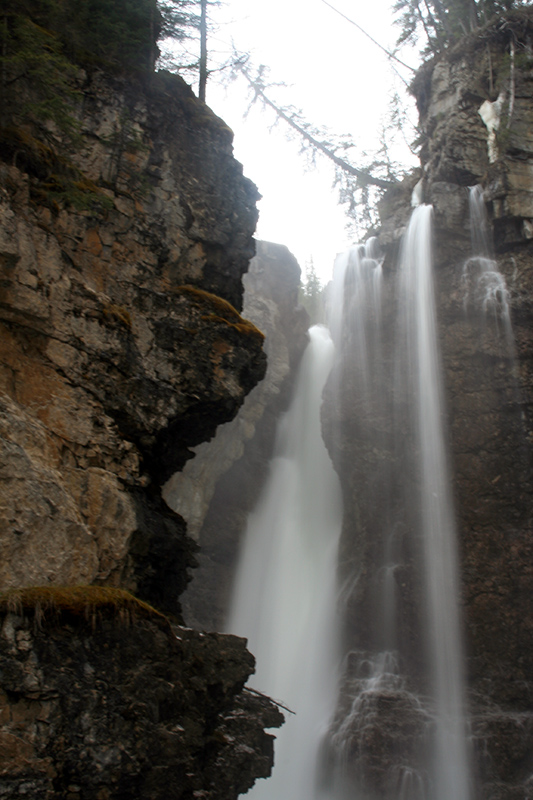
A narrow limestone canyon with waterfalls, where a trail follows steel catwalks bolted to the cliff face right above the water. It's a kilometre to Lower Falls, 2 a half to Upper Falls, and a further 5 a half to the Ink Pots meadow with its colourful springs. In winter, hikers walk the frozen canyon between ice-covered waterfalls.
Tip: The car park is small and full after 9 in summer — arrive before 8 or after 5. At Lower Falls you can climb through a short tunnel to a viewpoint right opposite the waterfall. In winter the walkways are slippery, so ice cleats are essential and can be rented in town. Bears are often spotted along the Bow Valley Parkway on the way.
Admission:
free
Time needed:
2–4 h
Peyto Lake
Icefields Parkway
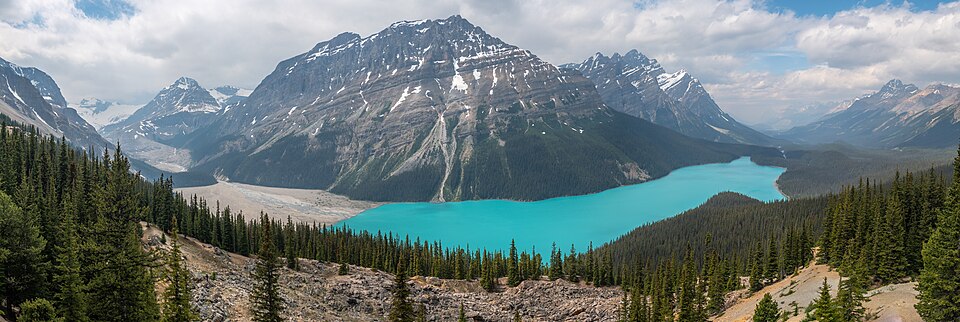
A wolf-head-shaped lake on the Icefields Parkway, the most intensely turquoise of any lake in the park. It's viewed from above at a lookout on Bow Summit, the road's highest point, overlooking the Mistaya Valley. The lake is named after mountain guide Bill Peyto.
Tip: It's a 10-minute climb from the car park on a paved path, but the main platform gets crowded with tour buses at midday. Continue along the trail to the upper viewpoint, which is quieter and has a better angle. The lake is at its most vivid from mid-July to August, when the glaciers are melting. It's 40 minutes from Lake Louise.
Admission:
free
Time needed:
1 h
Lake Minnewanka
5 km from Banff
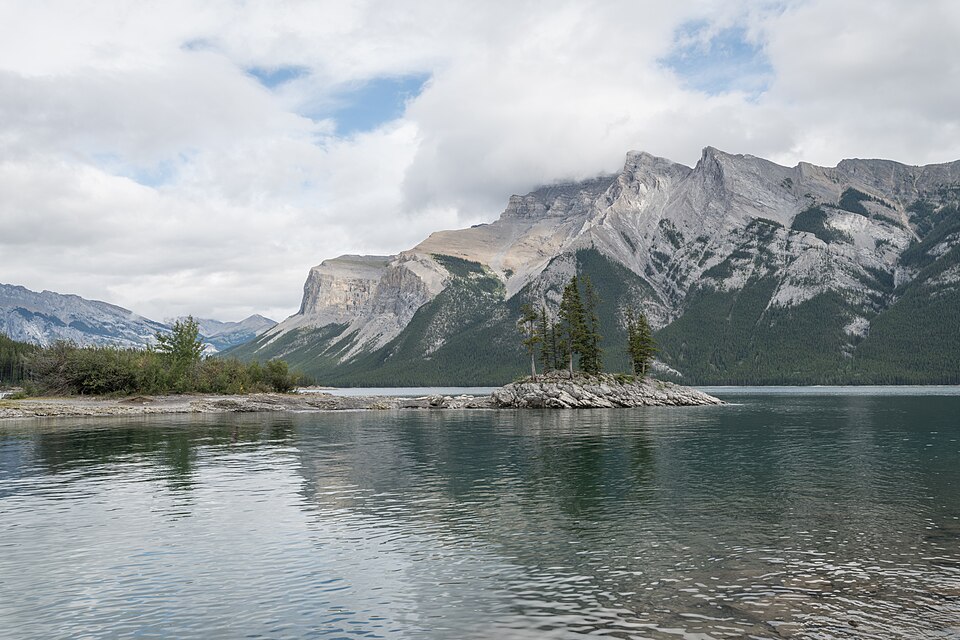
The park's largest lake, 28 kilometres long, 5 kilometres from Banff. A 1-hour boat cruise runs to Devil's Gap, a narrows between the mountains. Beneath the surface lies the drowned village of Minnewanka Landing, submerged before the dam was built and now a dive site. Bighorn sheep often graze along the loop around the lake.
Tip: The 16-kilometre Minnewanka Loop runs by car or bike around Lake Minnewanka and Two Jack Lake, with ideal sunset spots — Two Jack Lake with Mount Rundle behind it is one of the park's best photos. From July to September, the lakeside trail is sometimes closed for bears feeding on berries.
Admission:
cruise around CAD 70
Time needed:
2 h
Cave and Basin
Banff
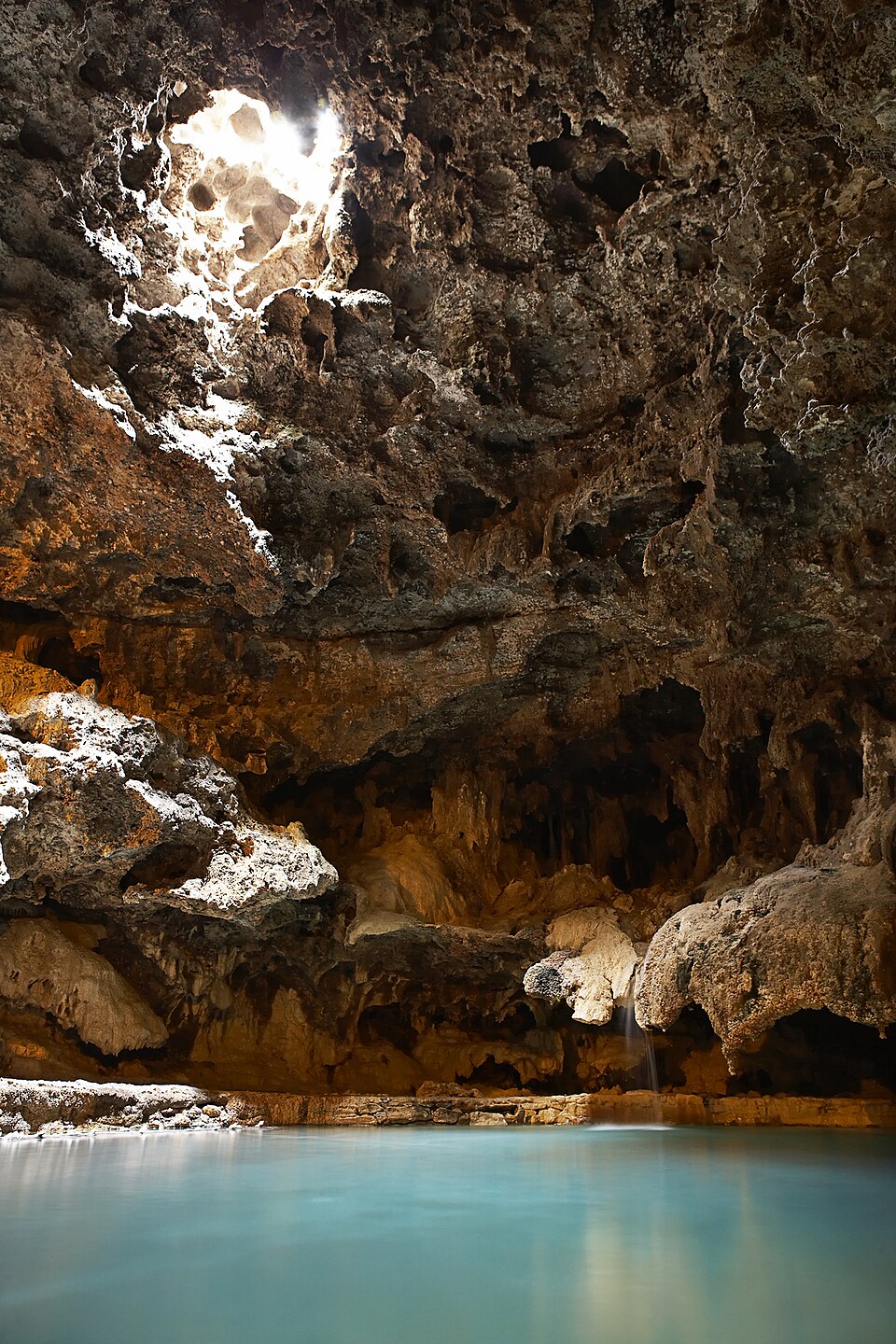
A cave with a hot spring that led to the founding of Canada's first national park in 1885 — 3 railway workers wanted to build a bathhouse here, and the government protected the site instead. Today it houses a museum on the history of Canada's parks and short boardwalks around the springs, home to a tiny endemic snail found nowhere else on Earth.
Tip: The museum is small, but the cave with its turquoise pool inside is worth seeing. Behind the building, the Marsh Loop boardwalk crosses a wetland where birds can be spotted, along with rising steam over the warm water in winter. It's a 25-minute walk from central Banff along the river, or 5 minutes around.
Admission:
around CAD 9
Time needed:
1 h
Banff Upper Hot Springs
Banff, near Sulphur Mountain
An outdoor thermal pool at around 39 degrees on the slopes of Sulphur Mountain, with mountain views. Parks Canada has run the bathhouse since 1932, and soaking in the hot water during a snowfall is one of Banff's most memorable winter experiences. Swimsuits and towels can be rented.
Tip: It's busiest in the afternoon after skiing and on weekends; the quietest times are morning and late evening before closing. The water contains minerals and has a faint smell of sulphur. Roam bus route 1 runs from the centre. Avoid alcohol after bathing, as the hot water at altitude can make you light-headed.
Admission:
around CAD 17
Time needed:
1–2 h
Banff Springs Hotel
Banff
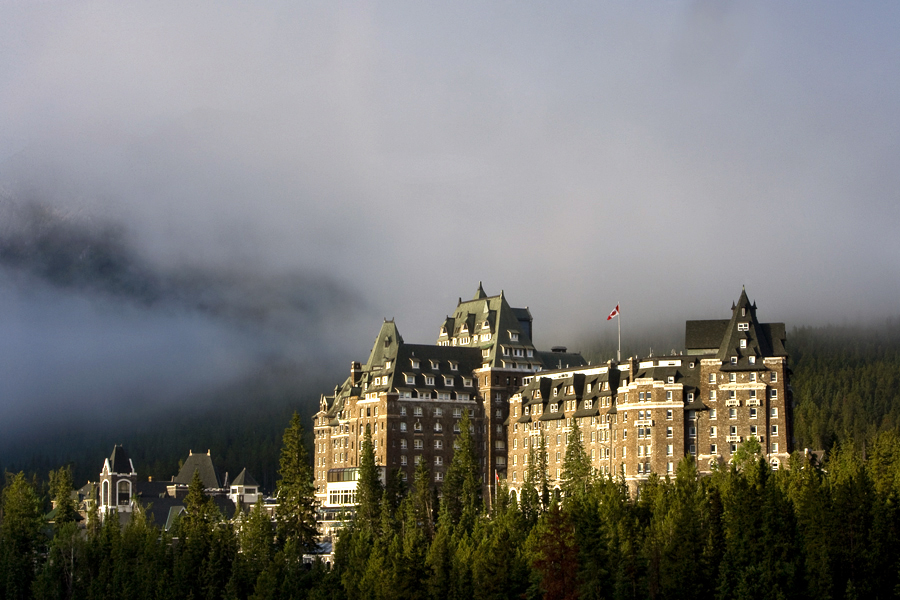
A Scottish-baronial-style castle hotel built by the Canadian Pacific railway company in 1888, known as the Castle in the Rockies. It stands above the confluence of the Bow and Spray rivers and looks like a fairy-tale castle from the Surprise Corner viewpoint. Inside are historic halls and restaurants.
Tip: You don't need to be a guest to look inside — afternoon tea or a drink at the Rundle Lounge, with its valley view, is the cheapest way to experience the atmosphere. The best view of the hotel is from Surprise Corner on Tunnel Mountain Drive. Bow Falls, below the hotel, is a 10-minute walk.
Areas and districts, matched to the kind of trip you are taking
Downtown Banff
Best for: first visit, restaurants
Hotels and guesthouses around Banff Avenue, with everything within walking distance — restaurants, shops, and buses to the lakes and the gondola. Summer prices are among the highest in Canada. Hotels right in the centre sell out months in advance.
Tunnel Mountain
Best for: calm, families
Hotels and campgrounds on a hill above town, 10 minutes by bus from the centre, with mountain views. Quieter, with larger rooms and apartments with kitchenettes. Elk are often seen wandering across the lawns here.
Lake Louise
Best for: lakes, hiking
A small village by the Trans-Canada Highway and hotels by the lake — the Château Lake Louise is one of Canada's most expensive hotels. Staying here means being at the lake first thing in the morning. The village has only a few restaurants and a shop, and evenings are quiet.
Canmore
Best for: budget, sport
A mountain town 20 kilometres outside the park boundary, about a third cheaper than Banff, with a better choice of apartments. No park pass needed here, but it's a longer drive to the lakes. A base for Kananaskis and climbing.
Calgary (YYC) is reached via a connecting flight through major hubs such as London, Frankfurt or Amsterdam; in summer, Air Canada, WestJet and Condor also operate direct flights from Europe. From the airport, Banff is 145 kilometres along the Trans-Canada Highway, an hour and a half by car. The Banff Airporter and Brewster shuttles run directly from the airport to the hotels. From Vancouver, it's a 9-hour drive to Banff, or 2 days with an overnight stop on the Rocky Mountaineer train. An electronic eTA authorisation, costing 7 Canadian dollars, is required to enter Canada.
Calgary International (YYC) · 145 km
Banff Airporter or Brewster shuttle· 2 h· CAD 80
Rental car· 1 h 30 min· CAD 70/day
Taxi· 1 h 30 min· CAD 300
Around town
A rental car gives the most freedom, but parking at Lake Louise, Moraine Lake and Johnston Canyon is a real problem. That's why the park relies on shuttles: Parks Canada runs from the Park and Ride near Lake Louise to both lakes, and departures must be booked ahead at reservation.pc.gc.ca. Local Roam buses run around Banff, to the gondola, the hot springs and Lake Minnewanka, plus express routes to Lake Louise and Canmore. No bus runs along the Icefields Parkway, only organised tours. Around town, walking or cycling is easiest.
Roam busAround Banff, to Canmore, and an express route to Lake Louise. · CAD 2
Parks Canada shuttleFrom the Park and Ride to Lake Louise and Moraine Lake, reservation required. · CAD 8
Rental carFor the Icefields Parkway and Yoho; parking fees at the lakes are extra. · CAD 70/day
BicycleAround town and for the Minnewanka Loop. · CAD 40/day
Useful apps: Parks Canada App, Roam Transit, 511 Alberta, AllTrails
When to go
The main season runs from mid-June to September: the lakes thawed and turquoise, trails clear of snow, daytime temperatures around 20 nights around 5. Moraine Lake doesn't thaw until early June, and the lakes are at their most vivid in July and August. The second half of September brings golden larches, fewer crowds and the first snow. From December to April is ski season at Sunshine Village, Lake Louise and Norquay, the lakes are frozen, and skating is possible at Lake Louise. May and November are the shoulder season, with muddy trails and closed services.
Best time
July–September
What to avoid
May and November
Month
Jan
Feb
Mar
Apr
May
Jun
Jul
Aug
Sep
Oct
Nov
Dec
Day
-3°
0°
4°
9°
15°
19°
23°
22°
17°
10°
2°
-3°
Night
-14°
-13°
-9°
-4°
1°
5°
7°
6°
2°
-2°
-8°
-13°
Rainy days
9
8
8
9
12
14
12
11
10
8
9
9
Food & drink
For a mountain town, Banff has surprisingly good food, thanks to visitors from all over the world. Alberta beef is among the best in North America, and steakhouses grill it over charcoal; alongside it you'll find game — elk, bison — and Pacific fish. Prices are high, and dinner for 2 runs a 120 to 200 dollars. Eat cheaply at the chains on Banff Avenue and the IGA supermarket. Canadian classics like poutine and maple-syrup sweets are found everywhere, and Banff has its own brewery, Banff Ave Brewing.
What to try
Alberta beef
Alberta raises more than half of Canada's cattle, and steak made from local beef is the pride of Calgary's steakhouses. Beef here is cheaper than in the rest of the country and portions are generous; steak is ordered medium rare.
Bison and elk
Burgers and steaks made from bison and elk raised on Alberta ranches, leaner and more intensely flavoured than beef. Served at mountain restaurants with a wild berry sauce.
Beaver tail
A fried, flattened pastry shaped like a beaver's tail, topped with cinnamon and sugar, Nutella or maple butter. A Canadian fairground treat, sold in Banff along Banff Avenue.
Poutine
Fries topped with brown gravy and fresh cheese curds that squeak against the teeth when bitten. It originated in rural Quebec in the 1950s; good poutine has curds that only half-melt in the hot gravy. Popular mostly after midnight.
Maple syrup
Canada produces 3-quarters of the world's maple syrup, most of it in Quebec. Grades vary by colour — light "golden" is delicate, dark "very dark" is intense and best for baking. Buy it in a tin or jar from a farmer; the maple-leaf-shaped bottles at the airport cost triple.
Nanaimo bar
A no-bake slice with 3 layers: a coconut-nut base, vanilla custard and chocolate. It comes from Vancouver Island and is sold with coffee in cafés across the country. Very sweet — 1 piece is enough for 2.
Caesar
Canada's national cocktail: vodka, Clamato juice made from tomatoes and clams, Worcestershire sauce and Tabasco, with a celery-salt rim and a celery stalk garnish. Invented by a bartender in Calgary in 1969, and almost unknown outside Canada.
Craft beer
Alberta breweries make beer from local barley; Banff has its own Banff Ave Brewing, and Canmore has Grizzly Paw. Enjoyed on a mountain-view terrace after a hike.
What it costs
Daily park pass per person
around CAD 11
Annual Discovery Pass for a family
around CAD 150
Sulphur Mountain gondola
CAD 70–90
Shuttle to Lake Louise and Moraine Lake
CAD 8–10
Burger at a restaurant
CAD 25–35
Alberta beef steak
CAD 50–80
Beer at a bar
CAD 9–12
Night in a 3* hotel for 2 in summer
CAD 300–500
Indicative prices that change over time — treat them as a guide, not a price list.
Practical information
SocketsAtwo flat pins (US/JP)Btwo flat pins plus ground (US)
Voltage120V / 60Hz
Tap waterTap water is drinkable — Tap water in Canada is safe and good, and restaurants will serve it free with ice — just ask for "tap water". Bottled water is an unnecessary expense, at 2 to 3 dollars a bottle, or 5 at the airport. Refill stations are found at airports, in parks and in museums, so it's worth carrying your own bottle. In the national parks, stream water shouldn't be drunk without boiling because of giardia, even if it looks crystal clear.
TippingTipping in Canada is expected, not optional: 15 to 20 percent at a table-service restaurant, 1–2 dollars per drink at a bar, 10 to 15 percent for taxi and tour drivers, 3 to 5 dollars a night for housekeeping. The card machine offers preset percentage buttons — some calculate them on the total including tax, so working it out yourself is often cheaper. Tax is added at the till on top of menu and shop prices, ranging from 5 to 15 percent depending on the province, so the final amount is always higher than the price tag.
Driving on theright
SafetyBanff is a safe town and crime is rarely an issue. The real risks are wildlife and the mountains. Grizzly and black bears live in the park, so hike in a group, talk loudly and carry bear spray (available in town for around 50 dollars). Elk wander through town and can be aggressive during the autumn rut and when calving in May and June — keep 30 metres away. There's no stopping on the Trans-Canada Highway because of wildlife. Mountain weather changes fast, and it can snow at the passes even in summer. In winter, check avalanche conditions at avalanche.ca and road conditions at 511 Alberta. There's no phone signal or petrol station along a stretch of the Icefields Parkway of over a 100 kilometres.
Opening hoursShops on Banff Avenue are open until 9 or 10 in the evening in summer, restaurants until 11. The Banff Gondola runs year-round from morning to evening, until 9 in summer. The Lake Louise car park fills before 7 in the morning in summer, the road to Moraine Lake is permanently closed to private cars, and only shuttles serve the lake from early June to mid-October. The Icefields Parkway is open year-round, but without services in winter.
Customs & etiquetteCanadians are polite and say "sorry" even when you bump into them. Queuing is strictly observed, at bus stops and coffee counters alike. Mistaking Canadians for Americans is the most common faux pas, and in Quebec every conversation should open with "bonjour" — switching to English afterwards is fine, but starting in English without a greeting comes across as rude. Indigenous peoples are referred to as First Nations, Inuit and Métis, and the word "Indian" isn't used. Smoking, including marijuana, is banned in restaurants, on patios and near entrances.
A few local wordsHello — Hi / Good morningThank you — Thank youExcuse me — Sorry / Excuse meThe bill, please — Can I get the bill, please?How much is it with tax? — How much is it with tax?Tap water, please — Tap water, please
How to plan your days
1 day
Banff in 1 day
1Morning shuttle to Moraine Lake and the climb to the Rockpile.
2Move on to Lake Louise and walk along the shore.
3Lunch at Lake Louise, then Johnston Canyon in the afternoon.
4Sulphur Mountain gondola at sunset.
5Evening at the Upper Hot Springs.
2 days
Banff in 2 days
1Day 1: Moraine Lake at dawn, Lake Louise, and the hike to the Lake Agnes Tea House.
2Evening: dinner in Banff.
3Day 2: Johnston Canyon in the morning, the gondola and Cave and Basin in the afternoon.
4The Minnewanka Loop, with bighorn sheep along the way.
5Sunset at Two Jack Lake.
3 days
Banff and the Icefields Parkway in 3 days
1Day 1: Banff — the gondola, Banff Springs Hotel, Bow Falls and the hot springs.
2Day 2: Moraine Lake, Lake Louise and the Plain of 6 Glaciers.
3Day 3: the Icefields Parkway — Bow Lake, Peyto Lake and Mistaya Falls.
4The Athabasca Glacier at the Columbia Icefield.
5Return to Lake Louise or continue on to Jasper.
Day trips
Icefields Parkway and Columbia Icefield
190 km · 2 h 30 min by car
A 230-kilometre road from Lake Louise to Jasper, one of the most beautiful drives in the world, running past glaciers, waterfalls and lakes. Along the way lie Bow Lake, Peyto Lake and, on the boundary between the parks, the Columbia Icefield with the Athabasca Glacier, reached by giant ice-explorer buses, plus the glass-floored Skywalk over the canyon. There's no phone signal along the route and only 1 petrol station.
Yoho National Park
85 km · 1 h by car
A neighbouring park in British Columbia beyond Kicking Horse Pass, home to Emerald Lake, where canoes can be rented, Takakkaw Falls at over 300 metres, and a natural rock bridge over the river. Less visited than Banff and just as beautiful. Lake O'Hara is reachable only through a bus-access lottery.
Canmore and Kananaskis
25 km · 20 min by car
A mountain town just outside the park boundary with views of the 3 Sisters, cafés and bakeries, all cheaper than in Banff. Beyond it opens Kananaskis Country, with lakes, trails and far fewer people — hikes to Grassi Lakes or around Upper and Lower Kananaskis Lake. Kananaskis requires its own Alberta parks pass.
Frequently asked questions
How do I get to Moraine Lake without a car?+
The road to Moraine Lake has been permanently closed to private cars since 2023. Access is by Parks Canada shuttle from the Park and Ride near Lake Louise, by Roam bus from Banff, or by private shuttle. Parks Canada reservations open in spring and the first morning departures sell out immediately. Some seats are released 2 days ahead.
How much does park entry cost?+
A day pass costs around 11 Canadian dollars per person, or 22 per vehicle with a group. Anyone staying over a week should get the annual Discovery Pass, valid in all of Canada's national parks. It's bought online or at the park gate and must be displayed behind the windscreen.
How many days do I need in Banff?+
At least 3 days: one for Lake Louise and Moraine Lake, one for Banff town with the gondola and hot springs, and one for the Icefields Parkway. 5 to 7 days is ideal if adding Yoho and Jasper. In a single day you can manage only the lakes or only Banff.
When are the lakes turquoise?+
The colour is most intense from mid-July to August, when glacial melt sends the most rock flour into the lakes. In June the lakes have already thawed but are paler. Moraine Lake doesn't thaw until early June, Lake Louise until late May. From November to May the lakes are frozen and snow-covered.
Will I see a bear?+
You'll most likely spot one from the car along the road, especially on the Bow Valley Parkway and the Icefields Parkway in June. Encounters on trails are rare but possible. Hike in a group, talk loudly and carry bear spray. Some trails require groups of 4 or more during berry season.
Is Banff expensive?+
Yes, it's among the most expensive places in Canada. Summer hotels start at 300 dollars a night, and dinner for 2 runs over a 100 dollars. Save by staying in Canmore, buying food from a shop for a picnic by the lakes, and using buses instead of parking. Outside Christmas, winter hotel rates are about half.
What's the skiing like in Banff?+
Excellent — 3 resorts share a single SkiBig3 pass: Sunshine Village has the most snow, Lake Louise has the biggest terrain and the best views, and Norquay, above town, offers night skiing. The season runs from November to May. Frosts below minus 20 in January aren't unusual.
Do I need a visa for Canada?+
Many nationalities don't need a visa, but do need an electronic eTA authorisation for 7 Canadian dollars when flying in. It's processed online through the Canadian government's website, usually within minutes. Watch out for unofficial sites that charge more.
Visa Requirements
Check the latest visa requirements for entering this country. Some nationalities may need to apply for a visa or e-visa before travel.