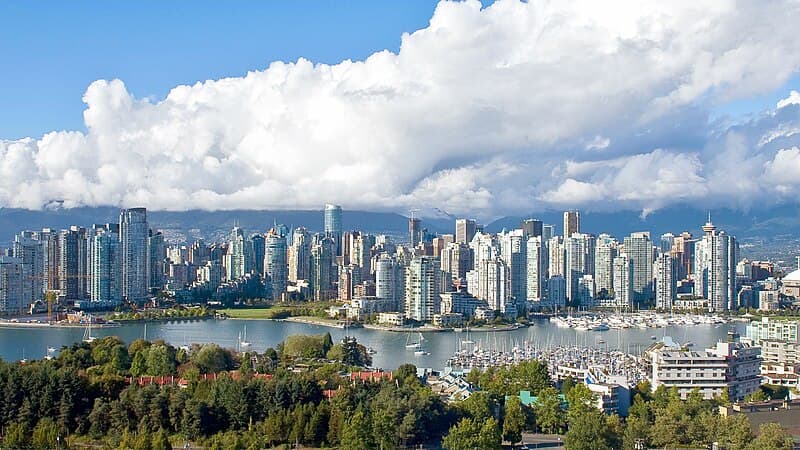
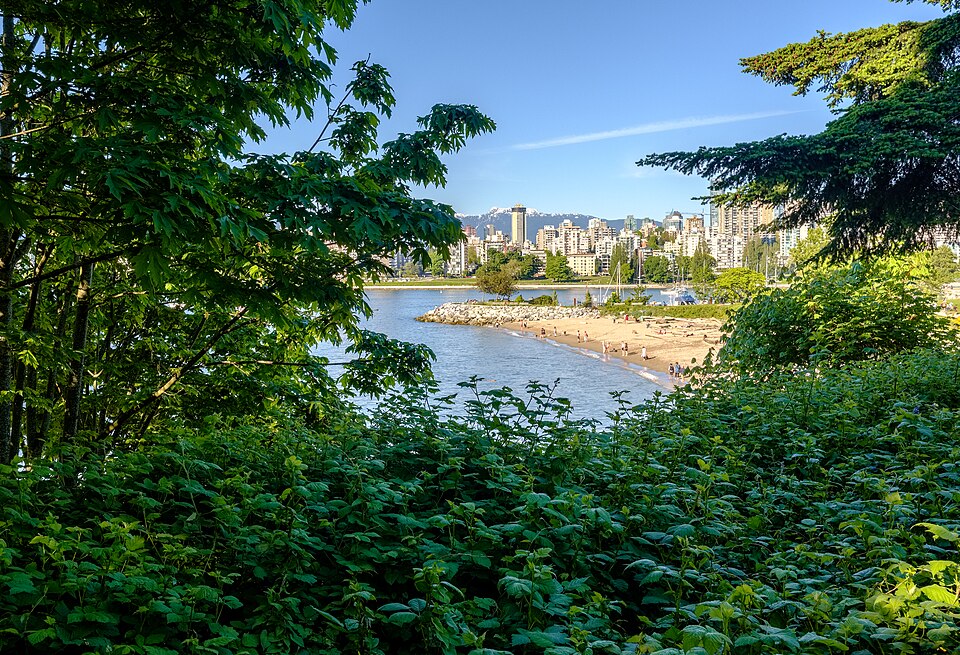
Skyscrapers between the ocean and the mountains: morning at the beach, afternoon on a gondola over the city
Vancouver
LanguageEnglish
CurrencyCAD
TimezoneGMT-8
Temperature-10-25 °C
Dial Code+1
Population40M
Area9,984,670 km²
SocketsType A / Type B
Tap waterDrinkable
Discover Vancouver
Vancouver sits on a narrow peninsula between the Pacific and the Coast Mountains, and from downtown you can see snow-capped peaks reached by a gondola just twenty minutes from the skyscrapers. Few big cities have nature this close at hand: the four-hundred-hectare Stanley Park, with giant cedars right at the end of the main shopping street, beaches within walking distance of hotels, kayaking in the bay, and a forest with suspension bridges in the suburbs. The city is young — founded in 1886 as the terminus of the transcontinental railway — and its greatest historical landmark is the totem poles of the coastal First Nations, on whose territory it stands. Today Vancouver is multicultural and distinctly Asian; nearly half the population has Asian roots, and its Chinese and Japanese cuisine ranks among the best outside Asia. For visitors, Vancouver is also the gateway to British Columbia: the ski resort of Whistler is two hours north, and Vancouver Island with Victoria is an hour and a half by ferry. It's one of Canada's most expensive cities and sees a lot of rain over winter, but from June to September its climate is among the most pleasant of any Canadian city.
What to see
The places worth your time in Vancouver, and what to expect at each
Stanley Park
West End
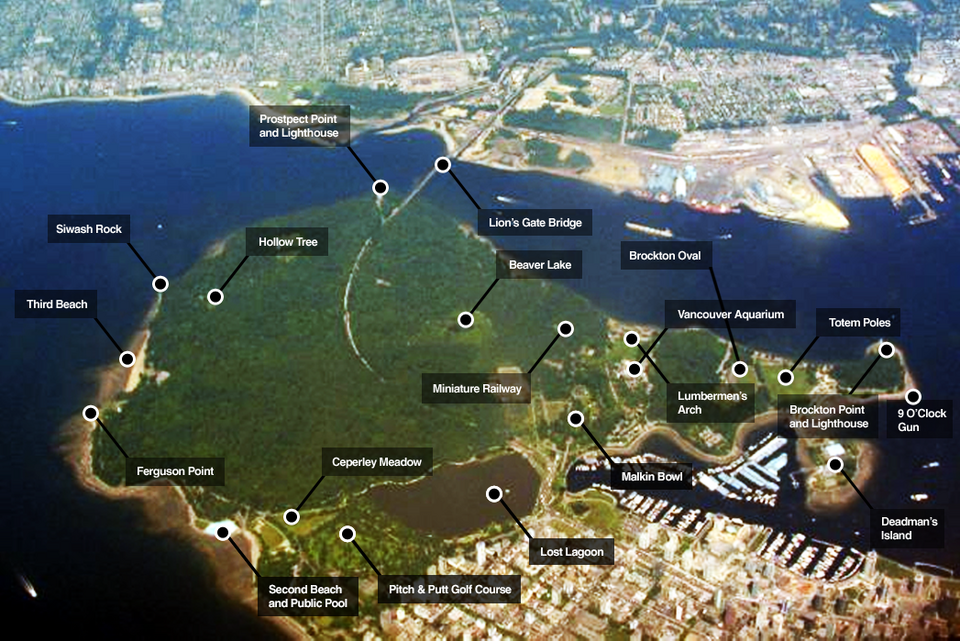
A four-hundred-hectare park at the tip of the peninsula, larger than New York's Central Park, with a forest of giant cedars and Douglas firs, beaches and small lakes. The nine-kilometer Seawall promenade runs around its perimeter. On the Brockton Point headland stands a cluster of First Nations totem poles, the most photographed spot in all of Vancouver.
Tip: Rent a bike on Denman Street at the park entrance for fifteen to twenty dollars an hour and ride the Seawall loop in about an hour. Bikes on the Seawall follow a one-way, counterclockwise route, so don't ride against it. On the west side, Third Beach is a favorite spot for sunset picnics.
Admission:
free
Time needed:
half day
Granville Island
False Creek
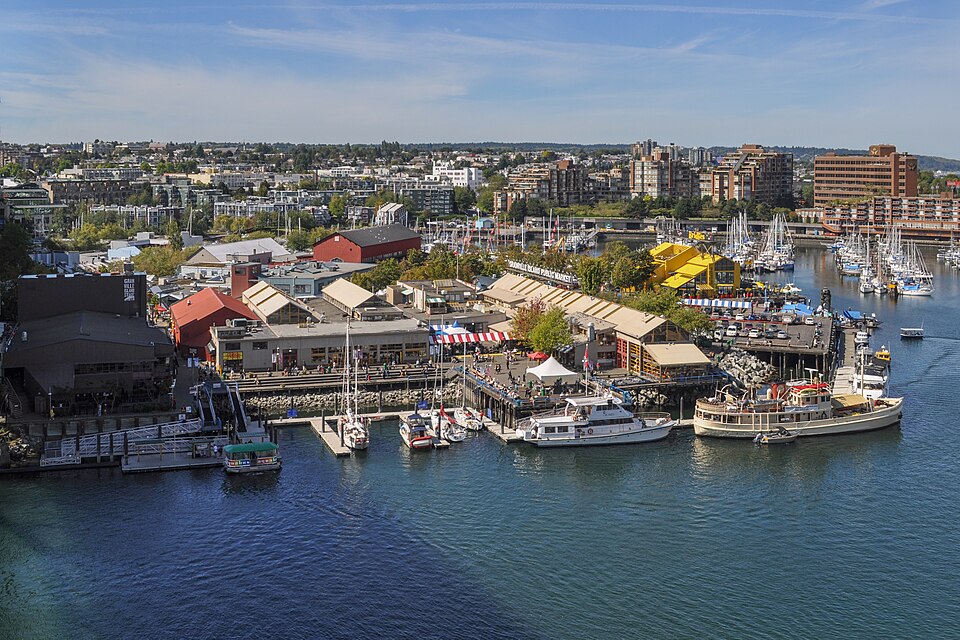
A former industrial islet beneath the Granville Bridge, converted into a market, artisan workshops, theaters and a brewery. The main draw is the Public Market hall, with fishmongers, bakers, cheesemongers and food stalls selling smoked salmon and fresh seafood. The island also has a cement plant whose silos are painted as giant figures.
Tip: Don't drive here from downtown — the parking lots fill up. The small rainbow-colored Aquabus and False Creek Ferries run from several docks downtown and in Yaletown for a few dollars, and the ride is an experience in itself. Take market food out onto the docks to eat — watch out for seagulls, which steal food right out of your hand.
Admission:
free
Time needed:
2–3 h
Gastown
Gastown
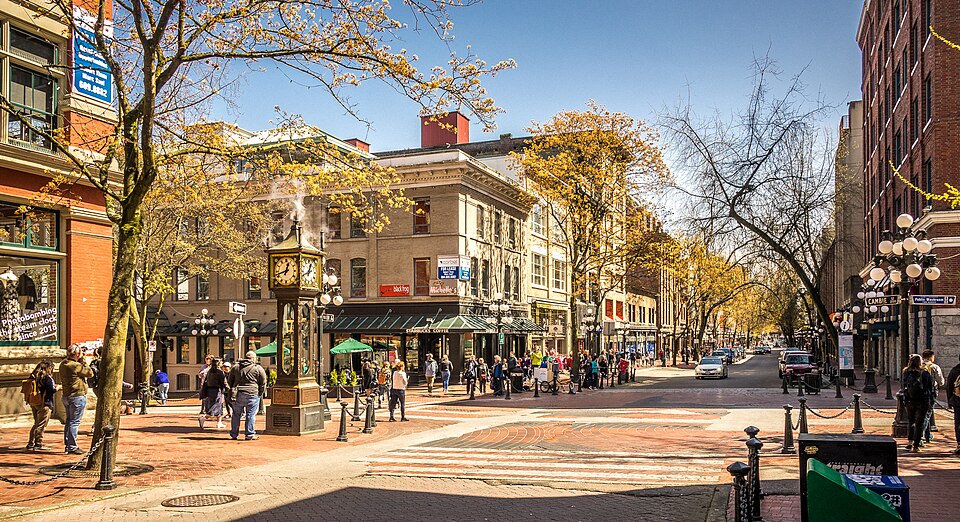
Vancouver's oldest neighborhood, with cobblestone streets and late-nineteenth-century brick warehouses, named after saloon-keeper 'Gassy Jack,' whose statue stands on Maple Tree Square. Today it holds design shops, cocktail bars and some of the city's best restaurants. Its symbol is the steam clock on Water Street, which whistles every quarter hour.
Tip: The steam clock looks historic but was actually built in 1977 and runs partly on electricity. Gastown borders the Downtown Eastside around East Hastings Street, where drug use and homelessness are visible — unpleasant by day, but avoid walking through at night, and head out of Gastown along Water Street toward Waterfront instead.
Admission:
free
Time needed:
1.5 h
Capilano Suspension Bridge
North Vancouver
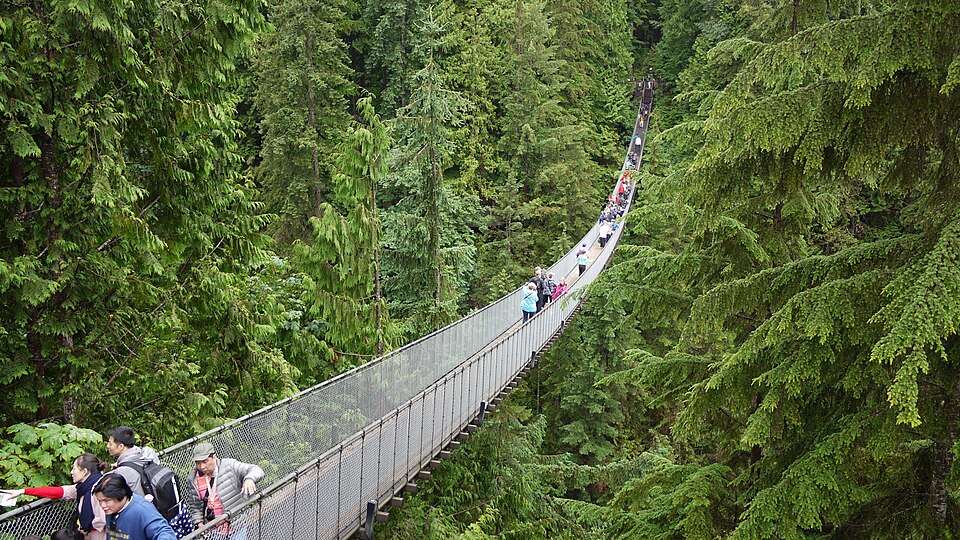
A suspension bridge over the Capilano River canyon, a hundred thirty-seven meters long and seventy meters above the water, first built in 1889 from hemp rope. The grounds around it include the Treetops Adventure walkways among the tree canopy and the Cliffwalk lookout trail bolted to the cliff face above the canyon.
Tip: Admission is steep, around seventy dollars, but the venue runs a free shuttle bus from Canada Place downtown. Anyone who just wants a suspension bridge and forest for free should go to Lynn Canyon Park instead. Arrive right at opening — cruise-ship tour groups fill the site by mid-morning, and the bridge sways under hundreds of people.
Admission:
around 70 CAD
Time needed:
2 h
Grouse Mountain
North Vancouver
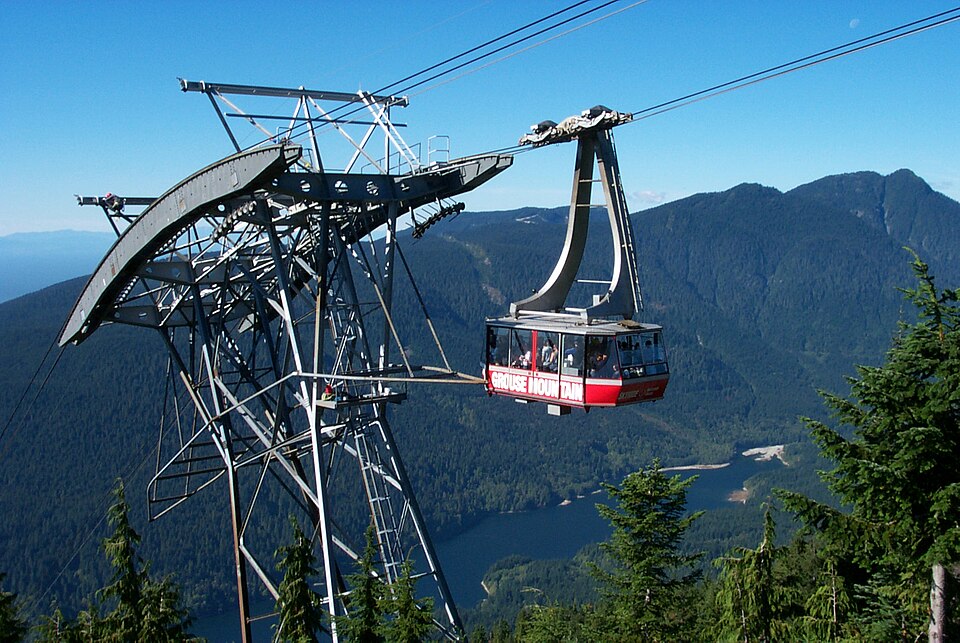
A mountain above North Vancouver with a summit over twelve hundred meters, reached by the Skyride gondola. At the top are views over the whole city, an enclosure with two orphaned grizzly bears, a lumberjack show, and winter skiing under floodlights. Best on a clear evening, when the city lights up below you.
Tip: Locals don't ride up — they climb the Grouse Grind trail, just under three kilometers and eight hundred fifty vertical meters, an hour and a half of stairs. Anyone who hikes up only pays for the ride down, about twenty dollars instead of the full seventy-dollar ticket. The trail is open roughly from June to October and closed in winter.
Admission:
gondola around 70 CAD
Time needed:
3 h
Museum of Anthropology
UBC / Point Grey
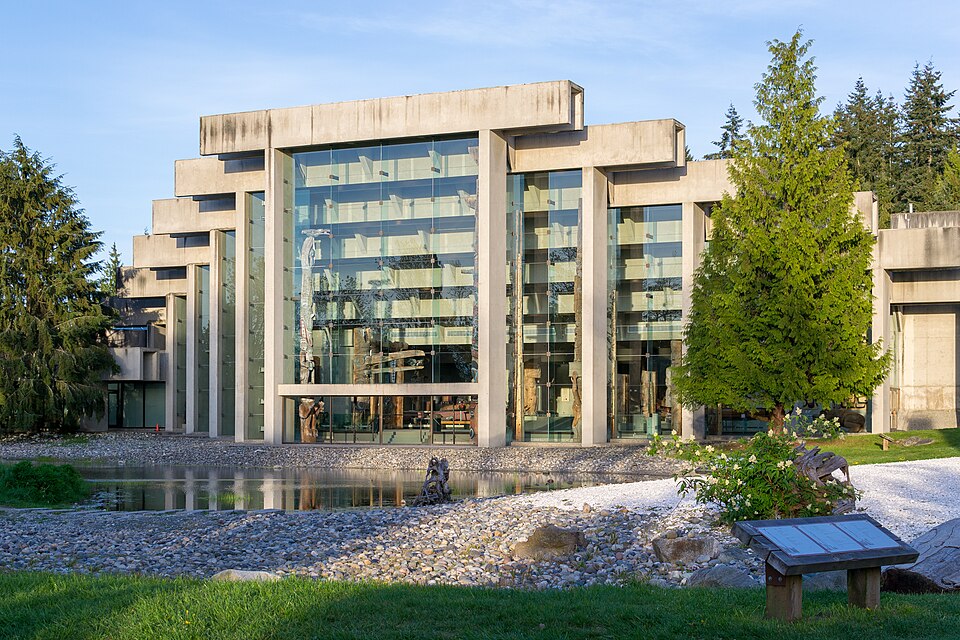
A museum on the University of British Columbia campus, in a building by architect Arthur Erickson whose glass-walled hall, filled with giant totem poles and framed by ocean views, offers the most powerful encounter with coastal First Nations culture in Canada. The centerpiece is Bill Reid's sculpture 'The Raven and the First Men,' carved from yellow cedar.
Tip: The museum is forty minutes from downtown by bus 4 or 14, and pairs well with Pacific Spirit Park and the university's botanical garden. Below the campus cliffs lies Wreck Beach, reached by five hundred steps, where clothing is optional — anyone who'd rather skip that can stay up at the lookout instead.
Admission:
around 20 CAD
Time needed:
2 h
Dr. Sun Yat-Sen Classical Chinese Garden
Chinatown
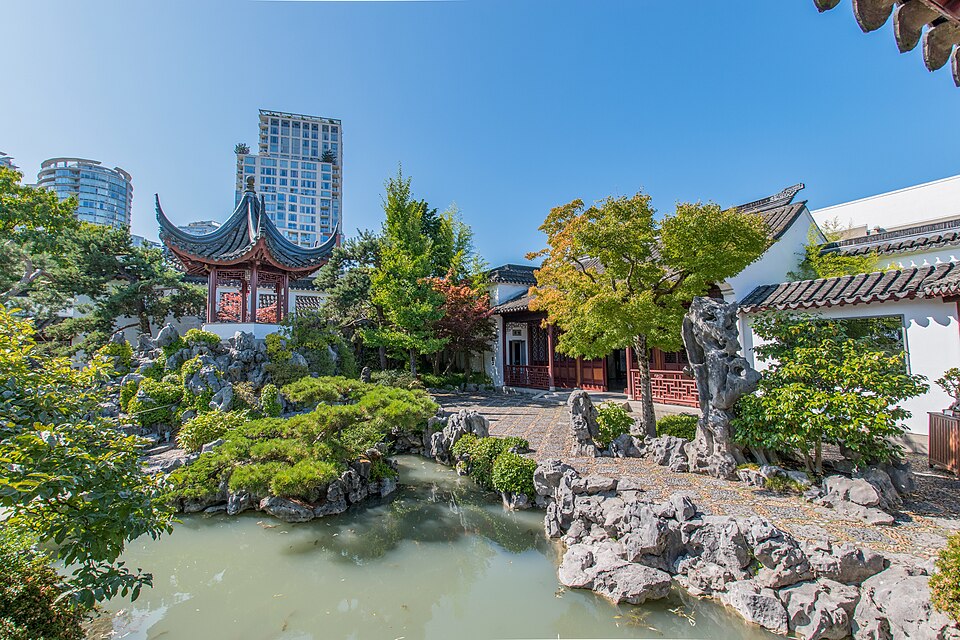
The first classical Ming-dynasty-style garden built outside China, constructed in 1986 by craftsmen from Suzhou using materials imported from China, without a single nail. Pavilions, a carp pond, rockery and bamboo packed into a small space in the middle of Chinatown make it one of the calmest spots in the city.
Tip: Next to the paid garden is a free public park with a matching pond and pavilion, open at no charge — enough for a quick visit. The paid section is worth it for the guided tour, which explains the symbolism of the windows and stones; it's included in admission and starts every hour.
Admission:
around 18 CAD, adjoining park free
Time needed:
1 h
Kitsilano Beach
Kitsilano
Vancouver's most popular city beach, looking across English Bay toward the skyline and mountains. In summer it has volleyball courts, barbecuing and long evenings. On the beach sits the Kitsilano Pool, a saltwater outdoor pool a hundred thirty-seven meters long, the longest in Canada, heated to a temperature that makes swimming comfortable even in June.
Tip: The sea here stays around only seventeen degrees even in August, so locals swim in the pool instead, open from May to September. Behind the beachfront promenade runs West 4th Avenue, lined with cafés and sporting-goods shops, good for a meal. Bus 2 or 22 from downtown takes fifteen minutes.
Admission:
beach free, pool around 7 CAD
Time needed:
2–3 h
Lynn Canyon Park
North Vancouver
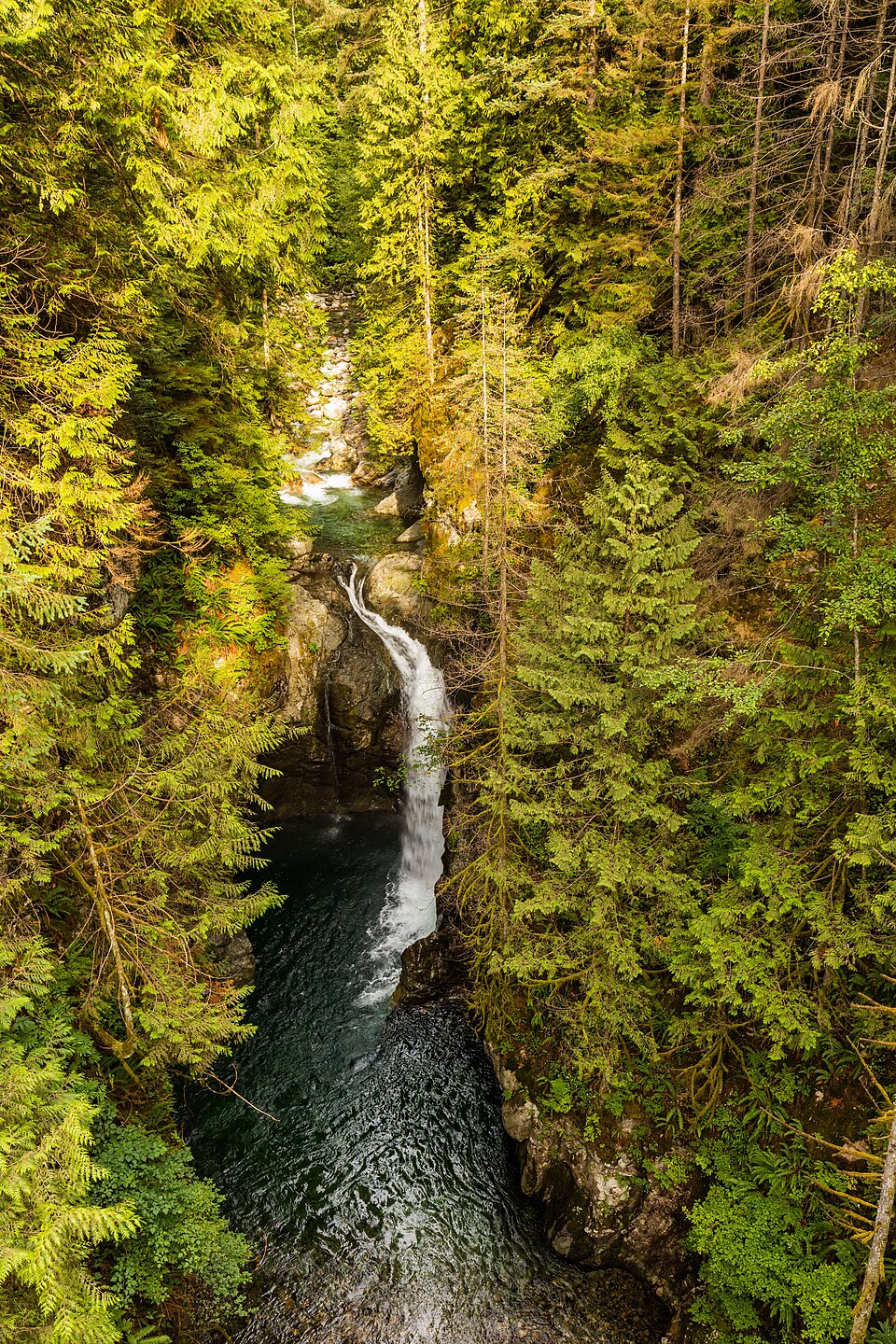
A forested park in North Vancouver with a suspension bridge fifty meters above the Lynn Creek canyon — twenty meters lower than Capilano's, but free and crowd-free. Below the bridge lies the Thirty Foot Pool, with ice-cold, crystal-clear water where locals jump in during summer. Trails wind among moss-covered cedars that have stood here for hundreds of years.
Tip: From downtown, take the SeaBus to Lonsdale Quay, then bus 228 or 227 — the whole trip takes an hour on a single fare. Cliff jumping into the canyon is banned and someone dies here almost every year, even though locals still do it — don't try it. On weekday mornings, you'll have the place almost to yourself.
Areas and districts, matched to the kind of trip you are taking
Downtown and West End
Best for: first-time visitors and hotels
The core between Waterfront and English Bay, with the shopping streets Robson and Granville and most of the hotels. The West End is a densely populated residential area with cafés on Denman and Davie streets, five minutes from Stanley Park and English Bay beach. Nearly everything is within walking distance from here.
Gastown and Chinatown
Best for: restaurants and bars
The oldest part of the city, with Vancouver's best restaurants and cocktail bars. Chinatown was once the second-largest in North America, and traditional bakeries and herbal shops remain. Both neighborhoods border the Downtown Eastside, though, so it helps to know your route in the evening; hotels are scarce here.
Yaletown and False Creek
Best for: modern living and waterfront
Former railway warehouses converted into restaurants with patios on old loading docks, ringed by glass towers and a waterfront promenade around False Creek. Small ferries to Granville Island depart from here. Hotels are modern and pricey, and the Canada Line station sits right in the neighborhood.
Kitsilano
Best for: beach and active lifestyle
A laid-back neighborhood on the south shore of English Bay, home to hippies in the sixties and now yogis, surfers and families. It has a beach, a pool, sporting-goods shops and cafés along West 4th Avenue. Accommodation is mostly apartments, fifteen minutes from downtown by bus.
Direct flights connect Vancouver to Europe from Frankfurt, Munich, Amsterdam, Paris, London and Zurich; from Prague, with one connection, the trip takes fourteen to sixteen hours, with the transpolar flight itself taking about ten. YVR International Airport sits on an island at the mouth of the Fraser River, twelve kilometers south of downtown, and is one of the most pleasant in North America. The automated Canada Line SkyTrain reaches Waterfront station downtown in twenty-five minutes. Watch for the surcharge: departing from the airport adds a five-dollar airport fee to the fare, though the trip to the airport doesn't carry it. Taxi and Uber cost around forty dollars downtown. Flights from Toronto or Montreal take four and a half hours, and the legendary VIA Rail Canadian train takes four days from Toronto.
Vancouver International (YVR) · 12 km
Canada Line to Waterfront· 25 min· around 9 CAD including airport surcharge
Taxi or Uber· 25–35 min· 40 CAD
Around town
Vancouver has the automated SkyTrain metro with three lines, a network of buses and trolleybuses, and the SeaBus ferry across the inlet to North Vancouver, all run by a single agency, TransLink. Fares are zone-based, but visitors only need to remember two things: on weekdays until 6:30 pm, you pay by the number of zones crossed, while evenings and weekends are single-zone everywhere, and buses always count as one zone. Pay by tapping a contactless card or phone on the reader; on SkyTrain and SeaBus, you must tap again when exiting or you'll be charged the maximum fare. Downtown is flat and walkable all the way to Stanley Park, Granville Island and Gastown. A car is useful for trips to the mountains, Whistler and the ferry terminal; you won't need one in the city, and parking costs four to six dollars an hour.
SkyTrain, buses and SeaBusA single-zone fare covers ninety minutes with transfers. Pay by tapping a card or phone; you must also tap out when leaving a station, or you'll be charged the highest fare. · 3.35 CAD
Day passUnlimited rides across all zones for the whole day, loaded onto a Compass card at a station vending machine. Worth it from the fourth ride onward. · around 12 CAD
SeaBus to Lonsdale QuayA twelve-minute crossing from Waterfront to North Vancouver, every fifteen minutes. The cheapest scenic cruise in the city, with views of downtown; a market awaits on the other side. · included in transit fare
Aquabus and False Creek FerriesSmall colorful boats crossing False Creek between downtown, Yaletown, Granville Island and Science World. These are privately run with their own fares. · from 4 CAD
Mobi bike shareShared bikes with two hundred stations downtown and a day pass. Vancouver is a cycling city with a path around Stanley Park and False Creek that never touches traffic. · around 20 CAD / day
Useful apps: Transit, Uber, Mobi by Rogers, BC Ferries
When to go
The best time is July to mid-September: dry, around twenty-five degrees, long evenings and every mountain trail open. June can still be changeable. From late October to April it rains — Vancouverites call it Gore-Tex season — and the sky stays grey for weeks, though temperatures rarely drop below freezing and snow in the city lasts only a day. For skiers, though, it's the best season: Grouse, Cypress and Seymour are twenty minutes from downtown, and Whistler two hours away. Spring, from March to May, brings cherry blossoms lining the streets, with their own dedicated festival.
Best time
July to mid-September, December to March for skiing
What to avoid
November and January for the rain
Month
Jan
Feb
Mar
Apr
May
Jun
Jul
Aug
Sep
Oct
Nov
Dec
Day
7°
8°
10°
13°
17°
20°
22°
22°
19°
14°
9°
7°
Night
2°
2°
4°
6°
9°
12°
14°
14°
11°
7°
4°
1°
Rainy days
19
15
17
14
12
10
6
6
8
15
19
19
Sea
8°
8°
8°
9°
11°
14°
16°
17°
15°
12°
10°
9°
Food & drink
Vancouver is the most Asian city in North America, and the best food here is Japanese and Chinese. Sushi is everywhere and good value — an ordinary sushi restaurant charges fifteen to twenty dollars for lunch, at a quality that would cost three times as much in a European restaurant. The best Chinese food, especially Cantonese dim sum and Hong Kong-style cafés, is in the suburb of Richmond near the airport, where every other sign is written in Chinese. The other big draw is Pacific fish and seafood: wild salmon, oysters, Dungeness crab, and in May and June, sweet spot prawns from local waters. Mount Pleasant has more than twenty craft breweries, and wine from the Okanagan Valley is excellent. Food and drink are both expensive, and alcohol carries high taxes.
What to try
Sushi and the BC roll
Vancouver chef Hidekazu Tojo claims to have invented the California roll here in the 1970s; what's certain is that he invented the BC roll, with grilled salmon skin. Sushi here is cheap and fresh, and a filling lunch costs about fifteen dollars.
Pacific salmon
British Columbia has five species of wild salmon, and the best is sockeye, with deep red flesh, in season from July to September. Markets also sell cold-smoked salmon and candied salmon, strips cured in maple syrup and dried.
Spot prawns
Large sweet shrimp from local waters with a short May-to-June season, sold straight from fishing boats at Fisherman's Wharf on False Creek. Eaten raw as sashimi or briefly seared in butter.
Dim sum in Richmond
Cantonese dumplings and steamed buns ordered plate by plate with tea; Richmond has restaurants that hold their own against Hong Kong. Expect an hour's wait for a table on weekends, none on weekdays.
Japadog
A Japanese-style hot dog topped with nori seaweed, teriyaki sauce and wasabi mayo. It started as a street cart on the corner of Burrard and Smithe streets and is now a Vancouver street-food classic.
Nanaimo bar
A no-bake dessert bar in three layers: a coconut-and-nut base, vanilla custard, and chocolate on top. It originates from Vancouver Island and is sold with coffee in cafés across the country. Very sweet — one piece is enough for two.
Caesar
Canada's national cocktail: vodka, Clamato juice (tomato and clam), Worcestershire sauce and Tabasco, served with a celery-salt rim and a celery stalk. Invented by a bartender in Calgary in 1969, it's almost unknown outside Canada.
What it costs
Coffee at a café
4–6 CAD
Sushi lunch
15–22 CAD
Beer at a brewery
8–11 CAD
Restaurant dinner
55–80 CAD per person
Transit fare
3.35 CAD
Bike rental per hour
15–20 CAD
Grouse Mountain gondola
around 70 CAD
Night at a 3-star hotel for two
250–400 CAD
Indicative prices that change over time — treat them as a guide, not a price list.
Practical information
SocketsAtwo flat pins (US/JP)Btwo flat pins plus ground (US)
Voltage120V / 60Hz
Tap waterTap water is drinkable — Tap water is safe and good throughout Canada, and restaurants serve it free with ice — just ask for 'tap water.' Bottled water is an unnecessary expense: a bottle costs two to three dollars, five at the airport. Refill stations are found at airports, in parks and in museums, so it's worth carrying your own bottle. In national parks, stream water shouldn't be drunk without boiling, even if it looks crystal clear, because of the giardia parasite.
TippingIn Canada, tipping is an obligation, not a bonus: fifteen to twenty percent at a table-service restaurant, a dollar or two per drink at a bar, ten to fifteen percent for taxi and rideshare drivers, and three to five dollars per night for housekeeping. Payment terminals offer preset percentage buttons — some calculate them on the pre-tax amount, so doing the math yourself is sometimes cheaper. Tax is added at checkout on top of listed menu and store prices, five to fifteen percent depending on the province, so the final total is always higher than the price tag. British Columbia adds a five percent federal tax and a seven percent provincial tax, plus ten percent on alcohol.
Driving on theright
SafetyCanadian cities rank among the safest in the world, and walking around tourist neighborhoods at night is fine. The real risks are different: car and bike theft, pickpockets in crowds, and in some neighborhoods a visible homelessness and drug crisis, which is unpleasant but generally poses no threat to tourists. In winter, the biggest hazard is ice and frost — shoes with non-slip soles matter more than anything else. Healthcare is very expensive for foreigners, with a single night in hospital costing thousands of dollars, so travel insurance with a high coverage limit is essential. The emergency number is 911. In Vancouver, this mainly applies to the Downtown Eastside around East Hastings Street, which tourists have no real need to visit.
Opening hoursShops are open roughly from ten until nine in the evening, shorter hours on Sundays; supermarkets often stay open until eleven, and Shoppers Drug Mart pharmacies are sometimes open around the clock. Restaurants serve dinner from five, and kitchens in smaller towns close around ten. Alcohol is sold at government-run LCBO and SAQ shops in Ontario and Quebec, or at supermarkets, and at private liquor stores in Alberta; drinking in public is not allowed. Museums are typically closed on Mondays and often have one free or discounted evening a week. Most shops close on public holidays such as Canada Day (July 1) and Thanksgiving in October.
Customs & etiquetteCanadians are polite and say 'sorry' even when you bump into them. Queuing is followed strictly, whether at a bus stop or ordering coffee. Confusing Canadians with Americans is the most common faux pas, and in Quebec, every conversation should open with 'bonjour' — switching to English afterward is fine, but starting in English without a greeting comes across as rude. Indigenous peoples are referred to as First Nations, Inuit and Métis, and the word 'Indian' is avoided. Smoking, including marijuana, is banned in restaurants, on patios and near entrances.
A few local wordsHello — Hi / Good morningThank you — Thank youExcuse me — Sorry / Excuse meThe bill, please — Can I get the bill, please?How much does it cost with tax? — How much is it with tax?Tap water, please — Tap water, please
How to plan your days
1 day
A day in Vancouver
1Morning bike ride around Stanley Park's Seawall, past the totem poles.
2Lunch at English Bay beach or a café on Denman Street.
3Aquabus ferry to Granville Island and the Public Market.
4Afternoon in Gastown and the Dr. Sun Yat-Sen Garden in Chinatown.
5Dinner and a cocktail in Gastown.
2 days
Two days: city and mountains
1Day one as above.
2Day two, take the SeaBus to North Vancouver.
3Lynn Canyon or the Capilano Suspension Bridge in the morning.
4Afternoon at Grouse Mountain, hiking the Grouse Grind or riding the gondola.
5Sunset over the city from the summit, then the gondola back down.
3 days
Three days with the museum and beaches
1Two days as above.
2Day three, visit the Museum of Anthropology at the university.
3Walk through Pacific Spirit forest to the lookout above Wreck Beach.
4Afternoon at Kitsilano Beach and a swim in the pool.
5Evening at the breweries in Mount Pleasant.
Day trips
Whistler
120 km · 2 h by car
North America's largest ski resort, host of the 2010 Olympics, with two mountains linked by the Peak 2 Peak gondola, suspended four hundred thirty-six meters above the valley. Skiing runs from late November to May; in summer it's mountain biking and alpine hiking trails. The Sea-to-Sky Highway along Howe Sound fjord ranks among the most scenic drives in Canada. Buses run from downtown several times a day, with tickets from thirty dollars.
Victoria
110 km · 3.5 h by ferry and bus, 35 min by seaplane
British Columbia's capital, on the southern tip of Vancouver Island, with a British atmosphere, a harbor, the 1898 parliament building, the Empress Hotel with its afternoon tea service, and Butchart Gardens. The BC Ferries crossing from the Tsawwassen terminal takes an hour and thirty-five minutes through islands where orcas occasionally appear. Faster and more memorable is the Harbour Air seaplane, flying directly from the downtown harbor to Victoria's harbor for two to three hundred dollars.
Squamish and the Sea to Sky Gondola
65 km · 1 h by car
A climbing town beneath the seven-hundred-meter granite wall of Stawamus Chief. The Sea to Sky Gondola rides ten minutes up to a lookout with a suspension bridge over the fjord and trails into the mountains. Along the way from Vancouver, Shannon Falls, British Columbia's third-highest waterfall, is a ten-minute walk from the parking lot. In November and December, hundreds of bald eagles gather near Brackendale.
Frequently asked questions
How many days are enough for Vancouver?+
Three days for the city, Stanley Park, Granville Island and North Vancouver with its mountains and suspension bridges. Another day for Victoria or Whistler. Vancouver is also the starting point for a trip through the Rockies to Banff, which deserves at least a week on its own.
Is the Capilano Suspension Bridge worth it?+
It depends on your budget. For seventy dollars, you get a longer, higher bridge, treetop walkways and a clifftop lookout, but also crowds. Lynn Canyon offers a smaller bridge, forest and a swimming hole for free. If you have time for both, don't choose; if only one, Capilano with kids, Lynn Canyon for quiet.
How do I get from the airport to downtown?+
The easiest way is the Canada Line SkyTrain to Waterfront station, running every few minutes and taking twenty-five minutes. Leaving from the airport adds a five-dollar airport surcharge, bringing the total to around nine. A taxi costs around forty dollars, and Uber is similar.
Does it really rain that much in Vancouver?+
From late October through April, yes — it rains nineteen days in November. But summer is dry and sunny, and Vancouver has one of the mildest climates in Canada; snow in the city itself is rare. Winter visitors should pack a waterproof jacket and can expect good snow in the mountains.
Is Vancouver safe?+
Most of the city, yes. The exception is the Downtown Eastside around East Hastings Street between Gastown and Chinatown, where a drug and homelessness crisis is concentrated; tourists usually aren't threatened there, but there's no need to walk through it, and it's best avoided at night. Bike and car break-ins are common.
Can you get from Vancouver to Banff?+
Yes, but it's eight hundred fifty kilometers, a two-day drive with an overnight stop in Kamloops or Revelstoke. By plane, it's an hour and a quarter to Calgary, and Banff is another hour and a half by car from there. The Rocky Mountaineer scenic train runs from Vancouver to Banff over two days with an overnight stop, traveling only by daylight.
Where should I stay in Vancouver?+
For a first visit, Downtown or the West End, from where you can walk to Stanley Park, the beach and Gastown. Yaletown is modern and close to the airport metro line. Cheaper hotels are found near SkyTrain stations in Burnaby and Richmond, twenty minutes from downtown.
Will I see whales in Vancouver?+
Not directly from the city, but whale-watching tours for orcas and humpbacks depart from Granville Island and from Steveston in Richmond from April to October, lasting five to six hours. Success rates are high in summer. Orcas occasionally appear from the ferry to Victoria too.
Visa Requirements
Check the latest visa requirements for entering this country. Some nationalities may need to apply for a visa or e-visa before travel.