A cowboy oil town beneath the Rockies and gateway to Banff
Calgary
LanguageEnglish / French
CurrencyCAD
TimezoneAmerica/Edmonton
Temperature-10-25 °C
Dial Code+1
Population40M
Area9,984,670 km²
SocketsType A / Type B
Tap waterDrinkable
Discover Calgary
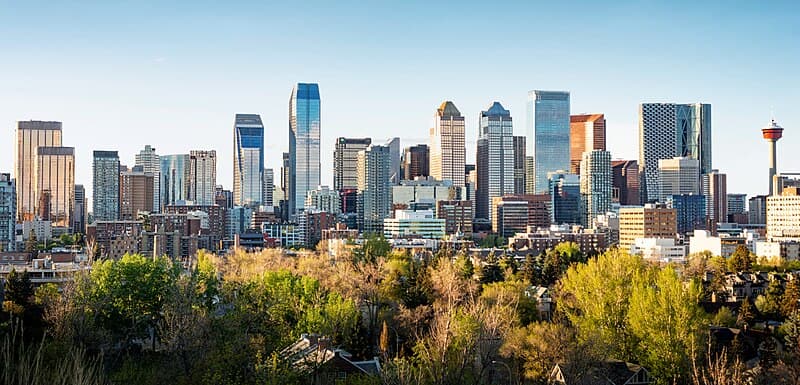
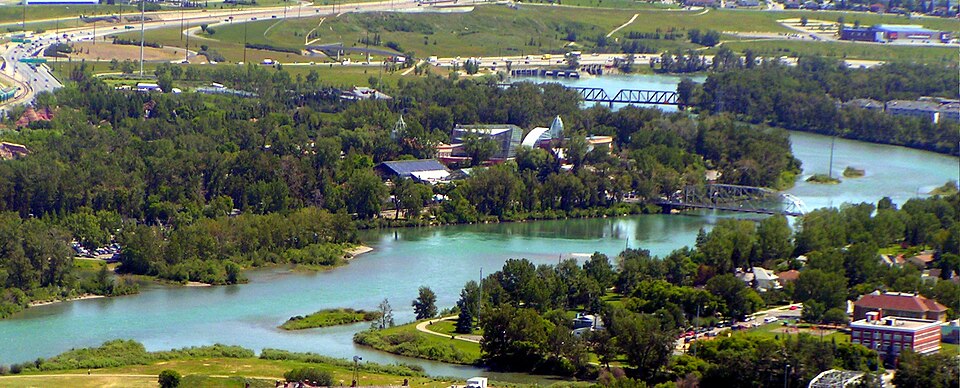
Calgary is Alberta's largest city and, for most Europeans, mainly the airport you fly through on the way to the Rocky Mountains — Banff is an hour and a half away by highway, and the mountain peaks are visible on the horizon from the downtown skyscrapers. But the city is worth 1–2 days in its own right. It grew out of a North-West Mounted Police outpost founded in 1875 at the confluence of the Bow and Elbow rivers, and entered the 20th century as a cattle and railway town; after the discovery of oil, it turned into an energy capital with a glass-towered downtown that's home to most of Canada's energy companies. But the cowboy past hasn't disappeared. Every July the city hosts the Calgary Stampede, 10 days of rodeo, chuckwagon racing and country concerts, when the whole city dons hats and boots and businesses invite passers-by to free pancake breakfasts. Calgary is Canada's sunniest big city, with more than 330 sunny days a year, and in winter it's warmed several times a month by the chinook, a warm foehn wind that can raise the temperature by 20 degrees within hours. Prices are lower than in Vancouver, and Alberta has no provincial sales tax.
What to see
The places worth your time in Calgary, and what to expect at each
Calgary Stampede
Stampede Park / Victoria Park
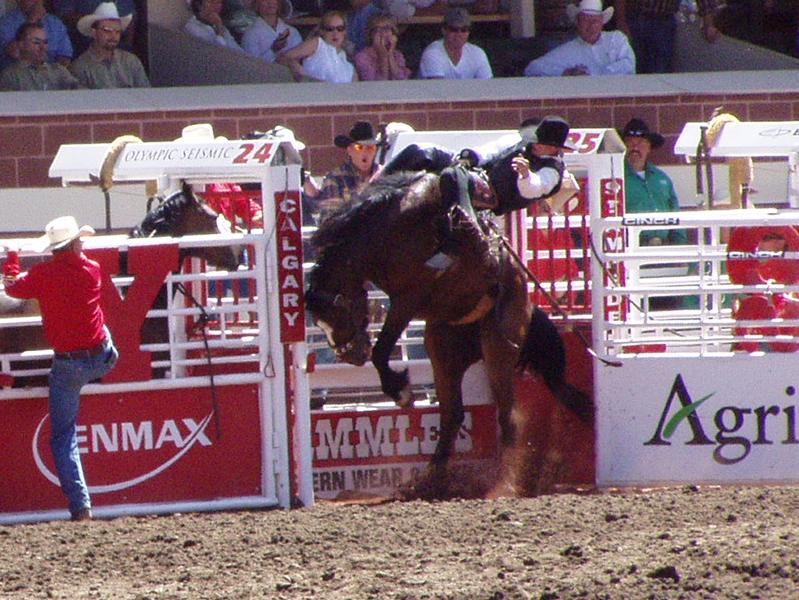
A 10-day rodeo and exhibition held every July since 1912, drawing over 1 million visitors. The main events are rodeo disciplines — bareback and bull riding, calf roping — plus the evening chuckwagon races. Alongside that there's a midway, country concerts and the Elbow River Camp Indigenous village.
Tip: Free pancake breakfasts are held all over the city during the Stampede — hosted by churches, shopping centres and banks — just join the queue. Entry to the grounds is cheap, but the rodeo and evening grandstand show need a separate ticket, which sells out months ahead. Hotels cost double in July, so book as soon as you know your dates.
Admission:
grounds entry around CAD 25, grandstand extra
Time needed:
full day
Calgary Tower
Downtown / Beltline
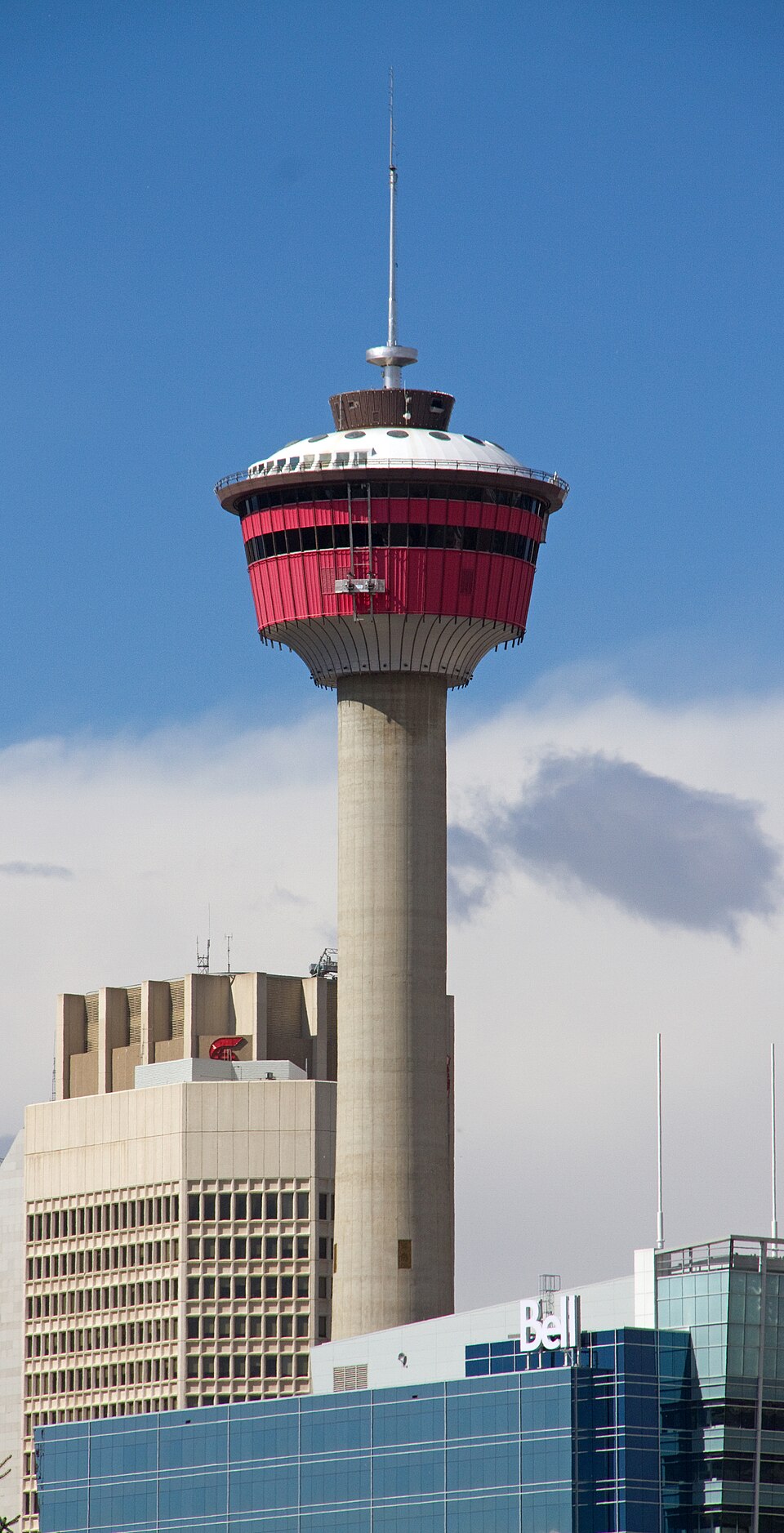
A 191-metre observation tower built in 1968 for Canada's centennial, once the city's tallest building and now dwarfed among the skyscrapers. From the glass-floored observation deck, the Rocky Mountains are visible 100km to the west on a clear day. During the 1988 Olympics, the Olympic flame burned on its summit.
Tip: The mountains are sharpest in the morning; clouds often build over them by afternoon. Book a meal at the revolving Sky 360 restaurant and the ride up is free. If it's overcast, save your visit for another day — you won't see anything through the haze.
Admission:
around CAD 20
Time needed:
45 min
Heritage Park Historical Village
Heritage Park / south Calgary
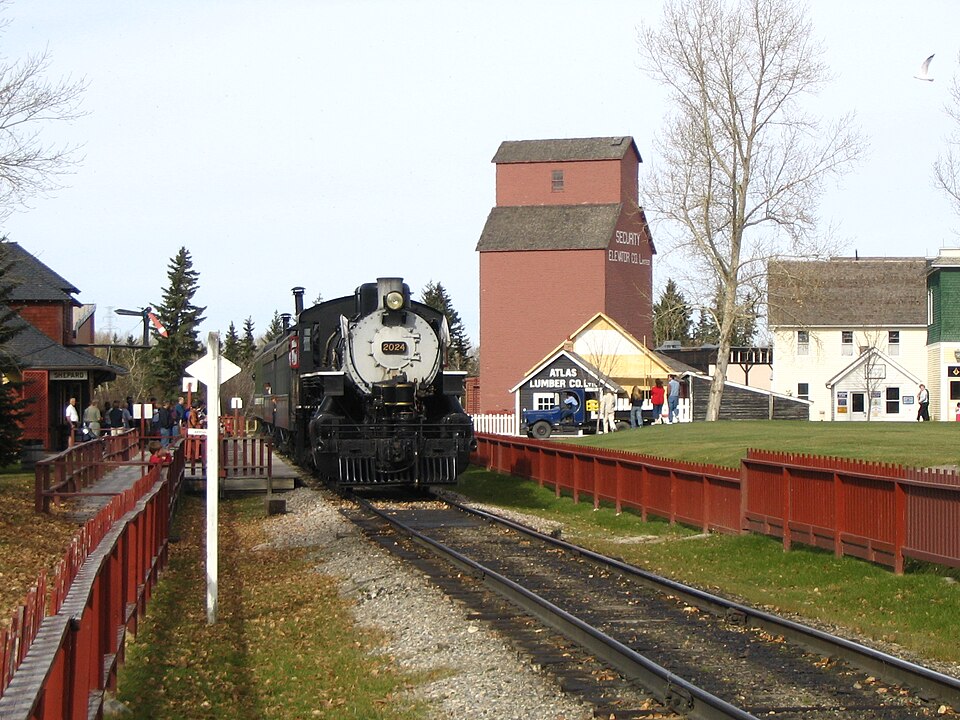
Canada's largest open-air museum, on the shore of the Glenmore Reservoir, with more than 180 structures — genuine buildings relocated from across Alberta. A steam train runs through the village, a paddle steamer crosses the lake, and staff in period costume work in the shops and workshops. The Gasoline Alley museum displays vintage gas pumps and cars.
Tip: The historic village is open daily only from late May to early September, and on weekends until mid-October; the Gasoline Alley museum runs year-round. The steamboat and train are included in admission, but the vintage midway rides cost extra. Arrive in the morning and plan lunch at the 1907 Wainwright Hotel.
Admission:
around CAD 35
Time needed:
3–4 h
Studio Bell
East Village
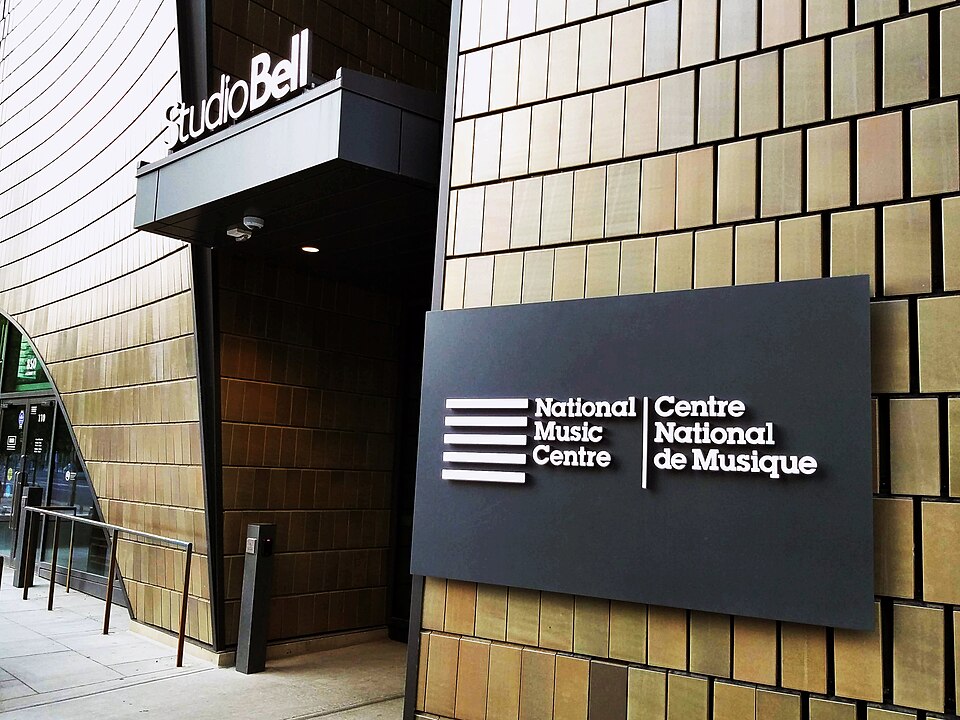
The National Music Centre, housed in a terracotta-tiled building whose shape evokes instruments and sound waves, linked by a bridge over the street. Inside are 200,000 items of music history: a mobile recording studio once used by the Rolling Stones, the giant TONTO synthesizer from Stevie Wonder's recordings, and the piano on which Elton John wrote his first albums.
Tip: Most instruments in the exhibits can be played, and there's a hands-on studio where you can try drums or recording. The Canadian Music Hall of Fame shows just how many global stars come from Canada. Concerts are held in the building; check the programme online for cheap tickets.
Admission:
around CAD 22
Time needed:
2 h
Prince's Island Park and Peace Bridge
Eau Claire
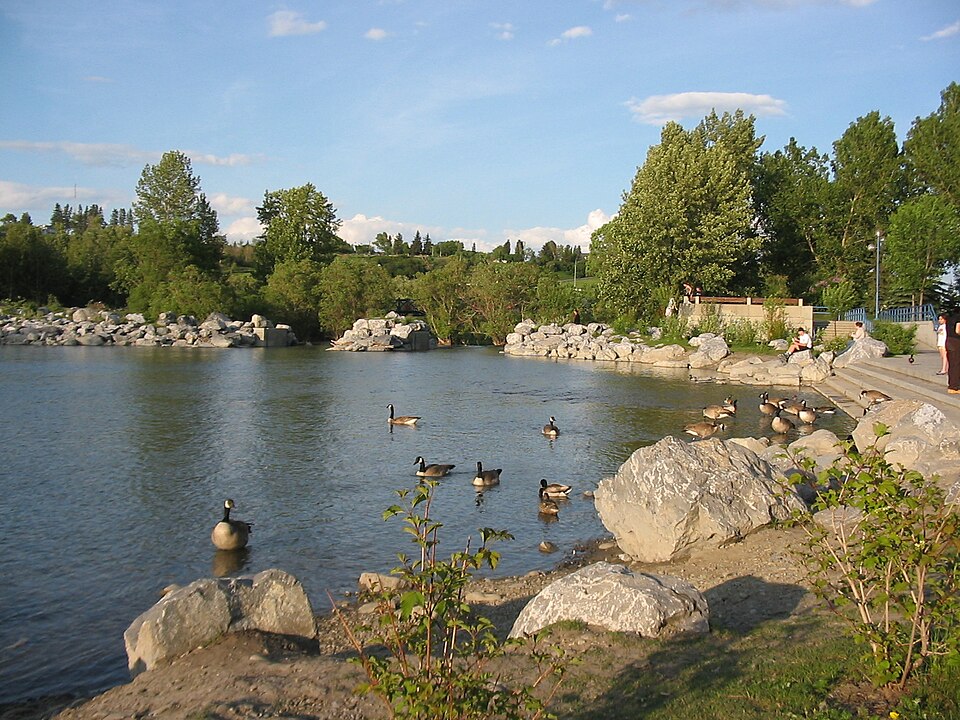
An island on the Bow River at the edge of downtown, turned into a park with lawns, a lagoon and the River Café restaurant. Footbridges lead to the island, and a little further along the river is the red spiral Peace Bridge by Santiago Calatrava, built in 2012, linking downtown with the Sunnyside neighbourhood. Cycle paths run along both banks.
Tip: On hot days, locals float down the Bow River on inflatable rafts from Bowness Park to here, a 2–3-hour drift; rental shops are in Bowness. The water comes from glaciers and stays cold even in August, so a life vest is a must. In summer the park hosts a folk festival and open-air Shakespeare.
Admission:
free
Time needed:
1–2 h
Stephen Avenue
Downtown
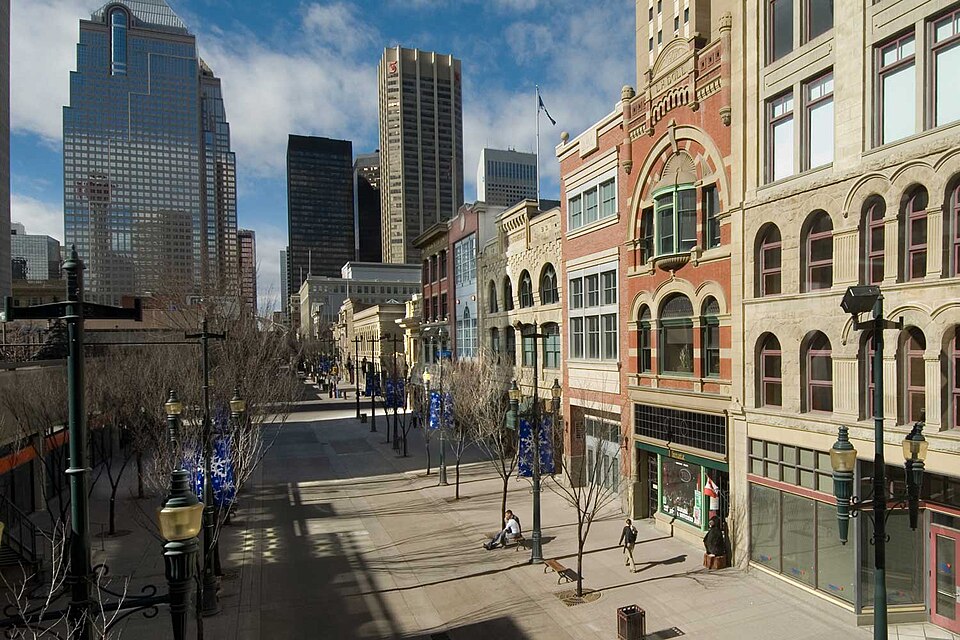
A pedestrian zone on 8th Avenue downtown, lined with sandstone buildings from the turn of the 20th century that survived the 1886 fire, after which the city started building in stone. Today they house restaurants, bars and shops, and the street is a National Historic Site. At its end stand skyscrapers and The Core shopping centre.
Tip: On the third floor of The Core is the Devonian Gardens, a covered garden with tropical plants and a pond, free to enter — an ideal place to warm up in winter. The downtown is linked by 16km of enclosed Plus 15 skyways 15 feet above the street, so you can cross the whole downtown in freezing weather without a coat.
Admission:
free
Time needed:
1 h
Calgary Central Library
East Village
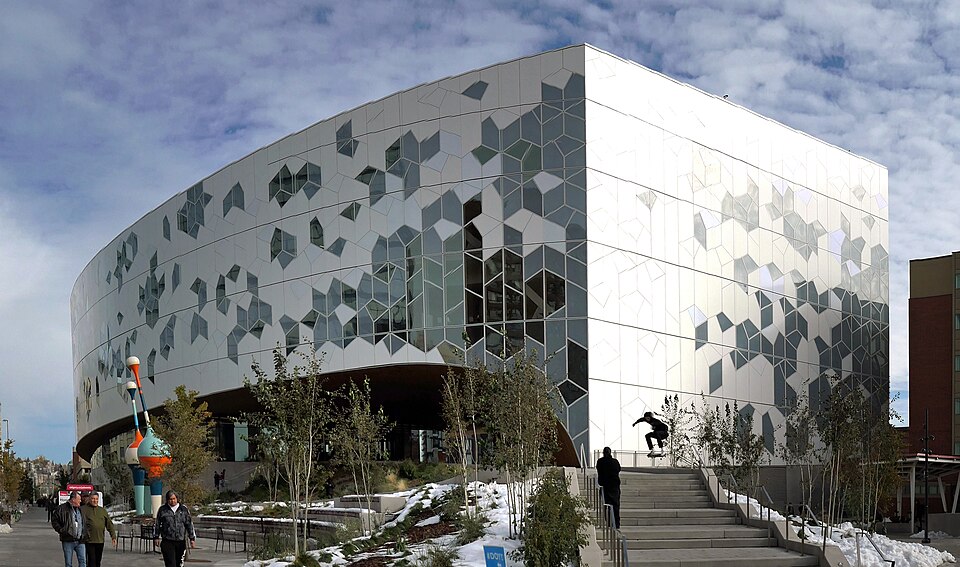
A new central library from 2018 by Norwegian firm Snøhetta, its hexagonal-windowed facade evoking snowflakes, with a wooden arched entrance inspired by chinook clouds. Inside is a 4-storey cedar-wood atrium, a children's area and terraces. The library is widely cited as a model of modern public architecture.
Tip: Admission, wifi and toilets are all free, and the top floor has a quiet reading room overlooking the city. It sits above the CTrain line, which runs through the building via a tunnel, and it's a 10-minute walk from downtown along Stephen Avenue. Good for a rainy afternoon.
Admission:
free
Time needed:
45 min
Calgary Zoo
Bridgeland / St. George's Island
A zoo on an island in the Bow River and along its bank, with a section devoted to Canadian wildlife — moose, grizzly bears and wolves — and a separate prehistoric-animal area with life-size dinosaur models. The panda pavilion is the biggest draw, along with the penguins, which take outdoor walks in winter.
Tip: In autumn, roughly from November to early January, the zoo hosts the Zoolights evening light festival with millions of bulbs. It's a 2-minute walk from the Zoo CTrain stop, a 10-minute ride from downtown. In summer, arrive in the morning, as animals hide from the heat in the afternoon.
Admission:
around CAD 35
Time needed:
3 h
Canada Olympic Park
west Calgary
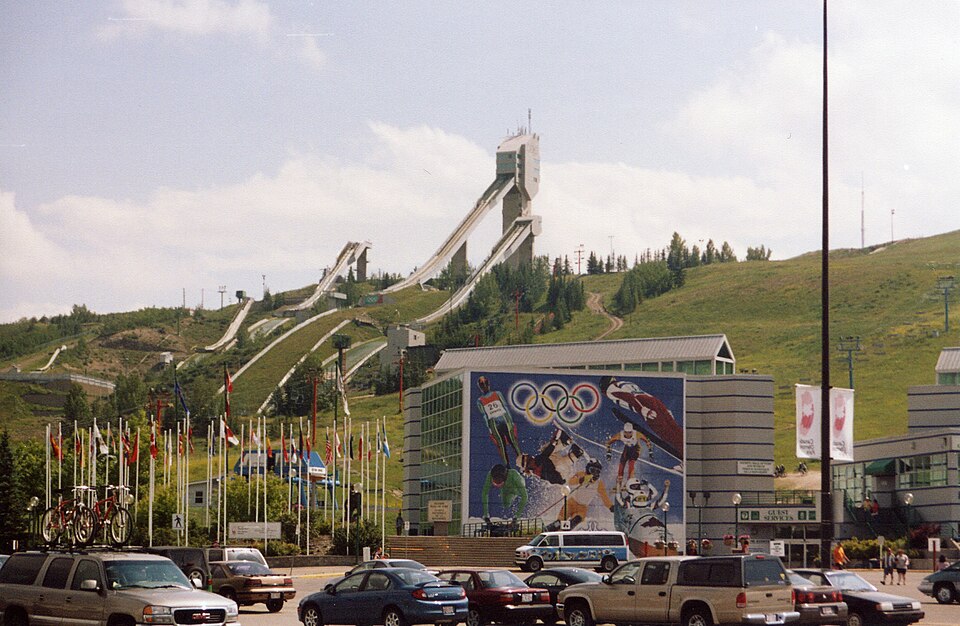
The site of the 1988 Winter Olympics on the city's western edge, with ski jumps and a bobsled track. In winter there's a small ski resort, and in summer, mountain-bike trails and one of North America's fastest ziplines, which launches from the ski jump at speeds up to 120km/h.
Tip: The Olympic bobsled track can be ridden with a professional pilot in winter, and on a wheeled version in summer. The site sits right on the road to Banff, making it a convenient stop en route to the mountains. Skiing is limited to a few short runs; serious skiers should head to Banff's resorts.
Areas and districts, matched to the kind of trip you are taking
Downtown and East Village
Best for: first-time visits and hotels
Skyscrapers of energy companies, pedestrian Stephen Avenue and the enclosed Plus 15 skyway network. East Village is a new district at the river confluence with the library, Studio Bell and a riverside promenade. Most hotels are here, and the CTrain on 7th Avenue is free downtown. The financial core empties out in the evening.
Beltline and 17th Avenue
Best for: bars, restaurants and nightlife
A district south of the tracks with the city's liveliest restaurant strip, 17th Avenue SW, nicknamed the Red Mile by locals after Flames hockey celebrations. Cafés, cocktail bars and shops. Stampede Park is around the corner, which makes Beltline the busiest spot in July.
Kensington
Best for: a quiet vibe and cafés
A small neighbourhood across the Bow River from downtown, with independent shops, bakeries, a cinema and cafés along Kensington Road. It's a 15-minute walk to downtown across the Peace Bridge. Accommodation is mainly apartments and small guesthouses.
Inglewood
Best for: breweries and antiques
Calgary's oldest neighbourhood, with brick buildings along 9th Avenue SE housing craft breweries, antique shops, record stores and music venues. It sits right by the zoo and the river, and can be reached from East Village along a trail. It's the best place in the city for an evening beer and live music.
Calgary has direct flights from Frankfurt, Amsterdam, London, Paris and Dublin; from many other European cities it takes 1 connection. It's a 4-hour flight from Toronto and 1 hour 15 minutes from Vancouver. Calgary International Airport (YYC) is 17km northeast of downtown. The MAX Orange rapid bus or route 300 runs downtown for a standard fare, while a taxi or Uber costs around $50. Most visitors rent a car straight at the airport and head to Banff — the Trans-Canada Highway (Hwy 1) bypasses downtown, and it's an hour and a half to the mountains. Banff Airporter and Brewster Express shuttle buses also run from the airport to Banff for around $70 per person.
Calgary International (YYC) · 17 km
Route 300 bus downtown· 35–45 min· around CAD 3.80
Taxi or Uber· 20–30 min· CAD 45
Shuttle bus to Banff· 2 h· around CAD 70
Around town
Downtown Calgary is compact and good for walking; beyond that, it's a car city. The CTrain light rail has two lines and runs along 7th Avenue downtown, where rides are free between the City Hall and Downtown West stops. Outside downtown a fare applies, valid for 90 minutes; buy it at a stop machine or via the app. Stephen Avenue, East Village, Prince's Island Park and Inglewood are all linked by cycle paths along the Bow and Elbow rivers, forming one of the longest urban trail networks in North America. For trips to the mountains, the dinosaurs or Kananaskis, a car is essential; rentals are cheaper than in Toronto and Alberta has the cheapest gas in Canada.
CTrain and Calgary Transit busesA fare is valid for 90 minutes with transfers. On 7th Avenue downtown, CTrain rides are entirely free. Pay at a stop machine, via the app, or by card. · around CAD 3.80
Day passUnlimited CTrain and bus rides for the whole day. Worth it if you're heading to the zoo, Heritage Park and back. · around CAD 12
Car rentalThe best way to reach Banff, Kananaskis and Drumheller. For Banff National Park you'll need a daily Parks Canada pass, bought online or at the gate. · from CAD 60 / day
Shared bikes and scootersElectric scooters and bikes from several companies are found all over downtown and along the riverside paths. The trails extend as far as Heritage Park and Fish Creek. · from CAD 1 + per minute
Plus 15 skyways16km of second-floor skyways link a hundred downtown buildings. In winter and rain you can cross the whole downtown through them; maps are posted at the entrances. · free
Useful apps: Transit, Uber, Parks Canada, Google Maps
When to go
The best time is June to September. July is Stampede month — the city is packed, festive and expensive — and it's also the best time for trips to the mountains, when all trails are open and Lake Louise and Moraine Lake have thawed. June tends to be rainy, and summer brings a risk of hail — Calgary is Canada's hail capital. September is sunny and less crowded, and the mountain larches turn gold towards the end of the month. Winter, from November to March, is cold and dry, with temperatures around -10°C occasionally broken by warm chinook winds that can melt the snow within hours. Skiing at Banff and Lake Louise runs from December to April.
Best time
July for the Stampede, September for the mountains without the crowds
What to avoid
late April and May, when the mountains are thawing and trails are muddy
Month
Jan
Feb
Mar
Apr
May
Jun
Jul
Aug
Sep
Oct
Nov
Dec
Day
-1°
1°
5°
11°
17°
20°
23°
23°
18°
12°
4°
0°
Night
-13°
-11°
-7°
-2°
3°
8°
10°
9°
5°
-1°
-8°
-12°
Rainy days
7
6
8
8
10
13
11
9
8
6
6
6
Food & drink
Calgary is a beef town: Alberta raises more cattle than any other province, and a grass-fed local beef steak is the pride of every steakhouse. The cowboy tradition mostly comes alive during the Stampede, when pancakes and sausages are eaten on the street alongside grilled beef. But the city also has good Asian neighbourhoods today — a Vietnamese strip on International Avenue and a Chinatown downtown — and it's the birthplace of ginger beef, a Canadian-Chinese dish of crispy fried beef in a spicy ginger sauce. Calgary is also the birthplace of the Caesar cocktail. There are more than 50 craft breweries, concentrated in Inglewood and the Barley Belt industrial zone. Since Alberta has no provincial sales tax, food and drink are cheaper here than in Toronto or Vancouver.
What to try
Alberta beef
Alberta raises more than half of Canada's cattle, and a steak of local beef is the pride of Calgary's steakhouse menus. Beef is cheaper here than in the rest of the country and portions are generous; steak is typically ordered medium rare.
Ginger beef
Strips of beef fried until crisp and coated in a sweet-spicy ginger sauce. It was invented by a Chinese restaurant in Calgary in the 1970s and spread across Canada from there; it's unknown in China itself.
Caesar
Canada's national cocktail: vodka, Clamato juice (tomato and clam), Worcestershire sauce and Tabasco, with a celery-salt rim and a celery stalk garnish. It was invented by a Calgary bartender in 1969 and is barely known outside Canada.
Bison burger
Bison meat from Alberta farms is leaner and sweeter than beef and appears on menus as a burger or steak. It's not cooked past medium, or it dries out.
Stampede pancakes
American-style pancakes with syrup and a sausage, served free at dozens of spots around the city during the Stampede. For locals, queuing for pancakes in the morning is as much a tradition as the afternoon rodeo.
Perogies
Ukrainian immigrants settled the prairies in the late 19th century, and potato-and-cheese perogies with sour cream and bacon are a staple across Alberta. At Calgary's farmers' market they're sold frozen by the kilo.
Saskatoon berry pie
Saskatoon berries are a prairie fruit similar to blueberries with an almond-like flavour. Pie made from them is a dessert of the prairie provinces, and fresh berries are sold at markets in season in July.
What it costs
Coffee at a café
CAD 4–5
Beer at a brewery
CAD 7–9
Steak at a steakhouse
CAD 45–70
Dinner at a restaurant
CAD 40–60 per person
CTrain ticket
around CAD 3.80
Calgary Tower
around CAD 20
Banff National Park daily pass
around CAD 11 per person
Night in a 3-star hotel for 2
CAD 150–250, double during the Stampede
Indicative prices that change over time — treat them as a guide, not a price list.
Practical information
SocketsAtwo flat pins (US/JP)Btwo flat pins plus ground (US)
Voltage120V / 60Hz
Tap waterTap water is drinkable — Tap water in Canada is safe and good, and you'll get it free with ice at restaurants — just ask for tap water. Bottled water is an unnecessary expense — a bottle costs $2–3, or $5 at the airport. Airports, parks and museums all have refill stations, so it's worth bringing your own bottle. In national parks, don't drink from streams without boiling the water first because of the parasite giardia, even if it looks crystal clear.
TippingTipping in Canada is an obligation, not a bonus: 15–20% at a table-service restaurant, $1–2 per drink at a bar, 10–15% for taxi and rideshare drivers, and $3–5 per night for housekeeping. Payment terminals prompt you with percentage buttons — some calculate them on the tax-inclusive total, so working it out yourself is often cheaper. Sales tax is added at the till on top of the menu or shelf price, ranging from 5–15% depending on the province, so the final total is always higher than what's marked. Alberta has no provincial sales tax, so only the federal 5% is added — which makes shopping cheaper here than elsewhere in Canada.
Driving on theright
SafetyCanadian cities rank among the safest big cities in the world, and it's fine to walk around tourist neighbourhoods even at night. The real risks lie elsewhere: theft from cars and bicycles, pickpockets in crowds, and in some neighbourhoods a visible homelessness and drug crisis that's unpleasant but usually poses no real threat to tourists. In winter, the biggest hazard is ice and frost — footwear with a non-slip sole matters more than anything else. Healthcare is very expensive for foreigners, with a night in hospital costing thousands of dollars, so travel insurance with a high coverage limit is essential. The emergency number is 911.
Opening hoursShops are generally open from around 10am to 9pm, shorter hours on Sundays, with supermarkets often open until 11pm and Shoppers Drug Mart pharmacies sometimes open 24 hours. Restaurants serve dinner from 5pm, and kitchens in smaller towns close around 10pm. Alcohol is bought at state-run LCBO and SAQ stores or supermarkets in Ontario and Quebec, and at private liquor stores in Alberta; drinking in public is not allowed. Museums are typically closed on Mondays and often have 1 evening a week that's free or discounted. On public holidays — Canada Day on 1 July, Thanksgiving in October — most shops close.
Customs & etiquetteCanadians are polite and say "sorry" even when you bump into them. Queuing is strictly observed, whether at a bus stop or for coffee. Mistaking Canadians for Americans is the most common faux pas, and in Quebec you should open every conversation with "bonjour" — switching to English afterwards is fine, but starting in English without a greeting comes across as rude. Indigenous peoples are referred to as First Nations, Inuit and Métis, and the word "Indian" is not used. Smoking, including marijuana, is banned in restaurants, on patios and near entrances.
A few local wordsHello — Hi / Good morningThank you — Thank youExcuse me — Sorry / Excuse meThe bill, please — Can I get the bill, please?How much is that including tax? — How much is it with tax?Tap water, please — Tap water, please
How to plan your days
1 day
1 day in Calgary
1Morning at Calgary Tower, while the mountains are still visible.
2Stephen Avenue, Devonian Gardens and the Plus 15 skyways.
3Lunch in East Village and the library.
4Afternoon at Studio Bell.
5Walk across Peace Bridge to Prince's Island Park and dinner in Inglewood.
2 days
2 days in Calgary
1Day 1 as in the plan above.
2Day 2, Heritage Park with the steamboat and train.
3Afternoon at the zoo or Canada Olympic Park.
4Evening steak on 17th Avenue.
5During the Stampede, swap this for a full day at the rodeo and evening chuckwagon races.
3 days
3 days with the mountains
11 day in the city, following the 1-day plan.
2Day 2, early to Banff, the Sulphur Mountain gondola and Lake Minnewanka.
3Afternoon at Lake Louise.
4Day 3, dinosaurs in Drumheller and the hoodoo rock formations.
A small town in the Badlands valley, where wind and water have carved bare striped hills and hoodoo rock formations. So many dinosaur bones have been found in the valley that it's home to the Royal Tyrrell Museum, one of the world's best palaeontology museums, with 40 complete skeletons. The town has an 11-metre T. rex statue you can climb inside. Horseshoe Canyon makes a good stop along the way.
Kananaskis Country
90 km · 1 h by car
A mountain area south of Banff favoured by locals because it has fewer tourists and no national-park fees, just a cheaper Kananaskis pass. Upper and Lower Kananaskis Lakes, hikes like Ptarmigan Cirque and ridge viewpoints. Highway 40 over Highwood Pass is Canada's highest paved road, but it's closed over winter. You're more likely to see moose and bears here than in Banff.
Frequently asked questions
Is it worth staying in Calgary, or heading straight to Banff?+
1 to 2 days are enough for the city itself. If you land in the evening, you can see the centre in the morning and head to the mountains in the afternoon. If you're travelling in July during the Stampede, Calgary is worth 2–3 days on its own. Otherwise, it's worth staying in Calgary before flying out, since it's cheaper than staying in Banff.
When is the Calgary Stampede?+
10 days in early July, always starting the first Friday of the month. Hotels sell out months ahead and prices roughly double. Buy tickets for the rodeo and evening grandstand show as soon as sales open, usually in spring.
How do I get from Calgary to Banff?+
By car it's an hour and a half on the Trans-Canada Highway; you'll need a Parks Canada pass for the national park. Without a car, Banff Airporter and Brewster Express buses run from the airport and downtown for around $70, plus a cheap seasonal On-It regional bus on summer weekends. There's no train link.
Is Calgary safe?+
Yes, it's one of Canada's safest big cities. Downtown, especially around East Village and the CTrain stops, you'll see homeless people, but it doesn't put tourists at risk. The bigger hazards are on the way to the mountains — wildlife on the road at dusk and bears on the trails, where it's worth carrying bear spray.
How much does entry to Banff National Park cost?+
A daily Parks Canada pass costs around $11 per adult, or around $22 for a group of up to 7 people in one car. If you're staying in the national parks for more than a week, an annual Discovery Pass pays off. Buy it online or at the gate on the highway.
What is a chinook?+
A warm, dry wind that rolls down off the Rocky Mountains in winter and can raise the temperature by 20 degrees within a few hours — from -15°C to +5°C. It often appears with a distinctive arc of clear sky above the mountains. It's the reason Calgary's winter isn't as brutal as other prairie cities.
Are there dinosaurs in Calgary?+
An hour and a half from the city, in Drumheller, is the Royal Tyrrell Museum, home to one of the world's largest collections of dinosaur skeletons. Over 40 dinosaur species have been found in Alberta. In Calgary itself, life-size dinosaur models can be found at the zoo.
Where should I stay in Calgary?+
Anyone heading to the mountains should stay near the airport or on the western edge of the city by the highway to Banff. Anyone who wants the city should stay downtown or in Beltline, close to the restaurants on 17th Avenue and the Stampede. Airport hotels are the cheapest and have free parking.
Visa Requirements
Check the latest visa requirements for entering this country. Some nationalities may need to apply for a visa or e-visa before travel.