City walls, a château above the river, and French spoken everywhere: a piece of Normandy in North America
Quebec City
LanguageEnglish / French
CurrencyCAD
TimezoneAmerica/Toronto
Temperature-10-25 °C
Dial Code+1
Population40M
Area9,984,670 km²
SocketsType A / Type B
Tap waterDrinkable
Discover Quebec City
Québec City is the capital of the French-speaking province of Québec and the only city north of Mexico that has kept its entire city walls. Founded by Samuel de Champlain in 1608 on a rocky headland where the Saint Lawrence River narrows, it was the center of New France for a hundred fifty years until the British captured it in 1759 in a battle that lasted fifteen minutes and decided the fate of the continent. Old Québec has been UNESCO-listed since 1985 and is split into two parts: Upper Town on the cliff, with the Château Frontenac, the cathedral and the Citadelle, and Lower Town by the river, with North America's oldest commercial street, Petit-Champlain. A funicular connects them, alongside the Casse-Cou staircase, whose name means 'Break-Neck.' French is spoken here far more than in Montreal — English gets you by in hotels and restaurants, but not everywhere. Québec City is compact; two days cover all of Old Québec, and it's best visited in one of two windows: summer, with its festivals, or February, during Winter Carnival, when snow covers the ground and temperatures drop to minus fifteen.
What to see
The places worth your time in Quebec City, and what to expect at each
Château Frontenac
Upper Town
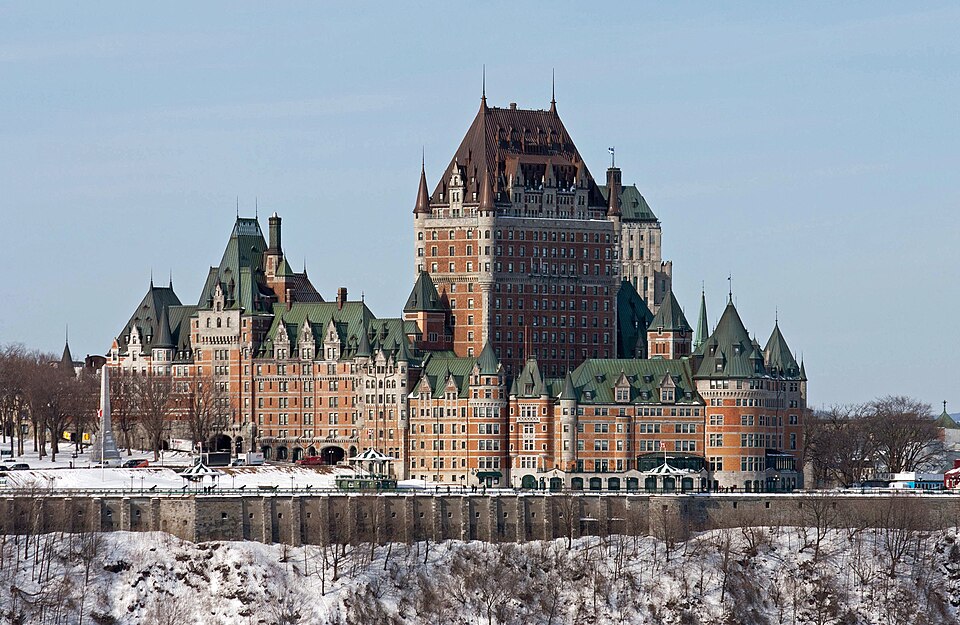
A hotel in the style of a French château, with copper roofs and turrets, built in 1893 by the Canadian Pacific railway company. It's the most photographed hotel in the world and a symbol of the city. In 1943, Churchill and Roosevelt planned the Normandy landings here. Inside, the lobby and the river-view bar are worth a look.
Tip: The best photo of the château isn't from the terrace in front of it, but from Lower Town along Rue du Petit-Champlain, or from the ferry to Lévis. Nobody checks whether you're a guest in the lobby, and Bar 1608, with its view, is open to everyone — a drink there is a cheaper way to see the château's interior than a guided tour.
Admission:
lobby free, guided tour around 30 CAD
Time needed:
45 min
Dufferin Terrace
Terrasse Dufferin
Upper Town
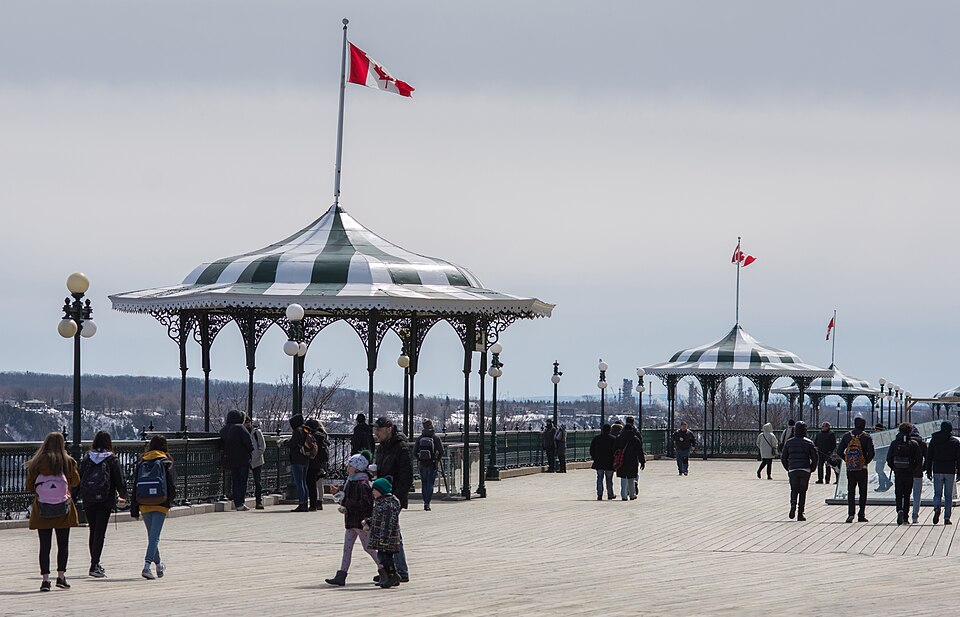
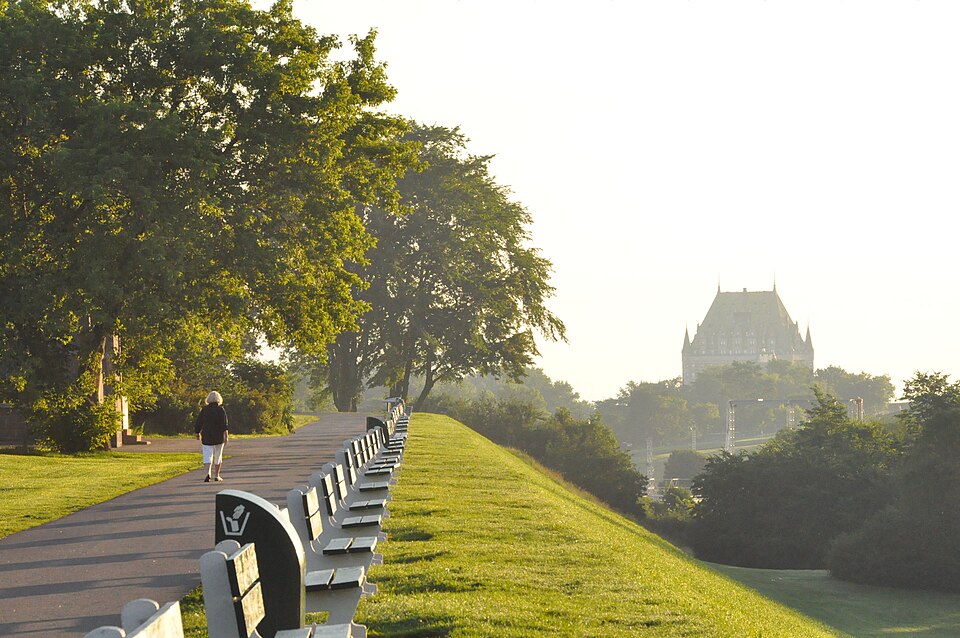
A four-hundred-meter wooden boardwalk along the cliff edge below the Château Frontenac, sixty meters above the river, with gazebos and views over the Saint Lawrence, Lévis and Île d'Orléans. At its far end begins the Promenade des Gouverneurs staircase, which runs along the cliff to the Citadelle and the Plains of Abraham.
Tip: In winter, a wooden toboggan slide called Au 1884 stands on the terrace, sending riders down two hundred fifty meters at seventy kilometers an hour for a few dollars a ride. Beneath the terrace floor lie the exposed foundations of the old governors' Château Saint-Louis, free to visit in summer.
Admission:
free
Time needed:
30 min – 1 h
Rue du Petit-Champlain
Lower Town
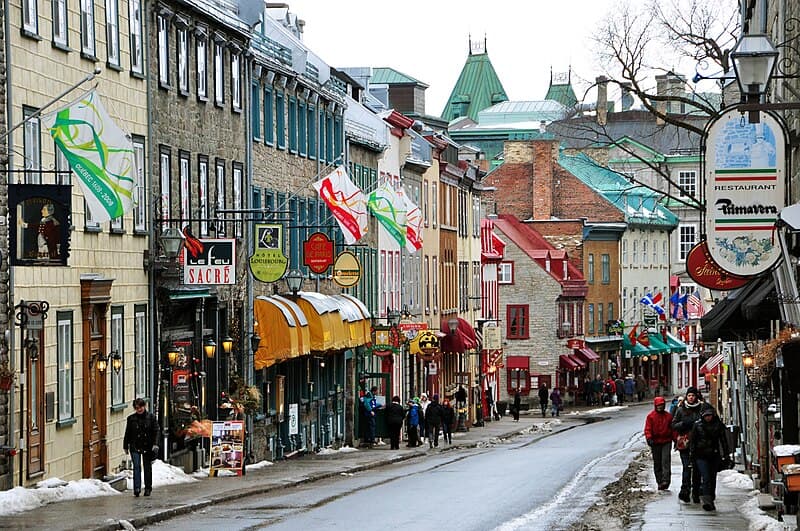
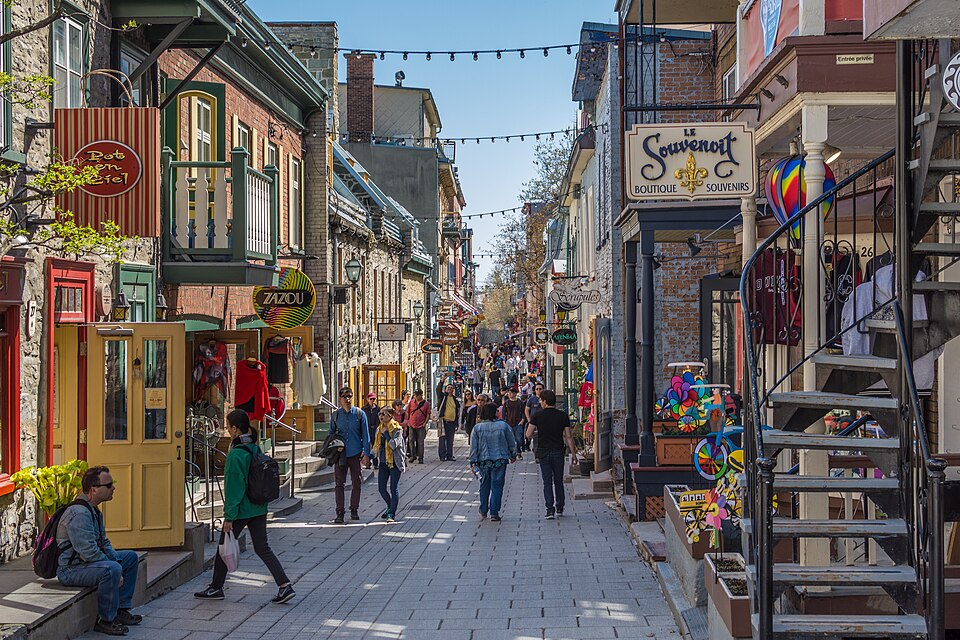
A narrow cobblestone street below the cliff in Lower Town, considered North America's oldest commercial street. Stone houses hold craft shops, galleries and bistros, decorated with lights and fir trees in winter. The Funiculaire cable car or the Casse-Cou stairs lead up to Upper Town.
Tip: The funicular costs around five dollars a ride and draws lines in summer; the Casse-Cou stairs are free and take three minutes, though they'll leave you out of breath. At the end of the street, a giant mural on a building's gable depicts the neighborhood's history — photograph it from the small park across the way. Mornings before ten are nearly empty.
Admission:
free, funicular around 5 CAD
Time needed:
1 h
Place Royale
Lower Town
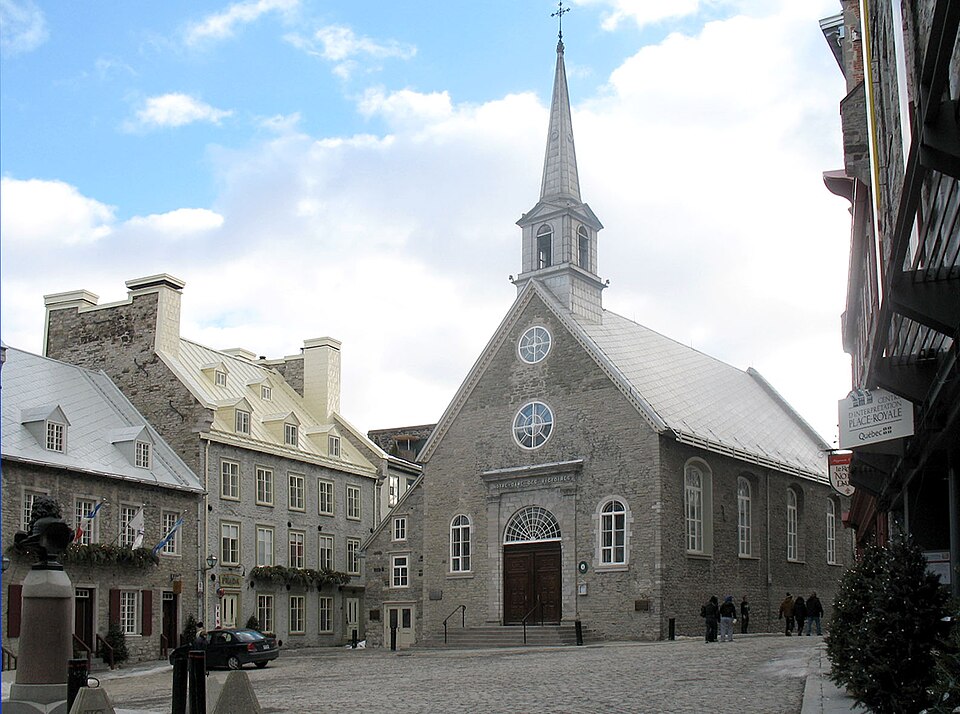
A small cobblestone square on the site where Champlain built his first house in 1608, surrounded by seventeenth- and eighteenth-century stone houses. The Notre-Dame-des-Victoires church, from 1688, is the oldest stone church in North America. A gable on one building holds a giant mural, the Fresque des Québécois, depicting famous figures from history.
Tip: On the mural, look for Champlain, Bishop Laval and Jacques Cartier — guides here play a game of who can spot the most figures. The church has a model ship hanging inside as a votive offering from sailors. In summer, the square hosts New France festivities with people in period costume.
Admission:
free
Time needed:
30 min
The Citadelle
La Citadelle
Upper Town
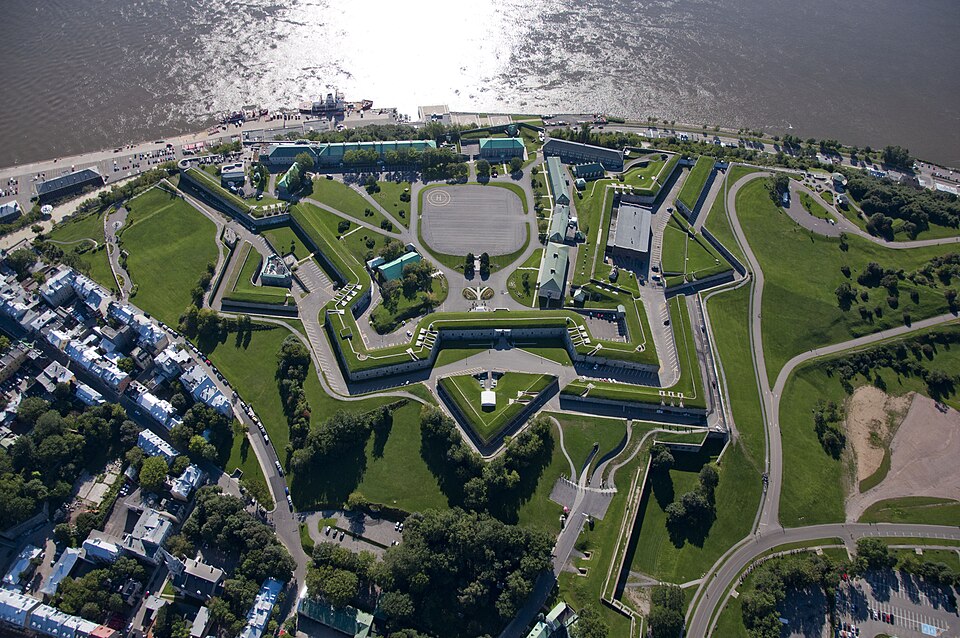
A star-shaped fortress on the highest point of Cape Diamond, built by the British between 1820 and 1850 to defend against the Americans. It remains an active military base for the Royal 22e Régiment and the official residence of Canada's Governor General. It can only be visited on a guided tour, which includes a military museum.
Tip: From late June to early September, a changing of the guard takes place at ten in the morning, featuring bearskin caps and the regiment's goat mascot, Batisse. Tours start every hour and last an hour; morning slots sell out. The ramparts offer a river view you can't get from the terrace below.
Admission:
around 22 CAD
Time needed:
1.5 h
Plains of Abraham
Plaines d'Abraham
Montcalm
A hundred-hectare park above the river where, in 1759, British General Wolfe defeated the French Marquis de Montcalm — both died in the battle. Today it's an urban park with lawns, gardens and trails. In summer it hosts concerts for the Festival d'été, and in winter it's used for cross-country skiing and snowshoeing.
Tip: Reach the park via the Promenade des Gouverneurs staircase from Dufferin Terrace — the twenty-minute walk along the cliff has the best views anywhere in the city. The Plains of Abraham museum in the park explains the battle interactively, in English too. On the park's west side is the Musée national des beaux-arts, with Québec art.
Admission:
park free
Time needed:
1–2 h
Notre-Dame de Québec Cathedral
Upper Town
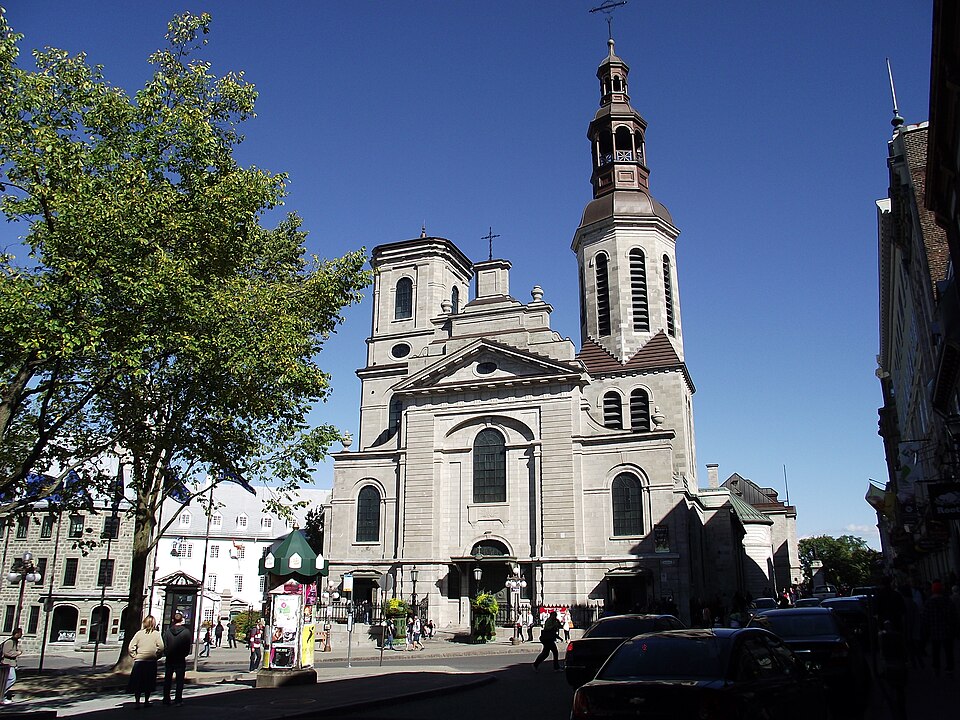
The cathedral of the oldest parish north of Mexico, founded in 1664, burned and rebuilt several times, most recently after a 1922 fire. The interior is gold and white with a canopy over the altar. It is one of the few cathedrals outside Rome with a Holy Door, permanently open to pilgrims since 2014.
Tip: The crypt holds the remains of bishops and four governors of New France, including Frontenac. Admission is free, and a guided crypt tour costs a few dollars. Right next door is the Québec Seminary, founded in 1663, with a courtyard visible through the gate.
Admission:
free
Time needed:
30 min
Parliament Building
Hôtel du Parlement
Colline Parlementaire
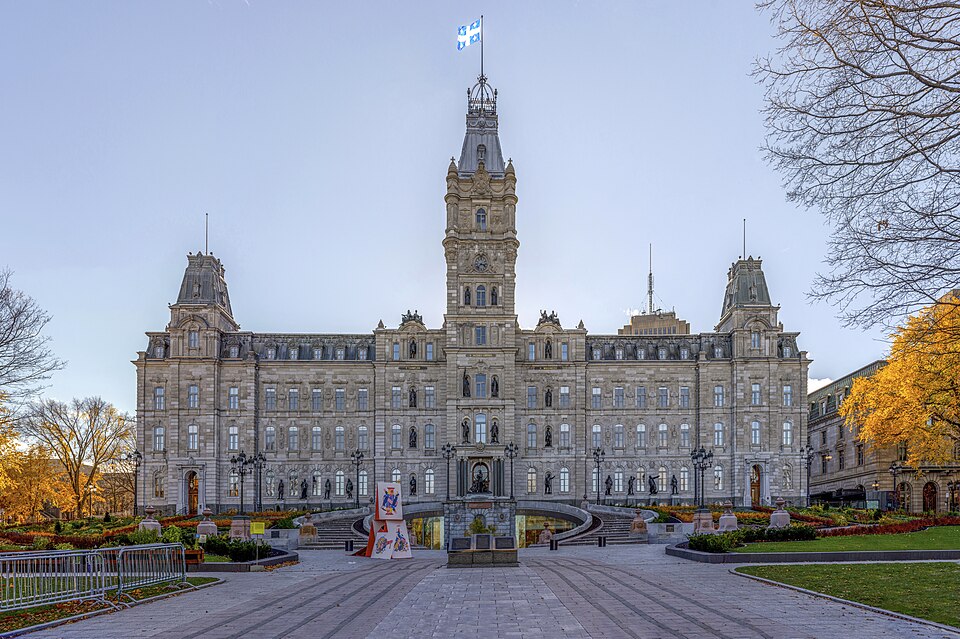
The seat of Québec's National Assembly, built between 1877 and 1886 in the Second Empire French style, its facade lined with statues of twenty-two figures from Québec's history. Inside are the green chamber of the legislators and the red chamber of the former upper house. The building stands just outside the walls near the Saint-Louis gate.
Tip: Guided tours are free, offered in English too, and last half an hour; pick up a timed ticket at the entrance or book online. The building houses the restaurant Le Parlementaire, where legislators eat lunch and anyone can join — a fixed price gets you a three-course lunch in a beautiful dining room.
Admission:
free
Time needed:
45 min
Musée de la civilisation
Lower Town / Vieux-Port
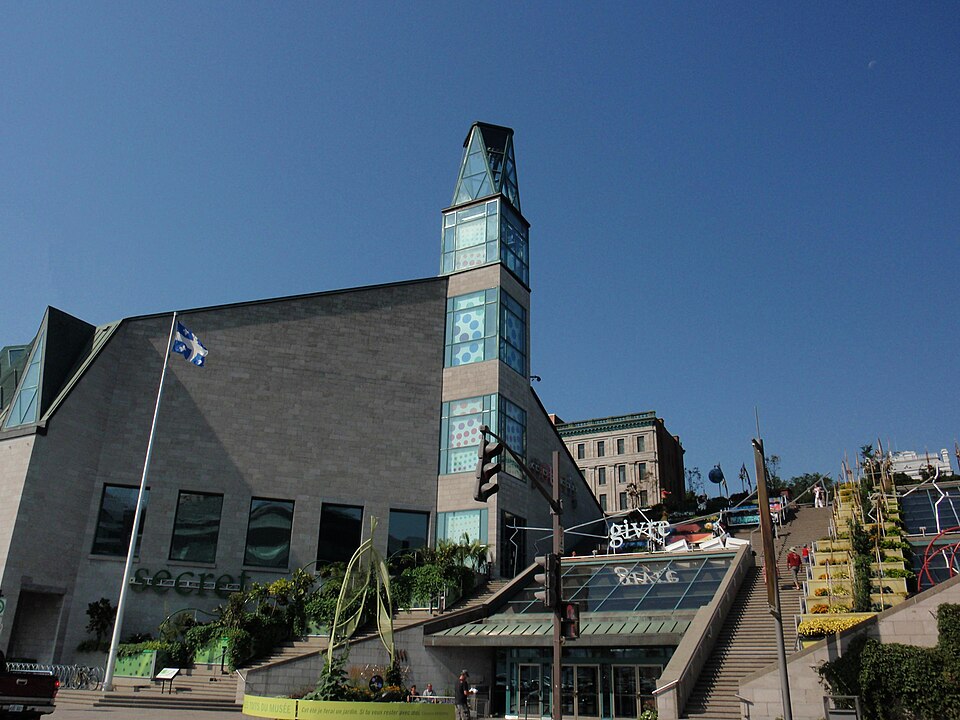
A modern museum in Lower Town, in a building by Moshe Safdie that incorporates historic houses. The permanent exhibit tells the history of Québec and the region's First Nations, and temporary exhibits are often large and interactive. It's the best place to understand why French is spoken here and how deeply Québécois value their identity.
Tip: A good pick for a rainy or freezing day when walking outside isn't appealing. Exhibits are bilingual. It's a five-minute walk from the funicular station and Place Royale along Rue Dalhousie, past the harbor where cruise ships dock.
Areas and districts, matched to the kind of trip you are taking
Upper Town, within the walls
Best for: a first visit and romance
Old Québec inside the ramparts, with the Château Frontenac, the cathedral, and Rue Saint-Louis and Rue Saint-Jean lined with restaurants and small hotels in historic houses. Everything is walkable, but the streets are steep and slippery in winter. Accommodation prices are the highest here, especially during the carnival and festival season.
Lower Town and the Old Port
Best for: calm, bistros and views
Below the cliff around Petit-Champlain, Place Royale and the old harbor. Boutique hotels in former warehouses, antique shops on Rue Saint-Paul and waterfront bistros. The funicular connects it to Upper Town, and Gare du Palais station, where trains from Montreal arrive, is nearby.
Saint-Jean-Baptiste and Montcalm
Best for: local life and food
Neighborhoods just outside the walls where Québécois actually live. Rue Saint-Jean continues past the gate as a main street with cafés and shops, and Avenue Cartier in Montcalm is full of restaurants. Guesthouses and apartments here cost less than inside the walls, and it's a ten-minute walk to Old Québec.
Saint-Roch
Best for: bars and a younger scene
A former working-class neighborhood in Lower Town below Saint-Jean-Baptiste, now a hub of microbreweries, cocktail bars and new restaurants along Rue Saint-Joseph. Modern hotels here cost less than in Old Québec. An elevator and staircase up the cliff connect the neighborhoods.
Most visitors reach Québec City by train or car from Montreal: the VIA Rail train takes three and a quarter hours and arrives at the beautiful Gare du Palais station in Lower Town, a five-minute walk from the walls; by car it's three hours on Highway 20 or 40. From Europe, seasonal direct flights run from Paris; otherwise you'll connect through Montreal or Toronto. Jean-Lesage Airport sits sixteen kilometers west of downtown; city buses from it run infrequently, so most people take a fixed-rate taxi to Old Québec or use Uber. From Toronto it's an hour and a quarter by plane. Anyone driving from Montreal can return along the northern route through the river villages on the Chemin du Roy, Canada's oldest road.
Québec City Jean-Lesage (YQB) · 16 km
Taxi, fixed rate to Old Québec· 20–25 min· around 45 CAD
Uber· 20–25 min· 35 CAD
Around town
Old Québec is small and everything is within walking distance, just uphill: Lower and Upper Town differ by sixty meters in elevation, crossed by funicular, staircases or the switchbacks of Côte de la Montagne. Outside the walls, RTC buses run, with the fast Métrobus lines 800 and 801 the most useful, running along Grande Allée and out to Montmorency Falls. You don't need a car inside the walls, and parking is expensive and limited; hotels usually offer paid parking outside the walls. The nicest way to get around is the twelve-minute ferry to Lévis on the opposite bank, which gives the best view of the whole city.
RTC busesMétrobus lines 800 and 801 run along Grande Allée, to the Plains of Abraham and to Montmorency Falls. Pay by card with the driver or via the app; a ticket is valid for ninety minutes. · around 3.75 CAD
Funiculaire cable carConnects Lower Town near Petit-Champlain with Dufferin Terrace; the ride takes under a minute. Runs from morning until late evening, shorter hours in winter. · around 5 CAD
Québec–Lévis ferryRuns year-round, even through winter ice floes, every twenty to thirty minutes during the day. The cheapest scenic cruise, with a view of the Château Frontenac. · around 4 CAD
On footThe fastest way to get around inside the walls. Streets are steep and cobbled; in winter sidewalks are gritted, and non-slip footwear is essential. · free
VIA Rail train to MontrealDeparts from Gare du Palais several times a day, taking three and a quarter hours; tickets bought in advance are significantly cheaper. The Orléans Express bus takes about the same time and costs a bit less. · from 40 CAD
Useful apps: RTC Nomade, Uber, Transit, Google Maps
When to go
Québec City has two peak seasons. Summer, from late June through August, is warm, around twenty-five degrees, with the Festival d'été music festival in July, when major bands play on the Plains of Abraham. September and early October are the prettiest for walking, with colorful foliage on Île d'Orléans and in Charlevoix. The second season is winter: Québec Winter Carnival, straddling late January and early February, features the snowman mascot Bonhomme, ice canoe races on the frozen river, and snow sculptures, while the Hôtel de Glace ice hotel outside the city runs from January to March. Winter is very cold, with temperatures dropping to minus twenty, and warm boots are essential. November and April are the least pleasant.
Best time
July and September to mid-October, or late January and February for winter
What to avoid
November and April
Month
Jan
Feb
Mar
Apr
May
Jun
Jul
Aug
Sep
Oct
Nov
Dec
Day
-8°
-6°
0°
8°
17°
22°
25°
24°
18°
11°
3°
-5°
Night
-18°
-16°
-9°
-1°
5°
11°
14°
13°
8°
2°
-4°
-13°
Rainy days
17
14
14
13
14
14
14
13
14
14
15
17
Food & drink
Québec cuisine grew out of French roots and long winters — it's hearty, meaty and sweet, thanks to maple syrup. Tourtière, pea soup, beans baked with syrup and poutine are dishes you'll see on every menu in Old Québec, alongside French classics like onion soup and steak tartare. Food in Old Québec is touristy and pricey; better value is found on Avenue Cartier and in Saint-Roch. In February and March, sugar shacks called cabane à sucre open around the region for maple feasts with live music. Local breweries are excellent, and Île d'Orléans produces cider, ice cider made from frozen apples, and blackcurrant liqueur, cassis.
What to try
Tourtière
A Québec meat pie made from ground pork, veal or game with cloves and cinnamon, traditionally served on Christmas Eve and New Year's Eve. Served with a tomato sauce called ketchup maison, and it appears on winter menus year-round.
Poutine
Fries drenched in brown gravy and topped with fresh cheese curds that squeak against your teeth. It originated in rural Québec in the 1950s; a good poutine uses cheese that only half-melts in the hot gravy. Eaten mostly after midnight.
Pea soup
A thick soup of yellow split peas cooked with salt pork, a dish of Québec lumberjacks and fishermen. Served at traditional restaurants like Aux Anciens Canadiens, in a house dating from the seventeenth century.
Tire d'érable
Hot maple syrup poured onto clean snow, where it hardens, then rolled onto a stick like a lollipop. Eaten in winter at the carnival and at sugar shacks; in summer it's made on shaved ice on Rue Saint-Louis.
Fèves au lard
White beans baked overnight with pork and maple syrup or molasses. Served at breakfast at a cabane à sucre alongside eggs, ham and pancakes drizzled with syrup.
Cidre de glace
Ice cider made from apples harvested frozen in winter or from juice frozen outdoors; sweet and tart at once, served with cheese and dessert. The best comes from orchards on Île d'Orléans, and a bottle starts around twenty-five dollars.
Maple syrup
Canada produces three-quarters of the world's maple syrup, most of it in Québec. Grades differ by color — light 'golden' is delicate, dark 'very dark' is bold and good for baking. Buy it in a tin or jar from a farmer; the maple-leaf-shaped bottle at the airport costs triple.
What it costs
Coffee with a croissant
6–8 CAD
Poutine
10–15 CAD
Beer at a bar
8–10 CAD
Dinner at a bistro
45–65 CAD per person
Funicular ride
around 5 CAD
Citadelle guided tour
around 22 CAD
Ferry to Lévis
around 4 CAD
Night at a 3-star hotel within the walls, for two
200–320 CAD
Indicative prices that change over time — treat them as a guide, not a price list.
Practical information
SocketsAtwo flat pins (US/JP)Btwo flat pins plus ground (US)
Voltage120V / 60Hz
Tap waterTap water is drinkable — Tap water in Canada is safe and good to drink, and restaurants will bring it free with ice — just ask for 'tap water.' Bottled water is an unnecessary expense — a bottle costs two to three dollars, five at the airport. Airports, parks and museums have refill stations, so it's worth carrying your own bottle. In national parks, don't drink stream water without boiling it first, even if it looks crystal clear, because of the parasite giardia.
TippingTipping in Canada is an obligation, not a bonus: at a table-service restaurant, leave fifteen to twenty percent; at a bar, one to two dollars per drink; taxi and rideshare drivers ten to fifteen percent; housekeeping three to five dollars a night. The card terminal will offer preset percentage buttons — some calculate from the total including tax, so working out your own tip is often cheaper. Sales tax, five to fifteen percent depending on the province, is added at checkout on top of listed prices, both on menus and in shops, so the final total is always higher than the price tag. In Québec, two taxes combine to just under fifteen percent.
Driving on theright
SafetyCanadian cities rank among the safest in the world, and you can walk tourist neighborhoods even at night. The real risks lie elsewhere: theft from cars and bikes, pickpockets in crowds, and in some neighborhoods a visible homelessness and drug crisis, which is unpleasant but rarely threatens tourists directly. In winter, the biggest hazard is ice and cold — boots with non-slip soles matter more than anything else. Healthcare is very expensive for foreigners, with a hospital night costing thousands of dollars, so travel insurance with a high coverage limit is essential. The emergency number is 911.
Opening hoursShops are open roughly from ten to nine in the evening, shorter hours on Sundays, with supermarkets often open until eleven and Shoppers Drug Mart pharmacies sometimes around the clock. Restaurants serve dinner from five, and kitchens in smaller towns close around ten. Alcohol is sold at state-run shops — LCBO in Ontario, SAQ in Québec — or in supermarkets; in Alberta, private liquor stores; drinking in public is not allowed. Museums are typically closed on Mondays and often have one evening a week free or discounted. On public holidays — Canada Day on July 1st, Thanksgiving in October — most shops close.
Customs & etiquetteCanadians are polite and say 'sorry' even when you bump into them. Queuing is strictly respected, whether at a bus stop or for coffee. Confusing Canadians with Americans is the most common faux pas, and in Québec City, start every conversation with 'bonjour' — switching to English afterward is fine, but opening in English without a greeting comes across as rude. Indigenous peoples are referred to as First Nations, Inuit and Métis, and the word 'Indian' is not used. Smoking, including marijuana, is banned in restaurants, on terraces and near entrances. This matters even more in Québec City than in Montreal — fewer people speak English here, and a few French words go a long way.
A few local wordsHello — BonjourThank you — MerciExcuse me — Excusez-moiThe check, please — L'addition, s'il vous plaîtDo you speak English? — Parlez-vous anglais ?Have a good day — Bonne journée
How to plan your days
1 day
A day in Québec City
1Morning at Petit-Champlain and Place Royale, while it's still empty.
2Casse-Cou stairs up to Dufferin Terrace and the Château Frontenac.
3Lunch on Rue Saint-Jean.
4Afternoon at the Citadelle and a walk along the Promenade des Gouverneurs to the Plains of Abraham.
5Evening ferry to Lévis and back at dusk.
2 days
Two days in Québec City
1First day as above.
2Second day, morning at the cathedral, the seminary and the free Parliament Building tour.
3Lunch at the parliament restaurant or on Avenue Cartier.
4Afternoon at the Musée de la civilisation and the Old Port.
5Evening at the breweries in Saint-Roch.
3 days
Three days with the falls and the island
1Two days in the city as above.
2Third day, bus 800 or a car to Montmorency Falls.
3Cable car and the suspension bridge over the falls.
4Cross the bridge to Île d'Orléans for farms, cideries and wineries.
5Return to the city for dinner.
Day trips
Montmorency Falls
12 km · 25 min by car
A waterfall eighty-three meters high — thirty meters taller than Niagara — plunging into the Saint Lawrence River just outside the city. A cable car and a five-hundred-step staircase lead to the top, a suspension bridge crosses the falls, and thrill-seekers can try the zipline or via ferrata. In winter, freezing mist builds an ice cone up to thirty meters tall at the base, nicknamed the 'sugar loaf.' Bus 800 runs there from downtown in forty minutes.
Île d'Orléans
15 km · 30 min by car
A farming island in the river, connected to the mainland by a bridge, with six villages and farms that have barely changed since the seventeenth century. A sixty-seven-kilometer road circles the island, lined with strawberry and apple stands, cideries, wineries, and makers of blackcurrant liqueur and chocolate. Strawberry season runs June and July, apples in September. It's an ideal bike trip, with rentals available near the bridge.
Tadoussac
220 km · 3 h by car
A village at the mouth of the Saguenay Fjord, where it meets the Saint Lawrence, a summer feeding ground for whales — belugas, minke whales, humpbacks and occasionally blue whales. Boat trips and Zodiac inflatable tours run from June to October, and whale sightings are nearly guaranteed. The drive from Québec City passes through the Charlevoix region, with villages and river viewpoints; it's a stretch for a single day, so an overnight stay is better.
Frequently asked questions
How many days do I need in Québec City?+
Two days are enough for Old Québec, the Citadelle and the Plains of Abraham. Spend a third day at Montmorency Falls and Île d'Orléans. Québec City is often combined with Montreal, three hours away by train, and a whale-watching trip to Tadoussac.
Will English get me by in Québec City?+
Yes, in hotels, restaurants in Old Québec and at tourist sites. Outside downtown and among older residents, less so than in Montreal — Québec City is ninety-five percent French-speaking. Greeting people with 'bonjour' and 'merci' opens doors, and anyone who speaks French will manage fine despite the strong accent.
When is the winter carnival?+
Québec Winter Carnival usually runs from late January to mid-February, with exact dates announced in the fall. The program takes place outdoors at minus ten to minus twenty degrees: night parades, snow sculptures, ice canoe races and slides. Hotels sell out and get pricier, so book two to three months ahead.
How do I get from Montreal to Québec City?+
By VIA Rail train in three and a quarter hours, several times a day, or by Orléans Express bus in a similar time. By car it's three hours on the highway. Flying isn't worth it — even counting the airport trip, it takes longer than the train.
Is it worth staying at the Château Frontenac?+
A night starts around four hundred dollars and up, with river-view rooms costing more. Worth it for a unique experience, especially in winter; anyone who just wants to see the interior can stop for a drink at Bar 1608 or take a guided tour. Small hotels in historic Old Québec houses cost half as much and have more character.
What is the Hôtel de Glace?+
An ice hotel rebuilt from scratch every winter at the Valcartier resort, half an hour from the city, open roughly from January to March. Rooms, a chapel, a bar with ice glasses — you sleep in sleeping bags on ice beds at around minus five degrees. Anyone who doesn't want to sleep there can just visit during the day.
Is Québec City safe?+
Québec City is one of the safest cities in North America, and Old Québec is calm even at night. The biggest risks are icy streets on steep slopes in winter and falling icicles from roofs — hotels rope off dangerous stretches with tape. In summer, the main nuisance is the crowds from cruise ships around Petit-Champlain.
How far is Québec City from Niagara or Toronto?+
Toronto is eight hundred kilometers away — eight hours by car, eight and a half by train via Montreal, or an hour and a quarter by plane. Niagara is another one hundred thirty kilometers beyond that. So a trip to Québec City makes more sense as part of a Montreal-based itinerary than as a day trip from Toronto.
Visa Requirements
Check the latest visa requirements for entering this country. Some nationalities may need to apply for a visa or e-visa before travel.