Hotels in Chengdu

Pandas, park teahouses and China's spiciest cuisine in a slow-paced Sichuan city

Chengdu

LanguageEnglish
CurrencyCNY
TimezoneGMT+8
Temperature5-30 °C
Dial Code+86
Population1.41B
Area9,596,960 km²
SocketsType A / Type C / Type I
Tap waterNot drinkable

Discover Chengdu

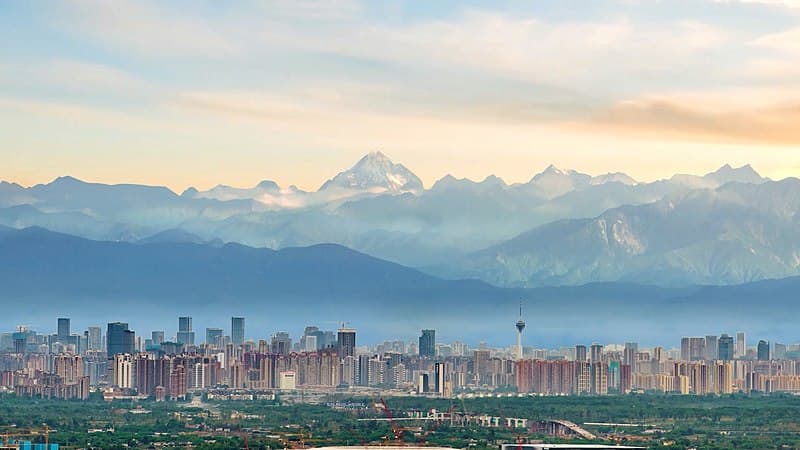
Chengdu is the capital of Sichuan province and one of the few Chinese megacities that has kept a slow pace of life. The Chinese say it is a city people do not want to leave: locals spend afternoons in teahouses in the parks, playing mahjong, listening to Sichuan opera and eating hotpot late into the night. Chengdu is the only major city in the world where you can watch giant pandas at a breeding base on the edge of town in the morning and sit in a 7th-century Buddhist monastery in the afternoon. It is also the capital of China's most famous regional cuisine: Sichuan pepper, which numbs the tongue, and chilli in almost every dish made it China's first UNESCO City of Gastronomy. Its history stretches back 3,000 years to the Jinsha culture and its gold masks, and the poet Du Fu wrote verses here in the 8th century in a thatched cottage that still stands today. Chengdu is also the gateway to Tibet, to the Giant Buddha at Leshan and to the sacred Mount Emei. The new Tianfu mega-airport has connected it to the world, but the city has stayed green, relaxed and welcoming.

What to see

The places worth your time in Chengdu, and what to expect at each

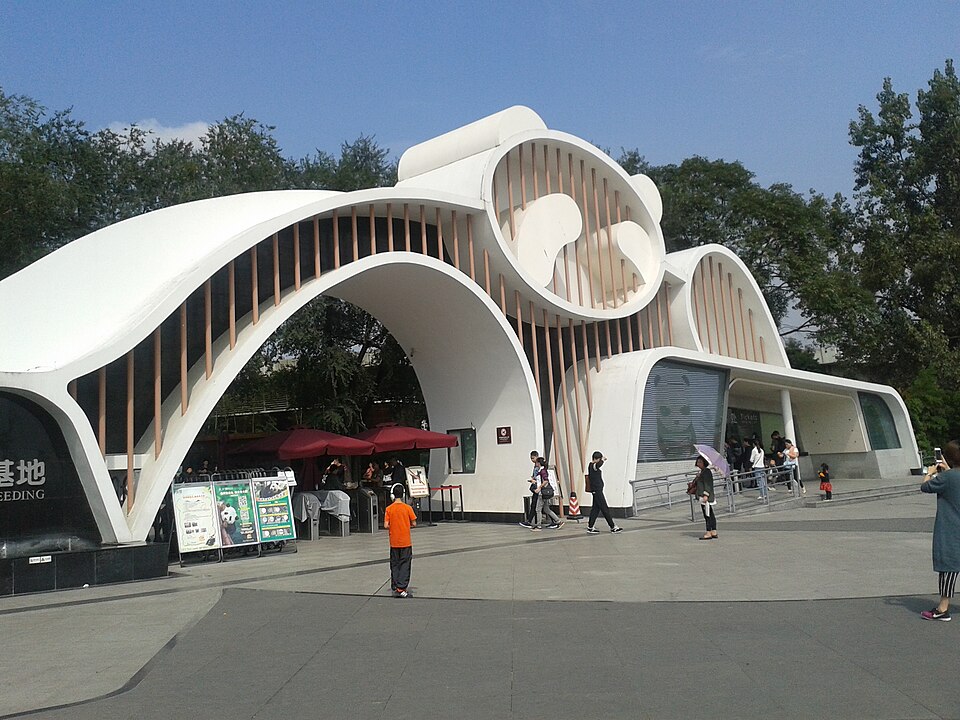
Chengdu Research Base of Giant Panda Breeding

Chengdu Research Base of Giant Panda Breeding

成都大熊猫繁育研究基地

Chenghua, north

A research and breeding centre founded in 1987 with 6 pandas rescued from the wild; today it is home to over 200 giant pandas and dozens of red pandas. The site is an extensive bamboo park with enclosures, a nursery where cubs are born in summer, and a panda museum.

Tip: Arrive right at opening, 7:30am: the pandas are only active in the morning during feeding, and are usually asleep after 11am. Tickets are bought online through the app or WeChat and sell out on weekends and holidays, with huge queues. The nursery with cubs is most interesting from August to November. The site is large, and buggies run inside it. A bus runs from Panda Avenue metro station.

Admission:
CNY 55
Time needed:
3h
Wenshu Monastery

Wenshu Monastery

文殊院

Qingyang

The best-preserved Buddhist monastery in Chengdu, founded during the Tang dynasty in the 7th century and restored in 1697. It comprises 5 halls on one axis, gardens with ponds, and a pagoda. The monastery is still active, home to monks, with worshippers praying with incense.

Tip: Entry is free, and mornings are best. There is a vegetarian restaurant on site where monks cook meat-like dishes, and a teahouse where tea is poured from a long-spouted kettle. The surrounding lanes are done up as an old town with sweet shops. Wenshu Monastery metro station is on line 1.

Admission:
free
Time needed:
1h
Kuanzhai Alley

Kuanzhai Alley

宽窄巷子

Qingyang

3 parallel lanes — Wide, Narrow and Well — with traditional courtyard houses from the Qing dynasty, when Manchu soldiers lived here. After a 2008 restoration, they now host cafes, teahouses, craft shops, restaurants and street performers.

Tip: The lanes are touristy and packed at weekends; they are nicest in the morning or late evening. In some teahouses an ear cleaner with metal tools will clean your ears right at the table — a traditional Sichuan experience for a few tens of yuan. Narrow Alley has better cafes, Wide Alley has traditional crafts and Sichuan opera with face-changing.

Admission:
free
Time needed:
1.5h
Wuhou Shrine and Jinli Street

Wuhou Shrine and Jinli Street

武侯祠·锦里

Wuhou

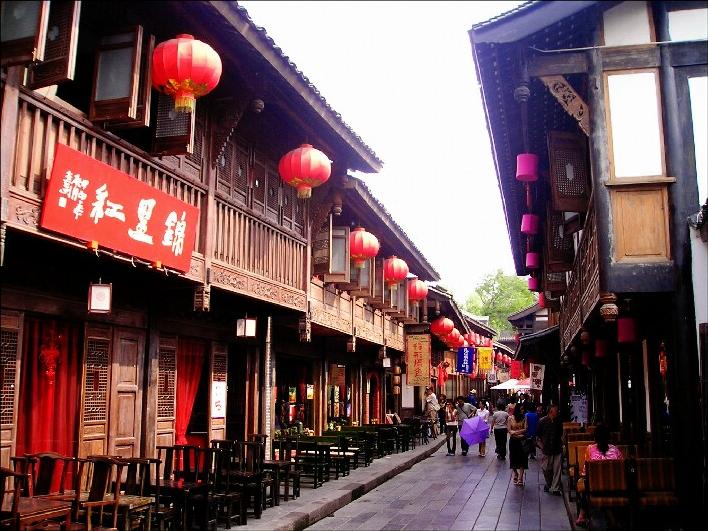
A shrine dedicated to Zhuge Liang, the legendary strategist of the Three Kingdoms period in the 3rd century, and also the tomb of his ruler Liu Bei. Dozens of statues of generals and ministers from the novel Romance of the Three Kingdoms stand in the halls. Right next door runs the historic Jinli Street, with lanterns, teahouses and stalls.

Tip: Visit the temple in the afternoon, then stay in Jinli for the evening, when red lanterns light up and the street is at its prettiest. Street food in Jinli is pricier than elsewhere, but it is a convenient way to sample Sichuan snacks like rabbit head or tangyuan. The Tibetan quarter, with shops selling monastic supplies, adjoins Jinli at the back.

Admission:
shrine CNY 50, street free
Time needed:
2h
Du Fu Thatched Cottage

Du Fu Thatched Cottage

杜甫草堂

Qingyang

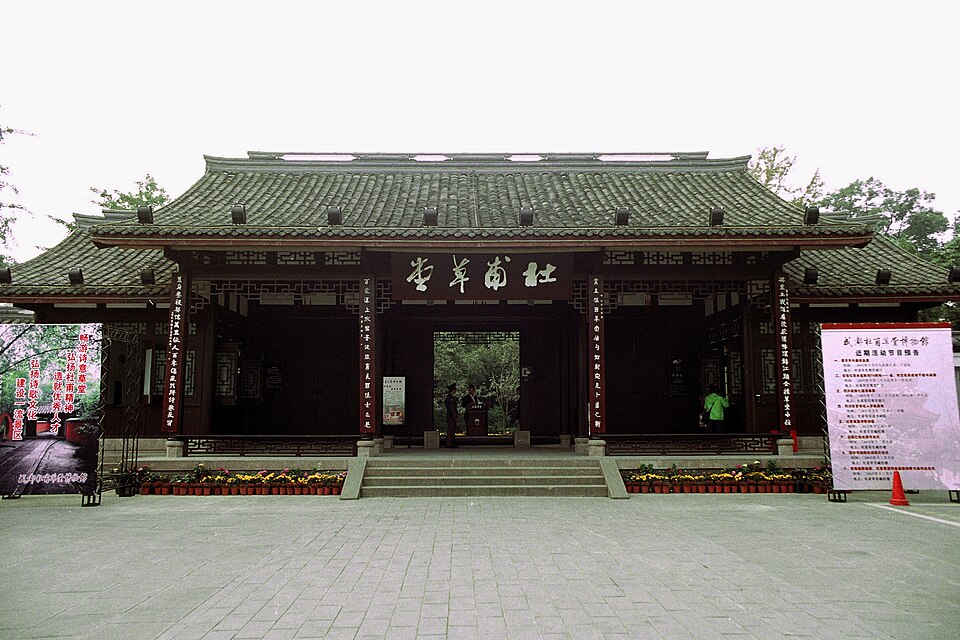
A park on the site where the poet Du Fu, one of China's greatest poets, lived from 759 to 763 after fleeing an uprising. The thatched cottage is a reconstruction, surrounded by a tranquil garden with bamboo, pavilions and plum trees, plus a museum with manuscripts and editions of his poems.

Tip: This is one of the calmest spots in Chengdu, ideal for an afternoon stroll. Plum trees bloom here in February, when the park is at its best. If you know one of Du Fu's poems in translation, you will find it carved in calligraphy on the stones in the garden. Caotang Temple metro station is on line 4.

Admission:
CNY 50
Time needed:
1.5h
People's Park and Heming Teahouse

People's Park and Heming Teahouse

人民公园

Qingyang

A park in the city centre that shows off the Chengdu way of life: retirees dance and sing, play mahjong and cards, and hundreds of people sit in bamboo chairs by the pond at Heming Teahouse. One part of the park hosts the famous marriage market, where parents post ads for their unmarried children.

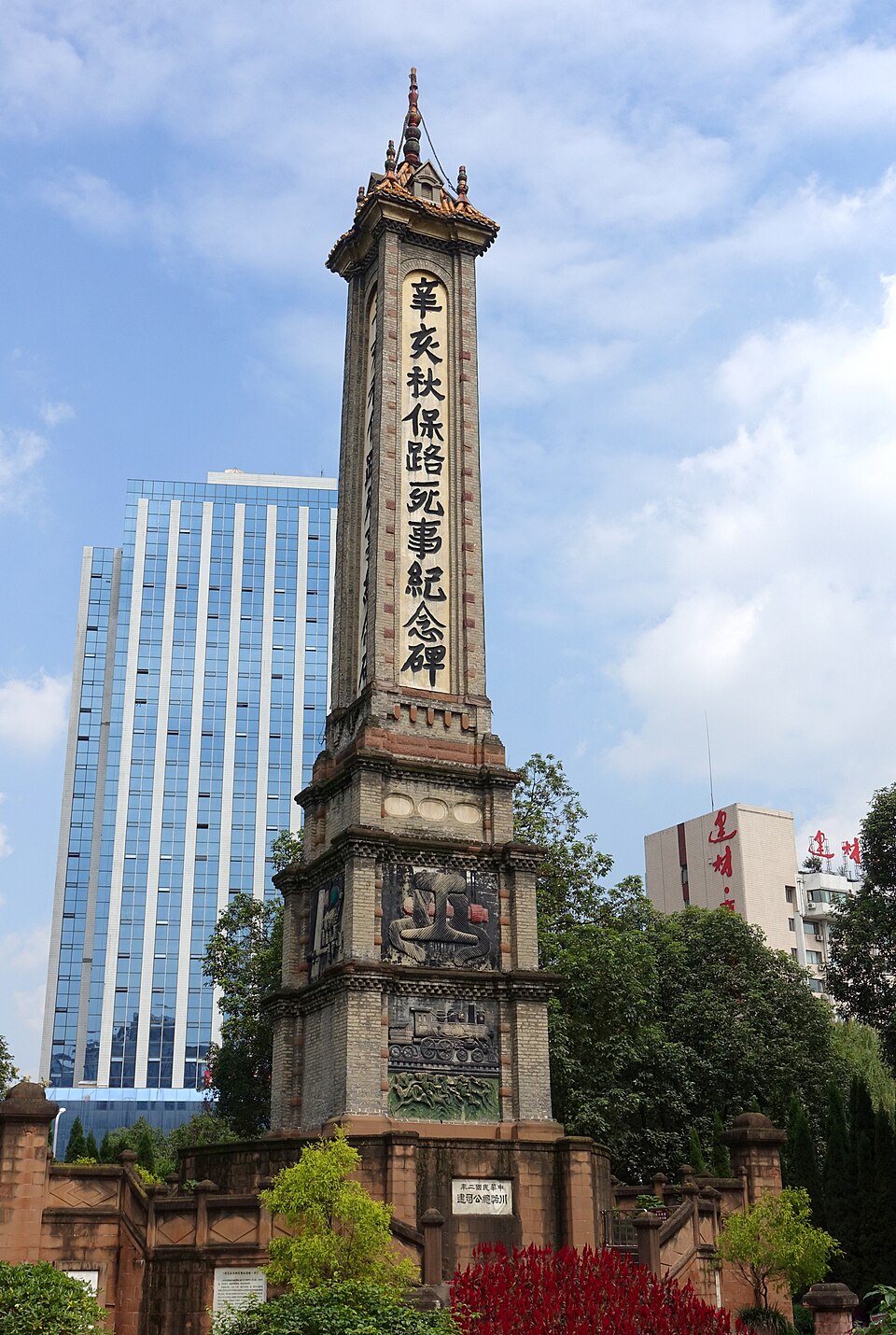
Tip: Sit down at the Heming Teahouse, order a green tea for CNY 30–50, and watch life go by. Tea is topped up with hot water for free, as much as you like, and locals sit here all afternoon. A marriage market is held on weekend afternoons in the northern part of the park. The park also has a monument to the 1911 Railway Protection Movement.

Admission:
free, tea CNY 30–50
Time needed:
1.5–2h
Jinsha Site Museum

Jinsha Site Museum

金沙遗址博物馆

Qingyang, west

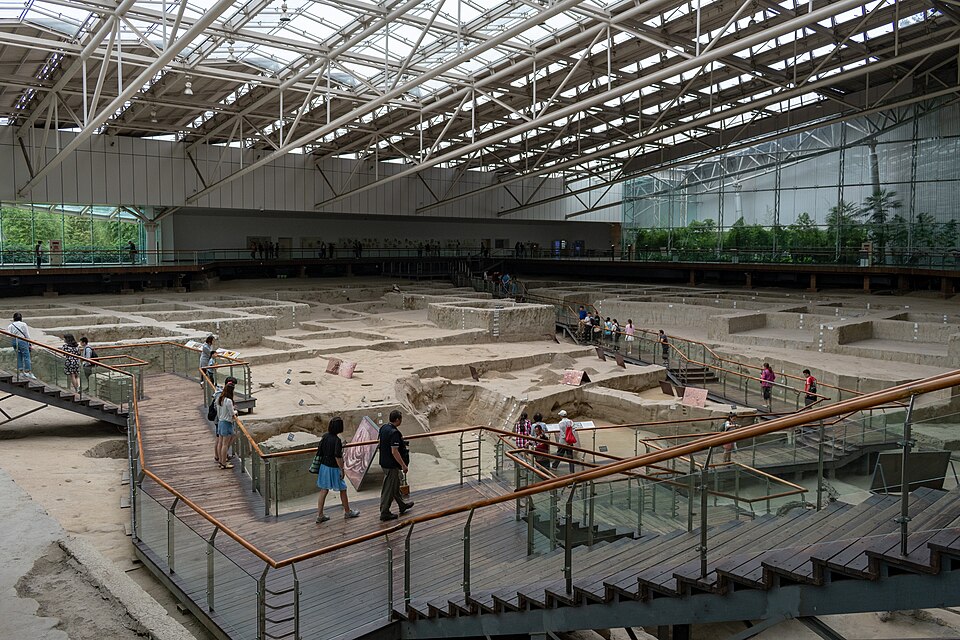
A museum built directly on the Jinsha archaeological site, discovered in 2001 during construction, where the capital of the Shu culture stood over 3,000 years ago. Thousands of artefacts in gold, jade, bronze and ivory were found here. The most famous is the Golden Sun Bird disc, today a symbol of Chinese cultural heritage.

Tip: The main hall is built right above the excavation itself, where you can see layers of elephant tusks. The Golden Sun Bird disc is so small it is easy to miss — look for it in the gold exhibit. Anyone interested in archaeology can combine it with the Sanxingdui Museum and its bronze masks, an hour's drive to the north. Closed on Mondays.

Admission:
CNY 70
Time needed:
2h
Qingyang Palace

Qingyang Palace

青羊宫

Qingyang

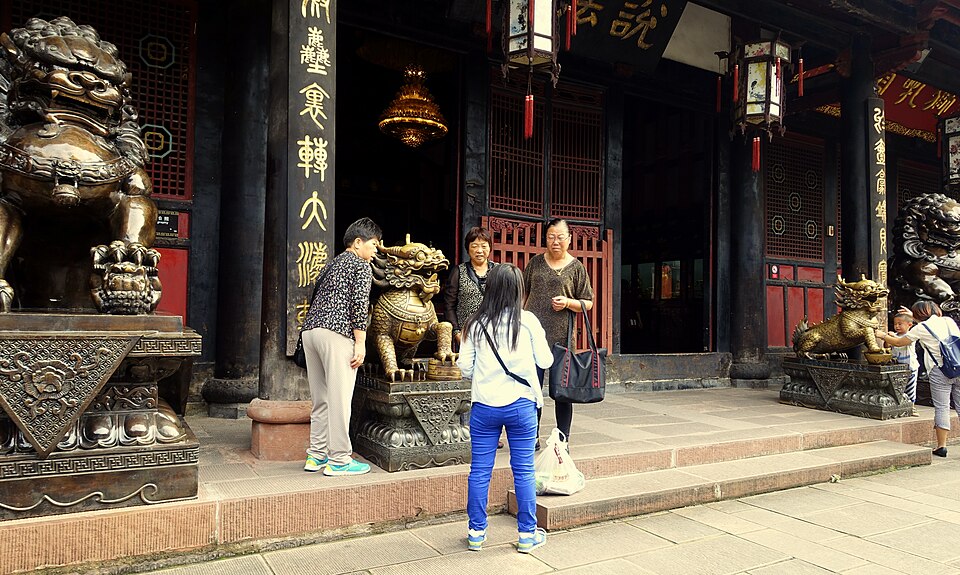
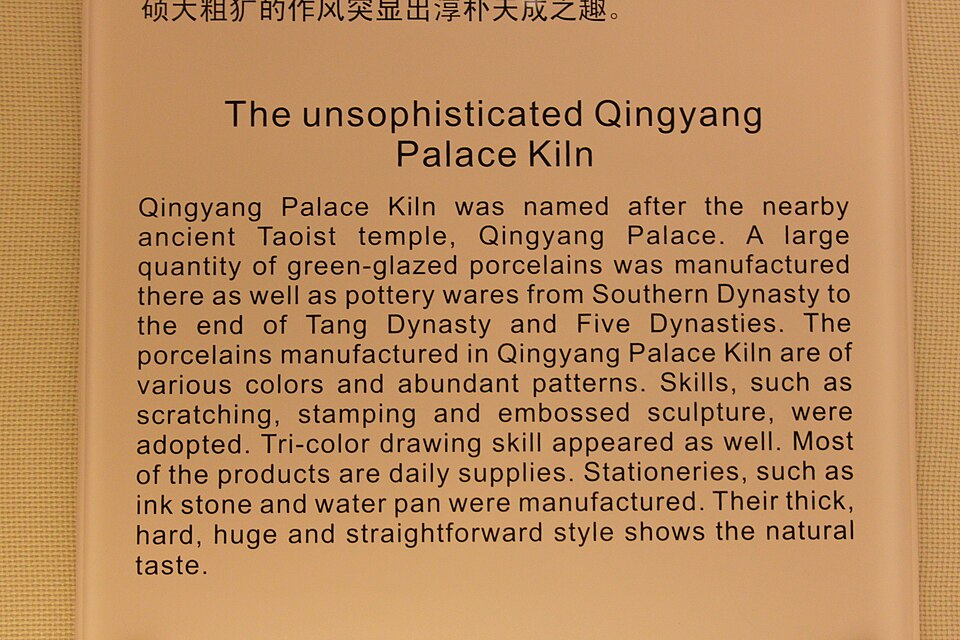
The oldest and largest Taoist temple in Chengdu, said to be the site where Laozi met his disciple. The current buildings date from the 17th century. The main hall houses 2 bronze goats credited with healing powers, and the Eight Trigrams Pavilion, built without a single nail.

Tip: Touch the bronze goat wherever it hurts — believers are convinced it helps, which is why parts of the statues are polished to gold. The temple is calmer than the Buddhist monasteries and sees few tourists. It borders Culture Park and is a short walk from Kuanzhai Alley and Du Fu Thatched Cottage.

Admission:
CNY 10
Time needed:
45 min
Sichuan Opera and Face-Changing

Sichuan Opera and Face-Changing

川剧变脸

Qingyang

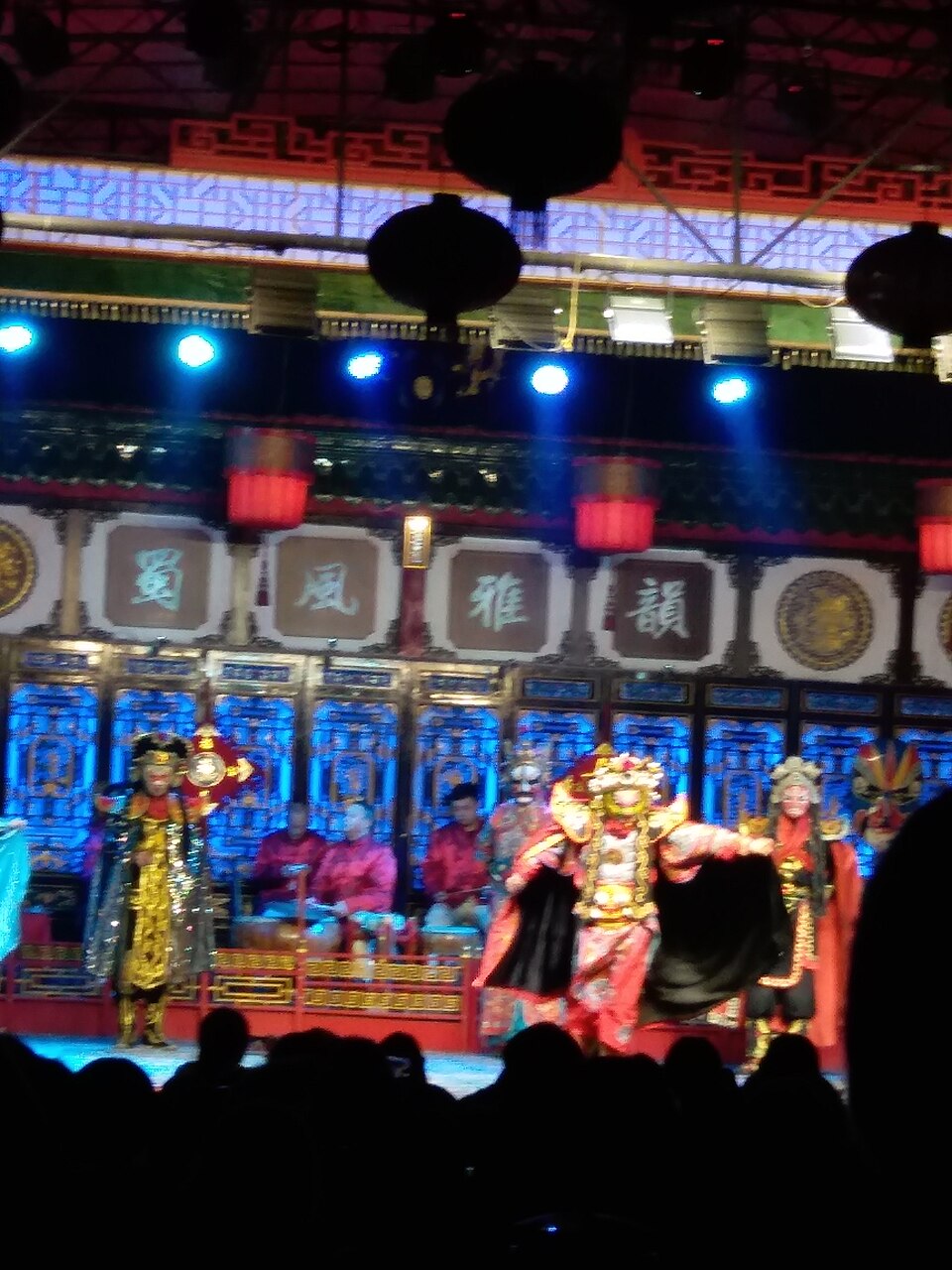
Traditional Sichuan opera with acrobatics, singing and, above all, bianlian face-changing, in which a performer switches coloured masks in a fraction of a second without the audience seeing how. The technique is a closely guarded secret passed down within families. Evening shows combine opera with puppetry, shadow theatre and fire-breathing.

Tip: The best-known theatre is Shu Feng Ya Yun in Culture Park; the evening show lasts 1.5 hours and starts around 8pm — buy tickets ahead and arrive early to watch performers apply their makeup. Cheaper, less formal shows can be seen in teahouses in Kuanzhai Alley and Jinli. For children, face-changing is the best experience in Chengdu.

Admission:
CNY 150–300
Time needed:
1.5h

Photos: Chengdu Research Base of Giant Panda Breeding — Kreisverkehrsampel (CC BY-SA 3.0) · Wenshu Monastery — Daderot (CC0) · Kuanzhai Alley — Breaknet2025 (CC BY 4.0) · Wuhou Shrine and Jinli Street — Wikimedia Commons (CC BY 1.0) · Du Fu Thatched Cottage — User:唐戈 (CC BY-SA 3.0) · People's Park and Heming Teahouse — Daderot (CC0) · Jinsha Site Museum — xiquinhosilva (CC BY 2.0) · Qingyang Palace — Gary Todd from Xinzheng, China (CC0) · Sichuan Opera and Face-Changing — Pauloleong2002 (CC BY-SA 4.0)

Where to stay

Areas and districts, matched to the kind of trip you are taking

Chunxi and Taikoo Li

Best for: first visit, shopping, food

The city's commercial heart, with the pedestrian street Chunxi, the modern Taikoo Li complex of low-rise buildings around Daci Temple, and the IFS mall with a panda climbing up its facade. Metro, restaurants and hotels of every category are all close by. The most practical choice for a short stay.

Kuanzhai and Qingyang

Best for: traditional Chengdu, teahouses

The western historic quarter with Kuanzhai Alley, People's Park, temples and Du Fu Thatched Cottage. Boutique hotels in traditional houses and the calm of the parks. It is far from the pandas, but it is the nicest district for a stroll.

Wuhou and the Tibetan quarter

Best for: evening atmosphere, cheaper hotels

The area around Wuhou Shrine, with Jinli Street and Tibetan shops and restaurants serving yak meat and butter tea. Hotels are cheaper, and the area is lively in the evening.

Tianfu New Area

Best for: business trips

A modern business district in the south with skyscrapers, a convention centre and international hotels, linked by metro to both airports. Not very appealing for tourists, but practical for business trips.

Getting around

From the airport

From Europe, Chengdu is reached with one stopover, via Beijing, Shanghai, Doha, Dubai or Istanbul, with a journey time of 14–18 hours; direct flight options with Chinese airlines change, so check current routes before booking. Visa requirements for China have changed several times in recent years and vary by nationality, so check current rules with your country's foreign ministry or nearest Chinese consulate before travelling; what is reliably available is visa-free transit of up to 240 hours when arriving from one country and departing to a third. Chengdu has 2 airports: the older Shuangliu, 16km southwest of the centre, and the newer Tianfu, 50km southeast, which handles most international flights. High-speed trains run from here to Chongqing in 1 hour and to Xi'an in 3.5 hours.

Chengdu Tianfu (TFU) · 50 km

  • Metro line 18 to the centre· 50–70 min· CNY 15
  • Airport bus to the centre· 60–90 min· CNY 30
  • Taxi or Didi to Chunxi· 50–70 min· CNY 150

Chengdu Shuangliu (CTU) · 16 km

  • Metro line 10 to the centre· 40 min· CNY 5
  • Taxi or Didi to the centre· 30–45 min· CNY 60

Around town

Chengdu has one of the largest metro networks in China, covering the centre, both airports, train stations and most sights; stations have English signage. Payment is by QR code in the Alipay or WeChat app, and tickets can also be bought at machines. For the pandas, take the metro to Panda Avenue station, then a bus. Taxis and Didi are cheap and reliable — show your destination in Chinese. The city is flat and green and easy to get around by shared bike, which unlocks via Alipay.

MetroOver 12 lines, pay by QR code in Alipay. · CNY 2
Didi / taxiCheap — enter your destination in the app's English interface. · CNY 9
BusCheap, no English information. · CNY 2
Shared bikesUnlock via Alipay, the city is flat. · CNY 1.5 / 30 min

Useful apps: Alipay, WeChat, Amap (Gaode), Didi, Trip.com, Metro Man

When to go

The best time is spring, from March to May, and autumn, from September to November, when temperatures hover around 20°C. Chengdu sits in the Sichuan Basin surrounded by mountains, and sunshine is rare — locals say the dogs bark when the sun comes out. Summer is hot and humid, around 30°C, with the most rainfall in July and August. Winter is grey and damp, around 8°C, without frost, but flats and many restaurants are not properly heated — though that is also the best time for hotpot. Pandas are most active in the cooler months; in summer they mostly sleep in air-conditioned pavilions. Avoid the national holidays in early May and October, when the whole of China is travelling.

Best time

March–May, September–November

What to avoid

holidays 1–7 October and 1–5 May, humid July and August

MonthJanFebMarAprMayJunJulAugSepOctNovDec
Day10°12°17°23°27°29°30°30°26°21°16°11°
Night3°5°9°14°18°21°23°23°19°15°10°5°
Rainy days5691113151715161474

Food & drink

Chengdu was the first Chinese city to be named a UNESCO City of Gastronomy, and food is one of the main reasons to visit. Sichuan cuisine is built on the ma-la combination: ma is the numbing sensation from Sichuan pepper, la is the heat of chilli. It leaves your tongue tingling and is oddly addictive. The most famous dish is hotpot, a pot of boiling spicy oil in the middle of the table for dipping meat, offal and vegetables. Add to that mapo tofu, kung pao chicken, dan dan noodles and dozens of street snacks. Not everything is spicy, though — Sichuan cuisine has 23 recognised flavours, and many dishes are only mildly seasoned. If you do not want it spicy, say bu yao la, but for hotpot, order a split pot with a spicy and a mild half.

What to try

Sichuan hotpot

A pot of boiling broth made from beef tallow, chilli and Sichuan pepper, in which you cook thin slices of meat, offal, tofu and vegetables yourself. Dip everything in sesame oil with garlic, which takes the edge off the heat. Dinner for 2 costs around CNY 200–300.

Mapo tofu

Soft tofu in a spicy sauce of fermented beans with minced beef and Sichuan pepper, said to have been invented in the 19th century by a woman with a pockmarked face. Eaten with plain rice to balance the heat.

Kung pao chicken

Diced chicken stir-fried with peanuts, dried chillies and Sichuan pepper in a sweet-and-sour sauce. In China it tastes completely different from the version served in European restaurants — spicier, with a strong peppery aroma.

Dan dan noodles

A small bowl of noodles with minced pork, chilli oil, Sichuan pepper and pickled vegetables, served without broth. Vendors originally carried them on a pole across their shoulders, hence the name. Costs CNY 15–25.

Chaoshou

Sichuan wontons in chilli oil with vinegar and garlic. Soft dumplings with a pork filling — a cheap, quick snack found on every corner.

Huiguorou

Twice-cooked pork: pork belly is boiled first, then sliced and stir-fried with leeks and fermented bean paste. Sichuan's most popular home-style dish.

Tea and rice wine

Tea is drunk without sugar and is often free in restaurants. Hainan rice wine and palm wine are sold at rural markets; "shan lan jiu" is a mountain spirit of the Li people, and it is stronger than it looks.

Tutou

Rabbit heads marinated in spices and chilli, eaten by hand wearing plastic gloves. A favourite bar snack for locals with beer; for many visitors, a test of nerve.

What it costs

Bowl of dan dan noodles

CNY 15–25

Tea at a park teahouse

CNY 30–50

Hotpot for 2

CNY 200–350

Dinner at a Sichuan restaurant

CNY 80–150 per person

Metro ride

CNY 2–7

Panda base entry

CNY 55

Beer at a bar

CNY 30–50

Night in a 4-star hotel for 2

CNY 450–900

Indicative prices that change over time — treat them as a guide, not a price list.

Practical information

SocketsAtwo flat pins (US/JP)CEuroplug, two round pinsIAustralian, angled pins
Voltage220V / 50Hz
Tap waterDo not drink tap water — Tap water is not drunk anywhere in China. Every hotel, station and plane has boiling water available — the Chinese drink hot water, and a thermos flask is standard kit. Bottled water costs CNY 2–3 in a shop, ten times that in a touristy complex. Ice is not traditionally added to drinks in China and you will not get it in local restaurants; beer is served warm unless you specifically ask for it chilled (bing de).
TippingTipping is not customary in China, and offering one is often refused as inappropriate; the exceptions are tour guides and international hotel chains. What matters is payment: cash and foreign cards are marginal in everyday use, payment is made by phone via WeChat Pay or Alipay, both of which can now be linked to a foreign card — set this up before you leave home, since it is often difficult to do once you are there without a Chinese phone number. Without mobile payment, you may struggle to eat or get around in many places. Bank of China ATMs accept foreign cards.
Driving on theright
SafetyChina is a safe country, violent crime against foreigners is rare, and walking around at night is not a problem. The real risks are different: traffic, where pedestrians do not have right of way even at crossings, crowding during national holidays, and overpricing in touristy areas. The "tea invitation" scam, or being lured into a bar with an inflated bill, still works in big cities. The internet is filtered — Google, WhatsApp, Facebook, Instagram and most foreign maps do not work without a VPN, which you need to install before you arrive. Emergency numbers are 110 (police) and 120 (ambulance).
Opening hoursShops and malls are open from 10am to 10pm, including weekends, and street food stalls from 6am. Restaurants serve lunch from 11am to 2pm and dinner from 5pm to 9pm — the kitchen is closed in between. Sights and parks open early, around 8am, and last admission is usually an hour before closing. During holidays, especially Chinese New Year and the first week of October, hundreds of millions of people are travelling around the country, and everything is crowded and more expensive.
Customs & etiquetteBusiness cards and money are handed over with both hands. Loud conversation and pushing in queues are not rudeness but the local norm. Food is ordered to share in the middle of the table, and everyone helps themselves from the dishes; chopsticks are never stuck upright in rice, as it resembles an offering for the dead. The bill is not split — one person pays, and the other pays next time. Declining the first offer is a politeness ritual; it is customary to offer 3 times. Leave political topics, Taiwan and Tibet alone.
A few local wordsHello — Ni haoThank you — Xie xieHow much does it cost? — Duo shao qian?The bill, please — Mai danI do not understand — Wo bu dongI do not want it spicy — Bu yao la

How to plan your days

1 day

Chengdu in a day

  1. 17:30am: the panda breeding base.
  2. 2Midday: Wenshu Monastery and a vegetarian lunch.
  3. 3Afternoon: tea at People's Park.
  4. 4Early evening: Kuanzhai Alley.
  5. 5Evening: hotpot and Sichuan opera.

2 days

2 days: pandas and the Three Kingdoms

  1. 1Day 1: pandas, Wenshu and People's Park.
  2. 2Day 1 evening: Taikoo Li and hotpot.
  3. 3Day 2: Du Fu Thatched Cottage and Qingyang Palace.
  4. 4Day 2 afternoon: Kuanzhai Alley.
  5. 5Day 2 evening: Wuhou Shrine and Jinli Street with lanterns.

3 days

3 days with the Giant Buddha

  1. 1Day 1: pandas, People's Park and Kuanzhai Alley.
  2. 2Day 2: high-speed train to Leshan for the Giant Buddha.
  3. 3Day 2 evening: return and opera.
  4. 4Day 3: Jinsha Museum and Du Fu Thatched Cottage.
  5. 5Day 3 evening: Wuhou and Jinli.

Day trips

Giant Buddha of Leshan

150 km · 1h by high-speed train

The largest stone Buddha statue in the world, 71m tall, carved into a cliff at the confluence of 3 rivers in the 8th century. A narrow staircase beside the statue leads down to its feet, though the queue can take 2 hours; an alternative is a sightseeing boat, which shows the whole statue. A high-speed train runs from Chengdu East station, and the trip can be combined with Mount Emei.

Mount Qingcheng and Dujiangyan

70 km · 1h by high-speed train

Mount Qingcheng is one of the birthplaces of Taoism, with temples in the forest and trails to the summit, and below it lies Dujiangyan, an irrigation system from the 3rd century BC that still irrigates the Sichuan Basin without a single dam. Both are UNESCO World Heritage sites. A high-speed train runs from Xipu station, and both can be combined in a single day.

Mount Emei

160 km · 1.5h by high-speed train

One of the 4 sacred mountains of Chinese Buddhism, 3,099m high, with a golden summit featuring a giant statue of Puxian and a monastery. A bus and cable car run to the top, and on a clear morning you can see a sea of clouds and the snow-capped peaks of Tibet. It is a demanding day trip; it is better to stay overnight in a monastery on the mountain. Watch out for monkeys that steal food.

Frequently asked questions

When is the best time to see the pandas?+

Right at opening, at 7:30am, when they are being fed and are most active. After 11am they are usually asleep. Cubs are born in summer and can be seen in the nursery from August to November. In the hot summer months, the pandas are often in air-conditioned indoor pavilions.

Can I hold a panda?+

No. Panda cuddling used to be possible for an extra fee, but it was banned to protect the animals' health. Some bases offer volunteer programmes involving enclosure cleaning and food preparation, but without physical contact.

Is the food in Chengdu very spicy?+

Most dishes are, but not all. Sichuan pepper is not actually hot — it numbs the tongue instead. If you do not want spice, say bu yao la, or wei la for mildly spicy. For hotpot, order a split pot with a spicy and a mild half.

Do I need a visa for China?+

Visa rules for China have changed several times in recent years and vary by nationality, so check current requirements with your country's foreign ministry or nearest Chinese consulate before travelling. What is reliably available is visa-free transit of up to 240 hours if you are arriving from one country and departing to a third, and Chengdu is one of the eligible transit airports.

How do you pay in China?+

Via Alipay or WeChat Pay, both of which can be linked to a foreign card — set this up before you leave home. Cash is accepted in some places, and foreign cards are accepted almost nowhere outside hotels. Carry a little cash in yuan just in case.

Do Google and WhatsApp work in China?+

No, they are blocked. Buy an eSIM with roaming, which gets around the block, or use a VPN installed before you leave. Use Amap or Apple Maps for navigation, and WeChat for messaging.

How many days for Chengdu?+

3–4 days: 2 for the city and the pandas, plus another for Leshan, Emei or Qingchengshan. Chengdu is also a gateway to Tibet and to western Sichuan's Tibetan mountain villages.

Is Chengdu safe?+

Very. Crime against tourists is low and it is fine to walk around at night. Watch out for traffic — electric scooters ride silently, even on pavements — and for overpriced services in touristy alleys.

Arrival Card

Fill in the required arrival card before your trip to avoid delays at immigration.

Complete Arrival Card

Visa Requirements

Check the latest visa requirements for entering this country. Some nationalities may need to apply for a visa or e-visa before travel.

Check visa requirements

Language

Mandarin

Currency

CNY

Timezone

GMT+8

Dial Code

+86

Population

1.41B

Area

9,596,960 km²

Voltage

220V / 50Hz

Driving Side

Right

Top Hotels in Chengdu

Live prices from 500+ properties

Loading hotels...

More destinations in China

Planning a trip to Chengdu?

Compare hundreds of hotels, find the best price, and book with free cancellation on TravelManiac.