Hotels in Shenzhen

From fishing village to the world's tech capital in forty years, right across the border from Hong Kong

Shenzhen

LanguageEnglish
CurrencyCNY
TimezoneGMT+8
Temperature5-30 °C
Dial Code+86
Population1.41B
Area9,596,960 km²
SocketsType A / Type C / Type I
Tap waterNot drinkable

Discover Shenzhen

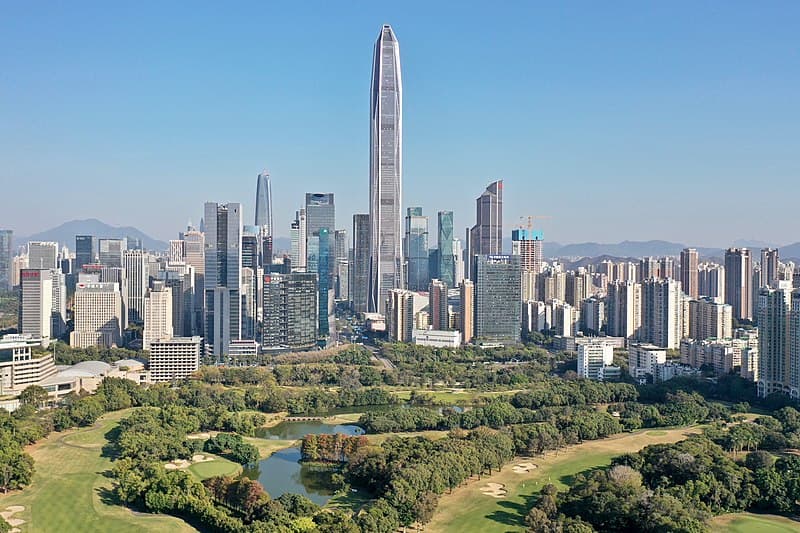
Shenzhen is China's youngest megacity and a symbol of the country's transformation. In 1980 it was a fishing village of a few thousand people, when Deng Xiaoping declared it China's first Special Economic Zone. Today more than seventeen million people live here, the average age is around thirty, and it's home to Huawei, Tencent, DJI and BYD. Shenzhen is the electronics capital of the world: at the Huaqiangbei market, components are sold to buyers worldwide, and a device prototype can be built here within a week. For visitors, it's a different China from Beijing or Xi'an — with little old history, but the most modern architecture, green parks, electric taxis and buses, and the fastest pace of life. The city is clean, full of parks and beaches to the east, and on the west side the Window of the World park draws crowds with miniatures of landmarks from around the globe. Thanks to its location right across the border from Hong Kong, Shenzhen is a favorite day trip and gateway city, and anyone here on business will find quality hotels at half the price of Hong Kong.

What to see

The places worth your time in Shenzhen, and what to expect at each

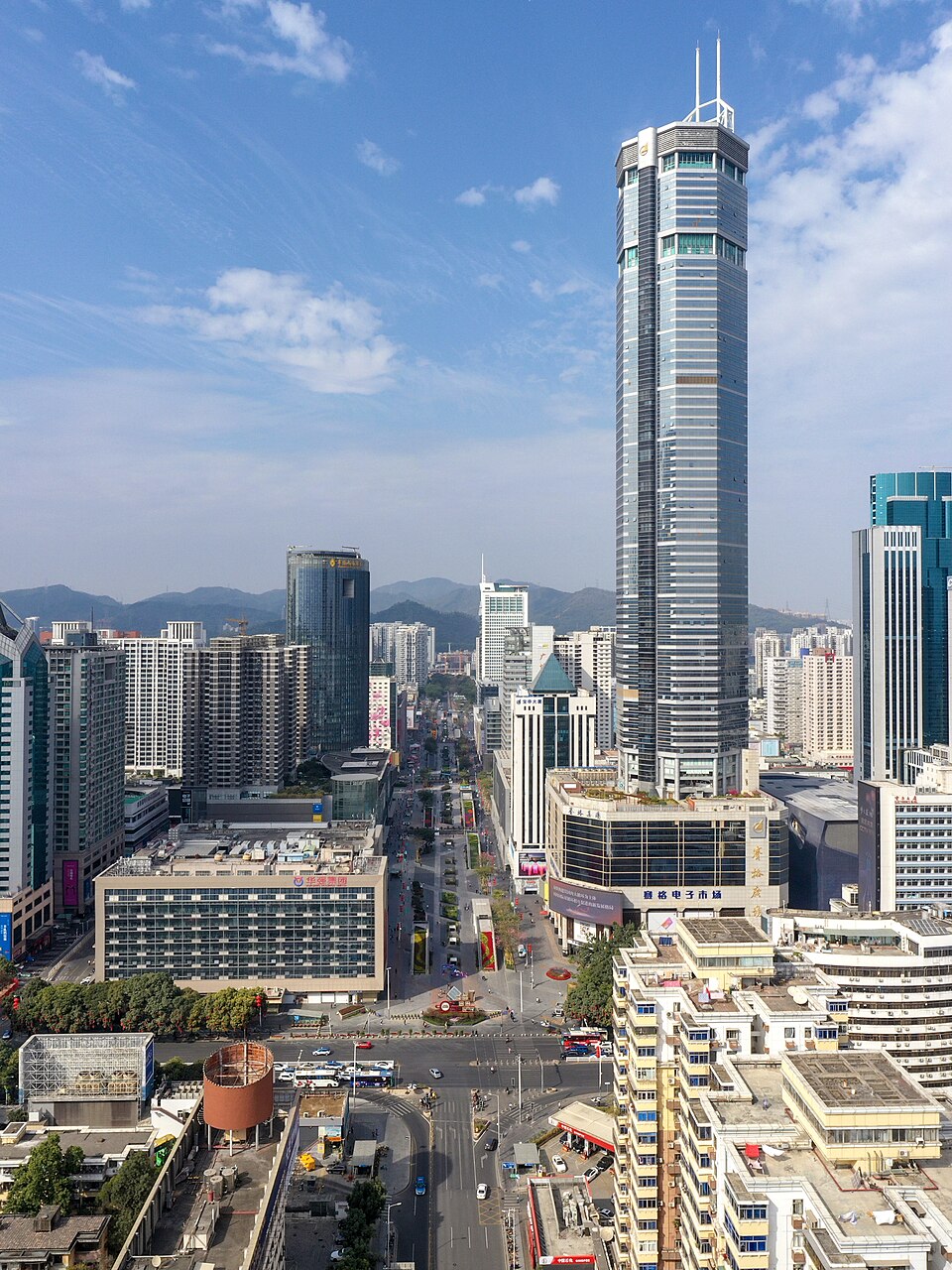
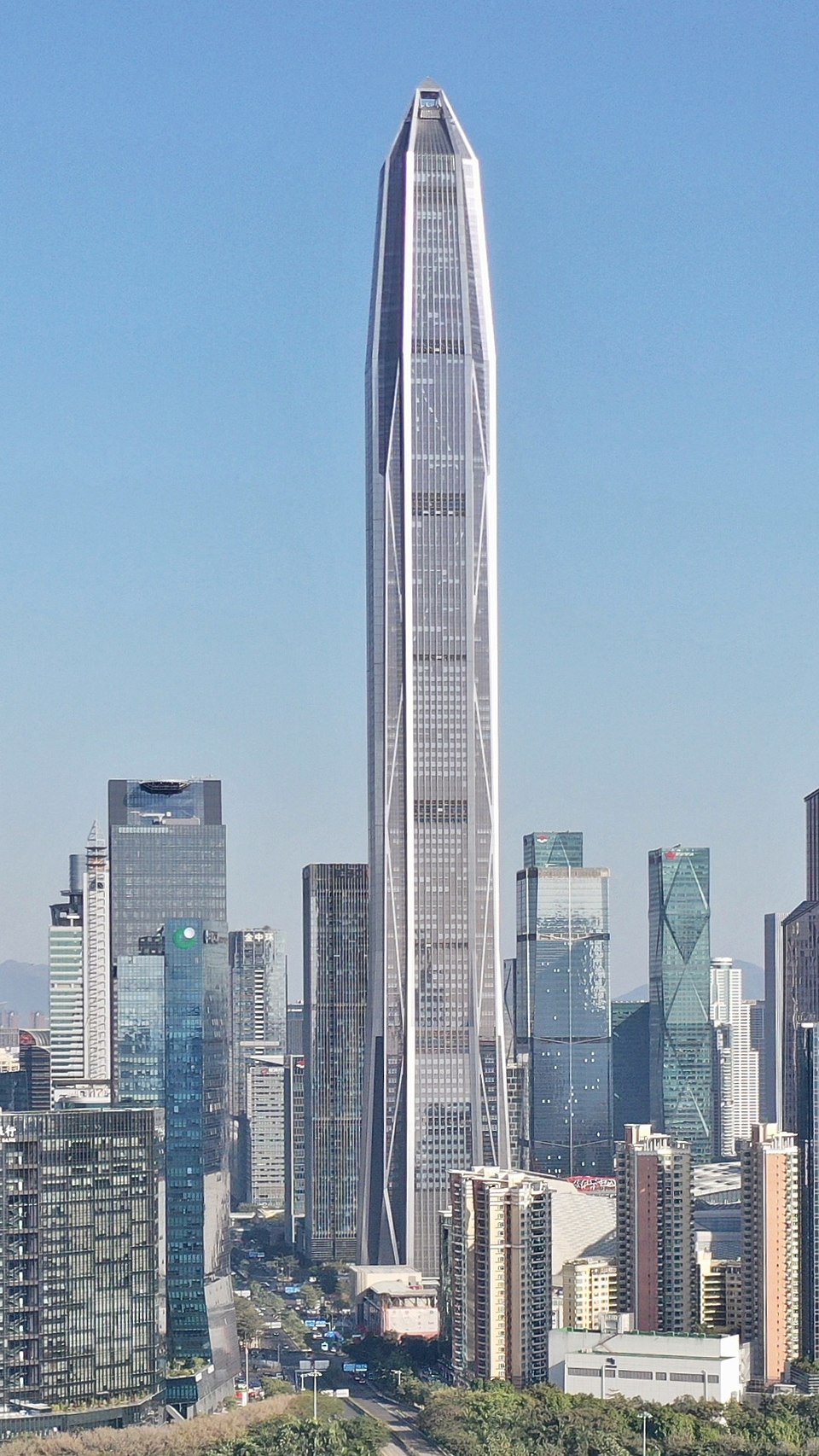
Ping An Finance Center and the Free Sky observation deck

Ping An Finance Center and the Free Sky observation deck

平安金融中心

Futian

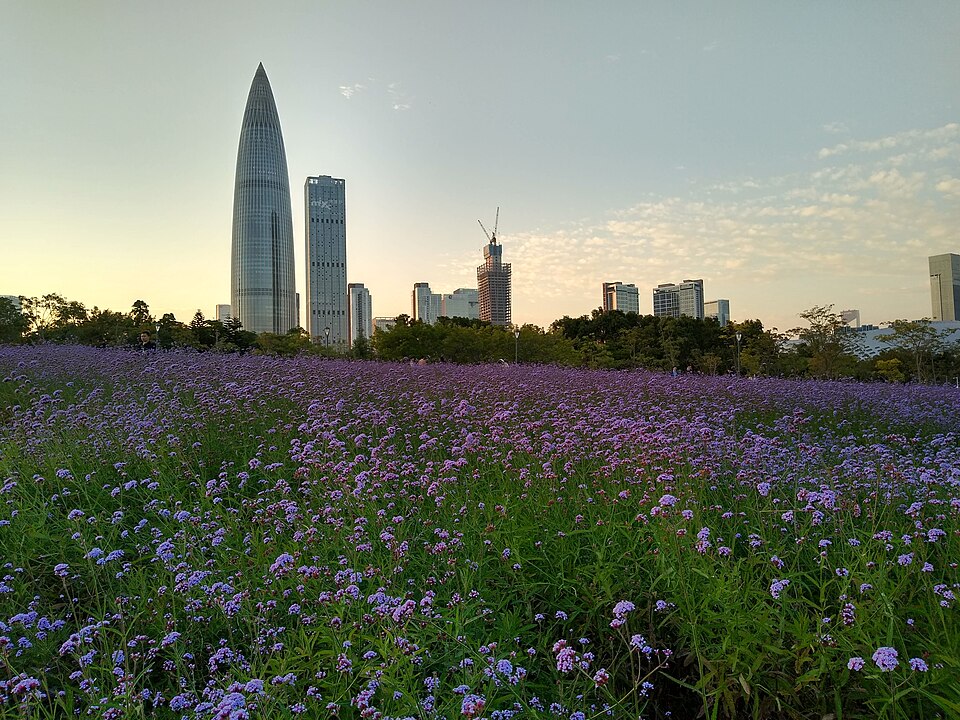
A 599-meter skyscraper completed in 2017, Shenzhen's tallest building and one of the tallest in the world. The Free Sky observation deck on the 116th floor offers views over the entire city, the bay, and on a clear day, all the way to Hong Kong.

Tip: The best time is dusk through nightfall, when all of downtown Futian lights up. Views can be limited by Shenzhen's smog and haze, so check the forecast. Buy tickets online via Trip.com. The building connects underground to Shopping Park metro station.

Admission:
around 200 CNY
Time needed:
1 h
Huaqiangbei electronics market

Huaqiangbei electronics market

华强北

Futian

The largest electronics market in the world, a kilometer-long street lined with dozens of malls where thousands of stalls sell components, chips, cables, drones, phones and spare parts. Inventors and companies from around the globe come here to source everything for a prototype in a single day and have it built in nearby workshops.

Tip: The most interesting stop is the SEG Electronics Market building, ten floors selling everything from resistors to drones. Mornings are busiest. Prices are negotiable, but don't buy branded electronics here — they're often replicas or refurbished units. For small components and accessories, it's a paradise, and equally fascinating just to watch Chinese hardware culture in action.

Admission:
free
Time needed:
2–3 h
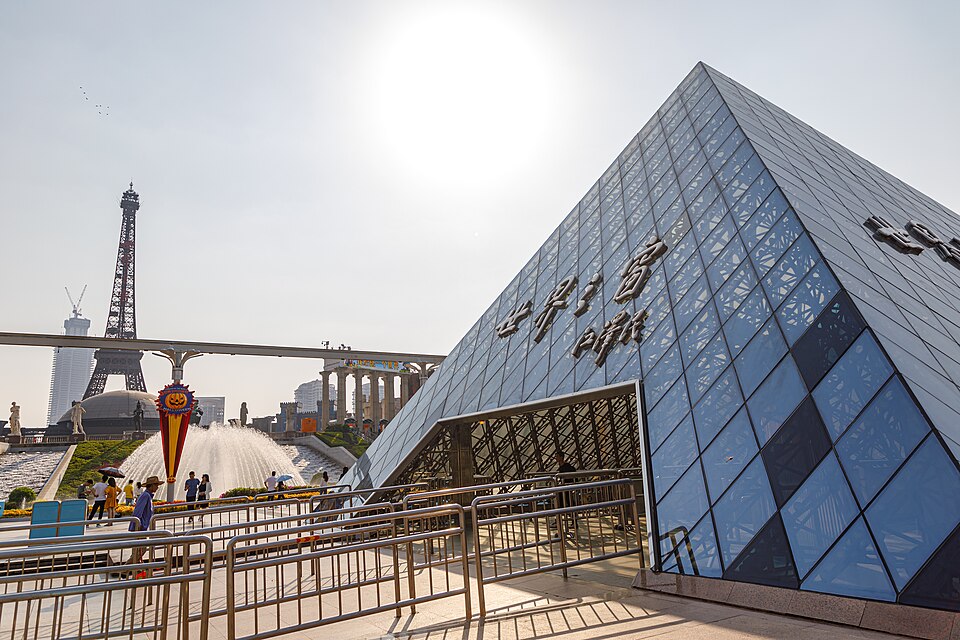
Window of the World

Window of the World

世界之窗

Nanshan

A theme park with more than a hundred thirty miniature reproductions of famous buildings from every continent — a 108-meter Eiffel Tower, the pyramids, the Taj Mahal, Manhattan and Angkor Wat. A large evening show combines dance, lights and fireworks.

Tip: The park is prettiest in the afternoon and evening, when the miniatures light up and fireworks follow the show. An elevator climbs the Eiffel Tower replica with views over the park and city. Next door is Splendid China park, with miniatures of Chinese landmarks and an ethnographic village. Window of the World metro station on Line 1 sits right at the entrance.

Admission:
around 200 CNY
Time needed:
half a day
OCT Loft

OCT Loft

华侨城创意文化园

Nanshan

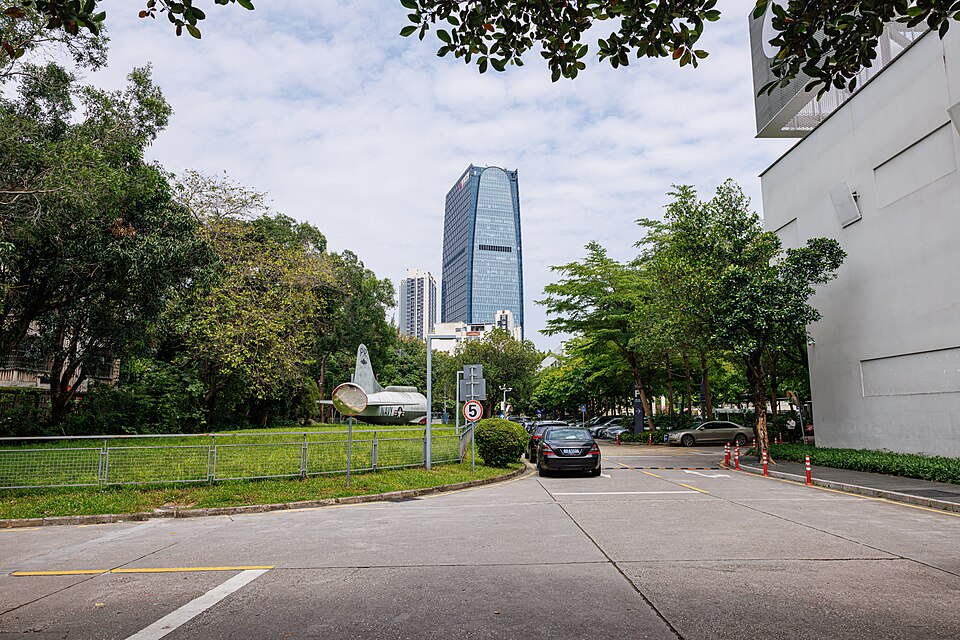
A creative district in former 1980s factories, converted into galleries, design studios, cafés, bookshops and concert venues. It's the center of Shenzhen's contemporary art and design scene, hosting exhibitions, concerts and festivals.

Tip: On weekends, markets here sell work by designers and craftspeople, and the OCAT gallery hosts free contemporary art exhibitions. The district is prettiest in the afternoon, when the cafés fill up. It's a few minutes from Window of the World, so the two combine easily. Galleries are closed on Mondays.

Admission:
free
Time needed:
1.5 h
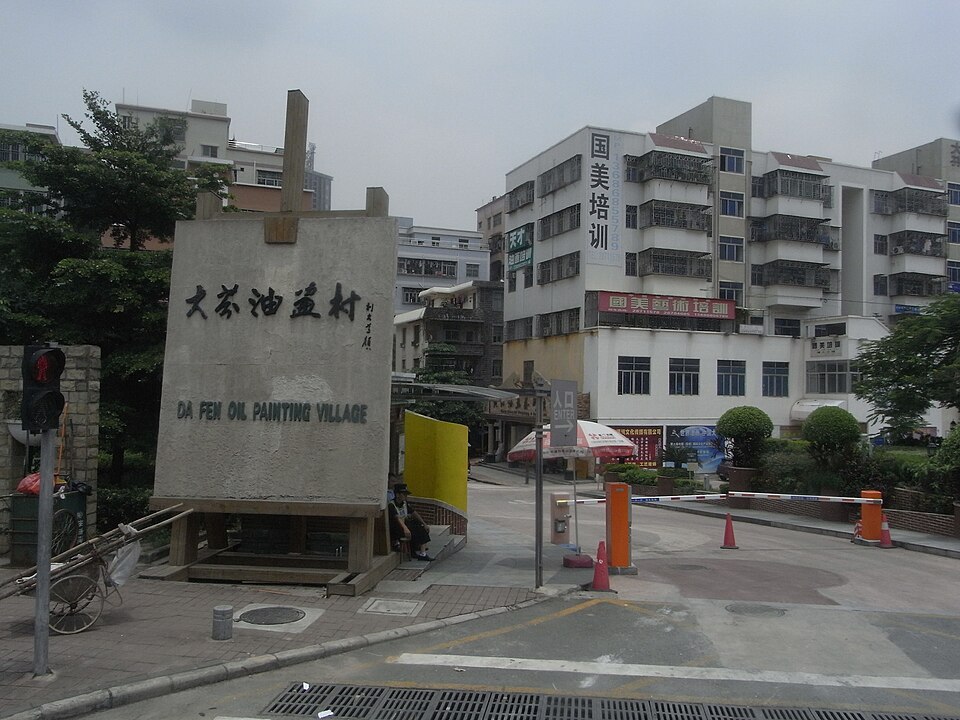
Dafen Oil Painting Village

Dafen Oil Painting Village

大芬油画村

Longgang

A village where more than eight thousand painters produce most of the world's oil-painting reproductions. In its narrow lanes, workshops copy Van Gogh's Sunflowers, the Mona Lisa and Monet by the hundreds, alongside original works by local artists.

Tip: Watching painters produce ten identical Sunflowers side by side at the same time is fascinating. A custom portrait made from your own photo can be painted in a few days and shipped home. Prices are low and negotiable. The Dafen Art Museum shows how the village developed. Dafen metro station is on Line 3.

Admission:
free
Time needed:
1.5 h
Lianhuashan Park

Lianhuashan Park

莲花山公园

Futian

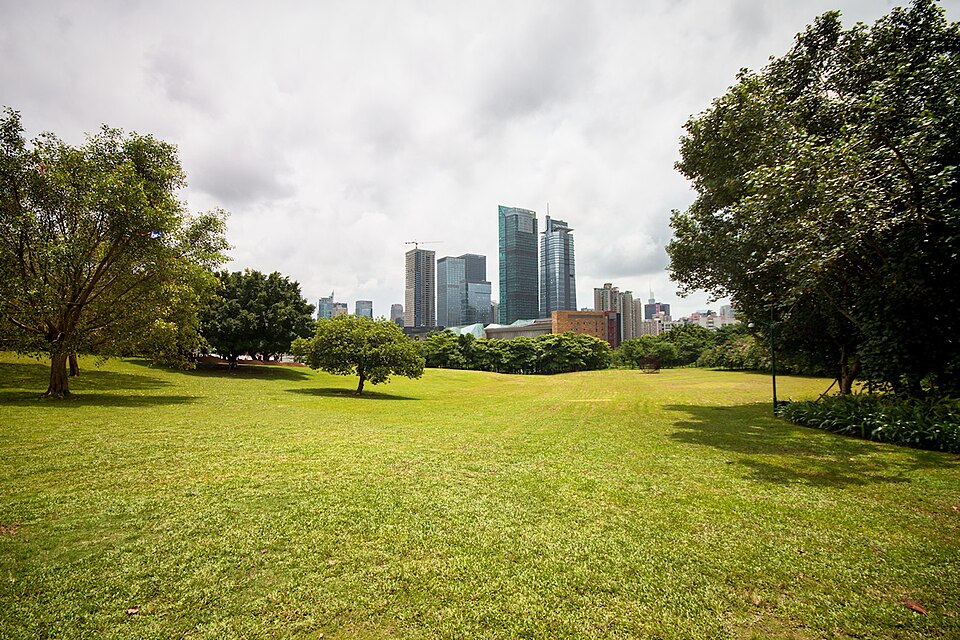
A hilltop park in downtown Futian with a bronze statue of Deng Xiaoping, the architect of China's reforms who turned Shenzhen into a Special Economic Zone. From the summit, views stretch over the skyscrapers of the city's central axis, including the Ping An Finance Center and the massive city hall building.

Tip: The climb to the summit takes twenty minutes along an easy path. It's best in the early evening, when the city's central axis lights up and a light show sometimes plays across the skyscrapers on weekends. Locals come here to fly kites and exercise. Near the park's south gate are a library and the Shenzhen Museum.

Admission:
free
Time needed:
1–1.5 h
Shenzhen Bay Park

Shenzhen Bay Park

深圳湾公园

Nanshan / Futian

A fifteen-kilometer coastal park along the bay with a bike path, promenade, mangroves and views across the water to Hong Kong. Thousands of migratory birds arrive here in winter, including the rare black-faced spoonbill.

Tip: Rent a bike and ride the promenade at dusk, when the sun sets over the bay and the bridge to Hong Kong lights up. At the eastern end is the Futian mangrove nature reserve with bird-watching hides, best from November to March. The park is free and quietest on weekdays.

Admission:
free
Time needed:
2 h
Nantou Ancient City

Nantou Ancient City

南头古城

Nanshan

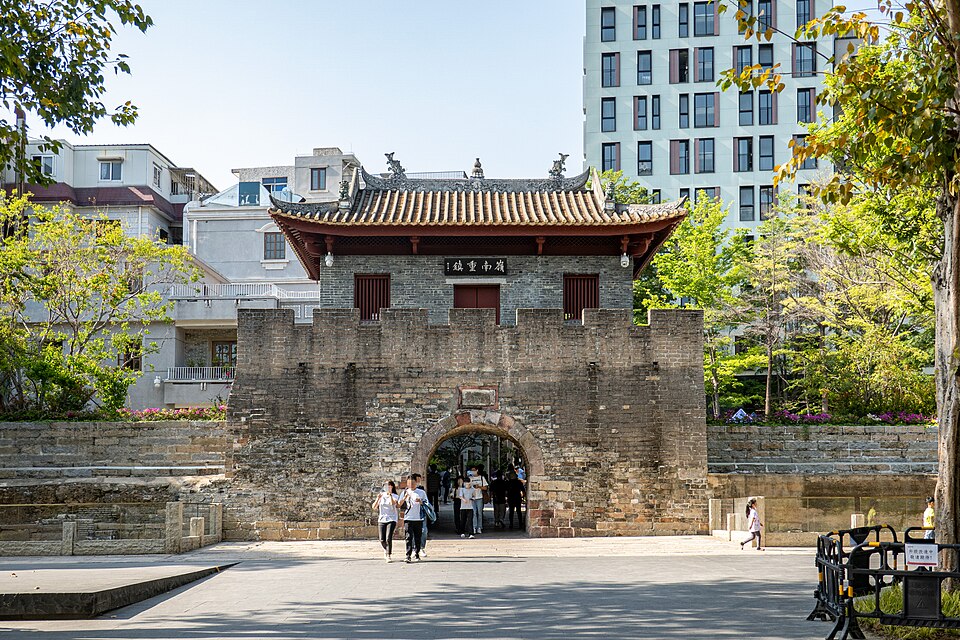
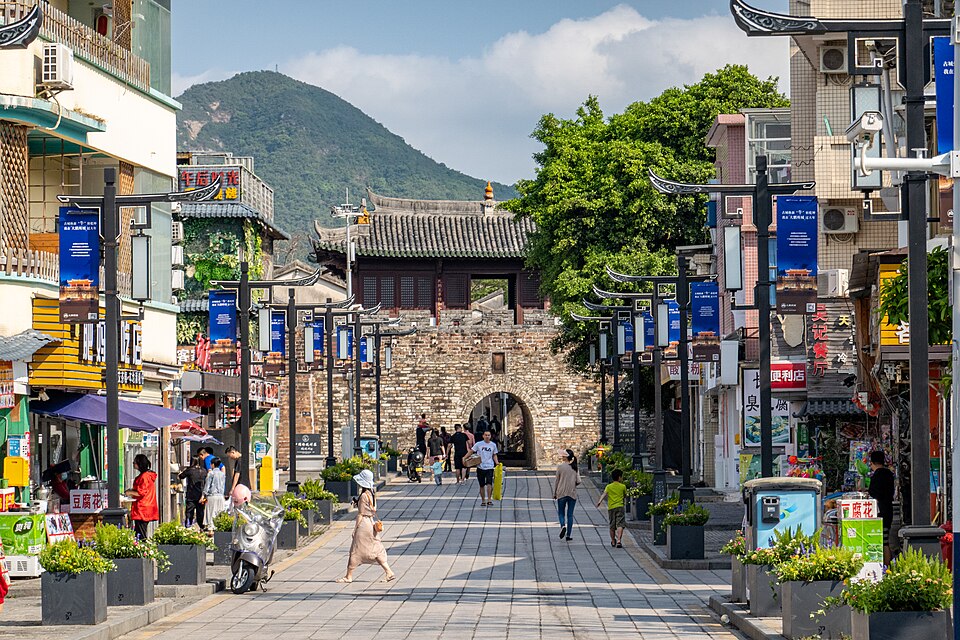
A walled town with a history spanning over seventeen hundred years, once the administrative center for the entire area, including present-day Hong Kong. Restored in 2020, it now holds old houses, gates, temples and a museum, interspersed with cafés, bookshops and design stores.

Tip: Enter through the south gate, which dates from the original Ming-era structure, and walk the main street to the temple. The Nantou History Museum is small but explains well how the area became a modern city. Concerts and markets are held here in the evenings. The old town is ten minutes from Zhongshan Park metro station.

Admission:
free
Time needed:
1–1.5 h
Dapeng Fortress

Dapeng Fortress

大鹏所城

Dapeng

A coastal fortress from 1394, built by the Ming dynasty to guard against pirates, still with inhabited houses, cobbled lanes, ancestral halls and walls. During the First Opium War in 1839, it served as a command post in the battle against the British. It's the best-preserved historic site within Shenzhen.

Tip: The fortress sits on the Dapeng Peninsula in the east, an hour and a half by car from downtown, so pair it with Xichong or Dongchong beaches, the prettiest in Shenzhen. Weekdays are quiet; weekends draw crowds from the city. Its lanes sell dried seafood and local sweets.

Admission:
free
Time needed:
1.5 h

Photos: Ping An Finance Center and the Free Sky observation deck — Charlie fong (CC BY-SA 4.0) · Huaqiangbei electronics market — Charlie fong (CC BY-SA 4.0) · Window of the World — Dinkun Chen (CC BY-SA 4.0) · OCT Loft — Dinkun Chen (CC BY-SA 4.0) · Dafen Oil Painting Village — Szdapanwen (CC BY-SA 3.0) · Lianhuashan Park — jo.sau from London/Vilnius, UK/Lithuania (CC BY 2.0) · Shenzhen Bay Park — Mx. Granger (CC0) · Nantou Ancient City — Iswzo (CC BY-SA 4.0) · Dapeng Fortress — Iswzo (CC BY-SA 4.0)

Where to stay

Areas and districts, matched to the kind of trip you are taking

Futian

Best for: first-time visitors, business trips, downtown

The business center, with skyscrapers, the convention center, city hall, Lianhuashan Park and the electronics market. International hotel chains, metro connections in every direction, and the Futian border crossing into Hong Kong. The most practical choice for a short stay.

Nanshan and Shekou

Best for: parks, expats, the sea

The western district, home to tech companies, Window of the World and OCT Loft parks, a coastal park, and Shekou harbor with ferries to Hong Kong and Macau. Shekou is popular with expats, with restaurants and bars in the Sea World area. A more pleasant setting than downtown.

Luohu

Best for: the Hong Kong border, shopping

The oldest part of modern Shenzhen, by the main border crossing into Hong Kong, home to the Luohu Commercial City mall known for cheap tailors and knockoffs. Hotels are older and cheaper, and the area feels less safe at night.

Dameisha and Dapeng

Best for: beaches, a seaside weekend

The coastal area to the east, with beaches, resorts and nature, one to two hours from downtown. Ideal for a beach weekend, though too far to use as a base for sightseeing the city.

Getting around

From the airport

Shenzhen has its own international airport, Bao'an, thirty-five kilometers west of downtown, but direct flights from Europe are scarce. Most Europeans instead fly to Hong Kong and cross over into Shenzhen: by MTR to the Lo Wu or Lok Ma Chau border crossing in about an hour, by high-speed train from West Kowloon to Futian in fifteen minutes, or by ferry from Hong Kong airport to Shekou in half an hour. Entry requirements for Czech citizens have changed several times in recent years, so check the Ministry of Foreign Affairs website before traveling to confirm whether visa-free entry currently applies or a visa is required; visa-free transit of up to 240 hours, arriving from one country and departing to a third, is reliably available. From Shenzhen, a high-speed train reaches Guangzhou in thirty minutes and a ferry reaches Macau in an hour.

Shenzhen Bao'an (SZX) · 35 km

  • Metro line 11 to Futian· 40 min· 8 CNY
  • Taxi or Didi to Futian· 35–50 min· 100 CNY

Hong Kong International (HKG) · 45 km

  • SkyPier ferry to Shekou· 30–40 min· 260 HKD
  • Cross-border bus to Shenzhen· 60–90 min· 100 HKD

Around town

Shenzhen has one of the most modern metro networks in China, with more than fifteen lines, English signage and clean trains. Pay by scanning a QR code in Alipay or WeChat, or with a Shenzhen Tong card. Every taxi and city bus in Shenzhen is electric, and most are made by BYD. Didi is cheap and reliable. Shared bikes are everywhere, and the coastal bike paths rank among the best in China. The border with Hong Kong has several crossings: Luohu and Futian connect directly to metro stations on both sides, while Shekou connects to ferries.

MetroOver fifteen lines, QR code payment via Alipay or WeChat. · 2 CNY
Didi / electric taxiCheap, enter your destination in the app. · 10 CNY
Shared bikesUnlock via Alipay, excellent along the coastal promenade. · 1.5 CNY / 30 min
Bus to the eastern beachesRoutes to Dameisha and Dapeng from downtown. · 2 CNY

Useful apps: Alipay, WeChat, Amap (Gaode), Didi, Trip.com, Metro Man

When to go

The best period is October to December, sunny, dry and around 25°C, ideal for parks and beaches. January and February are mild, around 15–20°C, but half the city goes home for Chinese New Year and many restaurants close. Spring is humid and hazy. From May to September it's hot, over 30°C with high humidity, thunderstorms and typhoons, when beaches and the harbor sometimes close. Sea swimming is best from May to October, outside typhoon events.

Best time

October–December

What to avoid

typhoons from July to September, Chinese New Year, the October 1–7 holiday

MonthJanFebMarAprMayJunJulAugSepOctNovDec
Day20°21°23°27°30°31°32°32°31°29°25°21°
Night12°14°17°21°24°26°26°26°25°22°18°14°
Rainy days5810111518161613543

Food & drink

Shenzhen is a city of migrants from all over China, so you can sample cuisine from every province — Sichuanese, Hunanese, northern and Uyghur. The base is Cantonese cuisine, with morning dim sum and roasted meats, but Shenzhen also has its own specialties: Hakka cuisine from the area's original inhabitants, with stuffed dishes and salt-baked chicken, and Chaozhou beef hotpot with hand-cut meat ordered by specific cut. In the port of Shekou and fishing villages to the east, seafood is chosen live from tanks and cooked to order at the restaurant. Thanks to its young population, the city has more modern cafés, bakeries and bubble-tea shops than anywhere else in China.

What to try

Dim sum and bao

Morning steamed baskets of shrimp, pork or sweet paste dumplings. Cantonese influence is strong here, and a dim sum breakfast with tea from seven in the morning is common even at simple eateries.

Chaozhou beef hotpot

A clear beef broth into which fresh beef, hand-sliced in front of you and sorted by cut, is dipped — each cut has a recommended cooking time measured in seconds. It's dipped in soy sauce with chili and sacha sauce. Dinner for two runs around two hundred yuan.

Hakka salt-baked chicken

Chicken wrapped in paper and baked in scorching coarse salt, a dish of the Hakka people who have lived in the Shenzhen area for centuries. The meat is juicy and salty, served with a ginger sauce.

Shajing oysters

The village of Shajing in western Shenzhen has farmed oysters for eight hundred years. They're grilled with garlic, dried, or cooked into an omelet. Best from November to March.

Siu mei roast meats

Roast duck, goose and char siu hanging in the windows of siu mei shops, served with rice for thirty to fifty yuan. A quick, filling lunch found in every neighborhood.

Shekou seafood

At the harbor market you pick live fish, shrimp, crab and shellfish, then have them steamed, cooked with ginger, or spiced at the restaurant a floor up. You pay by weight for the ingredients and separately for the cooking.

Hainanese noodles

Rice noodles with dried shrimp, peanuts and pickled vegetables, served almost dry with a bowl of broth on the side. A ten-yuan breakfast you won't find at a hotel buffet.

Tea and rice wine

Tea is drunk without sugar and is often free at restaurants. Hainanese rice wine and palm wine are sold at rural markets; "shan lan jiu," a spirit distilled by the Li people in the mountains, is stronger than it looks.

What it costs

Morning dim sum per person

50–100 CNY

Roast meat with rice

30–50 CNY

Beef hotpot for two

180–300 CNY

Coffee at a specialty café

30–45 CNY

Metro ride

2–10 CNY

Window of the World admission

around 200 CNY

Beer at a bar in Shekou

40–60 CNY

Night in a 4-star hotel for two

450–900 CNY

Indicative prices that change over time — treat them as a guide, not a price list.

Practical information

SocketsAtwo flat pins (US/JP)CEuroplug, two round pinsIAustralian, angled pins
Voltage220V / 50Hz
Tap waterDo not drink tap water — Tap water isn't drunk anywhere in China. Every hotel, train station and even airplane provides boiled water — Chinese people drink hot water, and a thermos is standard gear. Bottled water costs two to three yuan at a shop, ten times that in a tourist area. Ice in drinks isn't traditional in China and local restaurants won't serve it; beer is served lukewarm unless you specifically ask for chilled (bing de).
TippingTipping isn't customary in China, and an offered tip is often refused as inappropriate; the exceptions are tour guides and international hotel chains. Payment method matters far more: cash and foreign cards work only at the margins of daily life, while payment is done by phone via WeChat Pay or Alipay, both of which can now be linked to a foreign card — set this up before you leave home, since it's difficult to arrange locally without a Chinese phone number. Without mobile payment, you may struggle to eat or get a ride in many places. Bank of China ATMs accept foreign cards.
Driving on theright
SafetyChina is a safe country, violent crime against foreigners is rare, and walking around the city at night poses no problem. The real risks are different: traffic, where pedestrians have no right of way even at crossings, crowds during public holidays, and inflated prices in tourist areas. The "tea invitation" or bar scam with a fairy-tale-sized bill is still common in big cities. The internet is filtered — Google, WhatsApp, Facebook, Instagram and most foreign map apps don't work without a VPN, which must be installed before you arrive. Emergency numbers are 110 (police) and 120 (ambulance).
Opening hoursShops and malls are open from ten to ten, including weekends, and street food stalls from six in the morning. Restaurant kitchens serve lunch from eleven to two and dinner from five to nine, closing in between. Sights and parks open early, around eight, with last admission usually an hour before closing. During holidays, especially Chinese New Year and the first week of October, hundreds of millions of people travel across the country and everything is crowded and pricier.
Customs & etiquetteBusiness cards and money are handed over with both hands. Loud conversation and pushing in line aren't rudeness but the local norm. Food is ordered for the whole table to share, and everyone serves themselves from the shared dishes; chopsticks are never stuck upright into rice, since that resembles an offering to the dead. The bill isn't split — one person pays, and the other treats next time. Declining a first offer is a polite ritual; the offer is meant to be repeated three times. Steer clear of political topics, including Taiwan and Tibet.
A few local wordsHello — Ni haoThank you — Xie xieHow much does it cost? — Duo shao qian?The bill, please — Mai danI don't understand — Wo bu dongNo spicy, please — Bu yao la

How to plan your days

1 day

Shenzhen in one day

  1. 1Morning dim sum in Futian.
  2. 2The Huaqiangbei electronics market.
  3. 3Afternoon at OCT Loft and Nantou Ancient City.
  4. 4Sunset at Shenzhen Bay Park.
  5. 5Evening at the Free Sky deck in Ping An Finance Center.

2 days

Two days: city and parks

  1. 1Day 1: Huaqiangbei, Lianhuashan Park and the Free Sky deck.
  2. 2Day 1 evening: hotpot downtown.
  3. 3Day 2: OCT Loft, Nantou and Shekou.
  4. 4Day 2 afternoon: Window of the World.
  5. 5Day 2 evening: the light and fireworks show at Window of the World.

3 days

Three days including the eastern coast

  1. 1Day 1: downtown Futian and Huaqiangbei.
  2. 2Day 2: Dafen, OCT Loft and Window of the World.
  3. 3Day 3: Dapeng Fortress.
  4. 4Day 3 afternoon: Xichong beach.
  5. 5Day 3 evening: seafood in a fishing village.

Day trips

Hong Kong

30 km · 15 min by high-speed train

A world-class metropolis with skyscrapers over Victoria Harbour, the Peak Tram, the Star Ferry, the markets of Mong Kok and the region's best dim sum. The high-speed train from Futian to West Kowloon takes fifteen minutes, and the MTR from the Lo Wu border crossing to downtown takes an hour. Hong Kong itself requires no visa, but you'll need valid entry documents when returning to mainland China.

Macau

60 km · 1 h by ferry

A former Portuguese colony with baroque churches, cobblestone squares, Portuguese-Chinese cuisine and casinos bigger than those in Las Vegas. A ferry from Shekou harbor takes an hour. The historic center, with the façade of St. Paul's and Senado Square, is UNESCO-listed. Try the Portuguese egg tarts, pastel de nata.

Guangzhou

140 km · 30 min by high-speed train

The capital of Guangdong province, birthplace of Cantonese cuisine, with traditional dim sum teahouses, the Chen Clan Ancestral Hall, the colonial-era Shamian Island, and Canton Tower. High-speed trains from Shenzhen's Futian or Shenzhen North stations take half an hour and run every few minutes.

Frequently asked questions

Is Shenzhen worth visiting?+

For anyone interested in modern China, technology and architecture, yes. There are few historic sights, but the city shows just how fast China has transformed. It's a popular day trip or weekend getaway from Hong Kong.

How do you get from Hong Kong to Shenzhen?+

The fastest way is the high-speed train from West Kowloon to Futian in fifteen minutes. By MTR you can ride to the Lo Wu or Lok Ma Chau border crossing and walk across the border straight into the Shenzhen metro. A ferry also runs from Hong Kong airport to Shekou.

Do I need a visa for Shenzhen?+

Rules for entering China have changed; check the Ministry of Foreign Affairs website to confirm whether visa-free entry currently applies. Shenzhen is among the places covered by visa-free transit of up to 240 hours when traveling on to a third country. Hong Kong itself requires no visa.

Can I buy a cheap phone in Huaqiangbei?+

You can, but carefully. Branded phones are often refurbished or replicas, and warranties don't apply. The market is ideal for components, accessories, cables, drones and electronics from Chinese brands.

Is Shenzhen expensive?+

For China, yes, but noticeably cheaper than Hong Kong. Hotels are good quality at half Hong Kong prices, food is cheap and so is transport.

How do you pay and stay online in China?+

Pay via Alipay or WeChat Pay linked to a foreign card — set this up before you leave home. Google, WhatsApp and Instagram are blocked, so use an eSIM with roaming or a VPN installed in advance.

Can you swim in the sea in Shenzhen?+

Yes, on the east side are the beaches of Dameisha, Xiaomeisha and Xichong with clean water, one to two hours from downtown. Swimming season runs from May to October, and beaches get crowded on weekends.

How many days do you need for Shenzhen?+

One to two days for the main sights, a third day for the beaches or Dapeng Fortress. Shenzhen combines well with Hong Kong, Macau and Guangzhou, all within an hour.

Arrival Card

Fill in the required arrival card before your trip to avoid delays at immigration.

Complete Arrival Card

Visa Requirements

Check the latest visa requirements for entering this country. Some nationalities may need to apply for a visa or e-visa before travel.

Check visa requirements

Language

Mandarin

Currency

CNY

Timezone

GMT+8

Dial Code

+86

Population

1.41B

Area

9,596,960 km²

Voltage

220V / 50Hz

Driving Side

Right

Top Hotels in Shenzhen

Live prices from 500+ properties

Loading hotels...

More destinations in China

Planning a trip to Shenzhen?

Compare hundreds of hotels, find the best price, and book with free cancellation on TravelManiac.