Hotels in Guangzhou

Birthplace of Cantonese cuisine, a trading port with 2,000 years of history, and the Pearl River by night

Guangzhou

LanguageEnglish
CurrencyCNY
TimezoneGMT+8
Temperature5-30 °C
Dial Code+86
Population1.41B
Area9,596,960 km²
SocketsType A / Type C / Type I
Tap waterNot drinkable

Discover Guangzhou

Guangzhou, historically known in the West as Canton, is the capital of Guangdong province and one of China's oldest trading cities. For over 2,000 years, ships arrived here from Arabia, India and later Europe, and for a long time it was the only Chinese port where foreigners were allowed to trade — this is how tea, silk and porcelain first reached Europe. Today it's a megacity of 18 million people, where the Canton Fair, the largest trade exhibition in the world, is held every spring and autumn. For visitors, Guangzhou is above all the capital of Cantonese cuisine, known worldwide through dim sum: locals say they eat anything with legs except the table, and the morning tea ritual, yum cha, with dumplings, is a social institution here. Amid the skyscrapers, historic gems survive: the Chen Clan Ancestral Hall with incredibly fine carvings, the colonial island of Shamian with its European villas, the Temple of the Six Banyan Trees, and the 2nd-century BC tomb of the King of Nanyue. In the evening, the skyscrapers and the Canton Tower light up along the Pearl River. Guangzhou is also just 1 hour by high-speed train from Hong Kong and Macau.

What to see

The places worth your time in Guangzhou, and what to expect at each

Canton Tower

Canton Tower

广州塔

Haizhu

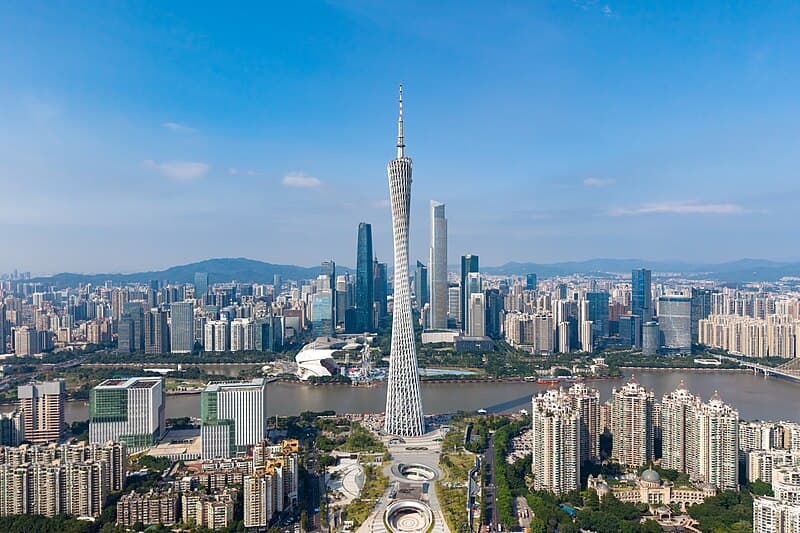
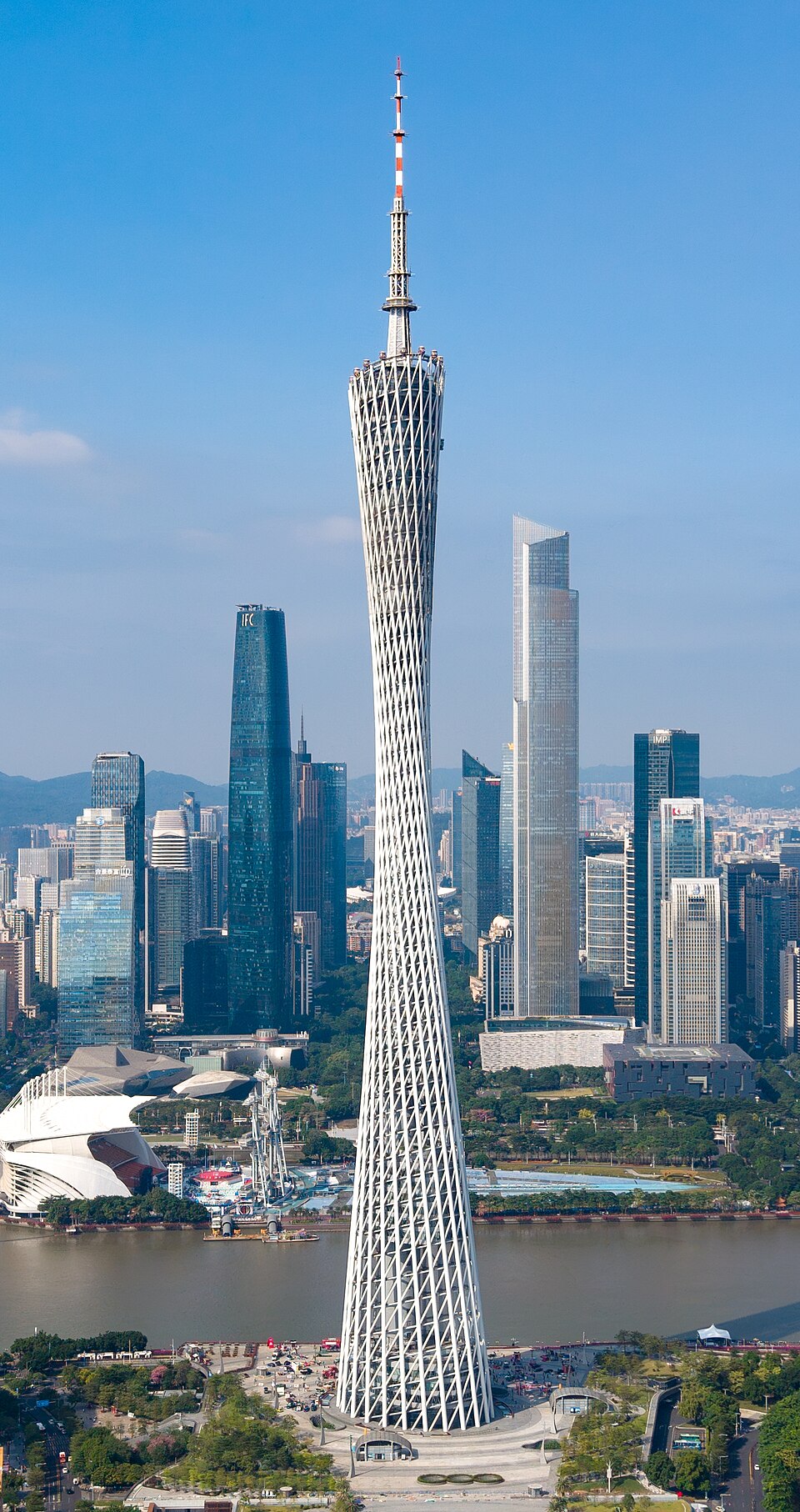
A 600m-tall television tower with a waist-like silhouette, opened in 2010 and nicknamed for its slender shape. Observation decks are at several levels up to 450m, at the top the Sky Wheel observation pods run around the roof's edge, and for the daring there's the Sky Drop free-fall ride.

Tip: It's best to go at dusk, so you see the city both in daylight and lit up. The cheapest ticket only covers the lower observation deck — the Sky Wheel and Sky Drop are extra. A nicer view of the tower itself is from the other side of the river at Huacheng Square, or from an evening cruise on the Pearl River, when the tower changes colour.

Admission:
from CNY 150
Time needed:
1.5–2 h
Chen Clan Ancestral Hall

Chen Clan Ancestral Hall

陈家祠

Liwan

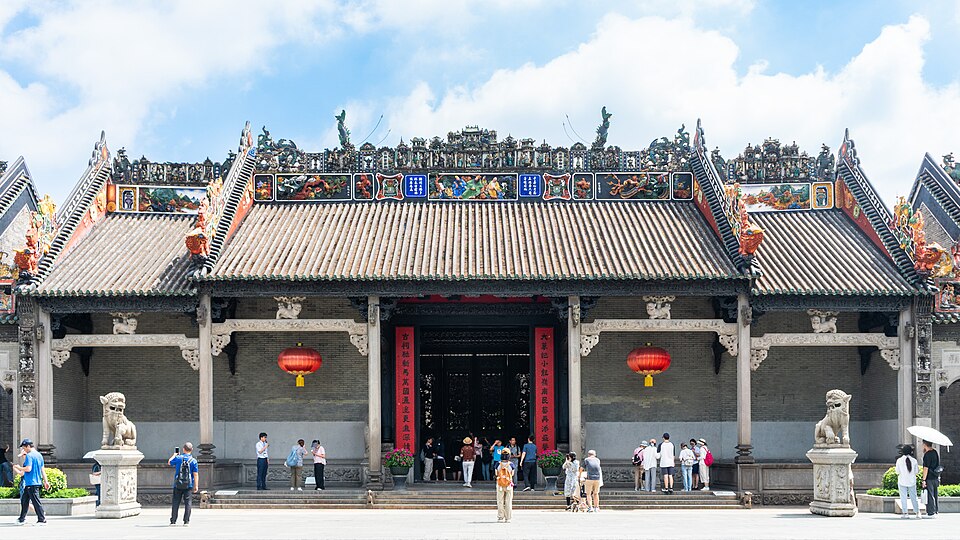
An ancestral shrine and academy from 1894, built by Chen families from across the province for students preparing for the imperial examinations. The building is the pinnacle of Cantonese folk art: roofs, walls and beams are covered in fine carvings in wood, stone and brick, and ceramic figurines depict hundreds of legendary characters.

Tip: Look up: the best work is on the roof ridges, where hundreds of ceramic figures stand. Inside is a folk art museum with embroidered pictures, ivory balls within balls, and carvings. The museum is by Chen Clan Academy metro station on Line 1, closed on Mondays. Come right after opening in the morning — tour groups arrive later.

Admission:
CNY 10
Time needed:
1–1.5 h
Shamian Island

Shamian Island

沙面

Liwan

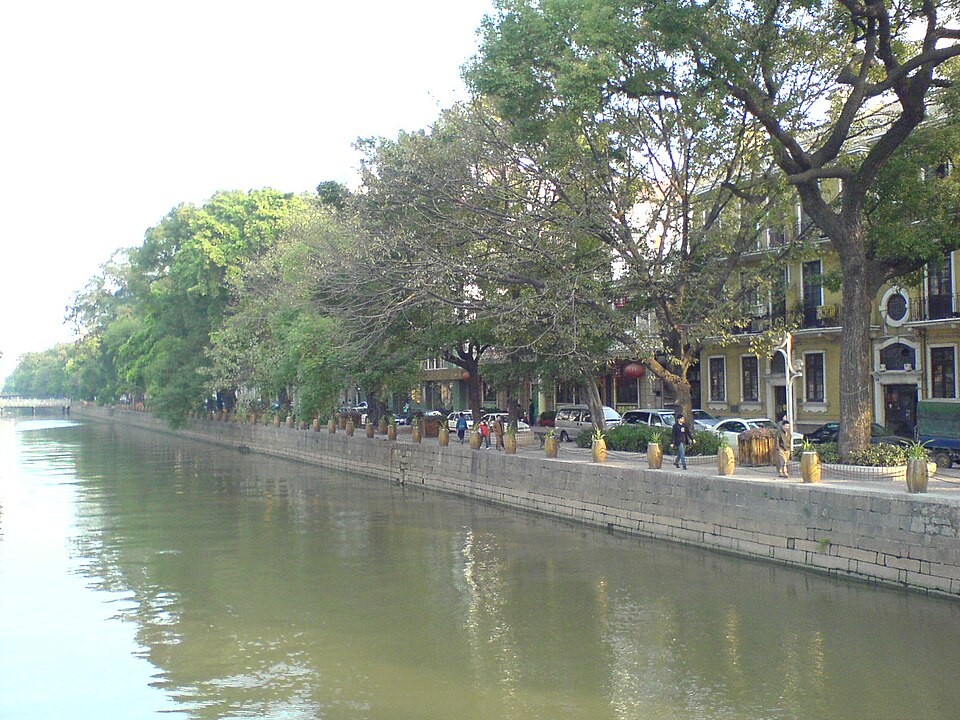
A small island on the Pearl River that was divided between British and French concessions from 1859 to 1943. Over 150 colonial buildings survive — banks, consulates, churches and villas — along shaded avenues of banyan trees. Today it's a calm, car-free zone with cafés and boutique hotels.

Tip: Shamian is loveliest for a stroll at dusk, when the lamps come on, and at weekends hundreds of wedding couples come here to be photographed. Have dim sum in the morning, then walk the island along the main Shamian Main Street. The Catholic Church of Our Lady of Lourdes is open to visitors. Just across the canal is Qingping Market, with herbs, dried seafood and mushrooms.

Admission:
free
Time needed:
1.5 h
Temple of the Six Banyan Trees

Temple of the Six Banyan Trees

六榕寺

Yuexiu

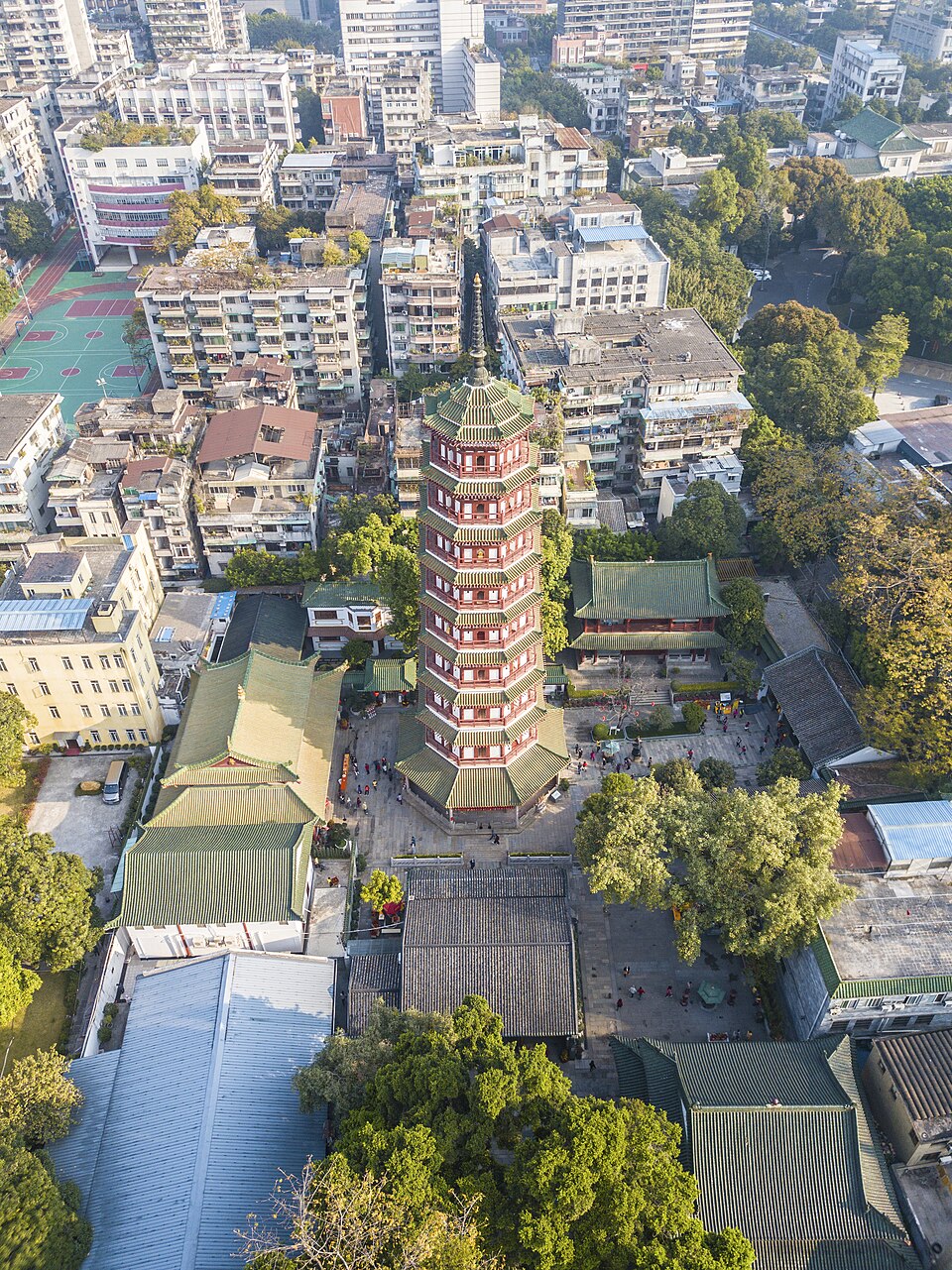
A Buddhist temple founded in 537, said to have been named by the 11th-century poet Su Dongpo after six banyan trees in the courtyard. Its most striking structure is the 57m-tall Flower Pagoda, which has 9 storeys on the outside and 17 inside.

Tip: The temple entry ticket is cheap; climbing the pagoda costs extra and involves narrow, steep stairs — the view over the old town is worth it, though it gets hot inside in summer. The temple is active, so come in the morning when the monks are praying. It's in the centre, a short walk from Guangxiao Temple, the oldest in Guangzhou, and the two can easily be combined.

Admission:
CNY 5, pagoda extra
Time needed:
45 min
Museum of the Mausoleum of the Nanyue King

Museum of the Mausoleum of the Nanyue King

西汉南越王博物馆

Yuexiu

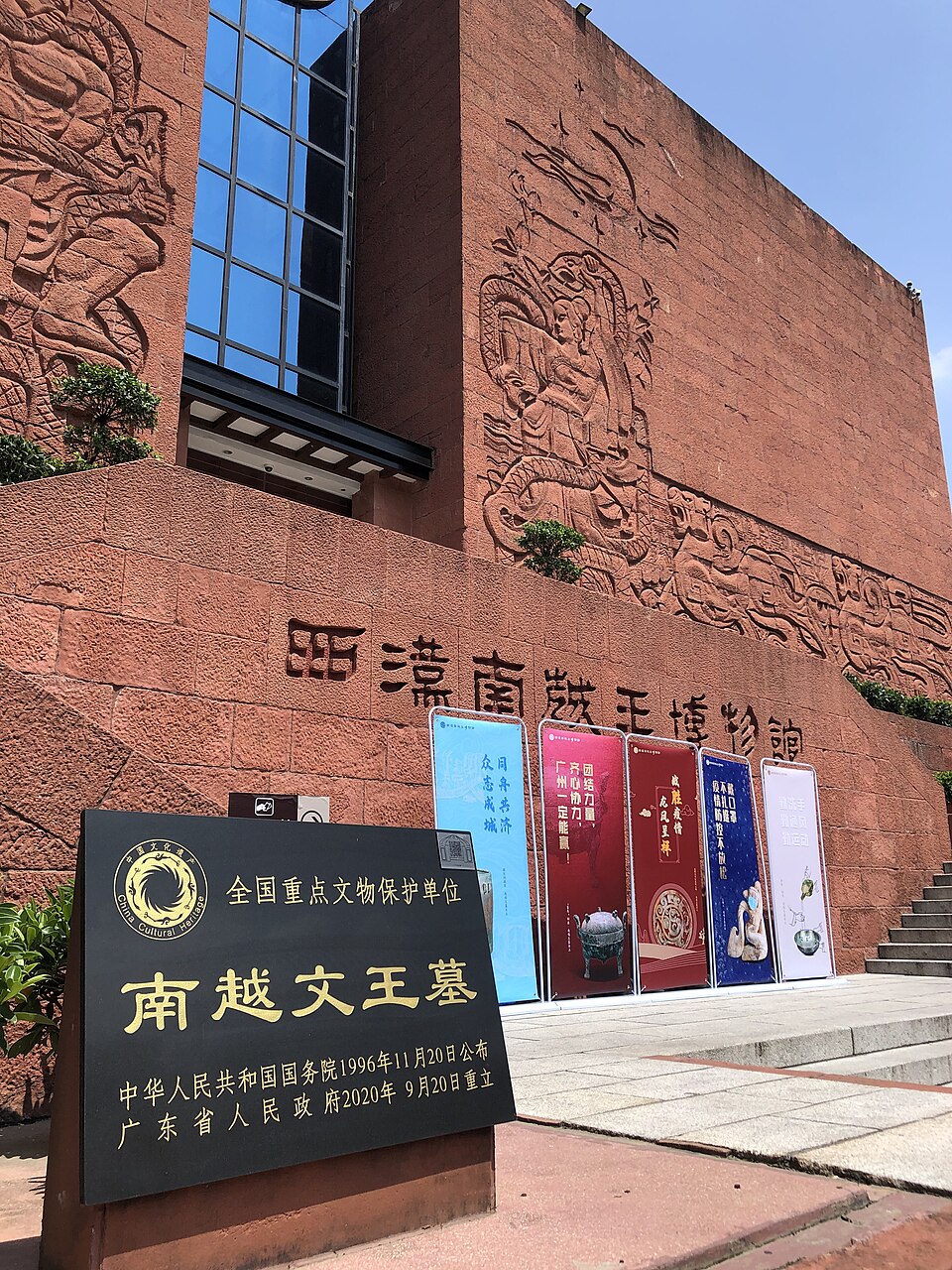
A museum built above the tomb of Zhao Mo, the second king of the Nanyue kingdom in the 2nd century BC, discovered in 1983 during the construction of a hotel. The tomb was untouched by looters and contained a burial suit of thousands of jade plaques stitched with silk thread, a gold seal, and hundreds of objects.

Tip: Go down into the tomb itself beneath the museum — the stone chambers are small and cramped, and you can see where servants and concubines were buried. The jade burial suit is the star exhibit. The museum also has a unique collection of ceramic pillows. It's a short walk from Yuexiu Park, so combine the two; closed on Mondays.

Admission:
free to CNY 12
Time needed:
1.5 h
Yuexiu Park and Zhenhai Tower

Yuexiu Park and Zhenhai Tower

越秀公园

Yuexiu

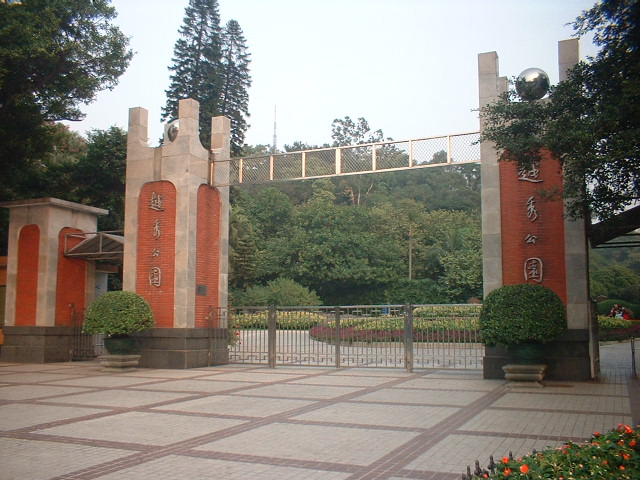
The largest park in central Guangzhou, on the Yuexiu hills, with lakes, pavilions and the Five Rams Statue, the city's symbol, based on a legend of five immortals who arrived on goats bringing rice. At the top stands the five-storey Zhenhai Tower from 1380, now a city museum.

Tip: Around 7am, locals come here to practise tai chi, sing opera and dance — the most authentic scene in Guangzhou. The museum in Zhenhai Tower has a view over the city. At the entrance stands the Sun Yat-sen Memorial Hall, dedicated to the founder of the Republic of China. The park is by Yuexiu Park metro station on Line 2.

Admission:
free, museum CNY 10
Time needed:
1.5–2 h
Guangzhou Opera House

Guangzhou Opera House

广州大剧院

Zhujiang New Town

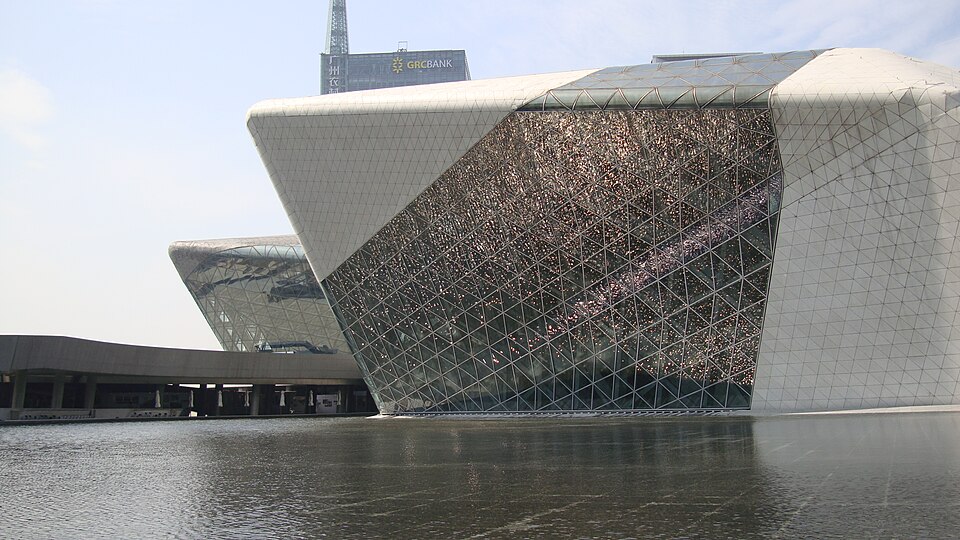
An opera house designed by Zaha Hadid, completed in 2010, whose two masses resemble pebbles smoothed by the Pearl River. It stands in the new riverside district of Zhujiang, among skyscrapers, a library and the Guangdong Museum, and is one of China's most striking modern buildings.

Tip: The building is loveliest in the evening when it's lit up. Operas, ballets and concerts are performed inside, and you can only see the interior with a performance ticket or a guided tour. Across the square stands the Guangdong Museum, shaped like a lacquer box, with a rich collection of Cantonese art and free admission.

Admission:
tour around CNY 30
Time needed:
1 h
Baiyun Mountain

Baiyun Mountain

白云山

Baiyun

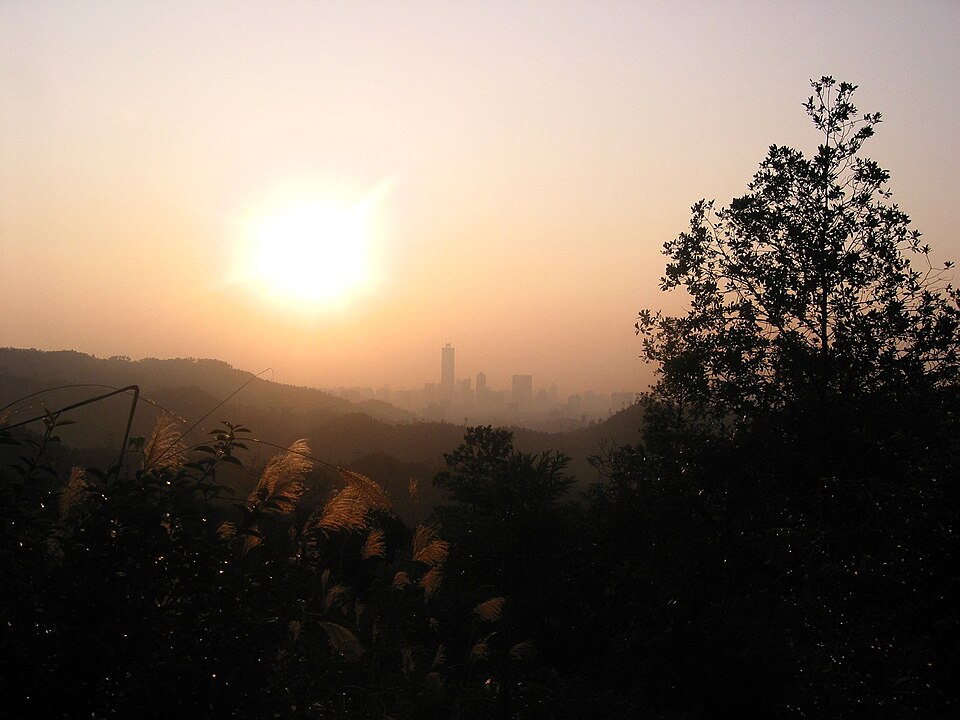
A mountain range in the north of the city, whose highest peak reaches 382m, with forests, trails, temples and views over all of Guangzhou. The name means White Cloud Mountain, because mist shrouds the peaks. It's a green refuge for Guangzhou's residents.

Tip: A cable car runs up, but locals walk the paved paths, which takes about 1.5 hours. The view from the Moxing Ridge summit is loveliest on a clear day and at sunset. It's busy at weekends and quiet on weekdays. A bus runs from Baiyun Park metro station to the gate.

Admission:
CNY 5, cable car extra
Time needed:
3–4 h
Shangxiajiu Pedestrian Street

Shangxiajiu Pedestrian Street

上下九步行街

Liwan

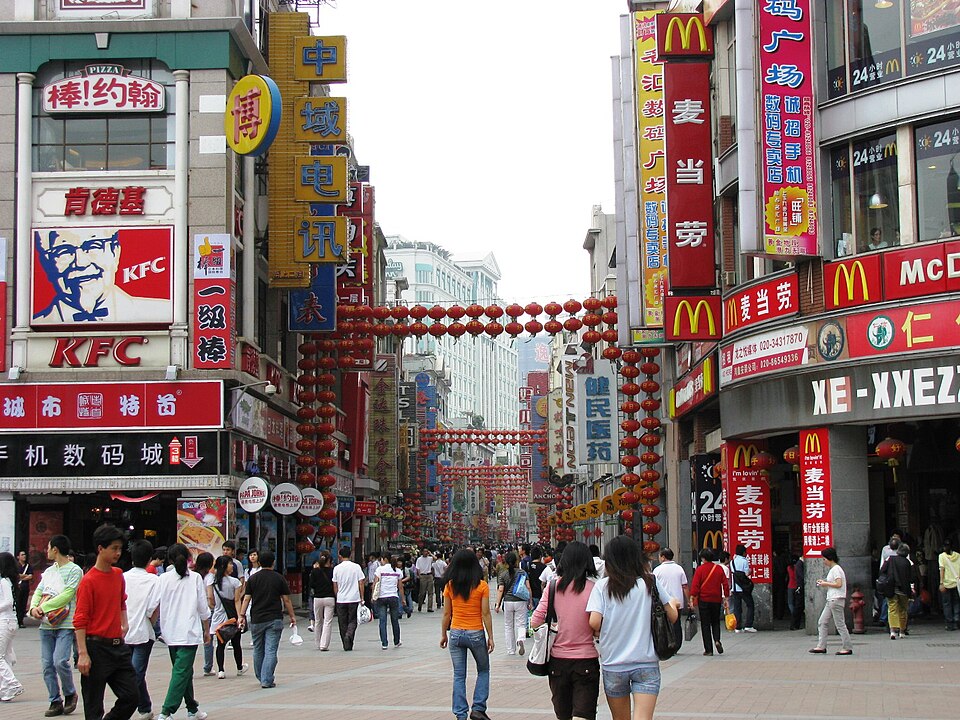
A historic shopping street in the western part of the old town, lined with qilou-style buildings with colonnaded arcades that sheltered pedestrians from sun and rain. It sells clothes, fabric, baked goods and, above all, traditional Cantonese sweets and snacks.

Tip: Go in the afternoon on an empty stomach — try the double-skin milk pudding shuangpi nai, cheung fun rice noodles, and curry fish balls. In the side streets of the Xiguan district are old houses with wooden sliding lattices. Nearby is the Hualin Jade Market and the Cantonese Opera Art Museum. Changshou Lu metro station.

Admission:
free
Time needed:
1.5 h

Photos: Canton Tower — Tim Wu (CC BY-SA 4.0) · Chen Clan Ancestral Hall — Shujianyang (CC BY-SA 4.0) · Shamian Island — Wikimedia Commons (CC BY-SA 3.0) · Temple of the Six Banyan Trees — Legolas1024 (CC BY-SA 4.0) · Museum of the Mausoleum of the Nanyue King — Vitsuha (CC BY-SA 4.0) · Yuexiu Park and Zhenhai Tower — Original uploader was Df112001 at zh.wikipedia (CC BY-SA 3.0) · Guangzhou Opera House — Mr a (CC BY 3.0) · Baiyun Mountain — User:Popolon (CC BY-SA 3.0) · Shangxiajiu Pedestrian Street — David Chen 东北虎(Manchurian Tiger) 11:44, 11 April 2008 (UTC) (CC BY 3.0)

Where to stay

Areas and districts, matched to the kind of trip you are taking

Tianhe and Zhujiang New Town

Best for: modern Guangzhou, business trips, shopping

The new centre, with skyscrapers, malls, the opera house, a museum and views of Canton Tower across the river. International hotel chains and metro access in every direction. The most practical base for a first visit and for fair-goers.

Yuexiu

Best for: history, temples, parks

The historic centre, with temples, Yuexiu Park, the Nanyue Museum and the pedestrian Beijing Road with thousand-year-old road remains preserved under glass. Hotels here are older and cheaper, and everything is close by metro.

Liwan and Shamian

Best for: old Guangzhou, dim sum, calm

The western historic district, with Shamian Island, the Chen Clan Ancestral Hall, Shangxiajiu Street and the oldest dim sum teahouses. Boutique hotels in colonial buildings on Shamian are the most pleasant place to stay in the city.

Pazhou (Fair area)

Best for: the Canton Fair

The area around the exhibition centre on Pazhou Island, with hotels for fair visitors. During the fair in April and October, hotel prices triple. Outside fair time it's quiet with little to see.

Getting around

From the airport

China Southern flies to Guangzhou from several European cities, with connections via Istanbul, Dubai, Doha or Beijing typically required. A popular alternative is to fly into Hong Kong and continue by high-speed train from West Kowloon station in under 1 hour. Visa requirements for China have changed several times in recent years, so check the current rules before you travel — whether visa-free entry applies or a visa is required; visa-free transit of up to 240 hours is available when arriving from one country and departing to a third. Baiyun International Airport lies 28km north of the centre. From there, it's 30 minutes by high-speed train to Shenzhen and 8 hours to Beijing.

Guangzhou Baiyun (CAN) · 28 km

  • Metro Line 3 to Tianhe· 50 min· CNY 7
  • Airport bus to the centre· 50–70 min· CNY 22
  • Taxi or Didi to the centre· 40–60 min· CNY 120

Around town

Guangzhou has an extensive metro network with more than 15 lines, English signage and announcements, covering the centre, the airport, stations and the exhibition centre. You pay by QR code in Alipay or WeChat, or with a Yang Cheng Tong card. Taxis and Didi are cheap and fast outside rush hour. Water buses cross the Pearl River between the banks, and in the evening there are sightseeing boats. Buses are frequent but have no English information. Trains run from three stations: Guangzhou South for high-speed trains, Guangzhou East for trains to Shenzhen and Hong Kong.

MetroOver 15 lines, QR code via Alipay or WeChat. · CNY 2
Didi / taxiCheap; enter your destination in the app. · CNY 12
Water busBetween the banks of the Pearl River, a cheap sightseeing ride. · CNY 2
Evening Pearl River cruiseA 1-hour sightseeing cruise from Tianzi Pier. · CNY 80

Useful apps: Alipay, WeChat, Amap (Gaode), Didi, Trip.com, Metro Man

When to go

The best time is from October to December, when it's sunny, dry and around 25°C. January and February are cooler and humid, around 10–15°C, and during Chinese New Year there's a flower market in the city, though most shops close. Spring, from March to May, is rainy and very humid, with fog and nothing drying out. Summer, from June to September, is hot at over 30°C, with heavy storms and typhoons. The Canton Fair takes place in mid-April and mid-October, and hotels are 3 times more expensive then — avoid this period unless you're attending the fair.

Best time

October–December

What to avoid

the Canton Fair (mid-April and mid-October), the 1–7 October holiday, rainy spring

MonthJanFebMarAprMayJunJulAugSepOctNovDec
Day18°19°22°26°30°32°33°33°32°29°25°20°
Night10°12°16°20°23°25°26°26°24°21°16°11°
Rainy days71115151820171712544

Food & drink

Guangzhou is the birthplace of Cantonese cuisine — the kind the world knows from Chinese restaurants, though it tastes quite different here. The basis is freshness and subtlety: chefs aim to bring out the flavour of an ingredient rather than mask it, so the food is less spicy and less oily than in the rest of China. The ritual is morning tea, yum cha, when families gather in huge teahouses over tea and small portions of dim sum — dumplings, rolls and pastries in bamboo steamers. Other specialities include siu mei roast meats, rice noodles, soups simmered for hours with herbs, and seafood you pick live from the tank. Cantonese people are known for eating almost anything, and you'll see snakes and turtles at the markets. For dessert there are milk puddings and sweet soups, tong sui.

What to try

Dim Sum and Bao

Morning steamer baskets with shrimp, pork or sweet paste. In Sanya the Cantonese influence is strong, and a dim sum breakfast with tea from 7am is common even in unassuming places.

Char Siu

Pork collar marinated in honey, soy sauce and five-spice, roasted to a deep red on a spit. Served with rice or as a filling for fluffy char siu bao buns. In the windows of siu mei restaurants it hangs alongside roast ducks and geese.

Roast Goose

A Cantonese speciality with thin, crispy skin and juicy meat, served with plum sauce. The best is found at restaurants with geese hanging in the window from morning.

Cheung Fun

Thin sheets of steamed rice noodle rolled around shrimp, beef or char siu, drizzled with sweet soy sauce. A breakfast dish and one of the most popular dim sum items.

Wonton Noodles

Thin egg noodles with shrimp wontons in a broth made from shrimp and dried flounder. The portion is small, and it's eaten as a quick lunch for 20–30 yuan.

Shuangpi Nai (Double-Skin Milk)

A double-skin milk pudding made from buffalo milk with 2 layers of skin, served warm or cold. It originates from Shunde near Guangzhou and is best at the dessert shops on Shangxiajiu Street.

Cantonese Soup

Soups simmered gently for hours with meat, dried fruit, herbs and roots believed in traditional medicine to have healing properties. Served at the start of a meal, and locals drink them daily.

Tea and Rice Wine

Tea is drunk without sugar and is usually free in restaurants. Hainanese rice wine and palm wine are sold at rural markets; 'shan lan jiu' is a mountain spirit made by the Li people and is stronger than it looks.

What it costs

Wonton noodles

CNY 20–35

Morning dim sum per person

CNY 60–120

Roast goose with rice

CNY 30–50

Dinner at a Cantonese restaurant

CNY 120–250 per person

Metro ride

CNY 2–12

Canton Tower admission

from CNY 150

Beer at a bar

CNY 30–60

Night in a 4-star hotel for 2

CNY 500–1,000

Indicative prices that change over time — treat them as a guide, not a price list.

Practical information

SocketsAtwo flat pins (US/JP)CEuroplug, two round pinsIAustralian, angled pins
Voltage220V / 50Hz
Tap waterDo not drink tap water — Tap water is not drunk anywhere in China. Every hotel, station and plane has boiling water available — Chinese people drink hot water and a thermos flask is standard kit. Bottled water costs 2–3 yuan in a shop, 10 times that in a tourist area. Ice is not traditionally added to drinks in China and you won't get it in local restaurants; beer is served at room temperature unless you specifically ask for it chilled (bing de).
TippingTipping is not customary in China and an offer is often turned down as inappropriate; the exception is tour guides and international hotel chains. Payment method matters more: cash and foreign cards work at the margins of everyday life, and payments are made by phone via WeChat Pay or Alipay — both can now be linked to a foreign card, so set this up before you leave, since it can be difficult to do on the spot without a Chinese phone number. In many places you can't eat or get a ride without mobile payment. Bank of China ATMs accept foreign cards.
Driving on theright
SafetyChina is among the safer countries; violent crime against foreigners is rare, and walking around cities at night isn't a problem. The real risks are different: traffic, where pedestrians don't have right of way even at crossings, crowds during public holidays, and overcharging in tourist areas. The 'invitation to tea' or bar scam with a fairy-tale bill still works in big cities today. The internet is filtered — Google, WhatsApp, Facebook, Instagram and most foreign maps don't work without a VPN, and you need to install one before you arrive. Emergency numbers are 110 (police) and 120 (ambulance).
Opening hoursShops and malls are open from 10am to 10pm, including weekends, and street food stalls from 6am. Restaurants cook for lunch from 11am to 2pm and for dinner from 5pm to 9pm — the kitchen is closed in between. Sights and parks open early, around 8am, and the last admission is usually 1 hour before closing. During holidays, especially Chinese New Year and the first week of October, hundreds of millions of people travel around the country and everything is crowded and more expensive.
Customs & etiquetteBusiness cards and money are handed over with both hands. Loud discussion and pushing in queues aren't rudeness but the local norm. Food is ordered to share in the centre of the table, and everyone helps themselves from the dishes; chopsticks are never stuck upright into rice, as it resembles an offering for the dead. The bill isn't split — one person pays, and the other pays next time. Turning down the first offer is a polite ritual; things are typically offered three times. Leave politics, Taiwan and Tibet alone.
A few local wordsHello — Nei houThank you (for a service) / excuse me — M goiThank you (for a gift) — Do dzeHow much does this cost? — Gei do cin?The bill, please — Mai danI don't want it spicy (in Mandarin) — Bu yao la

How to plan your days

1 day

Guangzhou in 1 Day

  1. 1Morning dim sum at a traditional teahouse.
  2. 2Chen Clan Ancestral Hall.
  3. 3Lunch on Shangxiajiu Street.
  4. 4Afternoon on Shamian Island.
  5. 5Evening Pearl River cruise and Canton Tower.

2 days

2 Days: Old and New Guangzhou

  1. 1Day 1: dim sum, Chen Clan Ancestral Hall, Shangxiajiu Street and Shamian Island.
  2. 2Day 1 evening: river cruise.
  3. 3Day 2: tai chi in Yuexiu Park and the Nanyue Museum.
  4. 4Day 2 afternoon: Temple of the Six Banyan Trees and Beijing Road.
  5. 5Day 2 evening: opera, the Guangdong Museum and Canton Tower.

3 days

3 Days with Foshan

  1. 1Day 1: Liwan, Shamian Island and a river cruise.
  2. 2Day 2: Yuexiu, temples and Canton Tower.
  3. 3Day 3: metro to Foshan, the Ancestral Temple and a kung fu show.
  4. 4Day 3 afternoon: Nanfeng Kiln and its ceramics.
  5. 5Day 3 evening: a Cantonese seafood dinner.

Day trips

Foshan

20 km · 40 min by metro

The neighbouring city, birthplace of kung fu master Ip Man, teacher of Bruce Lee, and a centre of Cantonese opera and ceramics. The 11th-century Ancestral Temple (Zumiao) is richly decorated with ceramics, and kung fu and lion dance shows are held in its courtyard every morning. The Nanfeng Kiln district still has kilns that are 500 years old. The Guangfo metro line connects the two cities.

Kaiping and the Diaolou Watchtowers

140 km · 1.5–2 h by car or high-speed train

A rural area with about 1,000 fortified diaolou watchtower houses, built in the first half of the 20th century by emigrants returning from America. They combine Chinese traditions with European columns, domes and balconies and once protected residents from bandits. They are UNESCO-listed. The prettiest villages are Zili and Liyuan.

Macau

130 km · 1.5 h by high-speed train

A former Portuguese colony with baroque churches, cobbled squares, Portuguese-Chinese cuisine and huge casinos. Its symbol is the façade of St Paul's Church, and the historic centre is UNESCO-listed. The high-speed train runs from Guangzhou South station to Zhuhai, from where you cross the border on foot. A passport is required at the border, and you go through immigration again on returning to mainland China.

Frequently asked questions

What is yum cha?+

The Cantonese custom of drinking morning tea (yum cha) with dim sum — small portions of dumplings, rolls and pastries in bamboo steamers. Traditional teahouses open from 6am, and at weekends there are huge queues. You order from a paper checklist and the tea gets topped up. Leave the lid of the pot ajar on the table when you want a refill.

Do people in Guangzhou speak Cantonese or Mandarin?+

Both. Cantonese is the mother tongue of locals and is spoken at home and in the markets; Mandarin is the language of schools and officialdom and everyone understands it. English gets you by in hotels and upmarket restaurants.

When is the Canton Fair held?+

Twice a year, in mid-April and mid-October, each time in 3 phases of 5 days. It's the largest trade fair in the world, with hundreds of thousands of buyers. Hotel prices triple during this time.

How do you get to Hong Kong?+

By high-speed train from Guangzhou South station to West Kowloon in under 1 hour, or by a slower train from Guangzhou East station. You clear immigration at the border; no visa is needed for Hong Kong. You'll need a valid entry when returning to mainland China.

Is Guangzhou safe?+

Yes, as in most Chinese cities, crime is low. Watch out for pickpockets at stations and on the metro, overpriced taxis without a meter, and the tea scam, where young people invite you for tea and then a hefty bill arrives.

How do you pay in China?+

Via Alipay or WeChat Pay linked to a foreign card. Set these up at home and test a payment before you go. Cash is handy as a backup; foreign cards are only accepted at large hotels.

How many days for Guangzhou?+

2–3 days for the city and food, plus a trip to Foshan. Guangzhou connects well with Hong Kong, Macau and Shenzhen — everything is linked by high-speed train within 1 hour.

Do people really eat everything here?+

Cantonese cuisine is famous for using even unusual ingredients, and you'll see snakes or turtles at the markets. In restaurants, though, this is usually clear from the menu, and no one will pressure you into anything. The most famous Cantonese dishes are dim sum, roast meats and soups.

Arrival Card

Fill in the required arrival card before your trip to avoid delays at immigration.

Complete Arrival Card

Visa Requirements

Check the latest visa requirements for entering this country. Some nationalities may need to apply for a visa or e-visa before travel.

Check visa requirements

Language

Mandarin

Currency

CNY

Timezone

GMT+8

Dial Code

+86

Population

1.41B

Area

9,596,960 km²

Voltage

220V / 50Hz

Driving Side

Right

Top Hotels in Guangzhou

Live prices from 500+ properties

Loading hotels...

More destinations in China

Planning a trip to Guangzhou?

Compare hundreds of hotels, find the best price, and book with free cancellation on TravelManiac.