Hotels in Zermatt

A car-free village beneath the Alps' most famous mountain

Zermatt

LanguageEnglish
CurrencyCHF
TimezoneGMT+1
Temperature-2-25 °C
Dial Code+41
Population8.8M
Area41,285 km²
SocketsType C / Type J
Tap waterDrinkable

Discover Zermatt

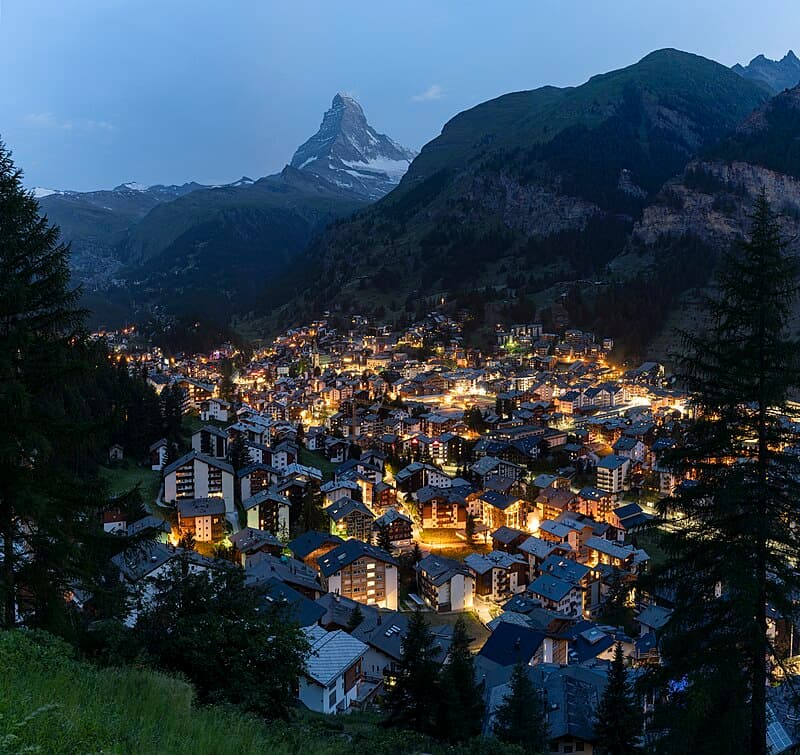
Zermatt sits at the end of the Mattertal valley at one thousand six hundred and eight metres, surrounded by twenty-nine four-thousand-metre peaks — more than around any other place in the Alps. Above the village rises the Matterhorn, four thousand four hundred and seventy-eight metres, a pyramid whose first ascent in 1865 ended with the death of four of the seven climbers and turned a mountain village into a place known worldwide. Cars aren't allowed into Zermatt: they stop five kilometres below in Täsch, and from there a shuttle train takes over, with only quiet electric carts and horse-drawn carriages running through the village itself. Three cable car systems climb from the village to altitudes above three thousand metres, and the highest station, Matterhorn Glacier Paradise at three thousand eight hundred and eighty-three metres, is the highest cable car in Europe. Skiing runs year-round, linked in winter to the Italian resort of Cervinia. Zermatt is expensive even by Swiss standards, but the views from the Gornergrat or Lake Riffelsee are exactly the ones you know from Toblerone boxes.

What to see

The places worth your time in Zermatt, and what to expect at each

Matterhorn

Matterhorn

southwest of the village

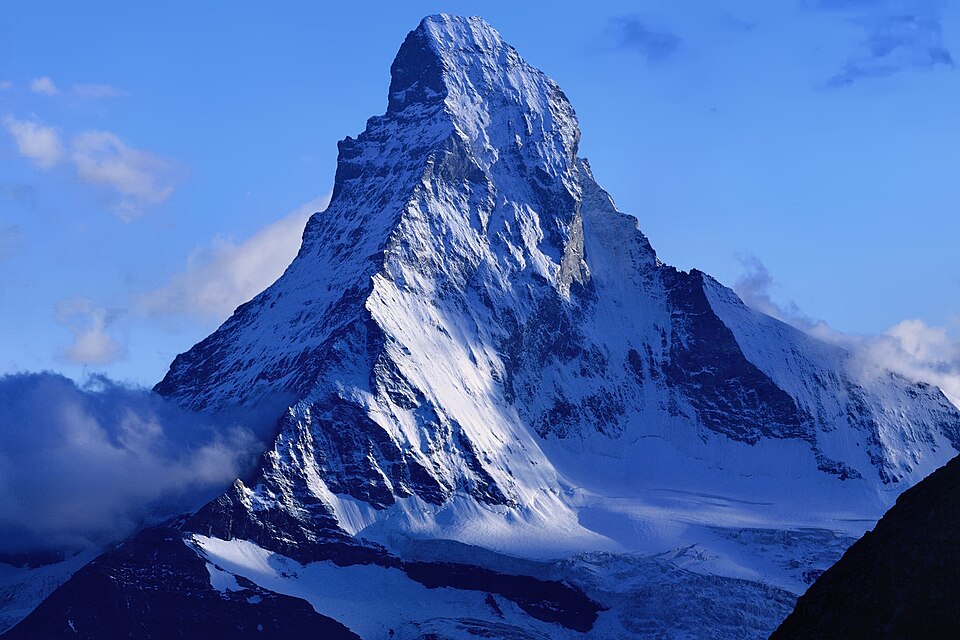
A four-sided pyramid on the border between Switzerland and Italy, a symbol of the Alps and of Switzerland itself. Its northeast Hörnli ridge starts at the Hörnli hut, at three thousand two hundred sixty metres, reachable on foot without climbing experience. More than three thousand people summit it each year, all with a mountain guide or years of experience.

Tip: The best village view of the Matterhorn is from Kirchbrücke by the church, at dawn, when the summit lights up orange first — the so-called alpenglow. A visibility forecast is on Zermatt's website; if it's cloudy in the morning, skip the cable car and wait, since it's often clearer after lunch. The Hörnli hut is two and a half hours from Schwarzsee along an exposed trail.

Admission:
free, guide to the summit from 1,800 CHF
Time needed:
full day to the Hörnli hut
Gornergrat cog railway

Gornergrat cog railway

Gornergratbahn

Gornergrat

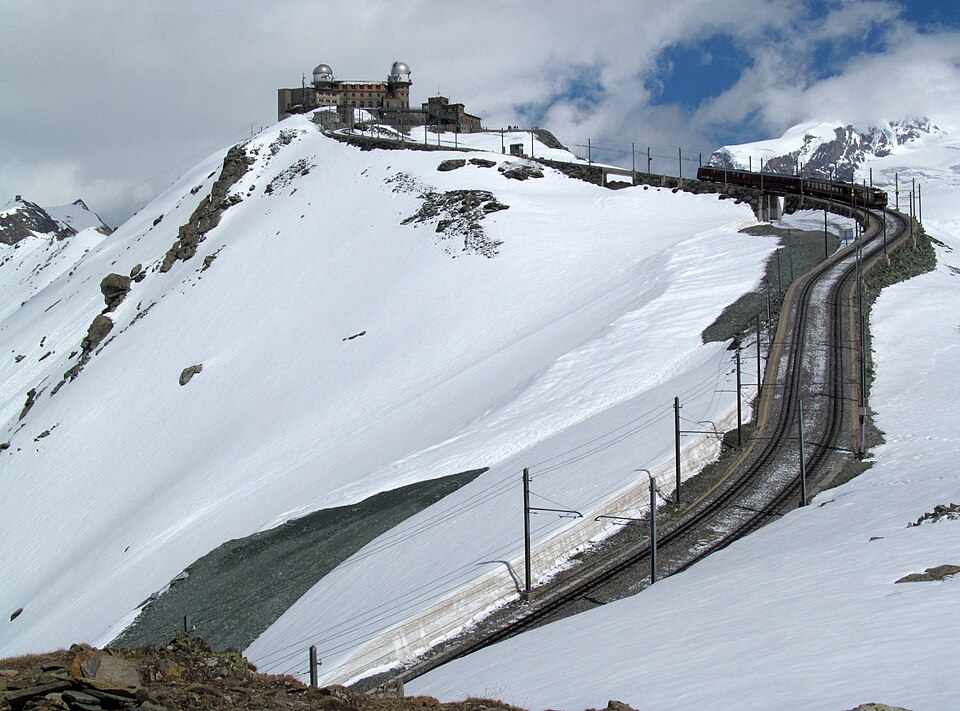
A rack railway from 1898 running from Zermatt to the Gornergrat at three thousand and eighty-nine metres, taking thirty-three minutes. At the top stands a hotel with an observatory, a restaurant and a viewing platform overlooking the Matterhorn, Monte Rosa with Switzerland's highest peak, the Dufourspitze, and the Gorner glacier below it.

Tip: Sit on the right side of the train in the direction of travel — the Matterhorn shows through the windows on that side. Tickets have dynamic pricing, cheapest on the first train in the morning and late afternoon. Coming down, get off at Riffelberg or Rotenboden and walk to Lake Riffelsee instead — an hour, and the loveliest stretch of the whole trip.

Admission:
return 90–138 CHF depending on date
Time needed:
half a day
Matterhorn Glacier Paradise

Matterhorn Glacier Paradise

Klein Matterhorn

Klein Matterhorn

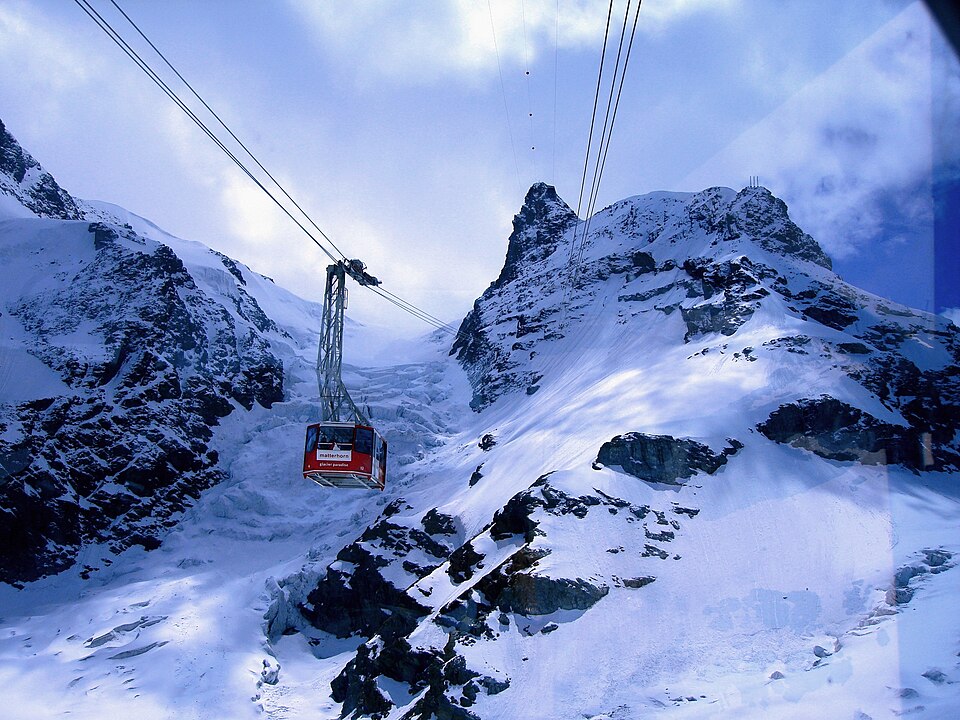
Europe's highest cable car station, at three thousand eight hundred and eighty-three metres on the Klein Matterhorn, reached via Furi and Trockener Steg. At the top is an ice palace with tunnels and sculptures carved into the glacier, and a viewing platform with forty-eight four-thousand-metre peaks in sight and, on a clear day, Mont Blanc.

Tip: At this altitude there's half the oxygen of sea level, and going up fast can bring on dizziness — move slowly up top and skip the alcohol. The Matterhorn Glacier Ride II cable car runs on from here to Testa Grigia in Italy, so you can cross the whole mountain into Italy in a single day. Sunglasses are essential; snow reflects sunlight even in cloud.

Admission:
return from 110 CHF
Time needed:
half a day
Five Lakes Trail

Five Lakes Trail

5-Seenweg

Sunnegga – Blauherd

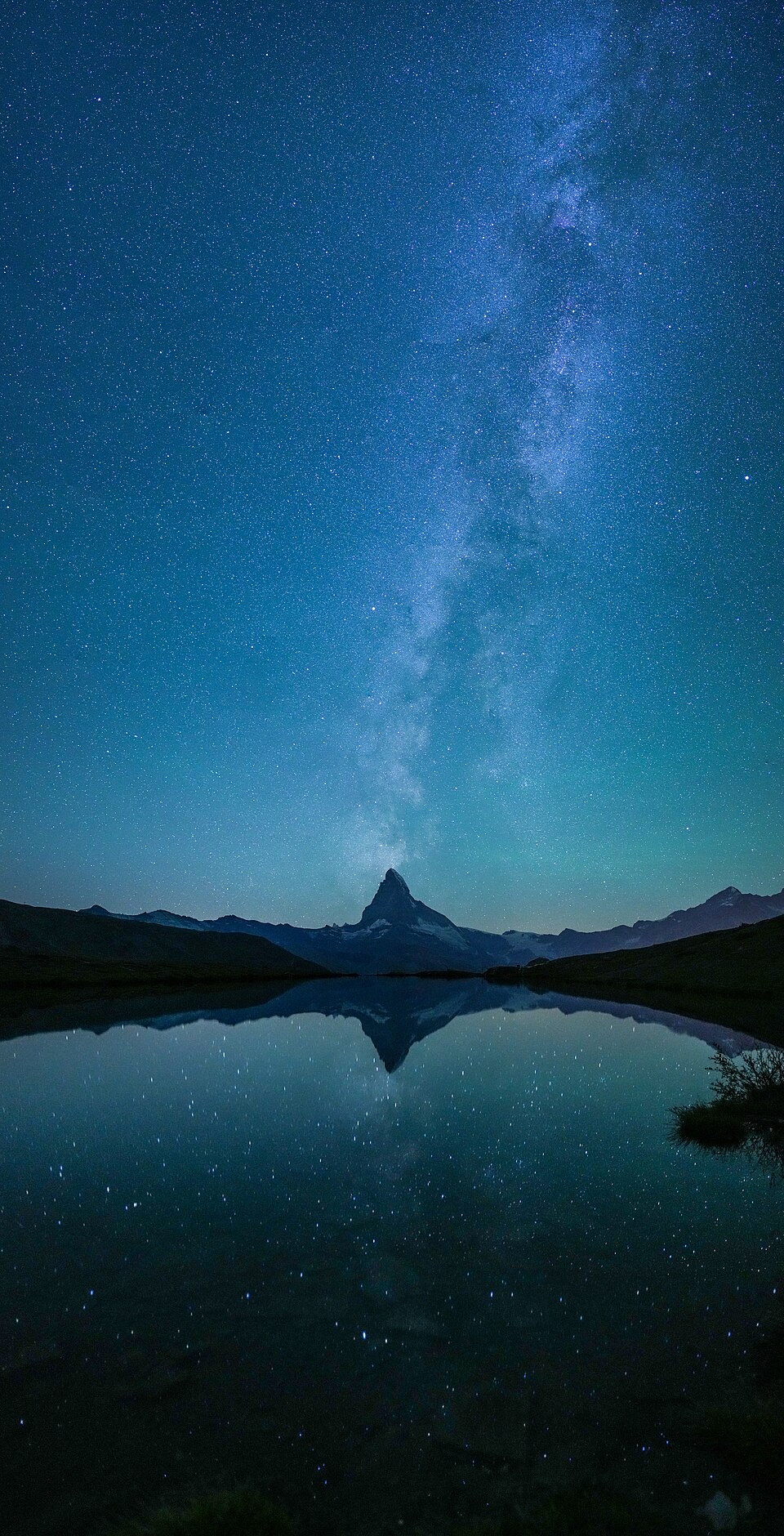
A summer hike from Blauherd above Sunnegga around five mountain lakes — Stellisee, Grindjisee, Grünsee, Mosjesee and Leisee — ten kilometres long and mostly downhill. In three of the lakes, the Matterhorn reflects perfectly on a still day. An underground funicular from the village reaches Sunnegga in three minutes.

Tip: Walk the route downhill from Blauherd, which saves your legs and time, and save Stellisee for early morning, when the surface is still and the reflection is perfect. Lake Leisee near Sunnegga has a beach with a shallow paddling area for children and is the only lake here you can actually swim in. The full route takes three hours without stops.

Admission:
Blauherd cable car from 45 CHF
Time needed:
3–5 h
Lake Riffelsee

Lake Riffelsee

Rotenboden

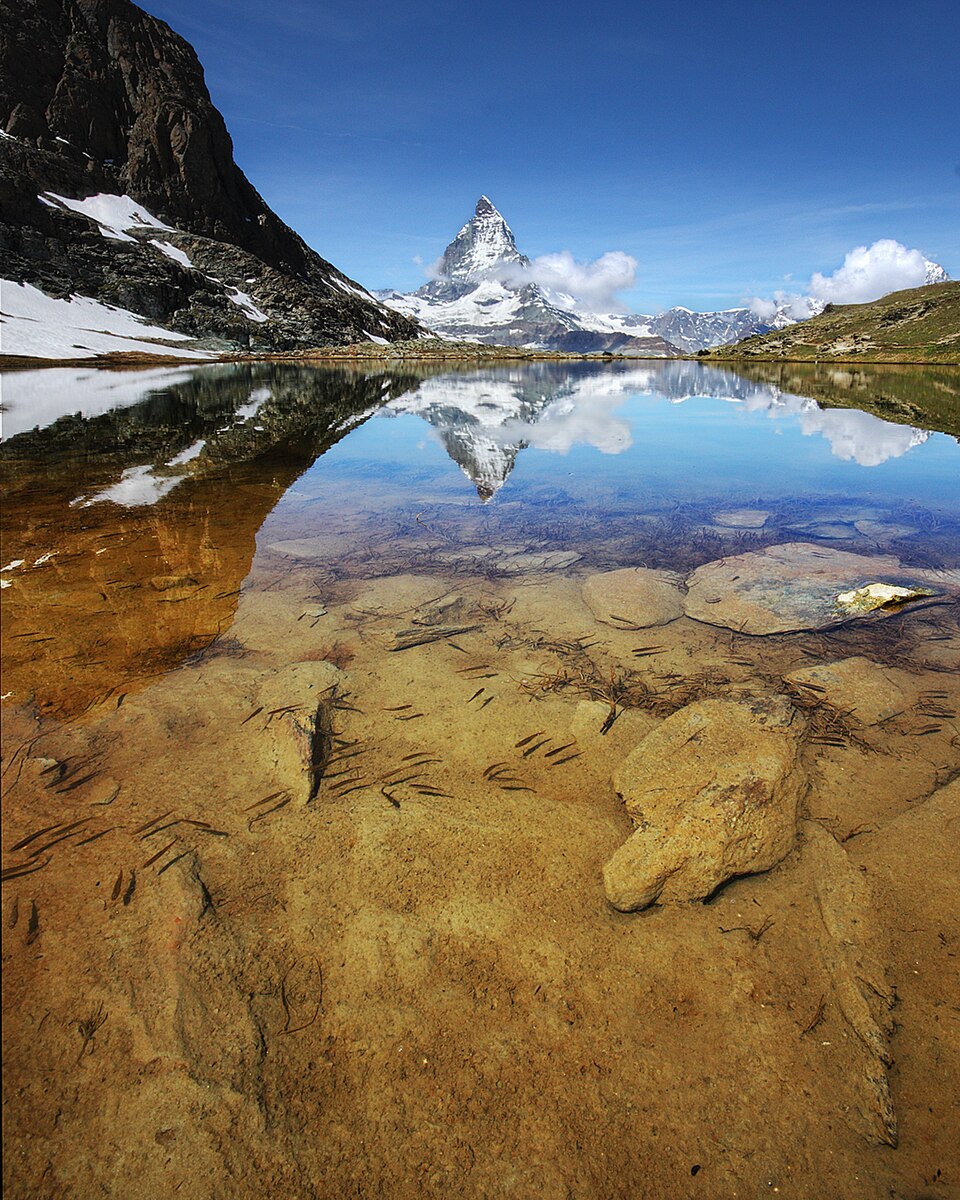
A small mountain lake at two thousand seven hundred and fifty-seven metres between the Rotenboden and Riffelberg stops on the cog railway, where the Matterhorn reflects in its best-known form. The view from Riffelsee appears on thousands of postcards and calendars. A path leads to it from Rotenboden in five minutes.

Tip: The reflection only works when it's calm, so arrive on the first train around seven, when the surface is stillest and the Matterhorn is lit by morning sun. The lake stays frozen until the end of June. Anyone walking on to Riffelberg has the Matterhorn ahead the whole way, with noticeably fewer people.

Admission:
covered by the Gornergrat ticket
Time needed:
1 h
Gorner Gorge

Gorner Gorge

Gornerschlucht

Gornerschlucht

A gorge cut by the Gorner river just above the village, crossed by a wooden walkway bolted to the rock above the rushing water. Over thousands of years the water has carved a winding canyon out of green serpentine rock. It's a twenty-minute walk from the village.

Tip: The gorge is only open from June to October, and there's most water in July when the glaciers are melting — expect noise and spray then. Combine the visit with a walk to the villages of Blatten and Zum See, home to two of the best restaurants in the area with Matterhorn views. The walkways get slippery, so good footwear is essential.

Admission:
5 CHF
Time needed:
1 h
Matterhorn Museum

Matterhorn Museum

Zermatlantis

centre

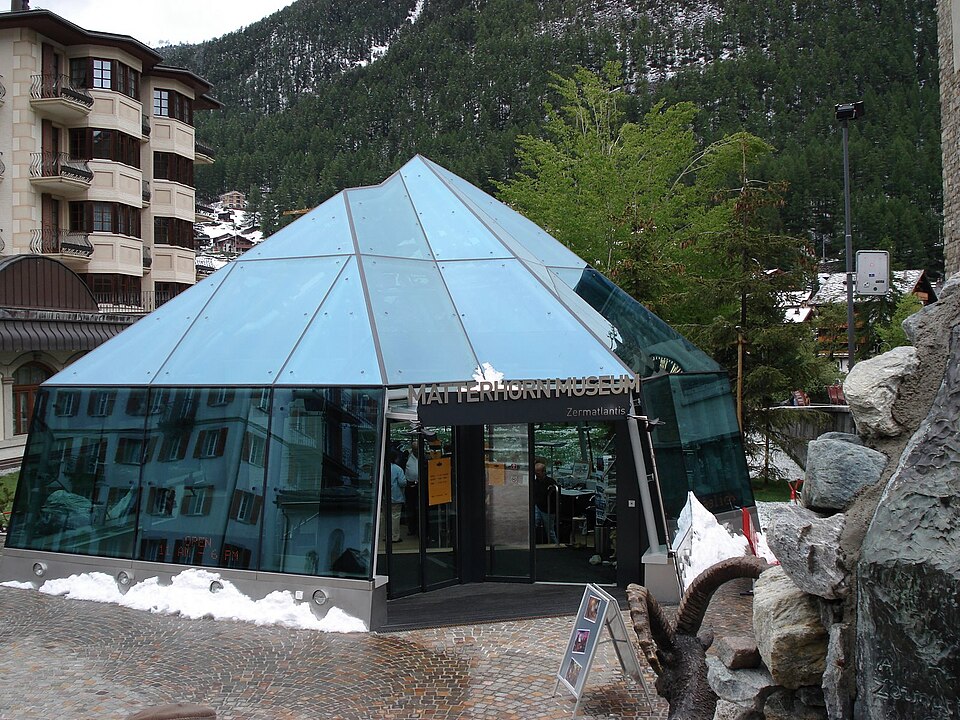
An underground museum below the square by the church, built as a buried village with original houses, kitchens and barns. The exhibition tells how a farming village became a mountain resort, and displays the rope that snapped during the descent from the first Matterhorn ascent in 1865. It also holds climbing gear from the nineteenth century to today.

Tip: On a rainy day when even the summit is invisible, this is the best hour in the village. Right next door is the climbers' cemetery, with the graves of Matterhorn victims — worth a look to understand why nobody climbs that mountain without a guide. A guest card gives discounted admission.

Admission:
12 CHF
Time needed:
1 h
Hinterdorf

Hinterdorf

centre

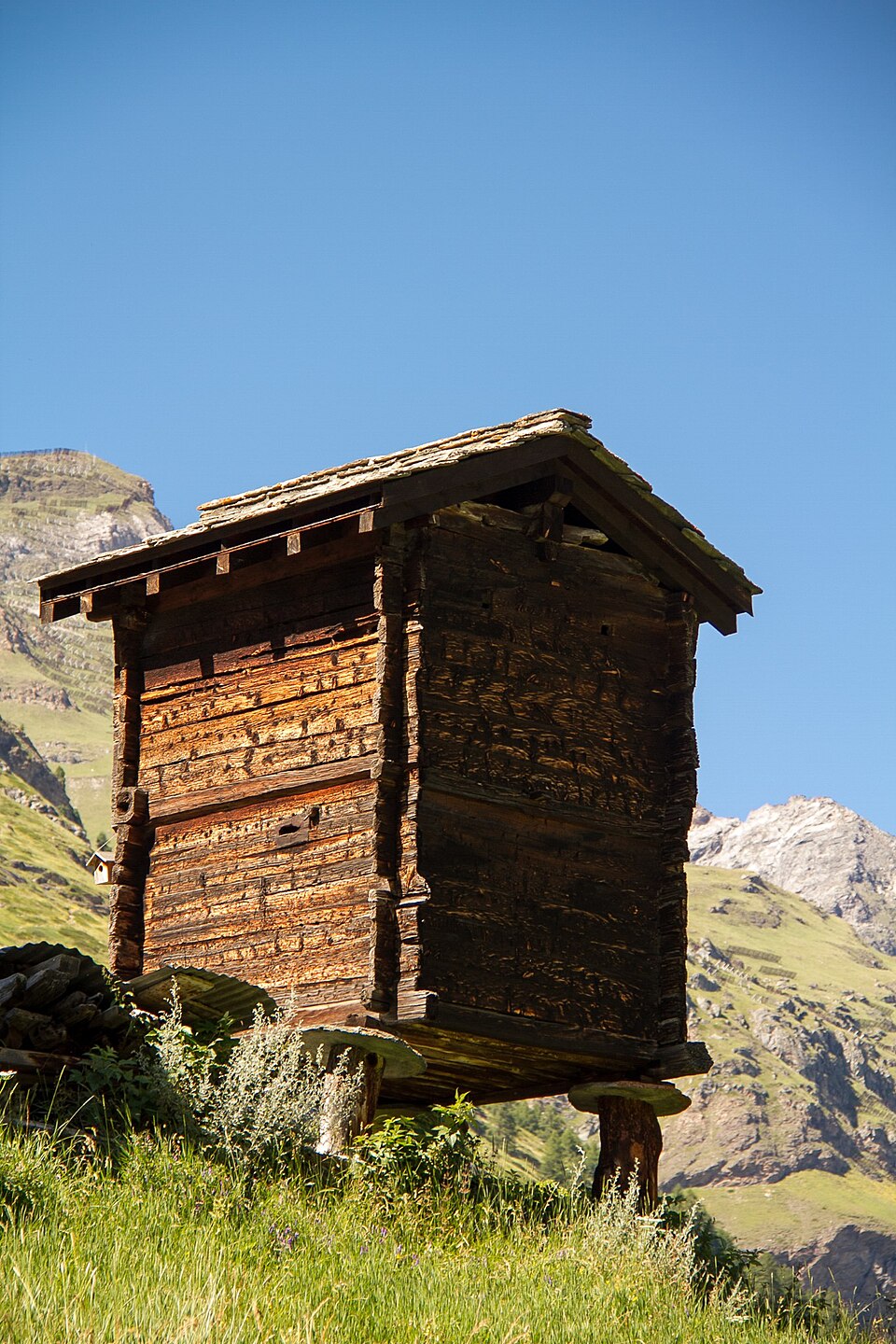
The oldest part of the village, north of the church, with wooden houses, barns and larch granaries standing on stone discs to keep mice out. Some buildings are more than five hundred years old. It's a striking contrast to the shopping street Bahnhofstrasse, just metres away.

Tip: Hinterdorfstrasse runs parallel to Bahnhofstrasse and is nearly empty — the best route from the station to the church when you want to avoid the crowds. The barns photograph best in late afternoon, when low sunlight hits the dark wood. You can't look inside; they're private.

Admission:
free
Time needed:
30 min
Schwarzsee

Schwarzsee

Schwarzsee

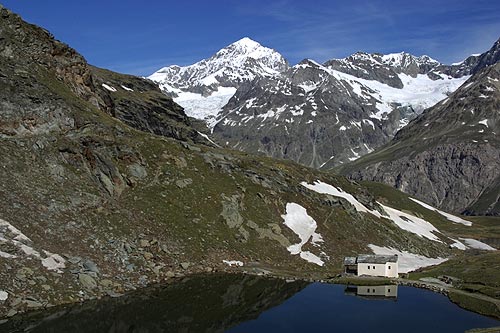
A mountain lake at two thousand five hundred eighty-three metres at the foot of the Matterhorn, with the Maria zum Schnee chapel on its shore, built, according to legend, by climbers grateful to have survived. A cable car runs here from Furi, and it's the starting point for the hike to the Hörnli hut — the closest you can get to the Matterhorn by cable car.

Tip: The chapel is open — step inside, since the climbers' votive pictures are more moving than the museum. Walk back to the village on foot via Stafelalp and Zmutt, a three-hour route with the Matterhorn's north face in view the whole way. In Zmutt there's a small restaurant with homemade cheese and salad.

Admission:
cable car from 60 CHF return
Time needed:
half a day

Photos: Matterhorn — Photo: chil, on Camptocamp.org Derivative work:Zacharie Grossen (CC BY-SA 3.0) · Gornergrat cog railway — My another account at English Wikipedia (CC0) · Matterhorn Glacier Paradise — KleinMatterhorn.jpg: Cable1 derivative work: Papa Lima Whiskey 2 (talk) (CC BY-SA 3.0) · Five Lakes Trail — Giles Laurent (CC BY-SA 4.0) · Lake Riffelsee — Jeffrey Pang (CC BY 2.0) · Gorner Gorge — Walter Schärer (CC BY-SA 3.0) · Matterhorn Museum — Iter1 (Public domain) · Hinterdorf — böhringer friedrich (CC BY-SA 2.5) · Schwarzsee — Roland Zumbühl (Picswiss), Arlesheim (Commons:Picswiss project) (CC BY-SA 3.0)

Where to stay

Areas and districts, matched to the kind of trip you are taking

Bahnhofstrasse and the centre

Best for: a first visit, shopping

The main street from the station to the church, lined with hotels, watch shops and restaurants. Everything is within walking distance, though it's a haul from the station with luggage, and it's the busiest and priciest part of the village. Not every room has a Matterhorn view — ask specifically.

Winkelmatten and Steinmatten

Best for: calm, Matterhorn views

Quiet districts at the southern end of the village near the lower station of the Matterhorn Express cable car, fifteen minutes' walk from the station. Chalets and apartments with mountain views and easier access to skiing and summer hiking.

Oberdorf and Hinterdorf

Best for: atmosphere, history

The northern part of the village, with the oldest wooden houses, close to the underground funicular to Sunnegga. Quieter than the centre, with less touristy restaurants.

Täsch

Best for: lowest prices, driving in

A village five kilometres below Zermatt, where the road ends and the shuttle train begins. Accommodation runs a third to half cheaper, and the train to Zermatt runs every twenty minutes, taking twelve. Suited to anyone arriving by car who wants to save money.

Getting around

From the airport

From Prague to Zermatt by car is roughly nine hundred kilometres and ten hours via Munich, Zurich and Bern, or via Innsbruck; a Swiss motorway vignette is required, and the car is left in covered garages in Täsch. By train it's about twelve hours via Zurich and Visp with several changes. The most sensible option is flying to Geneva, Zurich or Milan and taking the train from there; from both Swiss airports a train runs with a single change in Visp. The Glacier Express, the slowest express train in the world, runs between Zermatt and St. Moritz.

Geneva (GVA) · 240 km

  • Train via Visp· 3 h 45 min· 60 CHF
  • Private transfer to Täsch· 3 h· 550 CHF per vehicle

Zurich (ZRH) · 240 km

  • Train via Bern and Visp· 3 h 30 min· 65 CHF
  • Rental car to Täsch via the Lötschberg· 3 h 15 min

Milan Malpensa (MXP) · 200 km

  • Train via Domodossola and Brig· 4 h· 50 €
  • Private transfer· 2 h 45 min· 500 € per vehicle

Around town

Zermatt is car-free, and the village can be crossed on foot in twenty minutes. Electric buses run between the station and the lifts, along with small electric taxis that look like boxes. Three systems climb the mountains: the cog railway to Gornergrat, the underground funicular to Sunnegga and Rothorn, and cable cars to Klein Matterhorn and Schwarzsee. A Peak Pass covers every lift for multiple days and is worth it from three days onward. The Swiss Travel Pass gives a fifty-percent discount on Gornergrat and the cable cars.

Shuttle train Täsch – ZermattEvery twenty minutes, twelve-minute journey. Parking at the Täsch Matterhorn Terminal is covered. · 8.80 CHF one-way
Electric busTwo lines between the station and the lower cable car stations. Free with a ski pass. · 3.50 CHF
Electric taxiSmall electric carts for four people plus luggage. From the station to a hotel at the far end of the village. · 15 CHF
Peak PassAll cable cars and the Gornergrat cog railway for two to ten days, in summer. · from 220 CHF for two days
Glacier ExpressA panoramic train to St. Moritz over the Oberalp Pass, eight hours. Seat reservation is mandatory. · from 160 CHF

Useful apps: Zermatt, SBB Mobile, MeteoSwiss, White Risk

When to go

Zermatt has an almost year-round season. Winter runs from late November to the end of April, with skiing up to three thousand eight hundred metres; on the Theodul glacier there's skiing in summer too. Summer, from mid-June to mid-September, is for hiking, climbing and the views, though the village is packed in July and August. September offers the best balance, with the most clear days and fewer people. In May and from mid-October to mid-November, some hotels and lifts close. The village sits in a rain shadow and has more sunny days than the northern Swiss Alps.

Best time

September for hiking, February and March for skiing

What to avoid

May and November, when some lifts and hotels are closed

MonthJanFebMarAprMayJunJulAugSepOctNovDec
Day0°2°5°9°14°18°21°20°16°11°4°0°
Night-10°-9°-6°-2°2°6°8°8°4°0°-5°-9°
Rainy days66781010997776

Food & drink

Zermatt is one of the most expensive places to eat in the Alps, but up in the mountains the standard is high: restaurants like those in Zum See, Findeln or Furi are renowned and book out a week ahead. The cooking is Valais cuisine — raclette, fondue and dried meat — with wines from the Rhône valley. In the village itself, bakeries, the Coop and Migros supermarkets near the station, and pizzerias offer cheap eating. A picnic with a Coop sandwich on a bench with a Matterhorn view is often the cheapest and best lunch of all.

What to try

Raclette

Half a wheel of cheese melted under a grill and scraped onto potatoes with gherkins and pickled onion. Ordered by the number of scrapes, and eaten until the guest calls it quits.

Cheese fondue

A melted blend of gruyère and vacherin with white wine, into which bread is dipped on a fork. Drink white wine or black tea with it, not cold water — a portion for two runs twenty-five to thirty-five francs per person.

Rösti

Grated potatoes fried in a pan, originally a Bernese farmers' breakfast. Served with egg, cheese or bacon, and the cheapest main course on most mountain menus.

Walliser Teller and rye bread

A Valais platter: dried beef, raw ham, bacon and sausage, with cheese and Walliser Roggenbrot, a protected-origin rye bread that's dense and slightly sour. At a mountain hut it's ordered to share between two and stands in for lunch.

Cholera

A Valais pie of puff pastry filled with potatoes, apples, leek and cheese. The name has nothing to do with the disease — it likely comes from 'chola', the coal it was once baked over. Only a few traditional places in Zermatt still make it.

Fendant and Petite Arvine

White wines from Valais, Switzerland's largest wine canton. Fendant is the local name for the chasselas grape and goes with fondue and raclette; Petite Arvine is a local variety with a salty, mineral note, barely sold outside Switzerland.

Chocolate and Rivella

A bar of Swiss chocolate from Coop or Migros costs a fraction of the price in a tourist shop and is the same brand. Rivella is the national soft drink, made from whey, tasting somewhere between apple and milk.

What it costs

Espresso

5 CHF

Lunch at a mountain restaurant

35–55 CHF

Dinner at a restaurant

70–130 CHF per person

Fondue for two

60–80 CHF

Gornergrat, return

90–138 CHF

Day ski pass

79–99 CHF, 110 CHF with Cervinia

Half-litre of beer

8–9 CHF

Night in a 3-star hotel for two

280–450 CHF

Indicative prices that change over time — treat them as a guide, not a price list.

Practical information

SocketsCEuroplug, two round pinsJSwiss
Voltage230V / 50Hz
Tap waterTap water is drinkable — Tap water in Switzerland is drinkable without exception, and eighty percent of it comes from groundwater or springs — in the mountains it runs continuously into public fountains, and you can drink straight from them or fill a bottle. A sign reading 'kein Trinkwasser' means not drinkable and is rare. A litre of bottled water costs around a franc in a shop and six to eight in a restaurant, so a refillable bottle saves more money than anything else.
TippingService is included by law and no tip is expected. It's customary to round up, typically to the nearest franc or five. When paying by card, you tell the server the amount to round the receipt to — the terminal usually has no tip field. At mountain huts you pay at the counter up front, and no tip is given at all.
Driving on theright
SafetyZermatt is a safe place, and theft is rare, mostly limited to skis left outside restaurants. The main risk is altitude: above three thousand metres, altitude sickness with headaches and nausea is possible, so it's not wise to head straight up to Klein Matterhorn and exercise hard on day one. Don't walk onto glaciers without a guide — people die in crevasses even in summer. Mountain rescue is reached through Air Zermatt on 144; a helicopter callout without insurance costs thousands of francs. The general emergency number is 112.
Opening hoursShops in mountain resorts open from eight to half past six, and in season even on Sundays; out of season, everything shuts on Sundays except station shops. Restaurants serve lunch from half past eleven to two and dinner from six to nine, and you won't find food in the mountains later than that. Mountain huts close shortly after the last lift, usually between four and five in the afternoon. The shoulder season in November and from April to June is when most hotels and lifts are closed.
Customs & etiquettePunctuality is a form of courtesy in Switzerland — trains and buses leave at the announced minute, and a seven o'clock restaurant reservation means seven o'clock. A 'Grüezi' greeting is used even with strangers passed on a mountain trail — it's a rule, not an optional courtesy. Quiet hours apply on Sundays and after ten at night: no mowing lawns, no drilling, no laundry in apartment buildings. Waste is sorted rigorously, and some municipalities charge for a special bag for general rubbish.
A few local wordsHello — GrüeziThank you — DankePlease — BitteThe bill, please — Zahlen, bitteCheers — ProstGoodbye — Uf Wiederluege

How to plan your days

1 day

A day beneath the Matterhorn

  1. 1Sunrise over the Matterhorn from Kirchbrücke.
  2. 2First train up to Gornergrat, seated on the right side of the carriage.
  3. 3Walk from Rotenboden to Lake Riffelsee and on to Riffelberg.
  4. 4Lunch at Riffelalp or Findeln.
  5. 5Afternoon stroll through Hinterdorf and the Matterhorn Museum.

2 days

A weekend in the mountains

  1. 1Day one as the single-day plan above.
  2. 2Second morning by underground funicular to Sunnegga and on to Blauherd.
  3. 3Five Lakes Trail down to Leisee.
  4. 4Lunch on the terrace at Findeln.
  5. 5Afternoon at the Gorner Gorge and dinner in Zum See.

3 days

Three days with a glacier

  1. 1First two days as above.
  2. 2Third day by cable car up to Matterhorn Glacier Paradise.
  3. 3On the way back, cable car to Schwarzsee and its chapel.
  4. 4Walk back to the village via Stafelalp and Zmutt.

Day trips

Saas-Fee

35 km · 1 h by train and bus

Another car-free village in Valais, in the neighbouring valley below the Fee glacier, surrounded by thirteen four-thousand-metre peaks. Cable cars run up to Mittelallalin, home to the world's highest revolving restaurant, with summer skiing too. It's somewhat cheaper and quieter than Zermatt.

Glacier Express to St. Moritz

290 km · 8 h by train

A panoramic train with a glass roof that crosses two hundred ninety-one bridges and ninety-one tunnels, over the Oberalp Pass at two thousand thirty-three metres. As a day trip it's one-way only, but linking the two most famous Swiss resorts is an experience in itself. A shorter version stops at Andermatt.

Aletsch Glacier

60 km · 1 h 30 min by train and cable car

The largest glacier in the Alps, twenty kilometres long, UNESCO-listed. Cable cars from the villages of Riederalp and Bettmeralp climb to the Eggishorn, from where the entire glacial flow looks like a frozen motorway. The trip can be combined with a walk along the Moosfluh ridge.

Frequently asked questions

Can I drive into Zermatt?+

No, Zermatt is car-free. Cars are left in Täsch, in the garages of the Matterhorn Terminal, and from there a shuttle train runs every twenty minutes. Hotels pick guests up from the station by electric cart.

When is the Matterhorn best visible?+

On a clear morning, typically in September or in winter. In summer, clouds tend to build around the peak after lunch. A forecast and live cameras are on Zermatt's website, so it's worth timing the cable car around what you can actually see.

Is it worth taking the Gornergrat or the Matterhorn Glacier Paradise?+

Gornergrat has the finer side-on view of the Matterhorn and of the Gorner glacier; Matterhorn Glacier Paradise offers altitude and an ice palace instead. With only one day, choose Gornergrat and walk down to Riffelsee.

Can you ski in Zermatt in summer?+

Yes, summer skiing runs on the Theodul glacier below the Klein Matterhorn, with about twenty kilometres of pistes. Skiing happens in the morning, from eight until noon, while the snow is still firm.

How expensive is Zermatt?+

One of the most expensive resorts in the Alps: lunch in the mountains runs forty to fifty francs, a night in a three-star hotel over three hundred. You save by staying in Täsch, shopping at Coop, and buying a Peak Pass for the lifts.

Can I climb the Matterhorn?+

Only with climbing experience and a mountain guide, and the ascent takes two days with an overnight at the Hörnli hut. For an ordinary visitor, the real goal is the Hörnli hut itself, reached from Schwarzsee in two and a half hours.

How do I get to Zermatt from Prague?+

Fastest by flying into Zurich or Geneva and taking the train via Visp, three and a half to four hours total. By car it's about ten hours, and you'll need to leave the car in Täsch.

Is Zermatt suitable for children?+

Yes — in winter there's a children's area at Sunnegge and the Wolli park with a ski school, and in summer Lake Leisee, the five-lakes trail and Gornergrat. Above three thousand metres it's best to keep young children's exposure short because of the altitude.

Visa Requirements

Check the latest visa requirements for entering this country. Some nationalities may need to apply for a visa or e-visa before travel.

Check visa requirements

Language

German / French / Italian

Currency

CHF

Timezone

GMT+1

Dial Code

+41

Population

8.8M

Area

41,285 km²

Voltage

230V / 50Hz

Driving Side

Right

Top Hotels in Zermatt

Live prices from 500+ properties

Loading hotels...

More destinations in Switzerland

Planning a trip to Zermatt?

Compare hundreds of hotels, find the best price, and book with free cancellation on TravelManiac.