Hotels in Brač

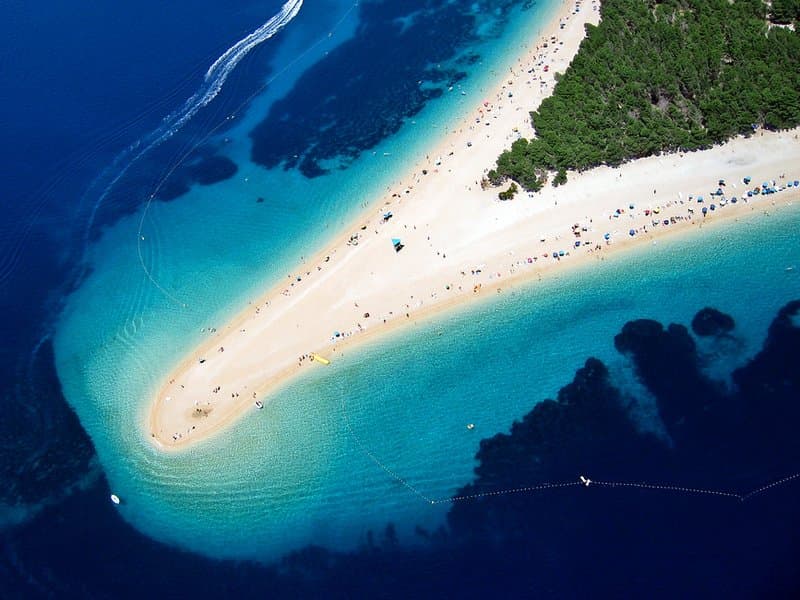
An island of the Zlatni Rat beach, white stone and lamb

Brač

LanguageCroatian
CurrencyEUR
TimezoneEurope/Zagreb
Temperature8-28 °C
Dial Code+385
Population3.9M
Area56,594 km²
SocketsType C / Type F
Tap waterDrinkable

Discover Brač

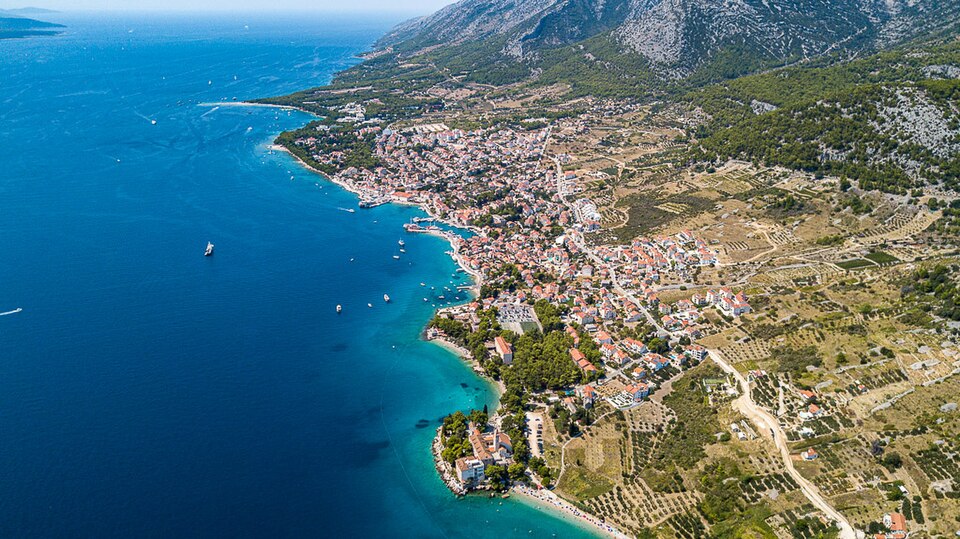
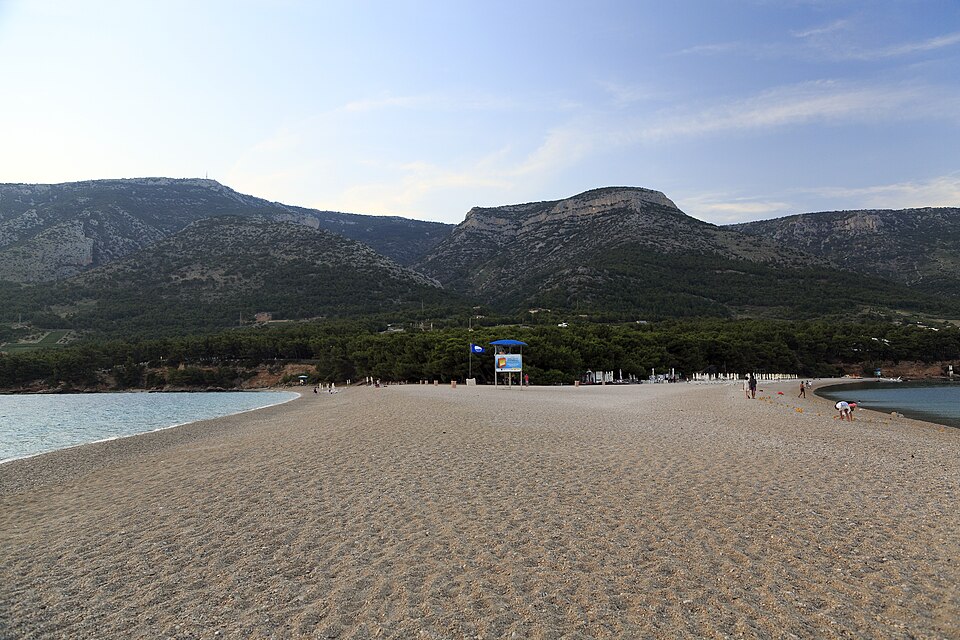
Brač is the largest island of central Dalmatia, only an hour's crossing from Split, and it became famous for the Zlatni Rat beach by the town of Bol, a tongue of pebbles reaching into the sea whose shape changes with the wind. The island is beautifully stony: the white Brač stone from local quarries is in Diocletian's Palace, in the White House in Washington and in many Croatian churches. Above Bol rises Vidova gora, 778 metres, the highest peak of the Adriatic islands, with views of Hvar, Šolta and the Biokovo range. Brač is calmer than Hvar and cheaper than Dubrovnik, but in July and August it is still full. It suits families, windsurfers, cyclists and those who like eating lamb. Ferries run to Supetar from Split in an hour and fast boats to Bol. From the Czech Republic it is about thirteen hundred kilometres by car, so most people fly to Split. The best time is June and September.

What to see

The places worth your time in Brač, and what to expect at each

Zlatni Rat Beach

Zlatni Rat Beach

Bol

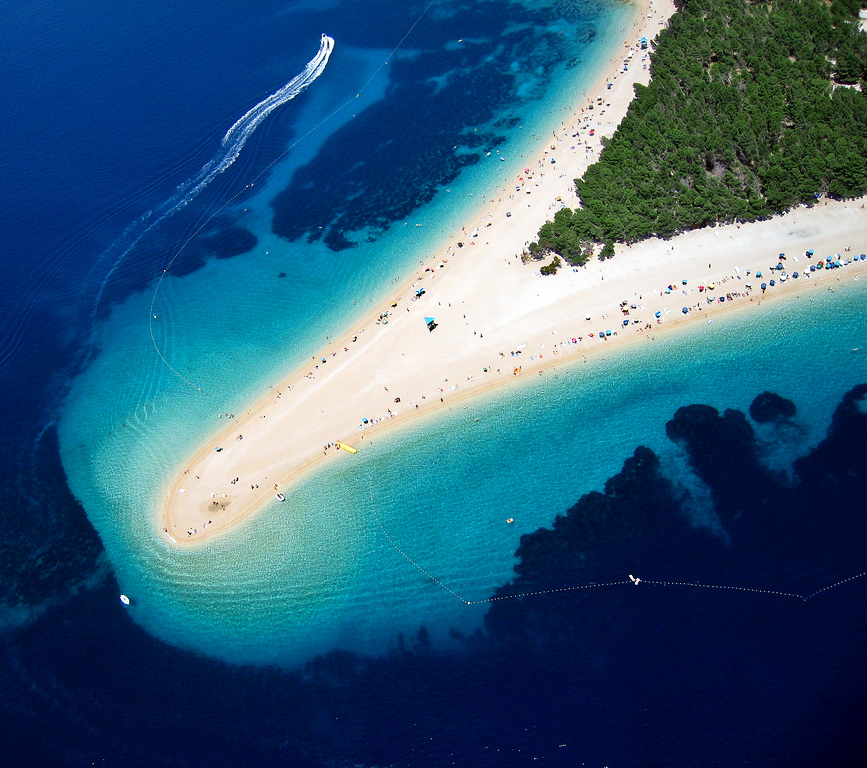
A stone and pebble tongue six hundred and thirty-four metres long that reaches out into the sea by the town of Bol and changes shape with wind and currents. Around it are a pine grove, bars and rental shops, and in the afternoon maestral wind people windsurf and kitesurf. It is the symbol of the island and among the most photographed places in Croatia.

Tip: In the morning the beach is calm and the sea clear; in the afternoon wind and crowds arrive. Bring water shoes, as the pebbles are sharp and the entry to the sea gradual.

Admission:
free
Time needed:
half a day
The Town of Bol

The Town of Bol

Bol

A small historic town on the south coast with a promenade, cafés, stone houses and a fifteenth-century Dominican monastery. In the harbour stand fishing boats and in the evening it is lively. It is the best base for the beaches and the wind.

Tip: Go in the evening to the promenade and to the monastery, which has a small museum. Prices are lower in side lanes and in restaurants on the hill above town.

Admission:
free
Time needed:
2 hrs
Vidova Gora

Vidova Gora

above Bol

The highest peak of the Adriatic islands, 778 metres high, above the town of Bol, with views of the coast, the islands of Hvar and Šolta, Pelješac and the Biokovo range. A road and a footpath lead up, the latter taking about two hours. At the top are a chapel and a restaurant.

Tip: Drive or walk up early in the morning or before sunset, when the view is clearest. Bring a windcheater, as it blows at the top and is ten degrees cooler.

Admission:
free
Time needed:
half a day
Supetar

Supetar

Supetar

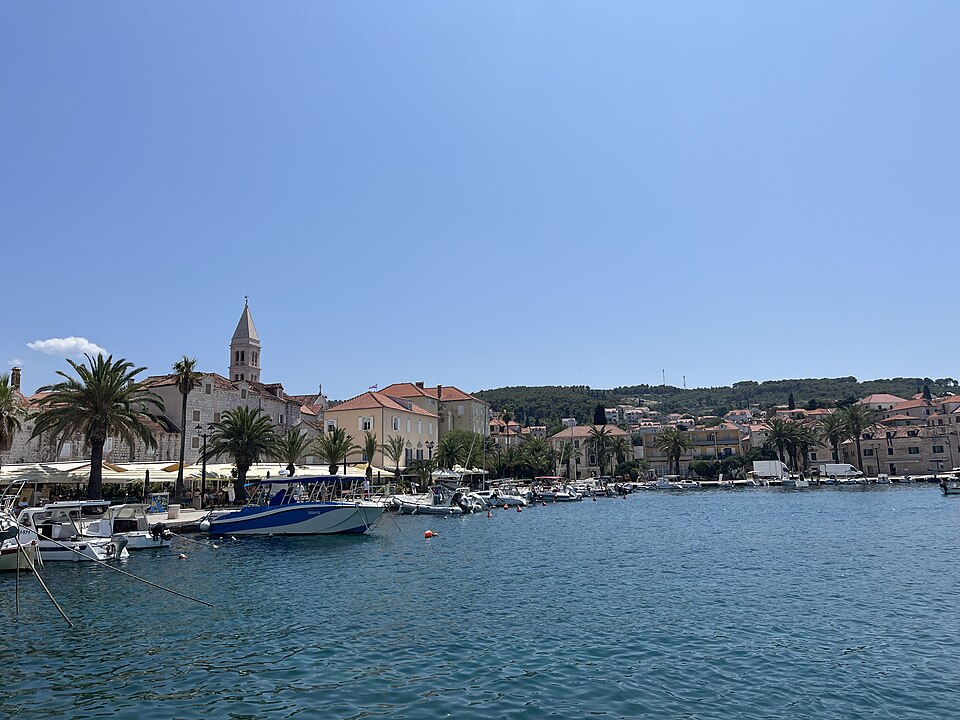
The island's largest town and main port, where ferries arrive from Split. It has a promenade, pine-shaded beaches and a cemetery with the Petrinović mausoleum designed by Ivan Meštrović. Around lie pebbly coves.

Tip: Ferries run every hour, but in season you book a car in advance. Vlaška beach is calm and suits children.

Admission:
free
Time needed:
2–3 hrs
Škrip

Škrip

centre of the island

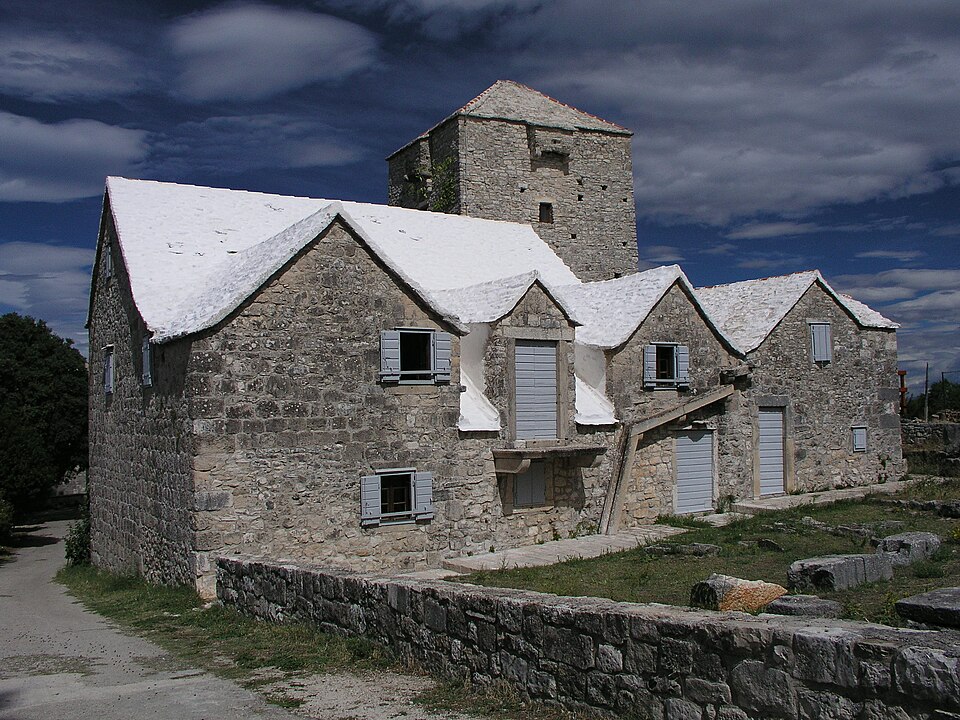
The oldest settlement on the island in the interior of Brač, with Roman and Illyrian remains, a fortress and a museum in the Radojković tower. It is a calm place of stone houses where you can see where the stone was quarried. The museum has exhibits from antiquity to today.

Tip: The museum is small but interesting. Come in the morning and combine the visit with a quarry and the village of Splitska.

Admission:
about €5
Time needed:
1–2 hrs
The Blaca Hermitage

The Blaca Hermitage

south of Nerežišća

A monastery set into the rock above a valley, founded in the sixteenth century by monks fleeing the Turks. It later became a centre of learning, with a library, an observatory and collections. It is one of the most remarkable monuments of the island.

Tip: From Murvica it is a half-hour walk down and the same back. Bring water and sturdy shoes, as in summer the path is baking. Entry costs around ten euros.

Admission:
about €10
Time needed:
3 hrs
The Village of Nerežišća

The Village of Nerežišća

centre of the island

A historic village in the interior of the island, a former capital of Brač, with stone houses, the church of St John and a square. Today it is a calm place without crowds, where you can buy local produce. The surroundings suit cyclists.

Tip: Come on a Monday, when a small market is held. Rent a bicycle in Supetar or Bol.

Admission:
free
Time needed:
1–2 hrs

The Dragon's Cave

Murvica

A cave in the hills above Murvica that Glagolitic monks used for centuries and in which reliefs of a dragon and figures are carved. It is one of the most enigmatic monuments of the island and accessible with a guide. The decoration here dates from the fifteenth century.

Tip: Ask in Bol about tours with a local guide; the cave opens only at agreed times. It is a harder journey, so wear sturdy shoes.

Admission:
about €10
Time needed:
2 hrs
Lovrečina Beach

Lovrečina Beach

Postira

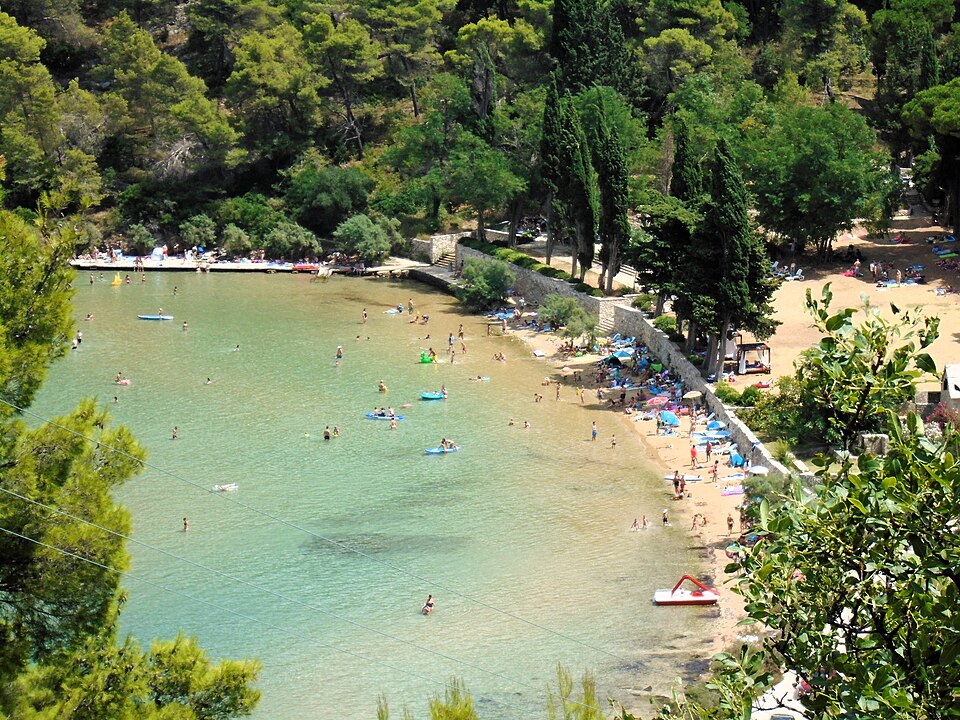
A long sandy and pebbly cove by Postira on the north of the island, ringed by pines, with shallow, warm sea. Nearby stand the remains of an early Christian basilica of the sixth century. It is an ideal place for families with children.

Tip: The beach is gradual and suits children, but in summer is full; come in the morning. It has little shade apart from the pines, so bring an umbrella.

Admission:
free
Time needed:
half a day

Photos: Zlatni Rat Beach — Szabolcs Emich (cropped by DIREKTOR) (CC BY 2.0) · The Town of Bol — Marin0110 (CC BY-SA 4.0) · Vidova Gora — Falk2 (CC BY-SA 4.0) · Supetar — WeatheredAviation (CC0) · Škrip — Honza Beran (CC BY 2.5) · The Blaca Hermitage — Wolfgang Schneider (CC BY-SA 3.0) · The Village of Nerežišća — Marijan (Public domain) · Lovrečina Beach — Silverije (CC BY-SA 4.0)

Where to stay

Areas and districts, matched to the kind of trip you are taking

Bol

Best for: beaches and windsurfing

The resort by Zlatni Rat with hotels and apartments, the loveliest place on the island. It has the widest range of services and an afternoon wind for surfers. In season it is full and pricey.

Supetar

Best for: port and families

The island's largest town, where the ferries arrive. It has beaches for children, a promenade and lower prices than Bol. A good choice for families and for arrivals.

Milna and Splitska

Best for: calm and yachts

Small harbours in the west and north with calm coves. It is calm with yachts, but with a smaller range of services. Suits couples.

Sumartin and Postira

Best for: calm and authenticity

Villages in the east and north with smaller hotels and beaches. Prices are lower and the atmosphere authentic. Suit families and those seeking calm.

Getting around

From the airport

Brač Airport (BWK) lies by Bol and has a few seasonal routes, but most travellers fly to Split (SPU) and sail across. From Split ferries run to Supetar (fifty minutes) and fast boats to Bol (an hour). From the Czech Republic it is about thirteen hundred kilometres by car through Slovenia and Zagreb, then a ferry from Split port. Coaches run overnight from Prague to Split.

Split Airport (SPU) · 5 km

  • Split–Supetar ferry· 50 min· €7
  • Split–Bol fast boat· 1 hr· €13
  • Car rental at the port· by the port· €45

Brač Airport (BWK) · 7 km

  • Taxi to Bol· 10 min· €20

Around town

Without a car you hardly get around the island, as buses run sparsely. In Bol everything is walkable and bicycles and scooters are rented. Buses run between Supetar and Bol several times a day. Roads are narrow and winding but good. In season book a car on the ferry in advance.

Split–Supetar ferryWith or without a car, every hour. · €7
Split–Bol fast boatFoot passengers only, in season. · €13
Bus Supetar–BolSeveral times a day. · €5
Car or scooter rentalFor the whole island. · €45

Useful apps: Google Maps, Jadrolinija, Bolt, Maps.me

When to go

Brač has a Mediterranean climate with a hot, dry summer and a mild winter. In July and August it is around thirty-one degrees and the sea twenty-five to twenty-six. The best months are June and September. In the afternoon the maestral wind blows, ideal for windsurfers.

Best time

June and September

What to avoid

July and August (heat and crowds)

MonthJanFebMarAprMayJunJulAugSepOctNovDec
Day12°12°15°19°24°28°31°31°26°21°16°13°
Night5°5°7°10°14°18°21°21°17°13°9°6°
Rainy days788875346799
Sea14°13°14°16°19°23°25°26°24°21°18°15°

Food & drink

Brač cooking is stony and rustic: lamb from the fire and the peka, cheese, olive oil and fish. A speciality is vitalac, a skewer of lamb offal, and hrapoćuša, a flat cake with honey. Lunch in a konoba costs fifteen to thirty euros.

What to try

Brač lamb

Young lamb baked under a peka bell with potatoes and herbs. The best are the family konobas in the interior of the island.

Vitalac

A skewer of lamb offal wrapped in intestines and roasted over a fire. A typical Brač speciality for the adventurous.

Škripavac

A fresh sheep's cheese from the island eaten with olive oil. The name means 'squeaky', because the cheese squeaks on the teeth.

Olive oil

From Brač olive trees, full and slightly bitter. You buy it straight from producers, for example in Škrip.

Hrapoćuša

A flat cake with honey and nuts, a traditional Brač dessert. Baked for festivals.

Grilled fish

Fresh Adriatic fish, grilled with olive oil and garlic. The price is by weight.

Black risotto

Rice with cuttlefish and its ink, black and intense. A typical dish of the coast.

What it costs

Espresso

€1.5–2

Lunch in a konoba

€15–30

Lamb from the peka

€18–28

A beer

€3–4

Ferry from Split

€7

Blaca hermitage

€10

3★ apartment (night)

€70–180

Lounger (day)

€12–20

Indicative prices that change over time — treat them as a guide, not a price list.

Practical information

SocketsCEuroplug, two round pinsFSchuko
Voltage230V / 50Hz
Tap waterTap water is drinkable — Tap water in Croatia is excellent and drunk without restriction. Croatia has been in the eurozone since 2023.
TippingTipping is customary, ten per cent in a restaurant or rounding up. For taxi drivers rounding up is enough.
Driving on theright
SafetyBrač is safe. In the sea watch for sea urchins and, in wind, waves. On the roads mind narrow and winding stretches. The emergency number is 112, ambulance 194.
Opening hoursShops are open from eight to eight, mostly closed on Sunday. Restaurants serve lunch from noon and dinner from six. Out of season some businesses are closed.
Customs & etiquetteCroats are friendly and 'dobar dan' is enough. On beaches do not sunbathe topless except in designated areas. Do not enter a church in swimwear.
A few local wordsGood day — Dobar danThank you — HvalaPlease — MolimHow much is it? — Koliko košta?Cheers — ŽivjeliThe bill, please — Račun, molimWhere is the toilet? — Gdje je WC?

How to plan your days

1 day

A day in Bol

  1. 1Morning Zlatni Rat beach.
  2. 2Lunch in a konoba.
  3. 3Afternoon a stroll through town and the monastery.
  4. 4Early evening Vidova gora.
  5. 5Evening dinner with lamb.

2 days

Two days: Bol and the interior

  1. 1Day one as above.
  2. 2Day two Škrip and Nerežišća.
  3. 3Afternoon the Blaca hermitage.
  4. 4Evening swimming in a cove.

3 days

Three days: Brač and Hvar

  1. 1Days one and two as above.
  2. 2Day three by boat from Bol to Hvar.
  3. 3Afternoon a walk through Hvar's old town.
  4. 4Evening return.

Frequently asked questions

Is Brač suitable for families?+

Yes, the beaches are pebbly and gradual, prices are lower than on Hvar and Bol has things for children. For the youngest the calm coves near Supetar are better. Bring water shoes.

How do I get to Brač?+

From Split airport or port by ferry to Supetar in fifty minutes or by fast boat to Bol in an hour. In season book a car on the ferry in advance. There is also a small Brač airport with a few seasonal routes.

When is the best time to visit?+

June and September, when it is warm and less crowded. July and August are full and pricey. For windsurfing the best is May to September.

What is Zlatni Rat?+

A pebble tongue six hundred and thirty-four metres long that reaches into the sea by Bol and changes shape with the wind. It is Croatia's most famous beach. The water is clean and gradual.

Do I need a car?+

For the interior of the island and the viewpoints yes, as buses run sparsely. For Bol and the beaches walking or cycling suffices. In season book a car in advance.

What should I eat on Brač?+

Lamb from the peka, škripavac and olive oil. With them vitalac for the adventurous and hrapoćuša as a dessert. Dinner in a konoba costs fifteen to thirty euros.

Is Brač pricier than Hvar?+

It is cheaper than Hvar and Dubrovnik. An apartment costs seventy to a hundred and eighty euros a night and lunch fifteen to thirty euros. Cheapest are the konobas in the interior.

Do you pay in euros on Brač?+

Yes, Croatia adopted the euro in January 2023. Cards are accepted nearly everywhere, and cash is useful at markets and in smaller konobas.

Visa Requirements

Check the latest visa requirements for entering this country. Some nationalities may need to apply for a visa or e-visa before travel.

Check visa requirements

Language

Croatian

Currency

EUR

Timezone

Europe/Zagreb

Dial Code

+385

Population

3.9M

Area

56,594 km²

Voltage

230V / 50Hz

Driving Side

Right

Top Hotels in Brač

Live prices from 500+ properties

Loading hotels...

Planning a trip to Brač?

Compare hundreds of hotels, find the best price, and book with free cancellation on TravelManiac.