Hotels in Podgora

A quiet resort squeezed between Biokovo and the sea

Podgora

LanguageCroatian
CurrencyEUR
TimezoneEurope/Zagreb
Temperature8-28 °C
Dial Code+385
Population3.9M
Area56,594 km²
SocketsType C / Type F
Tap waterDrinkable

Discover Podgora

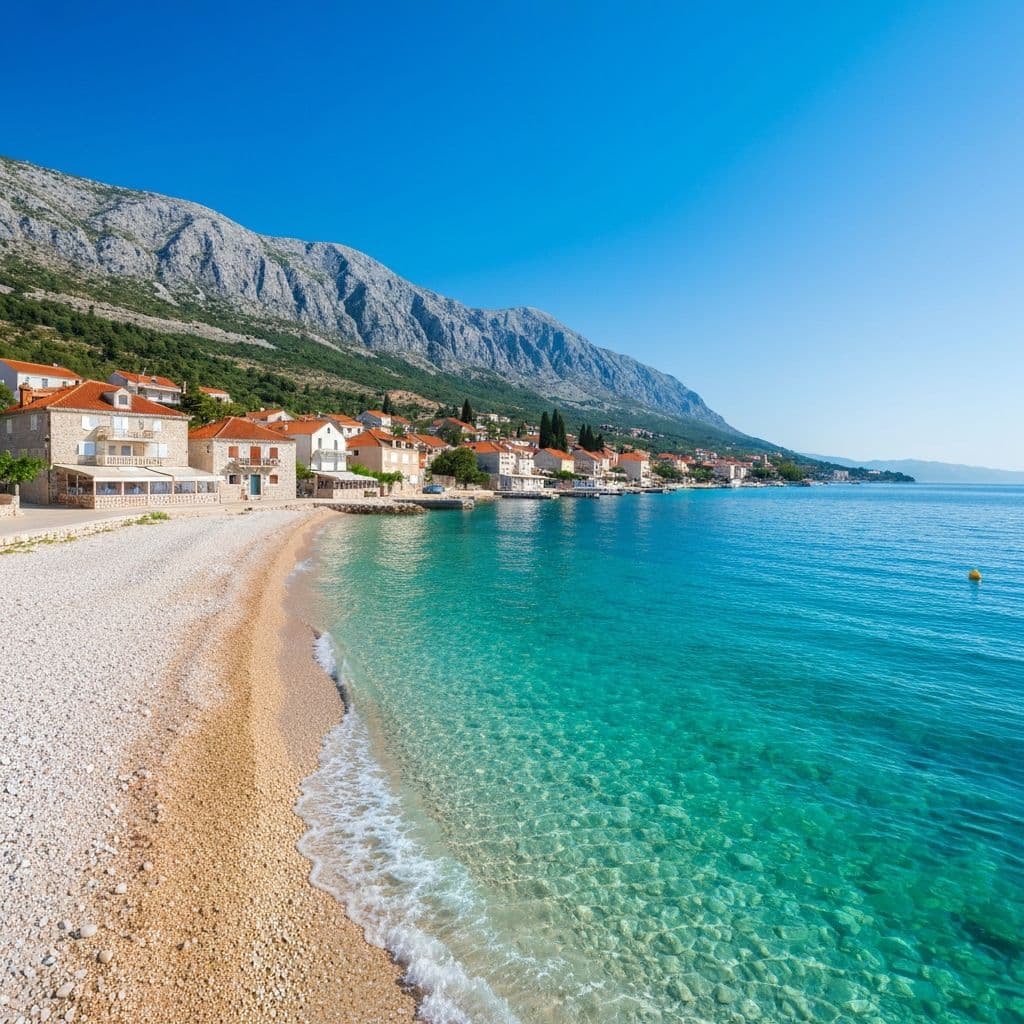
Podgora lies eight kilometres southeast of Makarska and is the most tightly squeezed spot on the whole riviera between mountain and sea — the slope of Biokovo falls so close to the coast that the village had to stretch into a long ribbon along the water. Above the harbour stands a concrete monument shaped like two seagull wings, marking the spot where the first unit of the Yugoslav partisan navy set sail in 1942; from a distance it looks like a piece of modern sculpture wedged into the rock. The original village sat on the slope three hundred metres above the sea, but after a 1962 earthquake residents moved down to the coast, leaving the stone houses above abandoned. Today's Podgora is a quiet resort with pebble beaches, pine trees down to the water, and a single promenade where the whole village strolls in the evening. Ideal for anyone who wants the Makarska Riviera without its bustle.

What to see

The places worth your time in Podgora, and what to expect at each

Galebova Krila monument

Galebova Krila monument

Above the harbour

Two concrete wings over twenty metres tall on a cliff above the harbour, unveiled in 1962. They commemorate the founding of the Yugoslav partisan navy, established here in September 1942 from a handful of fishing boats. It's one of the few monuments from that era that wasn't removed after the 1990s war.

Tip: Steps lead up to the monument from the harbour, and there's a viewing platform at the top overlooking the whole riviera. Go as the sun sets behind Brač — the concrete turns orange at that hour, and it's the best photo spot in Podgora.

Admission:
free
Time needed:
1 h
Harbour and promenade

Harbour and promenade

Centre

A small fishing harbour with a handful of boats and restaurants around the pier, from which a walking promenade runs the length of the resort. The pine-lined path continues northwest all the way to Tučepi and is the village's main artery — there's barely another street by the sea.

Tip: Restaurants right on the pier cost about a third more than those two hundred metres further along the promenade, despite using the same fish suppliers. The evening stroll picks up around seven; before that the promenade is baking in the sun.

Admission:
free
Time needed:
2 h
Podgora's beaches

Podgora's beaches

Along the promenade

A string of pebble beaches threaded along the promenade, the largest being Čaklje and the beach along the hotel strip. The seabed drops away quickly, the water is deep and clear, and the bay tends to stay calm, sheltered by a small peninsula. Pine trees growing right to the water's edge provide shade.

Tip: The quietest spot is the southeastern end past the harbour, which most visitors never reach. The pebbles are coarse and the seabed rocky, so water shoes aren't optional — sea urchins sit right at the edges of the coves.

Admission:
free, sunbeds from €12
Time needed:
full day
Gornja Podgora

Gornja Podgora

3 km above the resort

The original village on the slope of Biokovo, three hundred metres above the sea, abandoned after the 1962 earthquake. What remains are roofless stone houses, olive terraces, and the Church of All Saints, which still draws an annual pilgrimage. From here you can see the whole riviera and across to Hvar.

Tip: A narrow road with several hairpin turns leads up, along with an old footpath that takes about an hour to walk. Bring water and go in the morning — the ruins are littered with sharp stones and there's no shade at midday.

Admission:
free
Time needed:
2–3 h
Nugal Beach

Nugal Beach

5 km northwest

A wild pebble cove beneath a tall cliff face between Podgora and Makarska, with no road access and no facilities. The water is deep right from the shore, the cliff above keeps it shaded until late morning, and part of the cove is nudist.

Tip: The easiest way from Podgora is a water taxi from the harbour; on foot it's only reachable via a forest path from the Makarska side. Bring your own water, food and umbrella — nothing at all is sold on the beach.

Admission:
free
Time needed:
half a day
Sveti Jure and Biokovo Nature Park

Sveti Jure and Biokovo Nature Park

Biokovo, 30 km

Biokovo's highest peak stands at 1,762 metres, the second-highest in Croatia. A small stone chapel and a transmitter mast sit on the summit, surrounded by bare scree above the tree line, with views stretching across the Adriatic to Italy and the mountains of Bosnia.

Tip: The park is entered from Makarska, and tickets with a timed slot are bought online. From Podgora it's an hour and a half's drive up; even in August it can be around 15°C and windy on the ridge, so a jacket is essential.

Admission:
from €20 with a car
Time needed:
full day
Tučepi

Tučepi

4 km northwest

A neighbouring resort four kilometres northwest with the longest beach on the Makarska Riviera — a continuous pebble strip over four kilometres long, lined with pine woods and a promenade. An old village with a Romanesque church of St George sits on the slope above.

Tip: You can walk to Tučepi along the seaside promenade in about an hour, the loveliest coastal walk in the area. The beach here is wider than in Podgora and you can usually still find space on an August afternoon.

Admission:
free
Time needed:
half a day
Igrane

Igrane

7 km southeast

A village seven kilometres southeast, one of the best-preserved on the riviera: stone houses above a small harbour, a Baroque summer house belonging to the Šimić family, and an old olive grove avenue. Tourism has largely bypassed it, and its konobas cook for locals.

Tip: The bus stops on the main road above the village, and it's a short flight of steps down to the sea. Come for lunch — the value for money here is the best in the area, and no reservation is needed.

Admission:
free
Time needed:
half a day
Drvenik and the ferry to Hvar

Drvenik and the ferry to Hvar

20 km southeast

A harbour twenty kilometres southeast, from which a ferry sails to Sućuraj on Hvar's eastern tip. The crossing takes twenty-five minutes and carries cars, making it the fastest way from the Makarska Riviera to the island. Drvenik itself has two quiet pebble coves.

Tip: Sućuraj is seventy kilometres from Hvar Town across the whole island on a narrow road, an hour and a half's drive — plan a full day for a day trip to Hvar Town, or stay around Sućuraj instead.

Admission:
ferry from €5
Time needed:
full day

Photos: Galebova Krila monument — Alexander Rumpel (CC BY-SA 4.0) · Harbour and promenade — d.graso (CC BY 3.0) · Podgora's beaches — Mrcsifkin (CC BY-SA 3.0) · Gornja Podgora — Karl Gruber (CC BY-SA 3.0 at) · Nugal Beach — Tengilorg (CC BY 3.0) · Sveti Jure and Biokovo Nature Park — SKas (CC BY-SA 4.0) · Tučepi — Nikolaj Potanin (CC BY-SA 2.0) · Igrane — Falk2 (CC BY-SA 4.0) · Drvenik and the ferry to Hvar — Quahadi Añtó 13:14, 29 July 2012 (UTC) (CC BY-SA 3.0)

Where to stay

Areas and districts, matched to the kind of trip you are taking

Harbour and centre

Best for: a first stay and restaurants

The area around the pier with konobas, a shop, and the bus stop, overlooked by the Galebova Krila monument. Water taxis and excursion boats leave from here. Everything is within a ten-minute walk, and the whole village strolls through in the evening, though it quiets down after eleven.

Hotel strip to the northwest

Best for: hotels with pools and families

Toward Tučepi stand the larger hotels, with pools and their own beaches shaded by pines. The centre is a fifteen-minute walk away along the seafront promenade. The best choice if you want half-board and a beach under your balcony without worrying about transport.

Podaca and the southeastern strip

Best for: quiet and seaside apartments

Past the harbour, scattered apartment buildings continue along the coast road toward Igrane. The beaches here stay empty even in August, with an unobstructed view toward Hvar. You won't get anywhere without a car, though, and the only shop is in the centre.

Gornja Podgora and the slope

Best for: views and cooler nights

Apartments on the slope of Biokovo above the resort, among olive terraces and the ruins of the old village. The whole riviera is visible from here, and nights are a few degrees cooler than down by the sea. The road down is steep, so a car is a must.

Getting around

From the airport

The nearest airport is Split, in Kaštela, ninety-five kilometres to the northwest; the coastal-road transfer takes an hour and a half and is often included with a stay. Buses on the Split–Dubrovnik route stop on the main road above the resort, from where steps lead down to the sea. By car from Prague it's roughly 1,100 kilometres; leave the A1 motorway at Zagvozd and descend through the Sveti Ilija tunnel to the Makarska Riviera, with another quarter hour along the coast to Podgora.

Split (Resnik, Kaštela) (SPU) · 95 km

  • Hotel transfer· 1 h 30 min· included with stay
  • Scheduled bus via Split· 2 h 45 min· €16
  • Airport taxi· 1 h 30 min· €140
  • Rental car from the airport· 1 h 30 min· €45 / day

Dubrovnik (Čilipi) (DBV) · 160 km

  • Rental car· 2 h 20 min· €45 / day
  • Scheduled bus via Ploče· 3 h 15 min· €19

Around town

The resort is long and narrow, and everything happens along a single promenade that you can walk all the way to Tučepi. Scheduled buses along the riviera run between Podgora, Makarska and Brela roughly every half hour in season, stopping on the main road above the village. A car is useful for Biokovo, for the ferry at Drvenik, and for trips inland. Water taxis run from the harbour to nearby coves and offer full-day boat excursions.

Riviera busPodgora–Tučepi–Makarska–Baška Voda, every half hour in season; the stop is up on the main road. · €2.50
Coastal promenadeA walking path along the sea all the way to Tučepi, about an hour's walk, mostly shaded by pines. · free
Water taxiFrom the harbour to nearby coves, including the otherwise hard-to-reach Nugal; price is negotiated at the pier. · €20
Drvenik–Sućuraj ferryTwenty kilometres southeast, carries cars to Hvar, a twenty-five-minute crossing. · €5

Useful apps: Google Maps, Jadrolinija, Bolt, Arriva Croatia

When to go

The season runs from June to the end of September, and the sea stays above 24°C from July to early October. June and September are best, warm with a half-empty promenade and beaches. Even in August, Podgora stays calmer than Makarska, but accommodation costs the most then and parking in the centre is hard to find. The steep slope of Biokovo keeps the village in shade until about seven in the morning, so mornings here are pleasantly cool.

Best time

June and September

What to avoid

August, because of prices and parking

MonthJanFebMarAprMayJunJulAugSepOctNovDec
Day11°12°15°19°24°28°31°31°26°21°16°12°
Night5°5°7°10°14°18°21°21°17°14°10°6°
Rainy days1110101097447101212
Sea14°13°14°16°19°23°25°26°24°21°18°16°

Food & drink

Podgora cooks without tourist shortcuts: fish and octopus from local boats, lamb from Biokovo, olive oil from the terraced groves above the village. Peka is made in almost every konoba, but needs to be ordered a day ahead. Restaurants by the pier have the view and the higher prices; those further along the promenade and in neighbouring Igrane are cheaper and serve homemade wine. Shops are found only in the centre, and by law most close on Sundays.

What to try

Peka

Meat and potatoes slow-cooked for three hours under an iron bell covered in hot coals. Arguably Croatia's best dish, but it must be ordered a day in advance and for at least two people.

Brudet

A thick fish stew made from several kinds of fish with tomatoes, served with polenta. A fisherman's dish made from whatever didn't sell that day, so it's a little different every time.

Janjetina s ražnja

Whole lamb turned on a spit, sold by the kilogram at roadside stalls inland. Half a kilo per person is a normal portion; the bones count toward the weight.

Crni rižot

Risotto with octopus or cuttlefish, coloured black with cuttlefish ink. It tastes of the sea and reliably stains your teeth — skip the white shirt.

Škampi na buzaru

Shrimp stewed in white wine, garlic and breadcrumbs, eaten with your hands. Order it where they bring a bowl for the shells and a wet napkin — a sign it's made properly.

Pršut and paški sir

Cured ham from Dalmatia or Istria, and hard sheep's cheese from the island of Pag, where sheep graze on grass salted by the wind. A standard cold starter with a glass of wine.

Soparnik

A thin savoury pie filled with chard, baked over an open hearth, a specialty of the Poljica region near Omiš. Sold by weight, and the only Dalmatian dish that happens to be vegan.

Fritule

Small fried doughnuts with raisins and lemon zest, dusted with sugar. Sold in paper cones on the promenade, and the cheapest dessert on the coast.

What it costs

Coffee on the promenade

€2.50–3

Pizza or ćevapi

€8–12

Dinner at a konoba

€18–26 per person

0.5 l beer

€3.50–4

Sunbed and umbrella

€12–18 for two loungers

Water taxi to a cove

from €20

Drvenik–Sućuraj ferry

from €5 per person

Night in a 4-star hotel

€95–145

Indicative prices that change over time — treat them as a guide, not a price list.

Practical information

SocketsCEuroplug, two round pinsFSchuko
Voltage230V / 50Hz
Tap waterTap water is drinkable — Tap water is safe to drink everywhere in Croatia and tastes good; along the coast it comes from karst springs. Buying bottled water isn't necessary — just refill a bottle at your apartment in the morning. Restaurants, however, don't usually offer tap water and will charge for bottled instead.
TippingTipping is customary but modest: round up at a cafe, and leave around ten percent at a restaurant for good service. Card terminals usually don't have a tip option, so it helps to keep some cash on hand. For taxis, just round up.
Driving on theright
SafetyThe Croatian coast is one of the safest in Europe, and pickpocketing is rare even in high season. The real risks are different: the beaches are sharp limestone pebbles, and sea urchins live in the shallows, so water shoes aren't a luxury. The bura wind can rise within the hour and knock even experienced swimmers off inflatables, while the afternoon maestral can carry loungers off the shore. Jumping into the water from cliffs without checking the depth is the most common cause of injury that ambulances respond to here. The European emergency number 112 works, and operators speak English.
Opening hoursShops in resort towns are open from eight in the morning until ten at night in season, including Saturdays. Croatian law requires most shops to close on Sundays — they're allowed to open on only sixteen Sundays a year, chosen by the retailer, so bakeries, newsstands and petrol-station kiosks stay open while supermarkets don't. Sunday shopping needs to be done on Saturday instead. Restaurants and cafes aren't affected by the rule.
Customs & etiquetteSwimwear belongs on the beach — walking around town centres in swimwear or without a shirt is fined under municipal bylaws in Croatia, and Dubrovnik, Split and Hvar do actually issue fines, starting around a hundred euros. Shoulders and knees should be covered in churches. Croatians are proud to be Croatian, not "former Yugoslavia"; don't be the one to bring up the 1990s war. Breakfast is light, lunch is around 2pm, and dinner after 8pm.
A few local wordsGood day — Dobar danThank you — HvalaPlease — MolimThe bill, please — Račun, molimCheers — Živjeli

How to plan your days

1 day

One day in Podgora

  1. 1Morning swim at the quiet end of the beach past the harbour.
  2. 2Climb up to the Galebova Krila monument for a view over the riviera.
  3. 3Lunch at a konoba further along the promenade, not by the pier.
  4. 4Afternoon walk along the promenade to Tučepi and back.
  5. 5Evening stroll around the harbour and dinner with fish.

2 days

Two days with the old village

  1. 1Day one as above.
  2. 2Early morning on foot or by car up to Gornja Podgora.
  3. 3Earthquake ruins, the Church of All Saints, and views to Hvar.
  4. 4Afternoon water taxi to the wild cove of Nugal.
  5. 5Dinner in Igrane, where they cook for locals.

3 days

Three days with mountain and island

  1. 1First two days as above.
  2. 2Early morning drive to Biokovo Nature Park for your booked slot.
  3. 3Drive up to Sveti Jure and the view across the Adriatic.
  4. 4Next day, ferry from Drvenik to Sućuraj on Hvar.
  5. 5Swimming in the island's eastern coves and return on the afternoon boat.

Frequently asked questions

What is the Galebova Krila monument?+

A concrete sculpture of two seagull wings over twenty metres high on a cliff above the harbour, unveiled in 1962. It commemorates the founding of the Yugoslav partisan navy, which happened here in September 1942. It's freely accessible and offers the best view over the whole resort.

Is Podgora suitable for families with children?+

More suited to older children. The beaches are pebbly and the seabed drops off quickly, so there's practically no shallow water for toddlers. The bay is sheltered, though, so the water tends to be calm. For very young children, Baška Voda or Promajna are better choices, with shallow water right off the beach.

How far is it to Makarska?+

Eight kilometres — fifteen minutes by bus, ten by car. Buses run roughly every half hour in season and stop on the main road above the village. People go to Makarska for the market, a wider choice of restaurants, and nightlife, which Podgora has very little of.

Do I need a car in Podgora?+

Not for the stay itself — the promenade connects the whole resort and buses run along the riviera. A car is worth having for Biokovo, for Drvenik to catch the ferry to Hvar, and for Omiš. Parking in the centre is paid in season and spaces are scarce, since the village is built tightly along the water.

Can you get to Hvar from Podgora?+

Yes, by ferry from Drvenik, twenty kilometres to the southeast; the crossing to Sućuraj takes twenty-five minutes and carries cars. From Sućuraj it's still seventy kilometres of narrow road to Hvar Town, an hour and a half — a day trip to the town itself is pushing it.

What about getting to Biokovo?+

The entrance to the nature park is from Makarska and has limited capacity; tickets are booked online for a time slot. From Podgora it's an hour and a half's drive up hairpin bends with no guardrails. Even in summer it's around 15°C on the ridge, so bring a jacket.

When is the sea warmest?+

In August and the first half of September, when the water reaches 25–26°C. Swimming is comfortable from mid-June to early October. Thanks to the steep seabed the water is clear and transparent, but it stays noticeably cooler near the bottom even in summer.

Why is the old village above the resort abandoned?+

In 1962 an earthquake damaged Gornja Podgora and residents moved down to the coast, where tourism was already taking off. What remains up there are roofless stone houses, olive terraces, and the Church of All Saints, which still draws an annual pilgrimage.

Visa Requirements

Check the latest visa requirements for entering this country. Some nationalities may need to apply for a visa or e-visa before travel.

Check visa requirements

Language

Croatian

Currency

EUR

Timezone

Europe/Zagreb

Dial Code

+385

Population

3.9M

Area

56,594 km²

Voltage

230V / 50Hz

Driving Side

Right

Top Hotels in Podgora

Live prices from 500+ properties

Loading hotels...

Planning a trip to Podgora?

Compare hundreds of hotels, find the best price, and book with free cancellation on TravelManiac.