Hotels in Krk

The largest Adriatic island, joined to the mainland by a bridge

Krk

LanguageCroatian
CurrencyEUR
TimezoneEurope/Zagreb
Temperature8-28 °C
Dial Code+385
Population3.9M
Area56,594 km²
SocketsType C / Type F
Tap waterDrinkable

Discover Krk

Krk is Croatia's largest island in the Kvarner Gulf, linked to the mainland by a bridge, so it can be reached by car from the Czech Republic without a ferry. On the island are Rijeka airport and four main resorts: Krk, Baška, Malinska and Punat, and historic towns such as Vrbnik on a cliff. The beaches are pebbly, the water clean and calm in the coves, and Baška has a long pebble beach that is busy with children and pensioners alike. The island offers vineyards, the Biserujka cave, a monastery on the islet of Košljun and the Baška Tablet, the oldest Croatian written monument. Krk is popular with Czechs and Slovaks because it lies roughly nine hundred kilometres from Prague and in season is reachable by coach and plane. The best time is June and September, when it is warm and less crowded. In July and August the island is full, prices rise and parking in Baška is hard. Families find cheap apartments and safe beaches, couples calm in the coves in the east.

What to see

The places worth your time in Krk, and what to expect at each

Krk Town

Krk Town

Krk town

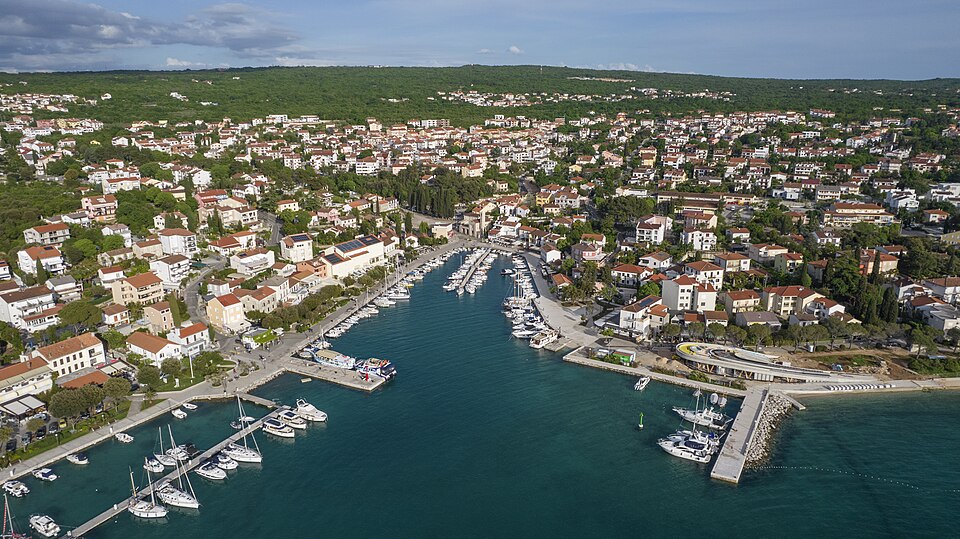
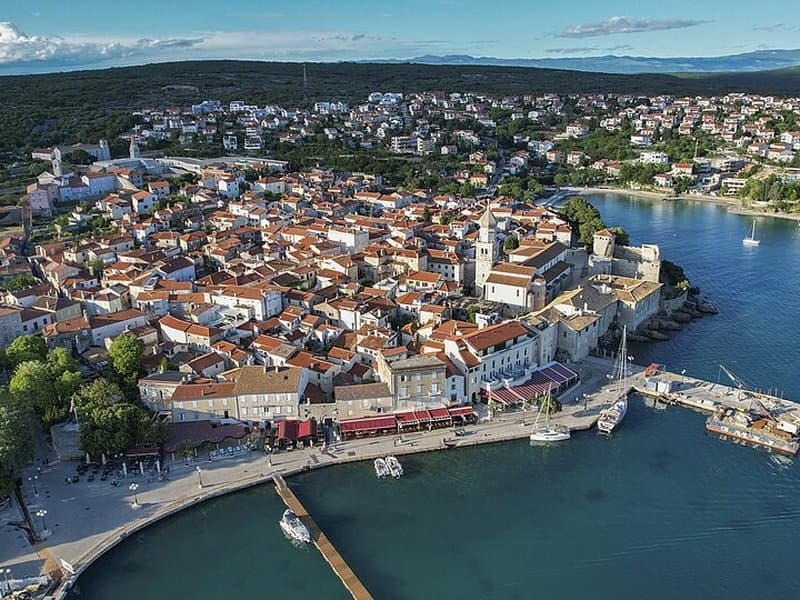
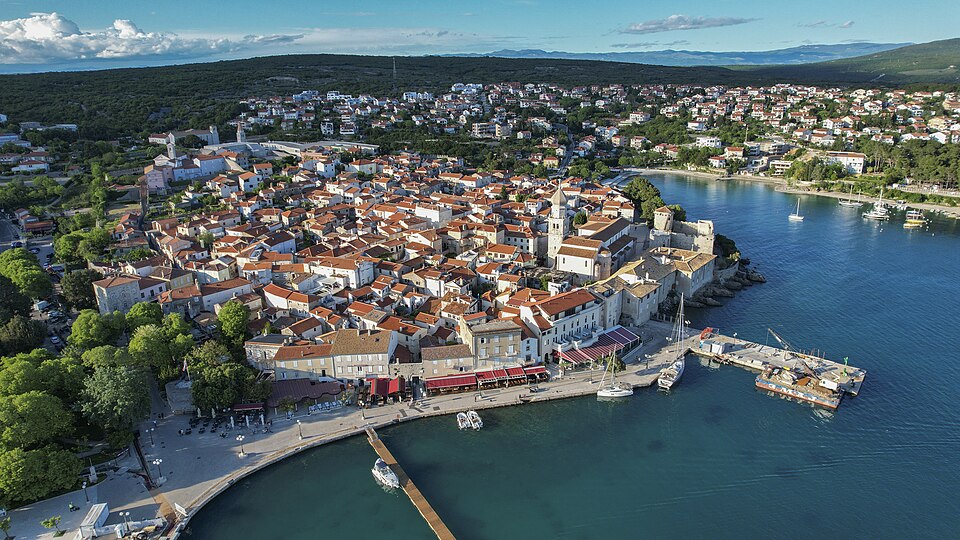
The island's main town, small and well preserved, with walls, a cathedral and the Frankopan castle by the harbour. The old lanes can be walked in an hour and yachts moor in the harbour. It is the best place for an evening stroll and for buying souvenirs.

Tip: It is worth going in the morning, before the coaches, or in the evening when it lights up. Cafés on the promenade cost more than in the lanes behind the cathedral.

Admission:
free
Time needed:
half a day
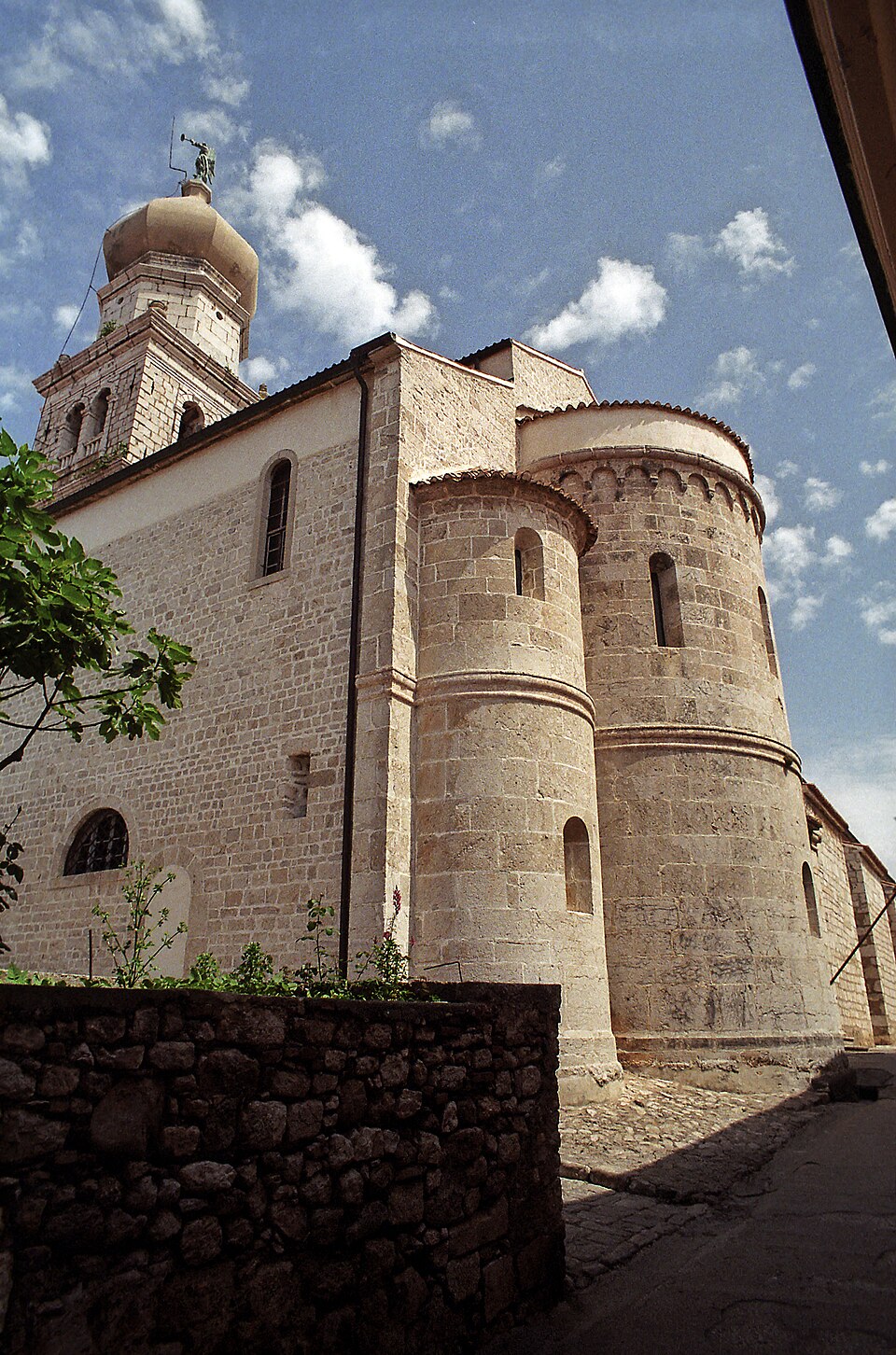
Krk Cathedral

Krk Cathedral

Krk town

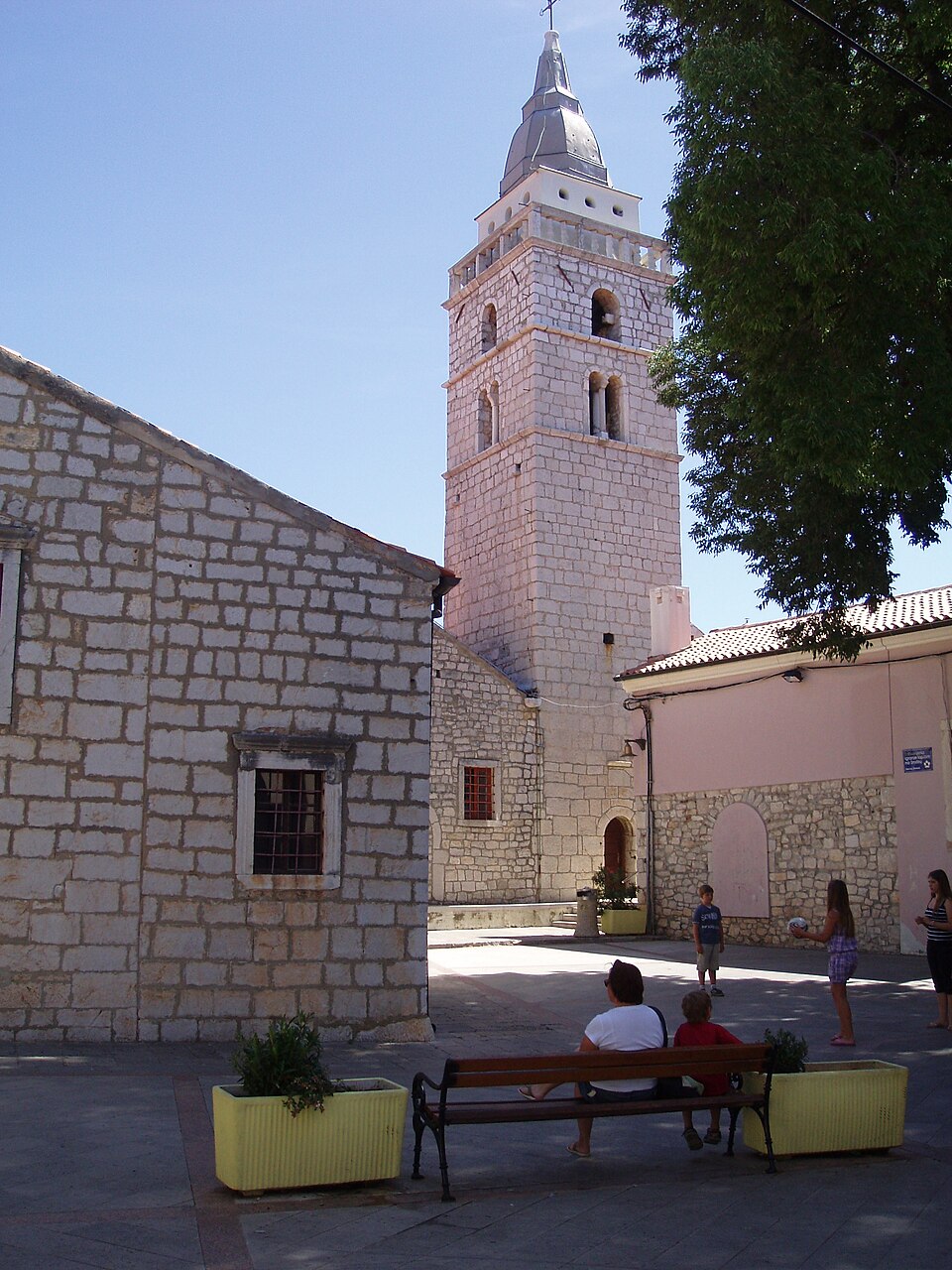
A cathedral from the twelfth century mixing Romanesque and Gothic styles. It stands on the site of a Roman temple and beside it is a sixteenth-century bell tower. Inside are Renaissance altars and paintings.

Tip: The cathedral is usually open in the morning; entry is free. During services do not enter in swimwear.

Admission:
free
Time needed:
30 min
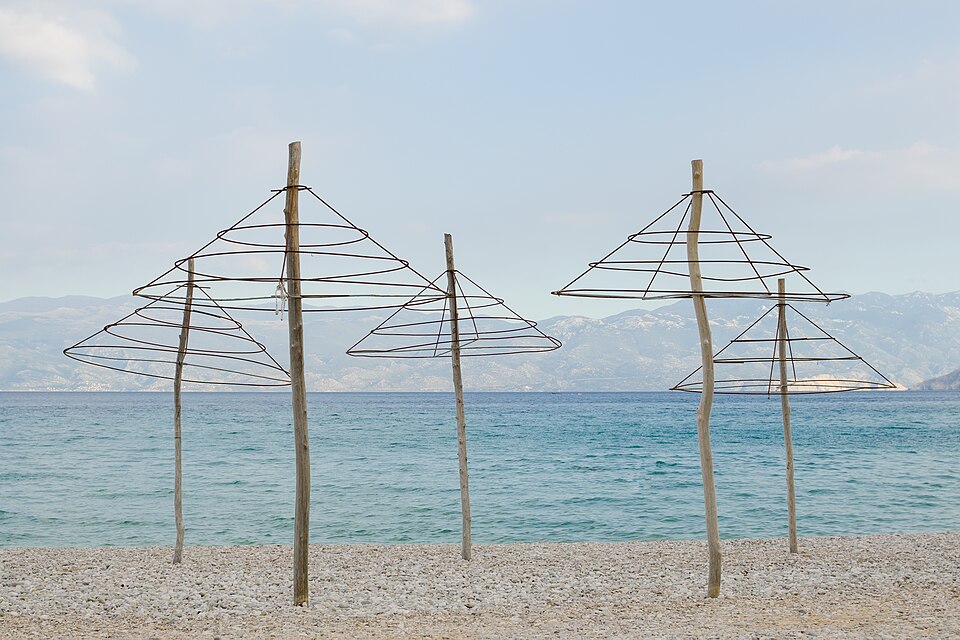
Baška and Vela Plaža

Baška and Vela Plaža

Baška

A resort in the south of the island with the two-and-a-half-kilometre pebble beach of Vela Plaža in a bay below rocky hills. The water is clean and gradual, and the promenade is lined with shops and restaurants. It is the island's most popular beach.

Tip: The beach is calmest in the morning; a lounger costs about fifteen euros. Bring water shoes and try a kayak or paddleboard.

Admission:
free
Time needed:
half a day
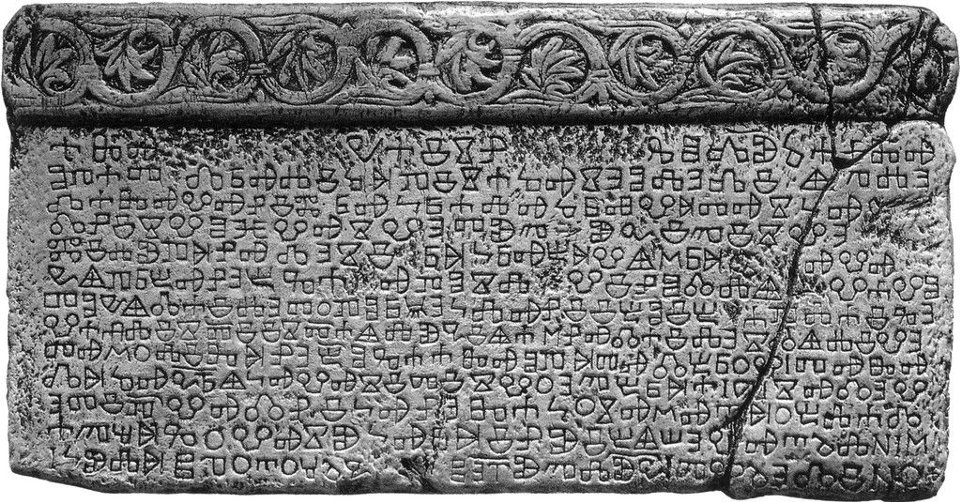
The Baška Tablet

The Baška Tablet

Jurandvor

A stone slab from the turn of the eleventh and twelfth centuries with text in Glagolitic, the oldest Croatian document. The original is in Zagreb and a replica stands in the church of St Lucy at Jurandvor above Baška. It is a monument of national importance.

Tip: Jurandvor is five kilometres from Baška; check the church's opening hours. You can walk there in an hour.

Admission:
about €3
Time needed:
30 min
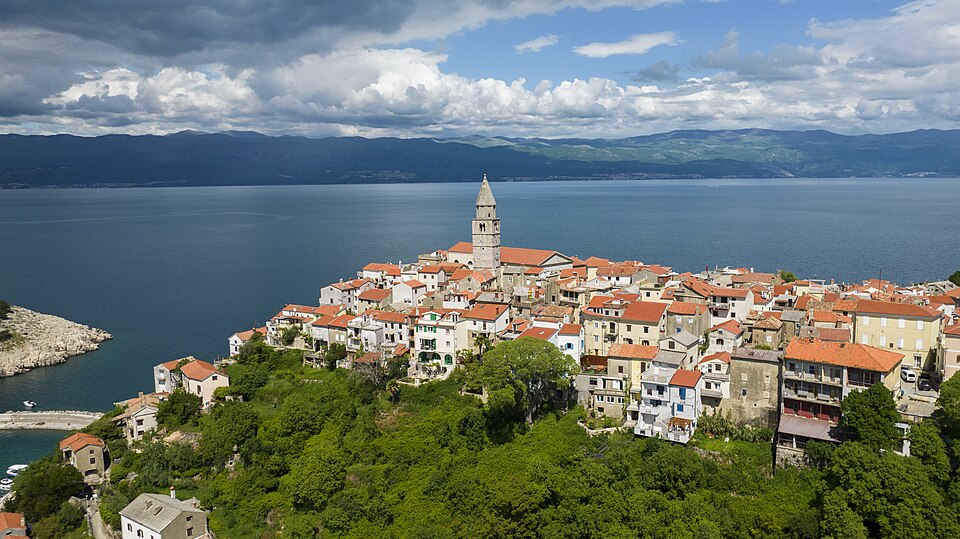
Vrbnik

Vrbnik

northeast of the island

A town on a cliff above the sea, home of the white wine Žlahtina. Narrow lanes are full of restaurants and wine shops, and the street Klančić is among the narrowest in Europe. From the lookout there is a view of the sea.

Tip: Taste Žlahtina at a winemaker's for a few euros. Traffic is heavy in season, so park at the car park outside town.

Admission:
free
Time needed:
half a day
Biserujka Cave

Biserujka Cave

Rudine

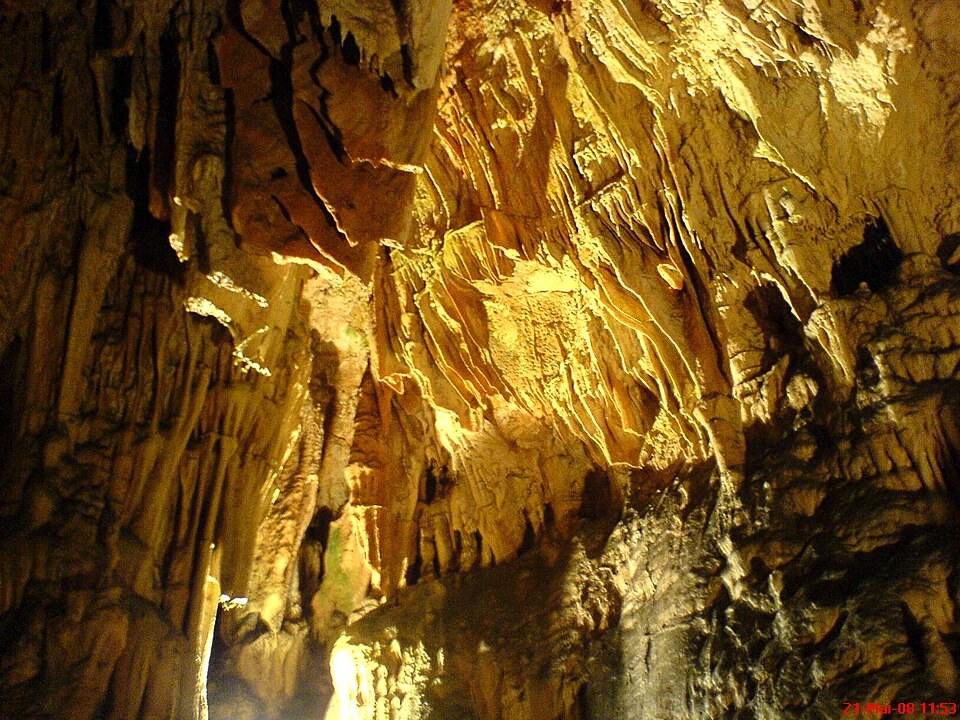
A karst cave near Rudine with stalactites, discovered by a local in 1893 and open with a guide. The tour takes about twenty-five minutes and costs a few euros. Inside it is cool at around ten degrees.

Tip: Bring a jacket and book a group in advance. Come in the morning, before the afternoon groups.

Admission:
about €12
Time needed:
45 min
Košljun Island and Monastery

Košljun Island and Monastery

Punat

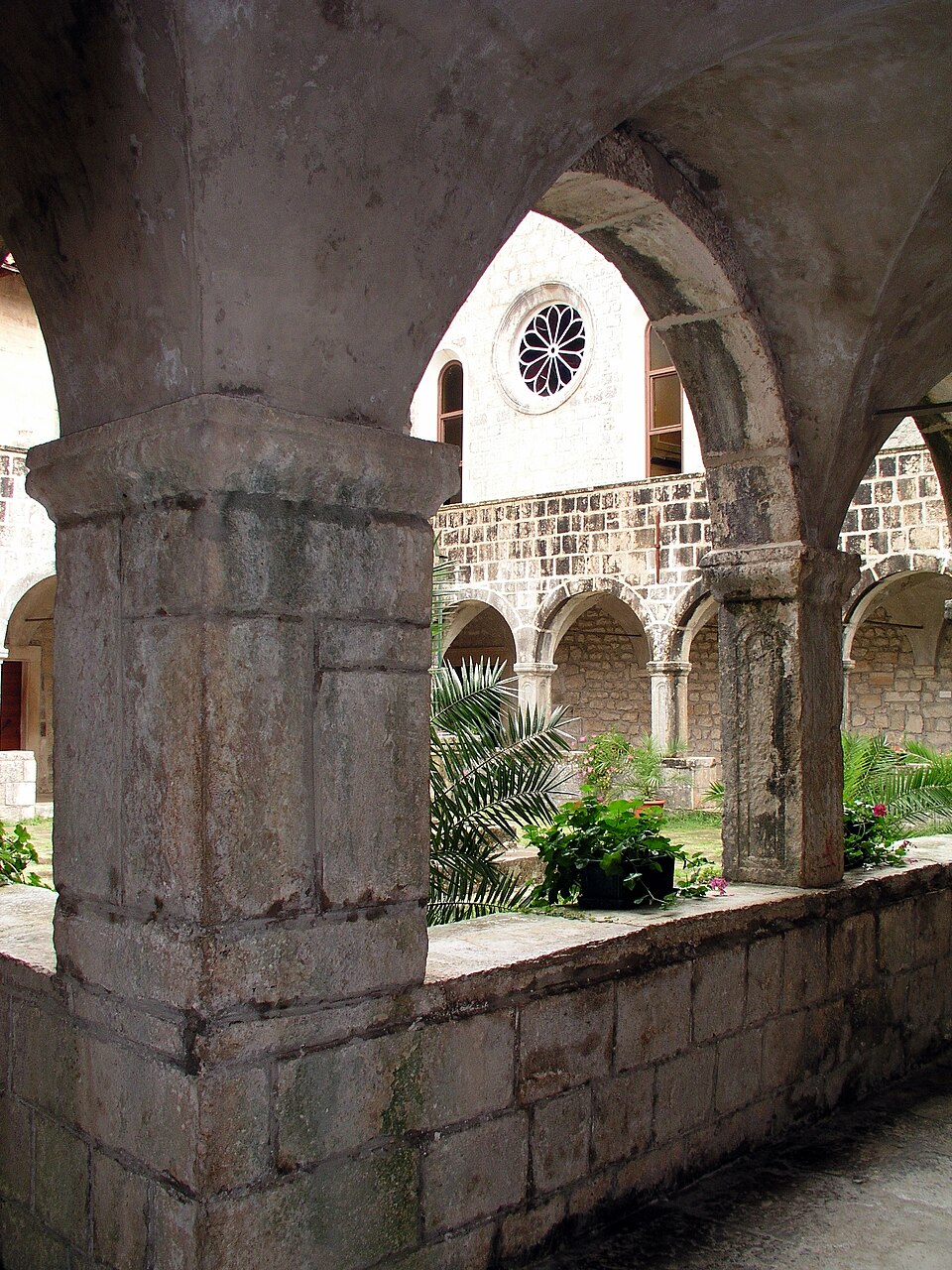
A small islet in Punat bay with a fifteenth-century Franciscan monastery, a church and a library. Boats run to the islet from Punat and the visit takes an hour. It is a calm place where you must not be noisy.

Tip: In season boats run from Punat every half hour; the visit includes the monastery and a museum. Keep quiet.

Admission:
about €7
Time needed:
1–2 hrs
Omišalj

Omišalj

north of the island

A town in the north of the island above the sea with walls, Roman excavations and white houses. It lies by the airport and the bridge, so it is a good first stop. The surroundings offer pebbly beaches and trails.

Tip: Omišalj is calmer than Krk and suits a night before a flight. A bus to Rijeka takes half an hour.

Admission:
free
Time needed:
1–2 hrs
Malinska

Malinska

Malinska

A coastal resort on the west of the island with a promenade, beaches and hotels, popular with Czechs and Slovaks. The water here is calm and gradual and the surroundings wooded. It is a good choice for families.

Tip: Beaches are pebbly, so bring water shoes. A bus from Krk runs every hour and costs a few euros.

Admission:
free
Time needed:
half a day

Photos: Krk Town — Arne Müseler (CC BY-SA 3.0 de) · Krk Cathedral — Falk2 (CC BY-SA 4.0) · Baška and Vela Plaža — Ruta Badina (CC BY-SA 3.0) · The Baška Tablet — Hrvatska enciklopedija (CC BY-SA 4.0) · Vrbnik — Arne Müseler (CC BY-SA 3.0 de) · Biserujka Cave — Usien (CC BY-SA 3.0) · Košljun Island and Monastery — pollobarca (CC BY-SA 2.0) · Omišalj — Wakowlk (CC BY-SA 3.0) · Malinska — Arne Müseler (CC BY-SA 3.0 de)

Where to stay

Areas and districts, matched to the kind of trip you are taking

Krk town

Best for: monuments and evening life

The main town with walls, restaurants and hotels. It has the widest range of services, but also noise. Suits a first visit and those without a car.

Baška

Best for: a beach for families

A resort with the island's longest beach, apartments and hotels. In season it is full, but the beach is gradual. A good choice for families with children.

Malinska and Njivice

Best for: calm in the northwest

Resorts with pines, beaches and smaller hotels. It is calmer and prices are lower than in Baška. Suits a longer stay.

Punat

Best for: harbour and boatyards

A town with the island's largest harbour, restaurants and boats to Košljun. It is calm and green. Suits those who like boating.

Getting around

From the airport

On the island is Rijeka airport (RJK), one of the nearest to the Czech Republic, with flights from several European cities in season. By car it is about nine hundred kilometres from Prague through Austria and Slovenia to the bridge to Krk. From Zagreb it is two and a half hours. Coaches run overnight from Prague and Brno.

Rijeka – airport on Krk (RJK) · 15 km

  • Taxi to Krk town· 20 min· €35
  • Bus to Krk· 30 min· €4

Zagreb Airport (ZAG) · 190 km

  • Bus to Krk· 3 hrs· €25
  • Private transfer· 2 hrs 30 min· €170

Around town

On Krk you can get by without a car only between towns, as buses run sparsely. Lines run between Krk, Baška and Malinska several times a day. A car suits farther coves. Parking in Baška and Krk is often hard in season. Boats run from Punat to Košljun.

BusLines between Krk, Baška and Malinska. · €4
Car rentalFor coves and the interior. · €45
TaxiBetween towns and to the airport. · €20
Boat to KošljunFrom Punat every half hour. · €7

Useful apps: Google Maps, Bolt, Maps.me, Jadrolinija

When to go

Krk has a Mediterranean climate with a warm summer and a mild winter. In July and August it is around twenty-eight degrees and the sea twenty-five. The best months are June and September. Winter is rainy and the bora wind can halt ferries.

Best time

June and September

What to avoid

November to February (rain, bora)

MonthJanFebMarAprMayJunJulAugSepOctNovDec
Day8°9°12°16°21°25°28°28°23°18°13°9°
Night2°2°5°9°13°17°20°20°16°12°8°4°
Rainy days989101010779101110
Sea11°11°12°15°19°23°25°25°23°19°16°13°

Food & drink

Krk cooking is Kvarner: fish, grilled meat, sheep cheeses and Žlahtina wine. The speciality is šurlice, hand-made pasta with a game or meat sauce. Lunch in a konoba costs fifteen to thirty euros.

What to try

Šurlice

Hand-made pasta in the shape of tiny rolls, served with a chicken or beef sauce. The island's most typical dish.

Krk prosciutto

Dry-cured pork ham from the island, smoked and dried by the bora wind. Served with cheese and olives.

Grilled fish

Fresh Kvarner fish, grilled with olive oil and garlic. The price is by weight.

Scampi buzara

Kvarner scampi stewed with wine, garlic and breadcrumbs. Deserves bread for dipping.

Žlahtina

White wine from the Žlahtina grape, which grows only on Krk. Fresh and light, it suits fish.

Sheep's cheese

Matured cheese from the milk of local sheep, with spices and olive oil. Sold at markets and in konobas.

Fritule

Small fried doughnuts with raisins, dusted with sugar. A dessert sold at festivals.

What it costs

Espresso

€1.5–2

Lunch in a konoba

€15–30

Šurlice

€15–22

A beer

€3–4

Biserujka cave

€12

Košljun

€7

3★ apartment (night)

€70–150

Lounger (day)

€12–18

Indicative prices that change over time — treat them as a guide, not a price list.

Practical information

SocketsCEuroplug, two round pinsFSchuko
Voltage230V / 50Hz
Tap waterTap water is drinkable — Tap water in Croatia is excellent and drunk without restriction. Croatia has been in the eurozone since 2023.
TippingTipping is customary, ten per cent in a restaurant or rounding up. For taxi drivers rounding up is enough.
Driving on theright
SafetyKrk is safe. In the sea watch for sea urchins on rocky beaches. The strong bora wind can make dangerous waves. The emergency number is 112, ambulance 194.
Opening hoursShops are open from eight to eight, mostly closed on Sunday. Restaurants serve lunch from noon and dinner from six. Out of season some businesses are closed.
Customs & etiquetteCroats are friendly and 'dobar dan' is enough. On beaches do not sunbathe topless except in designated areas. Do not enter a church in swimwear.
A few local wordsGood day — Dobar danThank you — HvalaPlease — MolimHow much is it? — Koliko košta?Cheers — ŽivjeliThe bill, please — Račun, molimWhere is the toilet? — Gdje je WC?

How to plan your days

1 day

A day on Krk

  1. 1Morning Krk town and the cathedral.
  2. 2Lunch in a konoba with šurlice.
  3. 3Afternoon the beach in Baška.
  4. 4Evening a stroll along the promenade.

2 days

Two days: Krk and Vrbnik

  1. 1Day one as above.
  2. 2Day two morning Vrbnik and a Žlahtina tasting.
  3. 3Afternoon Biserujka cave.
  4. 4Evening swimming in a cove.

3 days

Three days: Krk and Rab

  1. 1Days one and two as above.
  2. 2Day three by ferry to Rab island.
  3. 3Afternoon a walk through Rab's old town.
  4. 4Evening return to Krk.

Day trips

Rijeka

40 km · 45 min by car

Croatia's third-largest city with a harbour, a market and Trsat castle. It is lively and cheaper than the coast and suits half a day.

Opatija

60 km · 1 hr by car

An elegant Habsburg resort with the Lungomare promenade and villas. It suits an afternoon.

Rab

50 km · 1 hr 30 min by ferry and car

An island with a historic town of four bell towers and sandy beaches. A ferry runs from Baška to Lopar.

Frequently asked questions

Is Krk suitable for families?+

Yes, the beaches are pebbly but gradual and clean, hotels have kids' clubs and prices are lower than in the south. Baška and Malinska are best for children. For the youngest, water shoes help.

How do I get to Krk from the Czech Republic?+

By car it is about nine hundred kilometres through Austria and Slovenia, nine to ten hours; a bridge leads to the island with no ferry. You need a Slovenian vignette. In season coaches and flights run to Rijeka airport.

When is the best time to visit?+

June and September, when it is warm and less crowded. July and August are full and pricey. Out of season some businesses are closed.

Which is better, Krk or Pag?+

Krk is calmer and more family-oriented, with historic towns; Pag is drier and younger, with parties at Zrće. For families and calm Krk is better.

What does a lounger on the beach cost?+

Usually twelve to eighteen euros a day. On public beaches free space is available. In July and August it is pricier.

Is Biserujka cave worth it?+

Yes, it is a pleasant programme for the morning, especially with children, and it is cool inside. The tour takes about twenty-five minutes and costs around twelve euros.

Do I need a car?+

For the coves and Vrbnik yes, as buses run sparsely. Between Krk and Baška a bus suffices. In season book parking.

Do you pay in euros on Krk?+

Yes, Croatia adopted the euro in January 2023. Cards are accepted nearly everywhere, and cash is useful at markets and in smaller konobas.

Visa Requirements

Check the latest visa requirements for entering this country. Some nationalities may need to apply for a visa or e-visa before travel.

Check visa requirements

Language

Croatian

Currency

EUR

Timezone

Europe/Zagreb

Dial Code

+385

Population

3.9M

Area

56,594 km²

Voltage

230V / 50Hz

Driving Side

Right

Top Hotels in Krk

Live prices from 500+ properties

Loading hotels...

Planning a trip to Krk?

Compare hundreds of hotels, find the best price, and book with free cancellation on TravelManiac.