Where the American Revolution began and students still study today
Boston
LanguageEnglish
CurrencyUSD
TimezoneGMT-5
Temperature5-30 °C
Dial Code+1
Population335M
Area9,833,520 km²
SocketsType A / Type B
Tap waterDrinkable
Discover Boston
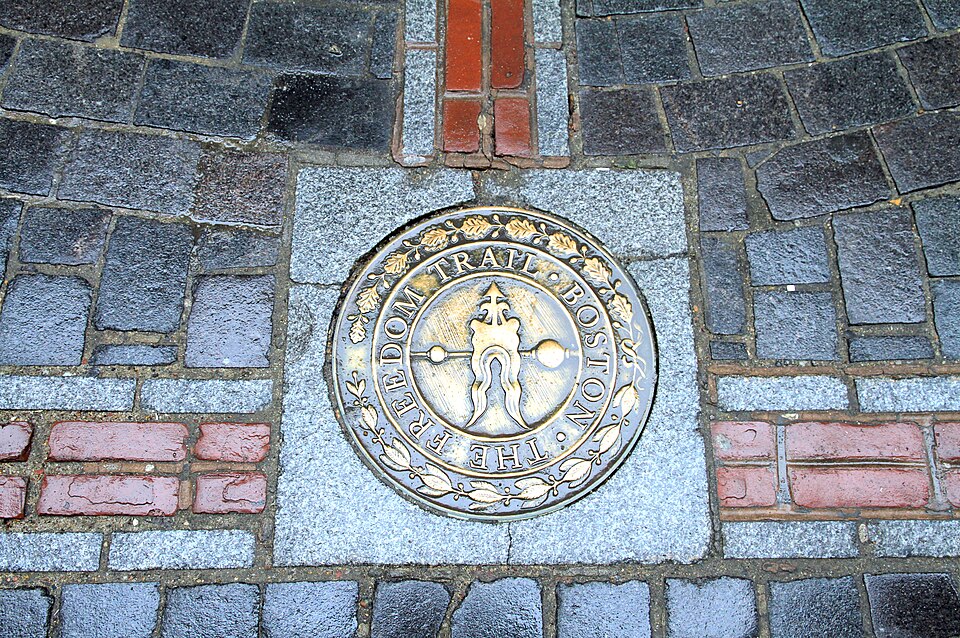
Boston is America's most European city. Downtown streets twist along old cow paths, gas lamps light up Beacon Hill in front of brick townhouses from the era of America's first patriots, and the entire historic core can be walked in a day. It was right here in 1773 that colonists dumped tea into the harbour, and 2 years later the War of Independence began — the route past the revolution's landmarks is marked by a red line set into the pavement. Across the river lies Cambridge, home to Harvard and MIT, and students from more than 30 universities make Boston a young city of cheap pubs and good bookshops. Add to that world-class art museums, the oldest baseball stadium in the country, and seafood unmatched anywhere else in America: the lobster roll, clams and clam chowder. Boston is smaller and calmer than New York, reachable from it by a 4-hour train ride to Manhattan, and in autumn it's the starting point for New England's colourful forests.
What to see
The places worth your time in Boston, and what to expect at each
Freedom Trail
Downtown to Charlestown
A 4 km route marked by a red brick line in the pavement, linking 16 sites tied to the revolution: from Boston Common, past the Old State House and the Granary Burying Ground, where Paul Revere and Samuel Adams are buried, to a warship in Charlestown.
Tip: Don't walk the whole route in one go — cover the downtown section in the morning, then cross the bridge into Charlestown after lunch in the North End. The free map from the visitor centre on the Common is enough; the paid guided tour in period costume lasts only 90 minutes and ends at Faneuil Hall.
Admission:
free, some buildings charge admission
Time needed:
3–4 h
Boston Common and Public Garden
Back Bay and Downtown
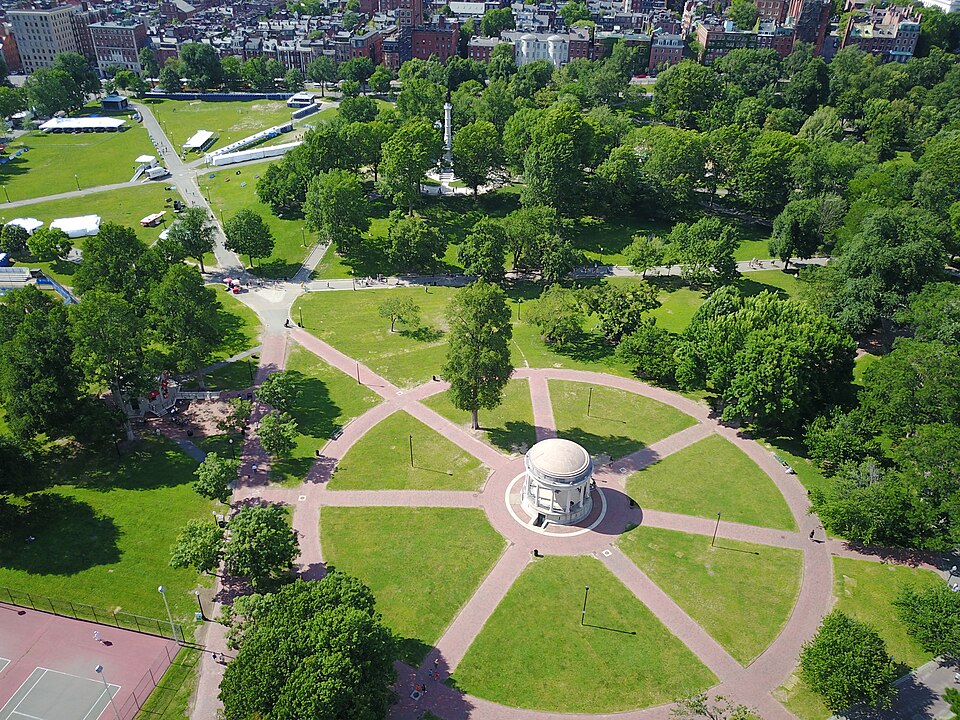
The oldest public park in the United States, dating to 1634, once used for grazing cattle and public hangings. The adjoining Public Garden is a botanical garden with a pond where swan-shaped boats ply the water from spring to autumn, and bronze ducklings from a beloved children's book.
Tip: The Swan Boats run only from April to mid-September, and the shortest queue is right at opening at 10am. In winter you can skate on Frog Pond on the Common, with skates available to rent there.
Admission:
free, boat rides charge admission
Time needed:
1 h
Beacon Hill
Beacon Hill
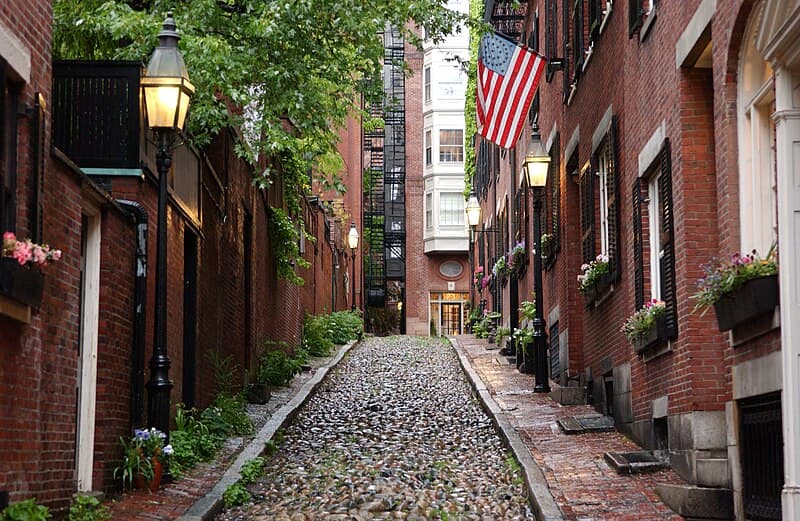
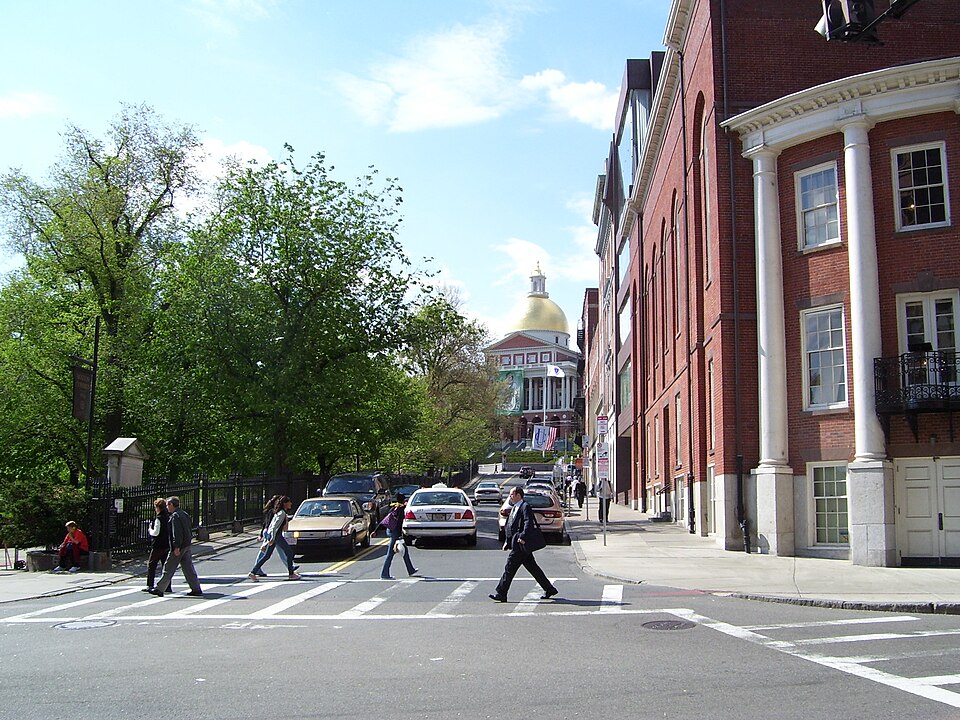
A neighbourhood of brick row houses from the early 19th century, with gas lamps, black shutters and steep lanes. Acorn Street, with its cobblestones, is the most photographed street in the city, and the State House with its gold dome stands atop the hill.
Tip: Acorn Street is a private lane and residents complain about the crowds — photograph it early in the morning and keep quiet. On Charles Street at the foot of the hill there are antique shops and cafés where you can sit for a reasonable price.
Admission:
free
Time needed:
1–2 h
Faneuil Hall and Quincy Market
Downtown
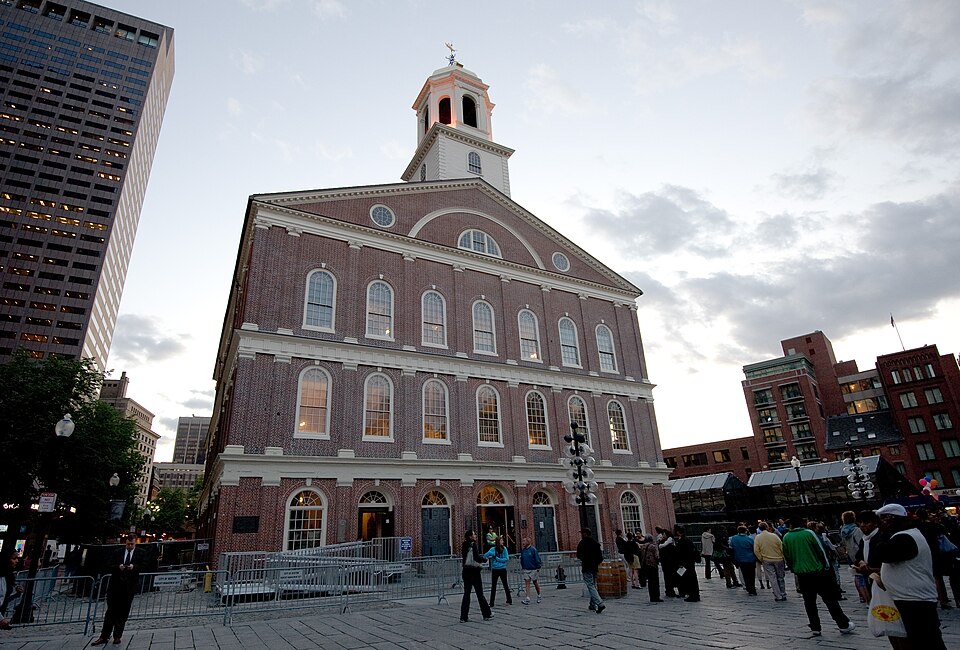
A marketplace and meeting hall from 1742, where protests against British taxes were held — hence its nickname, the Cradle of Liberty. Next to it stands the long Quincy Market building with dozens of food stalls, and street performers work the square outside.
Tip: Food at Quincy Market is touristy and overpriced; for chowder and a lobster roll, walk 5 minutes further to the old places on Union Street or into the North End. The upstairs meeting hall at Faneuil Hall is free and tourists tend to overlook it.
Admission:
free
Time needed:
1 h
USS Constitution
Charlestown
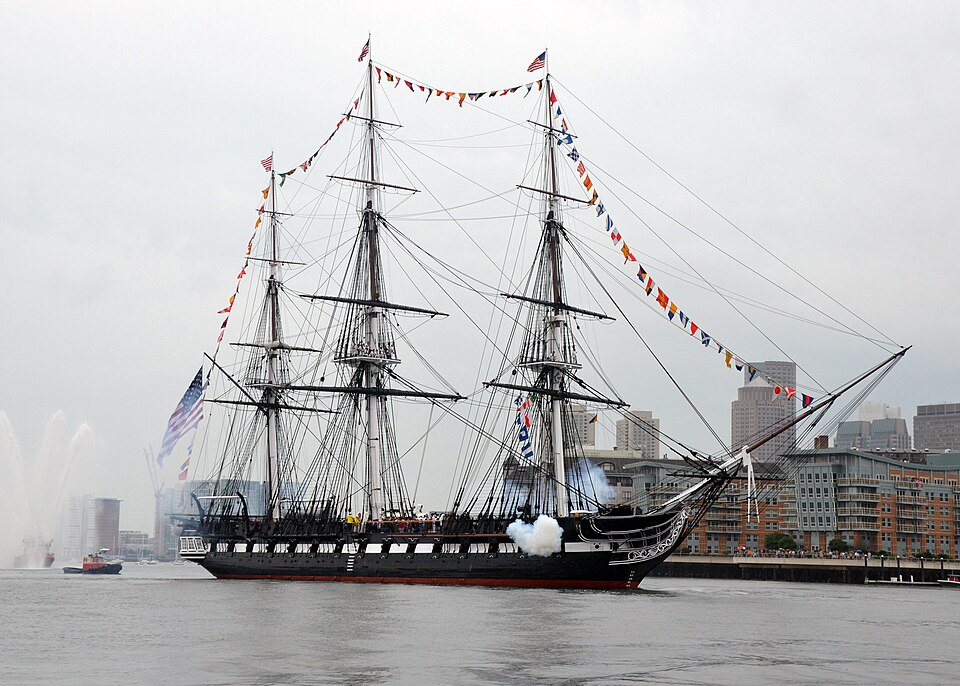
The oldest warship in the world still in commission and afloat — a 3-masted frigate launched in 1797, nicknamed Old Ironsides because British cannonballs were said to bounce off its oak hull. A museum with an interactive exhibition is docked alongside.
Tip: Boarding is free, but you'll pass through airport-style security, so bring your passport. Once a year the ship sails out for a short cruise around the harbour, with places on board decided by lottery. The ferry back to downtown runs from Charlestown Navy Yard to Long Wharf for the price of a subway fare.
Admission:
free
Time needed:
1–1.5 h
Museum of Fine Arts
Fenway
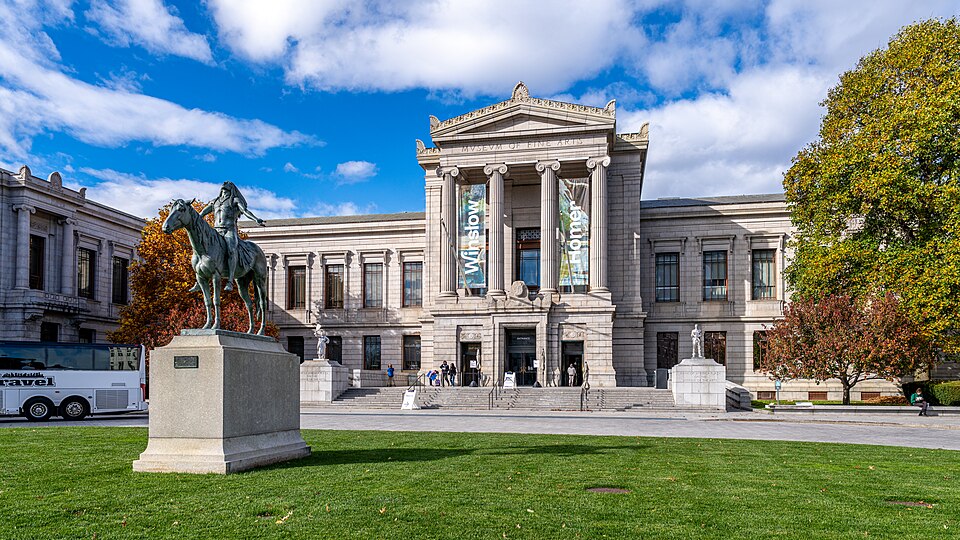
One of the largest art museums in America, with over 500,000 objects: Egyptian collections, Japanese art, American portraits by John Singer Sargent, and one of the finest Impressionist collections outside Paris, including dozens of Monets.
Tip: On Wednesdays from 4pm, admission is pay-what-you-wish. The ticket is valid for 2 days within a 10-day window, so you don't have to see the whole museum in one go. Sargent's murals are above the main staircase, and plenty of visitors miss them.
Admission:
admission charge
Time needed:
3 h
Isabella Stewart Gardner Museum
Fenway
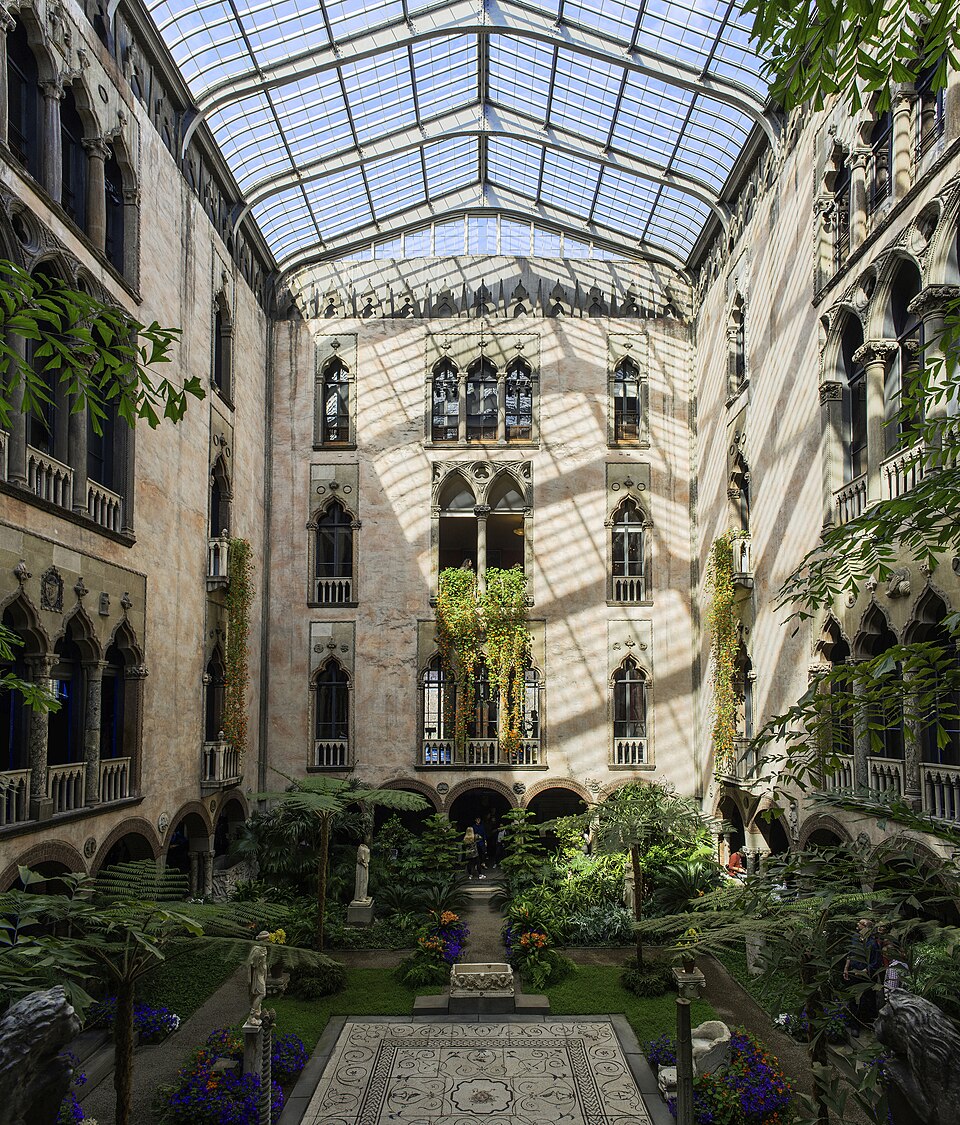
A private museum in a Venetian-style palace with a courtyard full of flowers, built by the collector in 1903 and filled with works by Titian, Rembrandt and Vermeer. In 1990 thieves stole 13 works from here, including a Vermeer — the empty frames still hang on the walls today.
Tip: Anyone named Isabella gets free admission for life, as does everyone on their birthday. The museum only sells a limited number of tickets per time slot, so buy online a day ahead on weekends. View the courtyard from the upper floor, where orchids bloom in winter.
Admission:
admission charge
Time needed:
1.5–2 h
Fenway Park
Fenway
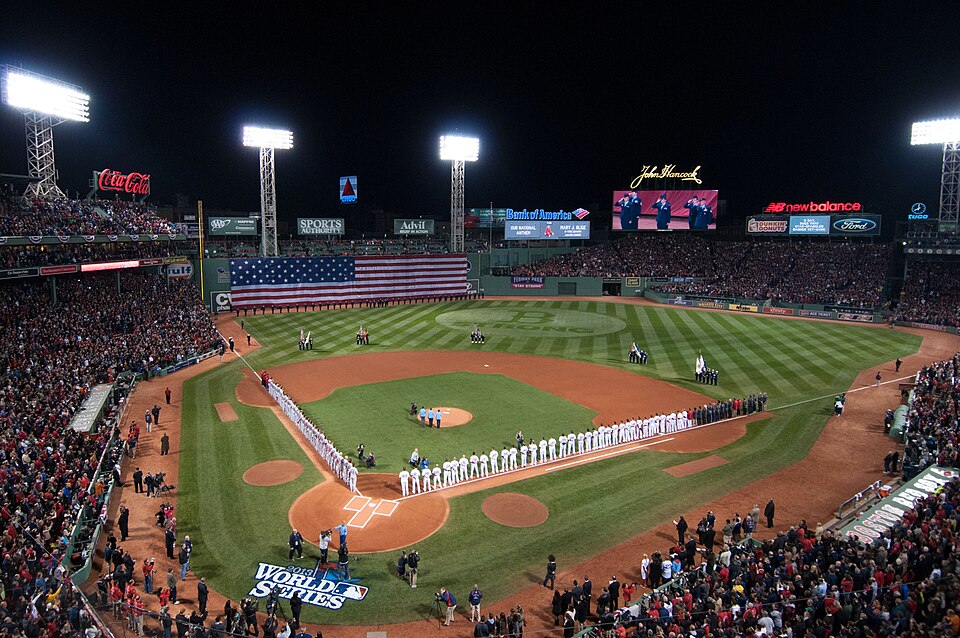
The oldest ballpark in Major League Baseball, opened in 1912, home of the Boston Red Sox. Famous for its 11-metre-high green wall on the left field line, nicknamed the Green Monster, where you can actually sit.
Tip: The cheapest seats for a game in the April-to-September season go for USD 30, but some are behind a pole — look for "obstructed view" in the listing. Outside game days, there's a 1-hour stadium tour that includes sitting on the Green Monster.
Admission:
tour or game admission charge
Time needed:
1 h tour, 3 h game
Harvard Yard
Cambridge
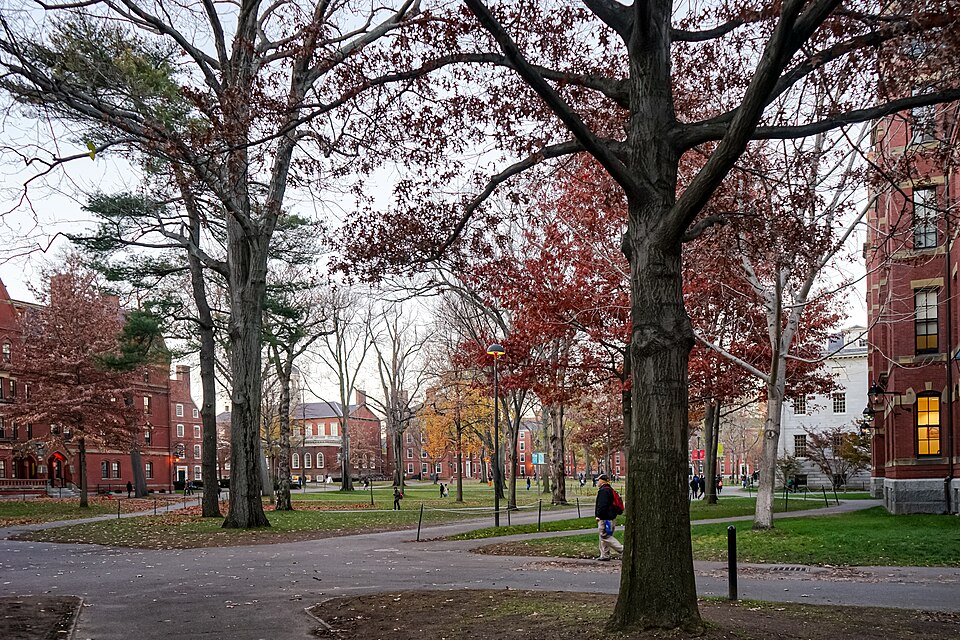
The oldest part of America's oldest university, founded in 1636, in Cambridge across the Charles River. Brick dormitories, the Widener Library, and the statue of John Harvard, said to tell 3 lies — it isn't actually him, he wasn't the founder, and the date is wrong.
Tip: Student-led tours are free and depart from the Smith Campus Center; you can also skip them, since the campus is open to the public. Tourists rub the statue's shoe for luck, but students have less noble traditions with it, so it's best left alone. Right next door is Harvard Square with bookshops and cheap places to eat.
Areas and districts, matched to the kind of trip you are taking
Back Bay
Best for: a first visit and shopping
A drained marsh on which a grid of grand brownstone townhouses rose up in the 19th century. Newbury Street is the shopping strip with boutiques, Copley Square with its library, and Trinity Church is the architectural heart of the city. Everything is close by from here, but hotels cost more.
North End
Best for: food and atmosphere
The Italian neighbourhood, with narrow lanes, the Old North Church and Paul Revere's house. Hanover Street has dozens of trattorias and bakeries famous for their cannoli. Housing here is mostly small apartments, and it's lively in the evening.
Seaport
Best for: modern Boston and the waterfront
Former harbour warehouses turned into a neighbourhood of glass towers, hotels and restaurants overlooking the harbour. The Institute of Contemporary Art hangs out over the water, and the tea ships sit on the bridge over the channel. It feels new and a bit uniform, but it's close to the airport.
Cambridge
Best for: students and cheaper stays
A separate city across the river, home to Harvard and MIT, linked to downtown by the Red Line subway. Harvard Square and Central Square have bookshops, music venues and cheap ethnic restaurants. Hotels here are somewhat cheaper and the mood more relaxed than downtown.
Logan Airport sits on a peninsula across the harbour, just 5 km from downtown, so the transfer is quick. A number of European cities have flights to Boston connecting through major hubs such as London, Dublin, Frankfurt, Amsterdam or Reykjavik. The electronic ESTA travel authorisation is required before departure for visa-waiver travellers. From the terminals, the free Silver Line SL1 bus runs directly to South Station, where you can change onto the subway. From New York, the Amtrak Acela train takes 3.5 hours, and cheaper long-distance buses take 4.5 hours.
Boston Logan International (BOS) · 5 km
Silver Line SL1 bus to South Station· 20 min· free
Blue Line subway (shuttle bus to Airport station)· 25 min· USD 2.40
Water taxi across the harbour· 10 min· USD 20
Uber / Lyft· 15–40 min· USD 30
Around town
Boston's subway, known as the T, is the oldest in America and has 4 colour-coded lines that cross downtown. You pay with a contactless card or phone right at the turnstile, and the daily fare cap is applied automatically. Downtown is compact and often better covered on foot than by subway, since the lines don't always run where you need to go. A car is useless in Boston: the streets are confusing, hotel parking costs USD 50 a night, and local drivers have a well-earned reputation for aggression. For trips around New England, it's best to rent a car only on the day you leave the city.
T subwayThe Red, Orange, Blue and Green lines. The Green Line is more of a tram and runs slowly on the surface. A weekly pass is cheaper than 10 single rides. · USD 2.40 per ride
MBTA busesSame payment system, with a dense network reaching neighbourhoods the subway doesn't. · USD 1.70
FerriesFrom Long Wharf to Charlestown and to the harbour islands. The fare to Charlestown is the same as a subway ride. · USD 2.40
BluebikesA bike-share scheme with over 400 stations; a day pass gives unlimited rides of up to 2 hours each. · USD 2.95 per ride
Uber / LyftA sensible choice in the evening and to the airport; prices rise sharply in the rain. · USD 12 within downtown
Useful apps: Uber, Lyft, Transit, Bluebikes, Google Maps
When to go
Boston has 4 distinct seasons. The most beautiful is autumn, from mid-September to late October, when New England's forests turn red and gold, the weather is dry and warm at around 15–20°C — though it's also the priciest time, with hotels full, especially on weekends packed with graduation visits. Summer, from June to August, is warm and occasionally muggy, with concerts along the riverfront and baseball season in full swing. Spring arrives late, and April tends to be cold and rainy; the Boston Marathon is run on the third Monday of April and hotels sell out. Winter is bitterly cold, and northeasters — powerful coastal storms — can bury the city under half a metre of snow, though prices are at their lowest.
Best time
mid-September to late October
What to avoid
January and February, for the cold and snowstorms
Month
Jan
Feb
Mar
Apr
May
Jun
Jul
Aug
Sep
Oct
Nov
Dec
Day
2°
4°
8°
14°
20°
25°
28°
27°
23°
17°
11°
5°
Night
-6°
-5°
-1°
5°
10°
15°
19°
18°
14°
8°
3°
-3°
Rainy days
11
10
12
11
12
11
10
10
9
10
11
12
Food & drink
Boston is the seafood capital of New England. Lobster from Atlantic waters is eaten here whole and boiled or in a roll, clams are fried or steamed, and thick clam chowder is on menus everywhere. The Italian North End has dozens of trattorias and bakeries with queues out the door. The cheapest option is eating at the Boston Public Market, where local farmers and fishermen sell from morning until evening. Prices are similar to Chicago's, with lobster the main expense, its price shifting with the day's catch. A 7% tax plus a tip are added to the bill.
What to try
Lobster roll
Lobster meat in a toasted bun, either cold with mayonnaise or, in the Connecticut version, warm with melted butter. It costs USD 30–40 and the price changes daily with the market — where it's noticeably cheaper, there's usually more mayonnaise than lobster.
New England clam chowder
A thick, creamy soup with clams, potato and bacon, served with small salty crackers. Locals eat it even in summer and can't stand the tomato-based Manhattan version.
Oysters
Oysters from the shallow bays of Cape Cod and Duxbury are smaller and saltier than European ones. Many bars run an afternoon happy hour with oysters for USD 1–2 each.
Fried clams
Whole clams deep-fried in a cornmeal batter, served in a box with fries and tartare sauce. A dish from coastal food stands that belongs to Boston just as much as chowder does.
Cannoli
Crisp fried pastry tubes filled with sweet ricotta, sold at bakeries in the North End. Which one is best is a matter of dispute — Mike's Pastry has the longer queue, Modern Pastry the softer filling.
Boston cream pie
Despite the name, it isn't a pie but a sponge cake with vanilla custard and chocolate icing, invented in 1856 at the Parker House hotel. It's still served there today.
Baked beans
Beans baked for hours with molasses and bacon, the dish that gave Boston its nickname Beantown. Today it's more a pub side dish than an everyday meal.
Local beer
Samuel Adams is brewed in Boston, and the brewery tour at Jamaica Plain is inexpensive. Harpoon and Trillium are other local breweries with taprooms right in the city.
What it costs
Lobster roll
USD 30–40
Bowl of clam chowder
USD 9–14
Dinner at a North End trattoria
USD 40–70 per person
Beer at a pub
USD 8–10
Weekly subway pass
USD 22.50
Museum of Fine Arts admission
USD 27
Fenway Park tour
from USD 25
Night at a 3-star hotel downtown
USD 220–380 + tax
Indicative prices that change over time — treat them as a guide, not a price list.
Practical information
SocketsAtwo flat pins (US/JP)Btwo flat pins plus ground (US)
Voltage120V / 60Hz
Tap waterTap water is drinkable — Tap water is safe to drink in the United States, and restaurants will give it to you free with ice — just ask for "tap water". Buying bottled water is pointless and expensive: a bottle in a shop costs USD 2–3, and USD 5 at an attraction. It's worth carrying a refillable bottle, since airports and parks have refill stations. Ice is everywhere, and drinks are served noticeably colder than is typical in Europe.
TippingTipping isn't optional here — it's part of staff wages. At a table-service restaurant, tip 18–20% of the pre-tax amount; at a bar, USD 1 per drink; taxi and rideshare drivers, 15%; housekeeping, USD 3–5 per night; porters, USD 2 per bag. Card terminals usually offer preset percentage buttons — watch out, as these are sometimes calculated on the total including tax. Massachusetts sales tax of 6.25% is added to prices, restaurants add 7%, and hotels charge over 14% in taxes, so the final amount is always higher than the price shown.
Driving on theright
SafetyBoston is one of America's safest big cities, and its tourist neighbourhoods are safe even in the evening. Caution is only worthwhile at night around the Downtown Crossing and Park Street stations and in parts of Roxbury and Dorchester, which tourists rarely visit anyway. The most common issues are stolen bikes and belongings left in cars. Health insurance is essential: an ER visit can cost thousands of dollars. The emergency number is 911.
Opening hoursShops are open from 10am to 9pm including Sundays, and supermarkets and CVS or Walgreens pharmacies are often open around the clock. Restaurants serve breakfast from 6am, lunch from 11am, and dinner early — by 9pm many kitchens have already closed. Bars check ID for anyone who looks under 40 and won't serve you without a passport; a copy isn't enough. Drinking in public, on the beach or in a car is prohibited. The subway in Boston only runs until 12:30am, and bars close at 2am.
Customs & etiquetteThe chatty friendliness of staff is a professional norm, not an invitation to friendship. Queueing is respected, and personal space is larger than in Europe. Haggling only happens over cars and at flea markets, never elsewhere. Smoking is banned in practically all indoor spaces and on many beaches. Questions about salary and politics aren't raised with strangers. Bostonians are more direct and less chatty than elsewhere in America, and they take sports fandom seriously — wearing a New York Yankees cap here isn't a good idea.
A few local wordsHi / Good morning — Hi / Good morningThank you — Thank youCheck, please — Check, pleaseJust looking, thanks — Just looking, thanksHow much is it with tax? — How much is it with tax?Tap water, please — Tap water, please
How to plan your days
1 day
A day in Boston
1Morning at the Public Garden and Beacon Hill, including Acorn Street.
2Freedom Trail from the Common past the Old State House to Faneuil Hall.
3Lunch in the North End and cannoli.
4Afternoon across the bridge to Charlestown for USS Constitution.
5Ferry back and oysters in Seaport in the evening.
2 days
2 days in Boston
1Day 1 as the one-day itinerary above.
2Day 2 morning: Harvard Yard and Harvard Square.
3Lunch in Cambridge, then across the river to the Museum of Fine Arts.
4Late afternoon at the Gardner Museum.
5Evening: a game or a tour at Fenway Park.
3 days
3 days in Boston
1The first 2 days as the itinerary above.
2Day 3: a train trip to Salem.
3The Peabody Essex Museum and the witch trial houses.
4Return in the afternoon and a walk through Back Bay along Newbury Street.
5Evening lobster at the harbour.
Day trips
Salem
25 km · 30 min by train from North Station
A port town where the 1692 witch trials took place, in which 20 people were executed. Today it has the Peabody Essex Museum with Asian art and a relocated Chinese house, a historic harbour and the House of the Seven Gables. In October Salem turns into a Halloween festival and the trains get packed.
Cape Cod
110 km · 1.5–2.5 h by car or ferry
A sandy peninsula shaped like a bent arm, with dunes, lighthouses and a national seashore. A fast ferry from Boston runs in summer to Provincetown at the tip in 90 minutes, the jumping-off point for whale watching. By car, the single bridge gets jammed on summer Fridays.
Lexington and Concord
30 km · 40 min by car
The places where the first shots of the War of Independence were fired in April 1775. The national historical park links the battlefield with the Battle Road trail, and Concord has the homes of writers Emerson and Alcott, plus Walden Pond, where Thoreau lived.
Frequently asked questions
How many days are enough for Boston?+
2 days cover the Freedom Trail, Beacon Hill, Harvard and 1 major museum. 3 days allow time for a trip to Salem or Cape Cod. Boston connects well with New York — 4 hours by train.
When is the autumn foliage best in Boston?+
In the city itself it peaks around mid-October, and in the mountains north of Boston about 2 weeks earlier. A car is needed for a leaf-peeping trip to New Hampshire or Vermont.
Is Boston expensive?+
Yes, similar to Chicago, though hotels run more expensive because of the universities and conferences. Cheap food is found in Cambridge and at the Boston Public Market, and museums have pay-what-you-wish days.
Is the Boston CityPASS worth it?+
It's worth it if you want to visit the aquarium, an observation deck and a science museum. For the Freedom Trail, Harvard and the Museum of Fine Arts it isn't, since most of those sights are free anyway.
How do I get from the airport to downtown?+
By the free Silver Line SL1 bus to South Station in 20 minutes, or by the Blue Line subway. The fastest option is a water taxi across the harbour to the waterfront hotels.
Do I need a car in Boston?+
Not in the city itself — a car there is more of a burden. For trips to Cape Cod, the mountains or the autumn foliage, it's worth renting one only on the day you leave the city.
Where's the best place to stay in Boston?+
Back Bay for a first visit, the North End for food, Cambridge for price and student atmosphere. Seaport is practical for its closeness to the airport.
When is the Boston Marathon run?+
Every year on the third Monday of April, the Patriots' Day public holiday. Hotels are sold out and pricier that weekend, but the atmosphere along the course is exceptional.
Visa Requirements
Check the latest visa requirements for entering this country. Some nationalities may need to apply for a visa or e-visa before travel.