Hotels in Chicago

Skyscrapers on the shore of a lake as big as a sea

Chicago

LanguageEnglish
CurrencyUSD
TimezoneGMT-6
Temperature5-30 °C
Dial Code+1
Population335M
Area9,833,520 km²
SocketsType A / Type B
Tap waterDrinkable

Discover Chicago

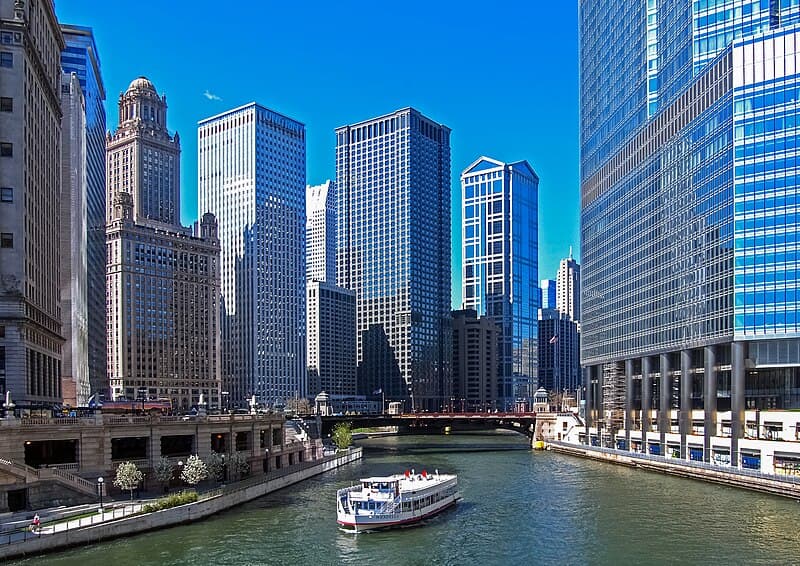
Chicago is the city where the skyscraper was invented. After the fire of 1871 that burned down the whole downtown, the best architects of the age arrived and built the world's first steel high-rises — and the city has been showcasing architecture ever since. That is why the best first-day plan is a boat cruise along the Chicago River, which flows through downtown between walls of glass and stone. Downtown is called the Loop, after the elevated railway that circles it, and it sits on the shore of Lake Michigan: a body of water so large you cannot see the far shore, with city beaches and a 30km lakefront trail. The museums are world-class and cluster together at the Museum Campus by the lake. Chicago is about a third cheaper than New York and has a reputation as America's friendliest big city. Winters, though, are harsh: the wind off the lake can drop the wind-chill to minus 20°C in January, so visit between May and October.

What to see

The places worth your time in Chicago, and what to expect at each

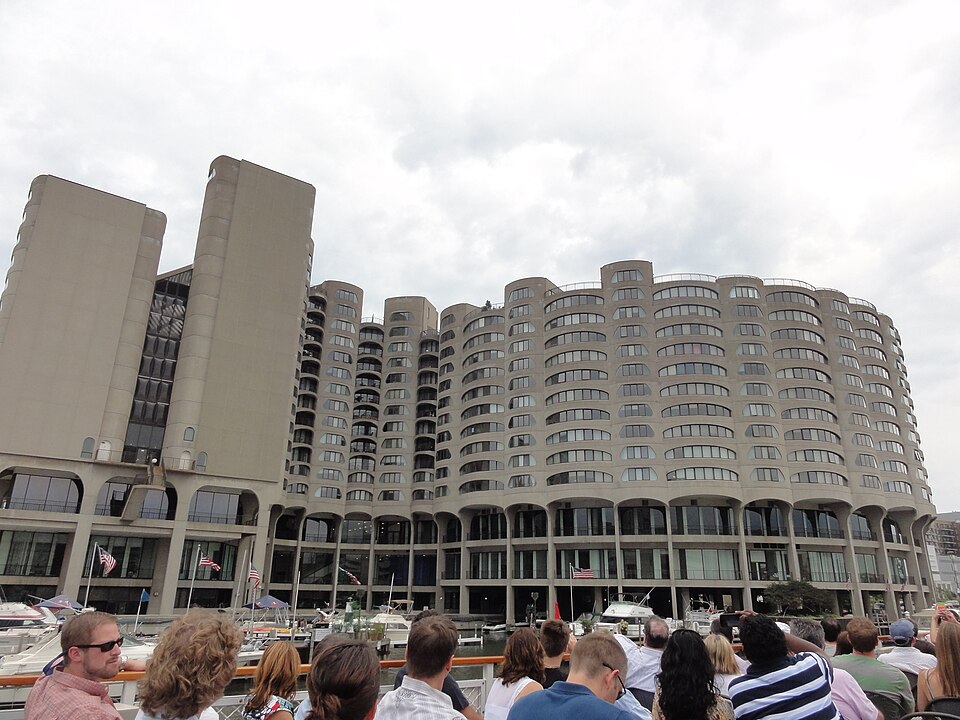
Chicago River Architecture Cruise

Chicago River Architecture Cruise

Loop and River North

A 1.5-hour boat cruise along the main branch and both forks of the Chicago River, during which a guide points out over 40 buildings, from the neo-Gothic Tribune Tower to the undulating Aqua Tower. It is the best introduction to the city and the single most popular thing to do here.

Tip: The best option is the Chicago Architecture Center boat, with volunteer guides who really know the architecture; the cheaper boats from Navy Pier mostly stick to the lake. Sit upstairs, but bring a jacket — it is windy on the water even in summer. The sunset evening cruise sells out first.

Admission:
admission fee
Time needed:
1.5h
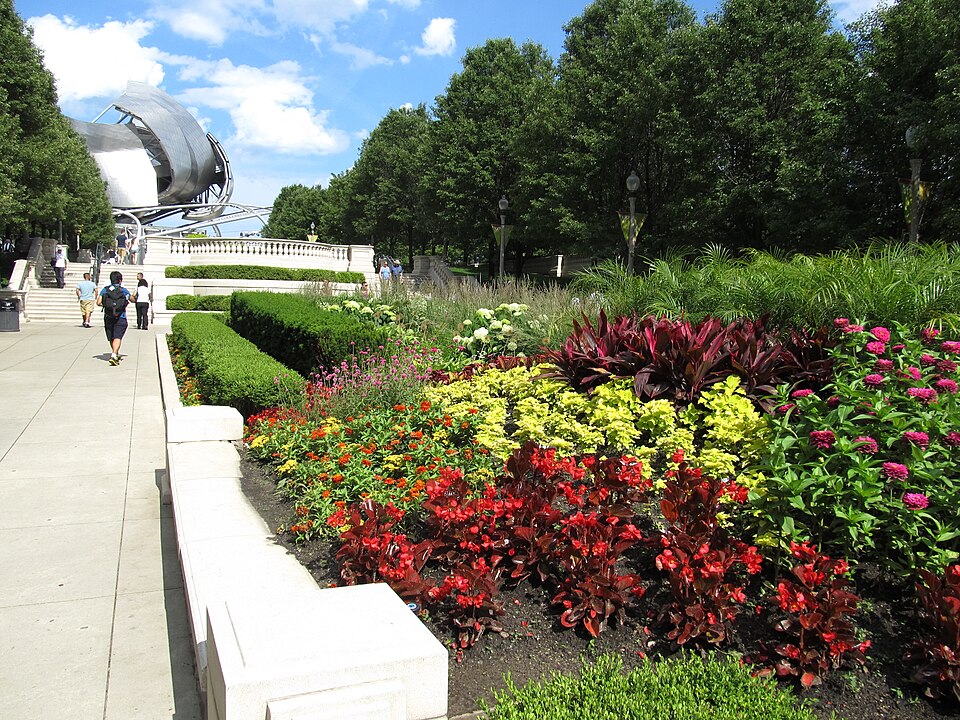
Millennium Park and Cloud Gate

Millennium Park and Cloud Gate

Loop

A park built on top of underground parking and rail yards, home to Anish Kapoor's stainless-steel Cloud Gate sculpture, known to locals simply as the Bean. Right next to it stands Frank Gehry's concert pavilion and Crown Fountain, with 2 towers whose projected faces spout water.

Tip: Visit the Bean before 8am, when it reflects only the sky and skyscrapers, not hundreds of people. Concerts at the Pritzker Pavilion are free in summer, with classical and jazz music; bring a blanket and a picnic. Crown Fountain is the best way to cool kids down on a hot day.

Admission:
free
Time needed:
1.5h
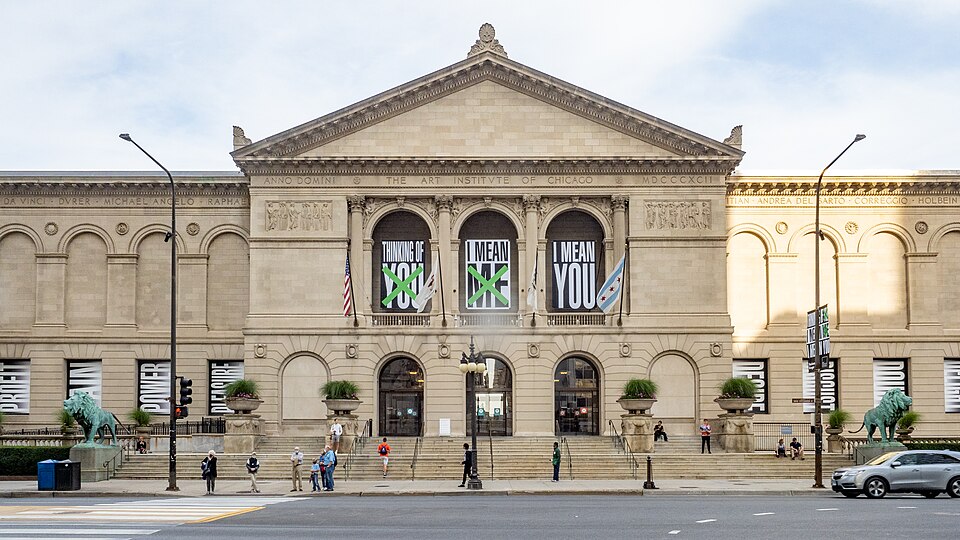
Art Institute of Chicago

Art Institute of Chicago

Loop

One of the world's most important art museums, holding the largest collection of Impressionist works outside Paris, Seurat's A Sunday on La Grande Jatte, Hopper's Nighthawks and Wood's American Gothic. 2 bronze lions guard the entrance.

Tip: If you are short on time, go in this order: the Impressionists on the second floor, then American art, and finally the Thorne Miniature Rooms in the basement, which everyone remembers. The museum stays open until 8pm on Thursdays. The modern wing has its own entrance on Monroe Street and a bridge straight into Millennium Park.

Admission:
admission fee
Time needed:
3h
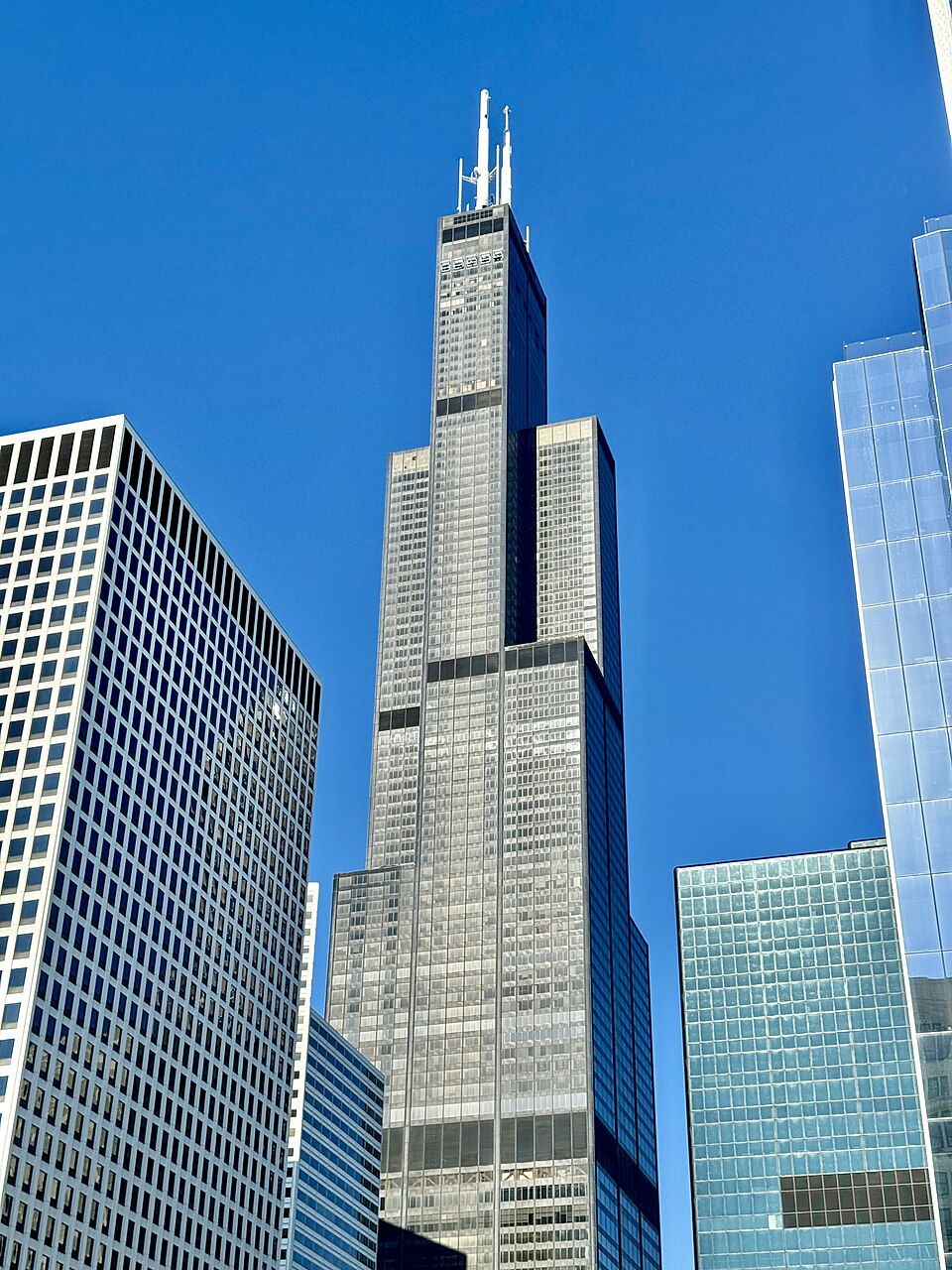
Willis Tower and Skydeck

Willis Tower and Skydeck

Loop

A black skyscraper from 1974, 442m tall, the world's tallest building for a quarter century. From the 103rd floor you can see into 4 states, and the glass balconies of The Ledge jut a metre out from the building's wall, putting 400m of empty air beneath your feet.

Tip: The queue for the elevator can run to an hour or more in summer; book a time slot online and arrive right at opening. If you would rather see the skyline with the lake, go instead to 360 Chicago in the former John Hancock Center on the northern end of Michigan Avenue — or skip the paid observation deck entirely and have a drink at the bar on the 96th floor.

Admission:
admission fee
Time needed:
1.5h
Field Museum

Field Museum

Museum Campus

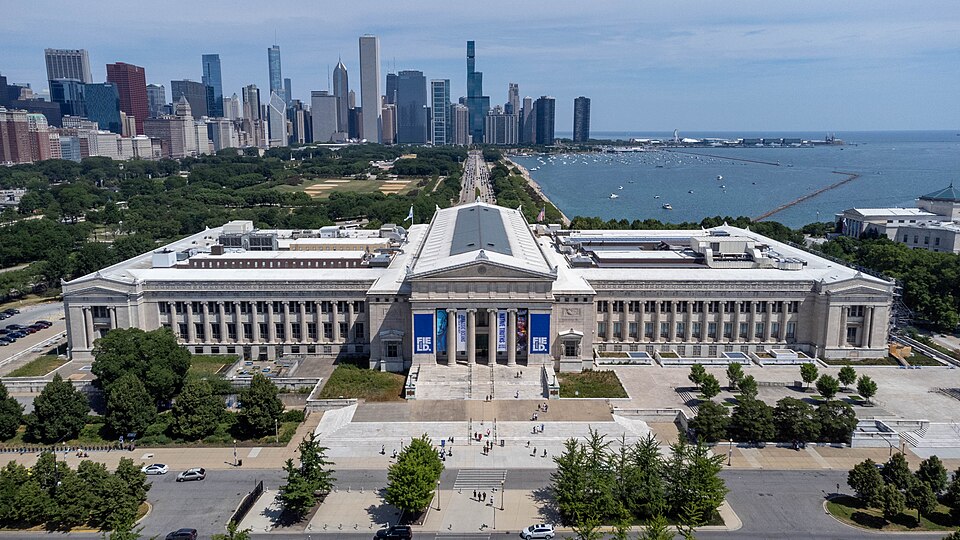
A natural history museum in a neoclassical building on the lakeshore, whose star attraction is Sue, the most complete Tyrannosaurus rex skeleton ever found. The collection holds over 40 million objects, a 3-storey Egyptian tomb, and 2 taxidermied Tsavo lions that killed dozens of railway workers in 1898.

Tip: The Museum Campus holds 3 major museums side by side — the Field Museum, Shedd Aquarium and Adler Planetarium — and the combined CityPASS ticket is worth it if you manage at least 2. The best view of the Chicago skyline is from the pavement in front of Adler Planetarium, at the tip of the peninsula.

Admission:
admission fee
Time needed:
3h
Navy Pier and the lakefront

Navy Pier and the lakefront

Streeterville

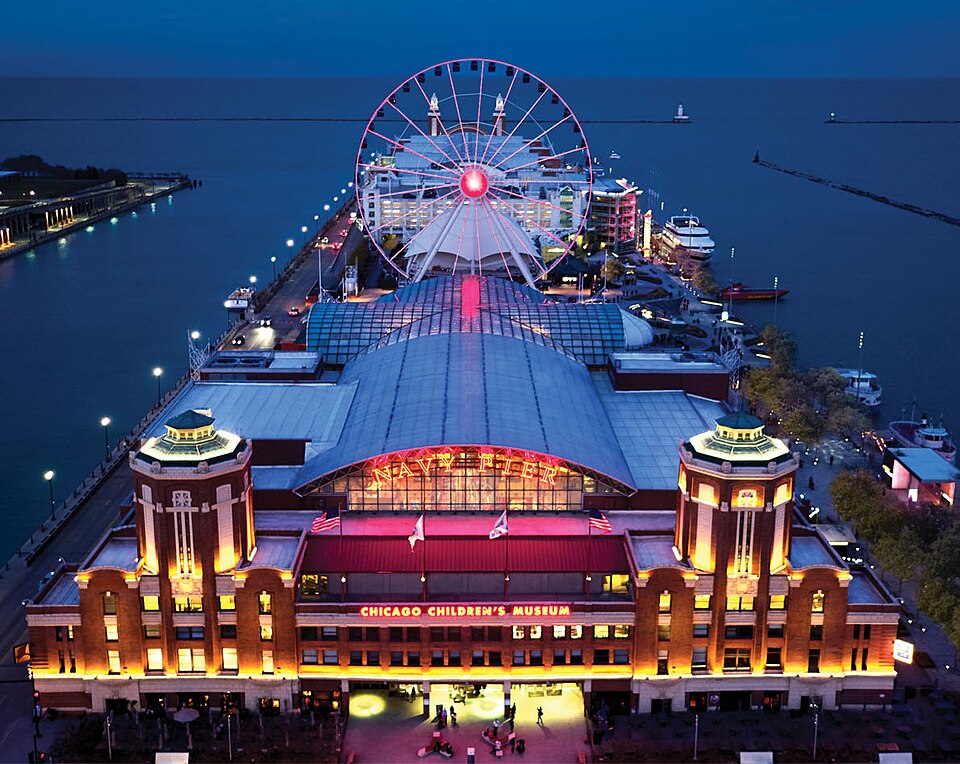
A 1km-long pier from 1916 with a Ferris wheel, sightseeing boats, restaurants and summer fireworks, with the Lakefront Trail running north and south from it along sandy beaches and parks. The lake reaches over 20°C in August, and people swim here in summer.

Tip: The pier itself is touristy and the food overpriced; the real value is the walk along the lakefront. Rent a Divvy bike and head north to the Oak Street and North Avenue beaches, which offer the best views of the skyscrapers above the sand. On summer Wednesdays and Saturday evenings there are free fireworks over the pier.

Admission:
free
Time needed:
2h
Wrigley Field

Wrigley Field

Lakeview

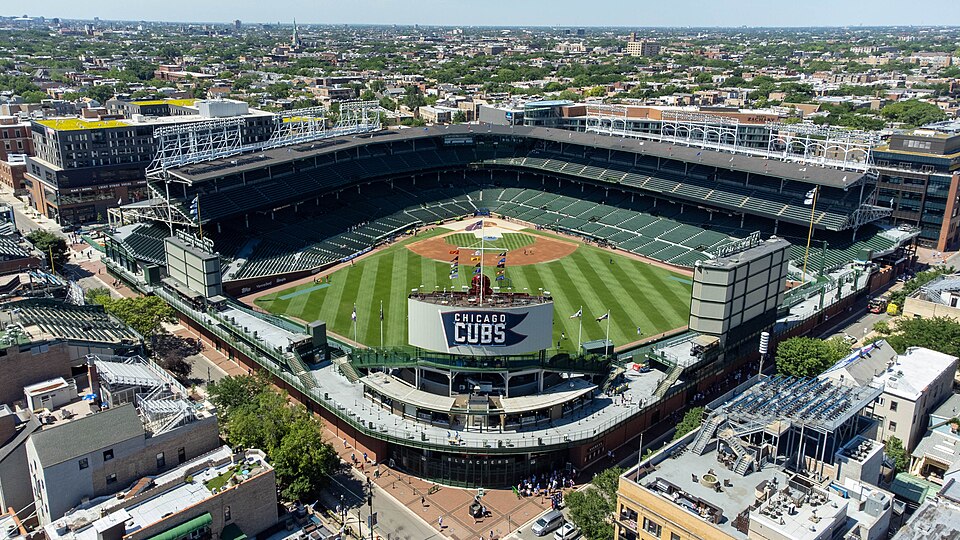
The Chicago Cubs' baseball stadium from 1914, the second-oldest in America, with a hand-operated scoreboard and ivy covering the outfield wall. The surrounding Wrigleyville neighbourhood turns into one giant outdoor pub on game day.

Tip: Even if you do not follow baseball, you will experience the quintessential American afternoon: beer, hot dogs and singing in the seventh inning. The cheapest bleacher seats behind the outfield wall start at USD 20 on weekdays. Outside the season, or when there is no game, the stadium runs guided tours. Take the Red Line — parking is impossible.

Admission:
admission fee
Time needed:
3.5h
Lincoln Park and Zoo

Lincoln Park and Zoo

Lincoln Park

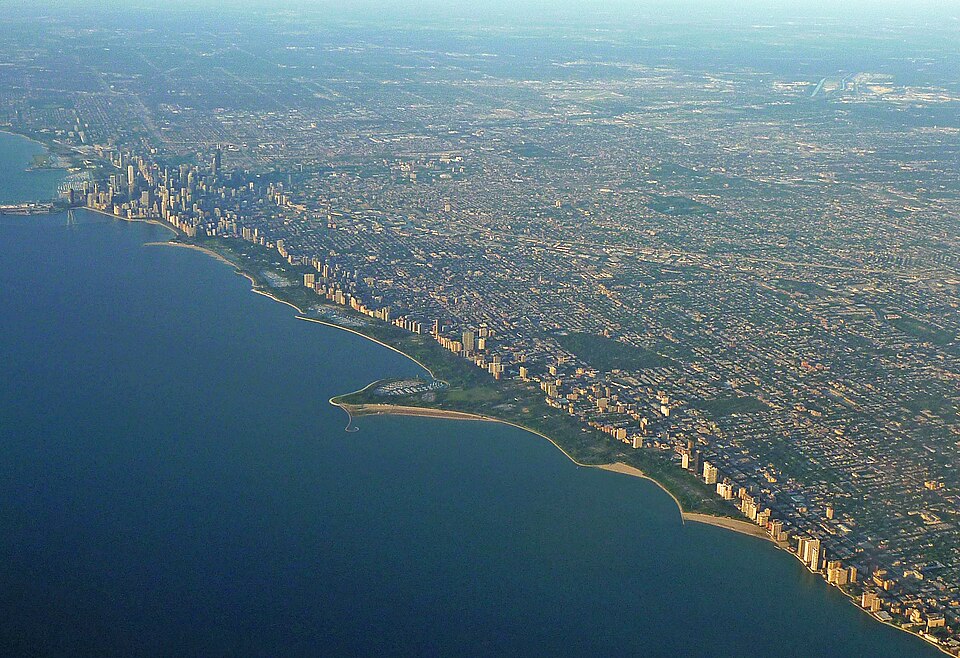
Chicago's largest city park, stretching 11km along the lake north of downtown, home to one of America's oldest zoos, an 1895 conservatory and a lagoon. The zoo has been free since it was founded in 1868.

Tip: Both the zoo and the Lincoln Park Conservatory are free to enter; only parking costs money, so come by the 151 bus instead. The bridge over the south lagoon offers the well-known shot of skyscrapers over the water. In autumn and winter, the conservatory turns tropical — a good place to escape the cold.

Admission:
free
Time needed:
2.5h
Museum of Science and Industry

Museum of Science and Industry

Hyde Park

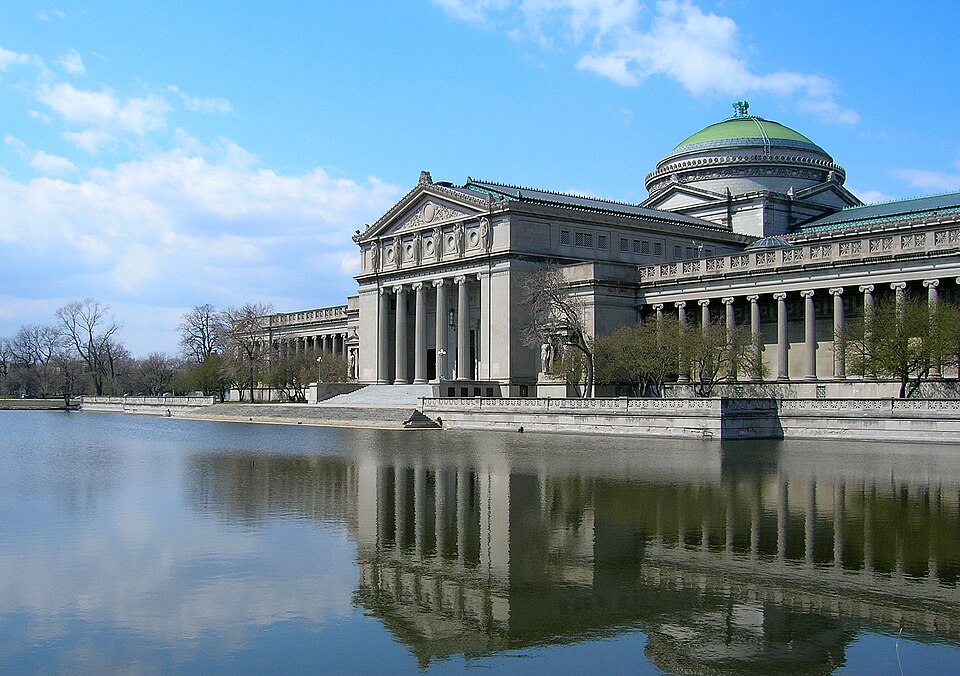
A technology museum housed in the only surviving building from the 1893 World's Fair, the largest of its kind in the Western Hemisphere. Inside is the captured German submarine U-505, a replica coal mine with an elevator descent, and a Boeing 727 suspended from the ceiling.

Tip: It sits 15km south of downtown in Hyde Park and can be reached by the 6 bus or the Metra Electric train in 20 minutes. Timed tickets are needed extra for the submarine and the coal mine, and they sell out by noon in summer. Next door is the University of Chicago campus with Robie House, Frank Lloyd Wright's most famous Prairie-style home.

Admission:
admission fee
Time needed:
4h

Photos: Chicago River Architecture Cruise — Kent Wang from Barcelona, Spain (CC BY-SA 2.0) · Millennium Park and Cloud Gate — Ken Lund from Reno, Nevada, USA (CC BY-SA 2.0) · Art Institute of Chicago — ajay_suresh (CC BY 2.0) · Willis Tower and Skydeck — w_lemay (CC BY-SA 2.0) · Field Museum — Sea Cow (CC BY-SA 4.0) · Navy Pier and the lakefront — Hbodine (CC BY-SA 4.0) · Wrigley Field — Sea Cow (CC BY-SA 4.0) · Lincoln Park and Zoo — Payton Chung (CC BY-SA 4.0) · Museum of Science and Industry — zooey from Chicago, Illinois USA (CC BY 2.0)

Where to stay

Areas and districts, matched to the kind of trip you are taking

The Loop

Best for: first visit and museums

The business centre inside the loop formed by the elevated railway, home to Millennium Park, the Art Institute and Willis Tower. Every L line stops here, and the Museum Campus is within walking distance. In the evening and at weekends, though, the office district empties out, and there are fewer restaurants than in the surrounding neighbourhoods.

River North and the Magnificent Mile

Best for: hotels, restaurants and shopping

North of the river, around the Michigan Avenue shopping strip and its department stores. The most hotels in the city, hundreds of restaurants and bars, and a 10-minute walk across the bridge to the Loop. Prices are the highest here, but you pay for the location.

West Loop

Best for: food and nightlife

A former meatpacking and warehouse district west of downtown, now the city's best street for food — Randolph Street and Fulton Market hold a string of Michelin-recognised restaurants. Hotels are newer and smaller, and it is a walk across the river to the Loop.

Lincoln Park and Lakeview

Best for: a quieter stay by the lake

Residential neighbourhoods of brick houses, with a lakeside park, a zoo and Wrigley Field. Hotels are scarce, but there are plenty of rentals and guesthouses, and the Red Line gets you downtown in 15 minutes. Best for those who would rather live Chicago than just see it.

Getting around

From the airport

Chicago has 2 airports. O'Hare, in the northwest, is one of the busiest in the world and handles international flights, reachable with 1 stopover from many European cities such as Frankfurt, Munich, London, Amsterdam or Dublin, with a total journey time of 12–15 hours. Midway, in the southwest, serves domestic low-cost routes and is handy if you are flying in from another American city. A metro line runs from both airports to downtown; a taxi gets stuck in traffic on the expressway during rush hour. ESTA authorisation, costing USD 40, is required before departure for visa-waiver travellers. Amtrak trains connect here from Milwaukee, Detroit, and overnight from New Orleans.

O'Hare International (ORD) · 27 km

  • L Blue Line to the Loop· 45 min· USD 5
  • Taxi to downtown· 35–70 min· USD 50
  • Uber / Lyft· 35–70 min· USD 40

Midway International (MDW) · 16 km

  • L Orange Line to the Loop· 25 min· USD 2.50
  • Taxi / Uber to downtown· 25–45 min· USD 35

Around town

Chicago's metro is called the L, after the elevated railway that makes up most of its tracks. 8 coloured lines converge in the Loop, and the Red and Blue lines run nonstop. Pay by contactless card or phone at the turnstile — tickets and transfers are managed by the Ventra system, and for a multi-day stay, a 1-day, 3-day or 7-day pass, which also covers buses, is worth getting. Downtown is flat as a table and walkable almost everywhere. Along the lakefront, a bike is the best option. Driving downtown makes little sense: hotels charge USD 60 a night for parking.

L (metro)8 lines, 2 running nonstop. 3 transfers within 2 hours for one fare. A 3-day pass works out cheaper than 6 rides. · USD 2.50 per ride
CTA busesSame payment system, with routes along the lake and to the Museum Campus, which the L does not reach. Route 146 runs from the Magnificent Mile straight to the museums. · USD 2.25
Ventra passUnlimited rides on both the L and buses. Bought at a station kiosk or in the Ventra app. A day pass activates on first tap at a turnstile and is valid for 24 hours. · USD 5 / day
Divvy bikesShared bikes and e-bikes with docking stations across the city and along the lake. A day pass covers 3-hour rides. · USD 1 to unlock
Water taxiThe Chicago Water Taxi runs along the river between Union Station, Michigan Avenue and Chinatown. A cheap substitute for a sightseeing boat, but without commentary. · USD 6

Useful apps: Ventra, Transit, Divvy, Uber, Lyft

When to go

Chicago has a continental climate with 4 distinct seasons. The best time is May to September: warm weather around 25°C, swimming in the lake, games at Wrigley Field, free concerts in Millennium Park and festivals every weekend, including jazz and blues. July and August also bring heatwaves with humidity. September and early October are the pleasantest and cheapest part of the warm season. From December to March there is frost, wind off the lake and snow, which is how the city got its Windy City nickname. Winter does bring low prices and museums without queues, though, and December has the Christkindlmarket and ice skating in Millennium Park.

Best time

May to September

What to avoid

January and February for the frost and wind off the lake

MonthJanFebMarAprMayJunJulAugSepOctNovDec
Day0°2°9°15°21°27°29°28°24°17°9°2°
Night-8°-6°-1°4°10°16°19°19°15°8°2°-5°
Rainy days119111212111099101011

Food & drink

Chicago has a cuisine of its own, built by immigrants: Italians brought the beef sandwich and pizza, Poles brought sausages, Mexicans brought taquerias in Pilsen, and Greeks brought Greektown. The city is also one of America's best food destinations, with a string of Michelin-starred restaurants in the West Loop. Prices are lower than in New York, portions just as big. In winter, a lot of eating happens in pubs and taverns, in summer on patios, and downtown a lunch from a deli costs USD 8–15. Restaurant tax downtown runs over 11%, on top of which comes the tip.

What to try

Deep-dish pizza

Pizza baked in a deep pan like a pie with a tall crust, a layer of cheese inside and tomato sauce on top. It takes 40 minutes to bake, so it is ordered as soon as you sit down. 1 slice will fill an adult; Lou Malnati's and Giordano's are the classics.

Chicago hot dog

A beef frankfurter in a poppy-seed bun with mustard, onion, sweet green relish, tomato, a pickle spear, sport peppers and celery salt. Ketchup is forbidden, and staff may take offence if you ask for it. Costs USD 4–6.

Italian beef

Thinly sliced roast beef soaked in its own jus, served in a roll with the spicy vegetable mix giardiniera or roasted peppers. Order it "dipped" for the whole roll to be soaked; it is then eaten leaning over the counter.

Tavern-style pizza

Chicago's other pizza, and the one locals eat more often than deep-dish: thin, crispy and cut into squares rather than triangles. It comes from taverns, where it was served as bar food, and it is cheaper than its famous sibling.

Grilled Polish sausage

The Maxwell Street Polish is a grilled sausage with sautéed onions and mustard in a bun, sold since the 1930s from windows on the South Side. Chicago once had the largest Polish community outside Warsaw, and traces of it remain in its sausages and bakeries.

Garrett popcorn

A mix of caramel and cheese popcorn that locals buy at Garrett shops on Michigan Avenue and in the Loop. It sounds odd, but it is Chicago's best-selling souvenir. The queue can run to 20 minutes.

Tacos in Pilsen

Pilsen, once a Czech neighbourhood, is now Mexican and has the best taquerias in the city, with tacos al pastor and carnitas for USD 3 apiece. Czech signage still survives on some buildings, along with St. Procopius Church.

What it costs

Chicago hot dog

USD 4–6

Slice of deep-dish pizza

USD 12–16

Dinner at a West Loop restaurant

USD 45–80 per person

Beer at a pub

USD 7–10

Architecture river cruise

from USD 55

3-day transit pass

USD 15

Art Institute admission

from USD 32

Night in a 3-star hotel in River North

USD 170–300 + tax

Indicative prices that change over time — treat them as a guide, not a price list.

Practical information

SocketsAtwo flat pins (US/JP)Btwo flat pins plus ground (US)
Voltage120V / 60Hz
Tap waterTap water is drinkable — Tap water is safe to drink in the United States, and restaurants will bring it free with ice if you ask for "tap water". Buying bottled is pointless and pricey — a bottle costs USD 2–3 in a shop, USD 5 at an attraction. It is worth carrying a refillable bottle, since airports and parks have filling stations. Ice is everywhere, and drinks are served noticeably colder than is usual in Europe.
TippingTipping is not optional — it is part of staff wages. At a table-service restaurant, 18–20% of the pre-tax total is standard; at a bar, a dollar per drink; for taxi and rideshare drivers, 15%; for housekeeping, USD 3–5 a night; for porters, USD 2 per bag. The card terminal usually offers percentage buttons — watch out, as they sometimes calculate from the total including tax. Chicago adds a sales tax of over 10% to the price, over 11% at downtown restaurants, and around 17.5% at hotels; the final total is always noticeably higher than the listed price.
Driving on theright
SafetyTourist areas in big American cities are safe by day and police presence is visible, but the line between a good and a bad neighbourhood is sharp and often just a few blocks. Check your accommodation's address on a map beforehand. Never leave visible belongings in a car. A crucial budget item is health insurance: an ER visit without insurance costs thousands of dollars, an ambulance ride over 1,000, and American hospitals expect payment upfront — travel insurance with a high limit is an absolute necessity here. The emergency number is 911.
Opening hoursShops are open from 10am to 9pm, including Sundays, and supermarkets and pharmacies like CVS or Walgreens are often open 24 hours. Restaurants serve breakfast from 6am, lunch from 11am, and dinner is eaten early — plenty of kitchens close by 9pm. Bars check ID for anyone who looks under 40, and will not serve you without a passport; a copy is not enough. Drinking alcohol in public, on the beach or in a car is illegal.
Customs & etiquetteFriendly small talk from staff is a professional standard, not an invitation to friendship. Queuing is respected, and personal space is larger than in Europe. Haggling only happens over cars and at flea markets, never elsewhere. Smoking is banned in practically all indoor spaces and on many beaches. Questions about salary and politics are not raised with strangers. Chicagoans are proud of their city and its sports teams; a remark about New York being the better city will not go down well. No eating on the train, and stand on the right on escalators.
A few local wordsHello — Hi / Good morningThank you — Thank youThe bill, please — Check, pleaseI'm just looking — Just looking, thanksHow much is that with tax? — How much is it with tax?Tap water, please — Tap water, please

How to plan your days

1 day

A day in Chicago

  1. 1Morning: Cloud Gate in Millennium Park while it is still empty.
  2. 2Late morning: the Art Institute and the Impressionists.
  3. 3Lunch from a deli in the Loop, then walk to the Riverwalk.
  4. 4Afternoon: architecture river cruise.
  5. 5Evening: deep-dish pizza in River North and a drink on the 96th floor at 360 Chicago.

2 days

2 days with the lake

  1. 1Day 1 as above.
  2. 2Morning: the Field Museum and Sue.
  3. 3Walk to Adler Planetarium for the skyline view.
  4. 4Afternoon: Divvy bike ride along the Lakefront Trail to North Avenue Beach.
  5. 5Evening: blues at a club on the North Side.

3 days

3 days with baseball

  1. 1First 2 days as above.
  2. 2Morning: Lincoln Park, the zoo and the conservatory.
  3. 3Afternoon: a Cubs game at Wrigley Field, or a stadium tour.
  4. 4Early evening: Willis Tower and The Ledge.
  5. 5Dinner in the West Loop on Randolph Street.

Day trips

Oak Park and Frank Lloyd Wright

15 km · 25 min on the Green Line

A suburb where Frank Lloyd Wright spent the first 20 years of his career and where the largest collection of his buildings anywhere stands — over 20 houses. A tour of his home and studio takes an hour, and the surrounding streets can be explored with an audio guide. Hemingway was born here, and his birthplace is a few blocks away.

Indiana Dunes National Park

80 km · 1h 30 min on the South Shore Line

Sand dunes up to 60m high on the south shore of Lake Michigan, with beaches, forests and views across the water to Chicago's skyline. A train from Millennium Station stops right by the beaches. The Three Dune Challenge loop over the 3 highest dunes involves over 160m of elevation gain in sand.

Milwaukee

150 km · 1h 30 min on Amtrak's Hiawatha service

A brewing city on the shore of the same lake, home to Miller and to Harley-Davidson motorcycles, which have their own museum. The art museum has an addition by Santiago Calatrava with wings that open at noon. The train runs 7 times a day and is faster than driving.

Frequently asked questions

How many days are enough for Chicago?+

3 days will cover the architecture, 2 major museums, the lake and baseball. 2 days is enough for downtown and a river cruise. Chicago pairs well with New York or with a Route 66 road trip, which starts here on Adams Street.

Is Chicago dangerous?+

The reputation comes from statistics in a handful of neighbourhoods on the south and west sides that tourists never reach. The Loop, River North, Lincoln Park, West Loop and Lakeview are safe even in the evening and full of people. On the L at night, stick to the first car near the driver, and avoid the southern ends of the lines after dark.

Which boat cruise is best?+

For architecture, the Chicago Architecture Center, departing from Michigan Avenue by the bridge — guides are trained volunteers and the commentary is substantive. Boats from Navy Pier are cheaper and combine the lake with the river, but the commentary is more entertainment-focused. Both last 1.5 hours.

Is the Chicago CityPASS worth it?+

If you want the Field Museum, Shedd Aquarium, Skydeck and one more attraction, you'll save roughly a third. If you're only visiting the Art Institute and taking a cruise, buy tickets separately. Plenty is free: Millennium Park, Lincoln Park Zoo, the Riverwalk and the beaches.

Where can you swim in Chicago?+

In the lake, from June to early September, when the water is 18–22°C. The closest beaches to downtown are Oak Street and North Avenue, both with lifeguards and skyline views. The water is fresh and clean, but strong winds bring waves and swimming bans.

What is the Windy City?+

The city's nickname, which locals explain as the wind off the lake, though historians say it originally mocked long-winded politicians. Either way, the wind is real — in winter it knocks the wind-chill down by 10 degrees, and it gusts between the skyscrapers of the Loop even in summer.

How do you get from O'Hare to downtown?+

Take the Blue Line, which runs nonstop straight from the airport terminal to the Loop in 45 minutes. A ticket from O'Hare costs more than one bought downtown, but the fare is otherwise the same. A taxi is more comfortable with luggage, but takes over an hour during rush hour.

What are prices like in Chicago?+

A downtown hotel costs USD 170–300 a night, deli food USD 10–15, a sit-down dinner around USD 60 per person. A beer costs USD 8. Compared with New York, you save mainly on accommodation — roughly a third.
Visa Requirements

Check the latest visa requirements for entering this country. Some nationalities may need to apply for a visa or e-visa before travel.

Check visa requirements

Language

English

Currency

USD

Timezone

GMT-6

Dial Code

+1

Population

335M

Area

9,833,520 km²

Voltage

120V / 60Hz

Driving Side

Right

Top Hotels in Chicago

Live prices from 500+ properties

Loading hotels...

Planning a trip to Chicago?

Compare hundreds of hotels, find the best price, and book with free cancellation on TravelManiac.