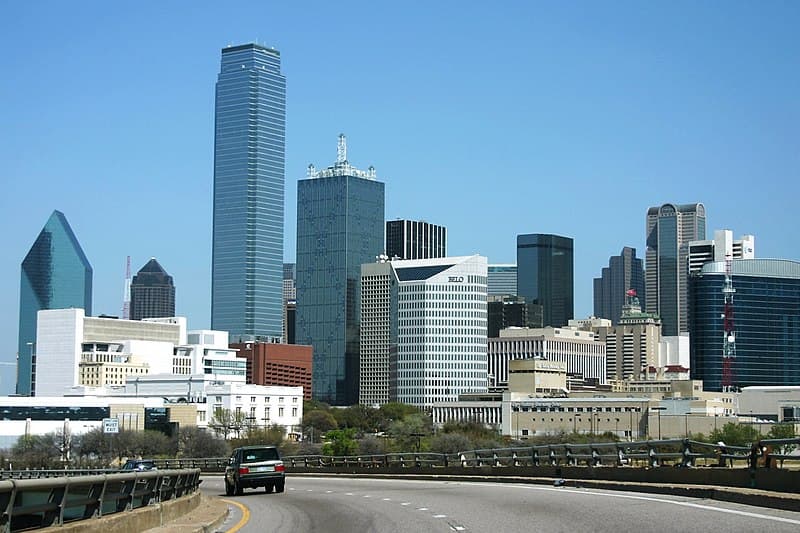
Dallas is the business capital of North Texas, a city of oil money, glass skyscrapers and multi-level freeways. The whole world knows it for a single day: on 22 November 1963, President Kennedy was shot here on Dealey Plaza, and the textbook-warehouse window Lee Harvey Oswald fired from is now one of America's most powerful museums. But Dallas is more than that. Downtown has the largest contiguous arts district in the US, with museums, a concert hall and a sculpture garden; a park has grown over the freeway; and Deep Ellum to the east is a neighbourhood of blues clubs and murals. But the best reason to visit is the food: Texas barbecue made from beef brisket smoked overnight, and the Tex-Mex cuisine invented here. An hour west lies Fort Worth, where a herd of longhorn cattle is driven down the street twice a day. Dallas is the gateway to Texas — DFW airport is one of the world's biggest hubs, and it's 3–4 hours by car to Austin and Houston.
What to see
The places worth your time in Dallas, and what to expect at each
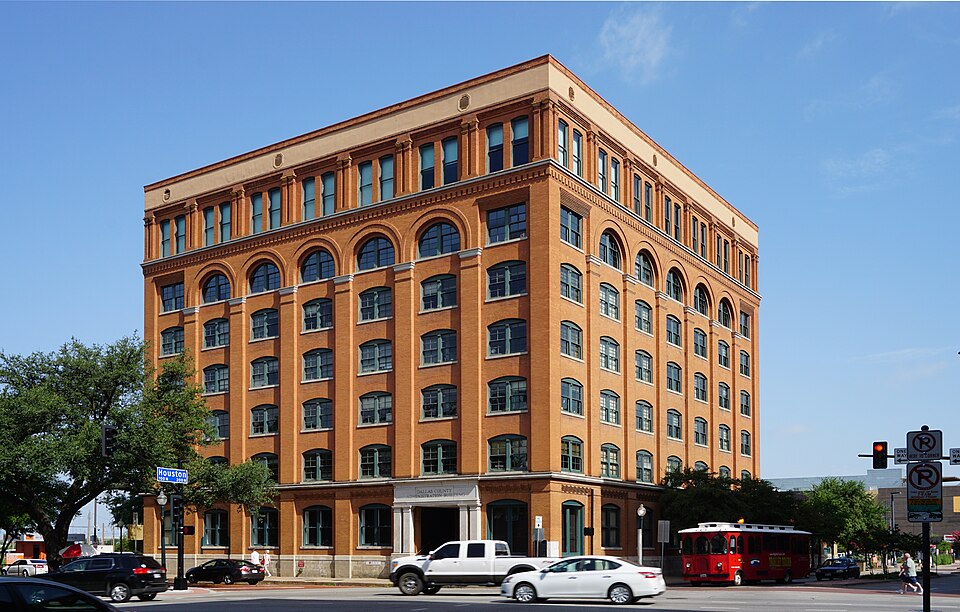
Sixth Floor Museum at Dealey Plaza
West End
A museum on the sixth floor of the former textbook warehouse from which Oswald shot President Kennedy. The corner window has been reconstructed as police found it, and the exhibition covers Kennedy's life, the assassination, the investigation and the conspiracy theories in detail.
Tip: The included audio guide is excellent and worth listening to in full — the exhibition takes 90 minutes. Outside on Elm Street, white crosses are painted on the road marking where the bullets hit the president — people take photos there, but it's a busy road, so be careful. Buy timed-entry tickets online.
Admission:
admission fee
Time needed:
1.5–2 h
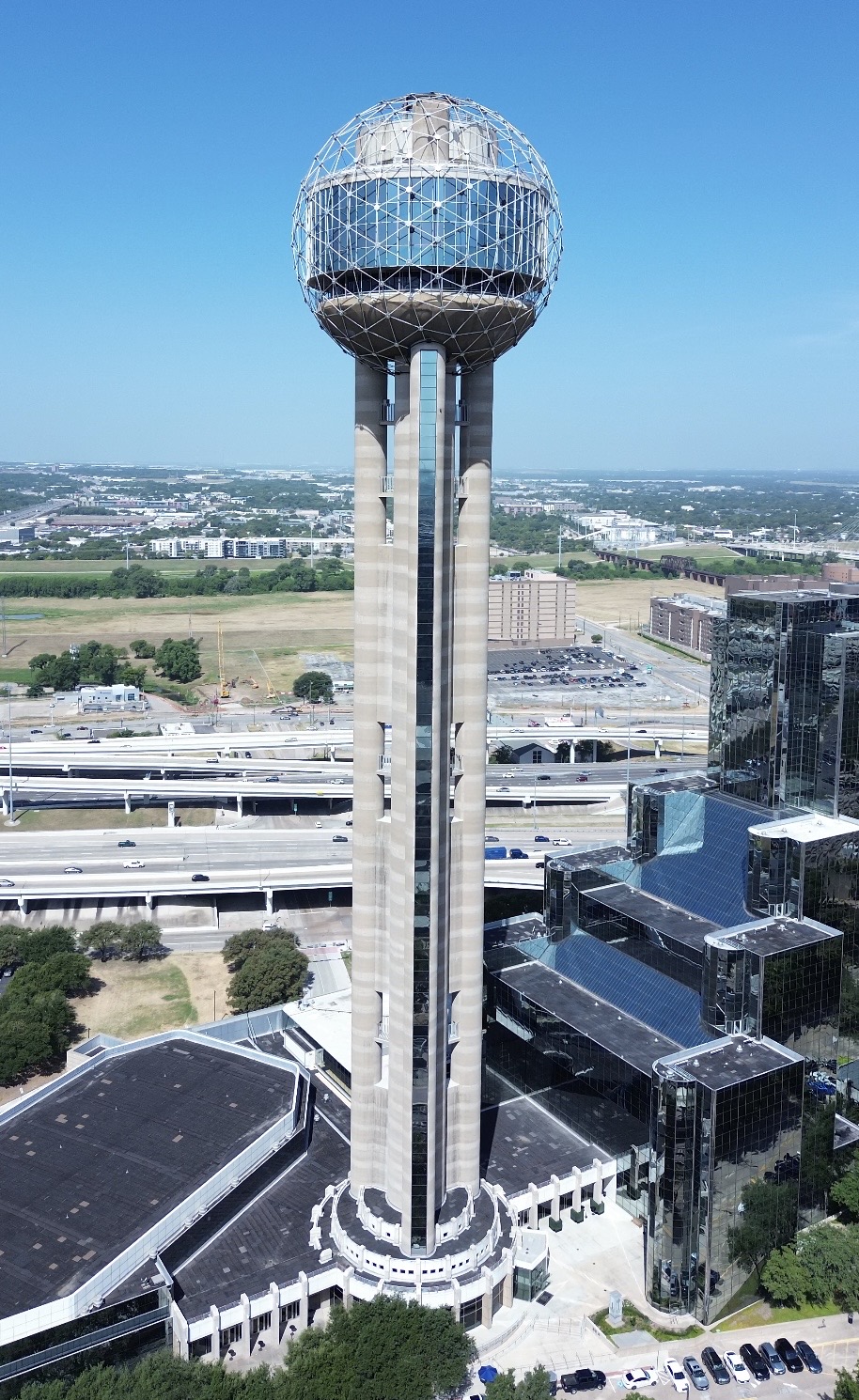
Reunion Tower
Downtown
A 171-metre tower with a glowing sphere on top that's the symbol of the Dallas skyline. The GeO-Deck observation deck shows the whole city, with interactive telescopes labelling buildings.
Tip: There's also a revolving restaurant upstairs, and if you have dinner there you don't have to pay the observation-deck admission. Sunset is the best time; in the evening a light show lights up the sphere. It's a short walk from Dealey Plaza and easy to combine.
Admission:
admission fee
Time needed:
1 h
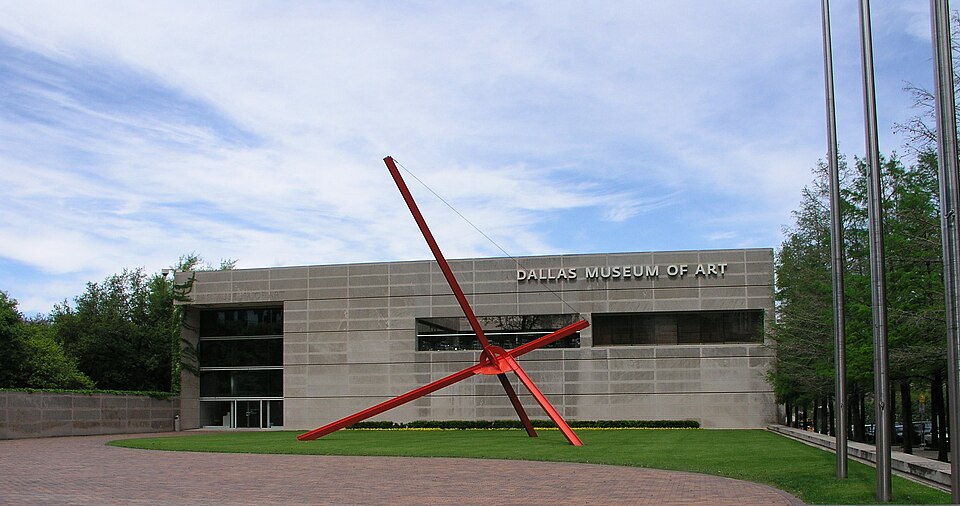
Dallas Museum of Art
Arts District
A large art museum with collections from antiquity to the present, including American, African and pre-Columbian art and paintings by Monet, Van Gogh and Pollock. The building stands at the western end of the Arts District.
Tip: The permanent collection is free — you only pay for special exhibitions, which isn't common in America. On the third Thursday of the month, the museum stays open until midnight with music and events.
Admission:
free
Time needed:
2 h
Nasher Sculpture Center
Arts District
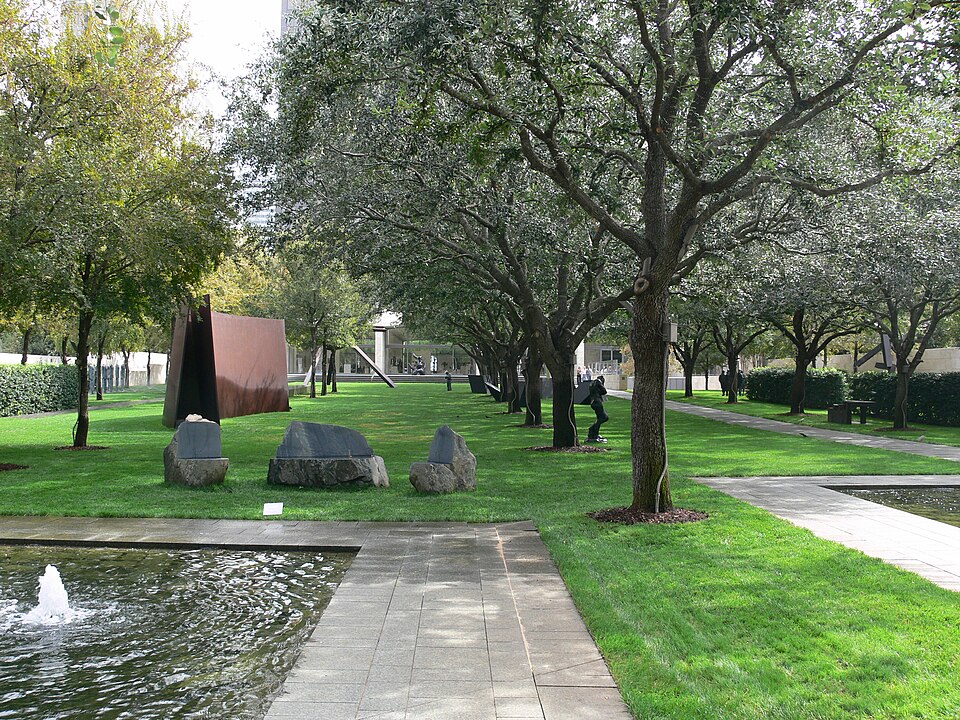
A museum of modern sculpture in a building by Renzo Piano, with an outdoor garden among the trees. Works by Rodin, Picasso, Miró, Giacometti and Henry Moore from collector Raymond Nasher's collection.
Tip: The garden is at its best in April and October. Admission is free on the first Saturday of the month. If you're short on time, don't skip Turrell's skyspace with the opening in the ceiling.
Admission:
admission fee
Time needed:
1–1.5 h
Perot Museum of Nature and Science
Victory Park
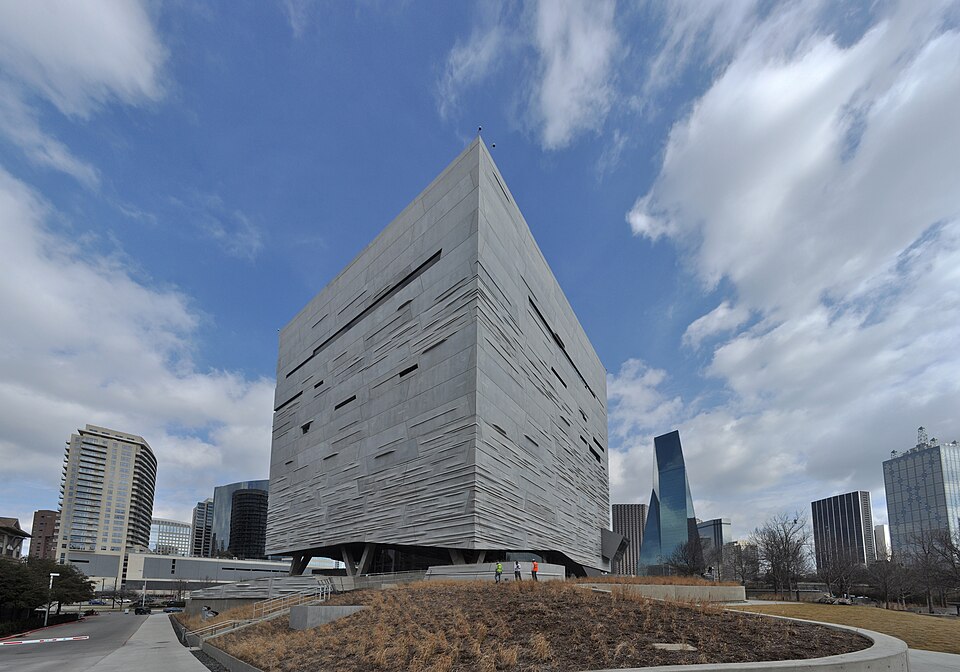
A natural science museum in a concrete cube with an outdoor escalator in a glass tube. Dinosaur skeletons, an earthquake simulator, exhibits on energy and space, and plenty of hands-on experiments for children.
Tip: An escalator takes you up, and the visit works its way back down. Weekends and holidays bring lots of families; weekday afternoons are quiet. Adults without children may prefer the Dallas Museum of Art.
Admission:
admission fee
Time needed:
2–3 h
Klyde Warren Park
Arts District
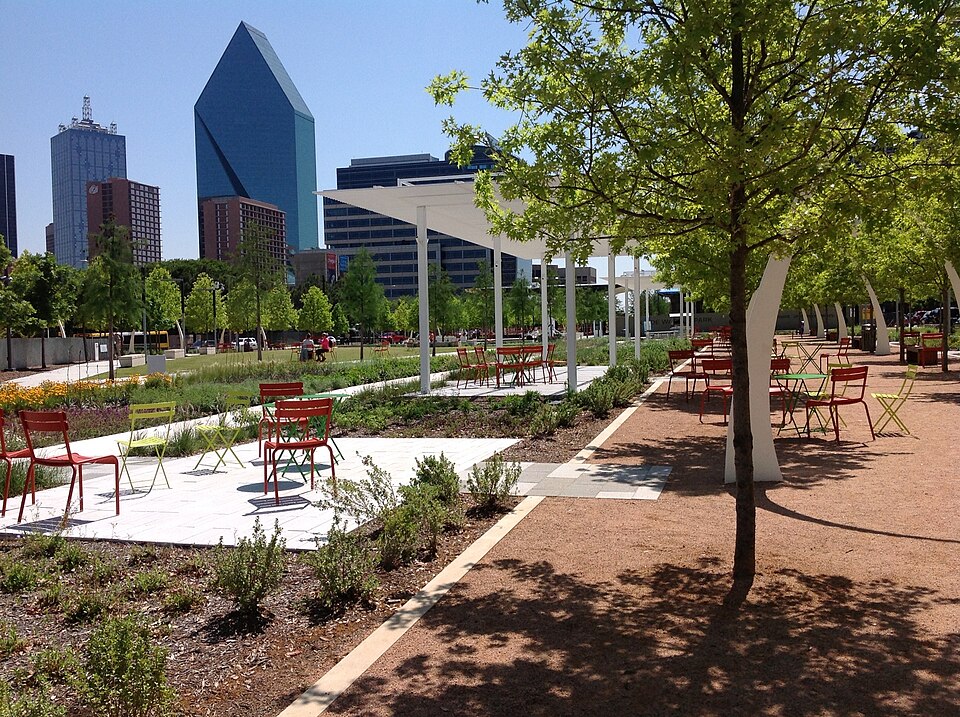
A park on a concrete deck over a sunken freeway that reconnected downtown with the Arts District. Lawns, children's fountains, an open-air library, exercise classes and food trucks every day.
Tip: Food trucks park by the park from 11am to 2pm and in the evening, and it's the cheapest lunch downtown. In hot summer the fountains and shade sails are in use. Parking is in nearby underground garages.
Admission:
free
Time needed:
1 h
Deep Ellum
Deep Ellum
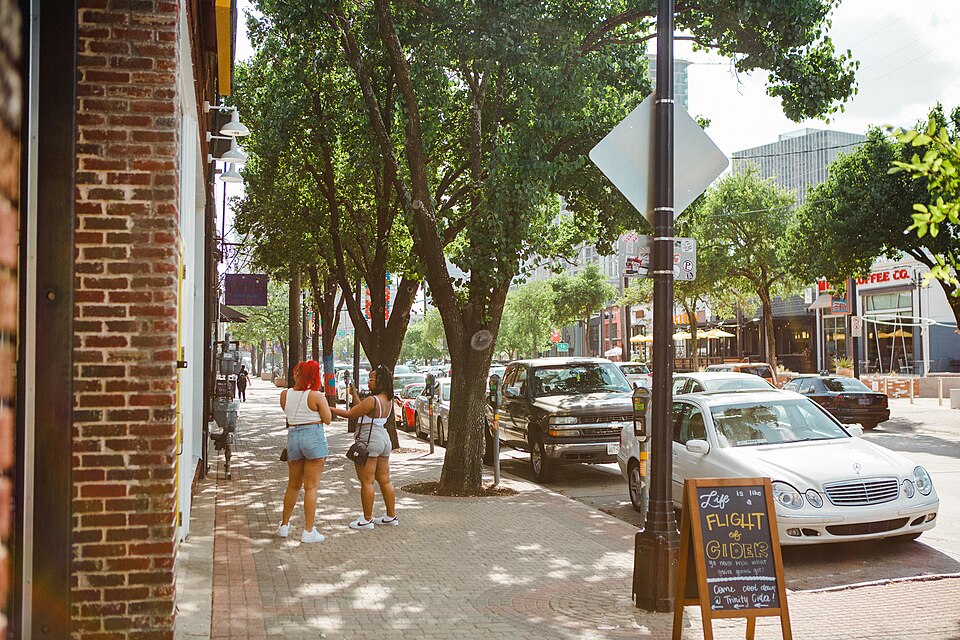
A warehouse district east of downtown where blues and jazz were played in the 1920s. Today it has music clubs, bars, tattoo parlours and over 150 murals on the walls of its buildings.
Tip: The murals photograph best in daylight; in the evening the neighbourhood turns into nightlife. Thursday to Saturday has the most live music. Park in a staffed lot — cars parked on the street get broken into.
Admission:
free
Time needed:
2 h
Dallas Arboretum
White Rock Lake
A botanical garden on the shore of White Rock Lake with 8 hectares of flowers, gardens and views of the city skyline. In spring it holds a half-a-million-tulip festival, and a pumpkin village in autumn.
Tip: The Dallas Blooms festival in spring and pumpkins in October are the biggest draws and sell out at weekends. Parking is charged separately. A 14-km trail runs around White Rock Lake.
Admission:
admission fee
Time needed:
2 h
AT&T Stadium
Arlington
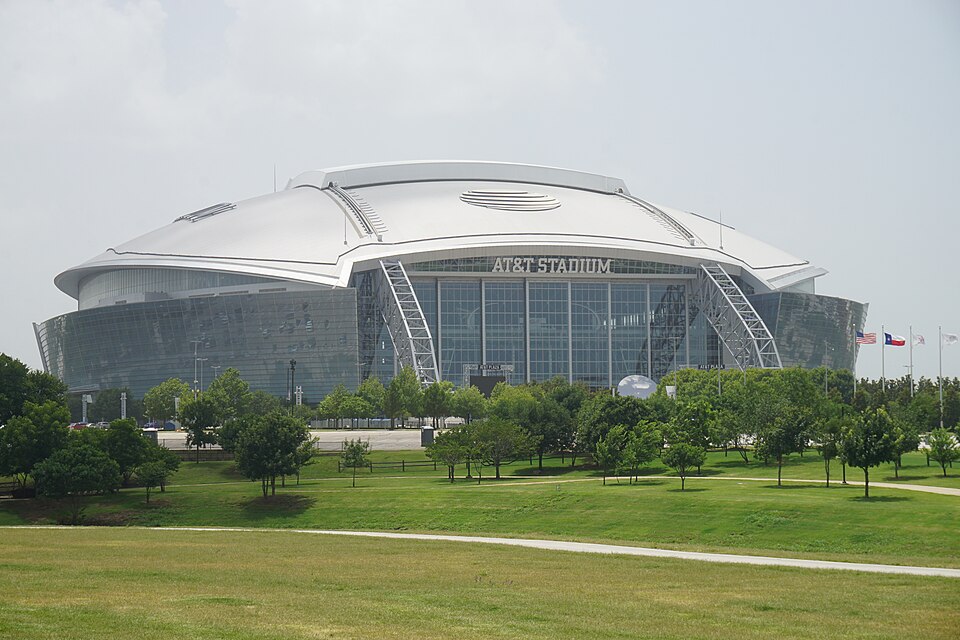
The giant Dallas Cowboys stadium in Arlington, seating 80,000, with a retractable roof and one of the world's largest video screens hanging over the field. It hosts American football and, for the 2026 World Cup, football too.
Tip: When there's no game on, stadium, locker room and jersey tours are available. Many visitors overlook the art collection inside the stadium. Arlington isn't reachable by public transport — car or Uber only — and expect an hour of traffic on game days.
Areas and districts, matched to the kind of trip you are taking
Downtown and West End
Best for: history and a first visit
The business core, with skyscrapers, Dealey Plaza and Reunion Tower. Hotels are close by, but downtown empties out in the evening and streets off the main strip aren't pleasant.
Uptown
Best for: nightlife and staying
A district north of downtown with restaurants, bars and hotels, connected by the free historic McKinney Avenue streetcar. The most pleasant place to stay.
Bishop Arts District
Best for: food and atmosphere
A small district of independent shops and restaurants in Oak Cliff, south of downtown. Locals love it for its cafés and relaxed feel.
Deep Ellum
Best for: music and street art
A music and bar district with murals. The liveliest place in the city at night, but noisy to stay in.
Dallas/Fort Worth Airport, known as DFW, sits between the two cities and is American Airlines' main hub. It connects with major European hubs such as London, Frankfurt, Amsterdam and Madrid, with total journey times typically 12–16 hours depending on the connection. The DART Orange Line light rail runs from Terminal B to downtown Dallas. The smaller Love Field airport, closer to downtown, handles Southwest's domestic flights. Visitors from visa-waiver countries need ESTA authorisation before departure. By road, Dallas is 3 hours from Austin and 4 from Houston.
Dallas/Fort Worth International (DFW) · 30 km
DART Orange Line light rail to downtown· 50 min· USD 2.50
Taxi to downtown· 25–45 min· USD 60
Uber / Lyft· 25–45 min· USD 40
Dallas Love Field (DAL) · 10 km
DART bus 524 to the light rail· 25 min· USD 2.50
Uber / Lyft to downtown· 15 min· USD 20
Around town
Dallas is built for cars, and public transport covers only part of the city. The DART light rail has 4 lines and is useful for getting from the airport and into downtown; the free historic McKinney Avenue Trolley runs to Uptown. For everything else, people use Uber. For trips to Fort Worth and beyond, renting a car is best. The freeways are wide but jammed at rush hour.
DART Light Rail4 light-rail lines from the airport through downtown to the suburbs. A day pass also covers the train to Fort Worth. · USD 2.50
McKinney Avenue TrolleyFree historic streetcar from the Arts District to Uptown. · free
Trinity Railway ExpressCommuter rail to Fort Worth; doesn't run on Sundays. · USD 6
Uber / LyftThe main way to get around in the evening and to neighbourhoods without a light-rail line. · USD 15 within downtown
Rental carMost practical for day trips; hotel parking costs $20–40. · USD 45/day
Useful apps: Uber, Lyft, GoPass, Google Maps
When to go
Spring (March to May) and autumn (October and November) are best, with temperatures around 25°C. Spring in North Texas brings strong hailstorms and occasional tornadoes, in what's known as Tornado Alley. Summer is very hot, over 35°C from June to September, and everything happens in air conditioning. Winter is mild but occasionally brings freezing rain that shuts the city down. The State Fair of Texas is held in October, with a giant Ferris wheel and fried treats.
Best time
April, May, October and November
What to avoid
July and August because of the heat
Month
Jan
Feb
Mar
Apr
May
Jun
Jul
Aug
Sep
Oct
Nov
Dec
Day
14°
17°
21°
25°
29°
33°
36°
36°
32°
26°
19°
14°
Night
3°
5°
9°
13°
18°
22°
24°
24°
20°
14°
8°
4°
Rainy days
7
7
8
7
9
7
5
5
6
7
7
7
Food & drink
Dallas is a meat town. Texas barbecue is made from beef brisket smoked for 12–18 hours over oak wood, and the best places sell out of meat by the afternoon. Tex-Mex cuisine — fajitas, enchiladas and chile con queso — was invented here, and the frozen margarita machine is a local invention too. Add giant steaks, fried chicken and food trucks. Prices are lower than on the coast. Sales tax of over 8% plus tip is added to the bill.
What to try
Brisket
Beef brisket smoked all night, cut into thick slices and served on paper with white bread, onion and pickles. Ordered by weight — a quarter-pound per person is plenty.
Fajitas
Strips of grilled beef or chicken with onion and pepper, brought sizzling on a hot skillet and wrapped in a tortilla. A Tex-Mex classic.
Chile con queso
Melted cheese with chilli, into which tortilla chips are dipped. Served as a starter in every Tex-Mex restaurant.
Chicken-fried steak
A thin beef cutlet breaded and fried like chicken, smothered in white pepper gravy. Classic highway-diner food.
Frozen margarita
The frozen margarita machine was invented in 1971 by Dallas restaurateur Mariano Martinez. Today it's in every Tex-Mex restaurant.
Kolache
Sweet yeast buns filled with cheese or fruit, brought to central Texas by Czech immigrants. The town of West, on the way to Waco, has Czech bakeries.
Steak
Texas steaks are big and good quality; ribeye and T-bone at steakhouses cost $40–80.
What it costs
Brisket by weight (quarter-pound)
$10–15
Tex-Mex lunch
$15–25
Steak at a steakhouse
$40–80
Beer
$6–9
Entry to the Sixth Floor Museum
from $20
Reunion Tower
from $18
DART day pass
$6
Night in a 3-star hotel in Uptown
$140–240 + tax
Indicative prices that change over time — treat them as a guide, not a price list.
Practical information
SocketsAtwo flat pins (US/JP)Btwo flat pins plus ground (US)
Voltage120V / 60Hz
Tap waterTap water is drinkable — Tap water is safe to drink in the United States, and restaurants will give it to you free with ice — just ask for "tap water". Buying bottled water is unnecessary and expensive: a bottle at a shop costs $2–3, at an attraction $5. It's worth carrying a water bottle, as airports and parks have refill stations. Ice is everywhere and drinks are served noticeably colder than is customary in Europe.
TippingTipping isn't optional — it's part of the server's wage. At a sit-down restaurant, tip 18–20% of the pre-tax total; at a bar, $1 per drink; taxi and rideshare drivers 15%; housekeeping $3–5 per night; porters $2 per bag. The card terminal usually offers percentage buttons — watch out, they're sometimes calculated on the total including tax. Dallas adds an 8.25% sales tax to the price, and hotels charge a 15% tax.
Driving on theright
SafetyTourist areas are safe during the day. Dallas does have higher crime in southern and eastern neighbourhoods that tourists have no reason to visit, and downtown streets off the main strip aren't for walking at night. Cars get broken into, so don't leave anything on the seat. Carrying a firearm is legal in Texas, and shops will post signs where it's banned. During tornado storms, follow the sirens and your hotel's instructions. The emergency number is 911.
Opening hoursShops open from 10am to 9pm including Sundays, and supermarkets and CVS or Walgreens pharmacies are often 24 hours. Restaurants serve breakfast from 6am, lunch from 11am, and dinner early — many kitchens close by 9pm. Bars check ID for anyone who looks under 40, and won't serve you without a passport; a copy isn't enough. Drinking alcohol in public, on the beach or in a car is illegal.
Customs & etiquetteStaff friendliness is a professional standard, not an invitation to friendship. Queuing is respected, and personal space is bigger than in Europe. Haggling only happens over cars and at flea markets, never elsewhere. Smoking is banned in practically all indoor spaces and on many beaches. Questions about salary and politics aren't opened with strangers. Texans are proud of their state and hospitable; "y'all" means all of you, and you'll hear it everywhere.
A few local wordsHello — Hi / Good morningThank you — Thank youThe bill, please — Check, pleaseJust looking — Just looking, thanksHow much is that with tax? — How much is it with tax?Tap water, please — Tap water, please
How to plan your days
1 day
A day in Dallas
1Morning at the Sixth Floor Museum and Dealey Plaza.
2Lunch at a barbecue joint in Deep Ellum.
3Afternoon at Klyde Warren Park and the Dallas Museum of Art.
4Nasher Sculpture Center.
5Evening at Reunion Tower for sunset.
2 days
2 days in Dallas
1Day 1 as the one-day itinerary.
2Day 2 morning: trip to the Fort Worth Stockyards for the cattle drive.
3Lunch in the cowboy district.
4Afternoon back in Dallas at the Bishop Arts District.
5Evening live music in Deep Ellum.
3 days
3 days in Dallas
12 days as the previous itinerary.
2Day 3: Perot Museum and the Arboretum.
3Tex-Mex lunch in Uptown.
4Afternoon tour of AT&T Stadium in Arlington.
5Evening steak dinner.
Day trips
Fort Worth Stockyards
55 km · 45 min by car
The historic cattle market in Fort Worth, where a herd of longhorn cattle is driven down the street by cowboys twice a day, at 11:30am and 4pm. Rodeo every Friday and Saturday evening, western shops selling hats and boots, and Billy Bob's, the largest honky-tonk bar in the world.
Waco
150 km · 1.5 h by car
The town of Magnolia Market, known from TV, with the museum of Dr Pepper (invented here) and a national monument with mammoth fossil sites. On the way is the town of West, with Czech bakeries selling kolaches.
Grapevine
35 km · 30 min by car
A historic town next to the airport with wineries, a restored main street and a steam railway to the Stockyards in Fort Worth. At Christmas it holds a big festival with a decorated main street.
Frequently asked questions
How many days are enough for Dallas?+
2 days cover the Kennedy museum, the Arts District, Deep Ellum and a trip to Fort Worth. Dallas connects well with Austin and Houston for a round trip through Texas.
Do I need a car in Dallas?+
Not downtown or in Uptown — the streetcar and Uber are enough there. For trips to Fort Worth, the stadium and the surrounding area, a car is worthwhile.
Where can you see cowboys?+
At the Fort Worth Stockyards, an hour from Dallas. A herd of longhorn cattle is driven down the street twice a day, and there's a rodeo at the weekend.
How do I get from the airport to downtown?+
From DFW, the DART Orange Line light rail runs from Terminal B for 50 minutes and $2.50. A taxi or Uber costs $40–60.
Where should I stay in Dallas?+
Uptown for restaurants and safe streets, Downtown for museums. Hotels near the airport only make sense for a single night.
Is Dallas hot?+
Yes in summer — from June to September it's regularly over 35°C. Spring and autumn are best; winter is mild.
What's the best food in Dallas?+
Texas barbecue made from beef brisket, and Tex-Mex. The best places sell out of meat by the afternoon, so go early for lunch.
How far is Dallas from Houston and Austin?+
Houston is 4 hours by car, Austin 3. Both cities are also connected by a domestic flight taking under an hour.
Visa Requirements
Check the latest visa requirements for entering this country. Some nationalities may need to apply for a visa or e-visa before travel.