Eighty miles of coastline, film studios, and sunshine three hundred days a year
Los Angeles
LanguageEnglish
CurrencyUSD
TimezoneGMT-8
Temperature5-30 °C
Dial Code+1
Population335M
Area9,833,520 km²
SocketsType A / Type B
Tap waterDrinkable
Discover Los Angeles
Los Angeles isn't a city in the European sense but eighty-eight independent municipalities and dozens of neighbourhoods fused into one sprawl the size of a small region, stitched together by freeways. Knowing that in advance lets you plan the trip by area and save hours in traffic: Hollywood and Griffith Park in the north, Beverly Hills and the museums along Wilshire Boulevard in the middle, Santa Monica, Venice and Malibu on the ocean to the west, and Downtown with its concert hall and old movie palaces to the east. Hollywood to Santa Monica is only twenty kilometres apart, but takes an hour by car at rush hour. Most visitors rent a car as a result, though the Metro and buses have expanded their reach considerably in recent years. The city has a subtropical Mediterranean climate with three hundred days of sunshine a year, and while you won't stumble across movie stars, you can peek behind the scenes at working film studios. The beaches are wide and endless, but the Pacific here is cold — around twenty degrees even in August.
What to see
The places worth your time in Los Angeles, and what to expect at each
Griffith Observatory and the Hollywood Sign view
Griffith Park
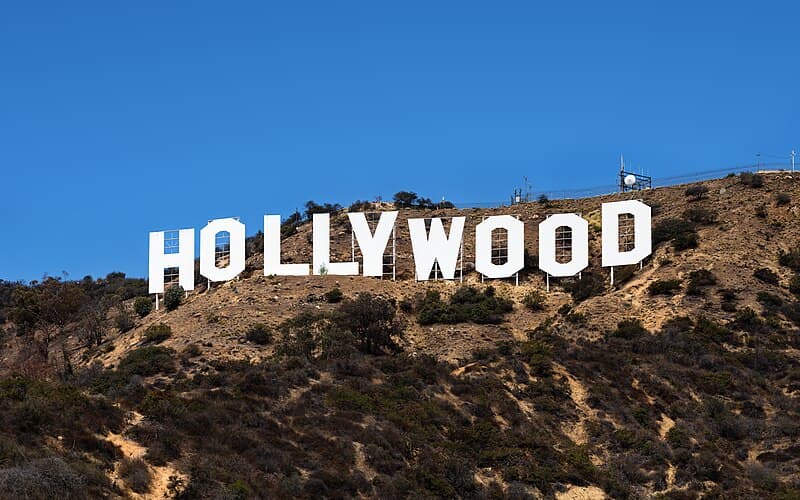
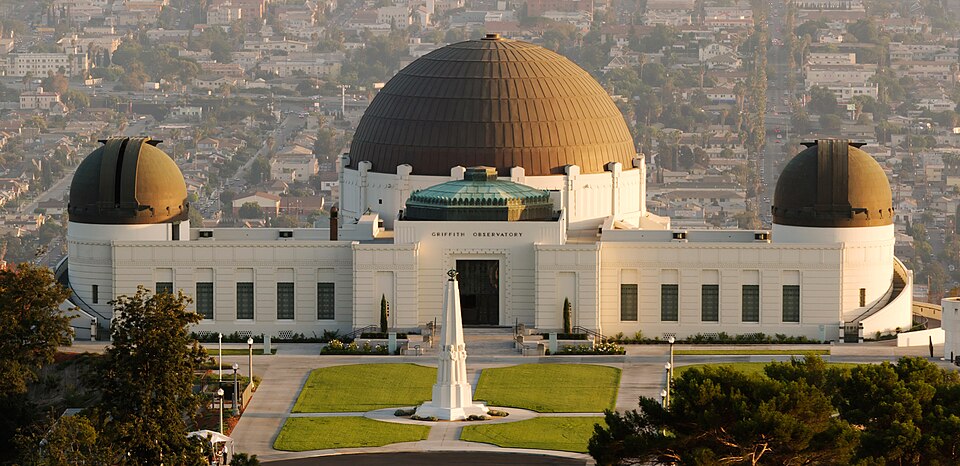
An art deco observatory from 1935 on the slopes of Mount Hollywood, with a planetarium, a Foucault pendulum and free public telescopes. The terraces look out over all of Los Angeles to the ocean, and offer the best view of the Hollywood Sign on the opposite hillside.
Tip: Entry to the building and the telescopes are free; only the planetarium charges. Hilltop parking is expensive and fills up by early evening — take the DASH Observatory bus from the Vermont/Sunset Metro stop instead. Arrive an hour before sunset and stay until the city lights come on. Closed Mondays.
Admission:
free
Time needed:
2 h
Hollywood Boulevard and the Walk of Fame
Hollywood
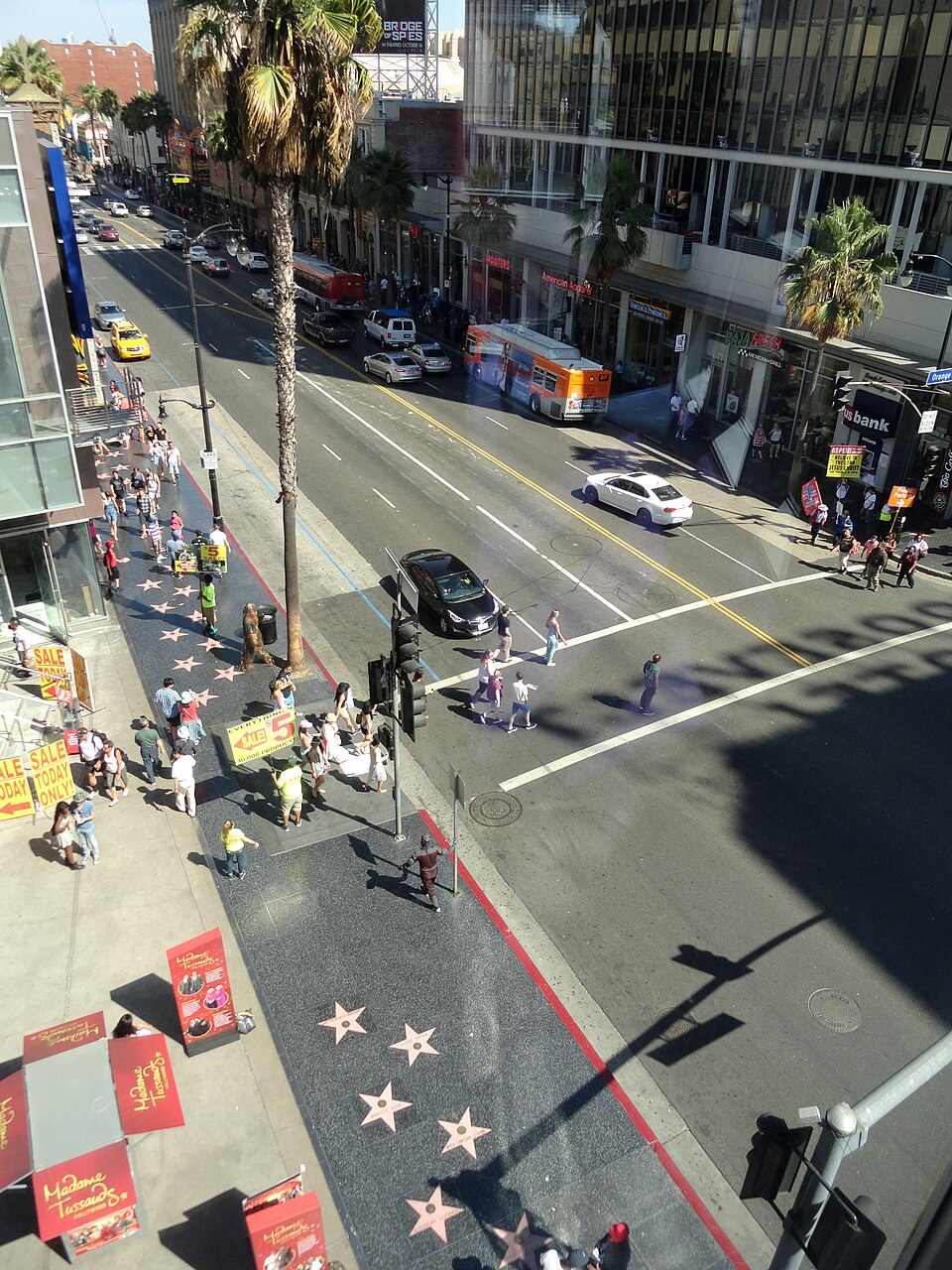
A boulevard lined with over two and a half thousand pink-star plaques set into the sidewalk, bearing the names of actors, musicians and directors. Outside the 1927 TCL Chinese Theatre, handprints and footprints of film stars are cast in the concrete, next to the Dolby Theatre, home of the Academy Awards.
Tip: Expect crowds, costumed characters asking for tips for photos, and souvenir shops — this is more a box to tick than an experience. An hour around the Chinese Theatre is plenty. Look up a specific star's location in the official directory on the Hollywood Chamber of Commerce website. Reached by the B line Metro to Hollywood/Highland.
Admission:
free
Time needed:
1 h
Getty Center
Brentwood
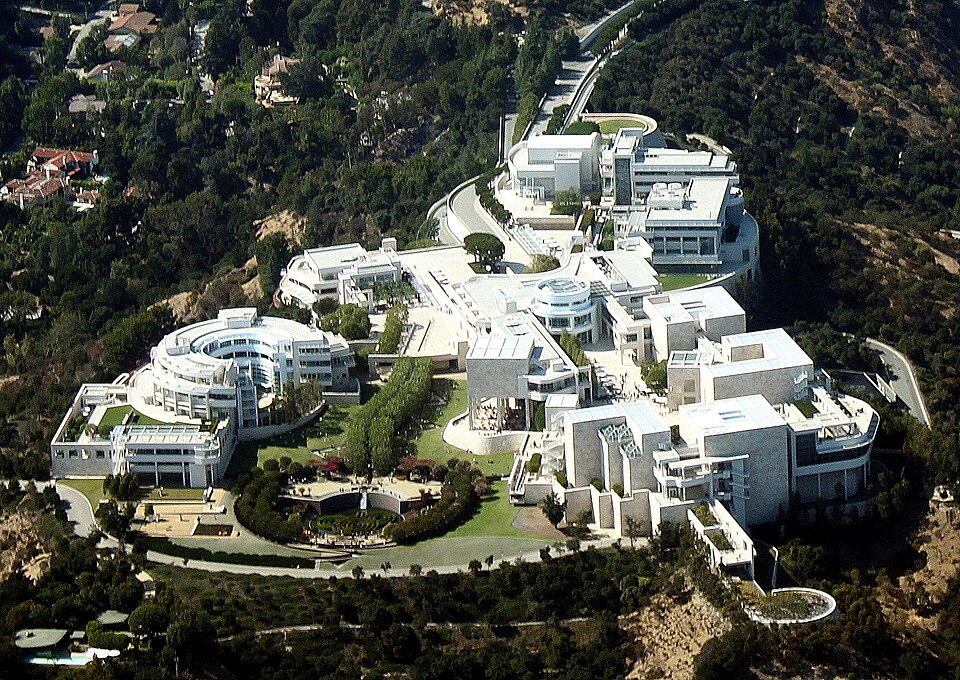
Richard Meier's white travertine art museum on a hilltop above Brentwood, reached by an automated tram. The collection ranges from medieval manuscripts through Rembrandt to Van Gogh's Irises, but the gardens and ocean views are just as celebrated.
Tip: Admission is free, only parking costs — so a carload of four comes out cheaper than an Uber. Buses along Sepulveda Boulevard stop right at the base of the tram. It's open until eight on Saturdays, and sunset over the ocean from the terrace is the best in all of LA. The sister site, the Getty Villa in Malibu, houses the antiquities collection and needs a free timed reservation.
Admission:
free
Time needed:
3 h
Santa Monica Pier
Santa Monica
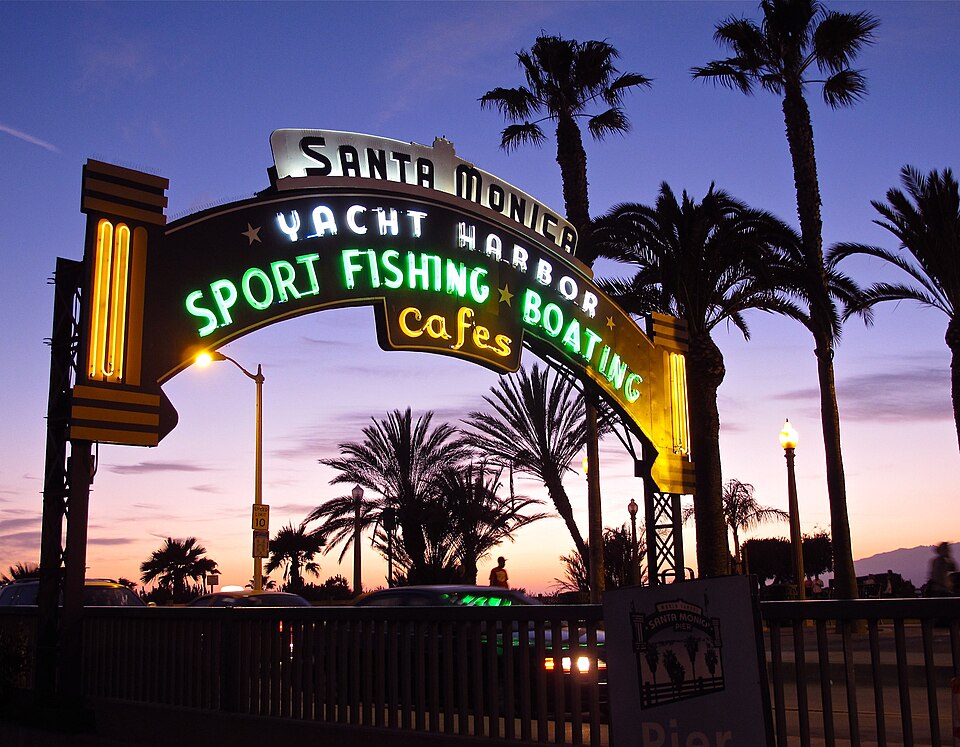
A wooden pier from 1909 with a small amusement park, a solar-powered Ferris wheel and a 1920s carousel. The historic Route 66 officially ends at its foot, and the beach beneath stretches for miles in both directions.
Tip: The pier itself is touristy, but the beach stretching in both directions is wide, public and free to walk. Renting a bike under the pier and riding The Strand path south to Venice, twenty-five minutes, is the best way to see it. Parking right at the pier costs double; municipal garages two blocks away are cheaper.
Admission:
free
Time needed:
2 h
Venice Beach and the canals
Venice
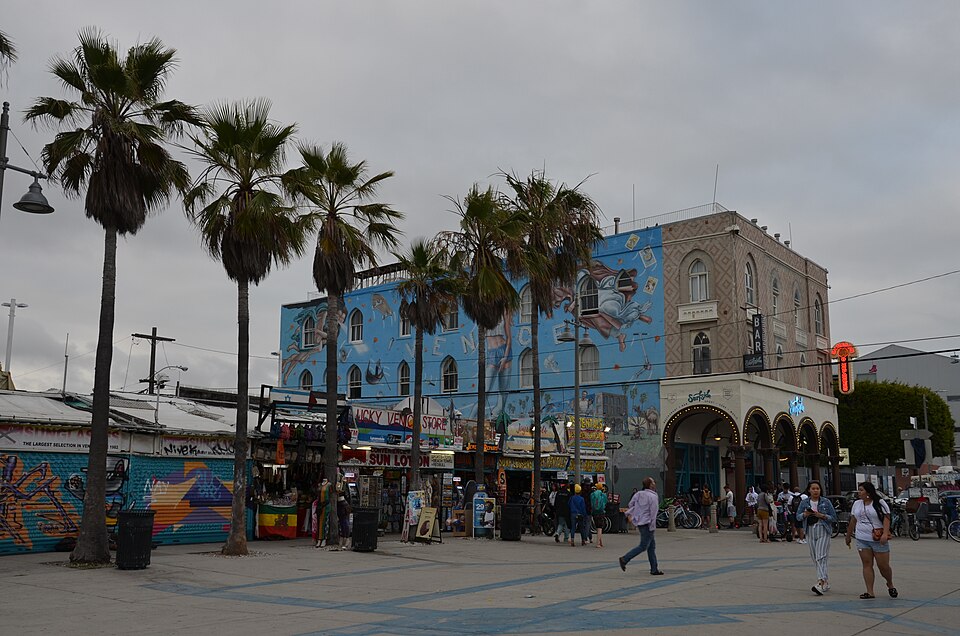
A beach lined with street performers, a skatepark, basketball courts and the outdoor Muscle Beach gym where Arnold Schwarzenegger once trained. A few blocks inland lies a quiet canal district with footbridges and houses, built as a Venice pastiche by founder Abbot Kinney in the early twentieth century.
Tip: The Ocean Front Walk boardwalk is lively in the afternoon and on weekends, and empties out at night — don't linger then. The canals are just south of Venice Boulevard and look their best in the morning. The best cafés and shops are a block inland on Abbot Kinney Boulevard, not on the boardwalk itself.
Admission:
free
Time needed:
2.5 h
Universal Studios Hollywood
Universal City
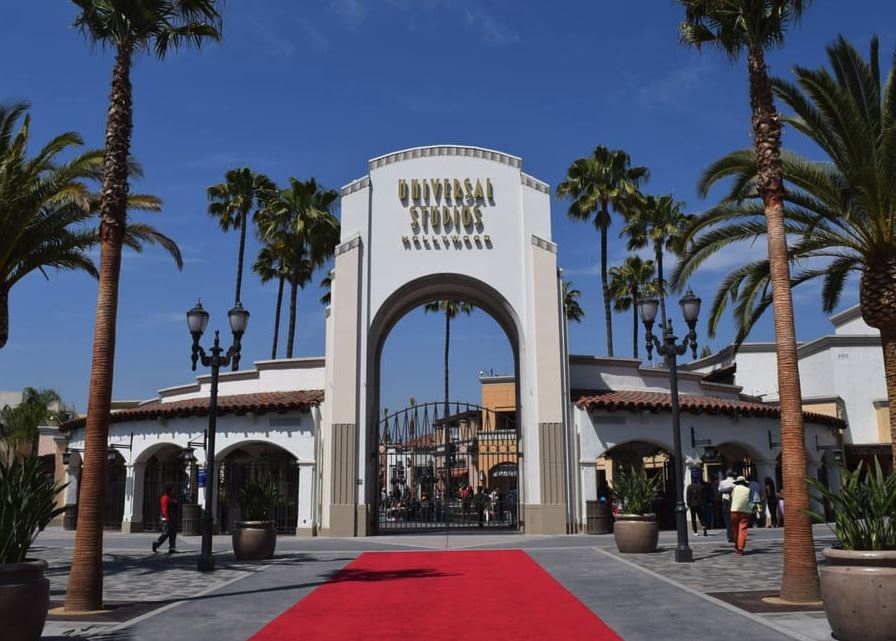
A movie-themed amusement park that's also a working studio still used for filming. The centrepiece is the Studio Tour ride through the backlot, past a crashed War of the Worlds plane and a Jaws shark attack, alongside rides based on Harry Potter, Super Mario and Jurassic Park.
Tip: Tickets are cheaper online and booked for a specific date; an Express skip-the-line ticket is worth it in summer and on weekends. Do the Studio Tour first thing — by afternoon the wait is an hour. The B line Metro runs to Universal City station, with a free shuttle bus onward to the park.
Admission:
admission fee
Time needed:
full day
LACMA and Museum Row
Mid-Wilshire
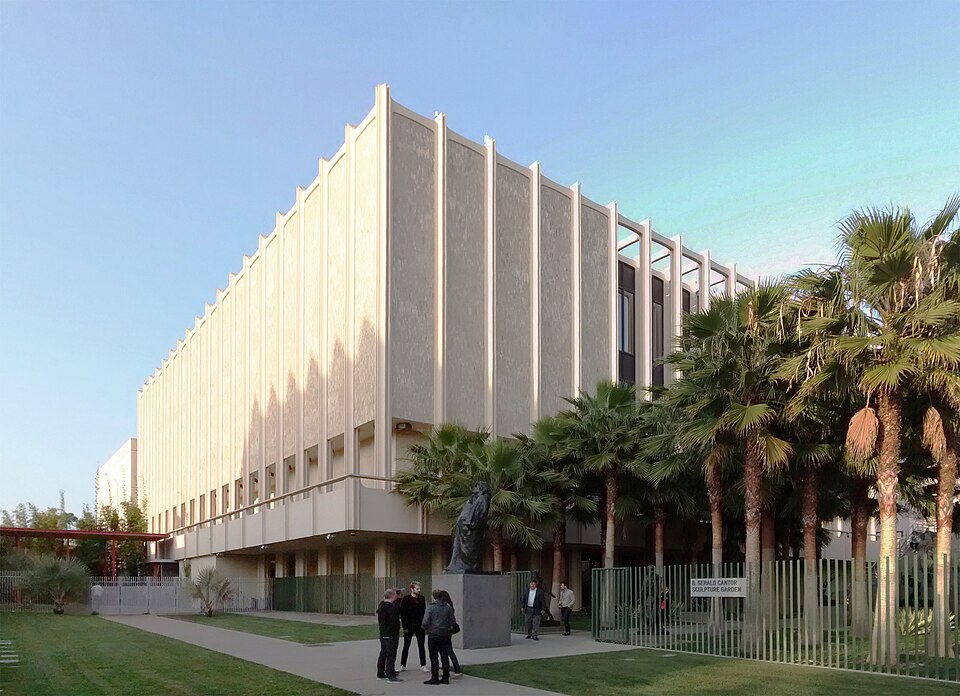
The Los Angeles County Museum of Art on Wilshire Boulevard, the largest art museum in the western United States, with a collection spanning antiquity to Warhol. Out front stands Urban Light, an installation of two hundred and two vintage street lamps, next to the Academy Museum of Motion Pictures and the La Brea Tar Pits, where mammoth bones are still being excavated.
Tip: Urban Light is free and looks best after dark, when the lamps are lit. The Academy Museum of Motion Pictures a block away holds Dorothy's ruby slippers from The Wizard of Oz and the Jaws shark. The Tar Pits' outdoor pools of bubbling asphalt can be seen for free — only the museum charges admission.
Admission:
admission fee
Time needed:
3 h
Walt Disney Concert Hall and Downtown
Downtown
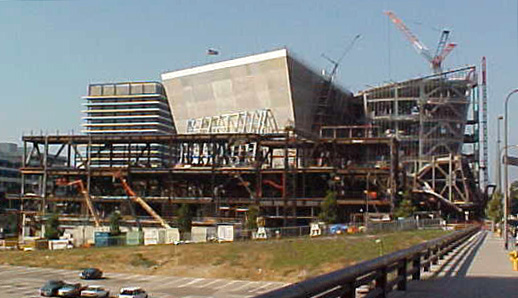
Frank Gehry's 2003 concert hall, clad in undulating stainless steel panels, home of the LA Philharmonic. Next door is The Broad, a contemporary art museum with free admission, and a few blocks away the 1917 Grand Central Market and Broadway's old movie palaces.
Tip: The self-guided audio tour of the concert hall is free and includes the rooftop garden, otherwise inaccessible. The Broad is free but the walk-in wait without a reservation can be an hour; book a timed ticket for Yayoi Kusama's Infinite Mirror Room as soon as you arrive. Grab lunch at Grand Central Market — try the tacos or Eggslut.
Admission:
free
Time needed:
3 h
Warner Bros. Studio Tour
Burbank
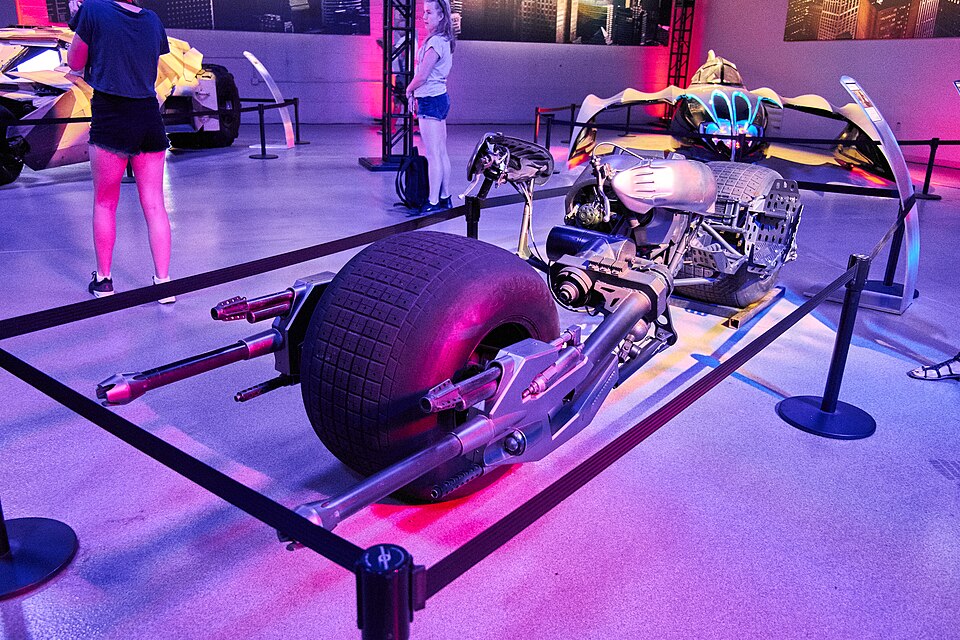
A three-hour tour of a working film studio in Burbank aboard a small guided cart, weaving between soundstages and outdoor street sets used for Friends, Casablanca and Batman. It ends with a props exhibit and the Central Perk café.
Tip: Unlike Universal, this isn't a theme park but a working lot — when filming is underway, the cart routes around the closed soundstages and your guide points out what's shooting where. Tours run in small groups at set times. Mornings are best, since filming usually happens in the afternoon.
Areas and districts, matched to the kind of trip you are taking
Santa Monica
Best for: a first stay by the ocean without a car
An independent seaside city with beaches, a pier and the pedestrian Third Street Promenade. It's the safest and most walkable base, and the E line Metro runs from here straight to Downtown. Hotels are pricey, and driving to Hollywood can take over an hour at rush hour.
Hollywood and West Hollywood
Best for: nightlife and a central location
Hollywood has cheaper hotels and a Metro stop, but the boulevard is noisy at night and some streets feel rough. Neighbouring West Hollywood is its own city, with bars and restaurants along Sunset Strip and Santa Monica Boulevard, safe and lively after dark. It's the closest base to both Beverly Hills and Griffith Park.
Beverly Hills and the Westside
Best for: luxury and quiet
Rodeo Drive's fashion houses, hillside villas, and green palm-lined boulevards. Hotels are among the priciest in California and the area is calm, but there's nowhere to walk to. The location is convenient, though: between Hollywood and the ocean, twenty minutes from the Getty Center.
Downtown LA
Best for: culture and cheaper hotels
Skyscrapers, the concert hall, museums, markets, and the Arts District and Little Tokyo neighbourhoods. The Metro fans out from here in every direction and hotels are cheaper than on the Westside. Away from the main streets it empties out at night, and many homeless residents live around Skid Row to the southeast — stay near Grand Avenue or in the Arts District instead.
The main airport, LAX, sits in the southwest near the ocean and is one of the busiest in the world. Flights from Prague connect through London, Frankfurt, Amsterdam, Paris or Istanbul and take fifteen to eighteen hours; there are no summer direct flights. An ESTA authorisation, costing forty dollars, is required before departure. Taxis and rideshares don't pick up at the terminal at LAX — they use a separate lot called LAX-it, reached by free green shuttle buses. Rental car depots are off-site and reached by their own shuttles. The smaller Burbank airport to the north handles domestic flights and is closest to Hollywood; Long Beach in the south is convenient for Disneyland.
Los Angeles International (LAX) · 27 km
FlyAway bus to Union Station· 40–70 min· $9.75
Shuttle + Metro K and C lines· 60–90 min· $1.75
Uber / Lyft from the LAX-it lot· 30–90 min· $40
Taxi to Hollywood· 40–90 min· $60
Hollywood Burbank (BUR) · 22 km
Uber / Lyft to Hollywood· 25 min· $25
Metrolink train to Union Station· 30 min· $4
Around town
A car remains the most practical way to get around Los Angeles, even at the cost of traffic and paid parking — hotels in Santa Monica and Beverly Hills charge thirty-five to sixty dollars a night. Avoid the 405 and 101 freeways during rush hour, 7–10am and 3–7pm. The Metro runs six lines from Downtown to Hollywood, Santa Monica, Pasadena and Long Beach, paid with a TAP card or the app; the daily cap is five dollars. For a shorter stay focused on one area, say Santa Monica and Venice, Uber and a bike are enough. Walking only works within individual neighbourhoods.
Car rentalThe fastest way to combine beaches, Hollywood and museums in one day. Budget for paid parking, and watch curb colours: red means no stopping, green means time-limited. · $45 / day
Metro RailLines B, D, E, A, C and K; most useful are the E line from Downtown to Santa Monica and the B line from Downtown to Hollywood and Universal City. Daily cap $5, weekly $18. · $1.75 per ride
Metro and Big Blue BusA dense network along the main boulevards, using the same TAP card. Big Blue Bus serves Santa Monica and LAX. · $1.75
Uber and LyftThe main way carless visitors get around. Costs more at night and to the airport, but saves on parking. · $15 short ride
Metro Bike and coastal bikesBike share in Downtown, Hollywood and Santa Monica. The Strand path along the beach runs over thirty kilometres. · $1.75 / 30 min
Useful apps: TAP LA, Transit, Uber, Lyft, SpotHero, Waze
When to go
Los Angeles works year-round. September and October are best: warm around twenty-eight degrees, the warmest ocean temperatures, and lower prices once the summer crowds leave. April and May are pleasant, though coastal mornings are often overcast — in May and June, a marine fog called May Gray and June Gloom keeps the beaches under cloud until noon while it's sunny just twenty kilometres inland. July and August are hot, over thirty-five degrees inland and warm but bearable by the sea. Winter is mild, eighteen to twenty degrees by day, but January and February bring the year's only rains, and autumn carries the risk of dry Santa Ana winds fanning hillside wildfires.
Best time
September and October, then April
What to avoid
July and August, for prices and inland heat
Month
Jan
Feb
Mar
Apr
May
Jun
Jul
Aug
Sep
Oct
Nov
Dec
Day
20°
20°
21°
23°
24°
27°
29°
30°
29°
26°
23°
20°
Night
9°
10°
11°
12°
14°
16°
18°
18°
17°
15°
11°
9°
Rainy days
6
6
5
3
1
0
0
0
1
2
3
5
Food & drink
Los Angeles has the best Mexican food outside Mexico and the best Korean food outside Korea, plus Thai, Armenian, Iranian and Vietnamese neighbourhoods where you eat cheaper and better than in Beverly Hills. Cheap eating means taco trucks and taquerias with tacos for three dollars; expensive means Californian cuisine built on local produce for over a hundred dollars. In between sit the Grand Central Market and Smorgasburg food halls Downtown. Dinner here is early, around seven, and most kitchens close by ten. California has the strictest smoking laws in the country — no smoking in restaurants or even on their patios.
What to try
Tacos from a taco truck
Corn tortillas filled with grilled al pastor, carne asada or fish, topped with onion, cilantro and lime. The best come from mobile kitchens in East LA and Boyle Heights, where a taco costs two to four dollars.
Korean barbecue
Meat grilled right at the table, served with a dozen small banchan dishes of kimchi and vegetables. Koreatown has over a hundred restaurants, many open until 2am; the cheapest option is the all-you-can-eat deal for thirty to forty dollars.
In-N-Out burger
A California burger chain that uses no frozen meat and no microwaves, and is a local cult favourite. The menu is short, but there's an unofficial 'secret menu' — order a Double-Double 'animal style' with grilled onions and extra sauce.
Fish tacos and ceviche
Battered fish in a tortilla with cabbage and a lime crema, imported from Baja California and now a coastal staple. On the beaches of Santa Monica and Venice you'll find them for five to eight dollars.
French dip
A thin-sliced roast beef sandwich dipped in pan juices; both Philippe's and Cole's in Downtown claim to have invented it in 1908. It costs around fifteen dollars and is eaten at long communal tables with sawdust on the floor.
Avocado toast and acai bowls
The Californian breakfast that LA exported to the rest of the world. Cafés in Silver Lake, Venice and Santa Monica make it with local avocado and fresh bread; expect to pay fourteen to eighteen dollars.
Thai food in Thai Town
Los Angeles has the largest Thai community outside Thailand, with its own neighbourhood in East Hollywood. The heat isn't toned down for tourists unless you ask, and a plate of pad thai costs twelve dollars.
What it costs
Taco from a truck
$2–4
Burger at In-N-Out
$6–9
Dinner at a restaurant
$40–80 per person
Car rental per day
$45–80
Hotel parking per night
$35–60
Daily Metro fare cap
$5
Universal Studios
from $110
Night in a 3-star Hollywood hotel
$180–300 + tax
Indicative prices that change over time — treat them as a guide, not a price list.
Practical information
SocketsAtwo flat pins (US/JP)Btwo flat pins plus ground (US)
Voltage120V / 60Hz
Tap waterTap water is drinkable — Tap water is safe across the United States, and restaurants will give it to you free with ice — just ask for 'tap water'. Buying bottled is unnecessary and pricey — a bottle at a store costs two to three dollars, five near an attraction. It's worth carrying a refillable bottle; airports and parks have filling stations. Ice is everywhere and drinks are served noticeably colder than is typical in Europe.
TippingTipping isn't optional — it's part of staff wages. At a table-service restaurant, tip eighteen to twenty percent of the pre-tax total; at a bar, a dollar per drink; for taxis and rideshare drivers, fifteen percent; for housekeeping, three to five dollars a night; for bellhops, two dollars a bag. Payment terminals usually offer preset percentage buttons — watch out, as these sometimes calculate off the total including tax. Los Angeles adds a sales tax of around nine and a half percent, and hotels add a tax of fourteen to sixteen percent depending on the district; many hotels also charge a nightly resort fee that isn't shown in the room rate.
Driving on theright
SafetyThe tourist neighbourhoods of major American cities are safe by day, with a visible police presence, but the line between a good and a bad block can be sharp and just a few streets apart. Check your accommodation's location on a map beforehand. Never leave visible belongings in a parked car. The biggest budget item is health insurance: an uninsured ER visit runs into the thousands of dollars, an ambulance ride over a thousand, and US hospitals expect payment upfront — travel insurance with a high coverage limit is an absolute necessity. The emergency number is 911.
Opening hoursShops are open from ten to nine, including Sundays; supermarkets and pharmacies like CVS or Walgreens are often open around the clock. Restaurants serve breakfast from six, lunch from eleven, and dinner early — plenty of kitchens close by nine. Bars check ID for anyone who looks under forty and won't serve you without a passport; a copy isn't accepted. Drinking in public, on the beach or in a car is illegal.
Customs & etiquetteThe friendliness of service staff is a professional standard, not an invitation to friendship. Queuing is respected, and personal space is larger than in Europe. Haggling only happens over cars and at flea markets, never elsewhere. Smoking is banned in practically every indoor space and on many beaches. Questions about salary or politics don't come up with strangers. In California, smoking is banned not just indoors but on beaches, piers and restaurant patios too. Talking about work in the film industry is more common in Los Angeles than talking about the weather — almost everyone here is shooting or writing something.
A few local wordsHi / good morning — Hi / Good morningThank you — Thank youCheck, please — Check, pleaseJust looking, thanks — Just looking, thanksHow much is it with tax? — How much is it with tax?Tap water, please — Tap water, please
How to plan your days
1 day
One day in Los Angeles
1Morning at Hollywood Boulevard and the Chinese Theatre, before the crowds arrive.
2Late morning in Griffith Park and the trail up to the observatory.
3Lunch at Grand Central Market Downtown.
4Afternoon by car or Metro to Santa Monica, the pier and the beach.
5Bike to Venice for sunset, evening on Abbot Kinney Boulevard.
2 days
Two days with museums
1Day one as above.
2Morning at the Getty Center and its gardens.
3Beverly Hills and a walk down Rodeo Drive.
4Afternoon at LACMA, Urban Light and the La Brea Tar Pits.
5Evening at Griffith Observatory for sunset.
3 days
Three days with a studio tour
1The first two days as above.
2A full day at Universal Studios, or a morning Warner Bros. tour in Burbank instead.
3Early evening at the Walt Disney Concert Hall and The Broad.
4Dinner in Koreatown for Korean barbecue.
Day trips
Disneyland in Anaheim
45 km · 45–90 min by car
The original Disneyland, opened by Walt Disney in 1955, sits alongside a second park, California Adventure. Each park needs a full day, and anyone wanting both should get a two-day ticket. The paid Lightning Lane service in the Disneyland app cuts down queues. Metrolink trains run from Los Angeles to Anaheim, but driving is more convenient.
Malibu and the Pacific Coast Highway
45 km · 1 h by car from Santa Monica
Highway 1 runs north from Santa Monica past movie stars' beach houses and coves tucked beneath the cliffs. El Matador and Point Dume are the most scenic, with whale watching from December to April. The Getty Villa, with its antiquities collection, is along the way; Malibu's beaches are reached via public paths between private properties — beach access is guaranteed by law.
Joshua Tree National Park
210 km · 2 h 30 min by car
A desert straddling two ecosystems, where thousands of Joshua trees spread their branched arms among piles of granite boulders. It's the closest major national park to Los Angeles and one of the best for stargazing at night. Day trips leave at six in the morning; visit in spring or autumn, since July can top forty degrees.
Frequently asked questions
Do I need a car in Los Angeles?+
For a longer stay covering beaches, Hollywood and museums, yes — it saves hours. If you're based in Santa Monica and mostly relaxing, the E line and Uber are enough. Budget thirty to sixty dollars a night for hotel parking, and paid garages near attractions.
Where should I stay in Los Angeles?+
For a first visit, Santa Monica or West Hollywood are best — both are safe, walkable and well connected. Hollywood is cheaper but noisy and rough in places. Downtown is good for culture but empties out at night. Beverly Hills is expensive and has little street life.
Will I see movie stars in Los Angeles?+
The odds are low, and there's no admission fee for a sighting. Your best chances are on the Warner Bros. tour, where filming actually happens, or as a member of a TV show's studio audience — talk-show tickets are handed out free via the 1iota website. Bus tours of stars' homes mostly show you fences.
Can you swim in the ocean?+
Yes, but the water is cold: around fifteen degrees in winter, twenty to twenty-one in August and September. Surfers wear wetsuits year-round. Lifeguards staff the main beaches, and currents near Malibu and Venice are strong — swim only where a lifeguard tower is manned.
Is Universal Studios or Disneyland better value?+
Universal is a shorter, one-day experience and worth it for the Studio Tour and Harry Potter, and suits adults and teens best. Disneyland is for families with younger children and needs two days. If you only have time for one and you're an adult, go for Universal or the Warner Bros. tour instead.
Is Los Angeles safe?+
The tourist neighbourhoods are, day and night. The real issue is the large homeless population, especially Downtown around Skid Row, in Hollywood, and along part of Venice Beach — mostly not dangerous, but best not to engage. Always empty your car of visible belongings; break-ins are common.
How long is the drive from the airport?+
Half an hour to Santa Monica, forty minutes to an hour and a half to Hollywood or Downtown depending on traffic. After 4pm, expect the worst. The FlyAway bus has its own freeway lanes and is often faster than a taxi into Downtown.
How many days are enough for Los Angeles?+
Three to four days for the highlights, if you have a car. LA is often the first or last stop on a California road trip: up the coast to San Francisco, or across the desert to Las Vegas and the Grand Canyon. Don't plan anything demanding for your first day after landing — the time difference is nine hours.
Visa Requirements
Check the latest visa requirements for entering this country. Some nationalities may need to apply for a visa or e-visa before travel.