Hotels in Capri

A limestone rock in the Bay of Naples that people have been sailing to for 2,000 years

Capri

LanguageEnglish
CurrencyEUR
TimezoneGMT+1
Temperature10-30 °C
Dial Code+39
Population59M
Area301,340 km²
SocketsType C / Type F / Type L
Tap waterDrinkable

Discover Capri

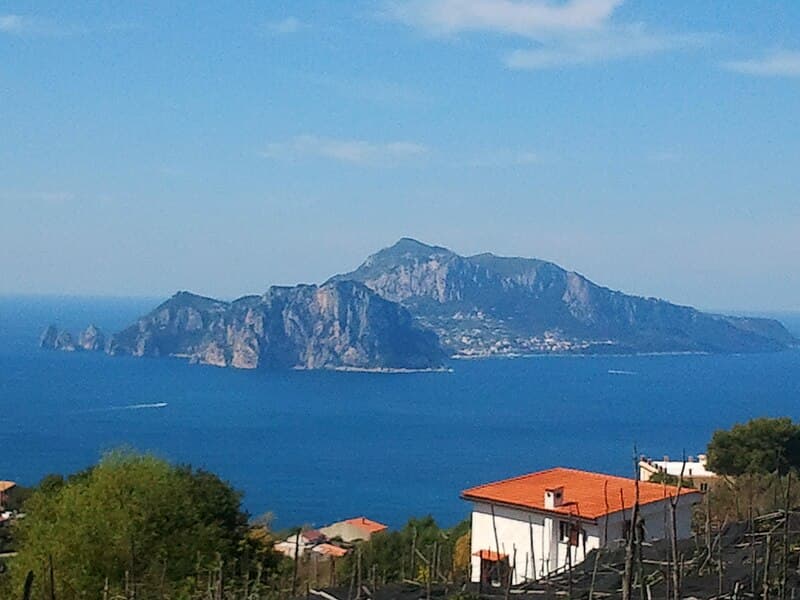
Capri is a 6 km limestone outcrop rising from the Bay of Naples into 150-metre cliffs, without a single sandy beach. In AD 27, Emperor Tiberius moved the entire Roman administration here and ran the empire from a villa above the eastern cliff for the last 11 years of his life. The island has 2 towns that have been at odds since the Middle Ages: the harbourside and upmarket Capri around the Piazzetta, and the quieter, more agricultural Anacapri, 300 metres higher, linked by a road with 16 hairpin bends. Up to 15,000 people arrive for the day, and between 11am and 4pm the Piazzetta becomes impassable, while at 7am and after the last ferry departs, the island is nearly empty. That's the entire key to timing a visit here. Only residents may bring cars to the island; transport runs on small buses and open-top taxis, and the whole island can be walked in a day.

What to see

The places worth your time in Capri, and what to expect at each

Blue Grotto

Blue Grotto

northwest coast

A sea cave you can only enter lying down in a rowing boat, squeezed through an opening just 1 metre high. Light passes through an underwater entrance and illuminates the water a brilliant blue from below, making anything submerged look silvery. The Romans built a staircase down to it directly from the villa above and used it as a nymphaeum.

Tip: The grotto closes with any swell at all, and on average it's inaccessible 2 days out of 7 — ask at the harbour in the morning, not the day before. It's cheaper to take the bus to Anacapri and a rowing boat just from the grotto; a round-trip cruise from Marina Grande costs more. You'll spend under 4 minutes inside, which is worth knowing in advance.

Admission:
€18 entry + €20 rowing boat
Time needed:
2 h including waiting
Monte Solaro

Monte Solaro

Anacapri

The island's highest point, at 589 metres, reached from Anacapri by a single-seat chairlift. The 12-minute ride glides over gardens and rooftops with your feet dangling freely above the ground. From the top, you can see the whole island, the Faraglioni from above, the Sorrento peninsula and Vesuvius.

Tip: The chairlift seats 1 person at a time, and a backpack has to sit on your lap, so it's not suited to a pushchair or 2 children at once. You can also walk up via the Passetiello path in 1.5 hours, but it's steep and shadeless in summer. The best light for photos is late afternoon, once the crowds have sailed off.

Admission:
€14 return, €11 one-way
Time needed:
2 h
Faraglioni

Faraglioni

southeast

3 limestone stacks rising from the sea off the southeastern coast, over 100 metres tall. The middle one has a tunnel through it that boats sail through, and the rocks are home to a blue lizard subspecies found nowhere else in the world. The best view is from the viewpoint at Punta Tragara.

Tip: Sailing through the tunnel is only possible on a small boat from Marina Piccola, and it's customary to kiss for luck as you pass through. Steps lead down from Punta Tragara to the La Fontelina and Da Luigi beach clubs by the rocks, where sunbeds start at €35 and are booked by phone in the morning.

Admission:
viewpoint free
Time needed:
1–2 h
Villa Jovis

Villa Jovis

eastern tip

The ruins of the largest of Tiberius's 12 villas on the island, spread over 7 terraces above a 300-metre-plus cliff at the eastern end. Cisterns, baths and the imperial loggia survive. According to Suetonius, those who displeased the emperor were thrown from here, and the spot is still called the Salto di Tiberio.

Tip: The walk from the Piazzetta takes 45 minutes uphill along paved lanes between gardens and is the island's most beautiful stroll. Go in the morning, as the stone gets hot after 10am. There's no café or shade at the villa, so bring water. It's usually open only until early afternoon and closed on Mondays.

Admission:
from €6
Time needed:
3 h including the walk
Villa San Michele

Villa San Michele

Anacapri

The home of Swedish doctor Axel Munthe in Anacapri, built on the foundations of another Tiberius villa. Munthe filled it with ancient sculptures, a sphinx above the cliff and a colonnade overlooking the bay, and wrote a book about it that became a worldwide bestseller. The garden is small but is one of Italy's most photographed spots.

Tip: Beside the villa begins the Phoenician Steps, 920 steps down to Capri town, used until the 1930s as the route between the 2 towns. Going down takes 40 minutes; going up should only be attempted when it's cool. Tickets can be bought on-site, with queues only around midday.

Admission:
€12
Time needed:
1–2 h
Gardens of Augustus and Via Krupp

Gardens of Augustus and Via Krupp

southern edge of Capri

Terraced gardens above the southern coast, offering the classic view of the Faraglioni on 1 side and Marina Piccola on the other. Directly below, the Via Krupp winds down the cliff face in switchbacks — a path carved in 1902 by a German industrialist to reach the sea from his hotel.

Tip: The gardens are most beautiful around 8am, when the sun is over the bay and no one else is there. Via Krupp has been closed for years at a time due to falling rocks and only opens for certain periods — check on-site rather than trusting old photos online. Even closed, it's clearly visible from below and photographs best from above.

Admission:
€7
Time needed:
1 h
Piazza Umberto I

Piazza Umberto I

central Capri

A tiny square the size of 2 tennis courts that everyone just calls the Piazzetta. 4 cafés with awnings occupy the whole space, a clock tower rises above them, and crowds squeeze past. Since the 1950s, it's been the island's social hub, a place where people go to watch other people.

Tip: Coffee at a table on the Piazzetta costs 4 times what it does at the counter 1 street away, and you're paying for the view, not the coffee. If you want to try it, go after 9pm, once the day-trippers have left and it's mostly locals. Below the square is a covered market with fruit and sandwiches at normal prices.

Admission:
free
Time needed:
1 h
Marina Piccola

Marina Piccola

south coast

A southern bay with pebble beaches and beach clubs, sheltered from the north wind, with a direct view of the Faraglioni. According to Homer, this is where the Sirens sang, and the rock in the middle of the bay is named Scoglio delle Sirene. The water is deep right from the shore and crystal clear.

Tip: The cheapest option is the public strip of beach between the beach clubs, where you can lie on a towel for free; a sunbed and umbrella on the paid section cost €35–50 a day. Water shoes are handy, as the pebbles are coarse. The bus from the Piazzetta takes 10 minutes down, and walking back up takes half an hour.

Admission:
beach free, sunbed from €35
Time needed:
half a day
Certosa di San Giacomo

Certosa di San Giacomo

central Capri

A 14th-century Carthusian monastery with 2 cloisters, which served over time as a hospital, barracks and prison. Today it houses a museum with huge paintings by German artist Karl Diefenbach, who spent his final years on Capri, and a park overlooking the southern coast.

Tip: It's the quietest spot in Capri town and a reliable refuge from the midday heat or the rain. Admission is nominal and often free for EU seniors. In summer, evening concerts are held in the cloister, with the programme posted around the Piazzetta.

Admission:
€6
Time needed:
1 h

Photos: Blue Grotto — Frédéric de Goldschmidt www.frederic.net (CC BY 3.0) · Monte Solaro — Falk2 (CC BY-SA 4.0) · Faraglioni — MM (Public domain) · Villa Jovis — Derbrauni (CC BY-SA 4.0) · Villa San Michele — Berthold Werner (CC BY-SA 3.0) · Gardens of Augustus and Via Krupp — Jenny (CC BY 2.0) · Piazza Umberto I — Elenagm (CC BY 3.0) · Marina Piccola — Bicloch (CC BY 3.0) · Certosa di San Giacomo — Norberto Chavez-Tapia (CC BY-SA 2.0)

Where to stay

Areas and districts, matched to the kind of trip you are taking

Capri and the Piazzetta

Best for: a first visit and nightlife

The island's core, with the little square, boutiques and most of the hotels. Everything is within walking distance, and it's the only place on the island with any evening life. Accommodation is the most expensive, and in season the lanes are almost impassable during the day. Staying here means you don't need a bus.

Anacapri

Best for: a quieter, cheaper stay

The upper town, 300 metres higher, with gardens, the San Michele church with its painted ceramic floor, and the chairlift up Monte Solaro. Accommodation costs roughly a third less than below, and life is more ordinary. Buses down run every 15 minutes, the last around midnight.

Marina Grande

Best for: a day visit and cheaper accommodation

The harbour where ferries arrive, with the island's only real beach and a row of fish restaurants. The funicular reaches the Piazzetta in 3 minutes. It's the cheapest place to stay, but the morning's entire tide of day-trippers passes through, along with boat noise.

Marina Piccola and the southern slope

Best for: swimming and quiet by the water

The island's southern side, with beach clubs, views of the Faraglioni and a few hotels above the bay. Sun lasts until evening here, and the sea is sheltered from the wind. Getting back up takes half an hour on foot or a bus ride, a limitation worth planning around in the evening.

Getting around

From the airport

The only way to reach Capri is by boat. Ferries and fast ferries run from Naples, from the Molo Beverello and Calata Porta di Massa terminals, and from Sorrento, plus Positano, Amalfi and Salerno in season. From Sorrento the crossing takes 20 minutes; from Naples, 50 minutes by fast ferry or 1.5 hours by regular ferry. Most visitors fly into Naples, from where the Alibus runs directly from the airport to Molo Beverello in 20 minutes. The last boats back leave around 6:30pm, and crossings are cancelled in strong wind even mid-season — build in a buffer on your departure day in case that happens.

Naples Capodichino (NAP) · 38 km

  • Alibus to Molo Beverello and fast ferry· 1 h 30 min· €30
  • Taxi to the port and ferry· 1 h 20 min· €45
  • Private transfer and fast ferry· 1 h 20 min· €90 per vehicle

Rome Fiumicino and Ciampino (ROM) · 260 km

  • Train to Naples and fast ferry· 3 h 30 min· €55
  • Rental car to Sorrento and ferry· 4 h

Around town

No one but residents may bring a car to Capri from March to November, and it isn't necessary anyway — the island has 7 km of roads. A funicular runs from the harbour to Capri town in 3 minutes, while van-sized buses run to Anacapri every 15 minutes and get crowded in season. Most places can be reached on foot, but nearly every route involves stairs, so light shoes and a single small bag are essential. Luggage can be sent by cart from the harbour to your hotel for a fee. Open-top taxis charge fixed rates by route and are only worthwhile with 3 or 4 people sharing.

Funicular, Marina Grande–CapriRuns every 15 minutes from 6:30am to midnight, taking 3 minutes. When large ferries arrive, expect a queue; the staircase alongside takes about 15 minutes on foot. · €2.40
ATC busesSmall buses connecting Capri, Anacapri, Marina Piccola and the Blue Grotto. They run often but only hold 20 people, and you might not fit on at midday. · €2.40 ticket
Open-top taxiIconic cars with canvas roofs and fixed fares by route. From the harbour to Anacapri costs around €25 regardless of the number of passengers. · €20–30 per ride
Boat around the islandA circular cruise around the island with swimming in caves takes 2–3 hours and is the only way to see the cliffs from below. Small boats can even pass through the Faraglioni tunnel. · €25 for the tour, €200 for a private boat
On footThe best way to get around. A paved path or staircase leads to every major sight, and the longest crossing of the island takes 1.5 hours. · free

Useful apps: Google Maps, Capri Insider, Alilauro, Meteo Capri

When to go

Capri's season runs from Easter to the end of October, and the difference between periods is significant. May, June and September are best: the sea is above 20°C, everything is in bloom, and crowds are half the size of summer's. July, and especially August, are packed and most expensive, with hotels requiring minimum stays and a 2-hour queue for the Blue Grotto. From November to March, the island largely closes down — some hotels, restaurants and boat services stop running, and crossings are cancelled in wind. Visitors who come off-season find an empty island, but limited services.

Best time

May, June and September

What to avoid

August for crowds and prices, November to February for closed businesses

MonthJanFebMarAprMayJunJulAugSepOctNovDec
Day14°14°16°18°22°26°29°29°26°22°18°15°
Night9°9°10°12°15°19°22°22°19°16°13°10°
Rainy days98885322581110
Sea16°15°15°16°19°23°26°27°25°23°20°18°

Food & drink

Capri gave its name to 2 dishes known the world over — caprese salad and torta caprese chocolate cake — and besides these, the local cuisine draws on Campania's fish, lemons and buffalo mozzarella from the mainland. Restaurants around the Piazzetta and on terraces with views charge for the view: the same dish costs half the price in a side street 200 metres away. Fish is often priced by weight, with the menu price per 100 grams, so it's worth asking how much a whole portion will weigh. The cheapest food is in Anacapri and the small market below the main square. Meals are washed down with white wine from the slopes of Vesuvius, and finished off with limoncello.

What to try

Insalata caprese

Tomato, buffalo mozzarella, basil and olive oil — nothing else. The original version uses Sorrento-type tomatoes and mozzarella from Campania, and it's never salted at the table beforehand.

Torta caprese

A flourless almond chocolate cake, said to have been created by accident when a baker forgot to add flour. Crisp on the outside, moist inside, and with varying sweetness at every bakery.

Ravioli capresi

Homemade dumplings filled with caciotta cheese and marjoram, topped with a simple tomato sauce. The island's most typical main course, made by hand in family-run trattorias in Anacapri.

Limoncello

A liqueur made from the peel of sfusato lemons, which grow on terraces all along the coast. Served chilled after meals, and shops also sell syrup and jam made from the same fruit.

Pesce all'acqua pazza

White fish poached in 'crazy water' — seawater with tomatoes, garlic and parsley. A fisherman's dish where the price is based on the fish's weight, so ask beforehand.

Sfogliatella and babà

Neapolitan pastry classics sold here too: a flaky, shell-shaped pastry filled with cream, and a rum-soaked yeast cake. At the counter with a coffee, they cost €2–3.

Pizza a portafoglio

Pizza folded into quarters and wrapped in paper, eaten on the go in Naples and here too. In Marina Grande, it's the cheapest lunch on the island.

Buffalo mozzarella

Buy it fresh from a dairy on the day it's made, not from a supermarket. The difference between buffalo and cow's milk versions is obvious from the first bite, and that explains the price difference.

What it costs

Espresso at the counter

€1.50

Coffee at a table on the Piazzetta

€6–8

Lunch at a trattoria in Anacapri

€20–30

Dinner with a view

€60–100 per person

Ferry from Sorrento return

€40

Blue Grotto including rowing boat

€38

Sunbed at a beach club

€35–50 per day

Night in a 3-star hotel for 2

€200–350

Indicative prices that change over time — treat them as a guide, not a price list.

Practical information

SocketsCEuroplug, two round pinsFSchukoLItalian
Voltage230V / 50Hz
Tap waterTap water is drinkable — Tap water in Italy is safe to drink and more strictly controlled than bottled water, including public drinking fountains in squares — in Rome they're called nasoni, and every larger city has hundreds of them. A sign reading 'acqua non potabile' means the opposite and usually appears only at fountains in old parks. Restaurants don't offer tap water; the waiter automatically brings bottled water and asks 'naturale, o frizzante?' — still or sparkling.
TippingTipping in Italy isn't given as a percentage the way it is in America. Restaurant bills usually include a coperto, a cover charge for the table setting and bread, typically €2–3 per person — this stands in for a tip. When service is excellent, the bill is rounded up or a few euros are left on the table. Nothing is given at a café. Card machines usually don't have a tip option.
Driving on theright
SafetyItaly is a safe country, and violent crime barely affects tourists. The real risks are pickpocketing in crowds, at metro exits and around crowded sights, and theft from cars — nothing visible should be left in a car parked on the street, not even an empty bag. In the south and in tourist centres, watch out for bills padded with items you didn't order; the price list must be clearly posted. The emergency number 112 works, and operators speak English.
Opening hoursIn resorts, shops are open in season from 9am until late evening, many even on Sundays, often skipping the midday break. Out of season, though, resorts largely shut down: from November to March, only a fraction of businesses stay open. Restaurants serve dinner from 7:30pm, busiest around 9pm. Beach clubs operate from May to mid-September; outside that period, beaches are open and free, without sunbeds.
Customs & etiquetteCappuccino is drunk only in the morning — ordering one after lunch is the clearest giveaway of a tourist; espresso is the after-meal choice. Coffee at the counter costs a fraction of the price at a table, and menus usually show 2 price columns. Churches don't allow shorts above the knee or bare shoulders, and this is enforced at the entrance of major basilicas. Walking around town in swimwear isn't done, and it can carry a fine in seaside resorts. Keep your receipt — Italian law fines customers who leave without one, too.
A few local wordsHello — BuongiornoThank you — GraziePlease — Per favoreThe bill, please — Il conto, per favoreCheers — SaluteGoodbye — Arrivederci

How to plan your days

1 day

1 day on Capri

  1. 1Take the first morning boat from Sorrento to be on the island before 9am.
  2. 2Bus to Anacapri and the chairlift up Monte Solaro while it's still clear.
  3. 3Villa San Michele and lunch in Anacapri away from the tourist prices.
  4. 4Afternoon: Gardens of Augustus and the Faraglioni viewpoint.
  5. 5Coffee on the Piazzetta and the last boat around 6pm.

2 days

2 days with the Blue Grotto

  1. 1Day 1 as above, but staying overnight on the island.
  2. 2Morning: head straight to the Blue Grotto while the sea is calm and the queue is short.
  3. 3A boat tour around the island passing through the Faraglioni.
  4. 4Afternoon swim at Marina Piccola.
  5. 5Dinner in Capri town once the day-trippers have left.

3 days

3 days of walking

  1. 1The first 2 days as above.
  2. 2Morning walk to Villa Jovis and the Salto di Tiberio.
  3. 3Walk down and lunch at or near the Certosa di San Giacomo.
  4. 4Afternoon: the Phoenician Steps down from Anacapri.
  5. 5With a 4th day, take a boat to Ischia or Positano.

Day trips

Positano and the Amalfi Coast

25 km · 40 min by boat

From May to September, direct boats run from Marina Grande to Positano and Amalfi, faster and cheaper than the detour by land. Positano climbs a hillside above the beach and is entirely made of steps; Amalfi has a cathedral with a Moorish staircase and a paper museum. The last boat back leaves around 5pm, which shapes the whole day.

Pompeii and Vesuvius

45 km · 2 h by boat and train

Take the ferry to Sorrento, then the Circumvesuviana train, 20 minutes to the ruins of the city buried by the eruption of AD 79. The site covers 60 hectares, and a quick visit needs 3 hours. From Pompeii, you can continue by bus to Vesuvius, to the car park below the crater, with a 30-minute walk to the top.

Ischia and Procida

35 km · 1 h 15 min by boat via Naples

2 neighbouring islands that are the exact opposite of Capri: Ischia is large, volcanic and full of thermal gardens with hot springs, while Procida is tiny, colourful and a working fishing village, with houses in 10 shades that made it the filming location for Il Postino. Connections run via Naples and are infrequent outside peak season.

Frequently asked questions

Is 1 day enough for Capri?+

It's enough for Monte Solaro, the Piazzetta and 1 viewpoint, but not for the Blue Grotto and swimming. Day-trippers are also on the island at exactly the worst hours — between 11am and 4pm. Anyone staying overnight sees the island early in the morning and in the evening, which is a different place altogether from midday.

How do I get to Capri, and when does the last boat leave?+

Only by boat, from Sorrento, Naples, or in season from Positano and Amalfi. From Sorrento the crossing takes 20 minutes, from Naples 50 minutes by fast ferry. The last boats back leave around 6:30pm, earlier out of season. Crossings are cancelled in strong wind, so build in a buffer on your departure day.

Can I bring a car to Capri?+

No. From March to November, only residents are allowed to bring cars to the island, and everyone else leaves theirs in a garage in Sorrento or Naples. It's not a hardship — the island has 7 km of roads, and everywhere is reachable on foot or by bus for a few euros.

When is the Blue Grotto open?+

When the sea is calm, since the entrance is only 1 metre high. On average it's closed 2 days out of 7, more often in winter. This is checked on the morning at the harbour or with the boatmen, not the day before. Entry costs €18, plus €20 for the rowing boat, and you'll spend under 4 minutes inside.

Are there sandy beaches on Capri?+

No, the island is a limestone rock, and the beaches are pebbly or concrete sun-decks with ladders into the water. The largest natural beach is at Marina Grande, and the best swimming is at Marina Piccola below the Faraglioni. A sunbed at a beach club costs €35–50 a day; public strips are free.

Is Capri expensive?+

Yes, it's one of the most expensive places in Italy, but there are big differences within the island. A coffee on the Piazzetta costs 4 times more than at the counter 1 street away, and lunch in Anacapri costs half of what dinner with a view costs in Capri town. A night's stay starts from around €200, considerably less out of season.

How much walking up and down steps is there on Capri?+

A lot. The island is a hillside, and staircases of hundreds of steps connect the towns, beaches and viewpoints. Anyone who struggles to walk can manage the Piazzetta, the chairlift and Monte Solaro by bus and chairlift, but Villa Jovis, the Faraglioni and Marina Piccola require legs that work well. A large suitcase is a real burden here.

Is it worth coming out of season?+

From November to March, the island is nearly empty and accommodation prices drop to a third of peak rates, but most hotels, restaurants and beach clubs are closed, and boat crossings are cancelled in wind. The best compromise is May, June and September, when everything is open, the sea is warm, and there are half as many people as in August.

Visa Requirements

Check the latest visa requirements for entering this country. Some nationalities may need to apply for a visa or e-visa before travel.

Check visa requirements

Language

Italian

Currency

EUR

Timezone

GMT+1

Dial Code

+39

Population

59M

Area

301,340 km²

Voltage

230V / 50Hz

Driving Side

Right

Top Hotels in Capri

Live prices from 500+ properties

Loading hotels...

Planning a trip to Capri?

Compare hundreds of hotels, find the best price, and book with free cancellation on TravelManiac.