Hotels in Lake Garda

Italy's largest lake, from lemon groves to Alps

Lake Garda

LanguageItalian
CurrencyEUR
TimezoneEurope/Rome
Temperature10-30 °C
Dial Code+39
Population59M
Area301,340 km²
SocketsType C / Type F / Type L
Tap waterDrinkable

Discover Lake Garda

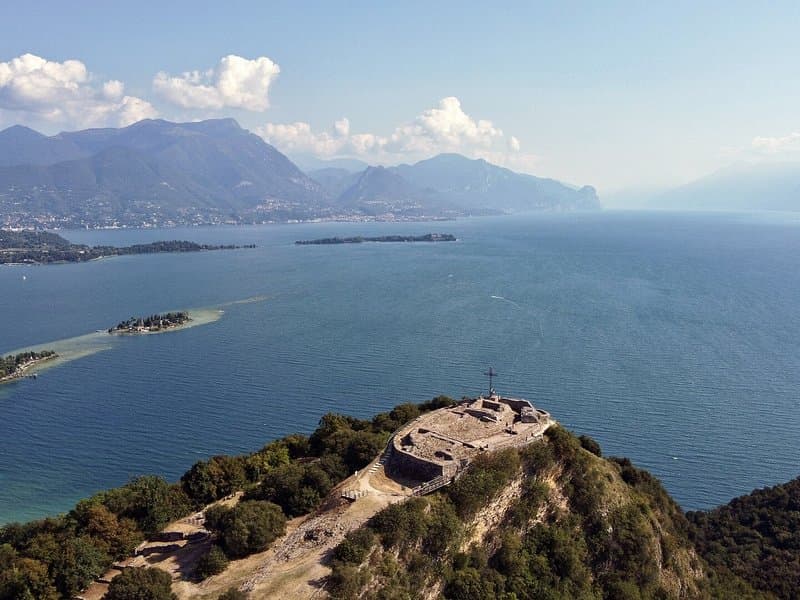
Lake Garda is Italy's largest lake: fifty-two kilometres long, with a hundred and fifty-eight kilometres of shoreline and a depth of more than three hundred and forty metres. For anyone driving from Central Europe it is the nearest Italian water — two hours down from the Brenner Pass. The lake has two faces. The southern end is broad and open, with pebble beaches, campsites, the Bardolino vineyards and the Gardaland theme park. The northern tip is a narrow fjord hemmed in by mountains, where the cliffs of Monte Baldo drop straight into the water and a reliable morning and afternoon wind draws windsurfers from all over Europe. In between sit medieval towns with Scaliger castles, Sirmione on its four-kilometre peninsula and Limone with its terraced lemon houses. The shores are split between three regions — Lombardy, Veneto and Trentino — each with slightly different food, buses and prices. Scheduled ferries criss-cross the lake, so a week without a car is entirely possible.

What to see

The places worth your time in Lake Garda, and what to expect at each

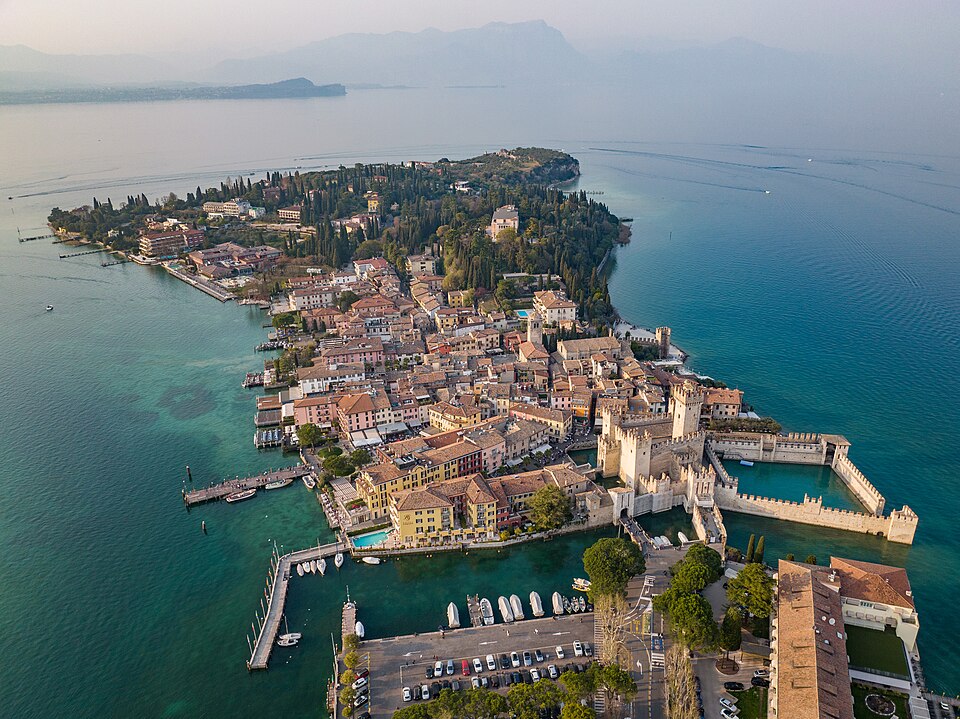
Sirmione and the Rocca Scaligera

Sirmione and the Rocca Scaligera

Sirmione

Sirmione, south shore

A small town at the end of a slender peninsula, entered across the drawbridge of a thirteenth-century water castle. The Rocca Scaligera has its own fortified harbour, one of very few to survive in Europe, and its tower looks out over the whole southern lake. Beyond the castle, lanes lined with gelato shops run on to spa baths fed by sulphurous water.

Tip: Only hotel guests may drive into the old town; everyone else uses the paid car parks at the neck of the peninsula, and the nearest fills by ten on summer mornings. It's cheaper and calmer to take the twenty-minute boat from Desenzano. Climb the tower right at opening time — after lunch there's a queue on the narrow stairs.

Admission:
castle around €8
Time needed:
half a day
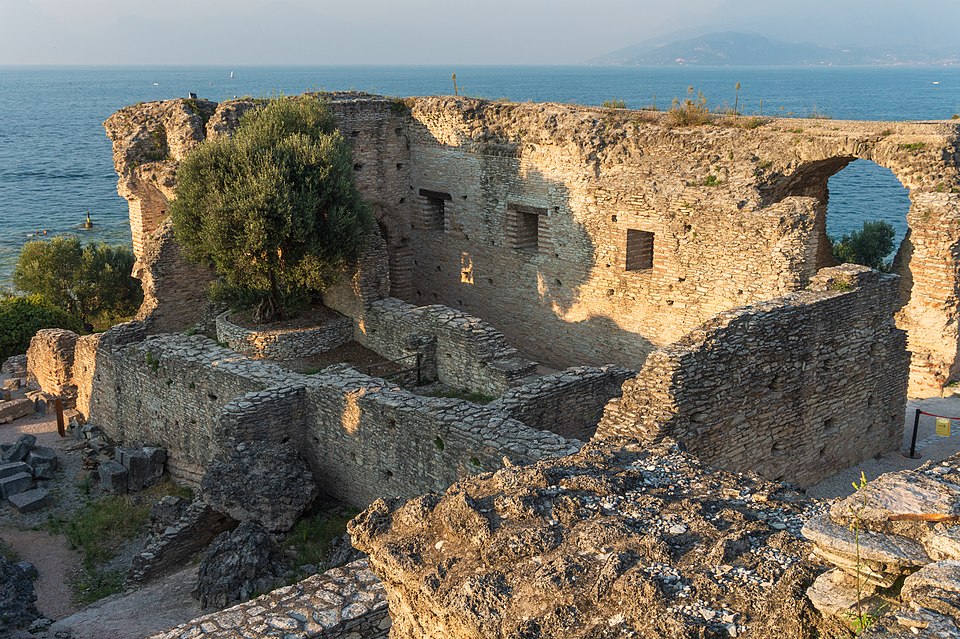
Grottoes of Catullus

Grottoes of Catullus

Grotte di Catullo

Sirmione, south shore

Not caves at all, but the ruins of the largest Roman villa in northern Italy, at the very tip of the Sirmione peninsula. Built around the turn of the first millennium, the villa covered more than two hectares, and its vaulted substructures were taken for caves in the Renaissance — hence the name. Centuries-old olive trees grow among the walls, and the edge of the site looks out over both sides of the lake.

Tip: It's a kilometre uphill from the castle; a little road train runs in summer, but the walk through the olive grove is nicer. Below the villa lies the rocky shelf known as Jamaica Beach, good for a swim — bring water shoes, the rock is slippery. The ticket also covers the small museum of finds by the entrance.

Admission:
around €8
Time needed:
1.5 h
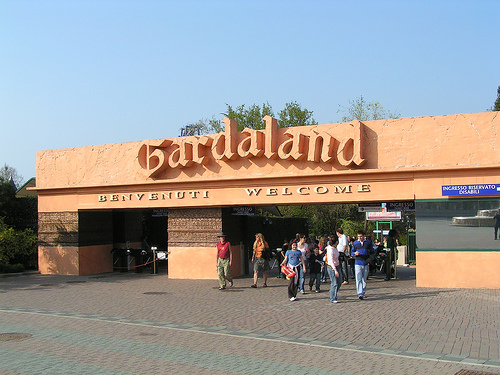
Gardaland

Gardaland

Castelnuovo del Garda, south-east shore

Italy's biggest theme park, opened in 1975 just outside Peschiera. Roller coasters for adults, a whole zone for small children, water rides and seasonal events at Halloween and Christmas. The Sea Life aquarium sits right next door, and there are themed hotels on site for anyone planning two days.

Tip: A dated ticket bought online is much cheaper than at the gate. Crowds peak in August and at weekends — a weekday in June or September means queues half as long. Without a car, take the train to Peschiera, where the park's free shuttle bus picks up at the station.

Admission:
from €40 online
Time needed:
full day
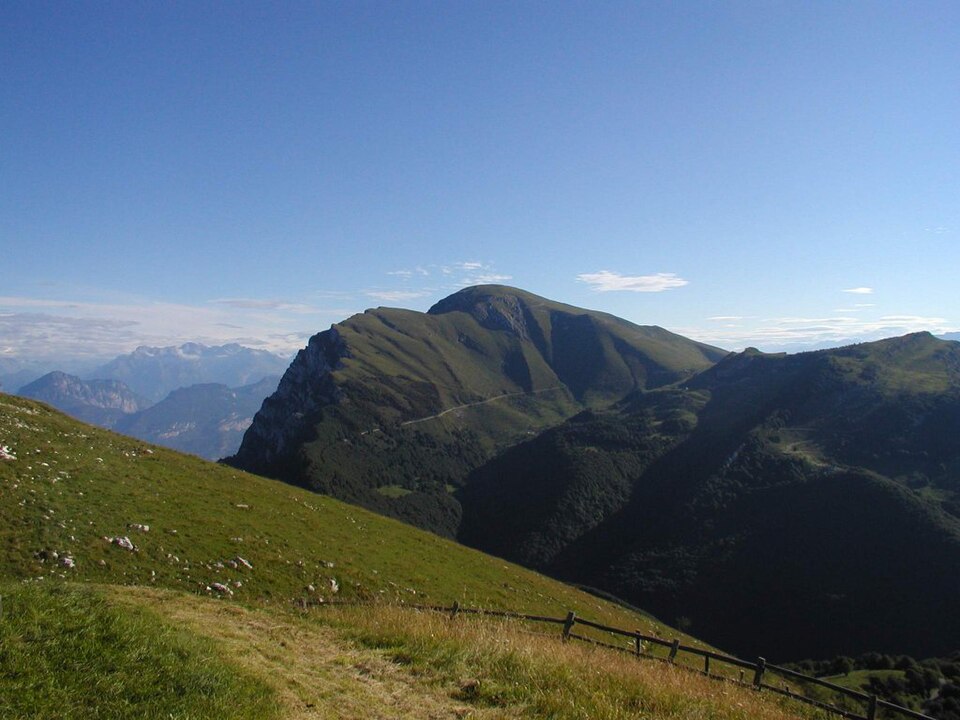
Monte Baldo cable car

Monte Baldo cable car

Funivia Malcesine–Monte Baldo

Malcesine

The cable car from Malcesine climbs in two stages from the lakeshore to 1,760 metres. On the upper stage the cabin slowly rotates as it rises, so everyone gets the lake, the cliffs and the Alps. At the top, hiking trails run along the ridge, paragliders launch and in winter people ski.

Tip: In July and August the queue at the valley station can reach an hour after nine, so ride the first car up or wait until after three. It's ten to twelve degrees cooler at the top — a jacket in your bag is essential. You can walk down to the middle station at San Michele in about an hour and a half and save on the downhill fare.

Admission:
return around €27
Time needed:
half a day
Malcesine and its Scaliger castle

Malcesine and its Scaliger castle

Malcesine, east shore

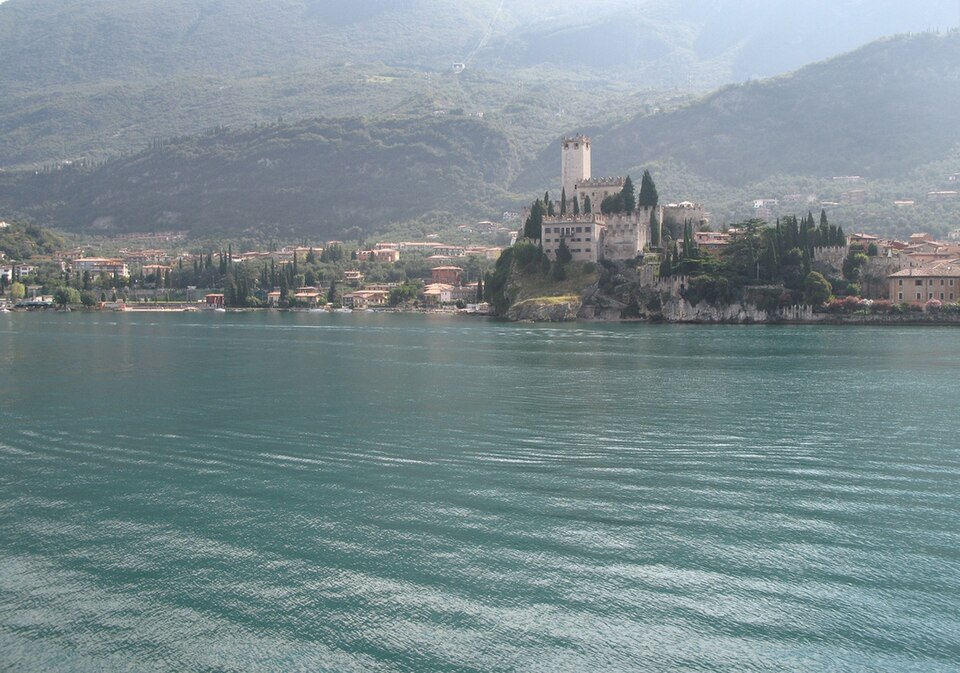
The prettiest town on the eastern shore, with a castle on a rock above the water and a tangle of stone-house lanes wrapped around it. When Goethe sat sketching the castle in 1786, locals detained him as an Austrian spy — there's a small exhibition about it inside. The battlements look straight across the lake to Limone.

Tip: The castle opens into the evening, and the courtyard is at its best at sunset. Parking is limited to paid car parks above the town, so arriving by boat or bus saves a lot of stress. In the evening, once the day-trippers have gone, the lanes empty out and the place comes into its own.

Admission:
castle around €7
Time needed:
2–3 h
Limone sul Garda and the cliff-side cycle path

Limone sul Garda and the cliff-side cycle path

Limone, west shore

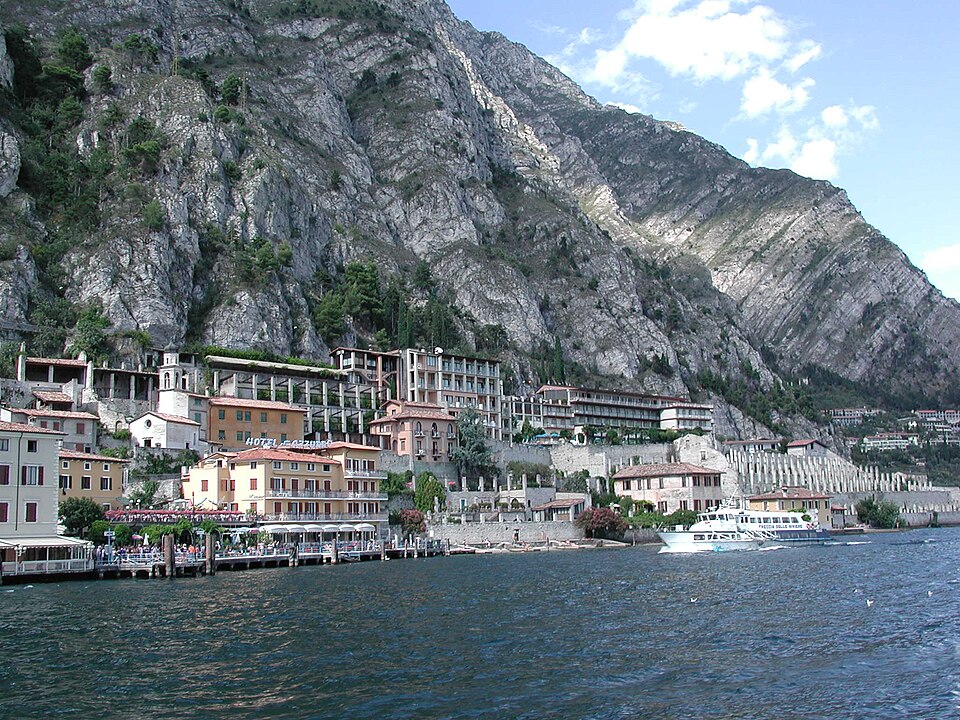
A village on the western shore squeezed beneath the cliffs, where lemons have been grown since the seventeenth century in terraced limonaie held up by stone pillars. One of them, the Limonaia del Castèl, is open to visitors. Heading north, a cycle path cantilevered off the rock face fifty metres above the water has become one of the most photographed routes in Italy.

Tip: Walk or ride the cantilevered path before nine or in the early evening; during the day pedestrians and cyclists jostle for space. A ferry crosses from Malcesine in under half an hour, far quicker than driving round the lake. Limoncello in the shops by the harbour costs more than the same bottle two lanes further up.

Admission:
limonaia around €3, path free
Time needed:
2–3 h
Vittoriale degli Italiani

Vittoriale degli Italiani

Gardone Riviera, west shore

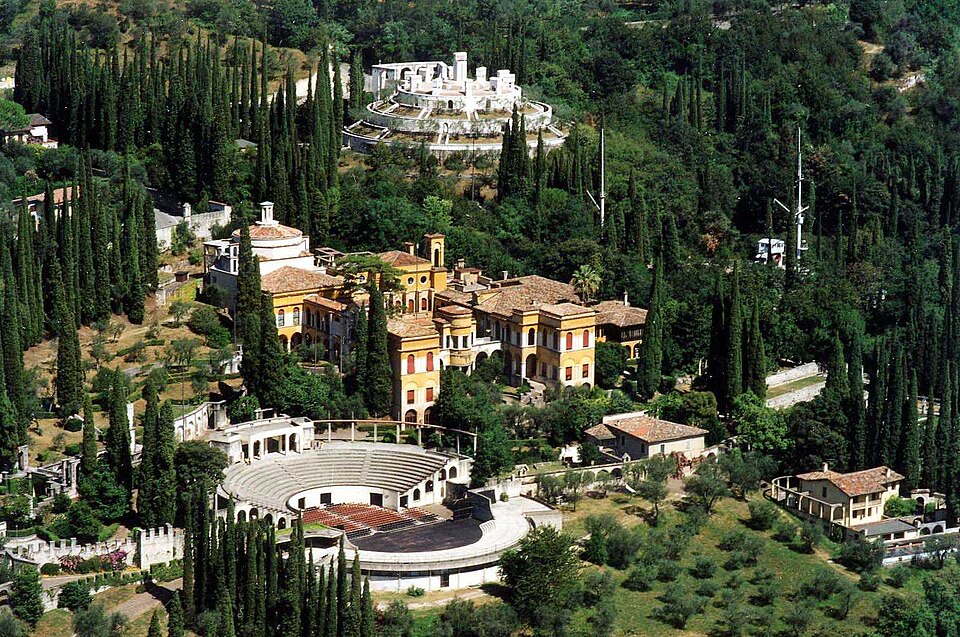
The estate of the poet Gabriele D'Annunzio at Gardone Riviera, which he had rebuilt as a monumental tribute to himself and to the First World War. The gardens contain a real cruiser, the Puglia, set into the hillside, plus an amphitheatre, a mausoleum and the seaplane D'Annunzio flew over Vienna. The house is crammed with twenty thousand objects and almost no daylight.

Tip: The Prioria house can only be seen on timed guided tours, which sell out in summer — book a slot online first thing. The gardens and museums alone fill three hours. Just below lies the Heller botanical garden, an easy hour that pairs well with the visit.

Admission:
from €16, more with the house
Time needed:
3–4 h
Varone waterfall

Varone waterfall

Cascate del Varone

Tenno, 3 km from Riva

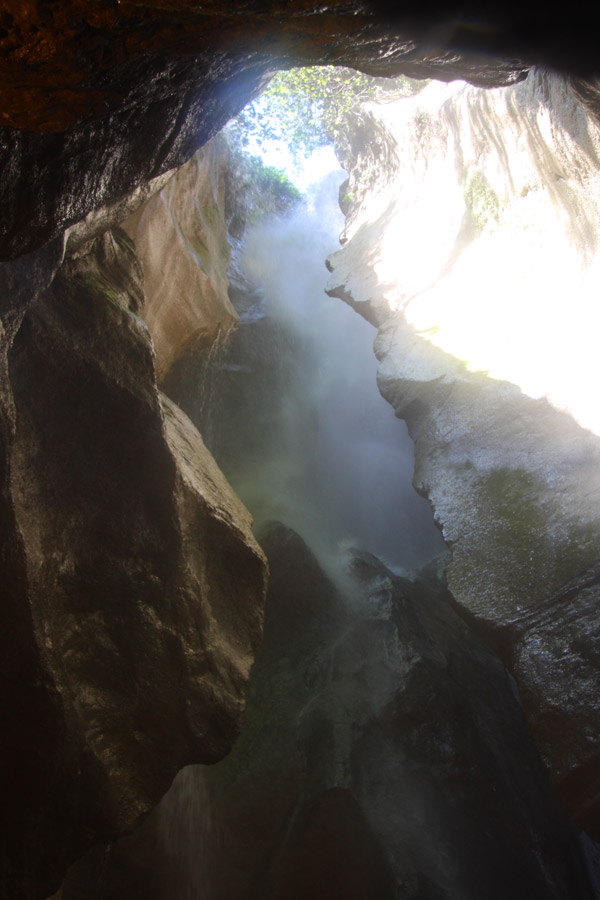
A waterfall dropping almost a hundred metres into a narrow gorge carved through the limestone above Riva. You follow metal walkways and tunnels inside the rock, and in the lower grotto the noise and spray are overwhelming. Around the entrance is a botanical garden with more than a thousand plant species.

Tip: You will get wet in the lower grotto, so a rain jacket is useful even in August, when this is one of the few cool spots near the lake. The falls are strongest in May and June during snowmelt. An hour is enough, which makes it ideal for a rainy morning in Riva.

Admission:
around €8
Time needed:
1 h
Sigurtà Park and Borghetto

Sigurtà Park and Borghetto

Parco Giardino Sigurtà

Valeggio sul Mincio, 10 km from the lake

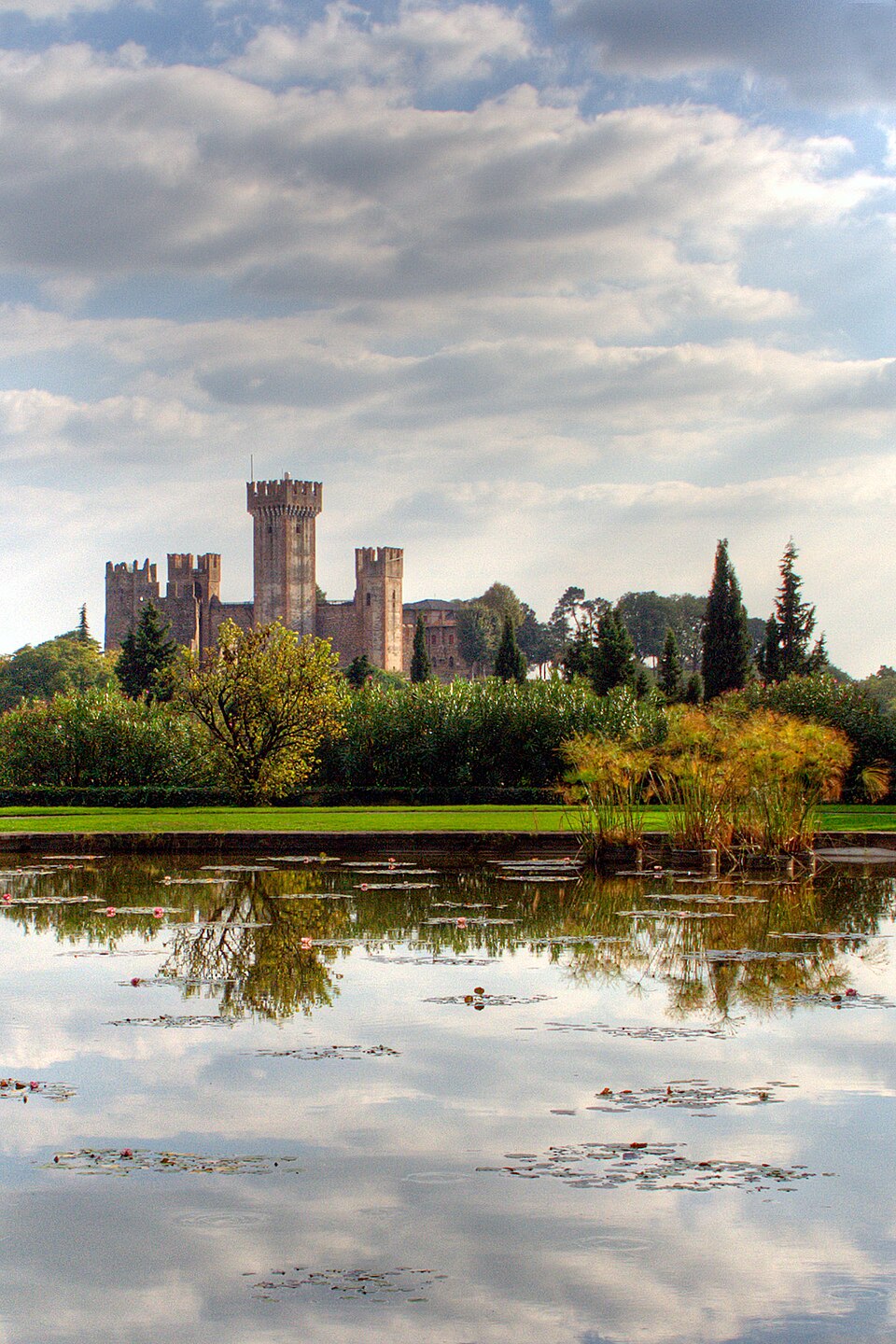
Sixty hectares of gardens ten kilometres south of the lake near Valeggio sul Mincio, with sweeping lawns, a box-hedge maze and lily ponds. In spring more than a million tulips bloom, followed by roses and water lilies in summer. Just below the park lies Borghetto, a hamlet of old watermills built right on the River Mincio.

Tip: The park is huge: on a bike or a golf buggy hired at the gate you'll see it in two hours rather than four on foot. Tulips bloom from late March to late April. For lunch, drop down to Borghetto for Valeggio tortellini — this is their home turf and nowhere does them better.

Admission:
around €15
Time needed:
half a day

Photos: Sirmione and the Rocca Scaligera — Arne Müseler (CC BY-SA 3.0 de) · Grottoes of Catullus — Marco Ober (CC BY-SA 4.0) · Gardaland — Wikimedia Commons (CC BY 2.0) · Monte Baldo cable car — No machine-readable author provided. Tanarus~commonswiki assumed (based on copyright claims). (CC BY-SA 3.0) · Malcesine and its Scaliger castle — Imcall (CC BY-SA 3.0) · Limone sul Garda and the cliff-side cycle path — Wikimedia Commons (CC BY-SA 3.0) · Vittoriale degli Italiani — Biblioteca Vittoriale (Public domain) · Varone waterfall — Alessandro Vecchi (CC BY-SA 3.0) · Sigurtà Park and Borghetto — Roberto Ferrari from Campogalliano (Modena), Italy (CC BY-SA 2.0)

Where to stay

Areas and districts, matched to the kind of trip you are taking

South shore: Sirmione, Desenzano and Peschiera

Best for: car-free stays, Gardaland and trips to Verona

The busiest part of the lake, with stations on the Milan–Verona–Venice railway and the shortest journeys to everywhere else. Desenzano is a lively little town with a harbour and nightlife; Peschiera has a star-shaped UNESCO fortress ringed by water. The water here is shallower and warmer, but the landscape is flat and in August it's packed.

East shore: Lazise, Bardolino and Garda

Best for: families, campsites and wine

The olive riviera, with a lakeside promenade running almost unbroken from Lazise through Bardolino to Garda. Most of the big campsites with pools, popular with families arriving by car, are here. The Bardolino vineyards rise behind, Gardaland is close by, and evenings mean a stroll along the waterfront for gelato.

Upper lake: Malcesine and Limone

Best for: mountains, views and hiking

The narrow part of the lake, where the mountains reach the water and the roads run through tunnels in the rock. Malcesine on the east has the cable car up Monte Baldo; Limone on the west has its lemon terraces and the cantilevered cycle path. Beaches are small and pebbly and rooms cost more, but the scenery is the most dramatic on the lake.

Northern tip: Riva, Torbole and Arco

Best for: windsurfing, cycling and climbing

The Trentino end of the lake, Alpine in character and reliably windy — the Pelèr blows from the north in the morning and the Ora from the south after midday. Torbole is the hub for windsurfing and kiting, and Arco, five kilometres inland, is one of Europe's great sport-climbing centres. Riva has an attractive old town and the best set-up for mountain biking.

Getting around

From the airport

Most visitors from Central Europe drive: from Munich it's about 420 kilometres and four and a half hours via Innsbruck and the Brenner Pass. You need an Austrian motorway vignette, the Brenner section carries a separate toll, and Italian tolls from the Brenner down to the lake come to about twenty euros. Leave the A22 motorway at Rovereto for the northern shore or at Affi for the eastern shore, and use the A4 exits at Peschiera, Sirmione or Desenzano for the south. The nearest airport is Verona, twenty kilometres from the southern shore, and budget airlines also serve Bergamo. By rail, change at Verona for a regional train to Peschiera or Desenzano.

Verona Villafranca (VRN) · 20 km

  • Airport bus to Verona Porta Nuova, then train to Peschiera· 50 min· €11
  • Taxi· 25 min· €55
  • Hire car· 25 min to the south shore, 1 h to Riva

Milano Bergamo (BGY) · 80 km

  • Bus to Bergamo station, then train via Brescia to Desenzano· 1 h 40 min· €12
  • Hire car on the A4 motorway· 1 h

Milano Malpensa (MXP) · 170 km

  • Malpensa Express to Milan, then train to Desenzano· 2 h 30 min· €25
  • Hire car· 2 h

Around town

The pleasantest way to get around is on the boats of the state-run Navigazione Lago di Garda, which in season link almost every town — fast catamarans as well as slow steamers. From the southern to the northern end takes three to four hours by boat, so for longer hops a bus or car is quicker. The lakeshore roads are narrow, run through tunnels in the north and jam up in summer, especially at weekends and around Malcesine. Lakeside parking is paid, at two to three euros an hour. On the south shore trains link Desenzano and Peschiera; regional buses cover the eastern and western shores.

Ferries and catamaransScheduled routes between the towns, hourly in season. A hop-on hop-off day ticket pays for itself from three crossings. · €5 short crossing
Car ferry across the lakeThe Toscolano Maderno–Torri del Benaco and Limone–Malcesine crossings save an hour or more of driving round the lake. · around €15 car and driver
Regional busesOn the eastern shore, routes run from Verona and Peschiera all the way to Riva; on the western shore, from Desenzano and Brescia. They're often full in summer. · €2
TrainDesenzano and Peschiera lie on the main line to Verona, ten minutes apart. · €2.50
Bike and e-bikeThere are lakeside cycle paths in the north and along the eastern shore, with rental shops in every town. An e-bike makes sense for the hills around Riva. · €15 a day

Useful apps: Google Maps, Navigazione Laghi, Trenitalia, Moovit

When to go

The main season runs from May to September, and the lake warms up enough for swimming in June, at about twenty-one degrees. August is the hottest month, with water up to twenty-five degrees in the south, but it's also the month of peak prices and traffic jams — Italians take their Ferragosto holiday around 15 August. June and September offer the best balance: warm, everything open and noticeably fewer people. Spring from April is ideal for hiking, cycling and gardens; autumn is for wine and olives. For wind and windsurfing, May to September is best. From November to March most hotels and ferry routes close.

Best time

June and September

What to avoid

the second and third weeks of August around Ferragosto

MonthJanFebMarAprMayJunJulAugSepOctNovDec
Day7°9°14°18°23°27°30°29°25°19°12°8°
Night0°1°5°8°12°16°19°18°15°11°5°1°
Rainy days6579119787886
Sea9°8°9°12°17°21°24°25°22°18°14°11°

Food & drink

Lakeside cooking rests on freshwater fish, olive oil and wine. The fish you'll see most is whitefish, called lavarello or coregone here, along with little lake sardines. Garda is the northernmost place in Europe where olives are grown, and the local oil carries a protected designation. On the eastern shore people drink Bardolino and the rosé Chiaretto; on the southern shore, white Lugana. Pizzerias and piadina counters are the cheapest places to eat, while restaurants right on the waterfront in Sirmione and Malcesine are the priciest — one street back, prices drop by a third.

What to try

Grilled lavarello

Lake whitefish grilled with olive oil and herbs, the classic main course. If the menu just says “pesce di lago“ without naming the fish, ask whether it really comes from Garda.

Tortellini di Valeggio

Paper-thin filled pasta known as nodo d'amore, the love knot. They're served with melted butter and sage, and Borghetto and Valeggio make the best in the region.

Bigoli with lake sardines

Thick home-made spaghetti in a sauce of dried lake sardines, onion and oil. An old fishermen's dish that tourist restaurants skip and family trattorias still make.

Risotto all'Amarone

Risotto cooked in the heavy red wine of nearby Valpolicella, turning it a deep wine colour. A Veronese speciality found on every better menu along the eastern shore.

Garda DOP olive oil

A delicate, slightly almondy oil from Europe's northernmost olive groves. Buy it at the presses along the eastern shore, where you can taste before you choose — it's the best thing to take home.

Bardolino and Chiaretto

A light red and a rosé from the same grapes, grown in the hills above the eastern shore. Tastings at the wineries cost a few euros, and a bottle there is half the restaurant price.

Lugana

A crisp white from the clay soils between Sirmione and Desenzano, perfect with lake fish. It sells for more outside the region, but on the south shore even an ordinary trattoria pours it by the carafe.

Carne salada

Beef cured for several weeks in salt and herbs, a Trentino speciality of the northern tip. It's served thinly sliced and raw like carpaccio, or briefly seared with beans.

What it costs

Espresso at the bar

€1.30–1.60

Pizza in a pizzeria

€9–14

Dinner with lake fish

€35–55 per person

Bottle of Bardolino at the winery

€8–15

Boat Desenzano–Sirmione

around €6

Monte Baldo cable car

around €27 return

Gardaland

from €40 online

Night in a 3* hotel with breakfast

€110–180 per double

Indicative prices that change over time — treat them as a guide, not a price list.

Practical information

SocketsCEuroplug, two round pinsFSchukoLItalian
Voltage230V / 50Hz
Tap waterTap water is drinkable — Tap water in Italy is safe to drink and more strictly tested than the bottled kind, and that includes the public drinking fountains in town squares — Rome calls them nasoni, and every larger town has hundreds. A sign reading “acqua non potabile“ means the opposite and usually only turns up on fountains in old parks. Restaurants don't offer tap water; staff bring a bottle as a matter of course and ask “naturale, o frizzante?“ — still or sparkling.
TippingItaly doesn't do percentage tipping American-style. The bill usually carries a coperto, a cover charge for the table and bread of two or three euros a head, and that stands in for a tip. If the service was excellent, round up or leave a couple of euros on the table. Nothing is expected in cafés, and card terminals rarely have a tip option.
Driving on theright
SafetyThe lake is safe even after dark and violent crime is virtually unheard of. What does get stolen is property from cars left for hours at beach car parks and at the cable car — leave the car empty. The lake drops off steeply right from the shore, and in the north the water stays several degrees cooler than in the south even in August. The afternoon Ora wind can whip up waves quickly, so stay close to the shore on paddleboards and inflatables. The emergency number is 112.
Opening hoursIn high season, resort shops open from nine until late evening, many on Sundays too, and often skip the lunch break. Out of season, though, a resort shuts down almost entirely: from November to March only a fraction of businesses stay open. Dinner starts at half past seven and restaurants fill up around nine. Beach concessions run from May to mid-September; outside that window the beaches are free and bare of loungers.
Customs & etiquetteCappuccino is a morning drink — ordering one after lunch is the surest sign of a tourist; after a meal it's espresso. Coffee at the bar costs a fraction of what it does at a table, and price lists often show both. Churches don't admit shorts above the knee or bare shoulders. Swimwear stays on the beach, and seaside towns fine people for walking the streets in it. Keep your receipt: Italian law can fine the customer who leaves without one too.
A few local wordsGood morning — BuongiornoThank you — GraziePlease — Per favoreThe bill, please — Il conto, per favoreCheers — SaluteGoodbye — Arrivederci

How to plan your days

1 day

One day on the southern lake

  1. 1Morning boat from Desenzano to Sirmione, straight up the Rocca Scaligera tower at opening time.
  2. 2Walk through the olive grove to the Grottoes of Catullus and swim below them.
  3. 3Lunch a street back from the waterfront, with a glass of Lugana.
  4. 4Afternoon by boat or car to Lazise and a promenade stroll to Bardolino.
  5. 5Tasting at a winery above Bardolino, then dinner with lake fish.

2 days

Two days: the south and the mountains

  1. 1Day one as above.
  2. 2Next day, early to Malcesine and the first cable car up Monte Baldo.
  3. 3Ridge walk, then hike down to the San Michele middle station.
  4. 4Afternoon at Malcesine castle and lanes, then the ferry across to Limone.
  5. 5Early evening on the cantilevered cycle path and at the limonaia, boat back at dusk.

3 days

Three days with Riva or Verona

  1. 1Days one and two as above.
  2. 2Day three, morning at the Varone waterfall and Riva's old town.
  3. 3Afternoon cycling or walking the old Ponale road above the lake.
  4. 4Southern alternative: a fifteen-minute train from Peschiera to Verona.
  5. 5With children, spend the whole day at Gardaland instead.

Day trips

Verona

30 km · 15 min by train from Peschiera

The city of Romeo and Juliet, with a Roman arena that stages open-air opera from June to September. Trains from Peschiera or Desenzano run every half hour, and Porta Nuova station is a twenty-minute walk from the Arena. For the opera, the cheap unnumbered stone tiers are the way to go — bring a cushion.

Mantua

50 km · 50 min by car

The Renaissance city of the Gonzagas, surrounded on three sides by lakes formed by the Mincio. The Palazzo Ducale has five hundred rooms and Mantegna's painted Bridal Chamber, while the Palazzo Te has its fresco-covered Chamber of the Giants. A good choice for a rainy day at the lake, with a stop at Borghetto on the way.

Lake Ledro

12 km · 20 min by car from Riva

A small mountain lake above Riva with turquoise water, grassy beaches and the kind of calm Garda can't offer in August. On the shore is a museum of Bronze Age pile dwellings, listed by UNESCO. The water is a few degrees cooler, but perfect for a summer swim.

Frequently asked questions

How long is the drive to Lake Garda?+

From Munich it's about four and a half hours via Innsbruck and the Brenner Pass to the northern shore, an hour more to the south. You need an Austrian vignette, a separate Brenner motorway toll and around twenty euros in Italian tolls. On summer Saturdays expect queues before the Brenner and on the A22.

Which shore of Lake Garda should I choose?+

For families and Gardaland, the southern or eastern shore — Peschiera, Lazise, Bardolino. For hiking, views and quiet, the upper lake around Malcesine and Limone. For windsurfing, mountain biking and climbing, the northern tip at Riva, Torbole and Arco. Without a car the south is best, thanks to the railway.

Are there sandy beaches on Lake Garda?+

Hardly any. The beaches are pebbly, or grassy with concrete jetties; sand appears only on a few short stretches in the south. Water shoes are worth packing. The upside is clean water — the lake is tested regularly and most beaches rate excellent.

How warm is the lake water?+

Around twenty-one degrees in June and up to twenty-five in the south in August. The narrow northern end is two or three degrees cooler because it's deep and fed by mountain water. In May and October only the hardy swim.

Can you see Lake Garda without a car?+

Yes. Trains via Verona reach the south shore, scheduled ferries cross the lake and buses run along both shores. If you stay in Desenzano, Peschiera or Malcesine you won't need a car. You'll only miss it for inland trips such as Sigurtà Park or Lake Ledro.

How much is a Gardaland ticket?+

A one-day ticket for a set date costs from about forty euros online and noticeably more at the gate. Children under one metre tall go free. Combined tickets with the Sea Life aquarium or two-day passes work out cheaper per day.

Is there a tourist tax at Lake Garda?+

Yes, most municipalities charge a tassa di soggiorno based on the category of accommodation, usually one to three euros per person per night, often only for the first seven nights. It's paid at the property and is usually not included in package prices.

What is there to do at Lake Garda when it rains?+

The Vittoriale at Gardone Riviera fills half a day and the house is entirely indoors, while the Varone waterfall is even more powerful in the rain. The Sea Life aquarium by Gardaland and the Sirmione spa are under cover. The best rainy-day plan, though, is a trip to Verona or Mantua.

Visa Requirements

Check the latest visa requirements for entering this country. Some nationalities may need to apply for a visa or e-visa before travel.

Check visa requirements

Language

Italian

Currency

EUR

Timezone

Europe/Rome

Dial Code

+39

Population

59M

Area

301,340 km²

Voltage

230V / 50Hz

Driving Side

Right

Top Hotels in Lake Garda

Live prices from 500+ properties

Loading hotels...

Planning a trip to Lake Garda?

Compare hundreds of hotels, find the best price, and book with free cancellation on TravelManiac.