Hotels in New Orleans

A city of jazz, beignets and colourful houses on the Mississippi

New Orleans

LanguageEnglish
CurrencyUSD
TimezoneAmerica/Chicago
Temperature5-30 °C
Dial Code+1
Population335M
Area9,833,520 km²
SocketsType A / Type B
Tap waterDrinkable

Discover New Orleans

New Orleans is the largest city in Louisiana, in the southern United States on the Mississippi river, and one of the most distinctive cities in America. It was founded by the French in 1718 and later belonged to Spain, so it blends French, Spanish, African and Caribbean influences in architecture, music and food. It is the cradle of jazz, with the French Quarter of iron balconies, Mardi Gras with its parades and a cuisine known for gumbo, jambalaya and beignets. The city is flat and partly below sea level, was devastated by Hurricane Katrina in 2005 and has since recovered. You enjoy a visit on foot and by streetcar, with evenings in the live clubs of Frenchmen Street. The best time is February to May and October to November; summer is hot, humid and hurricane season. EU citizens need ESTA authorisation to enter.

What to see

The places worth your time in New Orleans, and what to expect at each

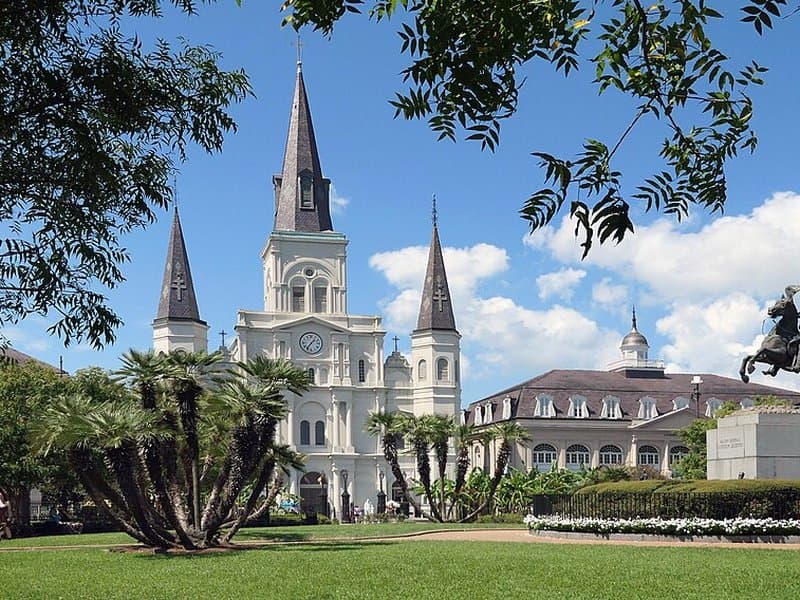
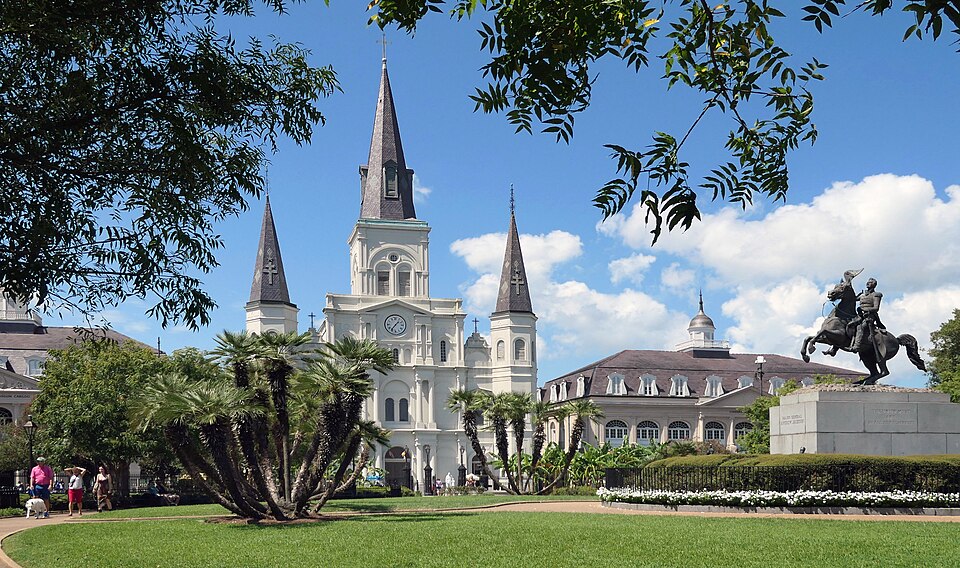
Jackson Square and St. Louis Cathedral

Jackson Square and St. Louis Cathedral

French Quarter

The main square of the French Quarter from the eighteenth century, with an equestrian statue of Andrew Jackson and the oldest continuously active cathedral in the US. Artists, musicians, fortune-tellers and street performers gather on the plaza. It is the heart of the district and the start of every walk.

Tip: Come in the morning when it is calm, or in the evening for music. For lunch stop in the nearby cafés and do not buy souvenirs from street sellers with no price.

Admission:
free
Time needed:
1–2 hrs
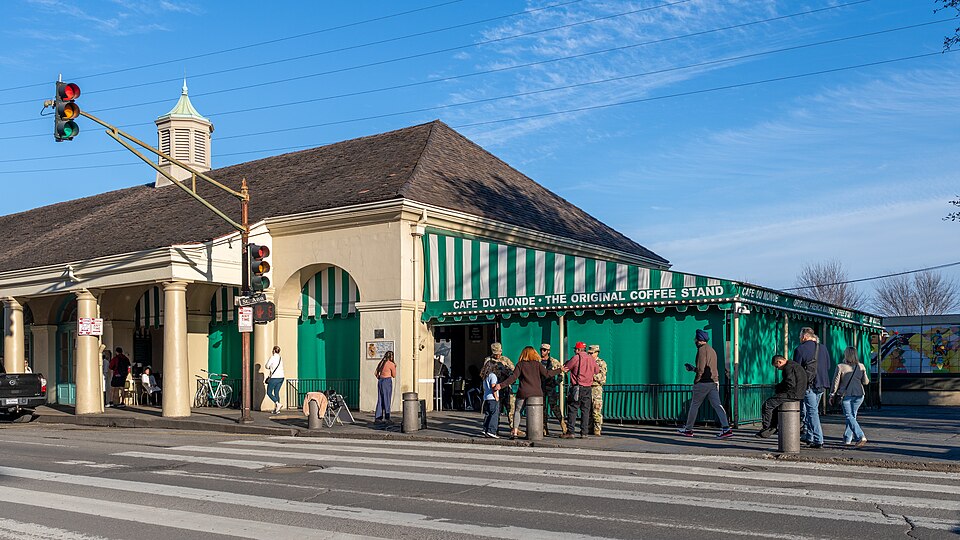
Café du Monde

Café du Monde

French Quarter

A café from 1862 by the French Market that became famous for beignets — fried yeast doughnuts buried in powdered sugar — and chicory coffee. You eat on the terrace or take them away. It is open most of the day and night and is a symbol of the city.

Tip: Beignets cost about five dollars for three. Take napkins: the sugar flies everywhere. It is quietest in the morning and late evening; at midday and weekends there is a queue.

Admission:
from $5
Time needed:
30–45 min
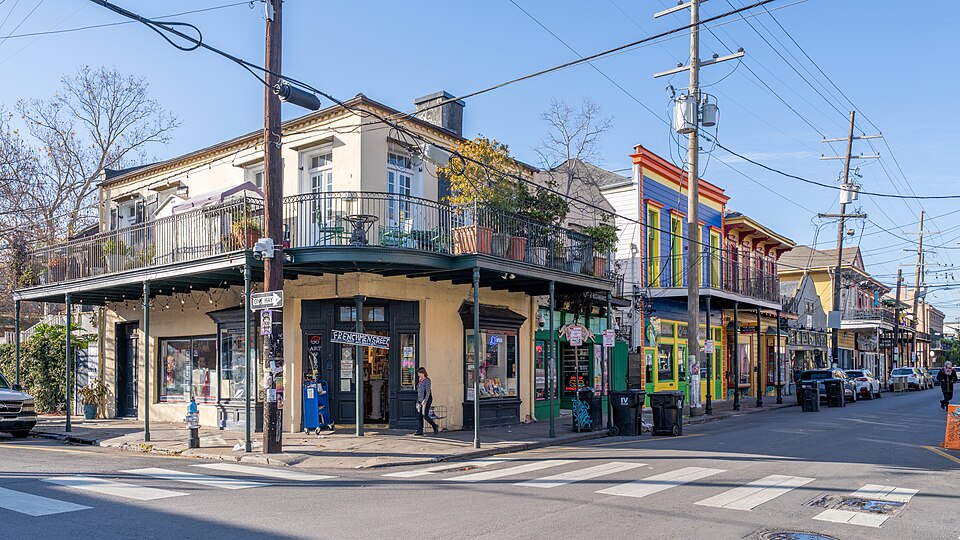
Frenchmen Street

Frenchmen Street

Marigny

A street in the Faubourg Marigny district, full of clubs with live jazz, blues and brass, where music plays from evening until morning. Unlike noisy Bourbon Street, the music here is authentic and entry is often free or a few dollars. It is the best place to experience jazz.

Tip: Choose clubs by the music drifting out; you are free to move between them. Tips for the musicians go in the bucket. In the evening many people come, so watch your belongings.

Admission:
free to $15
Time needed:
2–4 hrs
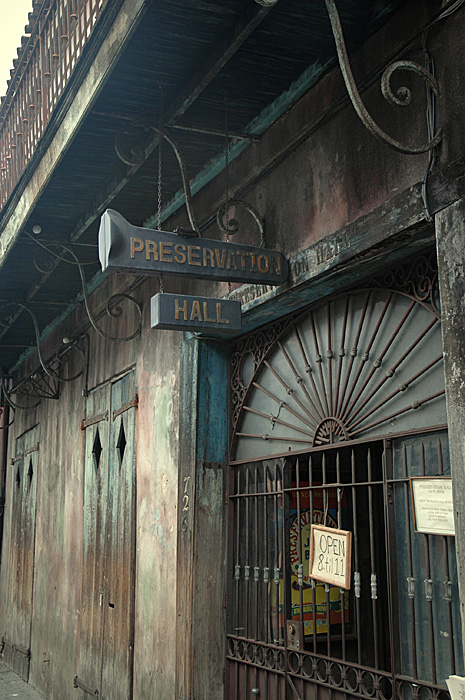
Preservation Hall

Preservation Hall

French Quarter

A small venue from 1961 in the French Quarter where traditional jazz is played in its original style in a small, plain room with wooden benches. Concerts last an hour and sell out weeks ahead. It is the most authentic and best place to hear New Orleans jazz.

Tip: Buy tickets online a week ahead. Places are limited and you stand. Mobile phones are switched off and photography is restricted.

Admission:
from $25
Time needed:
1 hr
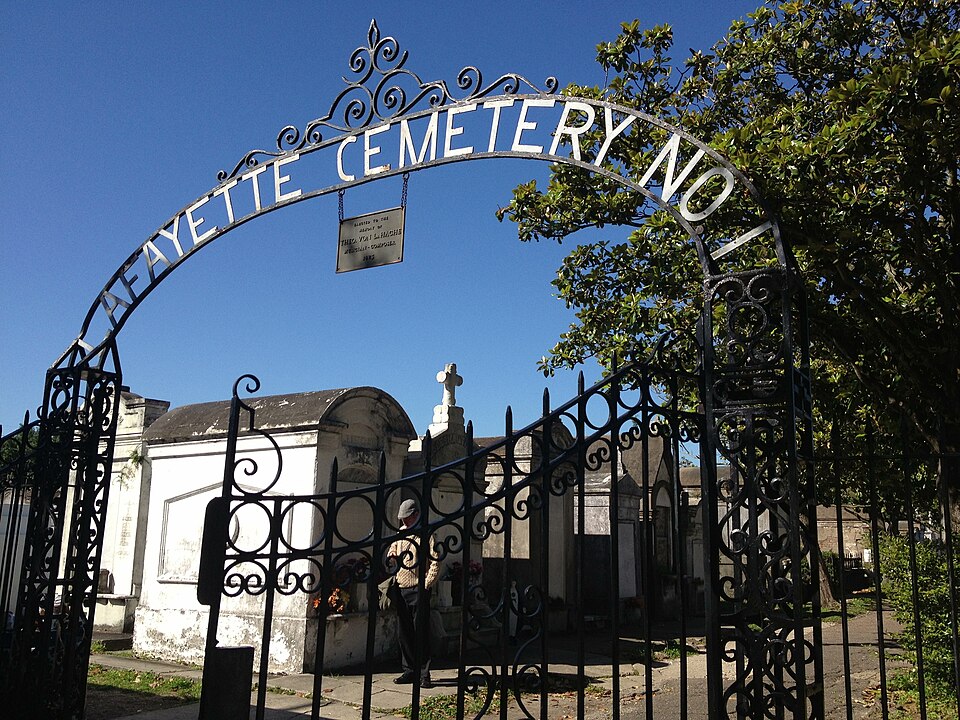
The Garden District and Lafayette Cemetery

The Garden District and Lafayette Cemetery

Garden District

A district of grand nineteenth-century mansions surrounded by gardens of oak trees, which you can walk in two hours. Lafayette Cemetery No. 1, with above-ground tombs, is atmospheric and often filmed. Nearby is Magazine Street with its shops.

Tip: You reach the district by the St. Charles Streetcar. The cemetery is often open only on certain days, so check the current hours and respect the place.

Admission:
free
Time needed:
2–3 hrs
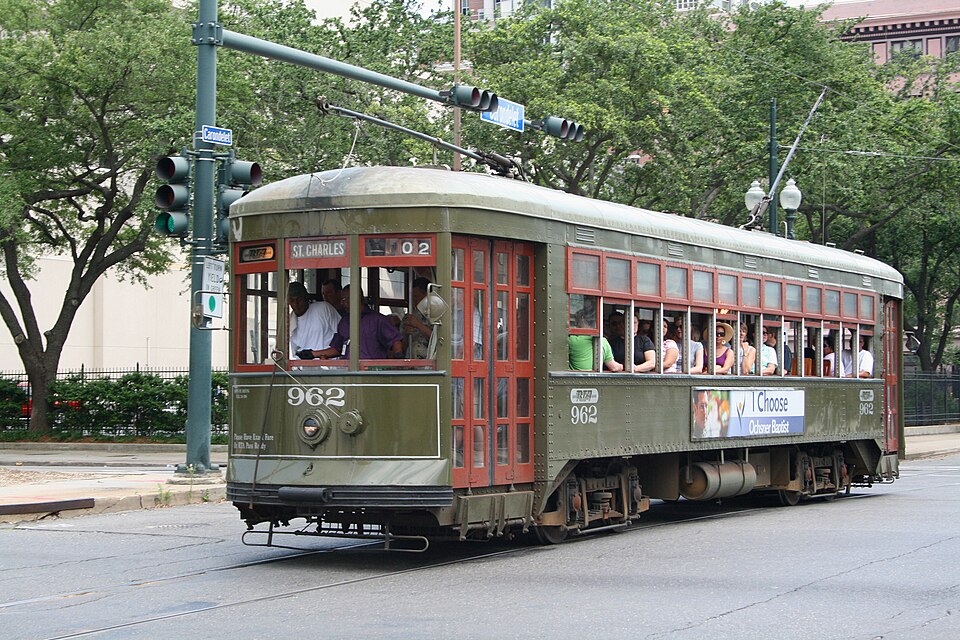
The St. Charles Streetcar

The St. Charles Streetcar

St. Charles Avenue

The oldest continuously operating streetcar line in the world, from 1835, which runs from the centre beneath oak avenues past the Garden District and Audubon Park. The green cars with wooden benches are part of the experience. A ticket costs only a few dollars.

Tip: You pay the fare in coins on board the streetcar. It is nicest to sit by a window on the right-hand side and get off in the Garden District.

Admission:
$1.25
Time needed:
1–2 hrs
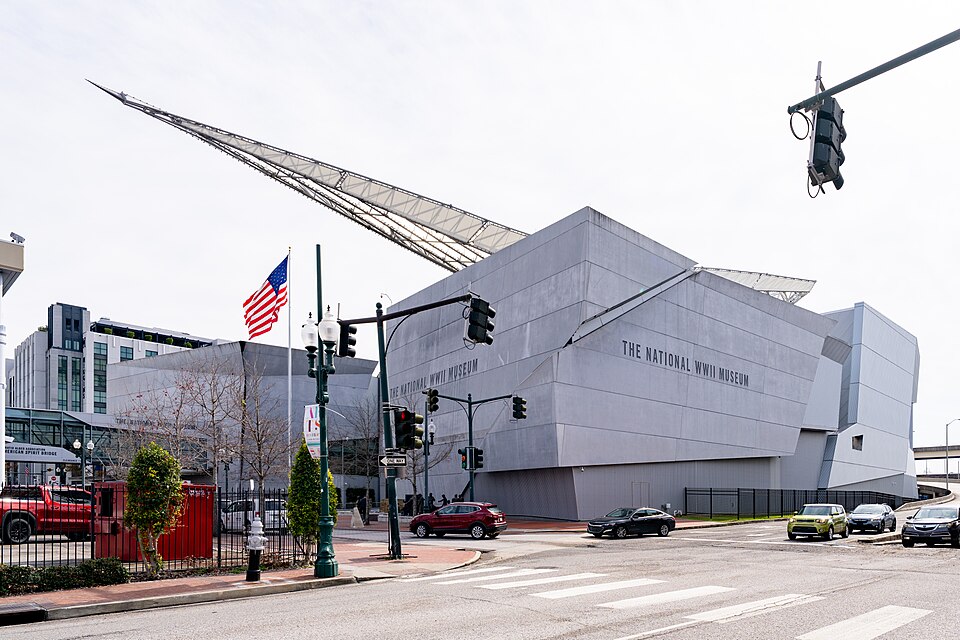
The National WWII Museum

The National WWII Museum

Warehouse District

A sprawling museum of the American history of the Second World War, which ranks among the best in the United States. It displays aircraft, ships, personal objects and testimonies and tells the story from the viewpoint of both soldiers and civilians. It is a large, carefully run complex.

Tip: Set aside at least four hours and buy tickets in advance. It suits a hot afternoon, as it is air-conditioned inside.

Admission:
about $40
Time needed:
4 hrs
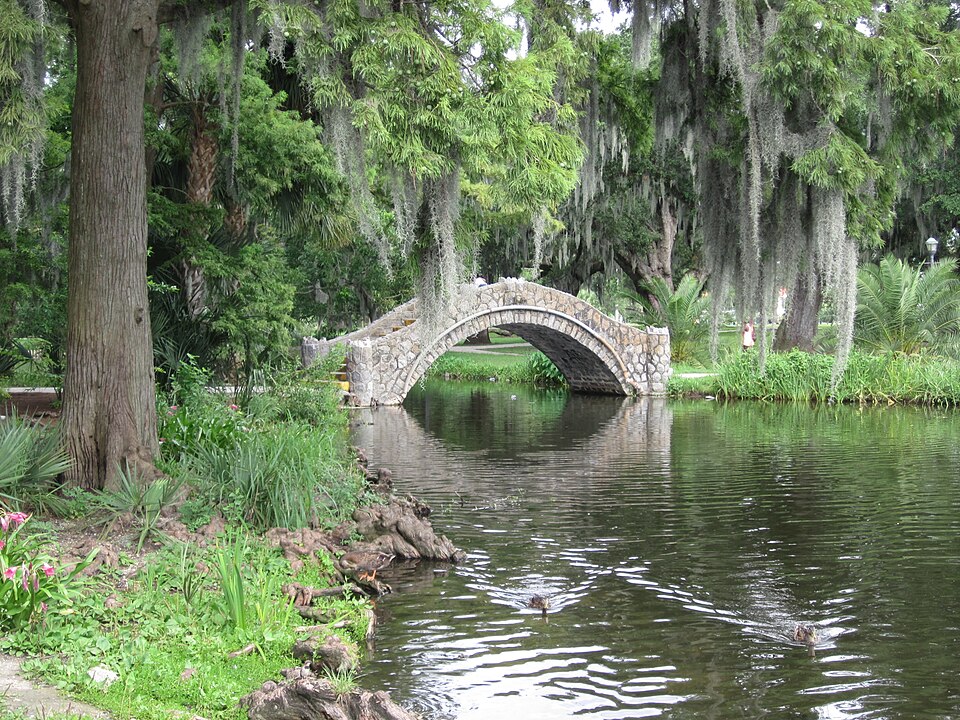
City Park

City Park

Mid-City

A vast city park of over thirteen hundred acres with thousand-year-old oaks, lakes, a sculpture garden and a botanical garden. It is larger than Central Park in New York. It is a calm green oasis far from the bustle of the French Quarter.

Tip: The Besthoff Sculpture Garden is free and suits an hour's rest. The Canal Street streetcar runs to the park and you walk from the terminus.

Admission:
free
Time needed:
half a day
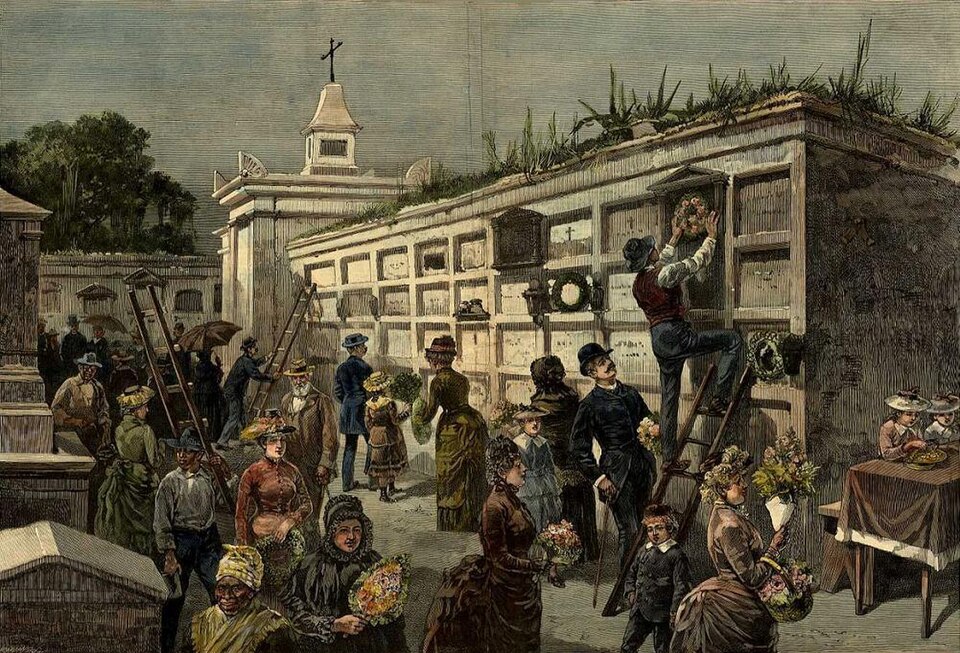
St. Louis Cemetery No. 1

St. Louis Cemetery No. 1

Tremé

The oldest cemetery in the city, from 1789, with above-ground tombs, including that of Marie Laveau, the famed voodoo queen. The above-ground tombs have a historical reason: the city lies below the water table. A visit is now possible only with a licensed guide.

Tip: Book a guided tour in advance. Do not touch the tombs and do not draw marks in chalk, as this is forbidden.

Admission:
tour from $25
Time needed:
1 hr

Photos: Jackson Square and St. Louis Cathedral — Bernard Spragg. NZ (CC0) · Café du Monde — ajay_suresh (CC BY 4.0) · Frenchmen Street — ajay_suresh (CC BY 4.0) · Preservation Hall — Francis Lee (CC BY-SA 3.0) · The Garden District and Lafayette Cemetery — President Rhapsody (CC BY-SA 3.0) · The St. Charles Streetcar — Diego Delso (CC BY-SA 3.0) · The National WWII Museum — ajay_suresh (CC BY 4.0) · City Park — Infrogmation of New Orleans (CC BY-SA 3.0) · St. Louis Cemetery No. 1 — John Durkin (Public domain)

Where to stay

Areas and districts, matched to the kind of trip you are taking

French Quarter

Best for: history, music and food

The oldest part of the city with old houses, bars and restaurants. It has the widest choice of accommodation, but also noise, especially around Bourbon Street. Suits a first visit.

Marigny and Bywater

Best for: jazz and artists

Districts beyond the French Quarter with colourful cottages, the clubs of Frenchmen Street and cafés. It is calmer and more authentic than the Quarter. A good choice for music lovers.

Garden District

Best for: mansions and calm

A district of grand homes and gardens, reached by streetcar. It is calm and comfortable, but far from evening entertainment. Suits a longer stay.

Warehouse District and CBD

Best for: museums and modern hotels

The business district with museums, galleries and modern hotels. It is close to conventions and to the WWII Museum. Suits families and business trips.

Getting around

From the airport

Louis Armstrong International Airport (MSY) is about twenty kilometres from the centre. From Europe you fly via the US mainland and the journey takes around fourteen hours. From the airport a taxi at a flat fare of about thirty-six dollars, a shuttle or Uber runs to the centre. Amtrak trains and long-distance buses also serve the city. ESTA is required for entering the US.

New Orleans – Louis Armstrong Airport (MSY) · 20 km

  • Taxi to the centre· 25 min· $36
  • Shuttle· 35 min· $25
  • Uber· 25 min· $35

Around town

The centre and French Quarter can be walked. For the Garden District and Mid-City the St. Charles and Canal Street streetcars run, and buses for longer rides. Taxis and Uber are cheaper than in other big US cities. A car is unnecessary and parking is expensive. On Saturday evening the French Quarter is thick with pedestrians.

St. Charles StreetcarFrom Canal Street to the Garden District. · $1.25
On footThe French Quarter and Marigny are walkable.
Uber or taxiIn the evening and to the airport. · $15
Jazzy PassA one-day ticket for streetcars and buses. · $3

Useful apps: Google Maps, Uber, Lyft, NORTA

When to go

New Orleans has a humid subtropical climate with a hot summer and a mild winter. From June to September it is around thirty-three degrees and humid, in hurricane season, which runs from June to November. The best months are February to May and October to November. Mardi Gras falls in February and Jazz Fest at the end of April.

Best time

February to May and October to November

What to avoid

July and August (heat and hurricanes)

MonthJanFebMarAprMayJunJulAugSepOctNovDec
Day17°19°22°26°30°32°33°33°31°27°22°18°
Night8°10°13°16°21°24°25°25°23°17°12°9°
Rainy days109979121514107810

Food & drink

New Orleans is a culinary city with cooking that blends French, Spanish, African and Caribbean influences. You find Cajun and Creole cooking, seafood and sweet pastries. A main dish in a restaurant costs fifteen to forty dollars and a lunch in a bistro about twelve.

What to try

Beignets

Square fried yeast doughnuts buried in powdered sugar, served at Café du Monde. Eaten with chicory coffee.

Gumbo

A thick soup of okra or roux with chicken, sausage or seafood and rice. The state dish of Louisiana.

Jambalaya

Rice with chicken, sausage and shrimp, cooked in a spicy stock. A quick, filling meal.

Po'boy

A baguette filled with fried shrimp, oysters or beef, with pickles and mayonnaise. The best lunch for ten dollars.

Muffuletta

A round sandwich with salami, ham, cheese and olive salad, invented at Central Grocery. Large, and can be shared.

Crawfish

Freshwater crayfish boiled with spices, corn and potatoes. The season runs from February to May.

Bananas Foster

Bananas flambéed in rum with butter and cinnamon, served with ice cream. A dessert invented in New Orleans.

What it costs

Beignets (3)

$5

Coffee

$3–5

Po'boy

$12–18

Lunch in a restaurant

$18–30

Preservation Hall

$25–40

WWII Museum

$40

3★ hotel (night)

$150–300

Taxi from the airport

$36

Indicative prices that change over time — treat them as a guide, not a price list.

Practical information

SocketsAtwo flat pins (US/JP)Btwo flat pins plus ground (US)
Voltage120V / 60Hz
Tap waterTap water is drinkable — Tap water in New Orleans is safe to drink, though it tastes of chlorine. In restaurants it is usually served free with ice.
TippingTipping is expected in the United States: eighteen to twenty per cent in a restaurant, a dollar a drink at a bar and for hotel porters and one to two dollars a day for housekeeping. Street musicians are tipped in the bucket.
Driving on theright
SafetyTourist districts are usually safe, but be careful: do not walk alone on remote streets at night, watch your belongings and do not leave valuables in the car. On Bourbon Street beware of pickpockets and of your drinks. The emergency number is 911.
Opening hoursShops are open from ten to eight, bars and clubs until morning. Restaurants serve lunch from eleven and dinner from five. On Sunday some businesses are closed.
Customs & etiquetteIn the French Quarter you may drink alcohol on the street from a plastic cup (a 'go cup'), but not from glass. At parades beads are thrown, but do not reach for them on the ground. Musicians are tipped.
A few local wordsLet the good times roll — Laissez les bons temps roulerA little something extra — LagniappeThe grassy median of a wide street — Neutral groundA brass-band parade with dancing — Second lineHow are you? (local greeting) — Where y'at?To buy groceries (local) — Make groceriesA fried doughnut with sugar — Beignet (ben-YAY)

How to plan your days

1 day

A day in New Orleans

  1. 1Morning beignets at Café du Monde.
  2. 2Jackson Square and the cathedral.
  3. 3Afternoon a stroll through the French Quarter.
  4. 4Early evening the St. Charles streetcar and the Garden District.
  5. 5Evening jazz on Frenchmen Street.

2 days

Two days: the city and the cemetery

  1. 1Day one as above.
  2. 2Day two morning the National WWII Museum.
  3. 3Afternoon St. Louis Cemetery with a guide.
  4. 4Evening Preservation Hall.

3 days

Three days: New Orleans and surroundings

  1. 1Days one and two as above.
  2. 2Day three a trip to Oak Alley Plantation.
  3. 3Afternoon a swamp cruise.
  4. 4Evening return and dinner with gumbo.

Day trips

Oak Alley Plantation

90 km · 1 hr by car

A plantation with an avenue of twenty-eight oaks planted in the eighteenth century. The big house from 1839 is a landmark that also recalls the history of slavery. It suits half a day.

Whitney Plantation

90 km · 1 hr by car

A museum and plantation devoted solely to the history of slavery, with official testimonies and memorials. It is a serious and instructive place and suits half a day.

Honey Island Swamp cruise

50 km · 50 min by car

A boat tour through cypress forests and swamps where alligators, herons and turtles live. It is offered for one to two hours.

Frequently asked questions

How long should I stay in New Orleans?+

Three to four days are enough for the French Quarter, the Garden District, jazz and food. For trips to plantations or swamps add a day. At Mardi Gras and Jazz Fest it is better to book accommodation months ahead.

When is the best time to visit?+

February to May and October to November, when it is pleasant. Mardi Gras is fun, but very expensive and crowded. Summer is hot and hurricane season.

Is New Orleans safe?+

In tourist districts yes, but crime is higher than in other cities. In the evening avoid remote streets, use taxis and watch your belongings. Avoid drinking from drinks you did not see poured.

How do I get from the airport to the centre?+

A taxi costs about thirty-six dollars at a flat fare, Uber similar, a shuttle about twenty-five dollars. The journey takes about twenty-five minutes. The E2 bus is cheaper but slower.

Do I need a visa or ESTA for the USA?+

EU citizens need ESTA, an electronic authorisation that is arranged online in advance and costs tens of dollars. The passport must be biometric and valid. Conditions change, so check them.

What is Mardi Gras?+

The carnival season, which peaks on the Tuesday before Ash Wednesday (9 February in 2027). Parades with floats, music and the throwing of beads are held. Accommodation is then the most expensive and streets are crowded.

Do I need a car?+

No, the centre can be walked and supplemented by streetcar and taxi. A car is costly because of parking and awkward in the French Quarter. For trips to plantations a rental or an organised tour suits.

What should I eat?+

Beignets, gumbo, jambalaya, po'boy and muffuletta; in season crawfish. With them a Sazerac or Hurricane cocktail. Book dinner at popular restaurants in advance.

Visa Requirements

Check the latest visa requirements for entering this country. Some nationalities may need to apply for a visa or e-visa before travel.

Check visa requirements

Language

English

Currency

USD

Timezone

America/Chicago

Dial Code

+1

Population

335M

Area

9,833,520 km²

Voltage

120V / 60Hz

Driving Side

Right

Top Hotels in New Orleans

Live prices from 500+ properties

Loading hotels...

Planning a trip to New Orleans?

Compare hundreds of hotels, find the best price, and book with free cancellation on TravelManiac.