Hotels in Sardinia

The Mediterranean's second-largest island, with its own language and seven thousand stone towers

Sardinia

LanguageEnglish
CurrencyEUR
TimezoneGMT+1
Temperature10-30 °C
Dial Code+39
Population59M
Area301,340 km²
SocketsType C / Type F / Type L
Tap waterDrinkable

Discover Sardinia

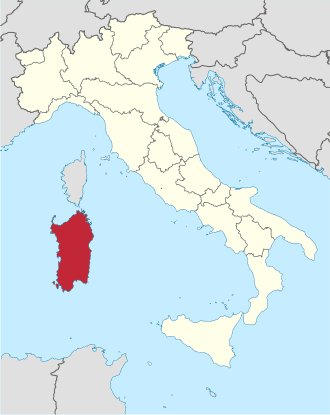
Sardinia is as large as Moravia and Silesia combined, separated from mainland Italy by two hundred kilometres of sea and two thousand years of distinct history. Before the Romans arrived, the Nuragic civilisation lived here, leaving behind seven thousand stone towers called nuraghi — structures found nowhere else on earth. Sardinians have their own language, Sardinian, a Romance language unintelligible to a mainland Italian, and in Alghero Catalan is still spoken today after four centuries of Aragonese rule. The coastline runs 1,900 kilometres and is the main reason people fly here: the sand is white and fine as flour, and the water has a shade that looks edited even in real life. But the island is mountainous and its interior sparsely populated — it's four hundred kilometres between the northeastern Costa Smeralda and the south, and Sardinia cannot be seen in a weekend. Only someone who stays put in a single resort can manage without a car.

What to see

The places worth your time in Sardinia, and what to expect at each

Costa Smeralda

Costa Smeralda

northeast

Fifty kilometres of granite coastline in the northeast, bought in 1962 by a consortium led by Prince Karim Aga Khan and developed into a resort under a single architectural code — no tall buildings, render in the colours of the local terrain. Porto Cervo is its centre and marina.

Tip: The Costa Smeralda's finest beaches are public and free: Capriccioli, Liscia Ruja and Cala di Volpe. Parking there costs five to ten euros a day and fills by 10am in August. Prices in Porto Cervo are incomparable with the rest of the island — shop in Arzachena, eight kilometres away, instead.

Admission:
beaches free, parking from 5 €
Time needed:
full day
La Maddalena Archipelago

La Maddalena Archipelago

north, from Palau

Seven larger and fifty smaller islands between Sardinia and Corsica, the whole group a national park. Caprera Island was Giuseppe Garibaldi's final home, and his house is now a museum. Budelli holds the Pink Beach, coloured by ground-up coral fragments — landing on it is now forbidden.

Tip: A ferry to the main island runs from Palau every half hour and carries cars. A full-day inter-island cruise with swimming stops costs fifty to eighty euros and is the only way to see Budelli and Spargi. Caprera is reached by a causeway; the Cala Coticcio beach requires an advance online booking.

Admission:
ferry 15 € with car, cruise from 50 €
Time needed:
full day
Cala Goloritzé

Cala Goloritzé

Baunei, east

A cove on the east coast in the Orosei Gulf, with a hundred-and-forty-metre rock spire and a natural arch over the water. Formed by a landslide in 1962 and a UNESCO site ever since. The water is so clear that anchored boats appear to float.

Tip: The descent takes an hour and a half on foot from Su Porteddu on the Golgo plateau, and the climb back up is demanding in the heat — plan for it and carry three litres of water. Entry is paid and visitor numbers are capped daily, booked online. The alternative is a boat from Cala Gonone with no walking required.

Admission:
6 € entry, boat from 30 €
Time needed:
full day
La Pelosa and Stintino

La Pelosa and Stintino

Stintino, northwest

A beach at the northwestern tip with fine white sand and water shallow enough to wade a hundred metres from shore. An Aragonese tower stands on an islet opposite, and beyond it lies Asinara Island, a former penal colony now a national park with white donkeys. The water stays turquoise even under cloud.

Tip: Entry is paid from June to October and capped at fifteen hundred people a day; booking online weeks ahead is required, and without it you won't get onto the beach. Towels can't be placed directly on the sand — a mat is required, and the rule is enforced with fines. The car park is outside the village, a five-minute walk away.

Admission:
3.50 € entry + parking
Time needed:
full day
Neptune's Grotto

Neptune's Grotto

Capo Caccia, near Alghero

A stalactite cave beneath the Capo Caccia cliffs near Alghero, with a hundred-and-twenty-metre saltwater lake and a stalactite column holding up the ceiling. Discovered by a fisherman in the eighteenth century, it's reached two ways: by sea, or down the cliffside staircase.

Tip: The Escala del Cabirol is six hundred and fifty-six steps carved into a sheer cliff above the sea, and the round trip takes forty minutes — an experience in itself, but not for everyone. Reaching it by boat from Alghero is more comfortable, and in rough seas it's the only option running.

Admission:
14 € entry, boat from 16 €
Time needed:
half a day
Su Nuraxi in Barumini

Su Nuraxi in Barumini

interior, 60 km from Cagliari

The island's best-preserved Nuragic fortress and its only UNESCO-listed one. The central tower of giant mortar-less stone blocks has stood since the seventeenth century BC, ringed by four bastions and a village of fifty round houses. It was only uncovered from beneath the soil in 1949.

Tip: Entry is guide-only, with tours departing every half hour in Italian and English. Inside you climb narrow stairs and low passages, so wear sturdy shoes and skip large bags. It's an hour and a half from Cagliari and two and a half from the Costa Smeralda — plan for a full day.

Admission:
15 € with guide
Time needed:
half a day
Cagliari and the Castello district

Cagliari and the Castello district

south of the island

The capital of the south, built on a limestone hill that the Pisans encircled with walls and two white towers in the thirteenth century. From the Elephant Tower and the Saint Remy Bastion you can see the bay, the flamingo-filled salt lagoons and, on clear days, the inland mountains.

Tip: The upper town can be reached by lift and escalators from Piazza Yenne, saving the climb in the heat. Flamingos on the Molentargius lagoon are present year-round and are best watched in the morning from the causeway between the salt pans, reached by a cycle path from Poetto beach.

Admission:
tower 5 €, lagoon free
Time needed:
full day
Alghero and its Catalan old town

Alghero and its Catalan old town

northwest

A harbour town in the northwest ringed by seven towers and Aragonese-era walls, where street names are in Catalan and locals speak the Algherese dialect. Inside the walls are narrow cobbled lanes, a cathedral with an Aragonese bell, and a rampart promenade over the sea.

Tip: Alghero is the one place on the island where it makes sense to stay without a car: the airport is fifteen kilometres away, a bus reaches the centre in half an hour, and the Lido and Maria Pia beaches are walkable. The fish market and an evening walk along the walls are free and better than most paid attractions.

Admission:
free
Time needed:
half a day
Bosa and the Temo river

Bosa and the Temo river

west coast

A colourful town on the island's only navigable river, with pastel-hued houses stacked below the twelfth-century Malaspina castle. A row of old tanneries lines the riverbank, now heritage-protected. The road from here to Alghero runs forty kilometres along an empty clifftop above the sea.

Tip: That road is the main reason to come — it's among the most beautiful coastal drives in Italy, with a midpoint viewpoint where griffon vultures nest. Drive it in the afternoon heading north, when the sun sits over the sea. The castle stays open into the evening and overlooks the whole valley.

Admission:
castle 5 €
Time needed:
half a day

Photos: Costa Smeralda — Alistair Wettin (CC BY-SA 4.0) · La Maddalena Archipelago — Wikimedia Commons (CC BY-SA 3.0) · Cala Goloritzé — Yesuitus2001 (CC BY-SA 2.5) · La Pelosa and Stintino — Giuseppe palumbo at Italian Wikipedia (Public domain) · Neptune's Grotto — Tobias Helfrich (CC BY-SA 2.5) · Su Nuraxi in Barumini — Norbert Nagel (CC BY-SA 3.0) · Cagliari and the Castello district — Robur.q (CC BY-SA 4.0) · Alghero and its Catalan old town — Marco Busdraghi (CC BY 3.0) · Bosa and the Temo river — Zsuzsanna Tóth (CC0)

Where to stay

Areas and districts, matched to the kind of trip you are taking

Costa Smeralda and Olbia

Best for: the finest beaches and charter flights

The northeast, with the Olbia airport most flights from the Czech Republic land at, and the island's most famous beaches. Accommodation is the priciest in all of Sardinia, doubling in August. In exchange, La Maddalena, Palau and Capo Testa are all within an hour's drive.

Alghero and the northwest

Best for: a car-free stay and Catalan flavour

The one place on the island where you can stay in town, walk to the beach, and be close to the airport. Prices run about a third lower than the Costa Smeralda, the old town stays lively year-round, and Neptune's Grotto and Bosa are half an hour away.

Cagliari and the south

Best for: city life, sights and long beaches

The capital, with the eight-kilometre Poetto beach right at its edge, flamingo-filled lagoons, and the island's best restaurant scene. Flights here are cheaper than to Olbia, and it's the closest base for the Barumini nuraghe and the beaches at Chia and Villasimius.

East coast and Cala Gonone

Best for: coves, boat trips and hiking

The Orosei Gulf, with inaccessible coves beneath cliffs reachable only by boat or hiking. Cala Gonone is the base for boat trips to Cala Luna and Cala Mariolu. Accommodation is cheaper than in the north, but drivable beaches are rarer and distances into the interior are long.

Getting around

From the airport

Sardinia has three airports: Olbia in the northeast near the Costa Smeralda, Alghero in the northwest, and Cagliari in the south. Direct seasonal flights from Prague serve Olbia and Cagliari; outside season, connect via Milan or Rome. The choice of airport matters greatly, since Olbia to Cagliari is three hundred kilometres and a three-hour drive — pick based on where you'll stay, not the cheapest fare. The alternative is a ferry from Livorno, Civitavecchia or Genoa to Olbia or Porto Torres, taking six to ten hours and carrying your car — sensible if driving from the Czech Republic.

Olbia Costa Smeralda (OLB) · 30 km

  • Rental car· 30 min to Porto Cervo
  • Bus to Olbia and onward ARST· 1 h· 2–6 €
  • Private transfer· 35 min· 80 € per car

Alghero Fertilia (AHO) · 15 km

  • Bus to central Alghero· 30 min· 1.50 €
  • Taxi· 20 min· 30 €
  • Rental car· 20 min

Cagliari Elmas (CAG) · 8 km

  • Train to Cagliari· 7 min· 1.30 €
  • Taxi to the centre· 15 min· 20 €
  • Rental car· 15 min

Around town

Sardinia can't be toured without a car. Trains connect only a handful of towns in the west and south, and ARST buses reach villages but the beaches only in season and a few times a day. Airport rental desks book out, and in August a car must be reserved months ahead, with prices tripling. Roads are good — the main SS131 from Cagliari to Porto Torres is a dual carriageway — but roads to coves are often gravel, and some are a tight fit for a small car. Car parks at popular beaches fill by 10am in August, with attended parking running five to ten euros a day.

Rental carPractically essential. Book ahead, months in advance for August. A small car suffices, but check your excess covers gravel-road damage to the underbody. · 35–120 € per day depending on season
ARST busesConnect towns and larger villages, reaching beaches only in season. Cheap, but with only a few daily departures and almost none on Sundays. · 1.50–10 €
Trenitalia and ARST trainsThe Cagliari–Oristano–Sassari–Olbia line runs but is slow and doesn't reach the coast. Useful for moving between towns, not for a beach holiday. · 5–20 €
Ferries and boatsTo La Maddalena from Palau every half hour; excursion boats to the coves from Cala Gonone and Arbatax. The only way to reach some of the island's finest beaches. · 7 € ferry, from 30 € excursion
ScooterFine for getting around a single resort area only. Distances in Sardinia are too large and inter-town roads too fast for touring by scooter. · 30 € per day

Useful apps: Google Maps, ARST, Sardegna Spiagge, Windy

When to go

The season runs from mid-May to early October. June and September are best: the sea is above 22°C, beaches aren't crowded, and car and accommodation prices are a fraction of August's. August is exceptionally demanding on the island — mainland Italians arrive, prices double, beach car parks fill by 10am, and the mistral wind can bring three days of rough seas. May and October are great for hiking and exploring the interior, but the water sits around 18°C. From November to April, the island is largely closed outside the main towns, and direct flights stop running.

Best time

June and September

What to avoid

August, for prices and crowds; November to April, for closures

MonthJanFebMarAprMayJunJulAugSepOctNovDec
Day15°15°17°19°23°28°31°31°27°23°19°16°
Night7°7°8°10°13°17°20°21°18°15°11°8°
Rainy days776642114788
Sea14°14°14°15°18°22°25°26°24°22°19°16°

Food & drink

Sardinian cuisine is shepherd's food, not fisherman's — for centuries the island turned inward, since raiders came from the sea. The basics are lamb, suckling pig, sheep's cheese and paper-thin carasau bread. Fish is eaten mainly in Alghero and Cagliari, where Catalan influence runs strong. Restaurant prices on the Costa Smeralda run double the rest of the island, while the same meal at an inland agriturismo costs thirty euros including wine and five courses. Agriturismo is generally the best value here — usually a farm cooking with its own produce.

What to try

Porceddu

Suckling pig roasted on a spit over myrtle wood, served on a wooden board with myrtle sprigs. A festive dish ordered a day ahead at an agriturismo and shared as a whole table's lunch.

Culurgiones

Dumplings filled with potato, sheep's cheese and mint, hand-pleated into an ear-of-wheat shape. From Ogliastra in the east, where the pleating technique is learned from childhood.

Pane carasau

Paper-thin bread that kept for months in the mountains for shepherds. Served dry with everything, or sprinkled with water and oil as 'guttiau'. One of the cheapest things to bring home.

Fregola with clams

Toasted semolina pellets, somewhere between couscous and pasta, cooked with clams and tomatoes. The most typical Sardinian seafood dish, found mainly in the south and in Cagliari.

Bottarga

Dried, pressed mullet roe, grated over spaghetti with oil and garlic. Intensely flavoured, expensive, and Sardinia's answer to caviar.

Pecorino sardo and casizolu

Sheep's cheeses in young and aged versions; the island produces more of them than the rest of Italy combined. Each village has its own version, and markets let you taste before buying.

Seadas

A fried pastry with fresh cheese inside, drizzled with hot bitter honey from myrtle or arbutus flowers. A savoury dessert that sounds odd and works.

Mirto and Cannonau

Mirto is a myrtle-berry liqueur drunk ice-cold after meals; Cannonau is a strong red wine from a grape identical to Grenache. Both are standard fixtures on every menu here.

What it costs

Espresso at the counter

1.10 €

Lunch at an agriturismo with wine

30–40 €

Dinner at a restaurant in Alghero

30–45 € per person

Dinner in Porto Cervo

80–150 € per person

Rental car in June / in August

40 € / 110 € per day

Parking at a well-known beach

5–10 € per day

Full-day boat trip to La Maddalena

50–80 €

Night in a 3-star hotel for two

90–200 €

Indicative prices that change over time — treat them as a guide, not a price list.

Practical information

SocketsCEuroplug, two round pinsFSchukoLItalian
Voltage230V / 50Hz
Tap waterTap water is drinkable — Tap water in Italy is safe to drink and monitored more strictly than bottled water, including public drinking fountains on squares — in Rome they're called 'nasoni' and every larger city has hundreds. A sign reading 'acqua non potabile' means the opposite and is usually found only on fountains in old parks. Restaurants don't offer tap water; the server automatically brings bottled and asks 'naturale, o frizzante?' — still or sparkling.
TippingTipping in Italy isn't given as a percentage the way it is in America. Restaurant bills usually carry a 'coperto' — a cover charge for the table setting and bread, typically two to three euros per person — which stands in for a tip. When service is excellent, round up or leave a few euros on the table. Nothing is left at a café. Card terminals usually have no tip option.
Driving on theright
SafetyItaly is a safe country, and violent crime against tourists is practically nonexistent. The real risks are pickpocketing in crowds, at metro exits and around packed sights, and theft from cars — nothing visible, not even an empty bag, should be left in a car parked on the street. In the south and in tourist hubs, watch for bills padded with items you didn't order; the price list must be clearly posted. The emergency number 112 works, and operators speak English.
Opening hoursIn resort towns, shops in season open from nine until late evening, many even on Sundays, often skipping the midday break. Out of season, though, a resort largely shuts down: from November to March only a fraction of businesses stay open. Restaurants serve dinner from 7:30pm, busiest around nine. Beach services run from May to mid-September; outside that window, beaches are free and unattended, with no sunbeds.
Customs & etiquetteCappuccino is only drunk in the morning — ordering one after lunch is the most obvious giveaway of a tourist; espresso follows a meal instead. Coffee at the counter costs a fraction of the price at a table, and the price list usually shows both columns. Don't enter churches in above-the-knee shorts or bare shoulders; at major basilicas this is enforced at the door. Walking around town in swimwear isn't done, and seaside resorts often fine it. Keep your receipt — Italian law fines even the customer who leaves without one.
A few local wordsGood day — BuongiornoThank you — GraziePlease — Per favoreThe bill, please — Il conto, per favoreCheers — SaluteGoodbye — Arrivederci

How to plan your days

1 day

One day in the north

  1. 1Morning at Capriccioli or Liscia Ruja beach, while parking is still free.
  2. 2Lunch in Arzachena, away from Porto Cervo prices.
  3. 3Afternoon ferry from Palau to La Maddalena.
  4. 4A loop drive around the island and a swim at Cala Spalmatore.
  5. 5Return on the last ferry and dinner in Palau.

2 days

Two days including the west

  1. 1Day one as above.
  2. 2Morning drive west to La Pelosa with a paid booking.
  3. 3Lunch in Stintino, then Alghero in the afternoon.
  4. 4Neptune's Grotto by boat from Alghero, or down the cliffside stairs.
  5. 5An evening walk along the walls and a fish dinner.

3 days

Three days including the interior

  1. 1First two days as above.
  2. 2Morning drive from Alghero to Bosa along the clifftop road.
  3. 3Bosa, the Malaspina castle, and lunch by the river.
  4. 4Afternoon at the Su Nuraxi nuraghe in Barumini with a guide.
  5. 5With more days, continue south to Cagliari or east to Cala Goloritzé.

Day trips

Corsica and Bonifacio

50 km · 1 h by ferry from Santa Teresa Gallura

From Sardinia's northernmost tip, French Corsica is a fifty-minute crossing, with ferries running several times a day. Bonifacio sits on a white limestone cliff above the sea, its old town perched over a ninety-metre drop. A day trip needs only an ID card and a ticket around thirty euros.

Orosei Gulf by boat from Cala Gonone

0 km · full-day boat trip

A string of coves beneath limestone cliffs with no road access: Cala Luna with caves behind it, Cala Mariolu with pea-sized pebbles, and Cala Sisine. Boats leave in the morning and return in the afternoon, costing around fifty euros including swimming stops. Trips are cancelled in rough seas.

Gola Su Gorropu canyon

40 km · 1 h by car and 2 h on foot

A canyon with five-hundred-metre walls, among the deepest in Europe, narrowing to just four metres at its tightest point. The descent from the Genna 'e Silana bridge takes an hour and a half down, and the same back up. Entry is paid, the route involves scrambling over boulders, and sturdy footwear is required.

Frequently asked questions

Which airport should I fly into in Sardinia?+

It depends where you'll be staying. Olbia serves the Costa Smeralda in the northeast, Alghero the northwest, and Cagliari the south; Olbia to Cagliari is three hundred kilometres and three hours' drive. A cheaper flight to the opposite end of the island ends up costing more in car rental and time.

Do I need a car in Sardinia?+

Almost certainly, yes. Trains don't reach the coast, and buses to the beaches run only in season and a few times a day. You can manage without a car only if you stay in Alghero or Cagliari, where the beach is walkable. Book well ahead — in August prices triple and cars sell out.

Do I need to book Sardinian beaches in advance?+

For some, yes. La Pelosa near Stintino charges admission from June to October and caps visitors at fifteen hundred a day; Cala Goloritzé and Cala Coticcio also limit numbers and require online booking. Most beaches, including those on the Costa Smeralda, are freely accessible and free.

When is the best time to visit Sardinia?+

June and September. The sea is over 22°C, beaches aren't packed, and accommodation and car rental cost a fraction of August prices. August means Italian holidays, double prices, and full car parks by 10am. From November to April, most places outside the big towns are closed.

Can you see all of Sardinia in a week?+

Not the whole island. It's as large as Moravia and Silesia combined, and crossing between north and south eats up half a day. In a week you can see one third of it well — say the northeast with La Maddalena, or the northwest with Alghero and Bosa. The interior and the south deserve a separate trip.

Why is Catalan spoken in Alghero?+

The Aragonese conquered the town in 1354, expelled its original inhabitants and resettled it with Catalans. The Algherese dialect has survived six hundred years and is still officially protected, with bilingual street signs. It's the only place outside Spain where Catalan is spoken as a living language.

What are nuraghi?+

Conical towers built from giant stone blocks stacked without mortar, constructed by the Nuragic civilisation between the eighteenth and eighth centuries BC. Seven thousand still stand on the island, found nowhere else in the world. The best preserved is Su Nuraxi in Barumini, a UNESCO World Heritage site.

Is Sardinia expensive?+

Outside the Costa Smeralda, it's cheaper than the Italian average: lunch at an agriturismo with wine costs around thirty-five euros, and a room starts at ninety. On the Costa Smeralda, prices are incomparable with the rest of the island, and a dinner in Porto Cervo can run to a hundred and fifty euros per person. In August, everything doubles.
Visa Requirements

Check the latest visa requirements for entering this country. Some nationalities may need to apply for a visa or e-visa before travel.

Check visa requirements

Language

Italian

Currency

EUR

Timezone

GMT+1

Dial Code

+39

Population

59M

Area

301,340 km²

Voltage

230V / 50Hz

Driving Side

Right

Top Hotels in Sardinia

Live prices from 500+ properties

Loading hotels...

Planning a trip to Sardinia?

Compare hundreds of hotels, find the best price, and book with free cancellation on TravelManiac.