Hotels in Tuscany

Cypress hills, medieval towns and Chianti wine

Tuscany

LanguageItalian
CurrencyEUR
TimezoneEurope/Rome
Temperature10-30 °C
Dial Code+39
Population59M
Area301,340 km²
SocketsType C / Type F / Type L
Tap waterDrinkable

Discover Tuscany

Tuscany is a region in central Italy with Florence as its capital, drawing travellers with rolling hills of cypress, vineyards and olive groves, medieval towns and food. It lies between the Tyrrhenian Sea and the Apennines and is made up of several distinct districts: the hills of Chianti between Florence and Siena, the UNESCO landscape of the Val d'Orcia, the Maremma coast with stone-built towns, and the north with Pisa and Lucca. Of the towns Siena, with its Piazza del Campo, Pisa, with its leaning tower, San Gimignano, with its towers, and Lucca, with the walls you can cycle on, are worth a visit. The wine is legendary: Chianti Classico, Brunello di Montalcino and Vino Nobile di Montepulciano. The region is best explored by car, and you can stay in a countryside agriturismo or in a historic town. The main season runs from April to October, August is hot and pricey, and May, June and September are ideal. This guide covers the region outside Florence, which has its own page.

What to see

The places worth your time in Tuscany, and what to expect at each

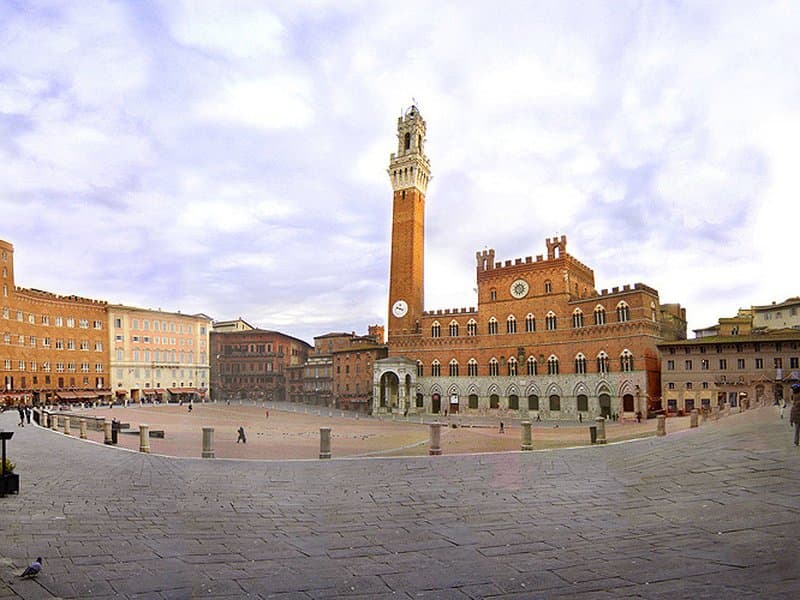
Siena and the Piazza del Campo

Siena and the Piazza del Campo

Siena

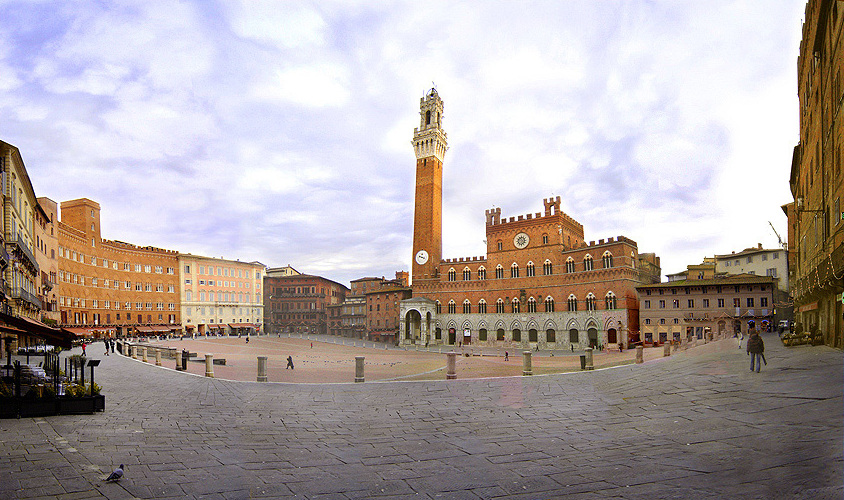
A medieval city on three hills with a shell-shaped square where the Palio horse race is run twice a year, on 2 July and 16 August. The Piazza del Campo is ringed by brick palaces and dominated by the Torre del Mangia town-hall tower. Siena is compact and can be seen in a day, but is worth an overnight stay.

Tip: Sit down on the square around nine in the evening, when it cools and the lamps come on. Tickets for the Torre del Mangia are bought in advance; the climb of about four hundred steps costs around ten euros.

Admission:
free, tower about €10
Time needed:
half a day
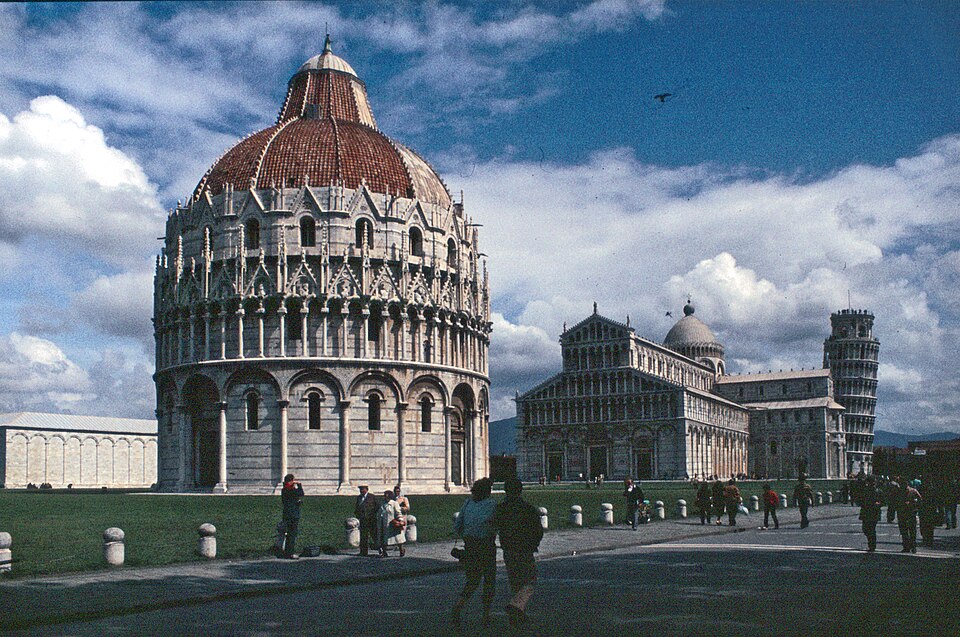
Piazza dei Miracoli in Pisa

Piazza dei Miracoli in Pisa

Pisa

A lawn with the cathedral, baptistery, the Camposanto cemetery and the famous Leaning Tower, a UNESCO site. The tower began to lean during construction on soft ground and today leans about four degrees. A visit without a queue is possible only with a booked time.

Tip: Buy tickets for the tower climb online in advance, otherwise you will not get in. It is quietest in the morning before nine and in the evening, when in summer the rest go home.

Admission:
square free, tower about €20
Time needed:
2–3 hrs
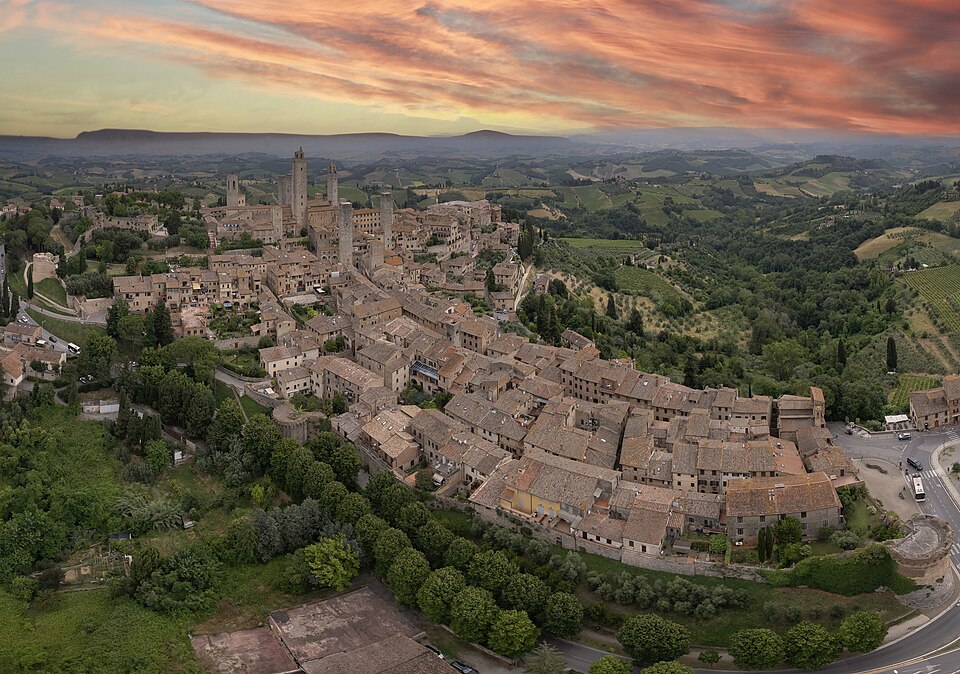
San Gimignano

San Gimignano

San Gimignano

A medieval hill town with fourteen surviving towers that wealthy families built as a symbol of power. From a distance it looks like a Tuscan Manhattan. The streets hold shops selling Vernaccia wine and an ice-cream parlour of world renown.

Tip: Come in the morning or afternoon, when the tour buses have left. The ice cream from Gelateria Dondoli is among the best in Tuscany.

Admission:
free, tower about €10
Time needed:
half a day

Val d'Orcia

south of Siena

A rolling landscape south of Siena with cypress avenues, lone farmhouses and wheat fields, a UNESCO site. This is just what the pictures of Tuscany look like. A road runs through it between the towns of Pienza, Montalcino and San Quirico d'Orcia.

Tip: The best light is at sunrise and sunset. The road near Pienza leads to the famous cypresses by the Podere Belvedere farm, where you can stop.

Admission:
free
Time needed:
half a day

Lucca and Its Walls

Lucca

A city surrounded by Renaissance walls four and a half kilometres long, planted with trees and ridden on bicycles. Inside are narrow lanes, the oval Piazza dell'Anfiteatro and Puccini's birthplace. Lucca is calmer than Pisa and Siena.

Tip: Bicycles are rented right by the walls for a few euros an hour. The best time is early evening, when it is pleasant on the walls and the sun colours the roofs.

Admission:
free
Time needed:
half a day

Chianti

between Florence and Siena

Rolling country between Florence and Siena with vineyards, olive groves and medieval villages such as Greve, Radda and Castellina. Chianti Classico wine is recognised by the black rooster on the bottle. Many wineries offer tastings and lunch at the farm.

Tip: For tastings you need a driver who does not drink. Book them in advance and ask about smaller wineries, where prices are lower.

Admission:
tastings from €20
Time needed:
full day

Pienza

Val d'Orcia

A small town in the Val d'Orcia that Pope Pius II rebuilt in the fifteenth century as an 'ideal city' of the Renaissance. It is a UNESCO site and famed for its sheep's cheese, pecorino. The main square and cathedral look like an architecture textbook.

Tip: Pecorino is bought straight from the shops on the main street — try it with honey. Choose the aged pecorino, which is stronger.

Admission:
free
Time needed:
2–3 hrs
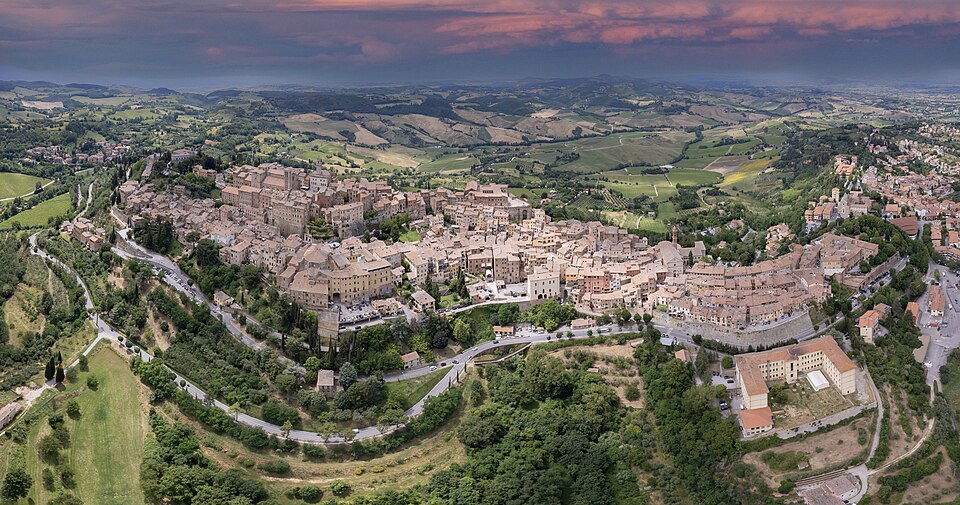
Montepulciano

Montepulciano

Montepulciano

A hill town at six hundred metres that is home to Vino Nobile wine. The main street climbs from the gate to Piazza Grande and along the way are cellars where wine is tasted for free or a few euros. From the walls there is a view over the valley.

Tip: The cellars under the town can often be visited without booking. The loveliest light is in the evening.

Admission:
free
Time needed:
half a day
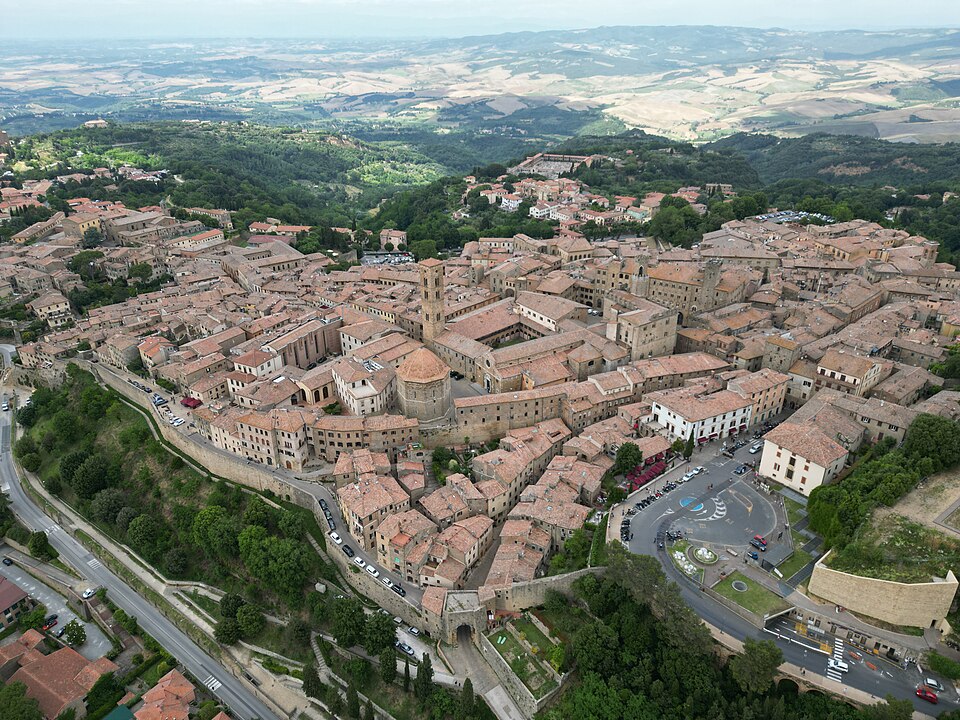
Volterra

Volterra

Volterra

An Etruscan and medieval hill town with walls, a Roman theatre and the Guarnacci museum of urns. It is known for alabaster, which is still worked here. The mood is slightly sombre but calm, and less visited than San Gimignano.

Tip: Visit a workshop where alabaster souvenirs are made. The road to Volterra runs over hills with views.

Admission:
free, museum about €10
Time needed:
half a day

Photos: Siena and the Piazza del Campo — Ricardo André Frantz (User:Tetraktys) (CC BY-SA 3.0) · Piazza dei Miracoli in Pisa — Gerd Eichmann (CC BY-SA 4.0) · San Gimignano — Chensiyuan (CC BY-SA 4.0) · Montepulciano — Chensiyuan (CC BY-SA 4.0) · Volterra — BobTanGo (CC BY 4.0)

Where to stay

Areas and districts, matched to the kind of trip you are taking

Siena and surroundings

Best for: a medieval city and Chianti

A base for Chianti and the Val d'Orcia. Hotels are in the old town and in agriturismos around it. A good choice for a weekend and for getting to know the region by car.

Val d'Orcia and Pienza

Best for: landscape and calm

Country villas, agriturismos and small hotels among the vineyards and cypresses. The calm is greatest and the scenery loveliest, but you cannot manage without a car.

Pisa and Lucca

Best for: monuments and the coast

The northern part with Pisa and Lucca, close to the airport and to the coast. Hotels are cheaper than in Siena and train travel is good.

Maremma and the coast

Best for: beaches and wild nature

The southern coast with beaches, stone towns and a nature park. It has fewer tourists and lower prices. Suits a seaside stay.

Getting around

From the airport

The region's main airport is Pisa Galileo Galilei (PSA), with flights from across Europe. Florence Peretola (FLR) is smaller, with routes to European cities, and Bologna airport (BLQ) suits northern Tuscany. From Pisa a train runs to Florence in an hour and to Lucca in half an hour. A car is essential to explore the countryside; rental firms are at all the airports.

Pisa – Galileo Galilei Airport (PSA) · 5 km

  • Train to Florence· 1 hr 15 min· €9
  • Train to Lucca· 30 min· €4
  • Car rental· at the airport· €40

Florence – Peretola Airport (FLR) · 5 km

  • Tram to central Florence· 25 min· €2
  • Taxi· 15 min· €25

Around town

The region is best explored by car; roads are good and the countryside between the towns is beautiful. Trains and buses link the towns, but connections to villages are sparse. Cars may not enter historic centres — these are ZTL zones with fines. Park on the edge of town.

CarFor countryside, vineyards and villages. · €40
TrainBetween Pisa, Lucca, Florence and Siena. · €9
BusBetween towns and to villages, sparse services. · €6
On footHistoric centres are walked.

Useful apps: Google Maps, Trenitalia, Italo, Moovit

When to go

Tuscany has a Mediterranean climate with warm summers and cool winters. In summer it is hot at around thirty degrees and in winter around ten. The best months are May to June and September to October, when it is pleasant and the countryside is green or golden. July and August are hot with the most tourists. In winter there is more rain, but prices are lower.

Best time

May, June, September and October

What to avoid

July and August (heat and crowds)

MonthJanFebMarAprMayJunJulAugSepOctNovDec
Day9°11°15°18°23°28°31°31°26°20°14°10°
Night2°2°5°8°12°16°18°18°15°11°6°3°
Rainy days767875345787

Food & drink

Tuscan cooking is country food and simple: good unsalted bread, olive oil, beans, grilled meat and pecorino. Wine goes with the meal and tastings are held in every village. Lunch is eaten around one and dinner from eight.

What to try

Bistecca alla fiorentina

A giant T-bone steak of Tuscan beef, grilled over charcoal and served rare. The price is by weight, usually forty to sixty euros a kilogram.

Ribollita

A thick soup of beans, black cabbage and bread that is cooked twice — hence the name. A warming dinner in autumn.

Pici cacio e pepe

Hand-rolled thick spaghetti, in Siena and Val d'Orcia with garlic or with cheese and pepper. A basic of the Tuscan table.

Cinghiale

Braised wild boar, a traditional dish of the Tuscan forests. Served with polenta or with pappardelle pasta.

Pecorino di Pienza

Sheep's cheese, young or aged, served with honey and pears. Pienza is its home.

Cantucci and Vin Santo

Hard almond biscuits dunked in sweet wine. The classic end to a dinner.

Chianti Classico and Brunello

Red wines, Chianti from the sangiovese grape and Brunello di Montalcino from a single clone. Chianti is recognised by the black rooster.

What it costs

Espresso at the bar

€1.2–1.5

Lunch in a trattoria

€15–25

Bistecca (per kilo)

€45–60

A glass of wine

€4–7

Train Pisa–Florence

€9

Tower in Pisa

€20

Agriturismo (night)

€90–180

Car rental (day)

€40–70

Indicative prices that change over time — treat them as a guide, not a price list.

Practical information

SocketsCEuroplug, two round pinsFSchukoLItalian
Voltage230V / 50Hz
Tap waterTap water is drinkable — Tap water in Tuscany is safe and drunk without restriction. The fountains in towns also give drinking water.
TippingTipping is not obligatory; restaurants add a coperto of one to three euros per person. Rounding up or a few euros extra is usual.
Driving on theright
SafetyTuscany is safe. In the crowds in Pisa and Siena watch for pickpockets. Do not drive into centres, as ZTL zones are strictly enforced and fines arrive by post months later. The emergency number is 112.
Opening hoursShops are open from nine to one and half past three to seven, in tourist towns often continuously. Museums are often closed on Mondays. Restaurants serve lunch from noon and dinner from seven.
Customs & etiquetteItalians care about greetings and courtesy. In churches cover your shoulders and knees. In trattorias do not ask for parmesan with fish. Lunch is unhurried, so take your time.
A few local wordsGood day — BuongiornoThank you — GraziePlease — Per favoreHow much is it? — Quanto costa?Cheers — SaluteThe bill, please — Il conto, per favoreWhere is the station? — Dov'è la stazione?

How to plan your days

1 day

A day in Siena

  1. 1Morning Piazza del Campo and the Torre del Mangia.
  2. 2The cathedral and the Duomo museum.
  3. 3Lunch with pici.
  4. 4Afternoon in the lanes and a wine bar.
  5. 5Evening view of Piazza del Campo at sunset.

2 days

Two days: Siena and the Val d'Orcia

  1. 1Day one as above.
  2. 2Day two morning Pienza and pecorino cheese.
  3. 3Afternoon Montepulciano and a Vino Nobile tasting.
  4. 4Evening back to Siena.

3 days

Three days: Tuscany

  1. 1Days one and two as above.
  2. 2Day three San Gimignano and Chianti.
  3. 3Afternoon a winery with a tasting.
  4. 4Evening return to the hotel.

Day trips

Florence

70 km · 1 hr 15 min by train or car

The capital of Tuscany with the Uffizi, the Duomo and the Ponte Vecchio. Buses run from Siena and trains from Pisa.

Cinque Terre

100 km · 1 hr 30 min by train from Pisa

Five colourful cliffside villages in Liguria, linked by a path and a train. It suits a full-day trip from Pisa or Lucca.

Pitigliano

120 km · 2 hrs by car

A town on a rocky spur in the southern Maremma with a Jewish quarter and Etruscan tombs. It is calm and less visited than Siena.

Frequently asked questions

What is the best time for Tuscany?+

May, June, September and October: pleasant, the countryside green or golden and no great crush in the towns. In July and August it is hot at around thirty degrees. In winter it is wet, but prices are lowest.

Do I need a car in Tuscany?+

For countryside, vineyards and villages yes, as public transport is sparse. For Pisa, Lucca, Florence and Siena the train suffices. Cars do not belong in historic centres — there are ZTL zones with fines.

How many days should I stay?+

Four to seven days are enough for the main towns and countryside. For the Val d'Orcia, Chianti and the coast a week is better. If you want to visit Florence as well, add two days.

Where should I stay?+

In an agriturismo in the countryside, which offers calm, breakfast with home produce and views. In Siena, Lucca and Pisa accommodation is in the historic centre. Choose according to whether you want calm or town life.

How do I get from Pisa to Siena?+

By train via Empoli with a change in about two hours, or by bus in just over two hours. Faster is a car on the motorway in about an hour and a half. The best way is a train to Florence and a bus from there.

What is a ZTL?+

A zona a traffico limitato — zones in historic centres where only permitted vehicles may drive. Cameras fine foreigners and fines arrive by post months later. Park on the edge and walk in.

Is Pisa worth it, or is a photo of the tower enough?+

A visit to Pisa takes half a day. Piazza dei Miracoli is beautiful and worth it even without climbing the tower. If you want to go up, buy a ticket in advance. Combine it with Lucca or the way to the airport.

How do I choose wine for a tasting?+

Chianti Classico is the best known and inexpensive, while Brunello di Montalcino and Vino Nobile di Montepulciano are pricier and finer. Smaller family wineries are cheaper than the famous ones. Book in advance and choose a driver who does not drink.

Visa Requirements

Check the latest visa requirements for entering this country. Some nationalities may need to apply for a visa or e-visa before travel.

Check visa requirements

Language

Italian

Currency

EUR

Timezone

Europe/Rome

Dial Code

+39

Population

59M

Area

301,340 km²

Voltage

230V / 50Hz

Driving Side

Right

Top Hotels in Tuscany

Live prices from 500+ properties

Loading hotels...

Planning a trip to Tuscany?

Compare hundreds of hotels, find the best price, and book with free cancellation on TravelManiac.