Hotels in Washington, D.C.

The capital where America's best museums cost nothing

Washington, D.C.

LanguageEnglish
CurrencyUSD
TimezoneGMT-5
Temperature5-30 °C
Dial Code+1
Population335M
Area9,833,520 km²
SocketsType A / Type B
Tap waterDrinkable

Discover Washington, D.C.

Washington was designed from the outset to be a capital: in 1791 French engineer Pierre L'Enfant laid it out with wide diagonal avenues and the grassy National Mall at its center, stretching nearly two miles from the Capitol to the Lincoln Memorial. Along it stand eleven Smithsonian museums and the National Gallery of Art, all free to enter — the Wright brothers' plane, the Apollo 11 command module, the Hope Diamond, the flag from 1814 that inspired the national anthem, works by Rembrandt and Vermeer. That makes Washington the cheapest major American city for a cultural itinerary, even though hotels rank among the pricier ones. A law bans buildings from rising above the surrounding streets, so there are no skyscrapers here, and the skyline is dominated by the obelisk and the Capitol dome. Beyond downtown lie neighborhoods with their own character: colonial Georgetown with its brick townhouses, Dupont Circle with its embassies, and the bars of U Street where Duke Ellington once performed. The city is compact, the Metro excellent, and the Mall is best explored on foot — only in July does it turn as muggy as the tropics.

What to see

The places worth your time in Washington, D.C., and what to expect at each

Lincoln Memorial and Reflecting Pool

Lincoln Memorial and Reflecting Pool

National Mall

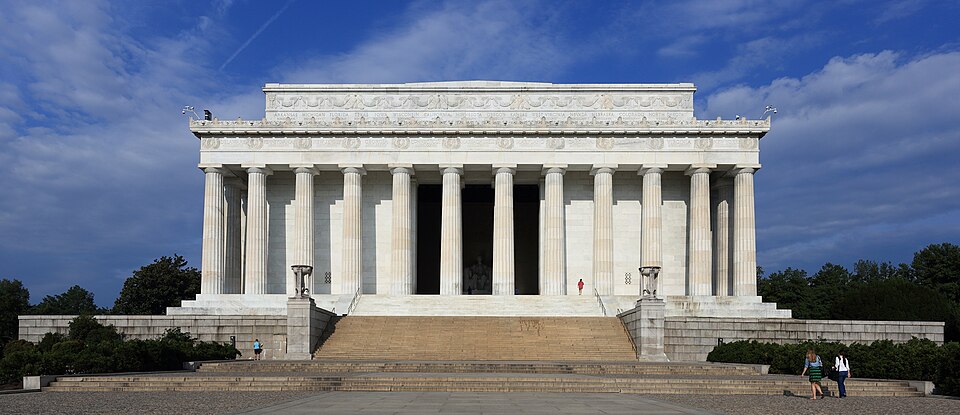
A 1922 temple in the style of the Greek Parthenon, housing a nineteen-foot seated statue of Abraham Lincoln with the text of his speeches carved into the walls. From its steps, Martin Luther King Jr. delivered his 1963 “I Have a Dream” speech, and the spot where he stood is marked in the stone.

Tip: The memorial is open around the clock and is most striking after dark, when the statue is lit and the steps are empty. Look for the inscription carved into the stone on the landing below the upper terrace, marking the spot of King's speech. Along the reflecting pool are the Vietnam Veterans Memorial, listing 58,000 names of the fallen, and the Korean War Veterans Memorial, with statues of soldiers in ponchos.

Admission:
free
Time needed:
1 h
United States Capitol

United States Capitol

Capitol Hill

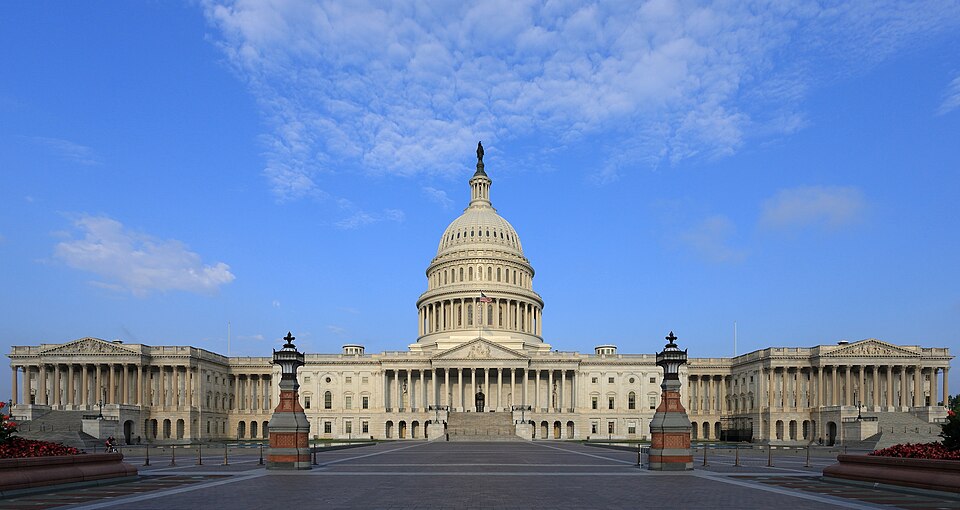
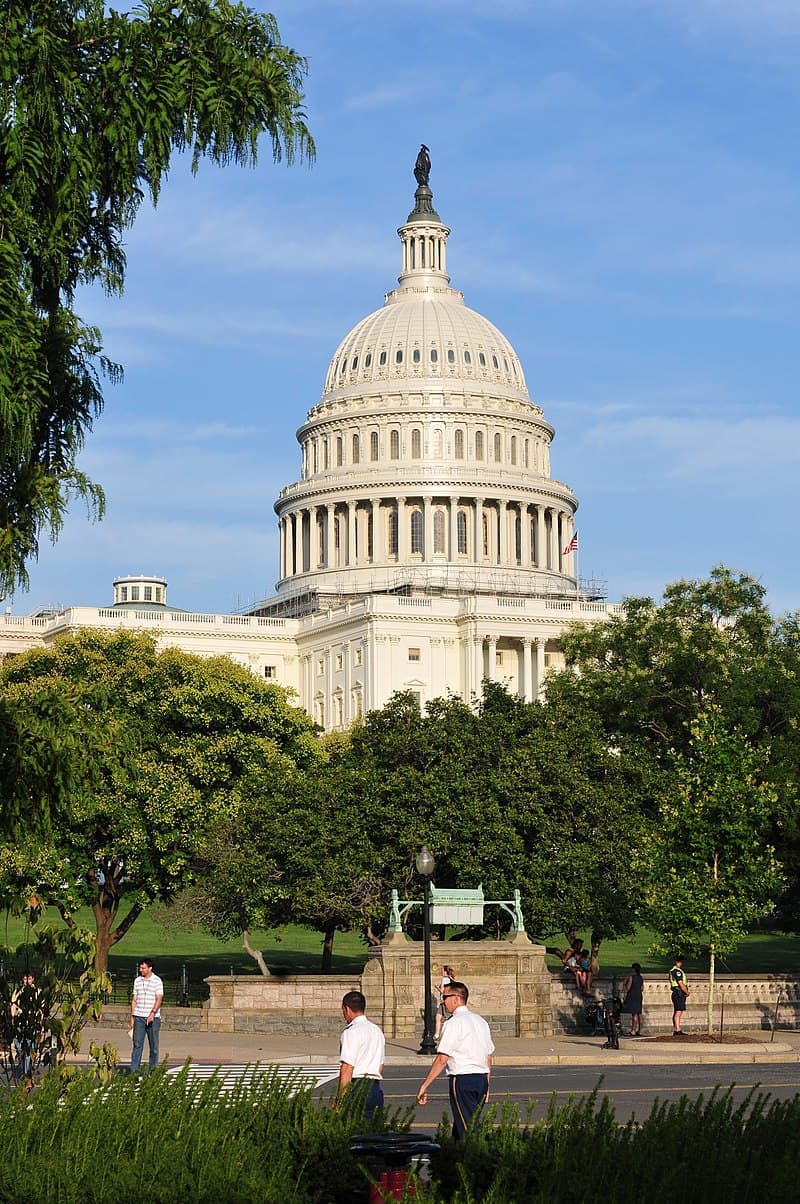
Seat of Congress, topped by a 288-foot cast-iron dome crowned with the Statue of Freedom. The tour passes through the circular rotunda, with its fresco “The Apotheosis of Washington” overhead, and the Statuary Hall, where every state has sent two statues of notable figures.

Tip: Tours are free and booked online through the visitor center; entry is through an underground passage on the east side. You can watch a Senate or House session from the gallery with a pass, which foreign visitors can get at the visitor center desk by showing a passport. An underground tunnel leads directly to the Library of Congress, which has the most beautiful interior in the city.

Admission:
free
Time needed:
2 h
White House

White House

Downtown

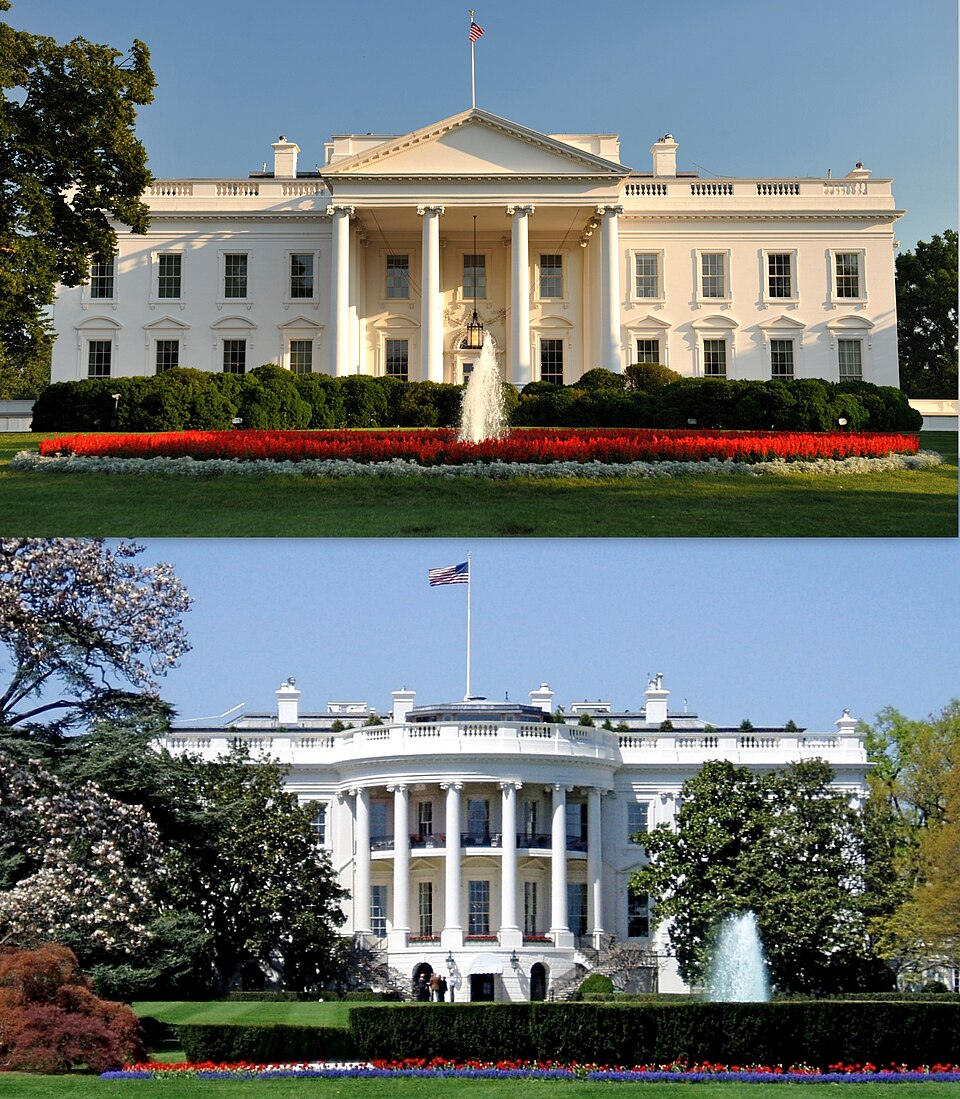
Home of the President of the United States since 1800, a neoclassical building of white-painted sandstone with 132 rooms. Every president except George Washington himself has lived here.

Tip: Foreign visitors must request interior tours through their embassy in Washington months in advance, and even then the odds are slim. The north façade can be viewed from Lafayette Park, the south façade with its balcony from the Ellipse. The White House Visitor Center on Pennsylvania Avenue has a free model of the building and exhibits. Security closures are common.

Admission:
free
Time needed:
45 min
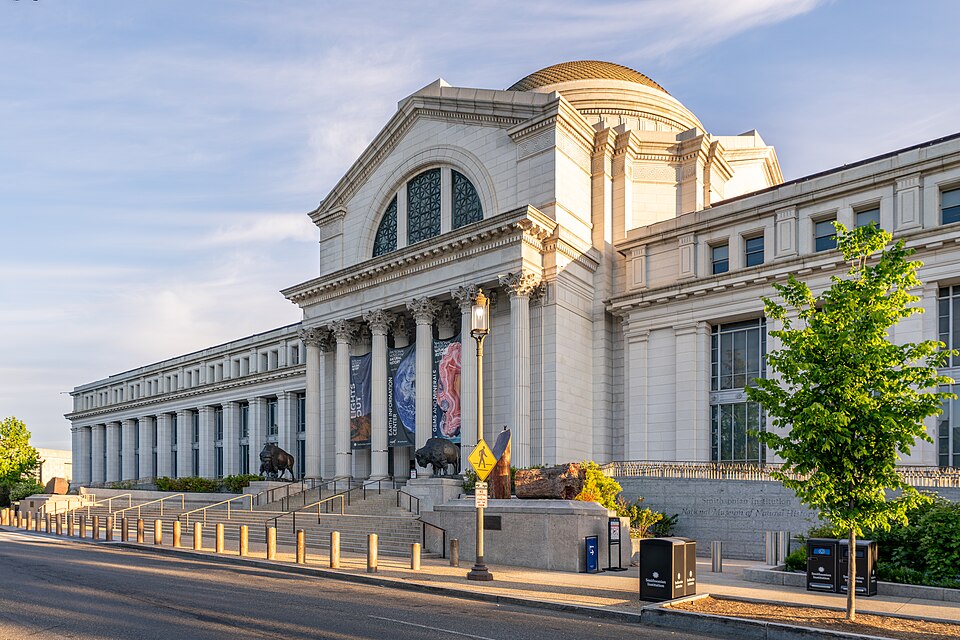
National Air and Space Museum

National Air and Space Museum

National Mall

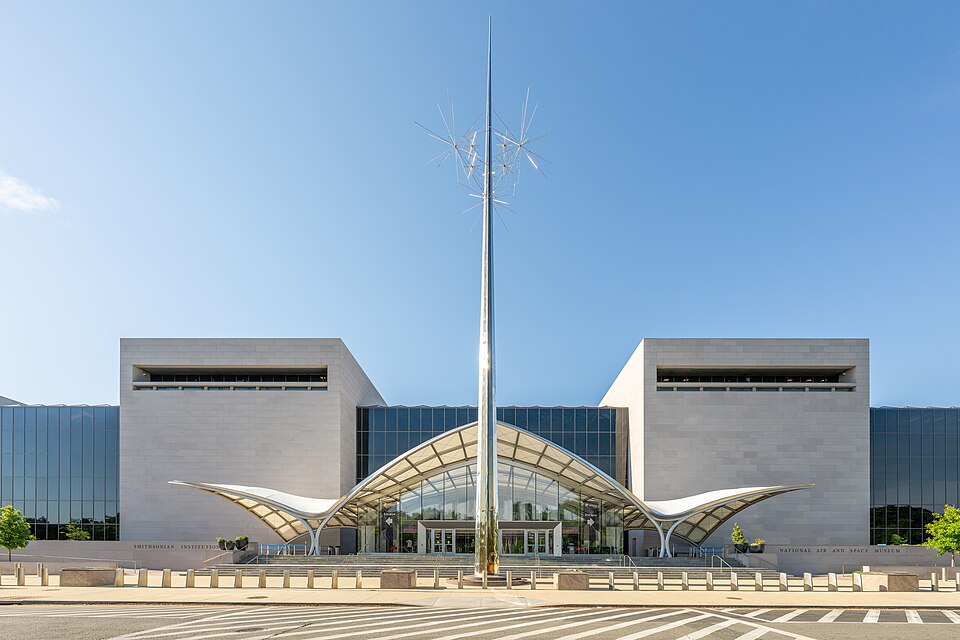
The most visited Smithsonian museum, home to the Wright brothers' 1903 Flyer, Lindbergh's Spirit of St. Louis, the Apollo 11 command module Columbia, and lunar spacesuits. The Mall building has undergone extensive renovation, with galleries reopening in stages.

Tip: Admission is free but requires a free timed ticket booked online; slots are often gone weeks ahead, though a fresh batch is released each morning of the visit. Most of the aircraft are actually at the second site, the Udvar-Hazy Center near Dulles Airport, with the space shuttle Discovery and the Enola Gay bomber; it's an hour from downtown, but you won't queue in its giant hangars.

Admission:
free
Time needed:
2.5 h
National Museum of Natural History

National Museum of Natural History

National Mall

The Smithsonian's natural history museum, home to 145 million specimens, a giant African elephant in the rotunda, a dinosaur hall with a T. rex skeleton, and the Hope Diamond, a forty-five-carat blue stone said to carry a curse.

Tip: The Hope Diamond is on the second floor in the gem gallery, and the line is shortest right at the ten o'clock opening. The Ocean Hall, with a life-size whale model, is the best pick for kids. Admission is free with no reservation needed; the entrance from the Mall side often has a longer bag-check line than the one on Constitution Avenue.

Admission:
free
Time needed:
2.5 h
National Museum of African American History and Culture

National Museum of African American History and Culture

National Mall

The newest Smithsonian museum, opened in 2016, in a bronze building shaped like a three-tiered crown, designed by David Adjaye. The exhibition begins underground with the slave trade and rises through civil rights to music and sport on the upper floors.

Tip: Free timed tickets are released online thirty days ahead and are the most in-demand in the city; on weekends they're gone within an hour. The underground history floors take at least two hours and are emotionally intense; the culture galleries above are lighter. The Sweet Home Café serves African American dishes organized by region.

Admission:
free
Time needed:
3 h
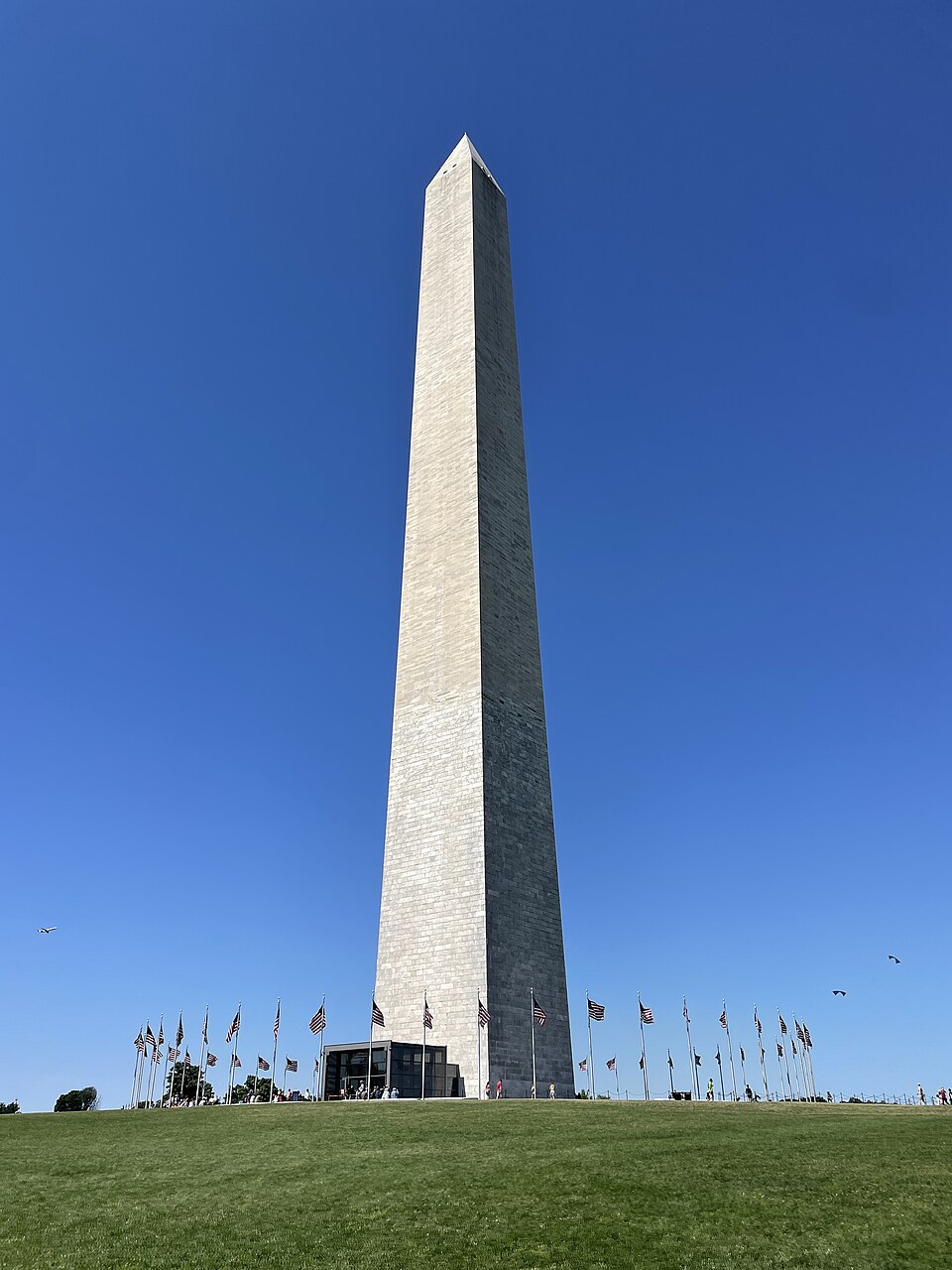
Washington Monument

Washington Monument

National Mall

A 555-foot marble obelisk completed in 1884 as the tallest structure in the world at the time. A visible change in the stone's shade about a third of the way up marks where construction paused for two decades due to funding shortfalls and the Civil War.

Tip: An elevator whisks visitors to the observation level in under a minute, and the view of the Capitol, White House and Lincoln Memorial gives the clearest sense of the city's layout. Tickets are booked online for a small fee the day before at ten in the morning; a handful of same-day tickets are released at the 15th Street ticket booth around 8:45am. Spring cherry blossom season is the most in-demand time.

Admission:
reservation fee
Time needed:
1 h
Arlington National Cemetery

Arlington National Cemetery

Arlington

A military cemetery on a hill above the Potomac River, with more than 400,000 graves in endless rows of white headstones. John F. Kennedy is buried here beneath an eternal flame, along with Robert Kennedy, and the Tomb of the Unknown Soldier, guarded around the clock with an hourly changing of the guard.

Tip: The Changing of the Guard happens every half hour from April to September and hourly otherwise, a precise ritual watched in silence. The cemetery is large and hilly; those who'd rather not walk uphill for an hour can buy a seat on the tram tour. It's a few steps from the Arlington Cemetery stop on the Blue Line.

Admission:
free
Time needed:
2 h
Georgetown

Georgetown

Georgetown

A colonial port town older than Washington itself, with eighteenth-century brick houses, cobblestone streets, a Potomac riverfront, and the 1831 Chesapeake and Ohio Canal. The main streets, M Street and Wisconsin Avenue, are packed with shops and restaurants.

Tip: No Metro line reaches Georgetown; take a Metrobus from Dupont Circle or Foggy Bottom, or walk fifteen minutes from Foggy Bottom. The prettiest route is the towpath along the canal, and the steps from The Exorcist on 36th Street. The Washington Harbour waterfront has ice skating in winter and outdoor dining in summer; kayaks can be rented near Key Bridge.

Admission:
free
Time needed:
2.5 h

Photos: Lincoln Memorial and Reflecting Pool — Martin Falbisoner (CC BY-SA 3.0) · United States Capitol — Martin Falbisoner (CC BY-SA 3.0) · White House — (top)Cezary p(bottom)MattWade (CC BY-SA 4.0) · National Air and Space Museum — ajay_suresh (CC BY 4.0) · National Museum of Natural History — ajay_suresh (CC BY 4.0) · National Museum of African American History and Culture — National Museum of African American History and Culture (Public domain) · Washington Monument — Greyfiveys (CC BY-SA 4.0) · Arlington National Cemetery — The Institute of Heraldry (Public domain) · Georgetown — Ben Schumin (CC BY-SA 2.5)

Where to stay

Areas and districts, matched to the kind of trip you are taking

Downtown and Penn Quarter

Best for: first-time visitors and museums

Between the White House and the Capitol, steps from the National Mall. The largest concentration of hotels, theaters, an arena, and a Chinatown full of restaurants. Every Metro line crosses here. Busy on weekdays with business-rate hotels, cheaper on weekends.

Dupont Circle and Logan Circle

Best for: restaurants, bars and atmosphere

Victorian rowhouses, embassies along Massachusetts Avenue, bookshops and cafés. The best combination of nightlife and Metro access on the Red Line. Neighboring U Street has jazz clubs and bars with a long history.

Georgetown

Best for: romance and shopping

The prettiest and oldest neighborhood, with boutique hotels and riverside restaurants. Its drawback is no Metro access — reaching downtown takes a bus or a twenty-minute walk. Quiet and safe even at night.

Capitol Hill and Navy Yard

Best for: quiet stays and weekends

Rowhouses around the Capitol and Eastern Market with its weekend flea market, and to the south the newer Navy Yard district by the river, with a baseball stadium and waterfront restaurants. Hotels here are newer and cheaper on weekends than downtown.

Getting around

From the airport

Washington is served by three airports. Dulles, to the west, handles international flights, reached from Prague with a connection in London, Frankfurt, Munich or Amsterdam; the journey takes twelve to fourteen hours. ESTA pre-authorization, costing forty dollars, is required before departure. The Silver Line Metro runs from Dulles into the city. Reagan National Airport sits just across the river from downtown, serves domestic flights, and is ten minutes from the Mall by Metro. Baltimore-Washington International, to the northeast, often has cheaper fares and train connections. From New York, the most convenient option is an Amtrak train to Union Station in three hours, or under three hours on the Acela high-speed service.

Washington Dulles International (IAD) · 42 km

  • Silver Line Metro to downtown· 55–65 min· 6 USD
  • Taxi to downtown· 40–70 min· 75 USD
  • Uber / Lyft· 40–70 min· 55 USD

Ronald Reagan Washington National (DCA) · 7 km

  • Blue or Yellow Line Metro· 15–20 min· 2.25 USD
  • Taxi / Uber to downtown· 15–25 min· 20 USD

Baltimore/Washington International (BWI) · 50 km

  • MARC or Amtrak train to Union Station· 35–50 min· 9 USD
  • Uber / Lyft to downtown· 50–80 min· 70 USD

Around town

Washington's Metro is clean, air-conditioned and covers every important part of the city except Georgetown. Pay with a SmarTrip card loaded on your phone, or tap a contactless payment card at the turnstile; fares depend on distance and time of day. Day and three-day passes pay off if you're riding a lot. On escalators, stand right and walk left — Washingtonians enforce this strictly. The National Mall is walkable or bikeable but longer than it looks: it's about a forty-minute walk from the Capitol to the Lincoln Memorial. Transfers from Metro to bus within two hours are free with SmarTrip.

MetrorailSix lines, fares from 2.25 to 6.75 USD depending on distance and time. Evenings and weekends have a cheaper flat fare. Use a SmarTrip card on your phone. · 2.25 USD
MetrobusBuses across the city; transfers from Metro with SmarTrip are free within two hours. The most useful routes run to Georgetown and around the Mall. · 2.25 USD
Metro day passUnlimited rides on Metro and buses for one, three or seven days. Pays off from about four rides a day. · 13.50 USD / day
Capital BikeshareShared bikes and e-bikes with stations all along the Mall and surrounding neighborhoods. The most practical way to move between memorials. · 1 USD unlock fee
Water taxiA ferry along the Potomac between Georgetown, The Wharf and historic Alexandria in Virginia. · 15 USD

Useful apps: SmarTrip, Capital Bikeshare, Transit, Uber, Lyft, NPS App

When to go

The most famous season is late March to early April, when around three thousand Japanese cherry trees — a gift from Tokyo in 1912 — bloom around the Tidal Basin; the city is crowded then and hotels expensive. May, September and October bring pleasant temperatures around 25°C and fewer crowds. Summer is hot and humid, with thunderstorms, but the museums are air-conditioned and free, and July 4th brings a big fireworks display over the Mall with a concert at the Capitol. Winter is mild, with occasional snow, and hotels are cheapest on weekends then. During a presidential inauguration in January and during large demonstrations, downtown can be closed off.

Best time

April, May, September and October

What to avoid

July and August for the humidity, and peak cherry blossom week for the prices

MonthJanFebMarAprMayJunJulAugSepOctNovDec
Day7°9°14°20°25°30°32°31°27°21°15°9°
Night-1°0°4°9°14°20°22°22°18°11°5°1°
Rainy days1091110111010988910

Food & drink

Thanks to its embassies and immigrant communities, Washington is deeply international: some of the best Ethiopian food in America, Salvadoran pupusas, Vietnamese cuisine in nearby Falls Church, and a growing number of Michelin-starred restaurants. Lunch here moves fast, since government workers get just an hour; downtown is dominated by salad-and-bowl chains at around fifteen dollars. For dinner, head to Shaw, 14th Street or Navy Yard. The museum cafés on the Mall tend to be pricey and crowded — the Mitsitam Café at the National Museum of the American Indian is an exception, serving dishes rooted in Native American cuisine. Cheap lunches are easy to find from food trucks around Farragut Square and near the museums.

What to try

Half-smoke

A smoked sausage made half of beef and half of pork, grilled and served in a bun with chili sauce, mustard and onions. A local specialty sold since 1958 at Ben's Chili Bowl on U Street, where even presidents have stopped in.

Ethiopian cuisine

Washington has the largest Ethiopian community outside Africa, and restaurants in the Shaw neighborhood serve stewed meats and lentils atop injera flatbread, eaten by hand. A platter for two runs about forty dollars.

Maryland crab cakes

Patties made from blue crab meat from the Chesapeake Bay, with minimal filler, served with tartar sauce. Best seasoned with Old Bay and available in season from April to November.

Mumbo sauce

A sweet-and-sour orange sauce locals pour over fried chicken wings and fries. It originated in Washington's fast-food spots and is almost unknown outside the city.

Pupusas

Salvadoran corn cakes filled with cheese, beans or pork, served with curtido cabbage slaw. Washington has one of the largest Salvadoran communities in the US, and a pupusa costs three to four dollars.

Chesapeake oysters

Oysters from the Chesapeake Bay and Virginia, eaten raw on the half shell, often at happy-hour prices of a dollar or two apiece. Best in fall and winter.

Brunch

Weekend brunch is a Washington institution, with bottomless mimosa deals at bars along 14th Street and in Navy Yard. Sunday reservations should be made a week ahead.

What it costs

Admission to Smithsonian museums

free

Half-smoke at Ben's Chili Bowl

8–11 USD

Lunch from a food truck

10–15 USD

Dinner at a restaurant

45–80 USD per person

Metro ride

2.25–6.75 USD

Washington Monument observation deck

1 USD reservation fee

Trolley tour of Arlington

from 20 USD

Night in a 3-star downtown hotel

180–320 USD + tax

Indicative prices that change over time — treat them as a guide, not a price list.

Practical information

SocketsAtwo flat pins (US/JP)Btwo flat pins plus ground (US)
Voltage120V / 60Hz
Tap waterTap water is drinkable — Tap water is safe to drink across the United States, and restaurants will bring it free with ice if you simply ask for “tap water.” Buying bottled water is unnecessary and expensive — a bottle costs two to three dollars in a shop, five near an attraction. It's worth carrying a refillable bottle, since airports and parks have filling stations. Ice is everywhere, and drinks are served noticeably colder than is typical in Europe.
TippingTipping isn't optional — it's effectively part of service workers' wages. At a table-service restaurant, leave eighteen to twenty percent of the pre-tax total; at a bar, a dollar per drink; for taxi and rideshare drivers, fifteen percent; for housekeeping, three to five dollars a night; for bellhops, two dollars a bag. Payment terminals usually offer percentage buttons — note these are sometimes calculated on the total including tax. Washington adds a sales tax of around six percent, restaurants add roughly ten percent, and hotels around fifteen percent, so the final bill is always higher than the listed price.
Driving on theright
SafetyTourist areas in major American cities are safe by day and well-policed, but the line between a good and a rough neighborhood can be sharp and just a few blocks wide. Check your accommodation's address on a map beforehand. Never leave visible belongings in a parked car. A key budget item is health insurance: an ER visit without coverage can cost thousands of dollars, an ambulance ride over a thousand, and US hospitals often expect payment upfront — high-limit travel insurance is an absolute necessity here. The emergency number is 911.
Opening hoursShops are typically open from 10am to 9pm, including Sundays; supermarkets and pharmacies like CVS or Walgreens are often open around the clock. Restaurants serve breakfast from 6am, lunch from 11am, and dinner tends to be early — many kitchens close by 9pm. Bars check ID for anyone who looks under forty and require a passport rather than a copy for foreign visitors. Drinking alcohol in public, on the beach or in a car is illegal.
Customs & etiquetteFriendly small talk from service staff is a professional norm, not an invitation to friendship. Queuing is strictly observed, and personal space expectations are larger than in Europe. Haggling is limited to cars and flea markets — never elsewhere. Smoking is banned in virtually all indoor spaces and on many beaches. Questions about salary or politics aren't opened with strangers. Washington is a company town for government work, and while politics is a constant undercurrent, people don't raise it casually with people they don't know. On Metro escalators, stand right and walk left — locals enforce this strictly — and behave quietly and respectfully at memorials and at Arlington.
A few local wordsHello — Hi / Good morningThank you — Thank youThe bill, please — Check, pleaseJust browsing — Just looking, thanksWhat's the total with tax? — How much is it with tax?Tap water, please — Tap water, please

How to plan your days

1 day

One day on the National Mall

  1. 1Morning: the Capitol with a booked tour and the tunnel to the Library of Congress.
  2. 2Along the Mall to the National Museum of Natural History for the Hope Diamond.
  3. 3Lunch from a food truck and the Washington Monument.
  4. 4Afternoon: the White House from Lafayette Park.
  5. 5At sunset: the Lincoln Memorial and the war memorials.

2 days

Two days with the museums

  1. 1Day one as above.
  2. 2Morning: the National Museum of African American History with a timed ticket.
  3. 3Lunch at the Mitsitam Café in the National Museum of the American Indian.
  4. 4Afternoon: the National Air and Space Museum.
  5. 5Evening: U Street and a half-smoke at Ben's Chili Bowl.

3 days

Three days with Arlington

  1. 1The first two days as above.
  2. 2Morning: Arlington National Cemetery and the changing of the guard.
  3. 3Cross the bridge into Georgetown for lunch.
  4. 4Afternoon: the canal towpath and M Street.
  5. 5Evening: water taxi to The Wharf for dinner.

Day trips

Mount Vernon

25 km · 30 min by car, 1 h by bus

George Washington's plantation and estate on the banks of the Potomac, with an eighteenth-century house, gardens, the first president's tomb, and a memorial to the enslaved people who worked there. You can cycle here from Washington along a riverside trail, sixteen flat miles, or take a boat from Alexandria in summer.

Annapolis

50 km · 50 min by car

The capital of Maryland, with a colonial harbor, brick townhouses and the US Naval Academy, whose campus can be toured. It's America's sailing capital, and the waterfront serves Chesapeake Bay crab. Getting here by public transport is awkward; by car it's simple.

Shenandoah National Park

120 km · 1 h 30 min by car

A stretch of Virginia's Blue Ridge Mountains along the 105-mile Skyline Drive scenic road, with waterfalls and over 500 miles of hiking trails. Most beautiful in October when the leaves turn, though the road gets jammed on fall weekends. Entry is charged per vehicle, and there's no phone signal, so download maps in advance.

Frequently asked questions

Are the museums in Washington really free?+

Yes, all Smithsonian museums, the National Gallery of Art, the Library of Congress and the Capitol are free. Some require a free timed-entry ticket booked online — mainly the Museum of African American History and the Air and Space Museum. Only private museums, such as the International Spy Museum, charge admission.

Can you visit the White House?+

For foreign visitors it's very difficult: applications go through your own embassy in Washington at least three months in advance, and success isn't guaranteed. From outside, you can view it from Lafayette Park to the north and the Ellipse to the south. The White House Visitor Center is free.

How many days are enough for Washington?+

Two days for the Mall, the Capitol and the main memorials; three to four days with museums, Arlington and Georgetown. Washington pairs well with New York, a three-hour train ride away, and with Philadelphia along the way.

When do the cherry blossoms bloom?+

Peak cherry blossom bloom around the Tidal Basin falls in late March or early April and lasts only a few days. The National Park Service announces the exact date each spring based on weather. The Cherry Blossom Festival runs three weeks, but the trees aren't in bloom the whole time.

Is Washington safe?+

The National Mall, Downtown, Georgetown, Dupont Circle and Capitol Hill are safe and well-patrolled. Caution is warranted in some neighborhoods east of the Anacostia River, and in the evening near some Metro stations outside the center. The center stays busy with people even at night.

What is the District of Columbia?+

A federal district that doesn't belong to any state, so the capital isn't dependent on one of them. Residents have no voting representative in Congress, which is why their license plates read Taxation Without Representation. D.C. is pronounced dee-cee.

How do I get from Dulles Airport?+

Take the Silver Line Metro directly from the terminal into the city in about an hour — one of the cheapest connections. A taxi costs over seventy dollars. If you fly domestically into Reagan National, you're downtown in fifteen minutes by Metro.

Where can you eat well in Washington?+

Ethiopian cuisine in the Shaw neighborhood, a half-smoke at Ben's Chili Bowl, pupusas in Columbia Heights, and crab cakes by the waterfront. For evenings, try 14th Street in Logan Circle and The Wharf. For lunch downtown, food trucks cluster around Farragut Square.

Visa Requirements

Check the latest visa requirements for entering this country. Some nationalities may need to apply for a visa or e-visa before travel.

Check visa requirements

Language

English

Currency

USD

Timezone

GMT-5

Dial Code

+1

Population

335M

Area

9,833,520 km²

Voltage

120V / 60Hz

Driving Side

Right

Top Hotels in Washington, D.C.

Live prices from 500+ properties

Loading hotels...

Planning a trip to Washington, D.C.?

Compare hundreds of hotels, find the best price, and book with free cancellation on TravelManiac.